Get HCM digital magazine and ezines FREE
Sign up here ▸
Jobs   News   Features   Products   Magazine      Advertise  
Profile
Cameron Saunders

The new CEO of UK Active talks to HCM about the gym-curious and why he believes the sector can double in size by the end of the next decade


What drew you to the role at UK Active?

I’ve spent my career in marketing, which is very much about engaging audiences and consumers with brands. From my early days working in telecoms with Orange and then in TV, cinema and film, I’ve been fascinated by the process of engaging audiences with brands.

One of my roles was as director of Cinema First – the trade body that represented cinemas. I was focused on encouraging cinema-going, so I’ve got a background in trade associations and consumer engagement and it seemed a strong fit with the UK Active role.

When organisations look at growing a market, what I find interesting is engaging consumers in positive behaviour. That’s what motivates me and what I’m passionate about – running campaigns that are commercially effective and drive audience behaviour.

Film and TV is a high-interest category and sport and fitness are the same. People are passionate about it and that really resonates with me.

It’s clear sport has been evolving in the brand space and increasing in scope to include health and fitness, while health clubs, gyms and fitness operations are increasingly becoming lifestyle brands, making marketing ever more important.

That really got my attention, because it’s a growing sector and something people feel very strongly about.

Major issues, such as economic inactivity and health inequalities, are in areas where we can make a meaningful contribution

Is there a personal dimension?

Yes – I’m also what you might call a latter-day convert to exercise. I was just reading a BBC article about how people’s experiences of sport at school can put them off it for life if they’re not delivered well and that was very much me – I had a terrible PE teacher and that put me off sport for years, but that changed when I was working with David Puttnam and Hugh Hudson on the re-release of the iconic film Chariots of Fire as part of the London 2012 celebrations.

When you release a film, you end up watching it many times, and it inspired me to start running and become active again. Running then gave me a genuine love of fitness and activity in its own right.

What excites you about the sector?

That those who work in the sector are so passionate about it. They’ve gone beyond seeing exercise as a means to an end and love it as an end in itself. That creates enormous authenticity.

That authenticity drives innovation and everyone I’ve met so far – public, private and independent operators and suppliers – do it because they love fitness and want other people to love it too. That makes this a very special sector.

We do a lot of work around social value, saving the NHS money and being part of health infrastructure and that’s important, but fundamentally we’re not only doing this to save the taxpayer money, we’re also doing it because we want people to be healthy and live long, active lives.
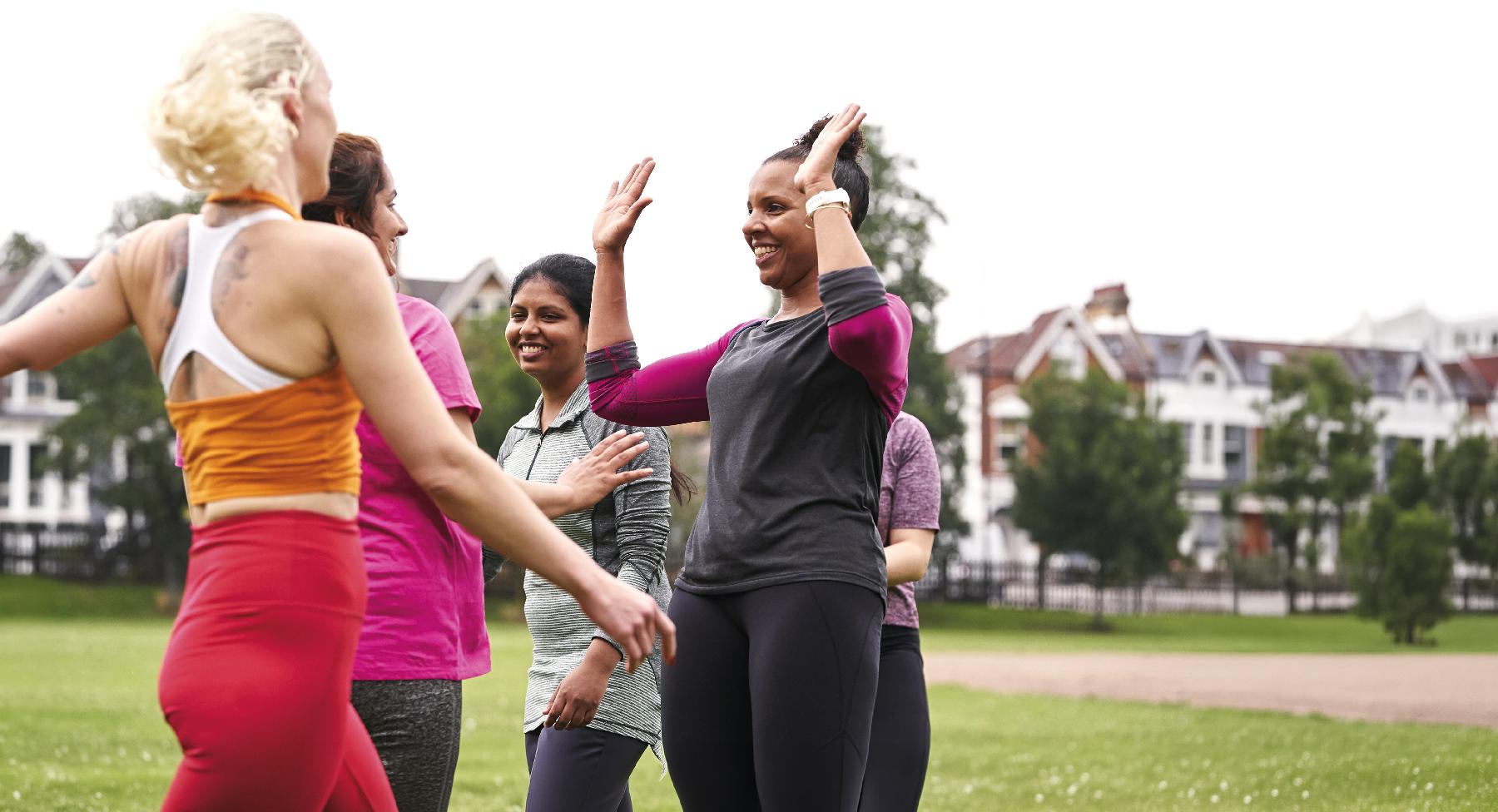
Group of women in gym wear outside
The industry must deliver offers that people genuinely value / Sport England

You’ve said the industry can feel ‘a little bit like a cult’. What did you mean by that?

Sometimes it does feel a little like a cult, and that could be one of the industry’s blind spots. We’re all converted. We all love exercise. We’re in the tent saying: ‘This is wonderful’, but there are lots of people outside the tent looking in and thinking: ‘They were the really fit kids at school who actually liked PE.’

The challenge is how we bring more people into that tent while recognising this isn’t something they find easy – especially at first. That, to me, is where the growth opportunity lies.

What’s your view on the sector?

I see enormous potential in terms of the classic adoption curve – innovators, early adopters, early majority and so on.

I followed this growth curve in mobile telephony. In the mid-1990s, only about 5 per cent of the population had mobile phones and they were marketed as tech products for businesspeople.

Then Orange came along and transformed them into consumer brands. Through products, pricing, distribution and marketing, they made mobiles feel relevant and desirable to ordinary consumers. Over the following decade, penetration rose from 5 per cent to 40 or 50 per cent, and eventually to almost 100 per cent.

I see the fitness industry in a very similar position. The Health and Fitness Market Report we undertake with Grant Thornton, 4Global and Sport England – shows around 18 per cent of UK adults are gym members. If you look at the market through the lens of the classic adoption curve, that suggests we’re only just entering the early majority phase.

My vision is that we could and should reach 36 per cent penetration by the end of the next decade.

In other words, I believe this market could double in size over the next 10 years or so.

If the industry continues to innovate, develops the right products and propositions and we work together to reach new audiences, there’s no reason that growth cannot be achieved.

It will mean reaching audiences outside our current demographic: people who are driven less by fitness itself and more by enjoyment, identity and social connection. They’ll ask, ‘Will I enjoy it?’, ‘Is it for people like me?’ and ‘Will it work?’

When budgets are under pressure and consumers are still choosing to spend money on fitness, it tells us they see these services as important to their lives

What makes you so confident?

One of the most striking things is the value people place on their gym membership. We know that during a very real cost-of-living crisis, they’re sacrificing other things to keep their membership because it’s so important. That’s extremely revealing.

When budgets are under pressure and consumers are still choosing to spend money on fitness, it tells us they see these services as genuinely valuable and important to their lives.

This is also one of the few real success stories for UK plc, with the sector growing at around 10 per cent a year according to The Health and Fitness Market Report.

When you look at the pace of innovation in wearables, connected fitness and digital tools, it feels as though we’re only just seeing the beginning of what’s possible.

What do you bring to UK Active?

Understanding how markets move from niche to mainstream. At Cinema First, we grew participation by making cinema-going feel more accessible and relevant to a wide range of audiences.

One of the key learnings was that you don’t grow markets by talking to existing enthusiasts, you grow them by identifying people who are interested but not yet participating, and then designing propositions that feel welcoming and relevant.

That principle also applies to fitness. We need to think about the large number of people who are interested in becoming more active but don’t yet feel that gyms are places where they belong.

You use the phrase ‘gym-curious’...

There’s a significant group of people who like the idea of going to the gym and understand the benefits. They may even aspire to be more active, but they’re hesitating to make the leap.

Often the barrier isn’t cost, although that can be a factor. More fundamentally, there’s an emotional disconnect. They may worry they’re not fit enough, not in the right shape, or that they’ll be judged.

The reality is that many gyms are inclusive environments, but are not perceived as such and perception matters. Our challenge as an industry is to bridge that emotional gap and help people understand that these spaces are genuinely for everyone.

What’s your long-term vision for the sector?

For physical activity to become a normal part of everyday life for a larger proportion of the population.

If we can broaden our appeal, remove barriers and help people feel that they belong, there is every reason to believe we can dramatically increase participation.

That growth would be commercially significant and transformative for the health and wellbeing of the country. That’s what makes this role so exciting.
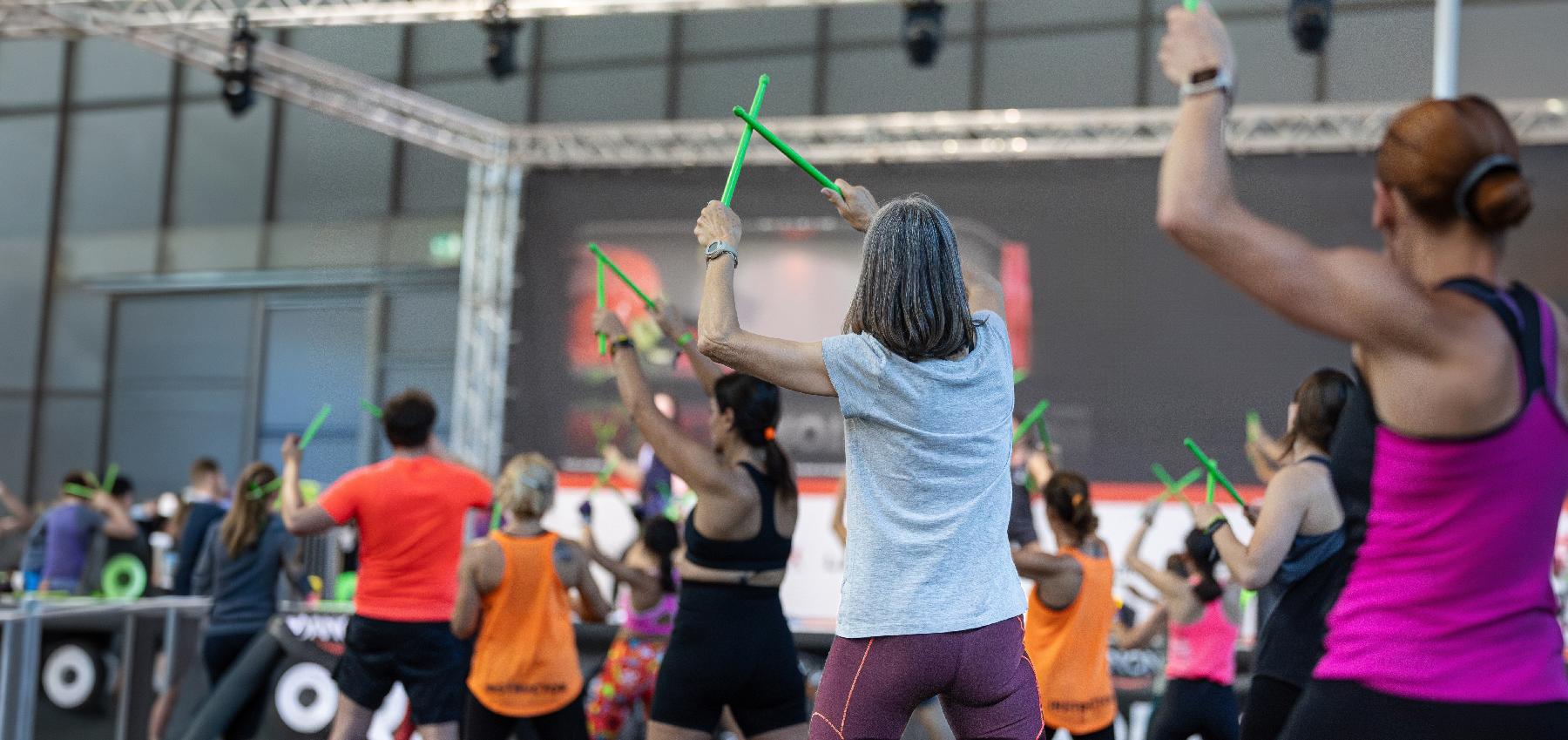
Group of women in exercise class
Higher penetration rates could transform the nation’s health / Shutterstock / Giorgio Rossi

How do you see the relationship between sport and the sector?

I was with Simon Hayes, the CEO of Sport England, recently, talking about exactly this.

Sport England has traditionally been seen as representing national governing bodies and organised sport, but Simon recognises that the activity with the greatest participation today is gym-based exercise. We know there are around 680 million gym visits a year in the UK. That’s a massive number and, I suspect, many times greater than participation in most individual sports.

We know from Sport England’s Active Lives surveys that fitness is second only to walking in driving activity levels.

What Simon sees is that gyms and leisure facilities underpin almost every other form of sport. If you’re playing rugby, squash, padel or football, much of what you do in the gym – strength, mobility and conditioning – forms the foundation.

Rather than being separate from sport, fitness is the platform on which much of sport is built.

Will you work more with Sport England?

We already work closely across a range of areas, particularly around data and understanding participation. One of the most important findings is that physical activity levels are increasing overall, but not evenly across society.

The most affluent areas of the country have activity levels of around 73 per cent, while in the most deprived communities the figure is closer to 54 per cent and has remained relatively flat.

That tells us that the challenge is not simply to grow participation, but also to ensure that growth reaches communities that have historically been less active.

How important is tackling health inequality?

It’s absolutely central. If we want to become a mainstream activity, we need to ensure that people in lower-income communities and underrepresented groups have access to welcoming and affordable opportunities to be active. This is both an obligation and an opportunity for both social and commercial good.

Historically, people assumed this was the responsibility of the public sector, but increasingly private and independent operators are playing an important role.

There’s also an issue of perception. Many people still feel that gyms are not designed for people like them. Our challenge is to demonstrate clearly that they’re for everyone.

The key question is how government can help reduce barriers so that more people are able to be active

How can UK Active address this?

One of the most exciting ideas is to expand National Fitness Day into a month-long celebration. A single day is useful, but it is not long enough to create major partnerships or meaningful behavioural change.

A month-long campaign would allow us to identify target groups and create specific programmes to welcome them. The aim would be to work collectively across the industry to provide supportive, accessible opportunities for people to try fitness and discover that it is for them.

What can we learn from other campaigns?

When I was working in cinema, we developed programmes such as Orange Wednesdays and Meerkat Movies. The lesson from those campaigns was that you can grow a market by partnering with brands that reach audiences who are interested, but not yet regular users.

The same principle applies to fitness. If we can work with the right partners, we can connect with people who are gym-curious and help them take that first step into fitness.

What role do you see for gyms in high street regeneration?

This is a very important area. In the cinema business, we were seen as anchor tenants that helped revive retail destinations by driving footfall.

Gyms are arguably even more powerful in this respect because they generate far more visits. A successful gym creates footfall and social interaction while also supporting businesses such as cafes and juice bars.

That makes them highly valuable components of high street renewal and our team is working with members to ensure we gather the evidence needed to shape the government’s strategy on high streets.

What policy changes could help the sector?

There are a number of practical barriers to activity the government can address.

Reducing business rates has been a recent focus, while optimised planning and parking policy can also support growth: if someone has a low-cost gym membership but must pay to park, it can become a deterrent, for example.

The key question is how government can help reduce barriers so more people can be active and the UK Active policy team is working with both governance councils and members to make sure we’re lobbying for the right policies with the best evidence.

Employment taxes are a key issue for our members and their customers. We’re a people business and increasing taxes on employment is a barrier to growth.

Operators can use tech and AI to drive efficiencies, but if we want to get more people more active more often, we need the workforce to achieve this.

Likewise, tax levelled at employees who are taking up employer-provided gym memberships is treating it as a taxable perk, rather than something that’s going to deliver wellbeing and better productivity.

How should UK Active approach government?

The most effective approach is to focus on the problems that government is trying to solve.

If we go to them with a list of industry concerns, they may listen politely, but if we go to them and say: “Here’s one of your biggest challenges, and here’s how we can help overcome it,” that’s a much more powerful proposition.

The major issues facing government – such as NHS sustainability, economic inactivity and health inequalities – are precisely the areas where this sector can make a meaningful contribution.

How advanced are these conversations?

We’re already in a much stronger position than ever before. Physical activity is firmly on the policy agenda and recognised as part of preventative healthcare and we’re working with the health service, including on MSK hubs, to demonstrate how the sector can act as an effective delivery partner.

We’re also exploring the role of physical activity in supporting people using GLP-1s, where structured exercise can improve outcomes and reduce longer-term healthcare costs. Government moves slowly, but progress is being made.

How do you persuade government to take the sector seriously?

The government, and particularly HM Treasury and the NHS, need robust evidence and cost-benefit analyses.

That is why pilot programmes and measurable outcomes are so important. You start with a focused initiative, demonstrate its impact and build from there.

But data isn’t enough. If people don’t buy into an idea, all the data in the world won’t persuade them. This is why storytelling matters so much alongside the evidence.

Woman with arms up
UK Active is working with the NHS, including with MSK hubs / Shutterstock / BearFotos

Can you expand on the role of storytelling?

People remember stories, not statistics. They remember the 81-year-old doing a HIIT class. They remember someone who had never exercised before and is now thriving.

Those stories make the impact of fitness tangible and relatable. This is true not only for consumers, but also for policymakers. Ministers and civil servants are human beings. They may review detailed reports, but what stays with them are vivid examples of real people whose lives have been changed.

What role do media partners play?

Media partners are incredibly valuable and with their support and the power of our members behind our shared vision, we can reach tens of millions of consumers.

Organisations such as HCM Magazine have the expertise and contacts to communicate ideas across the sector – celebrating the stories of our members’s success, for example – and connecting with decision-makers. That ability to tell stories and shape narratives is enormously important.

Working with partners is in our DNA. For example, we’re in discussions with Age UK to partner on its ‘Act Now. Age Better’ campaign next year, to tell our story to a huge untapped growth market.

Can social networks help grow participation?

One of the most effective forms of marketing is word-of-mouth, when people talk to their friends in real life or via social channels. Throughout my career, I’ve seen that consumers are more influenced by people they know than by even the most sophisticated advertising campaign. Social media amplifies that effect.

When people see their friends enjoying exercise and sharing positive experiences, it begins to feel normal and accessible. That social proof can be one of the strongest drivers of future growth.

What role should UK Active play in social?

There’s an opportunity to look strategically at how social platforms influence behaviour. There’s a huge amount of excellent content, but also challenges around misinformation.

As an industry, we must consider the ever-evolving landscape, identify best practice and explore how the industry can make more effective use of these channels while mitigating potential harms.

We’re watching closely what’s happening in Australia with the social media ban for under 16s and thinking through what a similar ban might mean in the UK. It presents opportunities, as well as potential challenges.

How can the sector learn from others to get the fundamentals right?

Consumers increasingly want environments where they feel comfortable, inspired and part of something aspirational.

There’s tremendous innovation happening in retail and hospitality and it’s clear that health and fitness operators can learn from those sectors.

One of the most effective growth strategies comes from understanding how other sectors have expanded from niche markets into mainstream consumer categories.

The most successful operators will be those that create environments where people feel they belong. This includes delivering on thoughtful design, strong branding, welcoming experiences and a sense of community.

Increasingly, operators who deliver will evolve into lifestyle brands.

How do you know a brand has arrived?

A simple test is whether someone would wear the T-shirt. People proudly wear Hyrox, Barry's, Parkrun, Les Mills and SoulCycle because those brands represent identity and belonging.

That’s the opportunity for operators – to create brands that people feel proud to be associated with.

What excites you most about the future?

We’re at a very significant moment in time. The sector is growing strongly; consumers increasingly understand the importance of activity and policymakers are beginning to recognise the essential role fitness can play in preventative health.

There’s enormous innovation taking place across health and fitness on both the operational and supply sides, as well as a real sense of momentum.

If we can continue to broaden our appeal, remove barriers to entry, strengthen our storytelling and work collaboratively, there’s every reason to believe this industry can achieve really significant growth.

It’s an incredibly exciting opportunity – both commercially and in terms of the positive impact we can have on people’s lives.
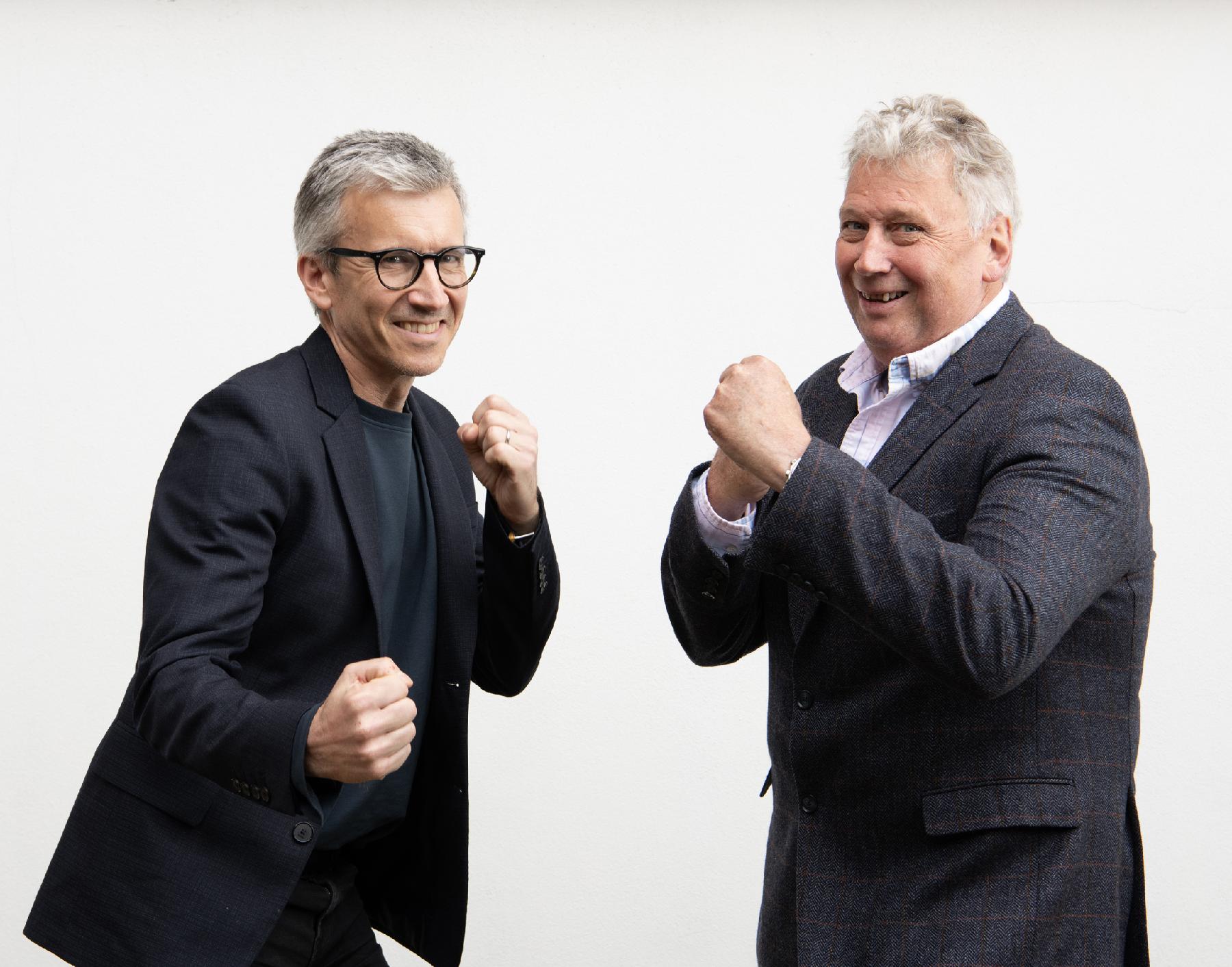
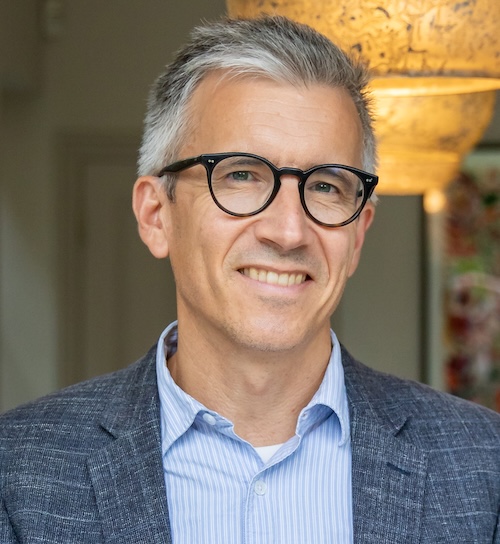
CEO Saunders with industry veteran and UK Active chair, David Stalker
CEO Saunders with industry veteran and UK Active chair, David Stalker / Jack Emmerson

FEATURED SUPPLIERS

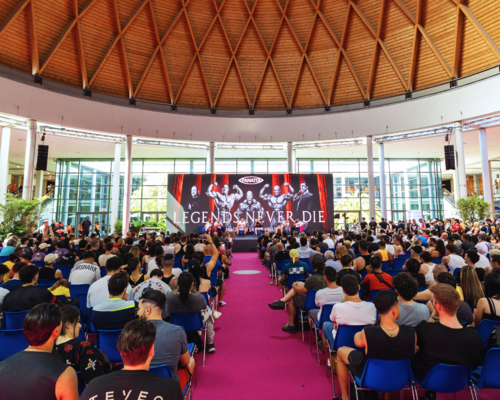
Legends never die: four legends, four philosophies of life
Panatta brought together four of the most influential figures in bodybuilding history on the stage of RiminiWellness 2026: Phil Heath, Lee Haney, Ronnie Coleman and Hany Rambod. [more...]

Cornerstone Connect helps Active Blackpool tackle health inequalities
Active Blackpool is deploying Cornerstone Connect, a new digital interface allowing disparate information from multiple systems to be aggregated into one dataset, to support its focus on reducing health inequalities and improving healthy life expectancy. [more...]
+ More featured suppliers  
COMPANY PROFILES
ukactive

ukactive is the UK’s leading trade body for the physical activity sector, bringing together more tha [more...]
Precor

Precor promises precision-quality products with steadfast reliability that are inspired by exerciser [more...]
+ More profiles  
CATALOGUE GALLERY
 
+ More catalogues  

DIRECTORY
+ More directory  
DIARY


23-26 Aug 2026

Elevate Spa Riviera Maya Edition

The Riviera Maya Edition Kanai, Playa del Carmen, Mexico
10-12 Sep 2026

ASEAN Patio Pool Spa Expo 2026

MITEC Kuala Lumpur,Malaysia, Malaysia
+ More diary  
 
ABOUT LEISURE MEDIA
LEISURE MEDIA MAGAZINES
LEISURE MEDIA HANDBOOKS
LEISURE MEDIA WEBSITES
LEISURE MEDIA PRODUCT SEARCH
 
HCM
LEISURE OPPORTUNITIES
HEALTH CLUB HANDBOOK
PRINT SUBSCRIPTIONS
FREE DIGITAL SUBSCRIPTIONS
ADVERTISE . CONTACT US

Leisure Media
Tel: +44 (0)1462 431385

©Cybertrek 2026
Get HCM digital magazine and ezines FREE
Sign up here ▸
Jobs    News   Products   Magazine
Profile
Cameron Saunders

The new CEO of UK Active talks to HCM about the gym-curious and why he believes the sector can double in size by the end of the next decade


What drew you to the role at UK Active?

I’ve spent my career in marketing, which is very much about engaging audiences and consumers with brands. From my early days working in telecoms with Orange and then in TV, cinema and film, I’ve been fascinated by the process of engaging audiences with brands.

One of my roles was as director of Cinema First – the trade body that represented cinemas. I was focused on encouraging cinema-going, so I’ve got a background in trade associations and consumer engagement and it seemed a strong fit with the UK Active role.

When organisations look at growing a market, what I find interesting is engaging consumers in positive behaviour. That’s what motivates me and what I’m passionate about – running campaigns that are commercially effective and drive audience behaviour.

Film and TV is a high-interest category and sport and fitness are the same. People are passionate about it and that really resonates with me.

It’s clear sport has been evolving in the brand space and increasing in scope to include health and fitness, while health clubs, gyms and fitness operations are increasingly becoming lifestyle brands, making marketing ever more important.

That really got my attention, because it’s a growing sector and something people feel very strongly about.

Major issues, such as economic inactivity and health inequalities, are in areas where we can make a meaningful contribution

Is there a personal dimension?

Yes – I’m also what you might call a latter-day convert to exercise. I was just reading a BBC article about how people’s experiences of sport at school can put them off it for life if they’re not delivered well and that was very much me – I had a terrible PE teacher and that put me off sport for years, but that changed when I was working with David Puttnam and Hugh Hudson on the re-release of the iconic film Chariots of Fire as part of the London 2012 celebrations.

When you release a film, you end up watching it many times, and it inspired me to start running and become active again. Running then gave me a genuine love of fitness and activity in its own right.

What excites you about the sector?

That those who work in the sector are so passionate about it. They’ve gone beyond seeing exercise as a means to an end and love it as an end in itself. That creates enormous authenticity.

That authenticity drives innovation and everyone I’ve met so far – public, private and independent operators and suppliers – do it because they love fitness and want other people to love it too. That makes this a very special sector.

We do a lot of work around social value, saving the NHS money and being part of health infrastructure and that’s important, but fundamentally we’re not only doing this to save the taxpayer money, we’re also doing it because we want people to be healthy and live long, active lives.

Group of women in gym wear outside
The industry must deliver offers that people genuinely value / Sport England

You’ve said the industry can feel ‘a little bit like a cult’. What did you mean by that?

Sometimes it does feel a little like a cult, and that could be one of the industry’s blind spots. We’re all converted. We all love exercise. We’re in the tent saying: ‘This is wonderful’, but there are lots of people outside the tent looking in and thinking: ‘They were the really fit kids at school who actually liked PE.’

The challenge is how we bring more people into that tent while recognising this isn’t something they find easy – especially at first. That, to me, is where the growth opportunity lies.

What’s your view on the sector?

I see enormous potential in terms of the classic adoption curve – innovators, early adopters, early majority and so on.

I followed this growth curve in mobile telephony. In the mid-1990s, only about 5 per cent of the population had mobile phones and they were marketed as tech products for businesspeople.

Then Orange came along and transformed them into consumer brands. Through products, pricing, distribution and marketing, they made mobiles feel relevant and desirable to ordinary consumers. Over the following decade, penetration rose from 5 per cent to 40 or 50 per cent, and eventually to almost 100 per cent.

I see the fitness industry in a very similar position. The Health and Fitness Market Report we undertake with Grant Thornton, 4Global and Sport England – shows around 18 per cent of UK adults are gym members. If you look at the market through the lens of the classic adoption curve, that suggests we’re only just entering the early majority phase.

My vision is that we could and should reach 36 per cent penetration by the end of the next decade.

In other words, I believe this market could double in size over the next 10 years or so.

If the industry continues to innovate, develops the right products and propositions and we work together to reach new audiences, there’s no reason that growth cannot be achieved.

It will mean reaching audiences outside our current demographic: people who are driven less by fitness itself and more by enjoyment, identity and social connection. They’ll ask, ‘Will I enjoy it?’, ‘Is it for people like me?’ and ‘Will it work?’

When budgets are under pressure and consumers are still choosing to spend money on fitness, it tells us they see these services as important to their lives

What makes you so confident?

One of the most striking things is the value people place on their gym membership. We know that during a very real cost-of-living crisis, they’re sacrificing other things to keep their membership because it’s so important. That’s extremely revealing.

When budgets are under pressure and consumers are still choosing to spend money on fitness, it tells us they see these services as genuinely valuable and important to their lives.

This is also one of the few real success stories for UK plc, with the sector growing at around 10 per cent a year according to The Health and Fitness Market Report.

When you look at the pace of innovation in wearables, connected fitness and digital tools, it feels as though we’re only just seeing the beginning of what’s possible.

What do you bring to UK Active?

Understanding how markets move from niche to mainstream. At Cinema First, we grew participation by making cinema-going feel more accessible and relevant to a wide range of audiences.

One of the key learnings was that you don’t grow markets by talking to existing enthusiasts, you grow them by identifying people who are interested but not yet participating, and then designing propositions that feel welcoming and relevant.

That principle also applies to fitness. We need to think about the large number of people who are interested in becoming more active but don’t yet feel that gyms are places where they belong.

You use the phrase ‘gym-curious’...

There’s a significant group of people who like the idea of going to the gym and understand the benefits. They may even aspire to be more active, but they’re hesitating to make the leap.

Often the barrier isn’t cost, although that can be a factor. More fundamentally, there’s an emotional disconnect. They may worry they’re not fit enough, not in the right shape, or that they’ll be judged.

The reality is that many gyms are inclusive environments, but are not perceived as such and perception matters. Our challenge as an industry is to bridge that emotional gap and help people understand that these spaces are genuinely for everyone.

What’s your long-term vision for the sector?

For physical activity to become a normal part of everyday life for a larger proportion of the population.

If we can broaden our appeal, remove barriers and help people feel that they belong, there is every reason to believe we can dramatically increase participation.

That growth would be commercially significant and transformative for the health and wellbeing of the country. That’s what makes this role so exciting.

Group of women in exercise class
Higher penetration rates could transform the nation’s health / Shutterstock / Giorgio Rossi

How do you see the relationship between sport and the sector?

I was with Simon Hayes, the CEO of Sport England, recently, talking about exactly this.

Sport England has traditionally been seen as representing national governing bodies and organised sport, but Simon recognises that the activity with the greatest participation today is gym-based exercise. We know there are around 680 million gym visits a year in the UK. That’s a massive number and, I suspect, many times greater than participation in most individual sports.

We know from Sport England’s Active Lives surveys that fitness is second only to walking in driving activity levels.

What Simon sees is that gyms and leisure facilities underpin almost every other form of sport. If you’re playing rugby, squash, padel or football, much of what you do in the gym – strength, mobility and conditioning – forms the foundation.

Rather than being separate from sport, fitness is the platform on which much of sport is built.

Will you work more with Sport England?

We already work closely across a range of areas, particularly around data and understanding participation. One of the most important findings is that physical activity levels are increasing overall, but not evenly across society.

The most affluent areas of the country have activity levels of around 73 per cent, while in the most deprived communities the figure is closer to 54 per cent and has remained relatively flat.

That tells us that the challenge is not simply to grow participation, but also to ensure that growth reaches communities that have historically been less active.

How important is tackling health inequality?

It’s absolutely central. If we want to become a mainstream activity, we need to ensure that people in lower-income communities and underrepresented groups have access to welcoming and affordable opportunities to be active. This is both an obligation and an opportunity for both social and commercial good.

Historically, people assumed this was the responsibility of the public sector, but increasingly private and independent operators are playing an important role.

There’s also an issue of perception. Many people still feel that gyms are not designed for people like them. Our challenge is to demonstrate clearly that they’re for everyone.

The key question is how government can help reduce barriers so that more people are able to be active

How can UK Active address this?

One of the most exciting ideas is to expand National Fitness Day into a month-long celebration. A single day is useful, but it is not long enough to create major partnerships or meaningful behavioural change.

A month-long campaign would allow us to identify target groups and create specific programmes to welcome them. The aim would be to work collectively across the industry to provide supportive, accessible opportunities for people to try fitness and discover that it is for them.

What can we learn from other campaigns?

When I was working in cinema, we developed programmes such as Orange Wednesdays and Meerkat Movies. The lesson from those campaigns was that you can grow a market by partnering with brands that reach audiences who are interested, but not yet regular users.

The same principle applies to fitness. If we can work with the right partners, we can connect with people who are gym-curious and help them take that first step into fitness.

What role do you see for gyms in high street regeneration?

This is a very important area. In the cinema business, we were seen as anchor tenants that helped revive retail destinations by driving footfall.

Gyms are arguably even more powerful in this respect because they generate far more visits. A successful gym creates footfall and social interaction while also supporting businesses such as cafes and juice bars.

That makes them highly valuable components of high street renewal and our team is working with members to ensure we gather the evidence needed to shape the government’s strategy on high streets.

What policy changes could help the sector?

There are a number of practical barriers to activity the government can address.

Reducing business rates has been a recent focus, while optimised planning and parking policy can also support growth: if someone has a low-cost gym membership but must pay to park, it can become a deterrent, for example.

The key question is how government can help reduce barriers so more people can be active and the UK Active policy team is working with both governance councils and members to make sure we’re lobbying for the right policies with the best evidence.

Employment taxes are a key issue for our members and their customers. We’re a people business and increasing taxes on employment is a barrier to growth.

Operators can use tech and AI to drive efficiencies, but if we want to get more people more active more often, we need the workforce to achieve this.

Likewise, tax levelled at employees who are taking up employer-provided gym memberships is treating it as a taxable perk, rather than something that’s going to deliver wellbeing and better productivity.

How should UK Active approach government?

The most effective approach is to focus on the problems that government is trying to solve.

If we go to them with a list of industry concerns, they may listen politely, but if we go to them and say: “Here’s one of your biggest challenges, and here’s how we can help overcome it,” that’s a much more powerful proposition.

The major issues facing government – such as NHS sustainability, economic inactivity and health inequalities – are precisely the areas where this sector can make a meaningful contribution.

How advanced are these conversations?

We’re already in a much stronger position than ever before. Physical activity is firmly on the policy agenda and recognised as part of preventative healthcare and we’re working with the health service, including on MSK hubs, to demonstrate how the sector can act as an effective delivery partner.

We’re also exploring the role of physical activity in supporting people using GLP-1s, where structured exercise can improve outcomes and reduce longer-term healthcare costs. Government moves slowly, but progress is being made.

How do you persuade government to take the sector seriously?

The government, and particularly HM Treasury and the NHS, need robust evidence and cost-benefit analyses.

That is why pilot programmes and measurable outcomes are so important. You start with a focused initiative, demonstrate its impact and build from there.

But data isn’t enough. If people don’t buy into an idea, all the data in the world won’t persuade them. This is why storytelling matters so much alongside the evidence.

Woman with arms up
UK Active is working with the NHS, including with MSK hubs / Shutterstock / BearFotos

Can you expand on the role of storytelling?

People remember stories, not statistics. They remember the 81-year-old doing a HIIT class. They remember someone who had never exercised before and is now thriving.

Those stories make the impact of fitness tangible and relatable. This is true not only for consumers, but also for policymakers. Ministers and civil servants are human beings. They may review detailed reports, but what stays with them are vivid examples of real people whose lives have been changed.

What role do media partners play?

Media partners are incredibly valuable and with their support and the power of our members behind our shared vision, we can reach tens of millions of consumers.

Organisations such as HCM Magazine have the expertise and contacts to communicate ideas across the sector – celebrating the stories of our members’s success, for example – and connecting with decision-makers. That ability to tell stories and shape narratives is enormously important.

Working with partners is in our DNA. For example, we’re in discussions with Age UK to partner on its ‘Act Now. Age Better’ campaign next year, to tell our story to a huge untapped growth market.

Can social networks help grow participation?

One of the most effective forms of marketing is word-of-mouth, when people talk to their friends in real life or via social channels. Throughout my career, I’ve seen that consumers are more influenced by people they know than by even the most sophisticated advertising campaign. Social media amplifies that effect.

When people see their friends enjoying exercise and sharing positive experiences, it begins to feel normal and accessible. That social proof can be one of the strongest drivers of future growth.

What role should UK Active play in social?

There’s an opportunity to look strategically at how social platforms influence behaviour. There’s a huge amount of excellent content, but also challenges around misinformation.

As an industry, we must consider the ever-evolving landscape, identify best practice and explore how the industry can make more effective use of these channels while mitigating potential harms.

We’re watching closely what’s happening in Australia with the social media ban for under 16s and thinking through what a similar ban might mean in the UK. It presents opportunities, as well as potential challenges.

How can the sector learn from others to get the fundamentals right?

Consumers increasingly want environments where they feel comfortable, inspired and part of something aspirational.

There’s tremendous innovation happening in retail and hospitality and it’s clear that health and fitness operators can learn from those sectors.

One of the most effective growth strategies comes from understanding how other sectors have expanded from niche markets into mainstream consumer categories.

The most successful operators will be those that create environments where people feel they belong. This includes delivering on thoughtful design, strong branding, welcoming experiences and a sense of community.

Increasingly, operators who deliver will evolve into lifestyle brands.

How do you know a brand has arrived?

A simple test is whether someone would wear the T-shirt. People proudly wear Hyrox, Barry's, Parkrun, Les Mills and SoulCycle because those brands represent identity and belonging.

That’s the opportunity for operators – to create brands that people feel proud to be associated with.

What excites you most about the future?

We’re at a very significant moment in time. The sector is growing strongly; consumers increasingly understand the importance of activity and policymakers are beginning to recognise the essential role fitness can play in preventative health.

There’s enormous innovation taking place across health and fitness on both the operational and supply sides, as well as a real sense of momentum.

If we can continue to broaden our appeal, remove barriers to entry, strengthen our storytelling and work collaboratively, there’s every reason to believe this industry can achieve really significant growth.

It’s an incredibly exciting opportunity – both commercially and in terms of the positive impact we can have on people’s lives.

CEO Saunders with industry veteran and UK Active chair, David Stalker
CEO Saunders with industry veteran and UK Active chair, David Stalker / Jack Emmerson
LATEST NEWS
YogaSix responds to Pilates boom with launch of strength-focused Y6 Core class
YogaSix, the yoga brand of Xponential Fitness, has launched a heated, Pilates-inspired class called Y6 Core.
Bromley’s £17m Walnuts revamp adds EGYM, rehab and recovery
Walnuts Leisure Centre in Orpington, in the London Borough of Bromley, has reopened following a £17m transformation designed to secure the long-term future of the public leisure asset and reposition it as a community wellbeing hub.
The Gym Group breaks the million members mark for the first time
The Gym Group, has announced that it's sustained positive trading momentum has continued through the first half of 2026 and the company remains confident about the outlook.
Hyrox offers charity spots in sold-out races
Hyrox has announced it will be working with a second charity in the upcoming season and offering charity spots in sold-out races.
Amped Fitness debuts Amped Universe flagship
US low-cost operator, Amped Fitness, has launched a flagship location in Texas, debuting its multi-sensory Amped Universe design architecture.
X-Club gears up to open its flagship site in central London
Luxury boutique Pilates and wellness studio, X-Club, officially launches a 4,000sq ft flagship at Marylebone on 16 July Built around X-Club’s four pillars of wellness – mind, movement, nutrition and therapy – the facility features two group exercise studi
LifeFit Group expands in southern Germany with Fitness Sigmaringen acquisition
The LifeFit Group continues its buy and build strategy with the acquisition of the Fitness Sigmaringen club in the German state of Baden-Württemberg.
Industry veterans partner to launch women-only strength brand, LiftHer
An ambitious women’s-only strength and lifting studio concept is set to launch in Dallas this September, with a wider US rollout already in active development.
Omnigym collaborates on an outdoor gym for homeless people
Finnish outdoor fitness equipment specialist, Omnigym, has partnered with charity, Emmaüs Solidarité, to launch an outdoor gym installation at a homeless shelter in Paris.
Virgin Active opens social wellness club in London's Mayfair
Virgin Active has officially opened its redesigned Mayfair club, unveiling its latest Social Wellness Club and signalling a significant evolution of its proposition.
Basic-Fit expands German footprint with €52m Wellyou acquisition
Europe’s largest low-cost operator Basic-Fit has agreed to acquire 41 Wellyou clubs in Germany for €52m.
Myzone report shows importance of longevity and social connection
Longevity is the most important motivator for today’s exercisers and social connection is key, according to a report by Myzone.
+ More news   
 
FEATURED SUPPLIERS

Legends never die: four legends, four philosophies of life
Panatta brought together four of the most influential figures in bodybuilding history on the stage of RiminiWellness 2026: Phil Heath, Lee Haney, Ronnie Coleman and Hany Rambod. [more...]

Cornerstone Connect helps Active Blackpool tackle health inequalities
Active Blackpool is deploying Cornerstone Connect, a new digital interface allowing disparate information from multiple systems to be aggregated into one dataset, to support its focus on reducing health inequalities and improving healthy life expectancy. [more...]
+ More featured suppliers  
COMPANY PROFILES
ukactive

ukactive is the UK’s leading trade body for the physical activity sector, bringing together more tha [more...]
+ More profiles  
CATALOGUE GALLERY
+ More catalogues  

DIRECTORY
+ More directory  
DIARY


23-26 Aug 2026

Elevate Spa Riviera Maya Edition

The Riviera Maya Edition Kanai, Playa del Carmen, Mexico
10-12 Sep 2026

ASEAN Patio Pool Spa Expo 2026

MITEC Kuala Lumpur,Malaysia, Malaysia
+ More diary  


ADVERTISE . CONTACT US

Leisure Media
Tel: +44 (0)1462 431385

©Cybertrek 2026

ABOUT LEISURE MEDIA
LEISURE MEDIA MAGAZINES
LEISURE MEDIA HANDBOOKS
LEISURE MEDIA WEBSITES
LEISURE MEDIA PRODUCT SEARCH
PRINT SUBSCRIPTIONS
FREE DIGITAL SUBSCRIPTIONS