Get HCM digital magazine and ezines FREE
Sign up here ▸
Jobs   News   Features   Products   Magazine      Advertise  
Research
Record highs

Consolidation, specialisation and shifting consumer behaviours are reshaping the sector, say Deloitte and EuropeActive


The European fitness market has reached new highs, with revenues, memberships and club numbers all surpassing previous records, according to the latest report from EuropeActive and Deloitte.

The 13th edition of the European Health and Fitness Market Report 2026 provides a comprehensive annual analysis of developments in the European fitness industry and its wider ecosystem, drawing on insights from operators, consumers, intermediaries and suppliers across the region.

In addition to tracking market performance, the report offers detailed analysis of consumer fitness behaviour, including generational differences, the role of specialised facilities and evolving approaches to nutrition and supplementation. It also explores emerging themes such as weight-loss medications and longevity-focused lifestyles.

The findings are based on research conducted by Deloitte on behalf of EuropeActive, involving 11,250 consumers across 20 European countries, alongside analysis of operator performance and M&A activity over the past five years.

Growth accelerates

The European fitness market continued its strong growth trajectory in 2025, generating an estimated €39.1 billion in revenues, an increase of around 9 per cent year-on-year. This growth was driven by a combination of new club openings, rising membership numbers and ongoing price adjustments across many markets.

By the end of the year, the market had expanded to more than 67,500 clubs, an increase of around 3 per cent, serving approximately 75 million members – up 6 per cent. This upward trend is reflected in improving operator sentiment, with 83 per cent of European operators rating their current business situation as “good” in January 2026 – a rise of 19 percentage points when compared to January 2024.

The European fitness market hit €39.1 billion in 2025, with growth driven by expansion, pricing and demand

The sector’s largest operators continue to outperform the broader market and in 2025, the top 20 operators generated combined revenues of €7.96 billion, representing growth of 11 per cent year-on-year. All top 20 players reported revenue increases, supported by price adjustments and membership growth driven by both organic expansion and M&A activity.

In terms of membership, Basic-Fit strengthened its position as Europe’s largest operator, reaching 5.8 million members, followed by PureGym with 2.1 million and RSG Group with 1.8 million.

Collectively, the top 20 operators served 20.9 million members by year-end, an increase of 16 per cent compared to 2024, while their combined club networks grew by 15 per cent to 7,607 locations.

On the consumer side, engagement with fitness remains high. Around two-thirds of Europeans report exercising at least once per week, reinforcing the position of exercise as a routine part of daily life.

At the same time, preferences around how and where people exercise are becoming more defined. Fitness facilities have strengthened their role, gaining six percentage points since January 2023, while home-based and outdoor activity continue to complement weekly routines.

Traditional fitness clubs remain the dominant training environment, with three-quarters of regular facility users reporting that they exercise in a fitness club. However, specialised concepts – including Pilates, yoga and CrossFit studios – are attracting smaller but distinct user groups, contributing to a more diversified and segmented market.

Membership has surpassed 75 million across Europe, as fitness becomes embedded in everyday life for consumers

Consumer behaviour varies significantly by age group. Younger consumers show higher engagement with digital fitness solutions and specialised studio formats, and are more likely to view fitness as part of their identity. Older cohorts, by contrast, remain more focused on traditional club environments.

While awareness of the benefits of physical activity is high across all demographics – with more than 80 per cent agreeing that exercise is an important component of a healthy lifestyle – fewer consumers translate this awareness into consistent behaviour when it requires meaningful changes to daily routines.

Lifestyle convergence

The report also identifies a growing link between participation and health behaviours: consumers who exercise regularly are more likely to maintain consistent nutritional habits and to use supplements, both for general health and to support training.

This suggests that, for engaged consumers, fitness is increasingly part of a wider lifestyle framework rather than a standalone activity.

Awareness of weight-loss medication is widespread, with 66 per cent familiar with the topic. However, usage remains low, at below 3 per cent.

Importantly, around two-thirds of those using such medications report exercising regularly, indicating that these treatments are generally being used alongside physical activity rather than as a replacement for it.

Growing interest in longevity

Longevity is emerging as a key theme shaping consumer priorities. When asked about the most important factors for maximising long-term health, respondents placed greatest emphasis on core lifestyle behaviours.

Regular physical exercise ranked highest among those people already engaged in fitness, while among non regular exercisers it ranked third. Across both groups, sleep quality and a balanced diet were also prioritised, while social, cognitive and preventative measures were seen as secondary contributors.

M&A activity continues to reflect the sector’s consolidation trend. In 2025, a total of 27 transactions were recorded involving operators with at least four clubs and majority share transfers, resulting in a change of ownership for 936 clubs across Europe.

The top 20 operators continue to outperform, using scale, pricing power and expansion to drive market leadership

While this represents a slight decline from the 30 M&A transactions recorded in 2024, activity remains well above the five-year average of 20 deals per year.

The deal of the year

The acquisition of clever fit by Basic-Fit was by far the largest deal of the year, accounting for 493 clubs – more than half of all clubs transferred. Other notable transactions include the acquisition of MAC Group (121 clubs) by Benefit Systems and the acquisition of Fit/One (45 clubs) by LifeFit Group.

Intermediaries and aggregators continue to play a central role in widening access to fitness services. While business models vary across Europe – from B2B partnerships to direct-to-consumer approaches – more operators are partnering with these types of platforms.

This is reflected in the growth in the number of aggregator partner locations, which increased by 14 per cent to reach 148,000 in 2025, driven largely by the addition of fitness and functional training facilities.

The outlook for Europe

Looking ahead, the European fitness market is becoming increasingly complex as the boundaries between fitness, health and lifestyle continue to blur. Operators are refining their positioning and propositions in response to more segmented demand and intensifying competition, particularly in urban markets.

At the same time, the overall direction of travel remains positive. Participation is stable, market fundamentals are strong and consolidation continues to create scale advantages for leading operators.

EuropeActive’s target of 100 million members by 2030 is moving closer as the market continues to expan

Against this backdrop, EuropeActive is maintaining its ambition of reaching 100 million members of health clubs across Europe by 2030 – a target that appears increasingly achievable as the sector continues to evolve. 

• Find out more: www.europeactive.eu

2025
Top 10 operators by members

Basic-Fit: 5,785

PureGym: 2,141

RSG Group: 1,785

Fitness Park Group: 1,380

FitX: 990

The Gym Group: 923

DLL: 822

SATS: 755

LifeFit Group: 735

All Inclusive Fitness: 653

*Clubs trading in Europe (000)

Source: European Health and Fitness Market Report 2026

Deloitte numbers

Market size and growth

€39.1 billion total market revenue (2025)

9 per cent year-on-year revenue growth

Market scale

75 million total members

67,500+ total clubs

3 per cent club growth

6 per cent membership growth

Operator sentiment

83 per cent operators rating business as ‘good’ (Jan 2026)

+19 percentage points increase vs January 2024

Top 20 operators

€7.96 billion combined revenue

11 per cent revenue growth

20.9 million total members

16 per cent membership growth

7,607 total clubs

15 per cent club network growth

Leading operators

Basic-Fit  5.8 million members

PureGym  2.1 million members

RSG Group  1.8 million members

Intermediaries / aggregators

148,000 partner locations

14 per cent growth in partner locations Consumer behaviour

~66 per cent (two-thirds) exercise at least once per week

75 per cent (three-quarters) of facility users train in fitness clubs

Health, nutrition and GLP-1

66 per cent awareness of weight-loss medications

<3 per cent usage of weight-loss medications

M&A activity

27 total transactions (2025)

936 clubs transferred

30 transactions in 2024 (record year)

20 five-year average transactions

Major deals

493 clubs (clever fit acquisition by Basic-Fit)

121 clubs (MAC Group acquisition by Benefit Systems)

45 clubs (FIT/ONE acquisition by LifeFit Group)

Source: European Health and Fitness Market Report 2026

Woman and man in gym class
Two-thirds of GLP-1 users report exercising regularly / LifeFit Group / fitness-first
Pure Gym outside
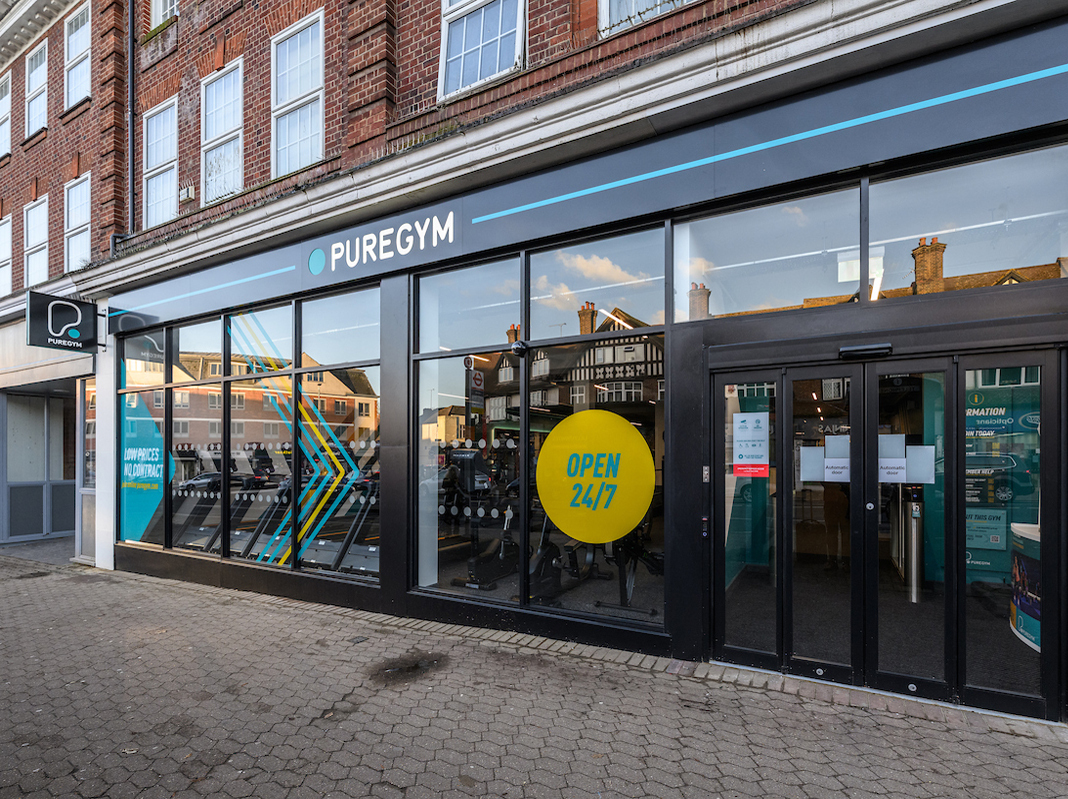
PureGym is the second largest operator by members (2.1m plus) / PURE GYM / James McCauley 
Trading year 2025
Top 10 operators by number of clubs*

✻ Basic-Fit: 2,151

✻ PureGym: 612

✻ RSG Group: 292

✻ Fitness Park Group: 403

✻ FItX: 112

✻ The Gym Group: 260

✻ DLL: 137

✻ SATS: 273

✻ LifeFit Group: 214

✻ All Inclusive Fitness: 172

*Clubs trading in Europe (000)
Source: European Health and Fitness Market Report 2026 

Gym members high fiving
LifeFit Group sits in the top 10 by nunber of members / LifeFit Group / fitness-first
Basic-fit machines
Basic-Fit strengthened its position as Europe’s largest operator / Basic Fit / Sven Coubergs
Instructor lifting weight
Fitness clubs remain the dominant training environment / Basic Fit
Woman lifting weight
Lines between fitness and health continue to blur / PURE GYM / Paul Calver
FEATURED SUPPLIERS

CoverMe extends matching service to personal training, rewriting how members and personal trainers connect
CoverMe, the global leader in fitness workforce management, today launches CoverMe PT, an on-demand personal training platform that connects the right personal trainer to the right client in under 10 seconds. [more...]

Cornerstone Connect helps Active Blackpool tackle health inequalities
Active Blackpool is deploying Cornerstone Connect, a new digital interface allowing disparate information from multiple systems to be aggregated into one dataset, to support its focus on reducing health inequalities and improving healthy life expectancy. [more...]
+ More featured suppliers  
COMPANY PROFILES
Serco Leisure

Serco Leisure Operating Limited is one of the UK’s leading national operators of leisure centres, de [more...]
Total Vibration Solutions Ltd (TVS Group)

TVS Group includes TVS Sports Surfaces, TVS Gym Flooring, TVS Play Surfaces and TVS Acoustics. [more...]
+ More profiles  
CATALOGUE GALLERY
 
+ More catalogues  

DIRECTORY
+ More directory  
DIARY


03-05 Jul 2026

World Championship in Massage

Copenhagen, Copenhagen, Denmark
23-26 Aug 2026

Elevate Spa Riviera Maya Edition

The Riviera Maya Edition Kanai, Playa del Carmen, Mexico
+ More diary  
 
ABOUT LEISURE MEDIA
LEISURE MEDIA MAGAZINES
LEISURE MEDIA HANDBOOKS
LEISURE MEDIA WEBSITES
LEISURE MEDIA PRODUCT SEARCH
 
HCM
LEISURE OPPORTUNITIES
HEALTH CLUB HANDBOOK
PRINT SUBSCRIPTIONS
FREE DIGITAL SUBSCRIPTIONS
ADVERTISE . CONTACT US

Leisure Media
Tel: +44 (0)1462 431385

©Cybertrek 2026
Get HCM digital magazine and ezines FREE
Sign up here ▸
Jobs    News   Products   Magazine
Research
Record highs

Consolidation, specialisation and shifting consumer behaviours are reshaping the sector, say Deloitte and EuropeActive


The European fitness market has reached new highs, with revenues, memberships and club numbers all surpassing previous records, according to the latest report from EuropeActive and Deloitte.

The 13th edition of the European Health and Fitness Market Report 2026 provides a comprehensive annual analysis of developments in the European fitness industry and its wider ecosystem, drawing on insights from operators, consumers, intermediaries and suppliers across the region.

In addition to tracking market performance, the report offers detailed analysis of consumer fitness behaviour, including generational differences, the role of specialised facilities and evolving approaches to nutrition and supplementation. It also explores emerging themes such as weight-loss medications and longevity-focused lifestyles.

The findings are based on research conducted by Deloitte on behalf of EuropeActive, involving 11,250 consumers across 20 European countries, alongside analysis of operator performance and M&A activity over the past five years.

Growth accelerates

The European fitness market continued its strong growth trajectory in 2025, generating an estimated €39.1 billion in revenues, an increase of around 9 per cent year-on-year. This growth was driven by a combination of new club openings, rising membership numbers and ongoing price adjustments across many markets.

By the end of the year, the market had expanded to more than 67,500 clubs, an increase of around 3 per cent, serving approximately 75 million members – up 6 per cent. This upward trend is reflected in improving operator sentiment, with 83 per cent of European operators rating their current business situation as “good” in January 2026 – a rise of 19 percentage points when compared to January 2024.

The European fitness market hit €39.1 billion in 2025, with growth driven by expansion, pricing and demand

The sector’s largest operators continue to outperform the broader market and in 2025, the top 20 operators generated combined revenues of €7.96 billion, representing growth of 11 per cent year-on-year. All top 20 players reported revenue increases, supported by price adjustments and membership growth driven by both organic expansion and M&A activity.

In terms of membership, Basic-Fit strengthened its position as Europe’s largest operator, reaching 5.8 million members, followed by PureGym with 2.1 million and RSG Group with 1.8 million.

Collectively, the top 20 operators served 20.9 million members by year-end, an increase of 16 per cent compared to 2024, while their combined club networks grew by 15 per cent to 7,607 locations.

On the consumer side, engagement with fitness remains high. Around two-thirds of Europeans report exercising at least once per week, reinforcing the position of exercise as a routine part of daily life.

At the same time, preferences around how and where people exercise are becoming more defined. Fitness facilities have strengthened their role, gaining six percentage points since January 2023, while home-based and outdoor activity continue to complement weekly routines.

Traditional fitness clubs remain the dominant training environment, with three-quarters of regular facility users reporting that they exercise in a fitness club. However, specialised concepts – including Pilates, yoga and CrossFit studios – are attracting smaller but distinct user groups, contributing to a more diversified and segmented market.

Membership has surpassed 75 million across Europe, as fitness becomes embedded in everyday life for consumers

Consumer behaviour varies significantly by age group. Younger consumers show higher engagement with digital fitness solutions and specialised studio formats, and are more likely to view fitness as part of their identity. Older cohorts, by contrast, remain more focused on traditional club environments.

While awareness of the benefits of physical activity is high across all demographics – with more than 80 per cent agreeing that exercise is an important component of a healthy lifestyle – fewer consumers translate this awareness into consistent behaviour when it requires meaningful changes to daily routines.

Lifestyle convergence

The report also identifies a growing link between participation and health behaviours: consumers who exercise regularly are more likely to maintain consistent nutritional habits and to use supplements, both for general health and to support training.

This suggests that, for engaged consumers, fitness is increasingly part of a wider lifestyle framework rather than a standalone activity.

Awareness of weight-loss medication is widespread, with 66 per cent familiar with the topic. However, usage remains low, at below 3 per cent.

Importantly, around two-thirds of those using such medications report exercising regularly, indicating that these treatments are generally being used alongside physical activity rather than as a replacement for it.

Growing interest in longevity

Longevity is emerging as a key theme shaping consumer priorities. When asked about the most important factors for maximising long-term health, respondents placed greatest emphasis on core lifestyle behaviours.

Regular physical exercise ranked highest among those people already engaged in fitness, while among non regular exercisers it ranked third. Across both groups, sleep quality and a balanced diet were also prioritised, while social, cognitive and preventative measures were seen as secondary contributors.

M&A activity continues to reflect the sector’s consolidation trend. In 2025, a total of 27 transactions were recorded involving operators with at least four clubs and majority share transfers, resulting in a change of ownership for 936 clubs across Europe.

The top 20 operators continue to outperform, using scale, pricing power and expansion to drive market leadership

While this represents a slight decline from the 30 M&A transactions recorded in 2024, activity remains well above the five-year average of 20 deals per year.

The deal of the year

The acquisition of clever fit by Basic-Fit was by far the largest deal of the year, accounting for 493 clubs – more than half of all clubs transferred. Other notable transactions include the acquisition of MAC Group (121 clubs) by Benefit Systems and the acquisition of Fit/One (45 clubs) by LifeFit Group.

Intermediaries and aggregators continue to play a central role in widening access to fitness services. While business models vary across Europe – from B2B partnerships to direct-to-consumer approaches – more operators are partnering with these types of platforms.

This is reflected in the growth in the number of aggregator partner locations, which increased by 14 per cent to reach 148,000 in 2025, driven largely by the addition of fitness and functional training facilities.

The outlook for Europe

Looking ahead, the European fitness market is becoming increasingly complex as the boundaries between fitness, health and lifestyle continue to blur. Operators are refining their positioning and propositions in response to more segmented demand and intensifying competition, particularly in urban markets.

At the same time, the overall direction of travel remains positive. Participation is stable, market fundamentals are strong and consolidation continues to create scale advantages for leading operators.

EuropeActive’s target of 100 million members by 2030 is moving closer as the market continues to expan

Against this backdrop, EuropeActive is maintaining its ambition of reaching 100 million members of health clubs across Europe by 2030 – a target that appears increasingly achievable as the sector continues to evolve. 

• Find out more: www.europeactive.eu

2025
Top 10 operators by members

Basic-Fit: 5,785

PureGym: 2,141

RSG Group: 1,785

Fitness Park Group: 1,380

FitX: 990

The Gym Group: 923

DLL: 822

SATS: 755

LifeFit Group: 735

All Inclusive Fitness: 653

*Clubs trading in Europe (000)

Source: European Health and Fitness Market Report 2026

Deloitte numbers

Market size and growth

€39.1 billion total market revenue (2025)

9 per cent year-on-year revenue growth

Market scale

75 million total members

67,500+ total clubs

3 per cent club growth

6 per cent membership growth

Operator sentiment

83 per cent operators rating business as ‘good’ (Jan 2026)

+19 percentage points increase vs January 2024

Top 20 operators

€7.96 billion combined revenue

11 per cent revenue growth

20.9 million total members

16 per cent membership growth

7,607 total clubs

15 per cent club network growth

Leading operators

Basic-Fit  5.8 million members

PureGym  2.1 million members

RSG Group  1.8 million members

Intermediaries / aggregators

148,000 partner locations

14 per cent growth in partner locations Consumer behaviour

~66 per cent (two-thirds) exercise at least once per week

75 per cent (three-quarters) of facility users train in fitness clubs

Health, nutrition and GLP-1

66 per cent awareness of weight-loss medications

<3 per cent usage of weight-loss medications

M&A activity

27 total transactions (2025)

936 clubs transferred

30 transactions in 2024 (record year)

20 five-year average transactions

Major deals

493 clubs (clever fit acquisition by Basic-Fit)

121 clubs (MAC Group acquisition by Benefit Systems)

45 clubs (FIT/ONE acquisition by LifeFit Group)

Source: European Health and Fitness Market Report 2026

Woman and man in gym class
Two-thirds of GLP-1 users report exercising regularly / LifeFit Group / fitness-first
Pure Gym outside
PureGym is the second largest operator by members (2.1m plus) / PURE GYM / James McCauley 
Trading year 2025
Top 10 operators by number of clubs*

✻ Basic-Fit: 2,151

✻ PureGym: 612

✻ RSG Group: 292

✻ Fitness Park Group: 403

✻ FItX: 112

✻ The Gym Group: 260

✻ DLL: 137

✻ SATS: 273

✻ LifeFit Group: 214

✻ All Inclusive Fitness: 172

*Clubs trading in Europe (000)
Source: European Health and Fitness Market Report 2026 

Gym members high fiving
LifeFit Group sits in the top 10 by nunber of members / LifeFit Group / fitness-first
Basic-fit machines
Basic-Fit strengthened its position as Europe’s largest operator / Basic Fit / Sven Coubergs
Instructor lifting weight
Fitness clubs remain the dominant training environment / Basic Fit
Woman lifting weight
Lines between fitness and health continue to blur / PURE GYM / Paul Calver
LATEST NEWS
Industry veterans partner to launch women-only strength brand, LiftHer
An ambitious women’s-only strength and lifting studio concept is set to launch in Dallas this September, with a wider US rollout already in active development.
Omnigym collaborates on an outdoor gym for homeless people
Finnish outdoor fitness equipment specialist, Omnigym, has partnered with charity, Emmaüs Solidarité, to launch an outdoor gym installation at a homeless shelter in Paris.
Virgin Active opens social wellness club in London's Mayfair
Basic-Fit expands German footprint with €52m Wellyou acquisition
Europe’s largest low-cost operator Basic-Fit has agreed to acquire 41 Wellyou clubs in Germany for €52m.
Myzone report shows importance of longevity and social connection
Longevity is the most important motivator for today’s exercisers and social connection is key, according to a report by Myzone.
Until combines multiple disciplines at new Canary Wharf club
Until has opened its fourth club at Canary Wharf, in the iconic YY London building.
Ben Allen appointed managing director at Common Bond
Ben Allen has been appointed managing director at Common Bond. Having set the company up for growth, Robert Rowland now steps into an advisory role.
Industry mourns the loss of Les Mills, a founding father of fitness
Les Mills, whose name became synonymous with one of the world's leading fitness brands, has passed away peacefully at the age of 91.
HCM News: Taking GLP-1s is linked to a decline in physical activity
People taking GLP-1 weight loss medications such as Ozempic, Wegovy, Mounjaro and Zepbound may be losing weight, but they’re also becoming less physically active, according to new research presented at the ENDO 2026 annual meeting of the Endocrine Society
PureGym pilots touchless Recovery Zones in London and Manchester
Low-cost gym operator, PureGym, is trialling recovery zones at two of its UK sites, democratising what was previously a premium experience.
New CIMSPA standards upskill coaches and swimming teachers in mental health
In a milestone moment, mental health has become a core part of CIMSPA’s occupational professional standards.
EoS Fitness is the next budget chain to offer reformer Pilates
US high-value, low-price chain, Eos Fitness, has announced plans to pilot reformer Pilates in three locations this year.
+ More news   
 
FEATURED SUPPLIERS

CoverMe extends matching service to personal training, rewriting how members and personal trainers connect
CoverMe, the global leader in fitness workforce management, today launches CoverMe PT, an on-demand personal training platform that connects the right personal trainer to the right client in under 10 seconds. [more...]

Cornerstone Connect helps Active Blackpool tackle health inequalities
Active Blackpool is deploying Cornerstone Connect, a new digital interface allowing disparate information from multiple systems to be aggregated into one dataset, to support its focus on reducing health inequalities and improving healthy life expectancy. [more...]
+ More featured suppliers  
COMPANY PROFILES
Serco Leisure

Serco Leisure Operating Limited is one of the UK’s leading national operators of leisure centres, de [more...]
+ More profiles  
CATALOGUE GALLERY
+ More catalogues  

DIRECTORY
+ More directory  
DIARY


03-05 Jul 2026

World Championship in Massage

Copenhagen, Copenhagen, Denmark
23-26 Aug 2026

Elevate Spa Riviera Maya Edition

The Riviera Maya Edition Kanai, Playa del Carmen, Mexico
+ More diary  


ADVERTISE . CONTACT US

Leisure Media
Tel: +44 (0)1462 431385

©Cybertrek 2026

ABOUT LEISURE MEDIA
LEISURE MEDIA MAGAZINES
LEISURE MEDIA HANDBOOKS
LEISURE MEDIA WEBSITES
LEISURE MEDIA PRODUCT SEARCH
PRINT SUBSCRIPTIONS
FREE DIGITAL SUBSCRIPTIONS