Maintaining floors using the correct products is vital to safety / Shutterstock / sklyareek
Flooring is rarely a headline-grabber in the overall scheme of things when it comes to health club development or refurbishment, yet the choices are some of the most consequential design decisions the team will make.
Members interact with flooring constantly and it absorbs impact, manages moisture, controls acoustics, defines the aesthetic and – if specified incorrectly – can become an operational liability.
The most successful clubs treat flooring not as a finish but as a performance system, and each area of a club has different demands when it comes to loading, cleaning and comfort.
The right flooring can enhance the member experience at every stage of the journey
Compliance considerations
There are important compliance considerations across all areas. In the UK, slip risk management guidance from the Health and Safety Executive (HSE) provides a framework for assessing and mitigating hazards, including guidance on the use of on-site testing – such as the pendulum method, which is covered in BS 7976.
Building Regulations also address access and usability, recommending that surfaces on accessible routes are ‘firm, even and appropriately slip-resistant’. For multi-activity indoor physical activity environments, another standard – EN 14904 – clarifies what’s acceptable in terms of shock absorption and surface deformation.
Ultimately, flooring in a health club should not be a decorative afterthought. When architects, designers and operators agree performance criteria early on in the process, flooring moves from being a potential problem to being an asset that underpins safety, longevity and brand perception.
The best outcomes require architects to define structural tolerances and drainage, designers to make sure the performance of finishes are in line with the brand and operators to commit to maintaining all floor areas to a high standard and using the correct cleaning products.
When this teamworking approach is taken, flooring can enhance the member experience at every stage of the customer journey.
The Gym Floor
The gym floor, with its cardio and strength machines demands a finish that can handle constant use, heavy equipment and regular cleaning without degrading visually or technically.
Unlike free weights zones, dropped loads are infrequent, but rolling loads from treadmills and weight stack machines can be substantial.
In many clubs, designers are leaning towards high-performance non-slip vinyl for the gym floor. These finishes provide a visually cohesive surface, strong wear resistance and good cleanability.
When paired with the correct subfloor with moisture control, levelling and appropriate adhesives, they can deliver long life and operational simplicity.
Rubber flooring is also widely used, particularly in functional training areas or where acoustic control is a priority. The advantage of rubber in these spaces lies in its resilience and slip resistance, especially when perspiration is present. However, its density and thickness must be aligned with use, as a decorative rubber product will not withstand concentrated machine loads over time.
Subfloor integrity is the main factor. Many flooring failures attributed to product defects are the result of inadequate moisture assessment or poor levelling. Early investment in slab testing and preparation pays dividends over the lifecycle of the building.
Gym floor checklist
Confirm cleaning regimes are compatible with the surface finish
Avoid abrupt material transitions that create trip points
Specify edge protection at high-impact perimeter areas
Ensure equipment layouts align with structural load capacity
Tiles can be easily replaced, to keep the floor in good condition / Shutterstock / king ajyad
The Studios
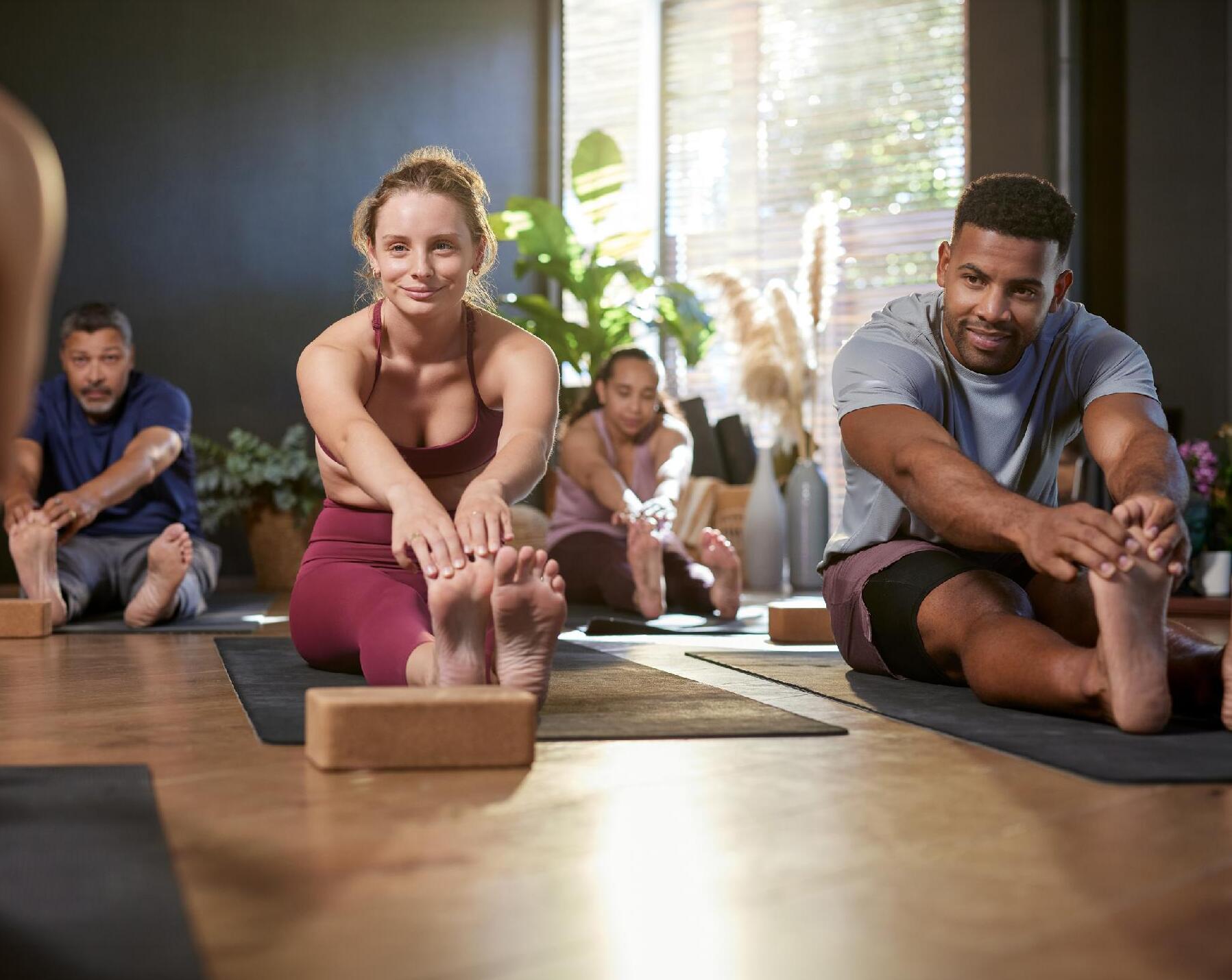
Studios demand nuance – a space that’s used to host HIIT at 6.00am, dance at noon and Pilates in the evening can’t rely on a single simplistic flooring descriptor such as ‘anti-slip’.
The ideal studio floor delivers consistent traction for dynamic movement while providing sufficient shock absorption to support joint health.
For studios functioning as multipurpose sports spaces, EN 14904 provides relevant performance benchmarks, including shock absorption and vertical deformation standards. Purpose-designed vinyl sports floors can satisfy these criteria while offering simpler maintenance than sprung timber systems. In contrast, dance- or aerobics-focused studios may benefit from sprung floors that provide enhanced energy return and ease the power of impact on the joints.
Surface continuity is vital. Movement-based classes amplify trip hazards, so floor panels, access hatches or inconsistent threshold detailing can introduce risk. Equally important is understanding that some cleaning products can alter floor traction, and an overly glossy finish or residual cleaning films can increase slip potential, while certain disinfectants may degrade the surface over time.
Studios checklist
Select surfaces aligned with the dominant class profile
Maintain consistent traction through appropriate cleaning products
Avoid unnecessary floor penetrations, such as hatches, or threshold changes
Control humidity where timber systems are installed
The ideal studio floor delivers consistent traction / Shutterstock / Rido
Weights Area
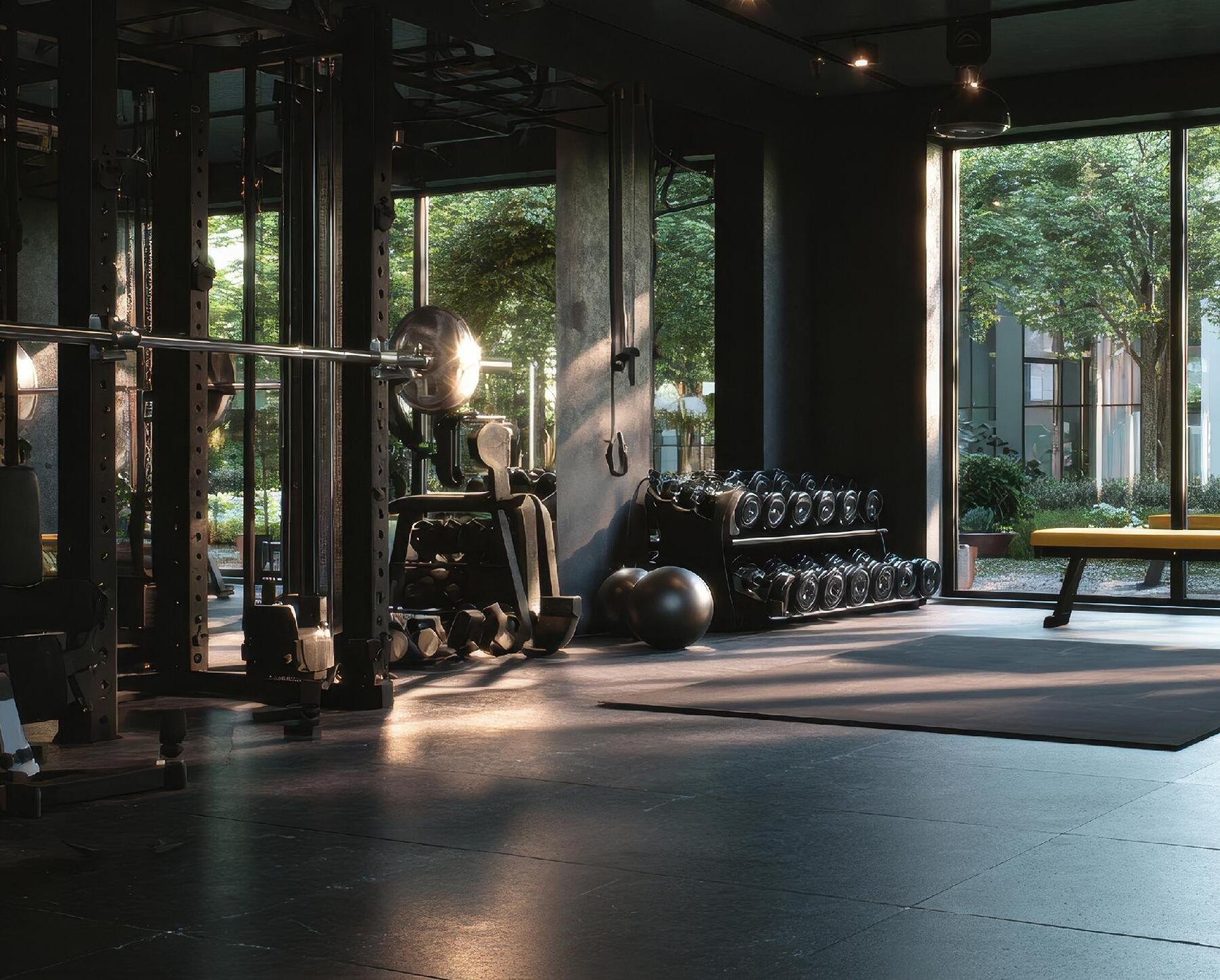
Free weights zones operate under different stresses – dropped barbells, concentrated point loading and constant mechanical impact require a flooring system designed to protect both the floor/slab and the user.
Dense rubber tiles are typically the foundation of these areas. Their thickness, which is often greater than general gym rubber, absorbs impact, reduces noise transmission and minimises vibration transfer.
In multi-storey facilities, this acoustic isolation becomes critical, particularly where spa or relaxation zones are located beneath lifting platforms or areas where weights might be dropped.
Modularity is also a factor and tile-based systems enable operators to replace damaged sections without lifting entire expanses of flooring, reducing long-term maintenance costs.
In high-performance lifting zones, dedicated platforms with engineered build-ups often sit above the primary slab, distributing load more evenly and further protecting the structure.
Weights Area checklist
Align rubber density and thickness with expected lifting loads
Incorporate acoustic isolation layers where required
Use modular systems to simplify replacement
Plan cleaning access around rack and platform layouts
Acoustic isolation is necessary to ensure a successful installation / Shutterstock / Oleggg
CoverMe, the global leader in fitness workforce management, today launches CoverMe PT, an
on-demand personal training platform that connects the right personal trainer to the right
client in under 10 seconds. [more...]
Active Blackpool is deploying Cornerstone Connect, a new digital interface allowing
disparate information from multiple systems to be aggregated into one dataset, to support
its focus on reducing health inequalities and improving healthy life expectancy. [more...]
Maintaining floors using the correct products is vital to safety / Shutterstock / sklyareek
Flooring is rarely a headline-grabber in the overall scheme of things when it comes to health club development or refurbishment, yet the choices are some of the most consequential design decisions the team will make.
Members interact with flooring constantly and it absorbs impact, manages moisture, controls acoustics, defines the aesthetic and – if specified incorrectly – can become an operational liability.
The most successful clubs treat flooring not as a finish but as a performance system, and each area of a club has different demands when it comes to loading, cleaning and comfort.
The right flooring can enhance the member experience at every stage of the journey
Compliance considerations
There are important compliance considerations across all areas. In the UK, slip risk management guidance from the Health and Safety Executive (HSE) provides a framework for assessing and mitigating hazards, including guidance on the use of on-site testing – such as the pendulum method, which is covered in BS 7976.
Building Regulations also address access and usability, recommending that surfaces on accessible routes are ‘firm, even and appropriately slip-resistant’. For multi-activity indoor physical activity environments, another standard – EN 14904 – clarifies what’s acceptable in terms of shock absorption and surface deformation.
Ultimately, flooring in a health club should not be a decorative afterthought. When architects, designers and operators agree performance criteria early on in the process, flooring moves from being a potential problem to being an asset that underpins safety, longevity and brand perception.
The best outcomes require architects to define structural tolerances and drainage, designers to make sure the performance of finishes are in line with the brand and operators to commit to maintaining all floor areas to a high standard and using the correct cleaning products.
When this teamworking approach is taken, flooring can enhance the member experience at every stage of the customer journey.
The Gym Floor
The gym floor, with its cardio and strength machines demands a finish that can handle constant use, heavy equipment and regular cleaning without degrading visually or technically.
Unlike free weights zones, dropped loads are infrequent, but rolling loads from treadmills and weight stack machines can be substantial.
In many clubs, designers are leaning towards high-performance non-slip vinyl for the gym floor. These finishes provide a visually cohesive surface, strong wear resistance and good cleanability.
When paired with the correct subfloor with moisture control, levelling and appropriate adhesives, they can deliver long life and operational simplicity.
Rubber flooring is also widely used, particularly in functional training areas or where acoustic control is a priority. The advantage of rubber in these spaces lies in its resilience and slip resistance, especially when perspiration is present. However, its density and thickness must be aligned with use, as a decorative rubber product will not withstand concentrated machine loads over time.
Subfloor integrity is the main factor. Many flooring failures attributed to product defects are the result of inadequate moisture assessment or poor levelling. Early investment in slab testing and preparation pays dividends over the lifecycle of the building.
Gym floor checklist
Confirm cleaning regimes are compatible with the surface finish
Avoid abrupt material transitions that create trip points
Specify edge protection at high-impact perimeter areas
Ensure equipment layouts align with structural load capacity
Tiles can be easily replaced, to keep the floor in good condition / Shutterstock / king ajyad
The Studios
Studios demand nuance – a space that’s used to host HIIT at 6.00am, dance at noon and Pilates in the evening can’t rely on a single simplistic flooring descriptor such as ‘anti-slip’.
The ideal studio floor delivers consistent traction for dynamic movement while providing sufficient shock absorption to support joint health.
For studios functioning as multipurpose sports spaces, EN 14904 provides relevant performance benchmarks, including shock absorption and vertical deformation standards. Purpose-designed vinyl sports floors can satisfy these criteria while offering simpler maintenance than sprung timber systems. In contrast, dance- or aerobics-focused studios may benefit from sprung floors that provide enhanced energy return and ease the power of impact on the joints.
Surface continuity is vital. Movement-based classes amplify trip hazards, so floor panels, access hatches or inconsistent threshold detailing can introduce risk. Equally important is understanding that some cleaning products can alter floor traction, and an overly glossy finish or residual cleaning films can increase slip potential, while certain disinfectants may degrade the surface over time.
Studios checklist
Select surfaces aligned with the dominant class profile
Maintain consistent traction through appropriate cleaning products
Avoid unnecessary floor penetrations, such as hatches, or threshold changes
Control humidity where timber systems are installed
The ideal studio floor delivers consistent traction / Shutterstock / Rido
Weights Area
Free weights zones operate under different stresses – dropped barbells, concentrated point loading and constant mechanical impact require a flooring system designed to protect both the floor/slab and the user.
Dense rubber tiles are typically the foundation of these areas. Their thickness, which is often greater than general gym rubber, absorbs impact, reduces noise transmission and minimises vibration transfer.
In multi-storey facilities, this acoustic isolation becomes critical, particularly where spa or relaxation zones are located beneath lifting platforms or areas where weights might be dropped.
Modularity is also a factor and tile-based systems enable operators to replace damaged sections without lifting entire expanses of flooring, reducing long-term maintenance costs.
In high-performance lifting zones, dedicated platforms with engineered build-ups often sit above the primary slab, distributing load more evenly and further protecting the structure.
Weights Area checklist
Align rubber density and thickness with expected lifting loads
Incorporate acoustic isolation layers where required
Use modular systems to simplify replacement
Plan cleaning access around rack and platform layouts
Acoustic isolation is necessary to ensure a successful installation / Shutterstock / Oleggg
An ambitious women’s-only strength and lifting studio concept is set to launch in Dallas this
September, with a wider US rollout already in active development.
Finnish outdoor fitness equipment specialist, Omnigym, has partnered with charity, Emmaüs
Solidarité, to launch an outdoor gym installation at a homeless shelter in Paris.
People taking GLP-1 weight loss medications such as Ozempic, Wegovy, Mounjaro and Zepbound
may be losing weight, but they’re also becoming less physically active, according to new
research presented at the ENDO 2026 annual meeting of the Endocrine Society
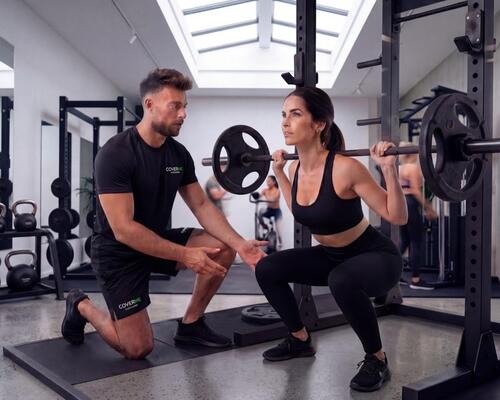
CoverMe, the global leader in fitness workforce management, today launches CoverMe PT, an
on-demand personal training platform that connects the right personal trainer to the right
client in under 10 seconds. [more...]
Active Blackpool is deploying Cornerstone Connect, a new digital interface allowing
disparate information from multiple systems to be aggregated into one dataset, to support
its focus on reducing health inequalities and improving healthy life expectancy. [more...]