Get HCM digital magazine and ezines FREE
Sign up here ▸
Jobs   News   Features   Products   Magazine      Advertise  
Sponsored
TechnoAlpin - rethinking recovery

Snow is an engaging and holistic way to cool down after exercise


Cold has long played a central role in athletic recovery. From cryotherapy to ice baths, it’s widely used in elite sports to reduce inflammation and support faster recovery.

But this is no longer reserved for professionals. Whether for elite competitors or anyone finishing a tough workout, the need for rest, repair, and readiness is universal. As recovery science evolves, so does the use of cold – shifting from strictly clinical methods toward more holistic, full-body experiences that support both physical and mental wellbeing. Snow introduces this new approach, making the cool-down phase easier, more engaging and accessible across all levels of sport.

Cold as experience
Unlike the shock of ice baths or the sterile feel of cryo chambers, snow-based recovery – such as in a snowroom – offers a calm environment, delivering cold in a soft, multi-sensory way that feels natural and intuitive.

“There are well-recognised cold therapies such as cryochambers and ice baths,” says Dr Stephen Lewis, team doctor for Chelsea Football Club. “But the snowroom is something different. It merges the physiological effects of cold with a more holistic experience – there’s a beautiful, calming aesthetic to it.”

Indoor snow environments make the cold tactile, visual, and gentle. Rather than overwhelming the body, they invite gradual cooling that resonates with the nervous system, easing it into rest and recalibration.

How snow aids recovery
After intense effort, the body experiences micro-trauma in the form of muscle fibre tears, as well as temporary inflammation and the accumulation of metabolic waste.

These are normal parts of the adaptation process, but can also be the sources of fatigue and soreness.

Cold exposure can help support recovery by gently lowering tissue temperature and moderating bloodflow. It may also help maintain neuromuscular function and movement quality after exercise.

A 2023 report, commissioned by TechnoAlpin Indoor, and published by the University of Trento in collaboration with the CERISM, Research Centre at the University of Verona, reviewed 13 systematic reviews and 18 studies from the last decade. It confirmed that cryotherapy is more effective for post-exercise recovery than passive rest, especially after match-type exertion.

Whole-body cryotherapy often outperforms Cold-Water Immersion, though comparisons with passive cooling methods, such as snow remain limited. These findings highlight both the proven biology of cold and the need for more user-friendly delivery methods.

Snow stands out for its gentle, even cooling. Instead of shocking the body, it introduces cold gradually, making it accessible for more people and easier and more pleasurable to integrate into regular recovery routines.

“Snow preserves muscle function by limiting inflammation and reducing creatine kinase levels,” notes Lewis. “Players feel less sore, less tired and more prepared to perform again.”

Mental and social recovery
In high-performance environments, recovery must also include mental regeneration – calming the nervous system, improving mood and supporting quality sleep. Cold environments stimulate dopamine and endorphin release, enhance emotional balance, reduce stress and promote better sleep – vital whether you’re preparing for the next match or your next workout.

Snowrooms play a unique role here. They’re immersive rather than isolating, activating the senses in a gentle way that encourages a parasympathetic, restorative state. They also function as social spaces, as – unlike the solitude of cryo chambers, or the discomfort of ice baths – snowrooms invite conversation, shared rituals and moments of connection that support team cohesion and motivation.

“You can’t underestimate the mental aspect,” says Lewis. “Cold improves sleep, supports emotional recovery and helps build a sense of team spirit.”

From elite to everyday
The biological effects of cold recovery are universal, whether you’re playing in the Premier League or returning to the gym after work.

The University of Trento and Verona’s report confirms that cold recovery is especially helpful in high-intensity and intermittent sports, though responses vary based on activity type and technique, reinforcing the need for personalised, user-centric recovery strategies.

Ultimately, accessibility and comfort matter. Snow-based recovery transforms cold exposure from something clinical into something experiential, multi-sensory and inclusive.

As wellness becomes integrated into sport, cold recovery is being reimagined. Across elite and everyday fitness, snow creates space for the body to heal, the mind to reset and teams or individuals to reconnect, restoring them for whatever comes next. 

More: www.indoor.technoalpin.com

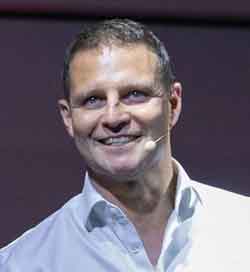
Dr Stephen Lewis
Dr Stephen Lewis Dr. Stephen Lewis

"Snow improves sleep, supports recovery and builds team spirit"
– Dr Stephen Lewis


Man in snowroom
Time in a snowroom aids recovery / TechnoAlpin
FEATURED SUPPLIERS

Cornerstone Connect helps Active Blackpool tackle health inequalities
Active Blackpool is deploying Cornerstone Connect, a new digital interface allowing disparate information from multiple systems to be aggregated into one dataset, to support its focus on reducing health inequalities and improving healthy life expectancy. [more...]

CoverMe extends matching service to personal training, rewriting how members and personal trainers connect
CoverMe, the global leader in fitness workforce management, today launches CoverMe PT, an on-demand personal training platform that connects the right personal trainer to the right client in under 10 seconds. [more...]
+ More featured suppliers  
COMPANY PROFILES
IndigoFitness

At IndigoFitness, we create intelligent training spaces that elevate fitness facilities across indus [more...]
Perfect Gym Solutions S.A.

Perfect Gym, part of the Sport Alliance group, is a global software provider specialising in fitness [more...]
+ More profiles  
CATALOGUE GALLERY
 
+ More catalogues  

DIRECTORY
+ More directory  
DIARY


03-05 Jul 2026

World Championship in Massage

Copenhagen, Copenhagen, Denmark
23-26 Aug 2026

Elevate Spa Riviera Maya Edition

The Riviera Maya Edition Kanai, Playa del Carmen, Mexico
+ More diary  
 
ABOUT LEISURE MEDIA
LEISURE MEDIA MAGAZINES
LEISURE MEDIA HANDBOOKS
LEISURE MEDIA WEBSITES
LEISURE MEDIA PRODUCT SEARCH
 
HCM
LEISURE OPPORTUNITIES
HEALTH CLUB HANDBOOK
PRINT SUBSCRIPTIONS
FREE DIGITAL SUBSCRIPTIONS
ADVERTISE . CONTACT US

Leisure Media
Tel: +44 (0)1462 431385

©Cybertrek 2026
Get HCM digital magazine and ezines FREE
Sign up here ▸
Jobs    News   Products   Magazine
Sponsored
TechnoAlpin - rethinking recovery

Snow is an engaging and holistic way to cool down after exercise


Cold has long played a central role in athletic recovery. From cryotherapy to ice baths, it’s widely used in elite sports to reduce inflammation and support faster recovery.

But this is no longer reserved for professionals. Whether for elite competitors or anyone finishing a tough workout, the need for rest, repair, and readiness is universal. As recovery science evolves, so does the use of cold – shifting from strictly clinical methods toward more holistic, full-body experiences that support both physical and mental wellbeing. Snow introduces this new approach, making the cool-down phase easier, more engaging and accessible across all levels of sport.

Cold as experience
Unlike the shock of ice baths or the sterile feel of cryo chambers, snow-based recovery – such as in a snowroom – offers a calm environment, delivering cold in a soft, multi-sensory way that feels natural and intuitive.

“There are well-recognised cold therapies such as cryochambers and ice baths,” says Dr Stephen Lewis, team doctor for Chelsea Football Club. “But the snowroom is something different. It merges the physiological effects of cold with a more holistic experience – there’s a beautiful, calming aesthetic to it.”

Indoor snow environments make the cold tactile, visual, and gentle. Rather than overwhelming the body, they invite gradual cooling that resonates with the nervous system, easing it into rest and recalibration.

How snow aids recovery
After intense effort, the body experiences micro-trauma in the form of muscle fibre tears, as well as temporary inflammation and the accumulation of metabolic waste.

These are normal parts of the adaptation process, but can also be the sources of fatigue and soreness.

Cold exposure can help support recovery by gently lowering tissue temperature and moderating bloodflow. It may also help maintain neuromuscular function and movement quality after exercise.

A 2023 report, commissioned by TechnoAlpin Indoor, and published by the University of Trento in collaboration with the CERISM, Research Centre at the University of Verona, reviewed 13 systematic reviews and 18 studies from the last decade. It confirmed that cryotherapy is more effective for post-exercise recovery than passive rest, especially after match-type exertion.

Whole-body cryotherapy often outperforms Cold-Water Immersion, though comparisons with passive cooling methods, such as snow remain limited. These findings highlight both the proven biology of cold and the need for more user-friendly delivery methods.

Snow stands out for its gentle, even cooling. Instead of shocking the body, it introduces cold gradually, making it accessible for more people and easier and more pleasurable to integrate into regular recovery routines.

“Snow preserves muscle function by limiting inflammation and reducing creatine kinase levels,” notes Lewis. “Players feel less sore, less tired and more prepared to perform again.”

Mental and social recovery
In high-performance environments, recovery must also include mental regeneration – calming the nervous system, improving mood and supporting quality sleep. Cold environments stimulate dopamine and endorphin release, enhance emotional balance, reduce stress and promote better sleep – vital whether you’re preparing for the next match or your next workout.

Snowrooms play a unique role here. They’re immersive rather than isolating, activating the senses in a gentle way that encourages a parasympathetic, restorative state. They also function as social spaces, as – unlike the solitude of cryo chambers, or the discomfort of ice baths – snowrooms invite conversation, shared rituals and moments of connection that support team cohesion and motivation.

“You can’t underestimate the mental aspect,” says Lewis. “Cold improves sleep, supports emotional recovery and helps build a sense of team spirit.”

From elite to everyday
The biological effects of cold recovery are universal, whether you’re playing in the Premier League or returning to the gym after work.

The University of Trento and Verona’s report confirms that cold recovery is especially helpful in high-intensity and intermittent sports, though responses vary based on activity type and technique, reinforcing the need for personalised, user-centric recovery strategies.

Ultimately, accessibility and comfort matter. Snow-based recovery transforms cold exposure from something clinical into something experiential, multi-sensory and inclusive.

As wellness becomes integrated into sport, cold recovery is being reimagined. Across elite and everyday fitness, snow creates space for the body to heal, the mind to reset and teams or individuals to reconnect, restoring them for whatever comes next. 

More: www.indoor.technoalpin.com

Dr Stephen Lewis
Dr Stephen Lewis Dr. Stephen Lewis

"Snow improves sleep, supports recovery and builds team spirit"
– Dr Stephen Lewis


Man in snowroom
Time in a snowroom aids recovery / TechnoAlpin
LATEST NEWS
Industry veterans partner to launch women-only strength brand, LiftHer
An ambitious women’s-only strength and lifting studio concept is set to launch in Dallas this September, with a wider US rollout already in active development.
Omnigym collaborates on an outdoor gym for homeless people
Finnish outdoor fitness equipment specialist, Omnigym, has partnered with charity, Emmaüs Solidarité, to launch an outdoor gym installation at a homeless shelter in Paris.
Virgin Active opens social wellness club in London's Mayfair
Basic-Fit expands German footprint with €52m Wellyou acquisition
Europe’s largest low-cost operator Basic-Fit has agreed to acquire 41 Wellyou clubs in Germany for €52m.
Myzone report shows importance of longevity and social connection
Longevity is the most important motivator for today’s exercisers and social connection is key, according to a report by Myzone.
Until combines multiple disciplines at new Canary Wharf club
Until has opened its fourth club at Canary Wharf, in the iconic YY London building.
Ben Allen appointed managing director at Common Bond
Ben Allen has been appointed managing director at Common Bond. Having set the company up for growth, Robert Rowland now steps into an advisory role.
Industry mourns the loss of Les Mills, a founding father of fitness
Les Mills, whose name became synonymous with one of the world's leading fitness brands, has passed away peacefully at the age of 91.
HCM News: Taking GLP-1s is linked to a decline in physical activity
People taking GLP-1 weight loss medications such as Ozempic, Wegovy, Mounjaro and Zepbound may be losing weight, but they’re also becoming less physically active, according to new research presented at the ENDO 2026 annual meeting of the Endocrine Society
PureGym pilots touchless Recovery Zones in London and Manchester
Low-cost gym operator, PureGym, is trialling recovery zones at two of its UK sites, democratising what was previously a premium experience.
New CIMSPA standards upskill coaches and swimming teachers in mental health
In a milestone moment, mental health has become a core part of CIMSPA’s occupational professional standards.
EoS Fitness is the next budget chain to offer reformer Pilates
US high-value, low-price chain, Eos Fitness, has announced plans to pilot reformer Pilates in three locations this year.
+ More news   
 
FEATURED SUPPLIERS

Cornerstone Connect helps Active Blackpool tackle health inequalities
Active Blackpool is deploying Cornerstone Connect, a new digital interface allowing disparate information from multiple systems to be aggregated into one dataset, to support its focus on reducing health inequalities and improving healthy life expectancy. [more...]

CoverMe extends matching service to personal training, rewriting how members and personal trainers connect
CoverMe, the global leader in fitness workforce management, today launches CoverMe PT, an on-demand personal training platform that connects the right personal trainer to the right client in under 10 seconds. [more...]
+ More featured suppliers  
COMPANY PROFILES
IndigoFitness

At IndigoFitness, we create intelligent training spaces that elevate fitness facilities across indus [more...]
+ More profiles  
CATALOGUE GALLERY
+ More catalogues  

DIRECTORY
+ More directory  
DIARY


03-05 Jul 2026

World Championship in Massage

Copenhagen, Copenhagen, Denmark
23-26 Aug 2026

Elevate Spa Riviera Maya Edition

The Riviera Maya Edition Kanai, Playa del Carmen, Mexico
+ More diary  


ADVERTISE . CONTACT US

Leisure Media
Tel: +44 (0)1462 431385

©Cybertrek 2026

ABOUT LEISURE MEDIA
LEISURE MEDIA MAGAZINES
LEISURE MEDIA HANDBOOKS
LEISURE MEDIA WEBSITES
LEISURE MEDIA PRODUCT SEARCH
PRINT SUBSCRIPTIONS
FREE DIGITAL SUBSCRIPTIONS