APAC expansion is on the cards for Fitness and Lifestyle Group
as it restructures around a premium value market positioning.
Its group CEO and MD speaks to Kate Cracknell
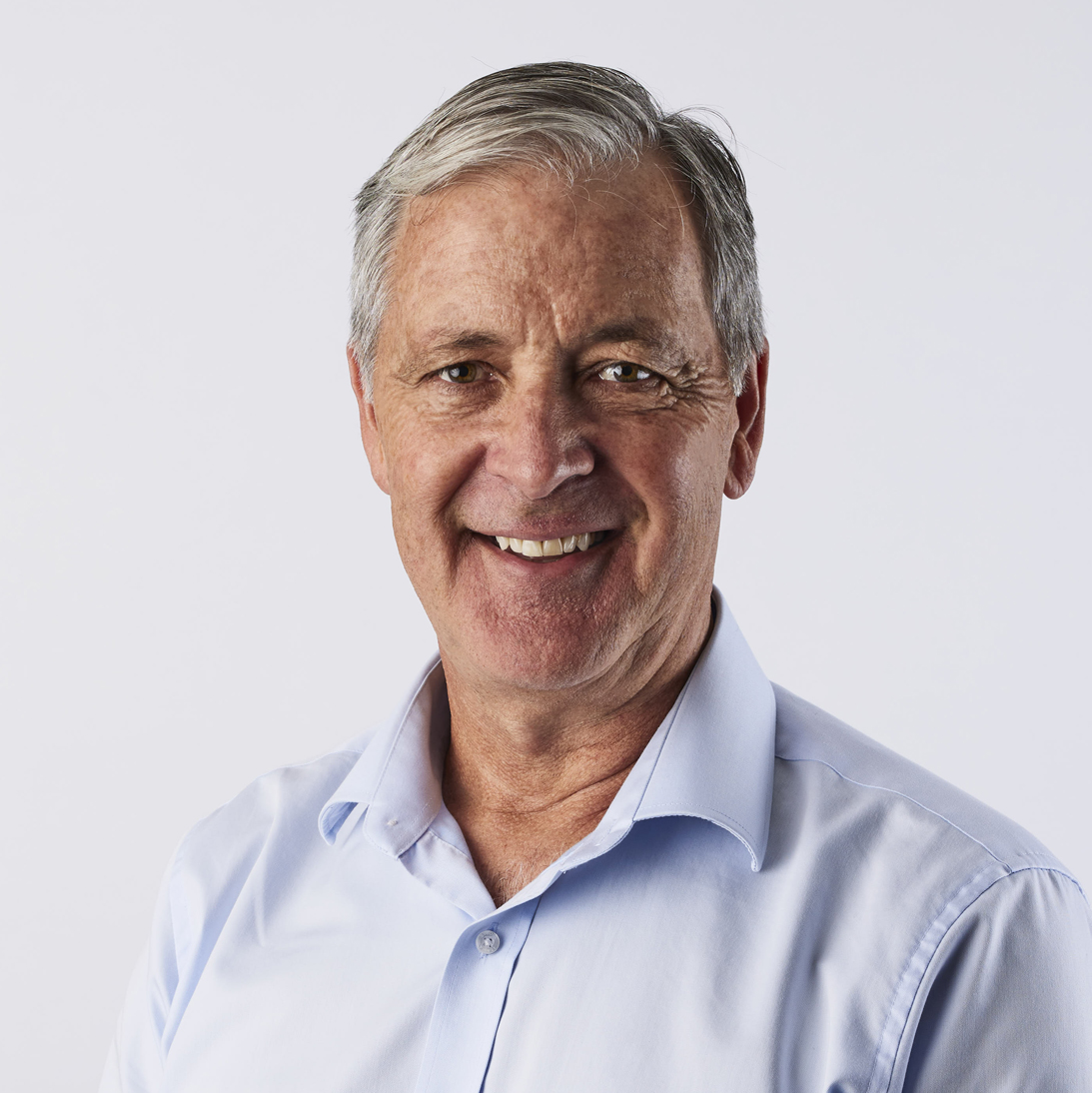
Greg Oliver, CEO and MD of Fitness and Lifestyle Group / photo: Fitness & Lifestyle Group
With 330+ locations across the APAC region, Fitness and Lifestyle Group (FLG) is Asia Pacific’s largest group of corporately owned health and wellness clubs.
The portfolio includes Fitness First Australia, Goodlife Health Clubs, Zap Fitness, Jetts Thailand and Jetts New Zealand, as well as six Barry’s locations in Sydney, Melbourne and Singapore.
Its vision from the outset has been to be the most significant player in the APAC region, with a suite of brands that allows it to service customers with the right product in the right market.
HCM last caught up with group CEO and managing director, Greg Oliver, in 2017, shortly after FLG had been created by private equity firm Quadrant. Fast-forward to 2025, we encounter a group that has recovered strongly from the pandemic, beating budgets and responding to changing consumer demand by forging a compelling new proposition and market classification which Oliver is calling ‘Premium Value’.
What do you mean by premium value? In the fitness sector, much of the capital is still being directed towards high value, low price (HVLP) brands. However, if we’re looking for growth areas in consumer spending, we have to look at premium experiences, particularly among Gen Z consumers.
This emerging young consumer is drinking less alcohol and prioritising sleep, mental health and physical wellbeing. They have a greater focus on quality of life and spend more intentionally, seeing fitness not as a luxury, but as an essential.
They’re also more likely to use multiple services: classes, personal training, recovery and more. Gen Zers aren’t just joining, they’re engaging deeply and driving membership growth – not only in numbers, but also in depth of experience and yield per member.
And so the previous definition of ‘full service’ is no longer enough. We have to create more offerings tailored to this group – recovery spaces, mind-body programmes, group training communities and so on – to build loyalty early.
This will benefit not only our individual businesses, but also the sector as a whole. Because if this trend continues – and on the basis that we believe in the efficacy of our products – then in 30–40 years, we’ll be having a very different conversation with regard to healthcare costs.
If this generation continues to invest in a holistic approach to health and wellness, then in years to come we might, for the first time, see our products and services bring about negative pressure on healthcare spending.
This is why FLG has done extensive research in recent years to really understand what consumers want, rather than assuming the same continues to apply. We’ve explored what they do and don’t value, as well as what they would value more of, if we were able to provide it. At the same time, we’ve challenged ourselves to identify services we might now omit from our previous iteration of ‘good’.
One example is childcare. It was a very difficult decision to remove this from our clubs, but with legislation continuing to tighten in this field and the service valued only by a small proportion of our members, the time was right to explore how we might better utilise these spaces – 147 across our estate – to provide a more relevant product.
It was a key decision that enabled the creation of a series of signature products, all of which are bundled into our Platinum Plus memberships. This is our competitive advantage: our scale means we can deliver premium experiences at a value price point. Consumers pay just a little more to get a lot more.
This is what we mean by offering members ‘premium value’. You could spend A$80 a week in Sydney doing Pilates in a standalone boutique, or you could add it to your Fitness First or Goodlife membership for A$12 a week.
What are your signature products? Our signature concepts reflect the post-pandemic shift in member priorities – away from fitness alone and towards overall wellbeing, recovery, mental health and longevity.
The first to launch was Reform Pilates, our dedicated reformer studio brand. A highly-curated, premium group programme designed and produced entirely in-house, it launched with two studios in 2020.
We recently reached the milestone of 50 Reform Pilates studios and it’s fast becoming a key growth engine for us: to date, over 277,000 Reform Pilates classes led by 650+ expert instructors have generated more than 3.6 million member visits. In that time, we’ve created more than 1,400 different exercises and produced 258 unique workouts to ensure a progressive, premium experience for our members.
We launched our inaugural Revive recovery zone at Fitness First’s new flagship in Richmond, Melbourne, last year. This is the second signature element of our premium value model: an immersive recovery space featuring infrared and traditional saunas, cold therapy rooms, red light therapy, compression boots, massage beds and massage guns.
Richmond was also our first club in Australia to feature a purpose-built athletic conditioning zone – a further component of our premium value model. We’re now actively investing capital into developing these high-performance training zones across more clubs, elevating the member experience even further through the addition of high-intensity boutique concept Les Mills Ceremony. Ceremony isn’t unique to us, of course, but our signature lies in the premium environment we’ve created around it.
The impact of all of this on our business? FLG has seen a 50 per cent rise in members aged 15–26 years, making Gen Z our fastest-growing cohort. This age group is also spending 65 per cent more per week on health and fitness than previously. They’re jumping at the opportunity to get a lot more for a little more.
We will, therefore, continue to roll out these premium concepts wherever we can across our Fitness First and Goodlife estates, with an A$25m investment already underway across 14 Fitness First clubs in New South Wales. This will further enhance the brand’s premium value proposition in that state.
Tell us more about FLG’s restructure. Our new strategy – democratising access to a premium product – is a key part of our restructure, but it isn’t the full story.
Since COVID, FLG has also undergone a quiet but purposeful internal restructure, not just to recover, but also to reposition for future growth. Ours is now a leaner, more aligned organisation, one that’s better equipped to respond to shifting consumer behaviours and health trends. It’s these two factors together that have shaped FLG 2.0.
As part of the restructure, we looked at where we sat with regard to franchising. FLG is predominantly a corporately-owned business, but we previously owned the Jetts and Hypoxi franchise businesses in Australia. We recognised that this was an inhibitor to our growth: it prevented us from infilling regions with our wholly-owned brands and products. We therefore divested both businesses and exited franchising in 2022, narrowing our focus to enable greater investment in our high-return businesses.
We retained the Jetts brand, clubs and assets in Thailand and New Zealand, where they had always been corporately owned by FLG.
We also moved away from our third-party digital content strategy, selling the Centr business. We built it during a time when online content was urgently required – indeed, when the potential was for this to be the only way we would all continue to exist. However, the world has pivoted back to physical locations at a rate we’ve never seen before: in Australia, 7,500 locations now serve 27 million people, up about 3,000 outlets from three years ago. People are deeply valuing the in-club experience.
This has allowed us to refocus on the core structure of our company and channel our investment in support of our premium value strategy.
What other changes have you made? We’ve taken a very disciplined approach to deploying capital in high-return areas, with our top 20 investments – a ranking we share with our regional CEOs to inspire growth – generating returns of between 50 and 300 per cent. These investments span premium inclusions through to new builds across our different geographies, with the best performing delivering a return within months.
Meanwhile, behind the scenes, we’ve moved away from multiple brand-siloed support structures to consolidate under a single management structure. This has driven major efficiencies – not only from a support perspective but also in terms of marketing, operations, facilities, maintenance – and unlocked a lot of opportunity.
We also looked with a critical eye at our back office and front-of-house systems and acknowledged that they weren’t best in class. We have now migrated to just two SaaS platforms: Workday and Salesforce. Workday alone removes 12 separate systems from our business and replaces it with one.
These world-leading solutions will help us execute our plan, including unlocking significant AI technology that will dramatically change the way we do business – not by replacing people, but by bringing new value to our teams and our members.
So while FLG has continued to deliver double-digit like-for-like growth, putting us considerably ahead of pre-COVID numbers, the business now looks very different.
Our transformation may have been quiet, but its impact has been foundational and far-reaching, enabling greater agility and strategic focus.
We’re now primed to capture opportunities in the expanding fitness, health and wellness market – which is expected to be worth A$1.4bn in Australia alone over the next five years – and to grow and reshape what health and fitness looks like in the APAC region, leading the shift from reactive health to proactive wellbeing.
What’s the latest from FLG’s various brands? We now have 45+ Fitness First clubs and 95+ Goodlife locations. Fitness First in Queensland was rebranded to Goodlife in 2022; there were only a few Fitness First clubs in the state and Goodlife enjoyed the stronger brand recognition. Rebranding also gave members access to a larger network of clubs to enjoy.
We’re currently rolling out 24/7 digital access across our estate, which we aim to complete by the end of this year. We can then consider options for reciprocal membership tiers that allow access to both Goodlife and Fitness First clubs. It could work well, as the signature products are the same and the main differentiator is geographic: Fitness First is predominantly in New South Wales (NSW)gen sers, with some in ACT [Australian Capital Territory] and Victoria.
As mentioned previously, we’re investing A$25m in Fitness First NSW. Each upgrade is tailored to the location, but the roll-out of our signature products lies at the heart of this project. Our premium value proposition will be further enhanced by the launch of a fantastic new Fitness First flagship in the elite Sydney suburb of Double Bay. Expected to open in the first quarter of 2026, this signature club will showcase the best of what we’ve learned.
Zap Fitness, our third brand in Australia, holds a lot of value for consumers. Established in Tasmania in 2009, it now operates in 75+ locations. The estate currently includes one Zap Premium club featuring steam, sauna and lounge facilities, which has proven popular. We’re exploring opportunities to expand this premium experience across Tasmania.
In New Zealand, we’ve been investing in our Jetts clubs, expanding sites where there was adjacent real estate or growing market share by relocating facilities. In spite of a slight recession, we’ve seen a positive response to our investments. The business is doing well.
Meanwhile, Jetts Thailand powers ahead, with 54 clubs and scope for plenty more. We’ve built the brand with a premium value mindset, all-encompassing in terms of group exercise and functional training and with an incredibly strong personal training business. It’s delivering a very strong performance as it continues to expand outside of Bangkok, which unlocks other regions across the country.
We’re already the largest operator in Thailand by number of clubs and we look forward to rolling out another 20–30 locations over the next few years. We’re not putting a cap on it. There’s high demand, so we’ll continue to supply the capital our Thailand team needs to satisfy some of that, building wherever we find appropriate sites.
What comes next for FLG? We have aspirations for further growth in the APAC region. We’ve already proven in Thailand that we can deliver a premium value product to the masses and we believe this strategy will now unlock other markets in Southeast Asia.
That might be through the acquisition of emerging brands looking for a capital partner, or it might be through greenfield development if we identify a void in the market for our premium value offer. We’re already actively looking at opportunities to solidify our position as the preeminent fitness company in APAC.
How do you see the sector performing? It’s in pretty good shape, isn’t it, considering that at one stage people thought no-one would ever go back into a facility. The growth since then has been extraordinary: our new builds and capital investments since COVID are returning better than at any time before. I do think we’re executing pretty well and hopefully we’re also getting the products, the services right and the mix right. But the reality is, I’ve never seen demand like it.
The sector has responded with a broader, more differentiated spectrum of offering than ever before. There’s HVLP, with its entry-level price point, There’s what we do: the premium value segment that enables people to broaden their experiences. There are the boutiques, which deliver a very targeted experience at a premium price point. And then there’s luxury: there are clubs in Australia that charge A$300–400 a week.
As operators, we’re all reacting to consumer preference and finding our lane. And the benefit to the consumer is unprecedented choice. I believe this is a golden era from a consumer perspective – and what’s good for consumers is ultimately good for us.
What continues to motivate you? I’m excited by our plan and everything we’ve been doing lately. We’ve done the work, we’ve understood where we fit in, we’ve identified the consumers we want to help and – through our premium value strategy – how we intend to do that. We have a clear purpose and focus and we’ve set an intention to take that into new markets.
This is FLG 2.0 and it’s inspired Greg 4.0. I don’t think I’ve been this invigorated for a long time.
Fitness & Lifestyle Group
"If this generation
continues to invest in
health and wellness,
we might, for the
first time, see our
services bring about
negative pressure on
healthcare spending" – Greg Oliver
Gen Z members tend to be deeply engaged with their clubs / photo: Fitness & Lifestyle Group
Younger consumers are drinking less and prioritising wellbeing / photo: Fitness & Lifestyle Group
Reform Pilates has been rolled out at Goodlife sites / Fitness & Lifestyle Group
Reform Pilates has been rolled out at Goodlife sites and also across the Fitness First estate / Fitness & Lifestyle Group
FLG’s new recovery zone concept, Revive, is an immersive space / Fitness & Lifestyle Group
FLG’s Fitness First Queensland clubs were rebranded to Goodlife / Fitness & Lifestyle Group
There are 95+ Goodlife locations, with digital access now being rolled out to the estate / Fitness & Lifestyle Group
/ Fitness & Lifestyle Group
/ Fitness & Lifestyle Group
/ Fitness & Lifestyle Group
Physical clubs in Australia bounced back strongly after COVID / Fitness & Lifestyle Group
A more agile FLG is now ready to react to changing trends / Fitness & Lifestyle Group
Jetts Thailand is powering ahead with 54 sites and room for more / photo: Fitness & Lifestyle Group / xphotography
Jetts Thailand continues to expand beyond Bangkok / photo: Fitness & Lifestyle Group
FLG has six Barry’s studios in Australia and Singapore / photo: Fitness & Lifestyle Group
Active Blackpool is deploying Cornerstone Connect, a new digital interface allowing
disparate information from multiple systems to be aggregated into one dataset, to support
its focus on reducing health inequalities and improving healthy life expectancy. [more...]
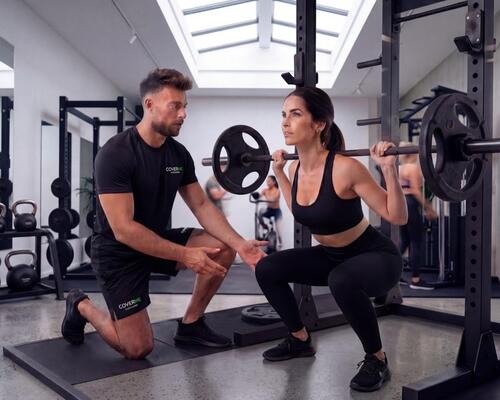
CoverMe, the global leader in fitness workforce management, today launches CoverMe PT, an
on-demand personal training platform that connects the right personal trainer to the right
client in under 10 seconds. [more...]
APAC expansion is on the cards for Fitness and Lifestyle Group
as it restructures around a premium value market positioning.
Its group CEO and MD speaks to Kate Cracknell
Greg Oliver, CEO and MD of Fitness and Lifestyle Group / photo: Fitness & Lifestyle Group
With 330+ locations across the APAC region, Fitness and Lifestyle Group (FLG) is Asia Pacific’s largest group of corporately owned health and wellness clubs.
The portfolio includes Fitness First Australia, Goodlife Health Clubs, Zap Fitness, Jetts Thailand and Jetts New Zealand, as well as six Barry’s locations in Sydney, Melbourne and Singapore.
Its vision from the outset has been to be the most significant player in the APAC region, with a suite of brands that allows it to service customers with the right product in the right market.
HCM last caught up with group CEO and managing director, Greg Oliver, in 2017, shortly after FLG had been created by private equity firm Quadrant. Fast-forward to 2025, we encounter a group that has recovered strongly from the pandemic, beating budgets and responding to changing consumer demand by forging a compelling new proposition and market classification which Oliver is calling ‘Premium Value’.
What do you mean by premium value? In the fitness sector, much of the capital is still being directed towards high value, low price (HVLP) brands. However, if we’re looking for growth areas in consumer spending, we have to look at premium experiences, particularly among Gen Z consumers.
This emerging young consumer is drinking less alcohol and prioritising sleep, mental health and physical wellbeing. They have a greater focus on quality of life and spend more intentionally, seeing fitness not as a luxury, but as an essential.
They’re also more likely to use multiple services: classes, personal training, recovery and more. Gen Zers aren’t just joining, they’re engaging deeply and driving membership growth – not only in numbers, but also in depth of experience and yield per member.
And so the previous definition of ‘full service’ is no longer enough. We have to create more offerings tailored to this group – recovery spaces, mind-body programmes, group training communities and so on – to build loyalty early.
This will benefit not only our individual businesses, but also the sector as a whole. Because if this trend continues – and on the basis that we believe in the efficacy of our products – then in 30–40 years, we’ll be having a very different conversation with regard to healthcare costs.
If this generation continues to invest in a holistic approach to health and wellness, then in years to come we might, for the first time, see our products and services bring about negative pressure on healthcare spending.
This is why FLG has done extensive research in recent years to really understand what consumers want, rather than assuming the same continues to apply. We’ve explored what they do and don’t value, as well as what they would value more of, if we were able to provide it. At the same time, we’ve challenged ourselves to identify services we might now omit from our previous iteration of ‘good’.
One example is childcare. It was a very difficult decision to remove this from our clubs, but with legislation continuing to tighten in this field and the service valued only by a small proportion of our members, the time was right to explore how we might better utilise these spaces – 147 across our estate – to provide a more relevant product.
It was a key decision that enabled the creation of a series of signature products, all of which are bundled into our Platinum Plus memberships. This is our competitive advantage: our scale means we can deliver premium experiences at a value price point. Consumers pay just a little more to get a lot more.
This is what we mean by offering members ‘premium value’. You could spend A$80 a week in Sydney doing Pilates in a standalone boutique, or you could add it to your Fitness First or Goodlife membership for A$12 a week.
What are your signature products? Our signature concepts reflect the post-pandemic shift in member priorities – away from fitness alone and towards overall wellbeing, recovery, mental health and longevity.
The first to launch was Reform Pilates, our dedicated reformer studio brand. A highly-curated, premium group programme designed and produced entirely in-house, it launched with two studios in 2020.
We recently reached the milestone of 50 Reform Pilates studios and it’s fast becoming a key growth engine for us: to date, over 277,000 Reform Pilates classes led by 650+ expert instructors have generated more than 3.6 million member visits. In that time, we’ve created more than 1,400 different exercises and produced 258 unique workouts to ensure a progressive, premium experience for our members.
We launched our inaugural Revive recovery zone at Fitness First’s new flagship in Richmond, Melbourne, last year. This is the second signature element of our premium value model: an immersive recovery space featuring infrared and traditional saunas, cold therapy rooms, red light therapy, compression boots, massage beds and massage guns.
Richmond was also our first club in Australia to feature a purpose-built athletic conditioning zone – a further component of our premium value model. We’re now actively investing capital into developing these high-performance training zones across more clubs, elevating the member experience even further through the addition of high-intensity boutique concept Les Mills Ceremony. Ceremony isn’t unique to us, of course, but our signature lies in the premium environment we’ve created around it.
The impact of all of this on our business? FLG has seen a 50 per cent rise in members aged 15–26 years, making Gen Z our fastest-growing cohort. This age group is also spending 65 per cent more per week on health and fitness than previously. They’re jumping at the opportunity to get a lot more for a little more.
We will, therefore, continue to roll out these premium concepts wherever we can across our Fitness First and Goodlife estates, with an A$25m investment already underway across 14 Fitness First clubs in New South Wales. This will further enhance the brand’s premium value proposition in that state.
Tell us more about FLG’s restructure. Our new strategy – democratising access to a premium product – is a key part of our restructure, but it isn’t the full story.
Since COVID, FLG has also undergone a quiet but purposeful internal restructure, not just to recover, but also to reposition for future growth. Ours is now a leaner, more aligned organisation, one that’s better equipped to respond to shifting consumer behaviours and health trends. It’s these two factors together that have shaped FLG 2.0.
As part of the restructure, we looked at where we sat with regard to franchising. FLG is predominantly a corporately-owned business, but we previously owned the Jetts and Hypoxi franchise businesses in Australia. We recognised that this was an inhibitor to our growth: it prevented us from infilling regions with our wholly-owned brands and products. We therefore divested both businesses and exited franchising in 2022, narrowing our focus to enable greater investment in our high-return businesses.
We retained the Jetts brand, clubs and assets in Thailand and New Zealand, where they had always been corporately owned by FLG.
We also moved away from our third-party digital content strategy, selling the Centr business. We built it during a time when online content was urgently required – indeed, when the potential was for this to be the only way we would all continue to exist. However, the world has pivoted back to physical locations at a rate we’ve never seen before: in Australia, 7,500 locations now serve 27 million people, up about 3,000 outlets from three years ago. People are deeply valuing the in-club experience.
This has allowed us to refocus on the core structure of our company and channel our investment in support of our premium value strategy.
What other changes have you made? We’ve taken a very disciplined approach to deploying capital in high-return areas, with our top 20 investments – a ranking we share with our regional CEOs to inspire growth – generating returns of between 50 and 300 per cent. These investments span premium inclusions through to new builds across our different geographies, with the best performing delivering a return within months.
Meanwhile, behind the scenes, we’ve moved away from multiple brand-siloed support structures to consolidate under a single management structure. This has driven major efficiencies – not only from a support perspective but also in terms of marketing, operations, facilities, maintenance – and unlocked a lot of opportunity.
We also looked with a critical eye at our back office and front-of-house systems and acknowledged that they weren’t best in class. We have now migrated to just two SaaS platforms: Workday and Salesforce. Workday alone removes 12 separate systems from our business and replaces it with one.
These world-leading solutions will help us execute our plan, including unlocking significant AI technology that will dramatically change the way we do business – not by replacing people, but by bringing new value to our teams and our members.
So while FLG has continued to deliver double-digit like-for-like growth, putting us considerably ahead of pre-COVID numbers, the business now looks very different.
Our transformation may have been quiet, but its impact has been foundational and far-reaching, enabling greater agility and strategic focus.
We’re now primed to capture opportunities in the expanding fitness, health and wellness market – which is expected to be worth A$1.4bn in Australia alone over the next five years – and to grow and reshape what health and fitness looks like in the APAC region, leading the shift from reactive health to proactive wellbeing.
What’s the latest from FLG’s various brands? We now have 45+ Fitness First clubs and 95+ Goodlife locations. Fitness First in Queensland was rebranded to Goodlife in 2022; there were only a few Fitness First clubs in the state and Goodlife enjoyed the stronger brand recognition. Rebranding also gave members access to a larger network of clubs to enjoy.
We’re currently rolling out 24/7 digital access across our estate, which we aim to complete by the end of this year. We can then consider options for reciprocal membership tiers that allow access to both Goodlife and Fitness First clubs. It could work well, as the signature products are the same and the main differentiator is geographic: Fitness First is predominantly in New South Wales (NSW)gen sers, with some in ACT [Australian Capital Territory] and Victoria.
As mentioned previously, we’re investing A$25m in Fitness First NSW. Each upgrade is tailored to the location, but the roll-out of our signature products lies at the heart of this project. Our premium value proposition will be further enhanced by the launch of a fantastic new Fitness First flagship in the elite Sydney suburb of Double Bay. Expected to open in the first quarter of 2026, this signature club will showcase the best of what we’ve learned.
Zap Fitness, our third brand in Australia, holds a lot of value for consumers. Established in Tasmania in 2009, it now operates in 75+ locations. The estate currently includes one Zap Premium club featuring steam, sauna and lounge facilities, which has proven popular. We’re exploring opportunities to expand this premium experience across Tasmania.
In New Zealand, we’ve been investing in our Jetts clubs, expanding sites where there was adjacent real estate or growing market share by relocating facilities. In spite of a slight recession, we’ve seen a positive response to our investments. The business is doing well.
Meanwhile, Jetts Thailand powers ahead, with 54 clubs and scope for plenty more. We’ve built the brand with a premium value mindset, all-encompassing in terms of group exercise and functional training and with an incredibly strong personal training business. It’s delivering a very strong performance as it continues to expand outside of Bangkok, which unlocks other regions across the country.
We’re already the largest operator in Thailand by number of clubs and we look forward to rolling out another 20–30 locations over the next few years. We’re not putting a cap on it. There’s high demand, so we’ll continue to supply the capital our Thailand team needs to satisfy some of that, building wherever we find appropriate sites.
What comes next for FLG? We have aspirations for further growth in the APAC region. We’ve already proven in Thailand that we can deliver a premium value product to the masses and we believe this strategy will now unlock other markets in Southeast Asia.
That might be through the acquisition of emerging brands looking for a capital partner, or it might be through greenfield development if we identify a void in the market for our premium value offer. We’re already actively looking at opportunities to solidify our position as the preeminent fitness company in APAC.
How do you see the sector performing? It’s in pretty good shape, isn’t it, considering that at one stage people thought no-one would ever go back into a facility. The growth since then has been extraordinary: our new builds and capital investments since COVID are returning better than at any time before. I do think we’re executing pretty well and hopefully we’re also getting the products, the services right and the mix right. But the reality is, I’ve never seen demand like it.
The sector has responded with a broader, more differentiated spectrum of offering than ever before. There’s HVLP, with its entry-level price point, There’s what we do: the premium value segment that enables people to broaden their experiences. There are the boutiques, which deliver a very targeted experience at a premium price point. And then there’s luxury: there are clubs in Australia that charge A$300–400 a week.
As operators, we’re all reacting to consumer preference and finding our lane. And the benefit to the consumer is unprecedented choice. I believe this is a golden era from a consumer perspective – and what’s good for consumers is ultimately good for us.
What continues to motivate you? I’m excited by our plan and everything we’ve been doing lately. We’ve done the work, we’ve understood where we fit in, we’ve identified the consumers we want to help and – through our premium value strategy – how we intend to do that. We have a clear purpose and focus and we’ve set an intention to take that into new markets.
This is FLG 2.0 and it’s inspired Greg 4.0. I don’t think I’ve been this invigorated for a long time.
Fitness & Lifestyle Group
"If this generation
continues to invest in
health and wellness,
we might, for the
first time, see our
services bring about
negative pressure on
healthcare spending" – Greg Oliver
Gen Z members tend to be deeply engaged with their clubs / photo: Fitness & Lifestyle Group
Younger consumers are drinking less and prioritising wellbeing / photo: Fitness & Lifestyle Group
Reform Pilates has been rolled out at Goodlife sites / Fitness & Lifestyle Group
Reform Pilates has been rolled out at Goodlife sites and also across the Fitness First estate / Fitness & Lifestyle Group
FLG’s new recovery zone concept, Revive, is an immersive space / Fitness & Lifestyle Group
FLG’s Fitness First Queensland clubs were rebranded to Goodlife / Fitness & Lifestyle Group
There are 95+ Goodlife locations, with digital access now being rolled out to the estate / Fitness & Lifestyle Group
/ Fitness & Lifestyle Group
/ Fitness & Lifestyle Group
/ Fitness & Lifestyle Group
Physical clubs in Australia bounced back strongly after COVID / Fitness & Lifestyle Group
A more agile FLG is now ready to react to changing trends / Fitness & Lifestyle Group
Jetts Thailand is powering ahead with 54 sites and room for more / photo: Fitness & Lifestyle Group / xphotography
Jetts Thailand continues to expand beyond Bangkok / photo: Fitness & Lifestyle Group
FLG has six Barry’s studios in Australia and Singapore / photo: Fitness & Lifestyle Group
An ambitious women’s-only strength and lifting studio concept is set to launch in Dallas this
September, with a wider US rollout already in active development.
Finnish outdoor fitness equipment specialist, Omnigym, has partnered with charity, Emmaüs
Solidarité, to launch an outdoor gym installation at a homeless shelter in Paris.
People taking GLP-1 weight loss medications such as Ozempic, Wegovy, Mounjaro and Zepbound
may be losing weight, but they’re also becoming less physically active, according to new
research presented at the ENDO 2026 annual meeting of the Endocrine Society
Active Blackpool is deploying Cornerstone Connect, a new digital interface allowing
disparate information from multiple systems to be aggregated into one dataset, to support
its focus on reducing health inequalities and improving healthy life expectancy. [more...]
CoverMe, the global leader in fitness workforce management, today launches CoverMe PT, an
on-demand personal training platform that connects the right personal trainer to the right
client in under 10 seconds. [more...]