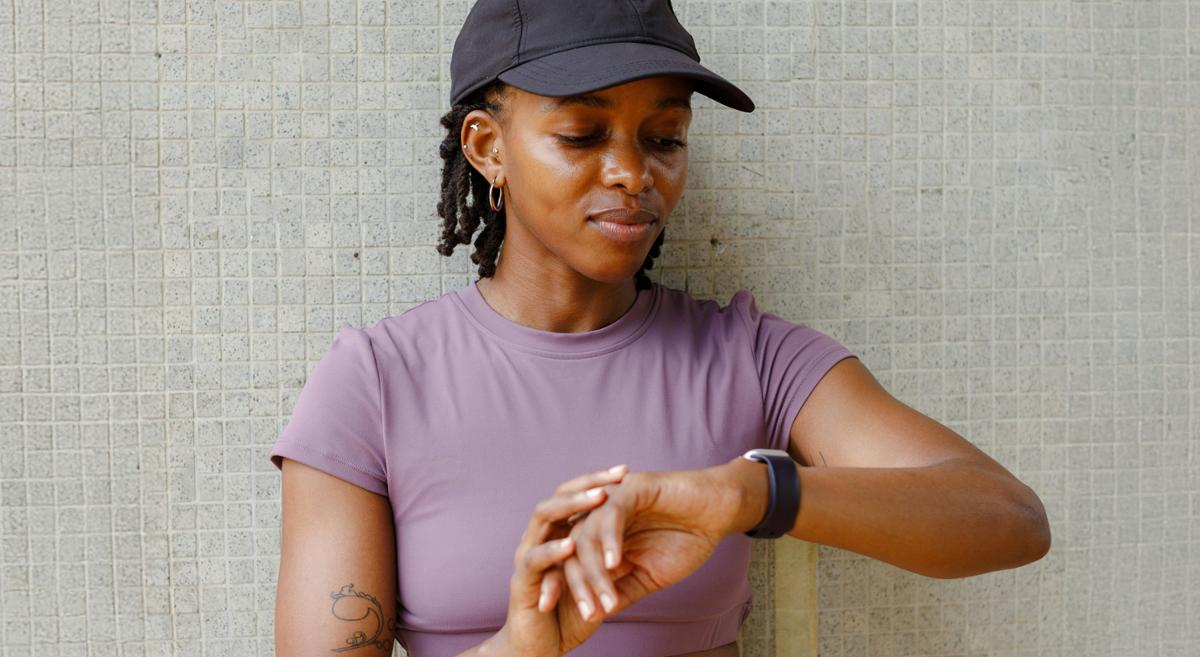
Smartwatches were tested by researchers at Leiden University / photo: unsplash/ben iwara
Smartwatches are consumer gadgets, not medical tools, say researchers from Leiden University, Netherlands, after a study found that some wearables can’t tell the difference between stress and excitement.
Published in the Journal of Psychopathology and Clinical Science, the study – Associations between ecological momentary assessment and passive sensor data in a large student sample – set out to establish whether smartwatches could be used to replace self-reporting as a means of gathering data on factors impacting mental health.
The aim was to establish whether it would be possible to build a warning system for depression in students using smartwatches.
Key areas of study Sleep, tiredness and stress were assessed, as they all impact the state of mental health.
Almost 800 students wore smartwatches while answering EMA surveys on how they were feeling for three months.
The study found that while self-report and wearable measures of sleep-related variables showed robust associations, the associations for tiredness were weaker and measures of stress didn’t overlap for most individuals.
For the majority of individuals in the sample, the self-report and physiological measures of stress showed ‘very weak’ to ‘no’ associations, suggesting that excitement might get flagged up as something negative.
Opposite results “The data showed no meaningful correlation between self-reported stress and smartwatch readings – in a quarter of cases, the watch gave the opposite result,” said Eiko Fried, lead author and associate professor in the department of clinical psychology at Leiden University.
“The devices’ reliance on heart rate as a stress indicator proved misleading, as elevated heart rate can occur during both positive and negative experiences,” he said.
“While body battery and sleep tracking were somewhat more accurate, these are consumer gadgets, not medical tools and should be treated accordingly.”
CoverMe, the global leader in fitness workforce management, today launches CoverMe PT, an
on-demand personal training platform that connects the right personal trainer to the right
client in under 10 seconds. [more...]
Active Blackpool is deploying Cornerstone Connect, a new digital interface allowing
disparate information from multiple systems to be aggregated into one dataset, to support
its focus on reducing health inequalities and improving healthy life expectancy. [more...]
+ More featured suppliers
COMPANY PROFILES
Precor
Precor promises precision-quality products with steadfast reliability that are inspired by exerciser [more...]
Smartwatches were tested by researchers at Leiden University / photo: unsplash/ben iwara
Smartwatches are consumer gadgets, not medical tools, say researchers from Leiden University, Netherlands, after a study found that some wearables can’t tell the difference between stress and excitement.
Published in the Journal of Psychopathology and Clinical Science, the study – Associations between ecological momentary assessment and passive sensor data in a large student sample – set out to establish whether smartwatches could be used to replace self-reporting as a means of gathering data on factors impacting mental health.
The aim was to establish whether it would be possible to build a warning system for depression in students using smartwatches.
Key areas of study Sleep, tiredness and stress were assessed, as they all impact the state of mental health.
Almost 800 students wore smartwatches while answering EMA surveys on how they were feeling for three months.
The study found that while self-report and wearable measures of sleep-related variables showed robust associations, the associations for tiredness were weaker and measures of stress didn’t overlap for most individuals.
For the majority of individuals in the sample, the self-report and physiological measures of stress showed ‘very weak’ to ‘no’ associations, suggesting that excitement might get flagged up as something negative.
Opposite results “The data showed no meaningful correlation between self-reported stress and smartwatch readings – in a quarter of cases, the watch gave the opposite result,” said Eiko Fried, lead author and associate professor in the department of clinical psychology at Leiden University.
“The devices’ reliance on heart rate as a stress indicator proved misleading, as elevated heart rate can occur during both positive and negative experiences,” he said.
“While body battery and sleep tracking were somewhat more accurate, these are consumer gadgets, not medical tools and should be treated accordingly.”
An ambitious women’s-only strength and lifting studio concept is set to launch in Dallas this
September, with a wider US rollout already in active development.
Finnish outdoor fitness equipment specialist, Omnigym, has partnered with charity, Emmaüs
Solidarité, to launch an outdoor gym installation at a homeless shelter in Paris.
People taking GLP-1 weight loss medications such as Ozempic, Wegovy, Mounjaro and Zepbound
may be losing weight, but they’re also becoming less physically active, according to new
research presented at the ENDO 2026 annual meeting of the Endocrine Society
CoverMe, the global leader in fitness workforce management, today launches CoverMe PT, an
on-demand personal training platform that connects the right personal trainer to the right
client in under 10 seconds. [more...]
Active Blackpool is deploying Cornerstone Connect, a new digital interface allowing
disparate information from multiple systems to be aggregated into one dataset, to support
its focus on reducing health inequalities and improving healthy life expectancy. [more...]
+ More featured suppliers
COMPANY PROFILES
Precor Precor promises precision-quality products with steadfast reliability that are inspired by exerciser [more...]