The much anticipated Fit for the Future: 10 Year Health Plan for England reveals
ambitious targets to create a new way of delivering health, says Kath Hudson
The government will partner with Brendan Foster’s Great Run Company / photo: Shutterstock / RedCap
Although Fit for the Future, the UK government’s new 10-year health strategy, contains no mention of gyms, leisure centres, health clubs, wellness, exercise, fitness, sport, physical activity or workplace wellness, there are nonetheless changes announced which will create opportunities for the sector, should it choose to take them – such as paid-for-result support in the implementation of weight loss drugs and partnerships with new Neighbourhood Health Centres.
The hotly-anticipated policy paper highlights a pivot to prevention as one of three pillars, along with moving treatment from hospital to community and moving from analogue to digital.
The prevention focus appears to be mainly underpinned by various technologies: data, AI, genomics, wearables and robotics, in addition to the focus on the development of the neighbourhood health centres.
“More care will be available on your doorstep and from the comfort of your own home. It will be easier to see a GP and Neighbourhood Health Centres will be available in every community,” it reads.
Beginning with places where healthy life expectancy is lowest, these centres will be a ‘one stop shop’ for patient care and the place from which multidisciplinary teams operate. They will be open at least 12 hours a day, and six days a week.
The government is expecting people to be more involved with their own health and self care and this will include making more healthy choices. The report says the new vision will “encourage citizens to play their part, including through a new health reward scheme to incentivise healthier choices”.
This may be referring to the ‘Better Health Rewards’ pilot which has been running quietly in Wolverhampton for some years now, but this has not yet been confirmed.
The plan includes a commitment to work with Brendan Foster’s Great Run Company to set up a campaign to motivate millions to run more on a regular basis.
Long-term health conditions More than a quarter of the UK population have a long-term health condition and they now account for 65 per cent of NHS spending. “The NHS today is no longer just a safety net to help people in crisis,” says the report, “it must provide a continuous service for those who have a chronic illness. The challenge is to shift from a model of care that is episodic and disempowering, to one that is continuous and empowering. The opportunity is to enable patients to exercise greater control over both their health and their care.”
In the longer-term, the report says there will be a move to a new NHS financial model, where money will increasingly follow patients through their lifetime. “Providers will be rewarded based on how well they improve outcomes for each individual, as well as how well they involve people in the design of their care’” it says, “not solely on whether they provide episodic instances of care on demand.”
People are living too long in ill health, with the gap in healthy life expectancy between rich and poor growing – nearly 20 per cent of children leave primary school with obesity. “Our overall goal is to halve the gap in healthy life expectancy between the richest and poorest regions, while increasing it for everyone and to raise the healthiest generation of children ever,” says the report. “This will boost our health, but also ensure the future sustainability of the NHS and support economic growth.”
Partnership working is given a great deal of prominence in the report, which says: “We’ll achieve our goals by harnessing a huge cross-societal energy on prevention. We’ll work with businesses, employers, investors, local authorities and mayors to create a healthier country together.”
Genomics will receive hefty investment to predict disease, personalise treatment and address health inequalities. For example, a newborn genome sequencing programme will be introduced to detect more than 200 rare conditions in babies.
Wearables will become standard in preventative, chronic and post-acute NHS treatment by 2035.
Obesity challenge Obesity will be tackled via broader access to medications, however, there is no mention of the importance of exercise in delivering these interventions safely, nor the potentially catastrophic outcomes of not doing so. The government says it will negotiate new partnerships with industry to provide access to obesity treatments on a ‘pay for impact on health outcomes’ basis, opening up opportunities for the fitness, health and wellness sector to deliver health outcomes for cash.
There will be some pressure on the food industry, with mandatory health food sales reporting for all large companies and the data will be used to set new mandatory targets on the healthiness of sales, although the detail of this scheme was not explained.
Junk food advertising aimed at children will be restricted and the soft drinks industry levy will be reformed to encourage reformulations.
Access to free school meals will be expanded, with higher nutrition standards set, giving access to healthier food.
With vaping among 11- to 15-year-olds doubling over the last five years, there will be a ban on advertising and sponsorship of vape and other nicotine products.
Children turning 16 this year (or younger) can never legally be sold tobacco and the introduction of the Tobacco and Vapes Bill will push for a smoking-free generation.
There will also generally be a greater focus on smoking cessation, especially for pregnant women and those with smoking-related conditions.
New standards will be introduced for alcohol labelling and the no and low-alcohol market will be supported.
Immunisation programmes are also part of the prevention agenda, with improved access via pharmacies and the introduction of new vaccination programmes. The government has ambitions to eliminate cervical cancer by 2040.
Screening for diseases will be broadened, especially for those with risk factors, such as a history of smoking.
Mental health The mental health of young people will be supported via Young Futures Hubs, which will provide support teams in schools and colleges.
By 2035 most non-emergency care will happen outside hospitals, relieving pressure on acute services. In the shift from hospital to community, thousands more GPs will be trained and 2,000 more nurse apprenticeships created in the next three years.
The Neighbourhood Health Service will focus around Neighbourhood Health Centres, which might be formed via public-private partnerships and hold potential for sector involvement by leisure centres and health clubs. The NHS App will become a “doctor in the pocket”, giving advice, access to health records and allowing people to book tests and vaccines, have a consultation and manage a long-term condition. This is part of the drive to involve people in their own care.
The government says the set of reforms will reimagine the NHS into a world-leading healthcare system, underpinned by science and technology, which will tackle inequalities, predict and prevent ill health and be an engine of economic growth by getting people fit for work. It will stay true to its founding principles of providing universal care, free at the point of delivery.
Financing challenges The NHS accounts for 38 per cent of government spending, projected to rise to 40 per cent by the end of this Parliament and the plan is backed by an additional £30bn expenditure.
However, the government has warned that the era of “more money, never reform” is over and there will have to be better outcomes for the money spent. The report says spending ‘at the centre’ of the NHS will reduce by 50 per cent by 2027, with the resources diverted to community action.
Around 200 health organisations will be disbanded as part of the overhaul of the system, with NHS England among them.
Executive summary
Fit for the Future: 10-Year Health Plan for England
✻ A 50 per cent cut in funding to the centre will see this money going into prevention.
✻ Three pillars will be: pivot to prevention, moving treatment from hospital to community; moving from analogue to digital.
✻ Citizens will be encouraged to be more responsible for their own self-care.
✻ Screening will be broadened to prevent disease developing.
✻ A Better Health Rewards scheme will incentivise healthy choices.
✻ The NHS App will become a “doctor in the pocket”, giving advice and access to health records, enabling booking of tests and vaccines and consultations.
✻ Neighbourhood Health Centres, possibly created through PPP, will be open 12 hours a day, six days a week, supporting health in the community
✻ A tie up with Brendan Foster’s Great Run Company will aim to get more people running.
✻ School meals will be improved and junk food advertising restricted.
✻ Young Futures Hubs will support mental health in the young.
✻ People 16 and younger will never be able to buy tobacco legally./p>
✻ The sugar levy will be updated to encourage reformulations.
✻ Immunisation programmes will be extended.
Editorial Comment
Seeing the UK government acknowledge the power of prevention so wholeheartedly makes today a huge day for everyone who has lobbied for this change for so many decades. The case for treating the cause and not the symptoms and also for early intervention has been thoroughly understood and acted upon, and we absolutely applaud this important change of direction.
This would not have been possible without the many years of lobbying by the wellness and health sector going right back to the 1920s and we salute everyone who has been involved with this labour of love over so many decades.
While it’s frustrating to discover that the report – which will direct the spending the best part of half of all government funds each year – does not foresee an immediate and direct role for the fitness, health and wellness sectors, nevertheless, there are opportunities to be had when it comes to collaboration, such as the delivery of weight loss and Type 2 diabetes interventions and support for Neighborhood Health Centres.
We can also be very confident that, once the health service has been through its pivot to prevention, it will be far more open to working with us and developing meaningful partnerships. We need to be patient, keep producing powerful evidence of the efficacy of our interventions and continue to nurture partnerships. Change will come in time – probably sooner than we think due to financial pressure.
We can be confident that once the health service has been through its pivot to prevention, it will be far more open to working with the physical activity sector - Liz Terry, editor, HCM
More changes revealed
The UK government has followed Fit for the Future with more announcements
WorkWell centres get power to refer consumers for exercise
Following the publication of Fit for the Future the UK government has announced further NHS reforms and support for physical activity in the form of a new Plan for Change, which is designed to support people in getting back to work.
With 2.8 million signed off because of poor health, the sick note culture is costly for individuals, the NHS and the economy as a whole.
In a win for the UK health and fitness industry, health secretary, Wes Streeting, has said doctors should consider referring people to health clubs and gyms, rather than writing sick notes.
Last year, the NHS issued more than 11 million sick notes, and 93 per cent of them simply declared people “not fit for work” with no alternative option or plan to help them find a job or stay in work.
The most common reasons for long-term sickness absence are mental health conditions such as anxiety and depression and musculoskeletal disorders such as back pain.
Referrals will be made by WorkWell centres. Fifteen are being piloted – each backed by £100,000 – employing specialist professionals, such as occupational therapists and social prescribers, who can work with people to support them back into work. In addition to gym prescriptions, career coaching and access to debt management have been proposed.
Health professionals, such as physiotherapists, will be able to write sick notes to free up GP time.
Evidence from the pilot will be used to inform the government’s wider approach to work, health and skills. It’s expected to help 56,000 disabled people and people with health conditions back into work by spring 2026.
Fifteen English regions are included in the pilot from Lancashire to the Isles of Scilly
Joe Wicks gets backing for Activate workouts for kids
The UK government has also got behind Joe Wicks’ latest initiative – Activate – a new animated series of five minute workouts for kids.
Wicks – the PT who became a household name in lockdown for his PE with Joe online family workouts – has collaborated with BAFTA-award winning Studio AKA, of Hey Duggee fame, on his latest campaign to get kids active.
The first five-minute workout in the animated series is now available on YouTube, with more being released over the school holidays. Wicks appears as an avatar, squatting and star jumping with five “Activators,” to music supplied by Universal Music UK.
The UK government has now said it will fund a further 10 episodes and in a show of support Health Secretary, Wes Streeting, joined Wicks for the official launch at Ripple Primary School in Barking, east London.
Wicks says: “Activate is the natural next step in everything I’ve worked towards over the past decade. From my early YouTube workouts, to PE with Joe during the pandemic, my goal has always been to get children moving and feeling good – physically and mentally.
“This project brings together everything I’m most passionate about and everything I’ve learned on my journey – going back to my own childhood where I discovered movement as a way to cope with the challenges of living with parents with drug addiction and mental health issues.”
Obesity rates have doubled since the 1990s, and now cost the NHS £11.4 billion a year. A forthcoming report by the chief medical officer will show that more than one in five children are living with obesity by the time they leave primary school, rising to almost one in three in areas with higher levels of poverty and deprivation.
“Childhood obesity robs our young people of their future, and inactivity is one of the biggest culprits. That’s why it’s crucial to start building healthy habits from a young age,” said Streeting.
It’s crucial to start
building healthy habits
from a young age
Activate is an animated series of workouts from Joe Wicks / Photo: Studio AKA
Joe Wicks has received funding for his new kids’ exercise programming / Photo: Ben Montgomery Photography / Studio AKA
The industry may have an opportunity to deliver health outcomes for cash / photo: Shutterstock / PeopleImages.com - Yuri A
More than a quarter of the population have a long-term condition / photo: Shutterstock / r.classen
Young Future Hubs will support the mental health of young people / photo: Shutterstock / PeopleImages.com - Yuri A
There will be a shift from hospital to community health services / photo: Sport England
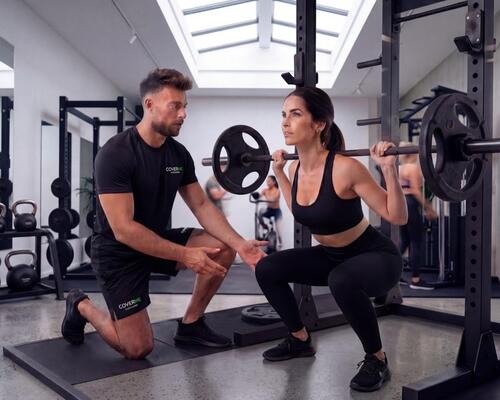
CoverMe, the global leader in fitness workforce management, today launches CoverMe PT, an
on-demand personal training platform that connects the right personal trainer to the right
client in under 10 seconds. [more...]
Active Blackpool is deploying Cornerstone Connect, a new digital interface allowing
disparate information from multiple systems to be aggregated into one dataset, to support
its focus on reducing health inequalities and improving healthy life expectancy. [more...]
+ More featured suppliers
COMPANY PROFILES
Everyone Active
Everyone Active operates leisure centres in partnership with local councils across the UK. Today, Ev [more...]
PSLT Ltd
PSLT Fitness Solutions manufacture, remanufacture and buy back commercial gym equipment. [more...]
The much anticipated Fit for the Future: 10 Year Health Plan for England reveals
ambitious targets to create a new way of delivering health, says Kath Hudson
The government will partner with Brendan Foster’s Great Run Company / photo: Shutterstock / RedCap
Although Fit for the Future, the UK government’s new 10-year health strategy, contains no mention of gyms, leisure centres, health clubs, wellness, exercise, fitness, sport, physical activity or workplace wellness, there are nonetheless changes announced which will create opportunities for the sector, should it choose to take them – such as paid-for-result support in the implementation of weight loss drugs and partnerships with new Neighbourhood Health Centres.
The hotly-anticipated policy paper highlights a pivot to prevention as one of three pillars, along with moving treatment from hospital to community and moving from analogue to digital.
The prevention focus appears to be mainly underpinned by various technologies: data, AI, genomics, wearables and robotics, in addition to the focus on the development of the neighbourhood health centres.
“More care will be available on your doorstep and from the comfort of your own home. It will be easier to see a GP and Neighbourhood Health Centres will be available in every community,” it reads.
Beginning with places where healthy life expectancy is lowest, these centres will be a ‘one stop shop’ for patient care and the place from which multidisciplinary teams operate. They will be open at least 12 hours a day, and six days a week.
The government is expecting people to be more involved with their own health and self care and this will include making more healthy choices. The report says the new vision will “encourage citizens to play their part, including through a new health reward scheme to incentivise healthier choices”.
This may be referring to the ‘Better Health Rewards’ pilot which has been running quietly in Wolverhampton for some years now, but this has not yet been confirmed.
The plan includes a commitment to work with Brendan Foster’s Great Run Company to set up a campaign to motivate millions to run more on a regular basis.
Long-term health conditions More than a quarter of the UK population have a long-term health condition and they now account for 65 per cent of NHS spending. “The NHS today is no longer just a safety net to help people in crisis,” says the report, “it must provide a continuous service for those who have a chronic illness. The challenge is to shift from a model of care that is episodic and disempowering, to one that is continuous and empowering. The opportunity is to enable patients to exercise greater control over both their health and their care.”
In the longer-term, the report says there will be a move to a new NHS financial model, where money will increasingly follow patients through their lifetime. “Providers will be rewarded based on how well they improve outcomes for each individual, as well as how well they involve people in the design of their care’” it says, “not solely on whether they provide episodic instances of care on demand.”
People are living too long in ill health, with the gap in healthy life expectancy between rich and poor growing – nearly 20 per cent of children leave primary school with obesity. “Our overall goal is to halve the gap in healthy life expectancy between the richest and poorest regions, while increasing it for everyone and to raise the healthiest generation of children ever,” says the report. “This will boost our health, but also ensure the future sustainability of the NHS and support economic growth.”
Partnership working is given a great deal of prominence in the report, which says: “We’ll achieve our goals by harnessing a huge cross-societal energy on prevention. We’ll work with businesses, employers, investors, local authorities and mayors to create a healthier country together.”
Genomics will receive hefty investment to predict disease, personalise treatment and address health inequalities. For example, a newborn genome sequencing programme will be introduced to detect more than 200 rare conditions in babies.
Wearables will become standard in preventative, chronic and post-acute NHS treatment by 2035.
Obesity challenge Obesity will be tackled via broader access to medications, however, there is no mention of the importance of exercise in delivering these interventions safely, nor the potentially catastrophic outcomes of not doing so. The government says it will negotiate new partnerships with industry to provide access to obesity treatments on a ‘pay for impact on health outcomes’ basis, opening up opportunities for the fitness, health and wellness sector to deliver health outcomes for cash.
There will be some pressure on the food industry, with mandatory health food sales reporting for all large companies and the data will be used to set new mandatory targets on the healthiness of sales, although the detail of this scheme was not explained.
Junk food advertising aimed at children will be restricted and the soft drinks industry levy will be reformed to encourage reformulations.
Access to free school meals will be expanded, with higher nutrition standards set, giving access to healthier food.
With vaping among 11- to 15-year-olds doubling over the last five years, there will be a ban on advertising and sponsorship of vape and other nicotine products.
Children turning 16 this year (or younger) can never legally be sold tobacco and the introduction of the Tobacco and Vapes Bill will push for a smoking-free generation.
There will also generally be a greater focus on smoking cessation, especially for pregnant women and those with smoking-related conditions.
New standards will be introduced for alcohol labelling and the no and low-alcohol market will be supported.
Immunisation programmes are also part of the prevention agenda, with improved access via pharmacies and the introduction of new vaccination programmes. The government has ambitions to eliminate cervical cancer by 2040.
Screening for diseases will be broadened, especially for those with risk factors, such as a history of smoking.
Mental health The mental health of young people will be supported via Young Futures Hubs, which will provide support teams in schools and colleges.
By 2035 most non-emergency care will happen outside hospitals, relieving pressure on acute services. In the shift from hospital to community, thousands more GPs will be trained and 2,000 more nurse apprenticeships created in the next three years.
The Neighbourhood Health Service will focus around Neighbourhood Health Centres, which might be formed via public-private partnerships and hold potential for sector involvement by leisure centres and health clubs. The NHS App will become a “doctor in the pocket”, giving advice, access to health records and allowing people to book tests and vaccines, have a consultation and manage a long-term condition. This is part of the drive to involve people in their own care.
The government says the set of reforms will reimagine the NHS into a world-leading healthcare system, underpinned by science and technology, which will tackle inequalities, predict and prevent ill health and be an engine of economic growth by getting people fit for work. It will stay true to its founding principles of providing universal care, free at the point of delivery.
Financing challenges The NHS accounts for 38 per cent of government spending, projected to rise to 40 per cent by the end of this Parliament and the plan is backed by an additional £30bn expenditure.
However, the government has warned that the era of “more money, never reform” is over and there will have to be better outcomes for the money spent. The report says spending ‘at the centre’ of the NHS will reduce by 50 per cent by 2027, with the resources diverted to community action.
Around 200 health organisations will be disbanded as part of the overhaul of the system, with NHS England among them.
Executive summary
Fit for the Future: 10-Year Health Plan for England
✻ A 50 per cent cut in funding to the centre will see this money going into prevention.
✻ Three pillars will be: pivot to prevention, moving treatment from hospital to community; moving from analogue to digital.
✻ Citizens will be encouraged to be more responsible for their own self-care.
✻ Screening will be broadened to prevent disease developing.
✻ A Better Health Rewards scheme will incentivise healthy choices.
✻ The NHS App will become a “doctor in the pocket”, giving advice and access to health records, enabling booking of tests and vaccines and consultations.
✻ Neighbourhood Health Centres, possibly created through PPP, will be open 12 hours a day, six days a week, supporting health in the community
✻ A tie up with Brendan Foster’s Great Run Company will aim to get more people running.
✻ School meals will be improved and junk food advertising restricted.
✻ Young Futures Hubs will support mental health in the young.
✻ People 16 and younger will never be able to buy tobacco legally./p>
✻ The sugar levy will be updated to encourage reformulations.
✻ Immunisation programmes will be extended.
Editorial Comment
Seeing the UK government acknowledge the power of prevention so wholeheartedly makes today a huge day for everyone who has lobbied for this change for so many decades. The case for treating the cause and not the symptoms and also for early intervention has been thoroughly understood and acted upon, and we absolutely applaud this important change of direction.
This would not have been possible without the many years of lobbying by the wellness and health sector going right back to the 1920s and we salute everyone who has been involved with this labour of love over so many decades.
While it’s frustrating to discover that the report – which will direct the spending the best part of half of all government funds each year – does not foresee an immediate and direct role for the fitness, health and wellness sectors, nevertheless, there are opportunities to be had when it comes to collaboration, such as the delivery of weight loss and Type 2 diabetes interventions and support for Neighborhood Health Centres.
We can also be very confident that, once the health service has been through its pivot to prevention, it will be far more open to working with us and developing meaningful partnerships. We need to be patient, keep producing powerful evidence of the efficacy of our interventions and continue to nurture partnerships. Change will come in time – probably sooner than we think due to financial pressure.
We can be confident that once the health service has been through its pivot to prevention, it will be far more open to working with the physical activity sector - Liz Terry, editor, HCM
More changes revealed
The UK government has followed Fit for the Future with more announcements
WorkWell centres get power to refer consumers for exercise
Following the publication of Fit for the Future the UK government has announced further NHS reforms and support for physical activity in the form of a new Plan for Change, which is designed to support people in getting back to work.
With 2.8 million signed off because of poor health, the sick note culture is costly for individuals, the NHS and the economy as a whole.
In a win for the UK health and fitness industry, health secretary, Wes Streeting, has said doctors should consider referring people to health clubs and gyms, rather than writing sick notes.
Last year, the NHS issued more than 11 million sick notes, and 93 per cent of them simply declared people “not fit for work” with no alternative option or plan to help them find a job or stay in work.
The most common reasons for long-term sickness absence are mental health conditions such as anxiety and depression and musculoskeletal disorders such as back pain.
Referrals will be made by WorkWell centres. Fifteen are being piloted – each backed by £100,000 – employing specialist professionals, such as occupational therapists and social prescribers, who can work with people to support them back into work. In addition to gym prescriptions, career coaching and access to debt management have been proposed.
Health professionals, such as physiotherapists, will be able to write sick notes to free up GP time.
Evidence from the pilot will be used to inform the government’s wider approach to work, health and skills. It’s expected to help 56,000 disabled people and people with health conditions back into work by spring 2026.
Fifteen English regions are included in the pilot from Lancashire to the Isles of Scilly
Joe Wicks gets backing for Activate workouts for kids
The UK government has also got behind Joe Wicks’ latest initiative – Activate – a new animated series of five minute workouts for kids.
Wicks – the PT who became a household name in lockdown for his PE with Joe online family workouts – has collaborated with BAFTA-award winning Studio AKA, of Hey Duggee fame, on his latest campaign to get kids active.
The first five-minute workout in the animated series is now available on YouTube, with more being released over the school holidays. Wicks appears as an avatar, squatting and star jumping with five “Activators,” to music supplied by Universal Music UK.
The UK government has now said it will fund a further 10 episodes and in a show of support Health Secretary, Wes Streeting, joined Wicks for the official launch at Ripple Primary School in Barking, east London.
Wicks says: “Activate is the natural next step in everything I’ve worked towards over the past decade. From my early YouTube workouts, to PE with Joe during the pandemic, my goal has always been to get children moving and feeling good – physically and mentally.
“This project brings together everything I’m most passionate about and everything I’ve learned on my journey – going back to my own childhood where I discovered movement as a way to cope with the challenges of living with parents with drug addiction and mental health issues.”
Obesity rates have doubled since the 1990s, and now cost the NHS £11.4 billion a year. A forthcoming report by the chief medical officer will show that more than one in five children are living with obesity by the time they leave primary school, rising to almost one in three in areas with higher levels of poverty and deprivation.
“Childhood obesity robs our young people of their future, and inactivity is one of the biggest culprits. That’s why it’s crucial to start building healthy habits from a young age,” said Streeting.
It’s crucial to start
building healthy habits
from a young age
Activate is an animated series of workouts from Joe Wicks / Photo: Studio AKA
Joe Wicks has received funding for his new kids’ exercise programming / Photo: Ben Montgomery Photography / Studio AKA
The industry may have an opportunity to deliver health outcomes for cash / photo: Shutterstock / PeopleImages.com - Yuri A
More than a quarter of the population have a long-term condition / photo: Shutterstock / r.classen
Young Future Hubs will support the mental health of young people / photo: Shutterstock / PeopleImages.com - Yuri A
There will be a shift from hospital to community health services / photo: Sport England
An ambitious women’s-only strength and lifting studio concept is set to launch in Dallas this
September, with a wider US rollout already in active development.
Finnish outdoor fitness equipment specialist, Omnigym, has partnered with charity, Emmaüs
Solidarité, to launch an outdoor gym installation at a homeless shelter in Paris.
People taking GLP-1 weight loss medications such as Ozempic, Wegovy, Mounjaro and Zepbound
may be losing weight, but they’re also becoming less physically active, according to new
research presented at the ENDO 2026 annual meeting of the Endocrine Society
CoverMe, the global leader in fitness workforce management, today launches CoverMe PT, an
on-demand personal training platform that connects the right personal trainer to the right
client in under 10 seconds. [more...]
Active Blackpool is deploying Cornerstone Connect, a new digital interface allowing
disparate information from multiple systems to be aggregated into one dataset, to support
its focus on reducing health inequalities and improving healthy life expectancy. [more...]
+ More featured suppliers
COMPANY PROFILES
Everyone Active Everyone Active operates leisure centres in partnership with local councils across the UK. Today, Ev [more...]