After decades of lobbying for partnerships with the medical profession worldwide, the sector is being repositioned by governments keen for system-level solutions
By Liz Terry | Published in Health Club Management 2025 issue 3
Medical memberships and health integrations are driving growth / photo: shutterstock/ Studio Romantic
Collaboration with the medical profession is a global aspiration for the sector. In the US, the PHIT Act (Personal Health Investment Today) has just been re-presented to Congress as part of a major push on prevention and in the UK, closer collaboration between the physical activity sector, prevention and medical has been bolstered by the publication of a new government report called Harnessing the benefits of physical activity, published by NHS England.
The PHIT Act – long championed by the Health and Fitness Association (IHRSA) – would address rising healthcare costs and improve access to preventative health solutions and boost the sector at a time when health budgets are being slashed.
Recommendations from NHS England also represent the coming to fruition of decades of lobbying and hard work and offer an exciting fresh start in setting the direction for collaboration.
The NHS report lays out the argument for prevention in plain terms, saying: “There’s overwhelming evidence that the benefits of physical activity far outweigh any risks, for both adults and children and even for those with health conditions.”
It goes on to stack up evidence, including – for example – that ‘one in six’ premature deaths in the UK from any cause can be attributed to inactivity”.
“People who are inactive, for whatever reason, are less able to participate in society”, say the authors, “both socially and economically”.
A report by Sport England and Sheffield Hallam University found physical activity’s role in preventing serious physical and mental health conditions provided over £9.5 billion in value in a year to the economy.
Ultimately, the authors see four ways forward for collaboration and these are: empowering health and care professionals; integrating physical activity into clinical pathways; supporting the NHS workforce and; supporting innovation and evaluation with partners.
Many health professionals have been reluctant to collaborate, so it’s music to our ears that the report says. “Unlocking the potential of physical activity will require healthcare leaders to be much more ambitious, incorporating promotion of physical activity into wider plans on prevention and long-term conditions management”.
We completely agree that collaboration between the NHS and the sector is essential to embedding physical activity into health and care and that addressing disparities in physical inactivity requires system-level solutions.
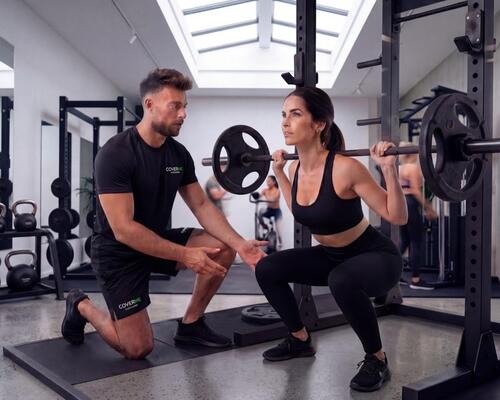
CoverMe, the global leader in fitness workforce management, today launches CoverMe PT, an
on-demand personal training platform that connects the right personal trainer to the right
client in under 10 seconds. [more...]
Active Blackpool is deploying Cornerstone Connect, a new digital interface allowing
disparate information from multiple systems to be aggregated into one dataset, to support
its focus on reducing health inequalities and improving healthy life expectancy. [more...]
+ More featured suppliers
COMPANY PROFILES
ukactive
ukactive is the UK’s leading trade body for the physical activity sector, bringing together more tha [more...]
After decades of lobbying for partnerships with the medical profession worldwide, the sector is being repositioned by governments keen for system-level solutions
By Liz Terry | Published in Health Club Management 2025 issue 3
Medical memberships and health integrations are driving growth / photo: shutterstock/ Studio Romantic
Collaboration with the medical profession is a global aspiration for the sector. In the US, the PHIT Act (Personal Health Investment Today) has just been re-presented to Congress as part of a major push on prevention and in the UK, closer collaboration between the physical activity sector, prevention and medical has been bolstered by the publication of a new government report called Harnessing the benefits of physical activity, published by NHS England.
The PHIT Act – long championed by the Health and Fitness Association (IHRSA) – would address rising healthcare costs and improve access to preventative health solutions and boost the sector at a time when health budgets are being slashed.
Recommendations from NHS England also represent the coming to fruition of decades of lobbying and hard work and offer an exciting fresh start in setting the direction for collaboration.
The NHS report lays out the argument for prevention in plain terms, saying: “There’s overwhelming evidence that the benefits of physical activity far outweigh any risks, for both adults and children and even for those with health conditions.”
It goes on to stack up evidence, including – for example – that ‘one in six’ premature deaths in the UK from any cause can be attributed to inactivity”.
“People who are inactive, for whatever reason, are less able to participate in society”, say the authors, “both socially and economically”.
A report by Sport England and Sheffield Hallam University found physical activity’s role in preventing serious physical and mental health conditions provided over £9.5 billion in value in a year to the economy.
Ultimately, the authors see four ways forward for collaboration and these are: empowering health and care professionals; integrating physical activity into clinical pathways; supporting the NHS workforce and; supporting innovation and evaluation with partners.
Many health professionals have been reluctant to collaborate, so it’s music to our ears that the report says. “Unlocking the potential of physical activity will require healthcare leaders to be much more ambitious, incorporating promotion of physical activity into wider plans on prevention and long-term conditions management”.
We completely agree that collaboration between the NHS and the sector is essential to embedding physical activity into health and care and that addressing disparities in physical inactivity requires system-level solutions.
An ambitious women’s-only strength and lifting studio concept is set to launch in Dallas this
September, with a wider US rollout already in active development.
Finnish outdoor fitness equipment specialist, Omnigym, has partnered with charity, Emmaüs
Solidarité, to launch an outdoor gym installation at a homeless shelter in Paris.
People taking GLP-1 weight loss medications such as Ozempic, Wegovy, Mounjaro and Zepbound
may be losing weight, but they’re also becoming less physically active, according to new
research presented at the ENDO 2026 annual meeting of the Endocrine Society
CoverMe, the global leader in fitness workforce management, today launches CoverMe PT, an
on-demand personal training platform that connects the right personal trainer to the right
client in under 10 seconds. [more...]
Active Blackpool is deploying Cornerstone Connect, a new digital interface allowing
disparate information from multiple systems to be aggregated into one dataset, to support
its focus on reducing health inequalities and improving healthy life expectancy. [more...]
+ More featured suppliers
COMPANY PROFILES
ukactive ukactive is the UK’s leading trade body for the physical activity sector, bringing together more tha [more...]