Only 33 per cent of adults meet HEPA guidelines / photo: Shutterstock / Halfpoint
The European fitness sector finds itself at a critical moment as new policy initiatives from the European Commission and World Health Organization (WHO) seek to address rising physical inactivity levels across the continent.
With health-enhancing physical activity (HEPA) gaining renewed focus, the question arises: is the fitness sector fully aligning with the broader public health goals set by these bodies, or is it missing out on the direction of travel?
Two Decades of Policy Development The European Commission has been advocating for health-enhancing physical activity for over two decades. This commitment was reaffirmed in a letter from European Commission president, Dr Ursula von der Leyen, to commissioner-designate Glenn Micallef in September 2024, with a newer focus on integrating mental health concerns into health-enhancing physical activity policies.
Micallef, who is set to take office in early 2025, will oversee policy initiatives that will run through 2029, continuing the EU’s longstanding support for health-enhancing physical activity.
Despite substantial investments and policy development over the past 20 years, the impact on increasing physical activity levels remains limited. In recognising of the fact the dial hasn’t shifted during this period, one of the most significant recent developments was the announcement in May 2024 of a more integrated formal collaboration between the World Health Organization and the European Commission to jointly promote physical activity. This collaboration aims to enhance EU member states’ policies and actions to support healthier populations, yet results on the ground have been slow to materialise.
The Challenge of Inactivity Europe continues to face significant public health challenges. Non-communicable diseases (NCDs) such as heart disease, diabetes and cancer impose a heavy burden in terms of human lives and healthcare costs. The WHO and European Commission have consistently emphasised that increasing physical activity can mitigate these issues, saving billions of Euros in healthcare costs annually and potentially preventing over 10,000 premature deaths each year.
However, the data on physical activity remains concerning. Eurostat’s report, released during the 2024 European Week of Sport, revealed that only 33 per cent of adults meet the recommended 150 minutes of health-enhancing physical activity per week, while 47 per cent engage in none at all.
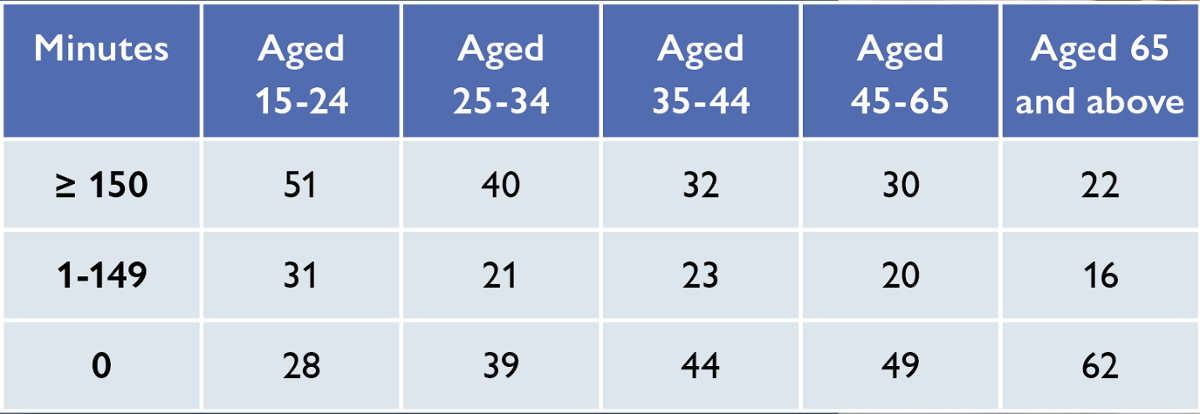
Inactivity increases with age, with 62 per cent of those aged 65 and above failing to meet even minimal activity requirements (Eurobarometer Survey on Sport and Physical Activity, 2022).
This aligns with a broader trend observed since 2009, where inactivity has steadily risen across the EU. The latest Eurobarometer survey says 45 per cent of Europeans now never exercise, 4 per cent increase from 2014, and Table 1, based on the Eurobarometer 2022 findings, shows how physical activity levels fall with age.
Is the fitness sector fully engaged? The fitness sector in Europe has grown significantly, yet it appears to largely remain disconnected from the broader public health agenda. Deloitte’s European Health & Fitness Market Report 2024 shows a 7.5 per cent increase in fitness club memberships from 2022 to 2023, with total membership reaching 67.6 million. However, this only represents 10 per cent of the European population aged 15 and above. Despite the sector’s expansion, there has been limited progress in engaging a broader range of people, particularly the inactive and older populations.
The WHO and European Commission’s bold new focus on physical activity programmes being delivered and monitored through the national government strategies of the member states will require a shift in financial support. The money must follow the plans for delivery. This presents an opportunity for the fitness sector to align more closely with European health policies, but it must first be clear on its own mission.
The new enhanced cooperation between the European Commission and WHO is framed by several global health initiatives. These include the WHO’s Global Action Plan on Physical Activity 2018–2030, which targets a 15 per cent reduction in inactivity, as well as various UN Sustainable Development Goals (SDGs) that are aimed at improving global health and wellbeing. These global targets, such as SDG 3.4 (reducing premature deaths from non-communicable disease by one-third by 2030), are designed to promote physical activity as part of broader public health efforts.
“The collaboration between WHO/Europe and the European Commission goes way beyond promoting the direct benefits of exercise,” said Kremlin Wickramasinghe, regional advisor for nutrition, physical activity and obesity at WHO/Europe in the May 2024 declaration of cooperation. “Health-enhancing physical activity policies recommended by WHO/Europe and the EU encompass a whole set of measures across multiple settings, such as schools, workplaces and cities, creating a cumulative positive effect on health, economies and social wellbeing”.
However, many fitness operators struggle to see the relevance of these big policy announcements and links to global goals. Their business models are often focused on local trends, membership rates, and digital innovations, with less attention paid to their potential contribution to achieving wider public health objectives. Fitness industry leaders need to appreciate the shifting position of European institutions and policy-makers in relation to these matters.
The Importance of Data Collection One of the key challenges facing the European fitness sector is the lack of comprehensive and coordinated data collection. While some fitness operators collect internal data and some research exists at the national level, there’s little reliable, large-scale data that can illustrate the sector’s impact on public health. This lack of data limits the ability of the sector to demonstrate its contributions to health-enhancing physical activity, which in turn affects its visibility and its influence in policy discussions.
The rapid development of digital fitness technologies, such as wearables and app-based platforms, provides an opportunity for better data collection. However, the competitive nature of these technologies means that systems are often incompatible, preventing a comprehensive view of how fitness activities are impacting public health across the EU.
Improved interoperability and data-sharing could help the sector demonstrate its role in reducing inactivity, but currently, there is little evidence to suggest such initiatives are underway.
The health and fitness sector and public health policy The European health and fitness sector has often struggled to position itself within the broader context of public health and to find an independent voice in Brussels and elsewhere across Europe. Although the sector has largely grown away from its sporting origins, it continues to face challenges in defining its role and demonstrating its value to public health initiatives. It is possibly blurring the edges again by stating that it is part of the physical activity or wellness sectors, as these too are also undefined and are also claimed by other stakeholders.
If the sector is now proclaiming that its future direction is an inexorable move towards a position of being a recognised healthcare provider, at least it should be able to say how much it already contributes and not just in terms of revenue and employment statistics.
The health and fitness sector should position itself more clearly as a key player in promoting health-enhancing physical activity and proving its positive contribution to outcomes that help reduce the societal costs of inactivity. The European Commission and WHO realise that a simple message of ‘get active’ does not sufficiently resonate to make any real difference, and have reacted to the reality that increasing levels of inactivity have already had negative impacts on health systems, the environment, economic development, community wellbeing and quality of life.
The way forward The European fitness sector is at a critical juncture. While it has grown significantly, it must do more to align itself with the broader public health objectives of the European Commission and WHO. By improving data collection, better defining its role, and contributing to global health goals, the fitness sector can play a more significant role in tackling the rising levels of inactivity in Europe. This presents a golden opportunity to evolve and grow the sector and enhance its reputation at the same time. The question remains: will the sector seize this opportunity, or will it miss out on the future direction of health policy?
"The European fitness sector is at a critical juncture. While it has grown significantly, it must do more to align itself with the broader public health objectives of the EU and WHO" – Cliff Collins
HEPA policies cover multiple settings, from schools to whole cities / photo: Shutterstock / Drazen Zigic
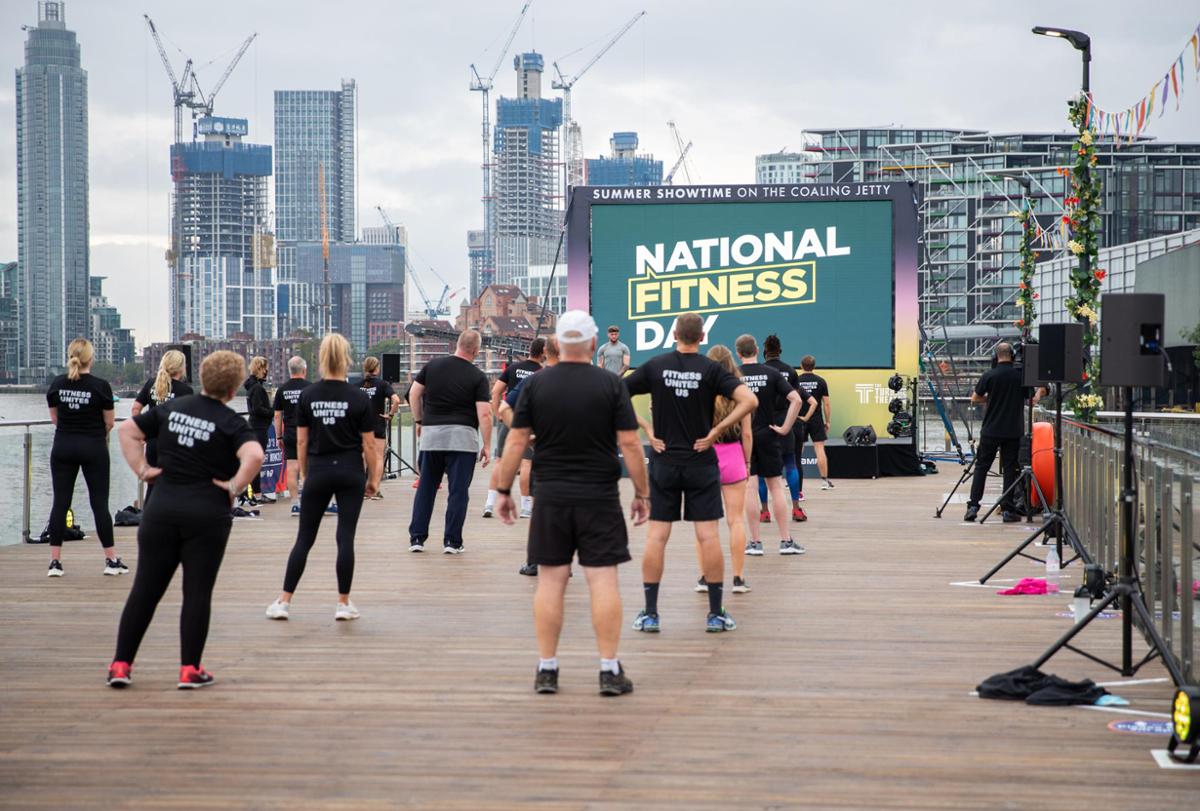
Progress in engaging wider populations has been limited / photo: national fitness day
Little data exists to show the fitness sector's impact on public health / photo: Shutterstock / PeopleImages.com - Yuri A
Weekly time spent on health-enhancing physical activity by age group / Source: Fitcomm
Active Blackpool is deploying Cornerstone Connect, a new digital interface allowing
disparate information from multiple systems to be aggregated into one dataset, to support
its focus on reducing health inequalities and improving healthy life expectancy. [more...]
CoverMe, the global leader in fitness workforce management, today launches CoverMe PT, an
on-demand personal training platform that connects the right personal trainer to the right
client in under 10 seconds. [more...]
+ More featured suppliers
COMPANY PROFILES
Alliance Leisure
Alliance Leisure Services was specifically
established to respond to the changing
development need [more...]
PSLT Ltd
PSLT Fitness Solutions manufacture, remanufacture and buy back commercial gym equipment. [more...]
Only 33 per cent of adults meet HEPA guidelines / photo: Shutterstock / Halfpoint
The European fitness sector finds itself at a critical moment as new policy initiatives from the European Commission and World Health Organization (WHO) seek to address rising physical inactivity levels across the continent.
With health-enhancing physical activity (HEPA) gaining renewed focus, the question arises: is the fitness sector fully aligning with the broader public health goals set by these bodies, or is it missing out on the direction of travel?
Two Decades of Policy Development The European Commission has been advocating for health-enhancing physical activity for over two decades. This commitment was reaffirmed in a letter from European Commission president, Dr Ursula von der Leyen, to commissioner-designate Glenn Micallef in September 2024, with a newer focus on integrating mental health concerns into health-enhancing physical activity policies.
Micallef, who is set to take office in early 2025, will oversee policy initiatives that will run through 2029, continuing the EU’s longstanding support for health-enhancing physical activity.
Despite substantial investments and policy development over the past 20 years, the impact on increasing physical activity levels remains limited. In recognising of the fact the dial hasn’t shifted during this period, one of the most significant recent developments was the announcement in May 2024 of a more integrated formal collaboration between the World Health Organization and the European Commission to jointly promote physical activity. This collaboration aims to enhance EU member states’ policies and actions to support healthier populations, yet results on the ground have been slow to materialise.
The Challenge of Inactivity Europe continues to face significant public health challenges. Non-communicable diseases (NCDs) such as heart disease, diabetes and cancer impose a heavy burden in terms of human lives and healthcare costs. The WHO and European Commission have consistently emphasised that increasing physical activity can mitigate these issues, saving billions of Euros in healthcare costs annually and potentially preventing over 10,000 premature deaths each year.
However, the data on physical activity remains concerning. Eurostat’s report, released during the 2024 European Week of Sport, revealed that only 33 per cent of adults meet the recommended 150 minutes of health-enhancing physical activity per week, while 47 per cent engage in none at all.
Inactivity increases with age, with 62 per cent of those aged 65 and above failing to meet even minimal activity requirements (Eurobarometer Survey on Sport and Physical Activity, 2022).
This aligns with a broader trend observed since 2009, where inactivity has steadily risen across the EU. The latest Eurobarometer survey says 45 per cent of Europeans now never exercise, 4 per cent increase from 2014, and Table 1, based on the Eurobarometer 2022 findings, shows how physical activity levels fall with age.
Is the fitness sector fully engaged? The fitness sector in Europe has grown significantly, yet it appears to largely remain disconnected from the broader public health agenda. Deloitte’s European Health & Fitness Market Report 2024 shows a 7.5 per cent increase in fitness club memberships from 2022 to 2023, with total membership reaching 67.6 million. However, this only represents 10 per cent of the European population aged 15 and above. Despite the sector’s expansion, there has been limited progress in engaging a broader range of people, particularly the inactive and older populations.
The WHO and European Commission’s bold new focus on physical activity programmes being delivered and monitored through the national government strategies of the member states will require a shift in financial support. The money must follow the plans for delivery. This presents an opportunity for the fitness sector to align more closely with European health policies, but it must first be clear on its own mission.
The new enhanced cooperation between the European Commission and WHO is framed by several global health initiatives. These include the WHO’s Global Action Plan on Physical Activity 2018–2030, which targets a 15 per cent reduction in inactivity, as well as various UN Sustainable Development Goals (SDGs) that are aimed at improving global health and wellbeing. These global targets, such as SDG 3.4 (reducing premature deaths from non-communicable disease by one-third by 2030), are designed to promote physical activity as part of broader public health efforts.
“The collaboration between WHO/Europe and the European Commission goes way beyond promoting the direct benefits of exercise,” said Kremlin Wickramasinghe, regional advisor for nutrition, physical activity and obesity at WHO/Europe in the May 2024 declaration of cooperation. “Health-enhancing physical activity policies recommended by WHO/Europe and the EU encompass a whole set of measures across multiple settings, such as schools, workplaces and cities, creating a cumulative positive effect on health, economies and social wellbeing”.
However, many fitness operators struggle to see the relevance of these big policy announcements and links to global goals. Their business models are often focused on local trends, membership rates, and digital innovations, with less attention paid to their potential contribution to achieving wider public health objectives. Fitness industry leaders need to appreciate the shifting position of European institutions and policy-makers in relation to these matters.
The Importance of Data Collection One of the key challenges facing the European fitness sector is the lack of comprehensive and coordinated data collection. While some fitness operators collect internal data and some research exists at the national level, there’s little reliable, large-scale data that can illustrate the sector’s impact on public health. This lack of data limits the ability of the sector to demonstrate its contributions to health-enhancing physical activity, which in turn affects its visibility and its influence in policy discussions.
The rapid development of digital fitness technologies, such as wearables and app-based platforms, provides an opportunity for better data collection. However, the competitive nature of these technologies means that systems are often incompatible, preventing a comprehensive view of how fitness activities are impacting public health across the EU.
Improved interoperability and data-sharing could help the sector demonstrate its role in reducing inactivity, but currently, there is little evidence to suggest such initiatives are underway.
The health and fitness sector and public health policy The European health and fitness sector has often struggled to position itself within the broader context of public health and to find an independent voice in Brussels and elsewhere across Europe. Although the sector has largely grown away from its sporting origins, it continues to face challenges in defining its role and demonstrating its value to public health initiatives. It is possibly blurring the edges again by stating that it is part of the physical activity or wellness sectors, as these too are also undefined and are also claimed by other stakeholders.
If the sector is now proclaiming that its future direction is an inexorable move towards a position of being a recognised healthcare provider, at least it should be able to say how much it already contributes and not just in terms of revenue and employment statistics.
The health and fitness sector should position itself more clearly as a key player in promoting health-enhancing physical activity and proving its positive contribution to outcomes that help reduce the societal costs of inactivity. The European Commission and WHO realise that a simple message of ‘get active’ does not sufficiently resonate to make any real difference, and have reacted to the reality that increasing levels of inactivity have already had negative impacts on health systems, the environment, economic development, community wellbeing and quality of life.
The way forward The European fitness sector is at a critical juncture. While it has grown significantly, it must do more to align itself with the broader public health objectives of the European Commission and WHO. By improving data collection, better defining its role, and contributing to global health goals, the fitness sector can play a more significant role in tackling the rising levels of inactivity in Europe. This presents a golden opportunity to evolve and grow the sector and enhance its reputation at the same time. The question remains: will the sector seize this opportunity, or will it miss out on the future direction of health policy?
"The European fitness sector is at a critical juncture. While it has grown significantly, it must do more to align itself with the broader public health objectives of the EU and WHO" – Cliff Collins
HEPA policies cover multiple settings, from schools to whole cities / photo: Shutterstock / Drazen Zigic
Progress in engaging wider populations has been limited / photo: national fitness day
Little data exists to show the fitness sector's impact on public health / photo: Shutterstock / PeopleImages.com - Yuri A
Weekly time spent on health-enhancing physical activity by age group / Source: Fitcomm
An ambitious women’s-only strength and lifting studio concept is set to launch in Dallas this
September, with a wider US rollout already in active development.
Finnish outdoor fitness equipment specialist, Omnigym, has partnered with charity, Emmaüs
Solidarité, to launch an outdoor gym installation at a homeless shelter in Paris.
People taking GLP-1 weight loss medications such as Ozempic, Wegovy, Mounjaro and Zepbound
may be losing weight, but they’re also becoming less physically active, according to new
research presented at the ENDO 2026 annual meeting of the Endocrine Society
Active Blackpool is deploying Cornerstone Connect, a new digital interface allowing
disparate information from multiple systems to be aggregated into one dataset, to support
its focus on reducing health inequalities and improving healthy life expectancy. [more...]
CoverMe, the global leader in fitness workforce management, today launches CoverMe PT, an
on-demand personal training platform that connects the right personal trainer to the right
client in under 10 seconds. [more...]
+ More featured suppliers
COMPANY PROFILES
Alliance Leisure Alliance Leisure Services was specifically
established to respond to the changing
development need [more...]