Get HCM digital magazine and ezines FREE
Sign up here ▸
Jobs   News   Features   Products   Magazine      Advertise  
Feedback
HCM Forum

Fuel the debate about issues and opportunities across the industry. We’d love to hear from you. Write to [email protected]


Can an Agency Agreement Model protect public sector services?
Lisa Forsyth, MD, Max Associates
photo: Lisa Forsyth / LinkedIn

For years, VAT has been the proverbial elephant in the room for the sector in the UK: a complex and often overlooked area that impacts governance models, trading income, and capital investment decisions.

Changes to UK government (HMRC) VAT rules in March 2023 (www.hcmmag.com/nickburrows) have fundamentally shifted the landscape, particularly for local authorities and not-for-profit leisure operators. This shift has brought something called the Agency Agreement Model into sharper focus, offering a potential solution to unlock significant financial savings.

It’s essential to understand how this model could reshape the sector and provide a lifeline to local authorities struggling to offset rising operating and delivery costs.

The background

Historically, VAT treatment has varied depending on governance models – in-house models and private sector operators saw their income being subject to VAT, but they could also reclaim VAT on relevant expenditure. By contrast, not-for-profit trusts benefited from a level of VAT-exempt income but couldn’t recover VAT on expenditure, including on capital projects.

The March 2023 changes to the treatment of VAT altered this dynamic, making in-house models far more VAT-efficient. While this has prompted some councils to consider switching to in-sourcing, external management remains financially attractive, due to benefits such as pension cost mitigation and economies of scale on sales and marketing and the purchase of big ticket items such as gym equipment.

Against this backdrop, the agency model has emerged as a compelling alternative. The concept has been employed in local authorities for years for capital projects, whereby operators do capital works on behalf of councils – as their agent – so VAT is recoverable, reducing project costs.

What’s new is the application of this model to operational contracts, driven by the potential financial benefits unlocked by the 2023 changes to VAT.

Under this type of agreement operators act as the agent for councils, collecting their income and as this is non-business, VAT is then recoverable on expenditure.

Analysis by Max Associates found the irrecoverable VAT cost-per-leisure-centre under traditional agreements with not-for-profit organisations ranges from £70,000-150,000 annually, so scaling this across the sector could yield savings of £50-£80m per year – a transformational figure for a sector grappling with utility cost volatility, and rises in minimum wage and National Insurance contributions.

Early adopters, such as the London Borough of Hounslow’s LATCo and Hillingdon Council – the first council to employ an Agency Agreement Model (March 2024), have shown the feasibility of this approach. Larger operators are leading the charge, embedding agency agreements across multiple contracts. Our records show a number of councils have had leisure management agency agreements passed by Cabinet, with around 40 councils in the process of tabling the option.

Procurement approaches

Procurement practices are evolving to accommodate this shift, with councils testing the model’s viability during pre-procurement, incorporating it as a variant option or requiring operators to demonstrate its financial and contractual robustness.

Larger contracts are the first targets, due to their potential for substantial savings.

However, the challenge remains to disseminate the model to smaller councils and operators, where even modest savings could be the difference between a facility remaining financially viable or not.

As with any innovative approach, risks exist. These include the potential for HMRC to challenge the model and the administrative complexities of implementing agency agreements across diverse contracts.

Larger operators have invested significantly in advice to mitigate these risks and ensure compliance. However, smaller operators and councils may require additional support to navigate this landscape.

Collaboration between stakeholders, including operators, councils and advisory bodies, is crucial to realising the full potential of this model. Procurement practices must be transparent and informed by solid legal and VAT advice.

We recently hosted an online roundtable with PSTAX to explore the merits of an agency model while discussing the challenges and risks. The event attracted representatives of more than 80 councils, highlighting a significant appetite for information and exploration.

Knowledge-sharing

As councils and operators navigate this transition, we must prioritise this kind of knowledge-sharing and capacity-building to enable smaller operators and councils to participate in and benefit from this shift.

Meanwhile, sector bodies, such as Sport England, need to consider including information within their guidance documentation to reflect the opportunities and risks.

These agreements represent a rare opportunity to align financial efficiency with the sector’s ambition to reduce inactivity.

Scaling this model across the sector could yield savings of £50-£80m per year

FEATURED SUPPLIERS

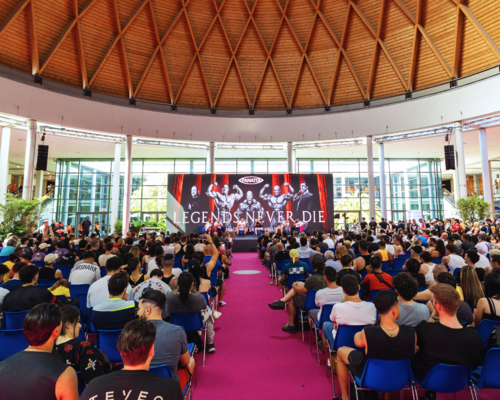
Legends never die: four legends, four philosophies of life
Panatta brought together four of the most influential figures in bodybuilding history on the stage of RiminiWellness 2026: Phil Heath, Lee Haney, Ronnie Coleman and Hany Rambod. [more...]

CoverMe extends matching service to personal training, rewriting how members and personal trainers connect
CoverMe, the global leader in fitness workforce management, today launches CoverMe PT, an on-demand personal training platform that connects the right personal trainer to the right client in under 10 seconds. [more...]
+ More featured suppliers  
COMPANY PROFILES
Alliance Leisure

Alliance Leisure Services was specifically established to respond to the changing development need [more...]
Total Vibration Solutions Ltd (TVS Group)

TVS Group includes TVS Sports Surfaces, TVS Gym Flooring, TVS Play Surfaces and TVS Acoustics. [more...]
+ More profiles  
CATALOGUE GALLERY
 
+ More catalogues  

DIRECTORY
+ More directory  
DIARY


23-26 Aug 2026

Elevate Spa Riviera Maya Edition

The Riviera Maya Edition Kanai, Playa del Carmen, Mexico
10-12 Sep 2026

ASEAN Patio Pool Spa Expo 2026

MITEC Kuala Lumpur,Malaysia, Malaysia
+ More diary  
 
ABOUT LEISURE MEDIA
LEISURE MEDIA MAGAZINES
LEISURE MEDIA HANDBOOKS
LEISURE MEDIA WEBSITES
LEISURE MEDIA PRODUCT SEARCH
 
HCM
LEISURE OPPORTUNITIES
HEALTH CLUB HANDBOOK
PRINT SUBSCRIPTIONS
FREE DIGITAL SUBSCRIPTIONS
ADVERTISE . CONTACT US

Leisure Media
Tel: +44 (0)1462 431385

©Cybertrek 2026
Get HCM digital magazine and ezines FREE
Sign up here ▸
Jobs    News   Products   Magazine
Feedback
HCM Forum

Fuel the debate about issues and opportunities across the industry. We’d love to hear from you. Write to [email protected]


Can an Agency Agreement Model protect public sector services?
Lisa Forsyth, MD, Max Associates
photo: Lisa Forsyth / LinkedIn

For years, VAT has been the proverbial elephant in the room for the sector in the UK: a complex and often overlooked area that impacts governance models, trading income, and capital investment decisions.

Changes to UK government (HMRC) VAT rules in March 2023 (www.hcmmag.com/nickburrows) have fundamentally shifted the landscape, particularly for local authorities and not-for-profit leisure operators. This shift has brought something called the Agency Agreement Model into sharper focus, offering a potential solution to unlock significant financial savings.

It’s essential to understand how this model could reshape the sector and provide a lifeline to local authorities struggling to offset rising operating and delivery costs.

The background

Historically, VAT treatment has varied depending on governance models – in-house models and private sector operators saw their income being subject to VAT, but they could also reclaim VAT on relevant expenditure. By contrast, not-for-profit trusts benefited from a level of VAT-exempt income but couldn’t recover VAT on expenditure, including on capital projects.

The March 2023 changes to the treatment of VAT altered this dynamic, making in-house models far more VAT-efficient. While this has prompted some councils to consider switching to in-sourcing, external management remains financially attractive, due to benefits such as pension cost mitigation and economies of scale on sales and marketing and the purchase of big ticket items such as gym equipment.

Against this backdrop, the agency model has emerged as a compelling alternative. The concept has been employed in local authorities for years for capital projects, whereby operators do capital works on behalf of councils – as their agent – so VAT is recoverable, reducing project costs.

What’s new is the application of this model to operational contracts, driven by the potential financial benefits unlocked by the 2023 changes to VAT.

Under this type of agreement operators act as the agent for councils, collecting their income and as this is non-business, VAT is then recoverable on expenditure.

Analysis by Max Associates found the irrecoverable VAT cost-per-leisure-centre under traditional agreements with not-for-profit organisations ranges from £70,000-150,000 annually, so scaling this across the sector could yield savings of £50-£80m per year – a transformational figure for a sector grappling with utility cost volatility, and rises in minimum wage and National Insurance contributions.

Early adopters, such as the London Borough of Hounslow’s LATCo and Hillingdon Council – the first council to employ an Agency Agreement Model (March 2024), have shown the feasibility of this approach. Larger operators are leading the charge, embedding agency agreements across multiple contracts. Our records show a number of councils have had leisure management agency agreements passed by Cabinet, with around 40 councils in the process of tabling the option.

Procurement approaches

Procurement practices are evolving to accommodate this shift, with councils testing the model’s viability during pre-procurement, incorporating it as a variant option or requiring operators to demonstrate its financial and contractual robustness.

Larger contracts are the first targets, due to their potential for substantial savings.

However, the challenge remains to disseminate the model to smaller councils and operators, where even modest savings could be the difference between a facility remaining financially viable or not.

As with any innovative approach, risks exist. These include the potential for HMRC to challenge the model and the administrative complexities of implementing agency agreements across diverse contracts.

Larger operators have invested significantly in advice to mitigate these risks and ensure compliance. However, smaller operators and councils may require additional support to navigate this landscape.

Collaboration between stakeholders, including operators, councils and advisory bodies, is crucial to realising the full potential of this model. Procurement practices must be transparent and informed by solid legal and VAT advice.

We recently hosted an online roundtable with PSTAX to explore the merits of an agency model while discussing the challenges and risks. The event attracted representatives of more than 80 councils, highlighting a significant appetite for information and exploration.

Knowledge-sharing

As councils and operators navigate this transition, we must prioritise this kind of knowledge-sharing and capacity-building to enable smaller operators and councils to participate in and benefit from this shift.

Meanwhile, sector bodies, such as Sport England, need to consider including information within their guidance documentation to reflect the opportunities and risks.

These agreements represent a rare opportunity to align financial efficiency with the sector’s ambition to reduce inactivity.

Scaling this model across the sector could yield savings of £50-£80m per year
LATEST NEWS
UK updates physical activity guidelines with focus on daily movement
The UK's four Chief Medical Officers have published a refreshed edition of Physical activity guidelines: UK Chief Medical Officers' report, updating the evidence that underpins the nation's physical activity recommendations and placing greater emphasis on strength, balance, reducing sedentary behaviour and, for the first time, supporting people taking weight loss medications.
Places Leisure is working with Roberts Limbrick to build £60m wellness flagship in Basingstoke
Places Leisure has exchanged contracts to build and operate a flagship £60m water and leisure destination on behalf of Basingstoke and Deane Borough Council.
PureGym announces expansion into Ireland
The Republic of Ireland will become the latest market in PureGym’s expanding international portfolio, with the first launch planned for Dublin in 2027.
Total Fitness CEO Sophie Lawler launches leadership coaching venture
Sophie Lawler, CEO of Total Fitness, has launched a leadership coaching business aimed at helping women realise their professional potential.
Anytime Fitness targets Europe after opening a club a day in 2025
Anytime Fitness opened more than one club a day in 2025 and is on track to maintain this rate of growth this year, as parent company Purpose Brands targets further international expansion.
Everyone Active opens £33.9 million next-generation leisure and wellbeing hub
The £33.9 million Leighton Leisure and Community Centre has opened in Leighton Buzzard, UK, creating a next-generation public leisure, health and wellbeing hub for the local community.
YogaSix responds to Pilates boom with launch of strength-focused Y6 Core class
YogaSix, the yoga brand of Xponential Fitness, has launched a heated, Pilates-inspired class called Y6 Core.
Bromley’s £17m Walnuts revamp adds EGYM, rehab and recovery
Walnuts Leisure Centre in Orpington, in the London Borough of Bromley, has reopened following a £17m transformation designed to secure the long-term future of the public leisure asset and reposition it as a community wellbeing hub.
The Gym Group breaks the million members mark for the first time
The Gym Group, has announced that it's sustained positive trading momentum has continued through the first half of 2026 and the company remains confident about the outlook.
Hyrox offers charity spots in sold-out races
Hyrox has announced it will be working with a second charity in the upcoming season and offering charity spots in sold-out races.
Amped Fitness debuts Amped Universe flagship
US low-cost operator, Amped Fitness, has launched a flagship location in Texas, debuting its multi-sensory Amped Universe design architecture.
X-Club gears up to open its flagship site in central London
Luxury boutique Pilates and wellness studio, X-Club, officially launches a 4,000sq ft flagship at Marylebone on 16 July Built around X-Club’s four pillars of wellness – mind, movement, nutrition and therapy – the facility features two group exercise studi
+ More news   
 
FEATURED SUPPLIERS

Legends never die: four legends, four philosophies of life
Panatta brought together four of the most influential figures in bodybuilding history on the stage of RiminiWellness 2026: Phil Heath, Lee Haney, Ronnie Coleman and Hany Rambod. [more...]

CoverMe extends matching service to personal training, rewriting how members and personal trainers connect
CoverMe, the global leader in fitness workforce management, today launches CoverMe PT, an on-demand personal training platform that connects the right personal trainer to the right client in under 10 seconds. [more...]
+ More featured suppliers  
COMPANY PROFILES
Alliance Leisure

Alliance Leisure Services was specifically established to respond to the changing development need [more...]
+ More profiles  
CATALOGUE GALLERY
+ More catalogues  

DIRECTORY
+ More directory  
DIARY


23-26 Aug 2026

Elevate Spa Riviera Maya Edition

The Riviera Maya Edition Kanai, Playa del Carmen, Mexico
10-12 Sep 2026

ASEAN Patio Pool Spa Expo 2026

MITEC Kuala Lumpur,Malaysia, Malaysia
+ More diary  


ADVERTISE . CONTACT US

Leisure Media
Tel: +44 (0)1462 431385

©Cybertrek 2026

ABOUT LEISURE MEDIA
LEISURE MEDIA MAGAZINES
LEISURE MEDIA HANDBOOKS
LEISURE MEDIA WEBSITES
LEISURE MEDIA PRODUCT SEARCH
PRINT SUBSCRIPTIONS
FREE DIGITAL SUBSCRIPTIONS