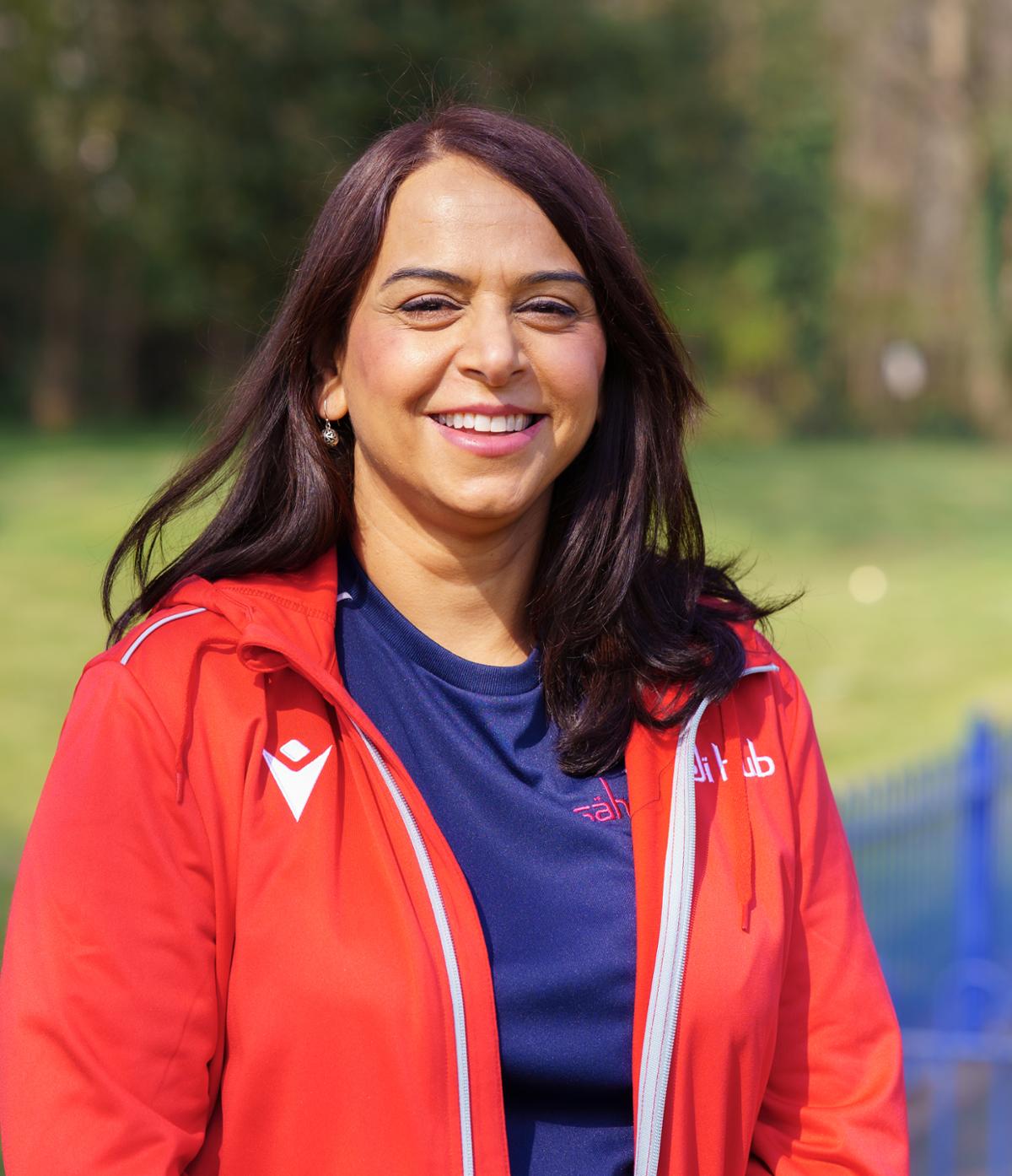
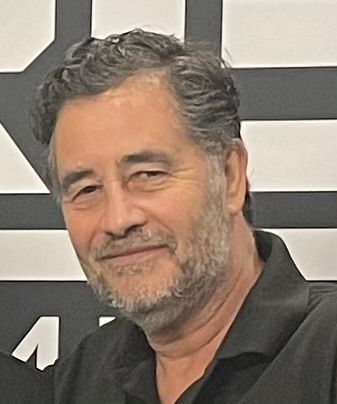
Akhtar has been a driving force for wellness for the last 20+ years / photo: Sähëlï Hub / Ian Cuthbert
How did Sähëlï Hub come about? I come from a deprived area of Birmingham in the UK, which has shocking health statistics. In the late 1990s and early 2000s one in every three babies died before their first birthday – most of them born prematurely – and while the national and Birmingham city average mortality rate was 73, in my neighbourhood many of the men were dying by the age of 65.
Even now men in my community die eight to ten years earlier than their white counterparts who live in the next road. It’s really rare to meet someone over 70 in my community. We also had one of the worst mortality rates during COVID because of all the undiagnosed underlying health conditions.
My chance to make a difference came when I was offered a job with a local neighbourhood forum that was trying to engage with more women, especially Asian women. My role was to find out about attitudes to physical exercise.
I found many Muslim and Asian women believed there were no real opportunities for them at the local leisure centre, where activities were framed around men's exercise. Only one or two hours a week were offered for women and this was at inappropriate times. Many of the women didn’t speak English and were embarrassed about their language and culture not being understood.
I asked the leisure centre to work with me, to give women a morning, or an afternoon with the aim of growing it to a full day, but they couldn’t see how this would work for our communities, so I set about doing it myself, securing funding and registering a charity.
How has the charity expanded? Under the Blair government the neighbourhood forum formed a partnership and we secured £500k through the Healthy Living Centre initiative, allowing me to pilot a space to provide women-only physical activities at a local college. We started with two sessions a week and six months later had so many committed women we could run sessions four days a week and invite men in on Wednesdays.
In 2006, we were awarded £258k from a National Lottery/Sport England fund which allowed us to open up a facility with 20 pieces of gym equipment and a wooden sprung floor for exercise classes, along with a changing room and toilets. Within two weeks, 265 women joined paying £10 a month.
When we launched the centre, called Sähëlï Adventure Hub, we invited representatives from the NHS, which led to us getting our first NHS contract, offering programmes for weight management and long-term health conditions.
Since then we’ve been awarded four contracts and have recently secured a culturally appropriate diabetes prevention programme, which has the highest participation of black and Asian people in the country. We've also developed a ‘know your numbers’ programme, teaching people to understand their blood pressure, weight, cholesterol, waist and hip ratio.
Diabetes levels in my community are three times the city average – we've got the highest rate in the east of Birmingham. My community still eats rich food full of sugar and salt – as though we’re going to be labouring in the field for eight hours a day – but we mainly have sedentary jobs, so we educate people about the hidden sugars in the Asian diet.
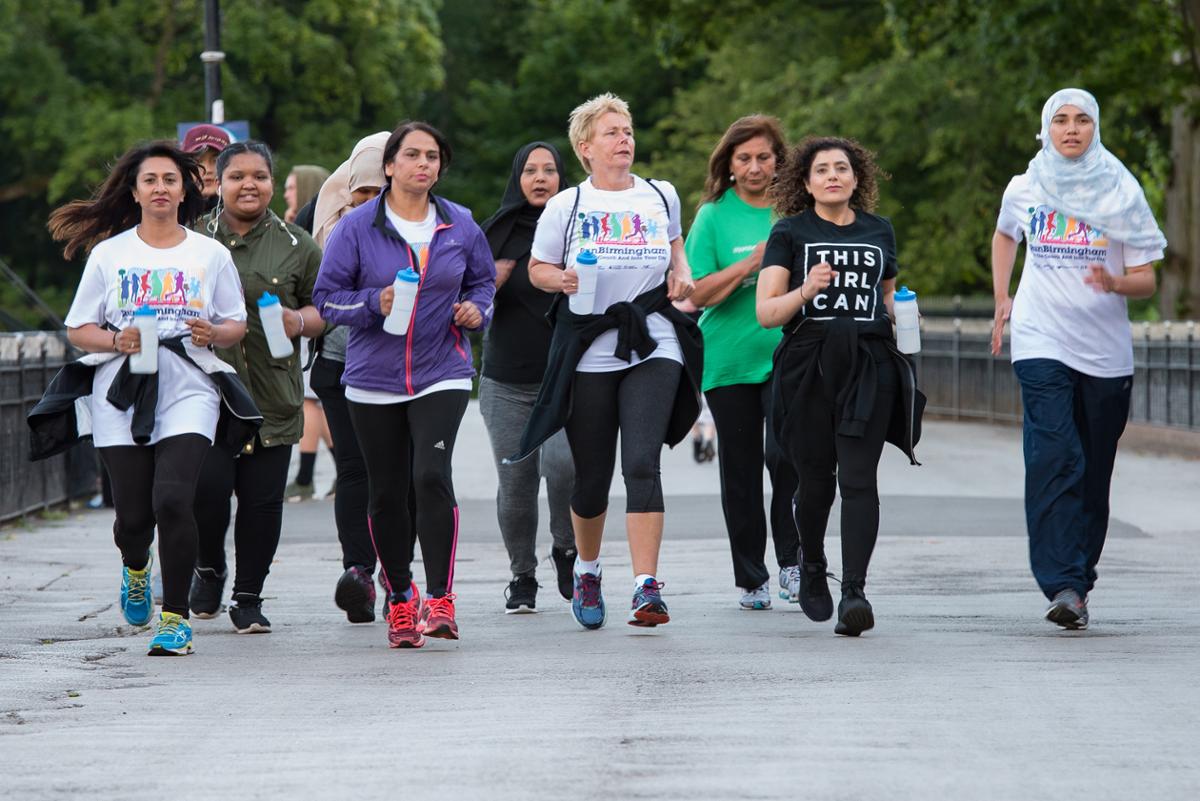
What services does Sähëlï Hub offer now? Each year we support 3,000 people to access free, culturally-appropriate physical activity programmes and social clubs in parks, GP surgeries and two of our own community centres. We’ve worked with around 16,000 women over the years, offering walking and running programmes – encouraging many people to run half marathons. We’ve taught around 3,200 women to cycle and also enable them to try other outdoor activities, such as kayaking, tennis, quad biking and wild swimming.
Many of the women we work with want to get active, but it ends up being more than that because it gives them confidence and empowers them to go to college or get a job, or be an activity leader. I always say to our team, we’re the stepping stone to help women become the being they want to be.
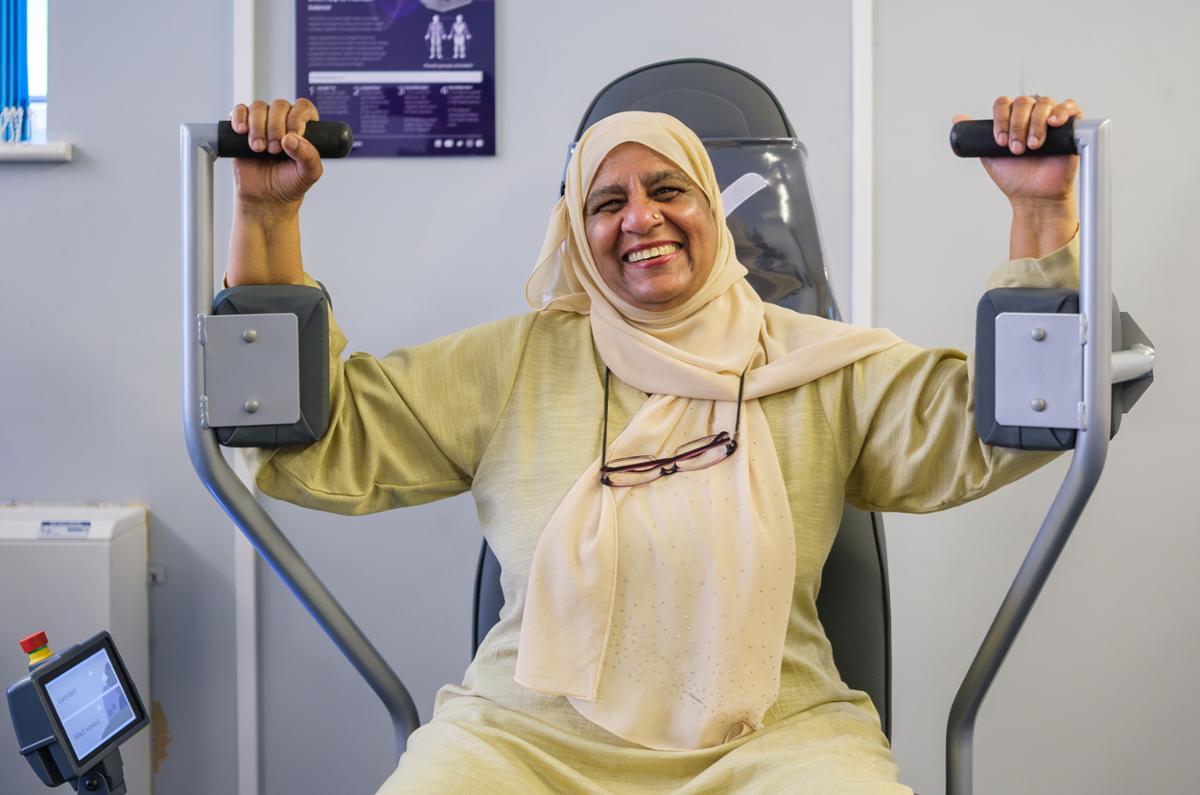
In the wake of COVID, we did a study about men to find out what they wanted and learned that men from my community are as unlikely as women to use normal leisure centres. This led to us putting on a programme for them, including the launch of a wellbeing suite at a local community centre, in partnership with Innerva, which has supplied power-assisted equipment. We have nine stations to support the community to access physical activity that’s tailored to all abilities.
What can mainstream gyms do to engage with Muslim and Asian communities? The biggest barrier is always cost and it's difficult because so many gyms are built on a finance model that’s about membership in numbers.
The second issue is that gyms aren’t often based in the poorest and most deprived communities, they're based in the places where people can pay.
If gym operators aren’t attracting a membership reflective of the demographic of their area, they need to get to know their community so they can deliver appropriate programmes, or partner up with organisations who are delivering to these communities.
What are your future plans? We’re working on a capacity-building programme for our organisation and are going to carry on developing our programmes, creating sustainable, long-term interventions to help break the cycle of inactivity, isolation, loneliness and depression, as well as tackling health inequalities and low life expectancy for the poorest communities. We want to work with committed sports governing bodies and partners who want to help us to make a dent in the poor physical activity statistics, not just for ethnic minorities, but for all communities.
Groups take part in outdoor activities as well as exercising in the wellness suite / photo: Sähëlï Hub / Ian Cuthbert
The charity has worked with 16,000 women over the years / photo: Sähëlï Hub / Ian Cuthbert
CoverMe, the global leader in fitness workforce management, today launches CoverMe PT, an
on-demand personal training platform that connects the right personal trainer to the right
client in under 10 seconds. [more...]
Active Blackpool is deploying Cornerstone Connect, a new digital interface allowing
disparate information from multiple systems to be aggregated into one dataset, to support
its focus on reducing health inequalities and improving healthy life expectancy. [more...]
Akhtar has been a driving force for wellness for the last 20+ years / photo: Sähëlï Hub / Ian Cuthbert
How did Sähëlï Hub come about? I come from a deprived area of Birmingham in the UK, which has shocking health statistics. In the late 1990s and early 2000s one in every three babies died before their first birthday – most of them born prematurely – and while the national and Birmingham city average mortality rate was 73, in my neighbourhood many of the men were dying by the age of 65.
Even now men in my community die eight to ten years earlier than their white counterparts who live in the next road. It’s really rare to meet someone over 70 in my community. We also had one of the worst mortality rates during COVID because of all the undiagnosed underlying health conditions.
My chance to make a difference came when I was offered a job with a local neighbourhood forum that was trying to engage with more women, especially Asian women. My role was to find out about attitudes to physical exercise.
I found many Muslim and Asian women believed there were no real opportunities for them at the local leisure centre, where activities were framed around men's exercise. Only one or two hours a week were offered for women and this was at inappropriate times. Many of the women didn’t speak English and were embarrassed about their language and culture not being understood.
I asked the leisure centre to work with me, to give women a morning, or an afternoon with the aim of growing it to a full day, but they couldn’t see how this would work for our communities, so I set about doing it myself, securing funding and registering a charity.
How has the charity expanded? Under the Blair government the neighbourhood forum formed a partnership and we secured £500k through the Healthy Living Centre initiative, allowing me to pilot a space to provide women-only physical activities at a local college. We started with two sessions a week and six months later had so many committed women we could run sessions four days a week and invite men in on Wednesdays.
In 2006, we were awarded £258k from a National Lottery/Sport England fund which allowed us to open up a facility with 20 pieces of gym equipment and a wooden sprung floor for exercise classes, along with a changing room and toilets. Within two weeks, 265 women joined paying £10 a month.
When we launched the centre, called Sähëlï Adventure Hub, we invited representatives from the NHS, which led to us getting our first NHS contract, offering programmes for weight management and long-term health conditions.
Since then we’ve been awarded four contracts and have recently secured a culturally appropriate diabetes prevention programme, which has the highest participation of black and Asian people in the country. We've also developed a ‘know your numbers’ programme, teaching people to understand their blood pressure, weight, cholesterol, waist and hip ratio.
Diabetes levels in my community are three times the city average – we've got the highest rate in the east of Birmingham. My community still eats rich food full of sugar and salt – as though we’re going to be labouring in the field for eight hours a day – but we mainly have sedentary jobs, so we educate people about the hidden sugars in the Asian diet.
What services does Sähëlï Hub offer now? Each year we support 3,000 people to access free, culturally-appropriate physical activity programmes and social clubs in parks, GP surgeries and two of our own community centres. We’ve worked with around 16,000 women over the years, offering walking and running programmes – encouraging many people to run half marathons. We’ve taught around 3,200 women to cycle and also enable them to try other outdoor activities, such as kayaking, tennis, quad biking and wild swimming.
Many of the women we work with want to get active, but it ends up being more than that because it gives them confidence and empowers them to go to college or get a job, or be an activity leader. I always say to our team, we’re the stepping stone to help women become the being they want to be.
In the wake of COVID, we did a study about men to find out what they wanted and learned that men from my community are as unlikely as women to use normal leisure centres. This led to us putting on a programme for them, including the launch of a wellbeing suite at a local community centre, in partnership with Innerva, which has supplied power-assisted equipment. We have nine stations to support the community to access physical activity that’s tailored to all abilities.
What can mainstream gyms do to engage with Muslim and Asian communities? The biggest barrier is always cost and it's difficult because so many gyms are built on a finance model that’s about membership in numbers.
The second issue is that gyms aren’t often based in the poorest and most deprived communities, they're based in the places where people can pay.
If gym operators aren’t attracting a membership reflective of the demographic of their area, they need to get to know their community so they can deliver appropriate programmes, or partner up with organisations who are delivering to these communities.
What are your future plans? We’re working on a capacity-building programme for our organisation and are going to carry on developing our programmes, creating sustainable, long-term interventions to help break the cycle of inactivity, isolation, loneliness and depression, as well as tackling health inequalities and low life expectancy for the poorest communities. We want to work with committed sports governing bodies and partners who want to help us to make a dent in the poor physical activity statistics, not just for ethnic minorities, but for all communities.
Groups take part in outdoor activities as well as exercising in the wellness suite / photo: Sähëlï Hub / Ian Cuthbert
The charity has worked with 16,000 women over the years / photo: Sähëlï Hub / Ian Cuthbert
An ambitious women’s-only strength and lifting studio concept is set to launch in Dallas this
September, with a wider US rollout already in active development.
Finnish outdoor fitness equipment specialist, Omnigym, has partnered with charity, Emmaüs
Solidarité, to launch an outdoor gym installation at a homeless shelter in Paris.
People taking GLP-1 weight loss medications such as Ozempic, Wegovy, Mounjaro and Zepbound
may be losing weight, but they’re also becoming less physically active, according to new
research presented at the ENDO 2026 annual meeting of the Endocrine Society
CoverMe, the global leader in fitness workforce management, today launches CoverMe PT, an
on-demand personal training platform that connects the right personal trainer to the right
client in under 10 seconds. [more...]
Active Blackpool is deploying Cornerstone Connect, a new digital interface allowing
disparate information from multiple systems to be aggregated into one dataset, to support
its focus on reducing health inequalities and improving healthy life expectancy. [more...]