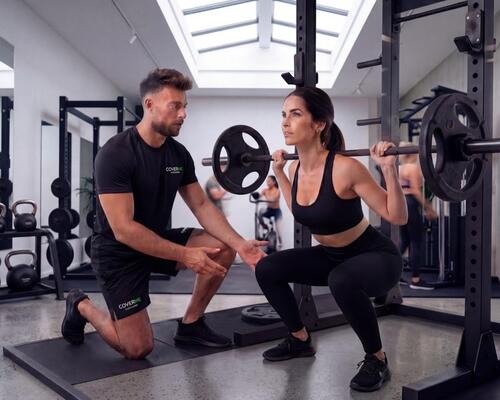
Research shows HIIT can roll back the damage of Parkinson’s disease / photo: Shutterstock / Shevtsovy
According to a pilot study by Yale School of Medicine, exercise can not only slow down the neurodegeneration associated with Parkinson’s Disease, there is evidence it can also reverse the damage.
Parkinson’s is currently the most increasingly prevalent neurological disease and estimated to impact more than 12 million people worldwide by 2040. It currently has no cure – only medication to treat the symptoms – so this new study by Yale holds promise that exercise could help to mitigate the enormous personal and economic costs the disease presents.
Two previous clinical trials have shown that engaging in high-intensity exercise three times a week for six months is correlated with less severe motor symptoms. This new study, published in npj Parkinson’s Disease earlier this year, went one step further, using brain scans to find evidence of further health benefits.
Causes of Parkinson’s Parkinson’s disease is caused by the misfolding of alpha synuclein protein, which accumulates within neurons and damages them. As the cells die off, the lack of dopamine creates the physical symptoms. The gradual progression, means that by the time patients are diagnosed they’ve usually lost more than half their dopamine-producing neurons.
The most common available medication replaces the dopamine, which alleviates symptoms but doesn’t prevent the ongoing neurodegeneration. Long-term use can also cause undesirable side effects, such as uncontrolled excessive movements.
HIIT has been shown to preserve the dopamine-producing neurons, which are the brain cells most vulnerable to destruction in patients with the disease.
Proof of concept Yale’s proof-of-concept study involved 10 patients who had been diagnosed for less than four years and hadn’t lost all their dopamine-producing neurons.
They received MRI and PET scans to measure the amount of neuromelanin found in dopamine-producing neurons and the protein dopamine transporter (DAT) which helps the neurons maintain dopamine levels.
After six months of HIIT three times a week, the scans were repeated and the brain imaging showed a significant increase in both the neuromelanin and DAT signals. Researchers say this suggests HIIT not only slowed down the neurodegenerative process, but that it also helped the dopaminergic system grow healthier.
“Where we would have expected to see a decline in the DAT and neuromelanin signals, we saw an increase,” says Professor Bart de Laat, the study’s first author. “We had hoped to see that the neurodegeneration wouldn’t progress as quickly or that it would stop temporarily, but instead we saw an increase in nine out of 10 people. That was remarkable.”
CoverMe, the global leader in fitness workforce management, today launches CoverMe PT, an
on-demand personal training platform that connects the right personal trainer to the right
client in under 10 seconds. [more...]
Active Blackpool is deploying Cornerstone Connect, a new digital interface allowing
disparate information from multiple systems to be aggregated into one dataset, to support
its focus on reducing health inequalities and improving healthy life expectancy. [more...]
+ More featured suppliers
COMPANY PROFILES
PSLT Ltd
PSLT Fitness Solutions manufacture, remanufacture and buy back commercial gym equipment. [more...]
Research shows HIIT can roll back the damage of Parkinson’s disease / photo: Shutterstock / Shevtsovy
According to a pilot study by Yale School of Medicine, exercise can not only slow down the neurodegeneration associated with Parkinson’s Disease, there is evidence it can also reverse the damage.
Parkinson’s is currently the most increasingly prevalent neurological disease and estimated to impact more than 12 million people worldwide by 2040. It currently has no cure – only medication to treat the symptoms – so this new study by Yale holds promise that exercise could help to mitigate the enormous personal and economic costs the disease presents.
Two previous clinical trials have shown that engaging in high-intensity exercise three times a week for six months is correlated with less severe motor symptoms. This new study, published in npj Parkinson’s Disease earlier this year, went one step further, using brain scans to find evidence of further health benefits.
Causes of Parkinson’s Parkinson’s disease is caused by the misfolding of alpha synuclein protein, which accumulates within neurons and damages them. As the cells die off, the lack of dopamine creates the physical symptoms. The gradual progression, means that by the time patients are diagnosed they’ve usually lost more than half their dopamine-producing neurons.
The most common available medication replaces the dopamine, which alleviates symptoms but doesn’t prevent the ongoing neurodegeneration. Long-term use can also cause undesirable side effects, such as uncontrolled excessive movements.
HIIT has been shown to preserve the dopamine-producing neurons, which are the brain cells most vulnerable to destruction in patients with the disease.
Proof of concept Yale’s proof-of-concept study involved 10 patients who had been diagnosed for less than four years and hadn’t lost all their dopamine-producing neurons.
They received MRI and PET scans to measure the amount of neuromelanin found in dopamine-producing neurons and the protein dopamine transporter (DAT) which helps the neurons maintain dopamine levels.
After six months of HIIT three times a week, the scans were repeated and the brain imaging showed a significant increase in both the neuromelanin and DAT signals. Researchers say this suggests HIIT not only slowed down the neurodegenerative process, but that it also helped the dopaminergic system grow healthier.
“Where we would have expected to see a decline in the DAT and neuromelanin signals, we saw an increase,” says Professor Bart de Laat, the study’s first author. “We had hoped to see that the neurodegeneration wouldn’t progress as quickly or that it would stop temporarily, but instead we saw an increase in nine out of 10 people. That was remarkable.”
An ambitious women’s-only strength and lifting studio concept is set to launch in Dallas this
September, with a wider US rollout already in active development.
Finnish outdoor fitness equipment specialist, Omnigym, has partnered with charity, Emmaüs
Solidarité, to launch an outdoor gym installation at a homeless shelter in Paris.
People taking GLP-1 weight loss medications such as Ozempic, Wegovy, Mounjaro and Zepbound
may be losing weight, but they’re also becoming less physically active, according to new
research presented at the ENDO 2026 annual meeting of the Endocrine Society
CoverMe, the global leader in fitness workforce management, today launches CoverMe PT, an
on-demand personal training platform that connects the right personal trainer to the right
client in under 10 seconds. [more...]
Active Blackpool is deploying Cornerstone Connect, a new digital interface allowing
disparate information from multiple systems to be aggregated into one dataset, to support
its focus on reducing health inequalities and improving healthy life expectancy. [more...]
+ More featured suppliers
COMPANY PROFILES
PSLT Ltd PSLT Fitness Solutions manufacture, remanufacture and buy back commercial gym equipment. [more...]