Employee wellbeing is linked to less absence, more engagement and better productivity / photo: WHOOP
The pandemic gave us all the chance to take stock, with many people deciding they didn’t want to return to their previous job, or that it was the time to unleash their inner entrepreneur, retrain for a different profession, or write that book.
Many who did return to their jobs, or had carried on doing them, still found they wanted more – either greater flexibility, such as being able to work from home, or health support – with all this leading to growth in corporate wellbeing programmes.
A sound investment It’s well known that investing in employee wellbeing can lead to increased resilience, better engagement, reduced absence and higher performance and productivity. With mental health taking a battering during the past two plus years – the World Health Organization has pointed out we’re living a parallel pandemic in mental health with rates of depression trebling – it’s become apparent that companies need to invest more in their workforce for the good of both the employees and the business.
In late 2021, a Harris Poll in the US found 40 per cent of employees were considering leaving their position due to chronic stress, largely because employers had not prioritised or supported their mental wellbeing. Many of those questioned said their employer had not followed through on commitments of support for mental health, or had recommended they practise self care, but had not supported them to do so.
However, 52 per cent said that more mental health support would likely make them stay in their job. Even if many companies haven’t quite realised it yet, their employees do not just want a return to business as usual. This presents an opportunity for health and fitness operators to craft meaningful corporate wellness programmes to sell to businesses.
“As is well known, when employees are happy, and feel taken care of, their productivity increases and the business flourishes,” says Professor Gerard Bodeker, chair of Global Wellness Initiative’s mental wellness initiative. “Nurturing is the best means of counteracting the Great Resignation.”
Culture change Wellness expert Mia Kyricos, president of Kyricos & Associates, says change has to be twofold: it’s not enough for companies to provide gyms, yoga classes and a nap room if a stressful, 24/7 work culture endures, but she believes change is starting to happen.
“Prior to the pandemic, organisations were predominantly interested in offering wellness-driven programmes, products and services as part of a company’s benefit package,” she says. “Today, pioneers are daring to look at the concept more in terms of company culture and from a leadership point of view.”
Kyricos says the pandemic has accelerated this. “From the Great Resignation to labour shortages in industries, such as spa and wellness, health and fitness and hospitality, to increasing demand for hybrid working and the fact that people have been reminded to live life more meaningfully and with purpose, the entire concept of wellbeing is being reconsidered,” she says. “While many companies are still trying to offer best-in-class programmes and resources – almost like toolkits for self-care by handfuls of colleagues both interested and willing – other companies are starting to consider what has made them unwell in the first place and that’s exciting.”
Ahmed Elbarkouki, CEO of Echeon Health, which provides preventative healthcare to the likes of online supermarket, Ocado, agrees the pandemic caused a shift in mindset which is being reflected in the workplace: “On a large scale, COVID-19 forced us to re-assess our priorities and health is now ranking higher than ever.
“There are benefits to making health assessments available to employees,” he continues. “Not only do they feel they’re being cared for, which positively impacts morale and increases employee retention rate, but it also makes sense financially. Providing bespoke preventative health assessments significantly reduces the risk of the occurrence of debilitating diseases which can cause disruption, instability and stress among the team.”
Opportunities for the sector Elbarkouki says this trend is creating growth opportunities for the health and fitness sector, including offering preventative healthcare, opening new gym spaces within office buildings or delivering mental health support.
A good proportion of health club operators are now offering corporate deals, either through direct marketing and pricing, or through aggregators such as Gympass, which works with Nuffield Health, Bannatyne, Anytime Fitness, Everlast and Snap Fitness, among others.
Gympass, which raised US$220m via a funding round in 2021 – valuing it at US$2.2bn – has recently also struck a partnership with Les Mills – a neat fit, given Gympass research, released at the end of 2022, found Gen Zers are 20 per cent more likely to use employee wellness packages, as this demographic is among Les Mills’ key target audiences.
Elsewhere, boutique operator, Gymbox, is working directly with office space providers, having signed a partnership with WeWork giving workers access to both in-person and on-demand fitness classes, as well as access to Gymbox studios and popup wellness and workout events in WeWork offices.
On the equipment supplier side, Technogym has launched a new corporate wellness offering, while Egym bought French corporate fitness business Gymlib, which has a network of 4,000 clubs, in 2022.
For creative operators and suppliers, it seems that now is a fertile time to craft wellness programmes and services which can be taken into corporate settings.
• Meditation app, Headspace, now offers Headspace for Work: a science-backed meditation and mindfulness programme. Its corporate package includes free Headspace access for employees, member support, engagement reporting and a dedicated success manager. It claims just four sessions can lead to a 14 per cent reduction in burnout; 32 per cent less stress after 30 days and 14 per cent greater focus after four weeks.
Headspace at Work is designed to reduce burnout / photo: Headspace
• Since launching Whoop Unite for business, connected wearable company, Whoop, now has 200 corporate customers, including the NHS and US National Forest Service. Allowing individuals to measure their sleep, stress levels and recovery, Whoop Unite acts like a digital coach for employees which the company says results in a more prepared and resilient workforce and will reduce burnout.
• Technogym has launched a connected ecosystem for corporate wellness called Technogym Corporate Club, the service is driven by the Technogym App Plus that uses AI to deliver services including hybrid workouts and guidance on nutrition and meditation.
The move is delivering new services to a sector where the company is already working with the likes of Goldman Sachs, Ferrari, Apple and Google.
Companies have a dashboard that analyses user activity in real-time, while also enabling them to communicate with their staff directly via an app integration.
Companies can also schedule gaming elements and if they don’t have room for a gym, Technogym Corporate Club recommends small-footprint solutions that can be placed in coffee corners, meeting rooms and common areas.
In addition to offering the Corporate Club, Technogym also builds and manages corporate wellness programmes.
Technogym has launched a corporate club for businesses / photo: TECHNOGYM
photo: EXOS
• Exos, headed by founder Mark Verstegen, is leading the charge in corporate wellness, working with companies such as Adidas and Pfizer. Its offering includes fitness centre design, development and management. The programming offers a range of support and solutions for mindset, nutrition, movement and recovery, as well as creating shared experiences which improve team building and connection to the company.
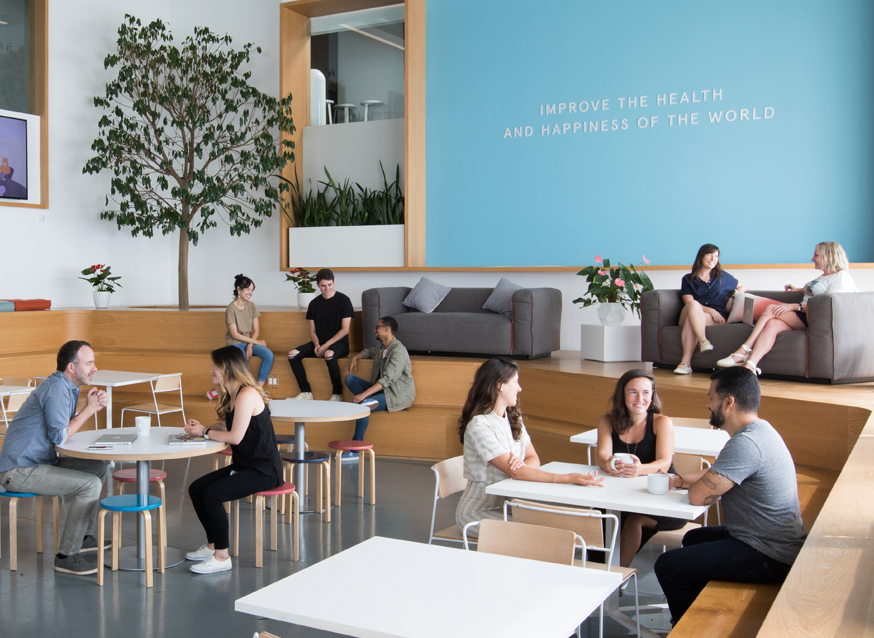
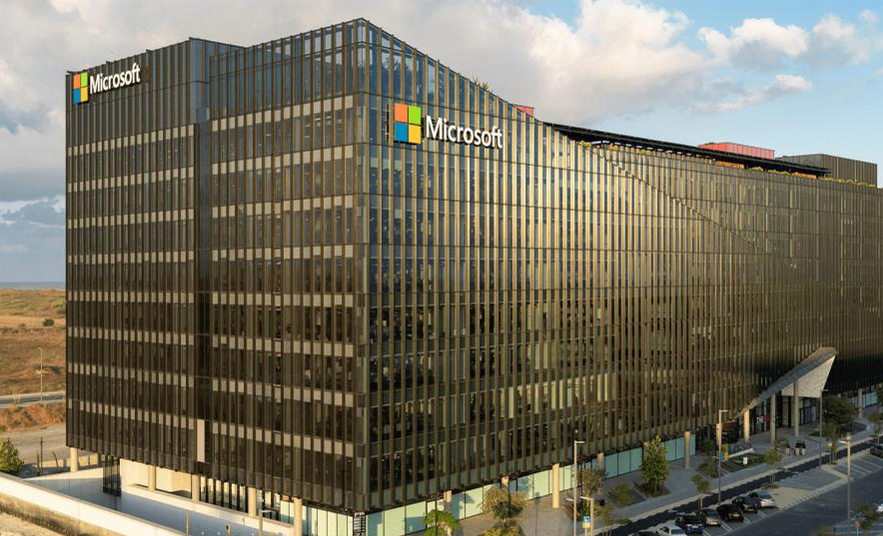
• Microsoft’s recently opened R&D campus in Israel was designed to re-define office working with a large health club playing a major role.
The brief to architects, Vered Gindi Architects and GSArch was to lessen the long-term impact on the environment and offer a flexible, inclusive workspace which can be endlessly customised to meet employees’ needs.
A 46,000sq m leisure space includes a 1,000sq m health club with cardio and strength equipment by Technogym, a circuit training system and a large yoga and exercise room. There’s also a café with baristas and a band practice room.
“This was a once-in-a-lifetime project,” says Vered Gindi. “We aimed to create a space which would be relevant for decades; no matter what comes next.”
photo: Microsoft
The Les Mills Wellbeing in the Workplace programme is being used by Google and IBM / photo: LES MILLS
Panatta brought together four of the most influential figures in bodybuilding history on the
stage of RiminiWellness 2026: Phil Heath, Lee Haney, Ronnie Coleman and Hany Rambod. [more...]
Employee wellbeing is linked to less absence, more engagement and better productivity / photo: WHOOP
The pandemic gave us all the chance to take stock, with many people deciding they didn’t want to return to their previous job, or that it was the time to unleash their inner entrepreneur, retrain for a different profession, or write that book.
Many who did return to their jobs, or had carried on doing them, still found they wanted more – either greater flexibility, such as being able to work from home, or health support – with all this leading to growth in corporate wellbeing programmes.
A sound investment It’s well known that investing in employee wellbeing can lead to increased resilience, better engagement, reduced absence and higher performance and productivity. With mental health taking a battering during the past two plus years – the World Health Organization has pointed out we’re living a parallel pandemic in mental health with rates of depression trebling – it’s become apparent that companies need to invest more in their workforce for the good of both the employees and the business.
In late 2021, a Harris Poll in the US found 40 per cent of employees were considering leaving their position due to chronic stress, largely because employers had not prioritised or supported their mental wellbeing. Many of those questioned said their employer had not followed through on commitments of support for mental health, or had recommended they practise self care, but had not supported them to do so.
However, 52 per cent said that more mental health support would likely make them stay in their job. Even if many companies haven’t quite realised it yet, their employees do not just want a return to business as usual. This presents an opportunity for health and fitness operators to craft meaningful corporate wellness programmes to sell to businesses.
“As is well known, when employees are happy, and feel taken care of, their productivity increases and the business flourishes,” says Professor Gerard Bodeker, chair of Global Wellness Initiative’s mental wellness initiative. “Nurturing is the best means of counteracting the Great Resignation.”
Culture change Wellness expert Mia Kyricos, president of Kyricos & Associates, says change has to be twofold: it’s not enough for companies to provide gyms, yoga classes and a nap room if a stressful, 24/7 work culture endures, but she believes change is starting to happen.
“Prior to the pandemic, organisations were predominantly interested in offering wellness-driven programmes, products and services as part of a company’s benefit package,” she says. “Today, pioneers are daring to look at the concept more in terms of company culture and from a leadership point of view.”
Kyricos says the pandemic has accelerated this. “From the Great Resignation to labour shortages in industries, such as spa and wellness, health and fitness and hospitality, to increasing demand for hybrid working and the fact that people have been reminded to live life more meaningfully and with purpose, the entire concept of wellbeing is being reconsidered,” she says. “While many companies are still trying to offer best-in-class programmes and resources – almost like toolkits for self-care by handfuls of colleagues both interested and willing – other companies are starting to consider what has made them unwell in the first place and that’s exciting.”
Ahmed Elbarkouki, CEO of Echeon Health, which provides preventative healthcare to the likes of online supermarket, Ocado, agrees the pandemic caused a shift in mindset which is being reflected in the workplace: “On a large scale, COVID-19 forced us to re-assess our priorities and health is now ranking higher than ever.
“There are benefits to making health assessments available to employees,” he continues. “Not only do they feel they’re being cared for, which positively impacts morale and increases employee retention rate, but it also makes sense financially. Providing bespoke preventative health assessments significantly reduces the risk of the occurrence of debilitating diseases which can cause disruption, instability and stress among the team.”
Opportunities for the sector Elbarkouki says this trend is creating growth opportunities for the health and fitness sector, including offering preventative healthcare, opening new gym spaces within office buildings or delivering mental health support.
A good proportion of health club operators are now offering corporate deals, either through direct marketing and pricing, or through aggregators such as Gympass, which works with Nuffield Health, Bannatyne, Anytime Fitness, Everlast and Snap Fitness, among others.
Gympass, which raised US$220m via a funding round in 2021 – valuing it at US$2.2bn – has recently also struck a partnership with Les Mills – a neat fit, given Gympass research, released at the end of 2022, found Gen Zers are 20 per cent more likely to use employee wellness packages, as this demographic is among Les Mills’ key target audiences.
Elsewhere, boutique operator, Gymbox, is working directly with office space providers, having signed a partnership with WeWork giving workers access to both in-person and on-demand fitness classes, as well as access to Gymbox studios and popup wellness and workout events in WeWork offices.
On the equipment supplier side, Technogym has launched a new corporate wellness offering, while Egym bought French corporate fitness business Gymlib, which has a network of 4,000 clubs, in 2022.
For creative operators and suppliers, it seems that now is a fertile time to craft wellness programmes and services which can be taken into corporate settings.
• Meditation app, Headspace, now offers Headspace for Work: a science-backed meditation and mindfulness programme. Its corporate package includes free Headspace access for employees, member support, engagement reporting and a dedicated success manager. It claims just four sessions can lead to a 14 per cent reduction in burnout; 32 per cent less stress after 30 days and 14 per cent greater focus after four weeks.
Headspace at Work is designed to reduce burnout / photo: Headspace
• Since launching Whoop Unite for business, connected wearable company, Whoop, now has 200 corporate customers, including the NHS and US National Forest Service. Allowing individuals to measure their sleep, stress levels and recovery, Whoop Unite acts like a digital coach for employees which the company says results in a more prepared and resilient workforce and will reduce burnout.
• Technogym has launched a connected ecosystem for corporate wellness called Technogym Corporate Club, the service is driven by the Technogym App Plus that uses AI to deliver services including hybrid workouts and guidance on nutrition and meditation.
The move is delivering new services to a sector where the company is already working with the likes of Goldman Sachs, Ferrari, Apple and Google.
Companies have a dashboard that analyses user activity in real-time, while also enabling them to communicate with their staff directly via an app integration.
Companies can also schedule gaming elements and if they don’t have room for a gym, Technogym Corporate Club recommends small-footprint solutions that can be placed in coffee corners, meeting rooms and common areas.
In addition to offering the Corporate Club, Technogym also builds and manages corporate wellness programmes.
Technogym has launched a corporate club for businesses / photo: TECHNOGYM
photo: EXOS
• Exos, headed by founder Mark Verstegen, is leading the charge in corporate wellness, working with companies such as Adidas and Pfizer. Its offering includes fitness centre design, development and management. The programming offers a range of support and solutions for mindset, nutrition, movement and recovery, as well as creating shared experiences which improve team building and connection to the company.
• Microsoft’s recently opened R&D campus in Israel was designed to re-define office working with a large health club playing a major role.
The brief to architects, Vered Gindi Architects and GSArch was to lessen the long-term impact on the environment and offer a flexible, inclusive workspace which can be endlessly customised to meet employees’ needs.
A 46,000sq m leisure space includes a 1,000sq m health club with cardio and strength equipment by Technogym, a circuit training system and a large yoga and exercise room. There’s also a café with baristas and a band practice room.
“This was a once-in-a-lifetime project,” says Vered Gindi. “We aimed to create a space which would be relevant for decades; no matter what comes next.”
photo: Microsoft
The Les Mills Wellbeing in the Workplace programme is being used by Google and IBM / photo: LES MILLS
Italian Exhibition Group – the organiser behind industry events Dubai Active and Dubai Muscle
Show – has been appointed to deliver the Health and Wellness Expo and Fire and Safety Expo at
the 16th World Firefighters Games.
It’s been five years since the fitness industry reopened after the last lockdown – long enough
to look back on the impact the pandemic had on the sector and what might come next.
Wattbike has announced a new integration with EGYM, which enables the bikes to contribute to
the Cardio BioAge score of individuals via a VO2 max result.
Les Mills has launched a reformer Pilates workout. The 45-minute workout blends traditional
reformer movements and more contemporary exercises, choreographed to music.
According to research which tracked more than 147,000 people for 30 years, 90-120 minutes
of strength training a week may deliver some of the biggest long-term health rewards.
The UK's four Chief Medical Officers have published a refreshed edition of Physical activity
guidelines: UK Chief Medical Officers' report, updating the evidence that underpins the nation's
physical activity recommendations and placing greater emphasis on strength, balance, reducing
sedentary behaviour and, for the first time, supporting people taking weight loss medications.
Places Leisure has exchanged contracts to build and operate a flagship £60m water and leisure
destination on behalf of Basingstoke and Deane Borough Council.
The Republic of Ireland will become the latest market in PureGym’s expanding international
portfolio, with the first launch planned for Dublin in 2027.
Panatta brought together four of the most influential figures in bodybuilding history on the
stage of RiminiWellness 2026: Phil Heath, Lee Haney, Ronnie Coleman and Hany Rambod. [more...]