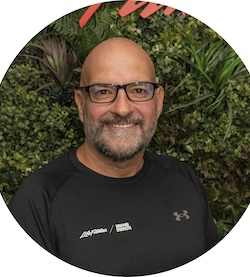
What was the inspiration for Kinezis? I founded Kidzania – an entertainment concept where children can role play different occupations – 25 years ago. It has been very successful and now has 29 centres in 22 countries. I wanted to incorporate a new concept and a separate growth opportunity and spent two years travelling the world looking for opportunities, visiting 32 countries, 52 cities and 400 properties.
Everywhere I went I saw a strong trend for health and wellness, as well as active entertainment, such as trampoline parks, which inspired me to come up with a completely new concept based on health.
When I started doing research it became clear that wellness is the future. Although obesity is a problem all over the world, there’s also evidence to show that people want to exercise more and eat better.
I bought a lot of reports about gyms and found out that worldwide – 85 per cent of gym goers go before 10.00am or after 6.00pm, while entertainment ‘purchases’ normally take place between 10.00am and 6.00pm. So I had the idea to use the same brand and same space to do both fitness and entertainment, but with different opening hours. Nobody has done this before.
We’ve also broken the rules by having three businesses in one: Kinezis Fun, Kinezis Fitness and Kinezis Health. We wanted to go into wellness, we’re very good at entertainment and it made sense to tap into fitness.
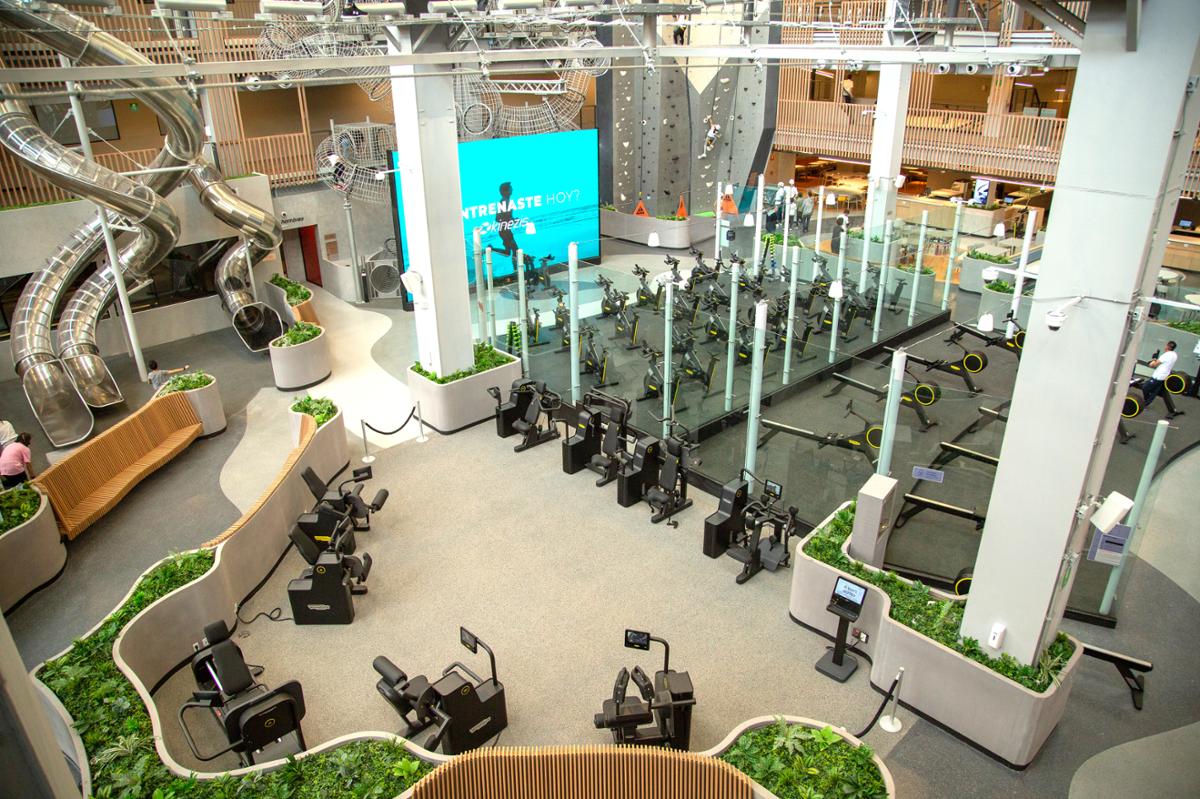
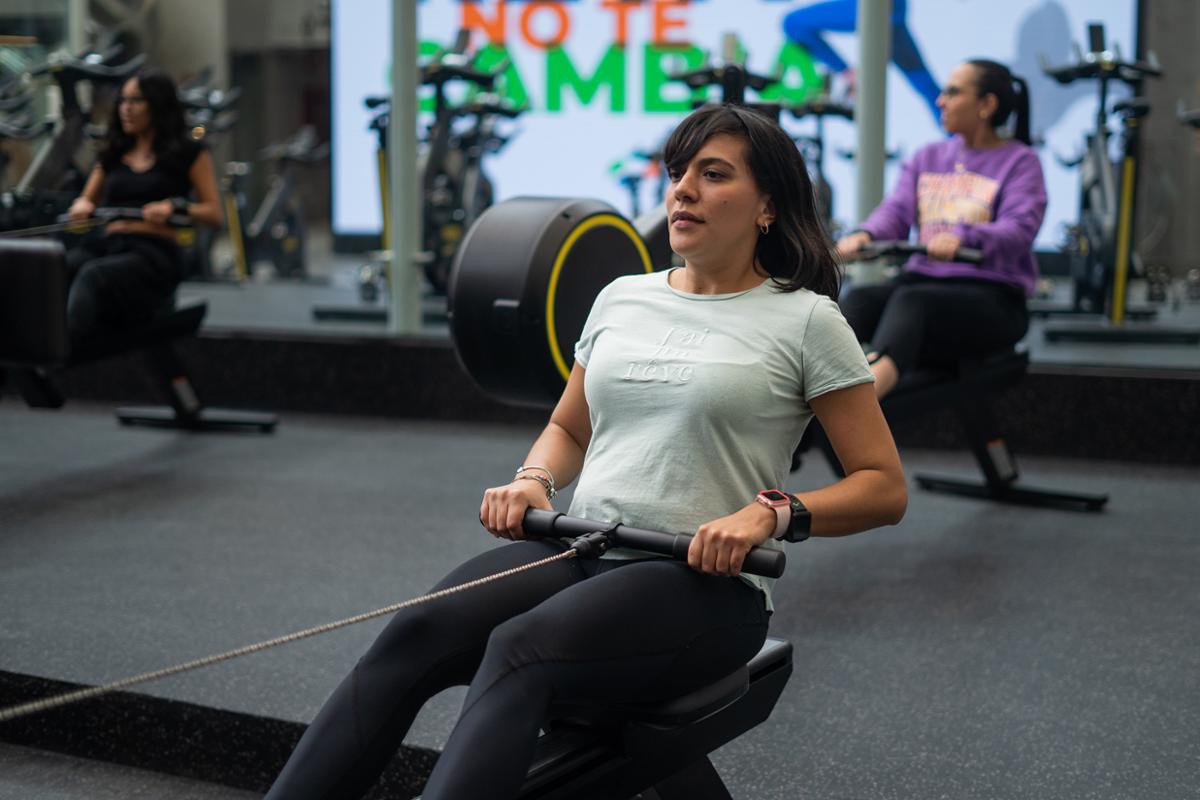
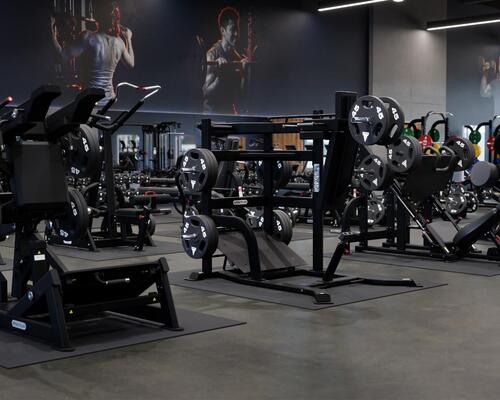
Tell us about the concept launched in Mexico Kinezis Fitness offers 18 different workout options, including treadmills, cycling, rowing, a running track, a Spartan-style obstacle course and step track, weights and free weights.
There are also seven studios for yoga, Pilates, functional training, barre, dancing, boxing and aerial silks, with four classes every morning and eight every evening.
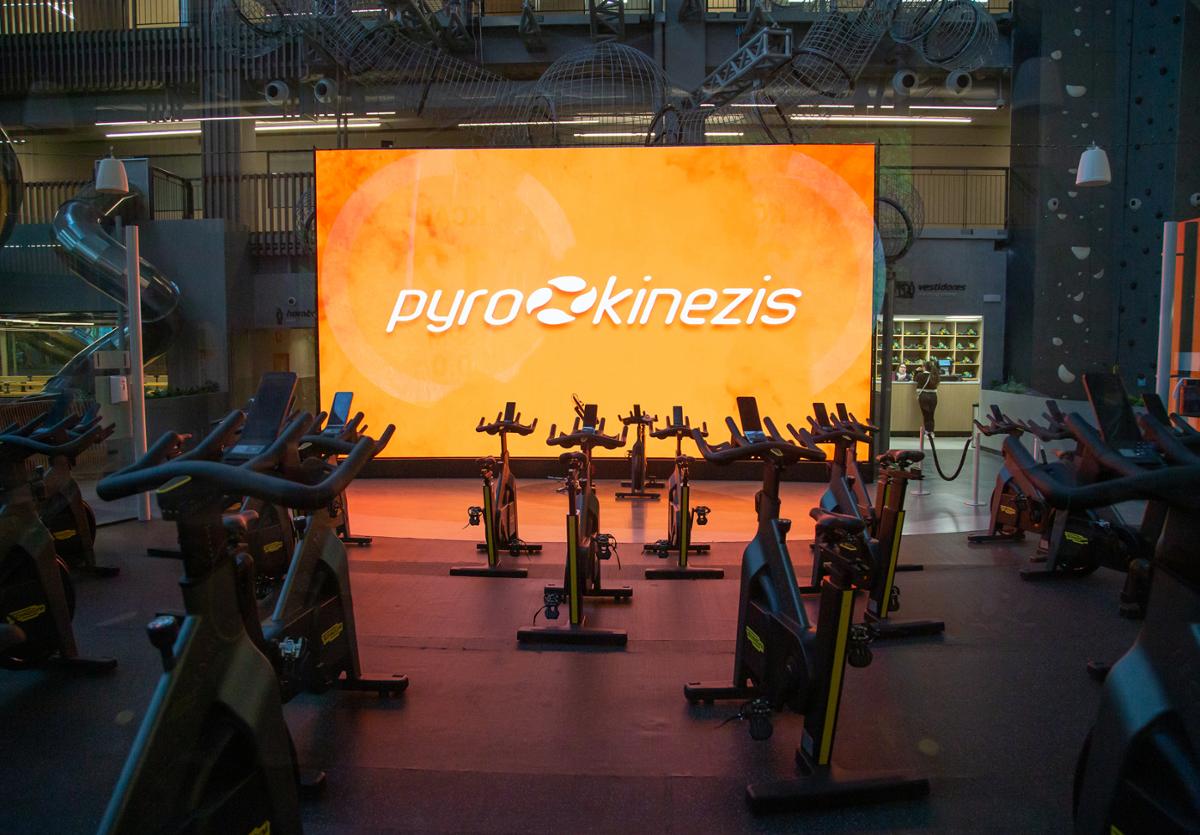
There are spaces to work, as well as pet care and childcare offering fun activities for children aged one- to five-years-old and dogs. We’re going for a boutique approach with immersive environments with 9m x 4m screens and excellent coaches, including some of Mexico’s best athletes.
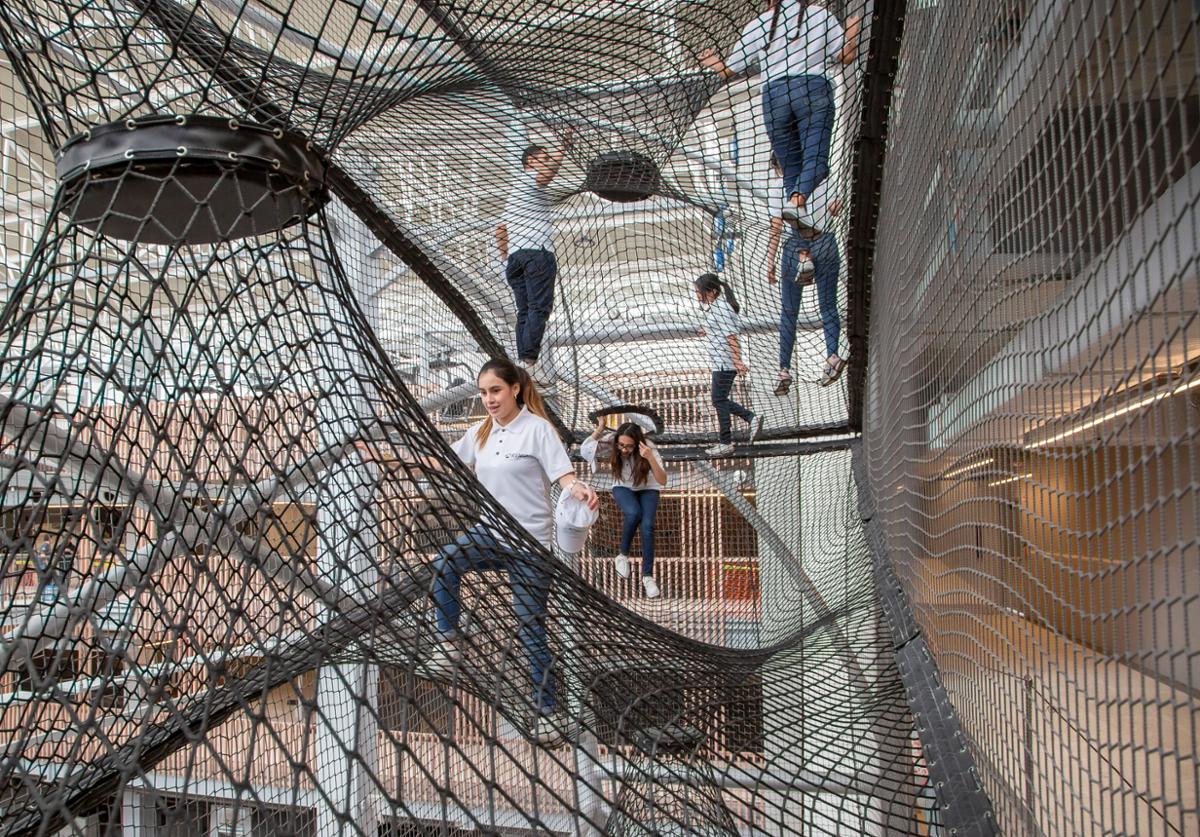
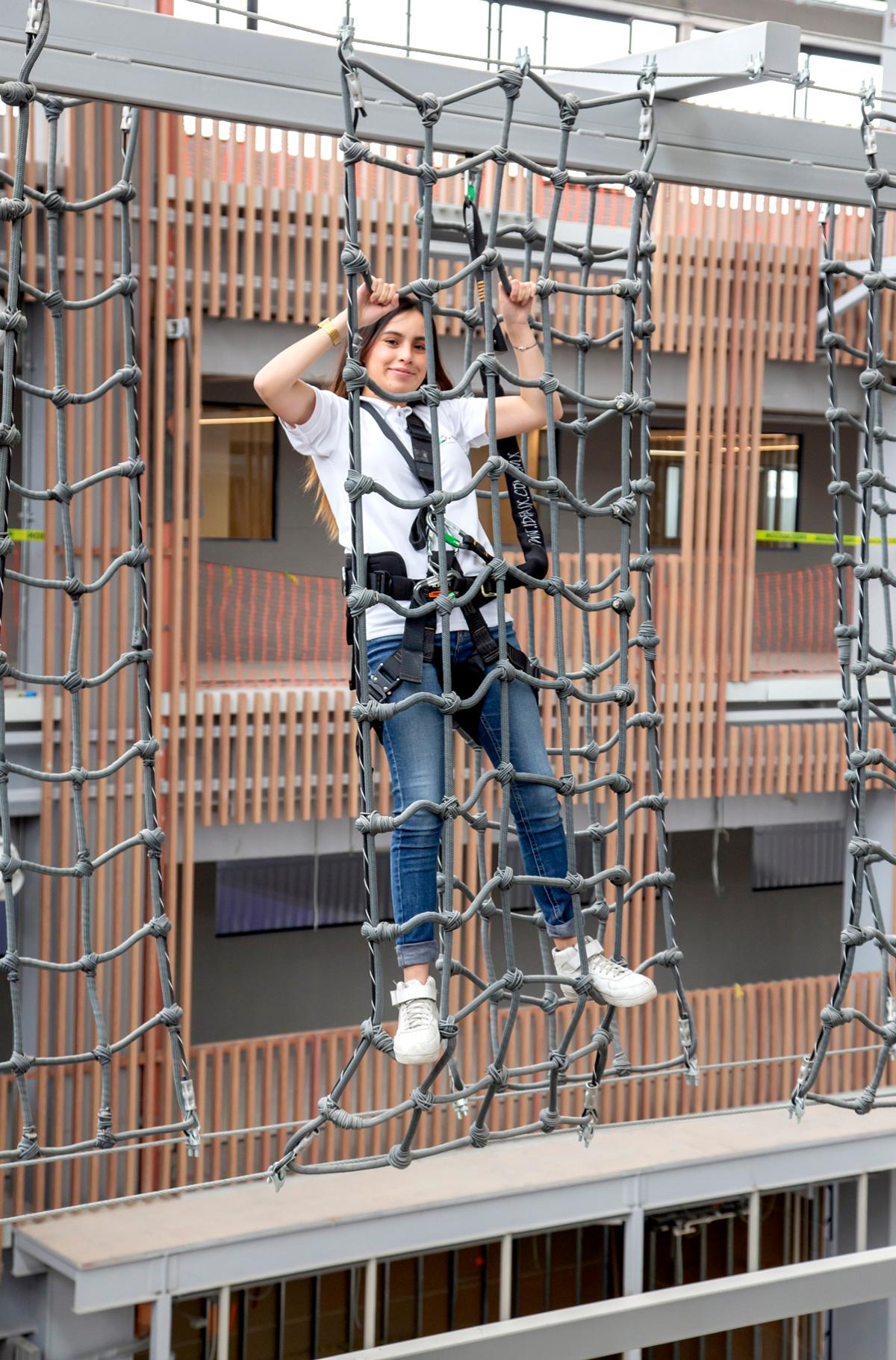
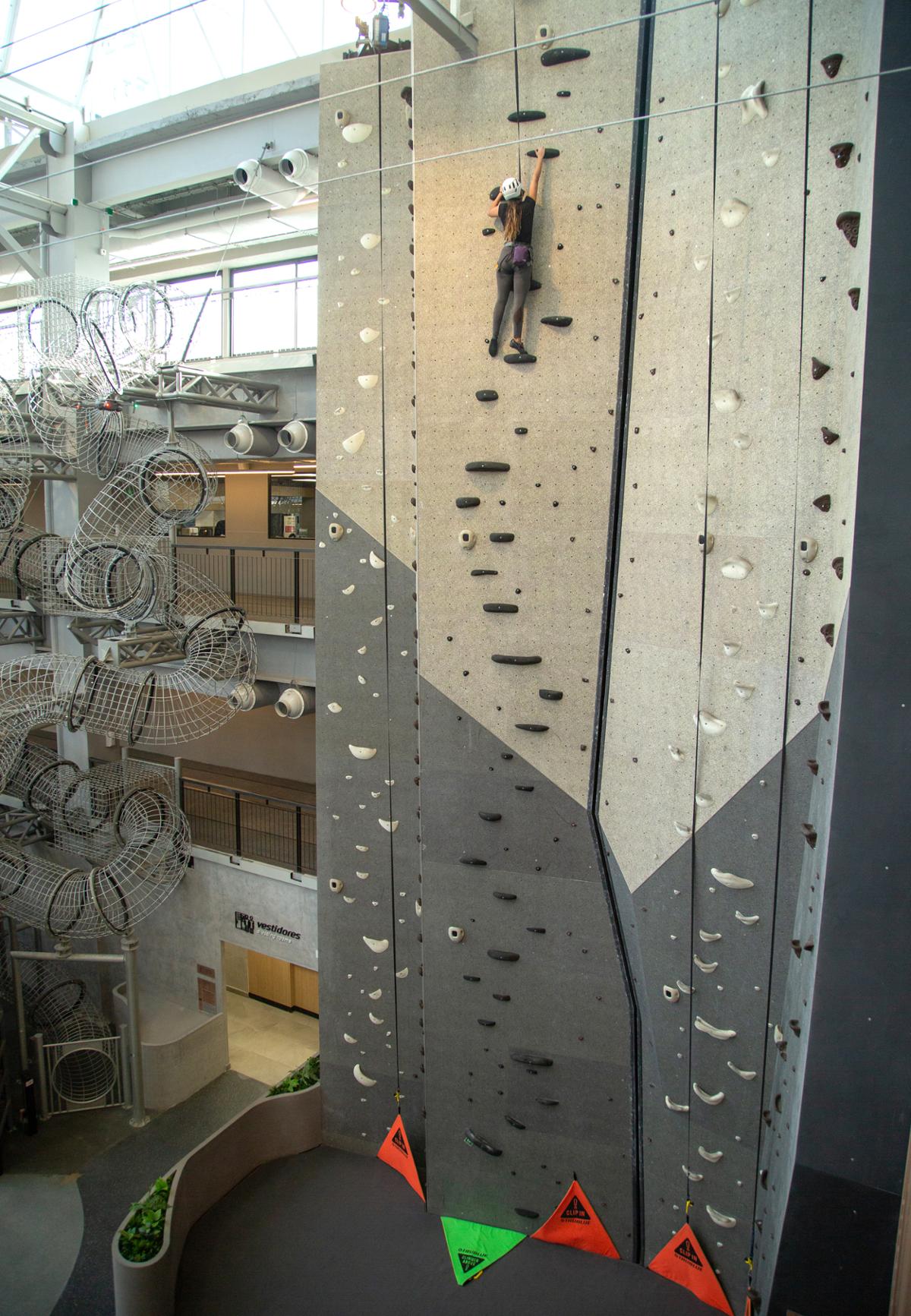
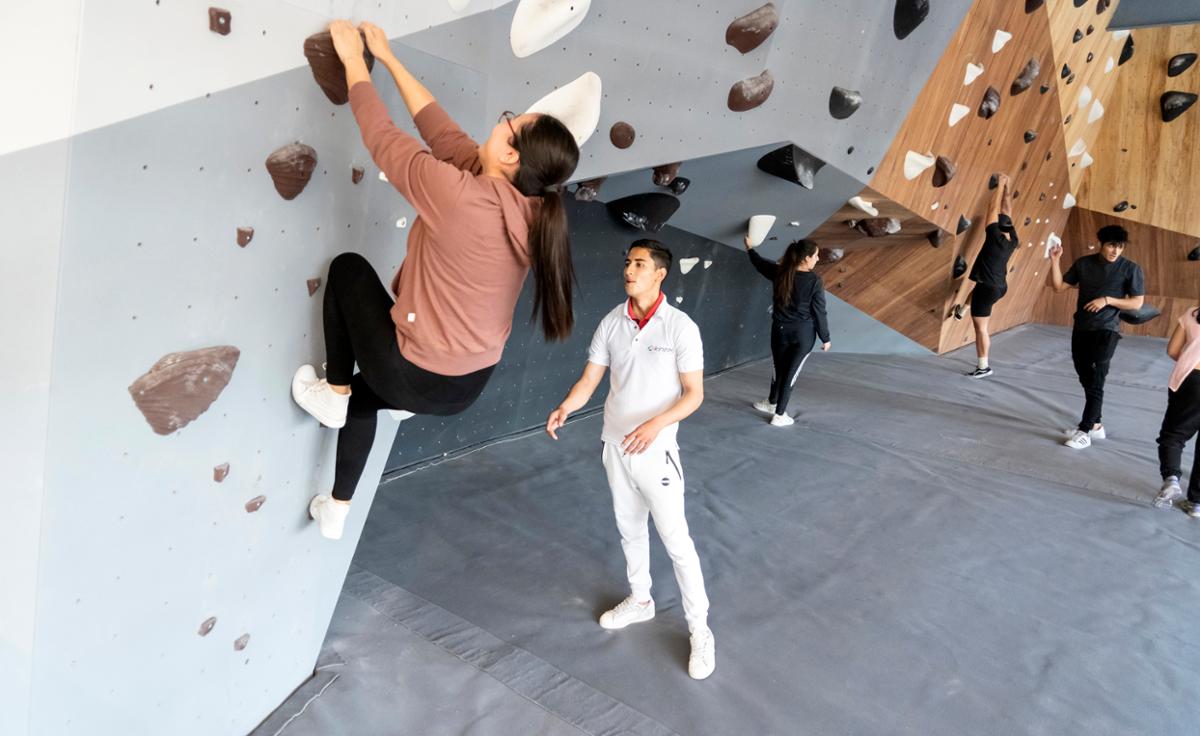
Kinezis Fun is all about adrenaline with six different style climbing walls, including bouldering, cloud climbing, net climbing, a hamster tube and the first speed climbing wall in Mexico.
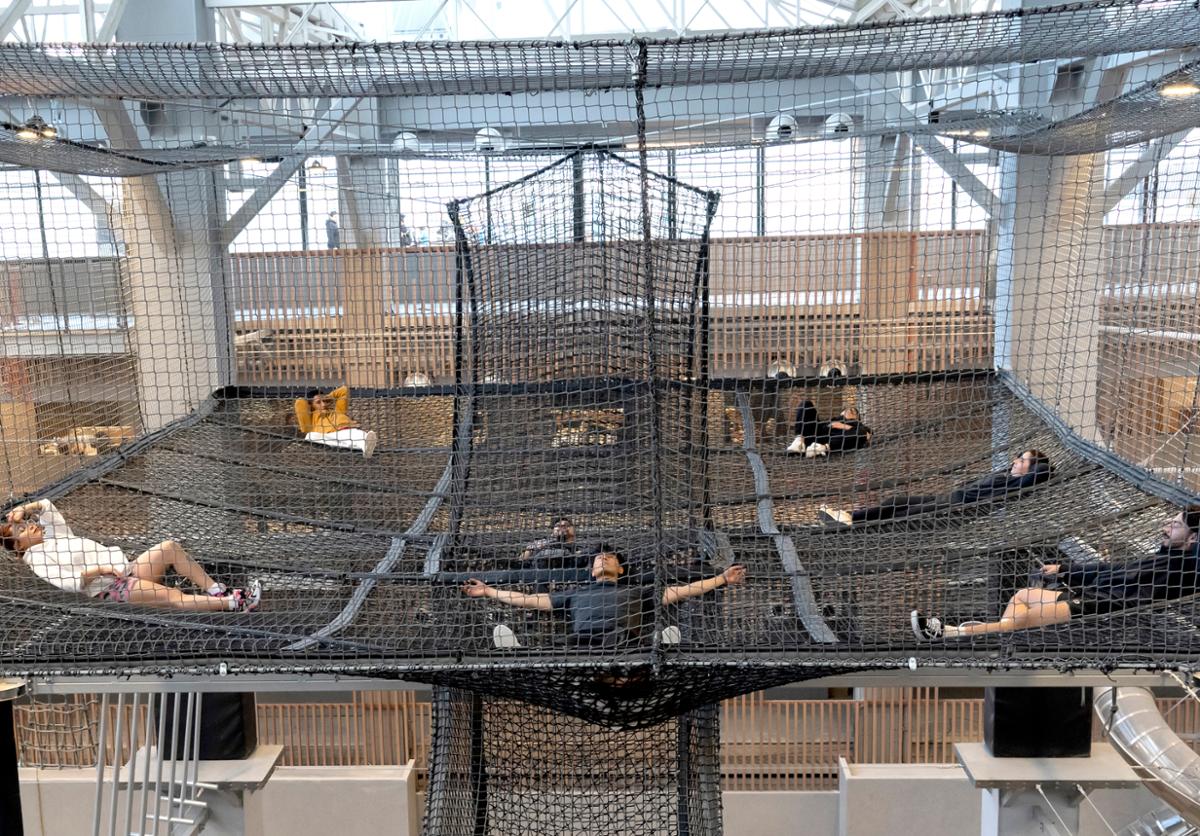
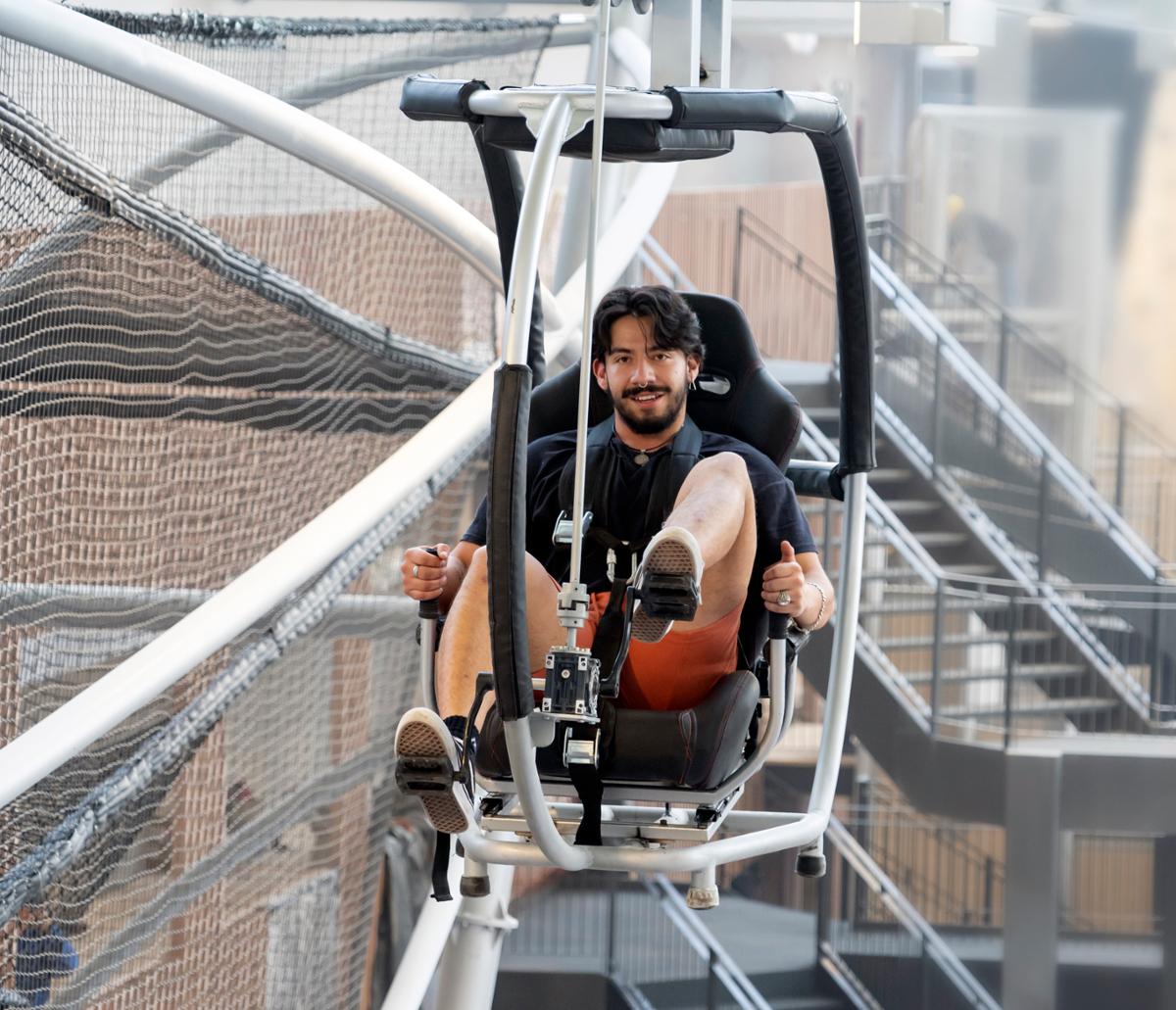
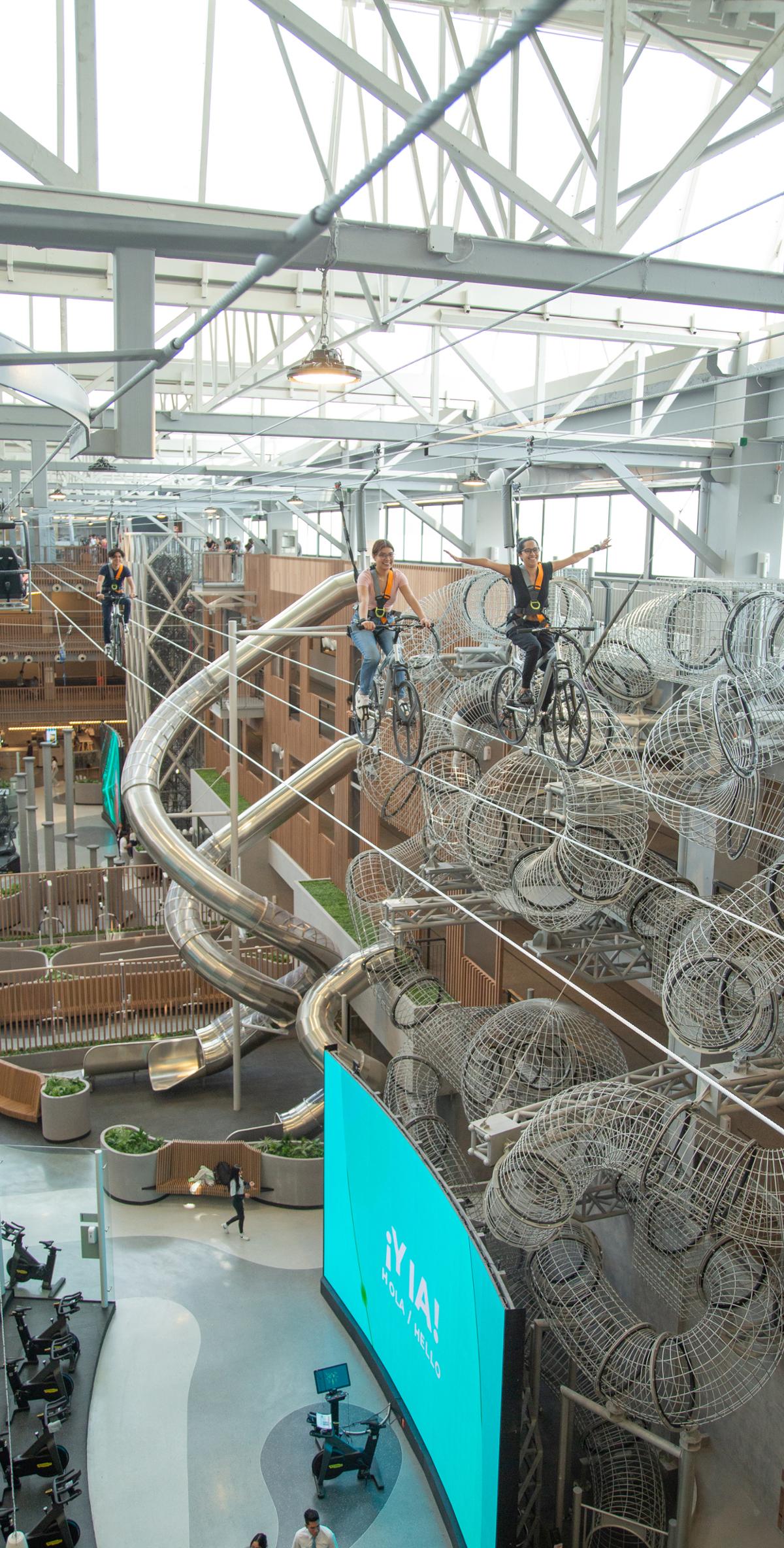
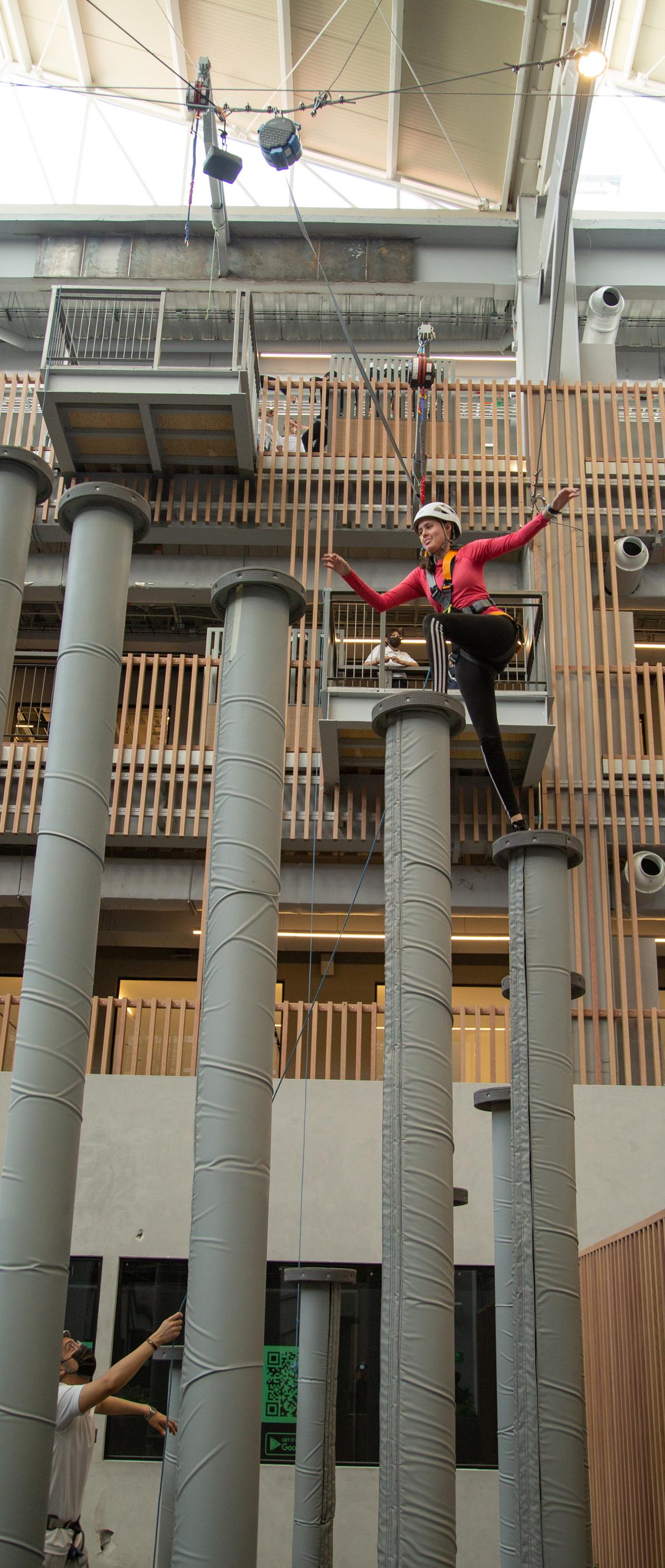
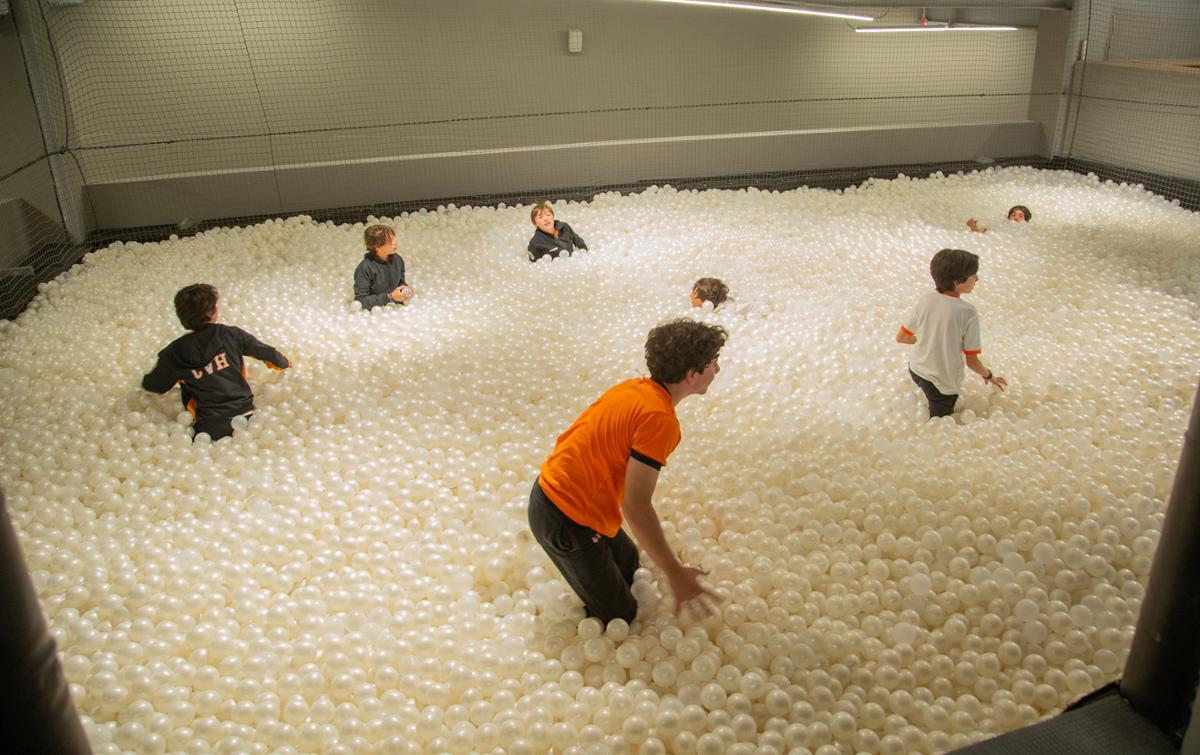
The site is four storeys high, so there are a number of fun ways to climb up and then drop down, such as the vertical drop and free fall, slides, trampolines, bouncing nets, and inflatables. There are also aerial bikes hanging on wires which people can ride around and a zip line goes around the shopping centre.
Nowhere in the world has all this content together.
Visitors are given a wearable bracelet which monitors everything they do, including counting calories burned and eaten, steps made, their heart rate and blood oxygenation, but although we monitor all this, the emphasis is very strongly on movement being fun.
Kinezis Wellness is the third piece of the jigsaw, with a spa that includes the first hammam in Mexico, treatment rooms, a sauna, hot tub, ice bath and hanging hammocks for relaxation.
An array of wellness services is on offer, including body composition scanning, access to nutritionists and bloodwork. Going forward we’ll also be employing psychologists.
In the event space we’re running workshops on things such as the Wim Hof Method, Ayurveda, meditation and sound healing.
How much does it cost to use? Access to Kinezis Fun can be per class, by day pass or by buying a bundle of classes or a membership.
There are two types of membership: US$120 a month covers the use of the gym, classes, petcare, childcare and access to the co-working space. For another US$40 members can also use the spa and have one treatment a month.
Classes cost US$12 each and there are discounts for bulk purchasing of 5 per cent for five and 10 per cent for 10, while our Kinezis health offer is charged by the service.
It’s incredibly ambitious, what has the main challenge been? There is nothing like this in the world, so marketing has been a challenge, especially as Kidzania has good brand recognition in Mexico, so people assume this is a venue for children.
People who are into entertainment aren’t drawn to the gym and gym-goers aren’t drawn to entertainment centres, but once they visit they really get it.
We’re finding the repeat business is good and our reviews and exit research shows that people are very happy with the experience.
Going forward, we’ll be working on how to get the marketing message across more effectively.
What lessons have you learned so far? This is our prototype and we’ll test it for one full year to see what works and what doesn’t and adapt the product. Even now, after two months, we’re already thinking of changes. It has a footprint of 6,000sq m, for example, but this is too large and I think future sites will be about 70 per cent of this size at 4,000-5,000sq m.
We’ve also learned not to have six restaurants with six separate kitchens.
We wanted people to walk and climb their way around the four storeys, but we’re finding that one set of stairs isn’t enough to accommodate this across such a large site so we will need to add more.
At the moment we have four spaces which are each themed on a natural element and each has an ascend and descend activity and a cardio activity. Although this is a good story we won’t continue it to other sites because we already have a big enough concept to sell with the Kinezis theme alone.
We’ve also decided it would be more social to have all the climbing walls in one area.
What will expansion look like? It took us 25 years to get Kidzania to 22 countries, but we think we’ll be able to get the same growth for Kinezis in five years. In Mexico, South America and the US we’ll open and run the sites, but we’ll also use our established partners to undertake developments in other parts of the world.
We have established partnerships all over the world: the UK, Japan, Korea, India, Indonesia, Singapore, Malaysia, Philippines, Thailand, UK, UAE, Saudi Arabia, Egypt, Kuwait, Qatar, Russia, Portugal, Chile, Brazil, Costa Rica, US.
We’re also opening Kidzania’s this year in South Africa and Vietnam, followed by Hong Kong and Taiwan.
About KidZania
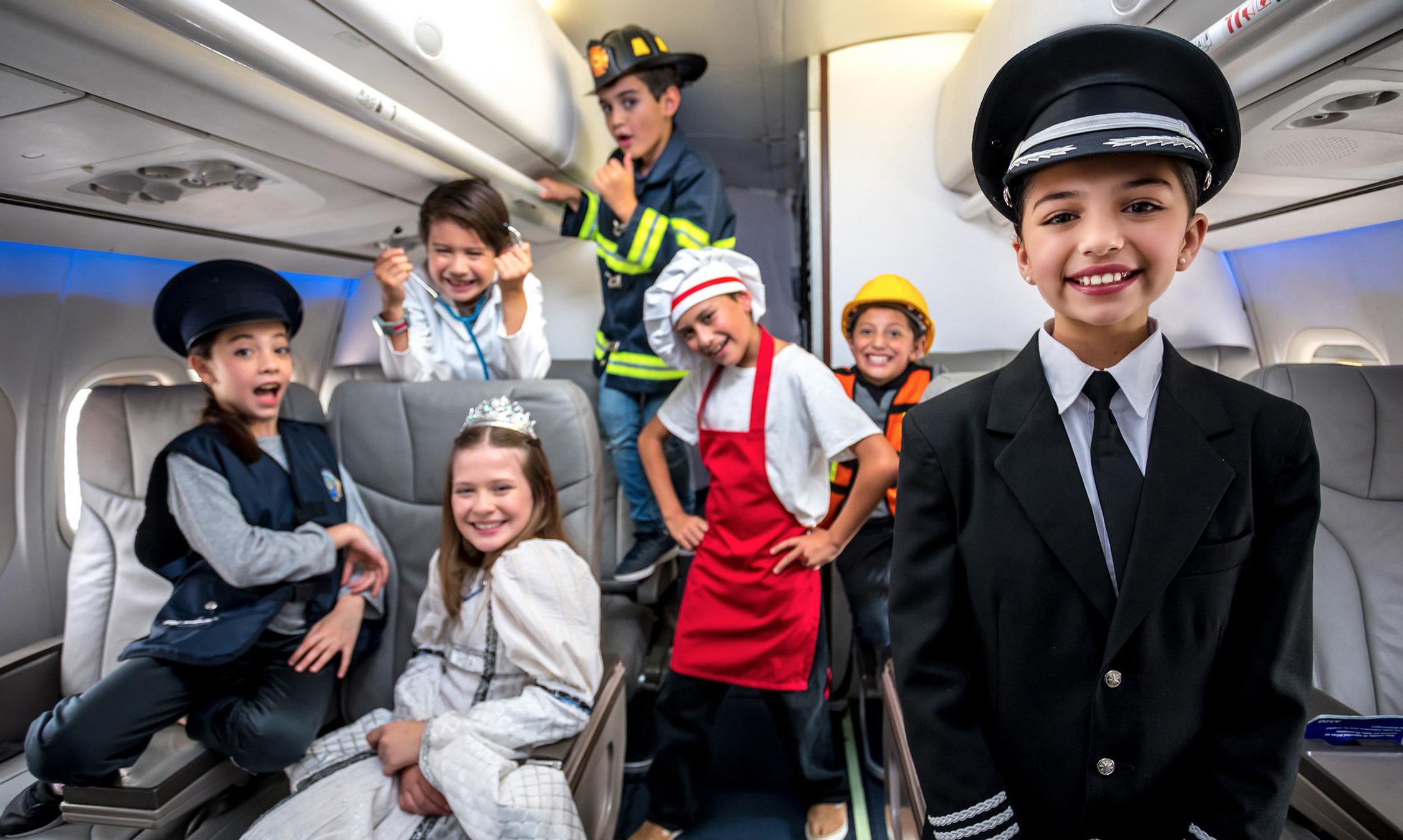
The operator has built a global network of role-play attractions
where children can enjoy scaled down, ‘real-world’ experiences
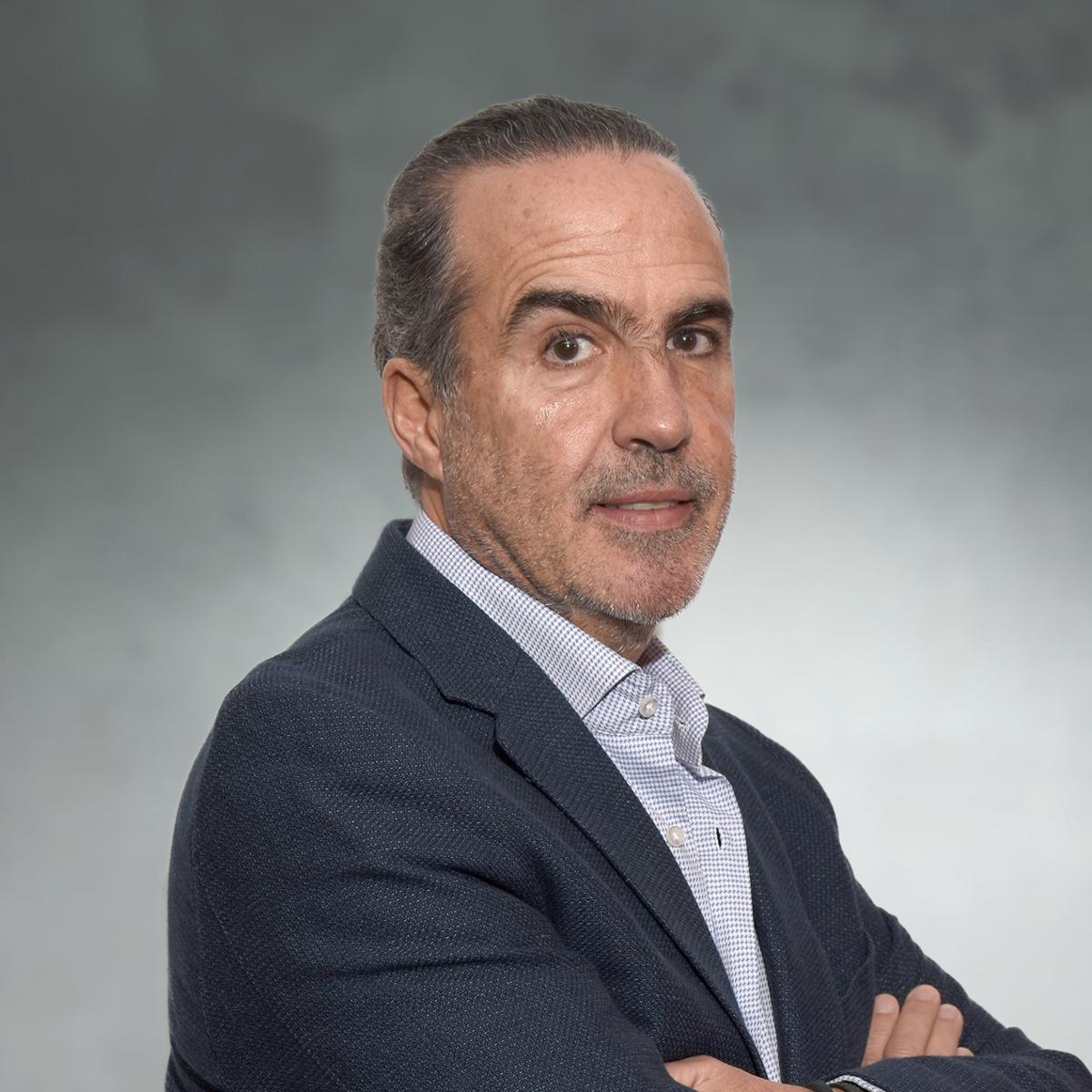
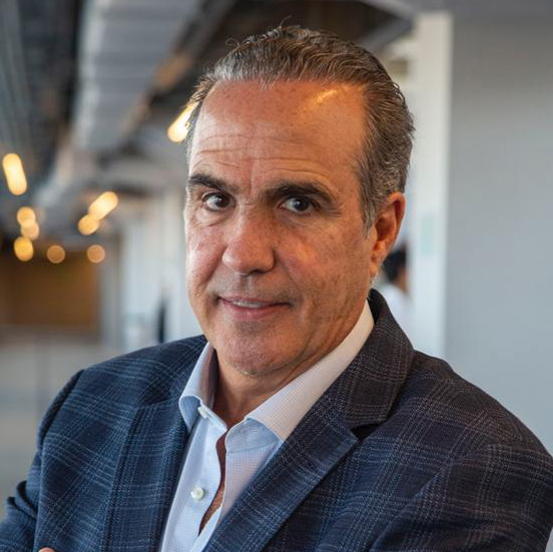
Xavier López Ancona / photo: kinezis
KidZania is a privately held international chain of indoor family entertainment centres operating in 30 locations worldwide, allowing children to role play adult jobs and earn currency. It receives around nine million visitors a year.
Every KidZania is themed as a child-sized replica of a real city, including buildings, shops and theatres, as well as vehicles and pedestrians moving along its streets.
In this city, children aged from 4- to 14-years-of-age, engage in branded activities from working in a Crest-sponsored dentist office, working at a McDonald’s restaurant, painting with Corporação Industrial do Norte, washing hands with P&G’s Safeguard soap, and using airline tickets from American Airlines.
Children earn KidZos (KidZania’s currency) while performing the tasks and the money is kept in the KidZania bank for children to spend at the gift shop and on KidZania’s activities.
Children wear electronic bracelets that allow parents to keep track of them remotely.
KidZania was created and developed by Xavier López Ancona, with the first KidZania opening in September 1999 in Mexico City. Corporate sponsors funded 55 per cent of the initial investment.
KidZania’s mascots are called RightZKeepers. They represent the rights that all KidZania customers have – the right to know, to care, to play, to create, to share and to be.
Examples are Urbano (Right to Know): A nine-year-old, green-haired ‘kid’ who’s interested in inventions and conducting experiments; Vita (Right to Care): Urbano’s younger sister, a kind and thoughtful blue-haired girl who loves all living things and; Beebop (Right to Create): Urbano’s 10-year-old best friend. He is a huge fan of music and is very artistic. He has orange hair, and wears a yellow shirt and headphones.
The first Kidzania opened in Mexico City in 1999 / photo: Kidzania
Entertainment centres tend to be busy during the day, while gyms are busy early morning and evening / photo: kinezis
Kinezis Fitness offers 18 different workout options / photo: kinezis
The new centre incorporates Kinezis Fun, Kinezis Fitness and Kinezis Health / photo: kinezis
The first Kinezis is open in Tlalnepantla de Baz, Mexico, with further sites planned / photo: kinezis
Kinezis ranges across all vertical space in the four-storey building / photo: kinezis
Aerial bikes are an innovative way for members to exercise / photo: kinezis
While customers are having fun and getting fit, they can also benefit from childcare and petcare services / photo: kinezis
As an entertainment and fitness concept, Kinezis is the first of its kind / photo: kinezis
Access to Kinezis Fun can be by class, by day pass, via a bundle or a monthly membership / photo: kinezis
The site in Mexico has a footprint of around 6,000sq m and is the brand’s prototype / photo: kinezis
The Kinezis brand has opted for a boutique approach with immersive environments / photo: kinezis
/ photo: kinezis
Kinesis has four distinct areas, each themed around a natural element / photo: kinezis
Panatta brought together four of the most influential figures in bodybuilding history on the
stage of RiminiWellness 2026: Phil Heath, Lee Haney, Ronnie Coleman and Hany Rambod. [more...]
What was the inspiration for Kinezis? I founded Kidzania – an entertainment concept where children can role play different occupations – 25 years ago. It has been very successful and now has 29 centres in 22 countries. I wanted to incorporate a new concept and a separate growth opportunity and spent two years travelling the world looking for opportunities, visiting 32 countries, 52 cities and 400 properties.
Everywhere I went I saw a strong trend for health and wellness, as well as active entertainment, such as trampoline parks, which inspired me to come up with a completely new concept based on health.
When I started doing research it became clear that wellness is the future. Although obesity is a problem all over the world, there’s also evidence to show that people want to exercise more and eat better.
I bought a lot of reports about gyms and found out that worldwide – 85 per cent of gym goers go before 10.00am or after 6.00pm, while entertainment ‘purchases’ normally take place between 10.00am and 6.00pm. So I had the idea to use the same brand and same space to do both fitness and entertainment, but with different opening hours. Nobody has done this before.
We’ve also broken the rules by having three businesses in one: Kinezis Fun, Kinezis Fitness and Kinezis Health. We wanted to go into wellness, we’re very good at entertainment and it made sense to tap into fitness.
Tell us about the concept launched in Mexico Kinezis Fitness offers 18 different workout options, including treadmills, cycling, rowing, a running track, a Spartan-style obstacle course and step track, weights and free weights.
There are also seven studios for yoga, Pilates, functional training, barre, dancing, boxing and aerial silks, with four classes every morning and eight every evening.
There are spaces to work, as well as pet care and childcare offering fun activities for children aged one- to five-years-old and dogs. We’re going for a boutique approach with immersive environments with 9m x 4m screens and excellent coaches, including some of Mexico’s best athletes.
Kinezis Fun is all about adrenaline with six different style climbing walls, including bouldering, cloud climbing, net climbing, a hamster tube and the first speed climbing wall in Mexico.
The site is four storeys high, so there are a number of fun ways to climb up and then drop down, such as the vertical drop and free fall, slides, trampolines, bouncing nets, and inflatables. There are also aerial bikes hanging on wires which people can ride around and a zip line goes around the shopping centre.
Nowhere in the world has all this content together.
Visitors are given a wearable bracelet which monitors everything they do, including counting calories burned and eaten, steps made, their heart rate and blood oxygenation, but although we monitor all this, the emphasis is very strongly on movement being fun.
Kinezis Wellness is the third piece of the jigsaw, with a spa that includes the first hammam in Mexico, treatment rooms, a sauna, hot tub, ice bath and hanging hammocks for relaxation.
An array of wellness services is on offer, including body composition scanning, access to nutritionists and bloodwork. Going forward we’ll also be employing psychologists.
In the event space we’re running workshops on things such as the Wim Hof Method, Ayurveda, meditation and sound healing.
How much does it cost to use? Access to Kinezis Fun can be per class, by day pass or by buying a bundle of classes or a membership.
There are two types of membership: US$120 a month covers the use of the gym, classes, petcare, childcare and access to the co-working space. For another US$40 members can also use the spa and have one treatment a month.
Classes cost US$12 each and there are discounts for bulk purchasing of 5 per cent for five and 10 per cent for 10, while our Kinezis health offer is charged by the service.
It’s incredibly ambitious, what has the main challenge been? There is nothing like this in the world, so marketing has been a challenge, especially as Kidzania has good brand recognition in Mexico, so people assume this is a venue for children.
People who are into entertainment aren’t drawn to the gym and gym-goers aren’t drawn to entertainment centres, but once they visit they really get it.
We’re finding the repeat business is good and our reviews and exit research shows that people are very happy with the experience.
Going forward, we’ll be working on how to get the marketing message across more effectively.
What lessons have you learned so far? This is our prototype and we’ll test it for one full year to see what works and what doesn’t and adapt the product. Even now, after two months, we’re already thinking of changes. It has a footprint of 6,000sq m, for example, but this is too large and I think future sites will be about 70 per cent of this size at 4,000-5,000sq m.
We’ve also learned not to have six restaurants with six separate kitchens.
We wanted people to walk and climb their way around the four storeys, but we’re finding that one set of stairs isn’t enough to accommodate this across such a large site so we will need to add more.
At the moment we have four spaces which are each themed on a natural element and each has an ascend and descend activity and a cardio activity. Although this is a good story we won’t continue it to other sites because we already have a big enough concept to sell with the Kinezis theme alone.
We’ve also decided it would be more social to have all the climbing walls in one area.
What will expansion look like? It took us 25 years to get Kidzania to 22 countries, but we think we’ll be able to get the same growth for Kinezis in five years. In Mexico, South America and the US we’ll open and run the sites, but we’ll also use our established partners to undertake developments in other parts of the world.
We have established partnerships all over the world: the UK, Japan, Korea, India, Indonesia, Singapore, Malaysia, Philippines, Thailand, UK, UAE, Saudi Arabia, Egypt, Kuwait, Qatar, Russia, Portugal, Chile, Brazil, Costa Rica, US.
We’re also opening Kidzania’s this year in South Africa and Vietnam, followed by Hong Kong and Taiwan.
About KidZania
The operator has built a global network of role-play attractions
where children can enjoy scaled down, ‘real-world’ experiences
Xavier López Ancona / photo: kinezis
KidZania is a privately held international chain of indoor family entertainment centres operating in 30 locations worldwide, allowing children to role play adult jobs and earn currency. It receives around nine million visitors a year.
Every KidZania is themed as a child-sized replica of a real city, including buildings, shops and theatres, as well as vehicles and pedestrians moving along its streets.
In this city, children aged from 4- to 14-years-of-age, engage in branded activities from working in a Crest-sponsored dentist office, working at a McDonald’s restaurant, painting with Corporação Industrial do Norte, washing hands with P&G’s Safeguard soap, and using airline tickets from American Airlines.
Children earn KidZos (KidZania’s currency) while performing the tasks and the money is kept in the KidZania bank for children to spend at the gift shop and on KidZania’s activities.
Children wear electronic bracelets that allow parents to keep track of them remotely.
KidZania was created and developed by Xavier López Ancona, with the first KidZania opening in September 1999 in Mexico City. Corporate sponsors funded 55 per cent of the initial investment.
KidZania’s mascots are called RightZKeepers. They represent the rights that all KidZania customers have – the right to know, to care, to play, to create, to share and to be.
Examples are Urbano (Right to Know): A nine-year-old, green-haired ‘kid’ who’s interested in inventions and conducting experiments; Vita (Right to Care): Urbano’s younger sister, a kind and thoughtful blue-haired girl who loves all living things and; Beebop (Right to Create): Urbano’s 10-year-old best friend. He is a huge fan of music and is very artistic. He has orange hair, and wears a yellow shirt and headphones.
The first Kidzania opened in Mexico City in 1999 / photo: Kidzania
Entertainment centres tend to be busy during the day, while gyms are busy early morning and evening / photo: kinezis
Kinezis Fitness offers 18 different workout options / photo: kinezis
The new centre incorporates Kinezis Fun, Kinezis Fitness and Kinezis Health / photo: kinezis
The first Kinezis is open in Tlalnepantla de Baz, Mexico, with further sites planned / photo: kinezis
Kinezis ranges across all vertical space in the four-storey building / photo: kinezis
Aerial bikes are an innovative way for members to exercise / photo: kinezis
While customers are having fun and getting fit, they can also benefit from childcare and petcare services / photo: kinezis
As an entertainment and fitness concept, Kinezis is the first of its kind / photo: kinezis
Access to Kinezis Fun can be by class, by day pass, via a bundle or a monthly membership / photo: kinezis
The site in Mexico has a footprint of around 6,000sq m and is the brand’s prototype / photo: kinezis
The Kinezis brand has opted for a boutique approach with immersive environments / photo: kinezis
/ photo: kinezis
Kinesis has four distinct areas, each themed around a natural element / photo: kinezis
Italian Exhibition Group – the organiser behind industry events Dubai Active and Dubai Muscle
Show – has been appointed to deliver the Health and Wellness Expo and Fire and Safety Expo at
the 16th World Firefighters Games.
It’s been five years since the fitness industry reopened after the last lockdown – long enough
to look back on the impact the pandemic had on the sector and what might come next.
Wattbike has announced a new integration with EGYM, which enables the bikes to contribute to
the Cardio BioAge score of individuals via a VO2 max result.
Les Mills has launched a reformer Pilates workout. The 45-minute workout blends traditional
reformer movements and more contemporary exercises, choreographed to music.
According to research which tracked more than 147,000 people for 30 years, 90-120 minutes
of strength training a week may deliver some of the biggest long-term health rewards.
The UK's four Chief Medical Officers have published a refreshed edition of Physical activity
guidelines: UK Chief Medical Officers' report, updating the evidence that underpins the nation's
physical activity recommendations and placing greater emphasis on strength, balance, reducing
sedentary behaviour and, for the first time, supporting people taking weight loss medications.
Places Leisure has exchanged contracts to build and operate a flagship £60m water and leisure
destination on behalf of Basingstoke and Deane Borough Council.
The Republic of Ireland will become the latest market in PureGym’s expanding international
portfolio, with the first launch planned for Dublin in 2027.
Panatta brought together four of the most influential figures in bodybuilding history on the
stage of RiminiWellness 2026: Phil Heath, Lee Haney, Ronnie Coleman and Hany Rambod. [more...]