Exercise on Referral can now attract public sector funding
Leisure operators in the UK offering Exercise on Referral (EOR) can now have the quality and effectiveness of their schemes validated by Quest – Sport England’s management improvement tool.
The new Exercise Referral Standard assessment can be taken standalone or as part of Sport England’s Quest assessment process, which is designed to help operators demonstrate the positive impact they have on their local communities, while also strengthening their core operational standards.
The Quality Standard for Exercise Referral assessment was originally developed pre-pandemic by Right Directions in partnership with Suffolk Public Health, which had created a set of locally tailored operating standards for exercise referral schemes in collaboration with exercise referral scheme leaders, health professionals and other key stakeholders across the county.
The first of its kind in the UK, the standard was developed to reassure GPs and health professionals that they can refer patients to take part in exercise in the knowledge that accredited facilities are delivering programmes that have been rigorously tested using real-world criteria.
Following a successful two and half year pilot, the standard has now been adapted into a module for Sport England’s Quest.
Checking suitability Phil Lown a senior Quest assessor at Right Directions, which manages Quest on behalf of Sport England as part of its Moving Communities initiative, explains, saying: “The Exercise Referral Standard will allow facilities running exercise on referral schemes to challenge and check the suitability of the programmes they’re running, analyse how they’re using funding and demonstrate clear patient outputs. This ‘rubber stamp’ should also give operators the confidence to apply for further funding.
“Health professionals will no longer need to find solutions to embed exercise themselves; they can simply refer patients living with a condition that would benefit from physical activity to facilities that have achieved the Exercise Referral Standard, reassured they will receive a high level of care and a structured exercise programme delivered in a safe environment.”
The standard aims to ensure exercise referral schemes are operating in line with the UK government’s 2014 National Institute for Health and Care Excellence (NICE) guidelines for exercise referral and behaviour change and that pathways are in place for exercise referral that’s aligned to evidence-based principles and best practice guidelines; as well as local health and wellbeing priorities.
“The standard isn’t limited to those offering exercise referral in a leisure centre, it’s ideal for small, specialist community teams and exercise referral-specific projects, as well as specialist exercise referral teams who operate as independent teams within the community or within a leisure or health club facility setting,” explains Lown.
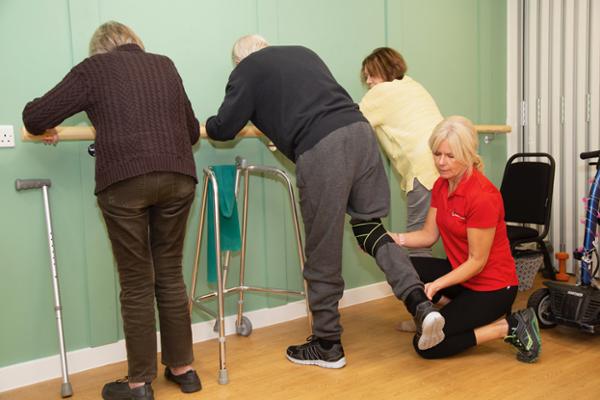
The assessment can be carried out as a stand-alone accreditation or as part of Quest Plus at no extra cost and covers all elements of exercise referral across four key areas: scheme safety, scheme delivery (including governance), information sharing and scheme monitoring and evaluation. It includes observation of a practical exercise referral session, which could be anything from a specialist programme review or initial consultation to an exercise class, group gym session or induction.
Lown concludes: “Achieving this exercise referral stamp of approval will help facilities grow their programmes by facilitating understanding of local referral processes, strengthening the local evidence-base on the effectiveness of schemes and, therefore, their case for accessing funding streams.
“Ultimately, it should ensure people receive high-quality exercise programmes tailored to their needs and make it easier for healthcare professionals to engage with schemes and for individuals to participate.”
Putting into practice Matthew Hickey is health and wellbeing manager at Abbeycroft Leisure and was involved in the original development of the Quality Standard. He explains: “We’ve had programmes running for 12 years now. They were originally self-funded by the client and some GPs and community teams were happy to refer into a paid service, however, the introduction of the standard has really joined the dots; providing us with the structure and credibility to move forward at pace.
“We now offer funded patient pathways,” he says, “supported by Suffolk County Council Public Health, West Suffolk NHS Foundation Trust, West Suffolk Council and the wider West Suffolk Alliance – all the local health bodies working together to support our work, simply because we’re a trusted partner.
“We use the Exercise Referral Standard and Refer-All’s software to demonstrate the outcomes of our Active Living programmes, which run across seven localities and we’ve secured an additional two years of funding” he says.
Steady expansion and increased funding This set-up has enabled Abbeycroft Leisure to expand its scope, as Hickey explains: “Now our foot’s in the door, we can keep it open, as we’re front and centre of partners’ thinking when it comes to anything else,” he says. “We’re having new conversations every week and have received further funding for Long-COVID support and working with MacMillan on cancer programmes.
“We now manage twelve centres on behalf of our local council partners and we’re able to use the standard as a base point to externally assess and align all Exercise on Referral programmes across our portfolio,” says Hickey. “From evaluation and feedback we can understand why one element scores an ‘excellent’ and another only a ‘good’, while recognising gaps in knowledge and creating a structure to put any changes in place, continually testing what we’re doing to ensure it’s still working effectively.”
• The industry is working to build partnerships with the health service to deliver exercise interventions to patients in gyms, health clubs and leisure centres
• In order for doctors to be able to refer patients they need to be assured that the services will be delivered in a safe and efficacious way.
•A new Exercise Referral Standard has been developed to drive staff training in this area and enable operators to skill-up to deliver exercise on referral and bid for funds to support this work
Why does it matter?
• The World Health Organization says US$27bn a year could be saved globally by pursuing a strategy of prevention and focusing on wellbeing and exercise
• The Prehab4Cancer exercise programme in Greater Manchester found participants spend an average of 36 hours less time in hospital and 10 hours less in critical care, releasing 550 ward-beds-days and 146 critical care-bed-days
• The industry already delivers two thirds of the UK’s cancer prehab and rehab interventions
• A study by Guy’s and St Thomas’s NHS Trust in the UK found cancer patients who followed a course of exercise ahead of surgery saw tumours shrink markedly
• The new Exercise Referral Standard is designed to increase capacity in areas of treatment, such as cancer, musculoskeletal, cardiac rehab, mental health and diabetes
Exercise can improve some cancer outcomes / PHOTO: national cancer institute/unsplash
About the Exercise Referral Standard
The standard covers all elements of exercise referral and is split into four assessment areas: scheme safety, scheme delivery (including governance), information sharing and the provision of information, scheme monitoring and evaluation. Here are some examples of areas of assessment. For a full list, go to www.hcmmag.com/assessguide
• The scheme is operated by professionals who hold relevant qualifications and have valid indemnity insurance
• It has a process for referral and ensures the appropriateness of that referral
• The scheme demonstrates effective management of risk
• There is a clear framework in place for the delivery of the exercise scheme
• Participants who fail to attend are identified and followed up and reasons for non-attendance are recorded
• Information is collected in line with a standard evaluation framework
• The collection of participant information and evaluation data is participant-centered and used to motivate behaviour change
Panatta brought together four of the most influential figures in bodybuilding history on the
stage of RiminiWellness 2026: Phil Heath, Lee Haney, Ronnie Coleman and Hany Rambod. [more...]
Exercise on Referral can now attract public sector funding
Leisure operators in the UK offering Exercise on Referral (EOR) can now have the quality and effectiveness of their schemes validated by Quest – Sport England’s management improvement tool.
The new Exercise Referral Standard assessment can be taken standalone or as part of Sport England’s Quest assessment process, which is designed to help operators demonstrate the positive impact they have on their local communities, while also strengthening their core operational standards.
The Quality Standard for Exercise Referral assessment was originally developed pre-pandemic by Right Directions in partnership with Suffolk Public Health, which had created a set of locally tailored operating standards for exercise referral schemes in collaboration with exercise referral scheme leaders, health professionals and other key stakeholders across the county.
The first of its kind in the UK, the standard was developed to reassure GPs and health professionals that they can refer patients to take part in exercise in the knowledge that accredited facilities are delivering programmes that have been rigorously tested using real-world criteria.
Following a successful two and half year pilot, the standard has now been adapted into a module for Sport England’s Quest.
Checking suitability Phil Lown a senior Quest assessor at Right Directions, which manages Quest on behalf of Sport England as part of its Moving Communities initiative, explains, saying: “The Exercise Referral Standard will allow facilities running exercise on referral schemes to challenge and check the suitability of the programmes they’re running, analyse how they’re using funding and demonstrate clear patient outputs. This ‘rubber stamp’ should also give operators the confidence to apply for further funding.
“Health professionals will no longer need to find solutions to embed exercise themselves; they can simply refer patients living with a condition that would benefit from physical activity to facilities that have achieved the Exercise Referral Standard, reassured they will receive a high level of care and a structured exercise programme delivered in a safe environment.”
The standard aims to ensure exercise referral schemes are operating in line with the UK government’s 2014 National Institute for Health and Care Excellence (NICE) guidelines for exercise referral and behaviour change and that pathways are in place for exercise referral that’s aligned to evidence-based principles and best practice guidelines; as well as local health and wellbeing priorities.
“The standard isn’t limited to those offering exercise referral in a leisure centre, it’s ideal for small, specialist community teams and exercise referral-specific projects, as well as specialist exercise referral teams who operate as independent teams within the community or within a leisure or health club facility setting,” explains Lown.
The assessment can be carried out as a stand-alone accreditation or as part of Quest Plus at no extra cost and covers all elements of exercise referral across four key areas: scheme safety, scheme delivery (including governance), information sharing and scheme monitoring and evaluation. It includes observation of a practical exercise referral session, which could be anything from a specialist programme review or initial consultation to an exercise class, group gym session or induction.
Lown concludes: “Achieving this exercise referral stamp of approval will help facilities grow their programmes by facilitating understanding of local referral processes, strengthening the local evidence-base on the effectiveness of schemes and, therefore, their case for accessing funding streams.
“Ultimately, it should ensure people receive high-quality exercise programmes tailored to their needs and make it easier for healthcare professionals to engage with schemes and for individuals to participate.”
Putting into practice Matthew Hickey is health and wellbeing manager at Abbeycroft Leisure and was involved in the original development of the Quality Standard. He explains: “We’ve had programmes running for 12 years now. They were originally self-funded by the client and some GPs and community teams were happy to refer into a paid service, however, the introduction of the standard has really joined the dots; providing us with the structure and credibility to move forward at pace.
“We now offer funded patient pathways,” he says, “supported by Suffolk County Council Public Health, West Suffolk NHS Foundation Trust, West Suffolk Council and the wider West Suffolk Alliance – all the local health bodies working together to support our work, simply because we’re a trusted partner.
“We use the Exercise Referral Standard and Refer-All’s software to demonstrate the outcomes of our Active Living programmes, which run across seven localities and we’ve secured an additional two years of funding” he says.
Steady expansion and increased funding This set-up has enabled Abbeycroft Leisure to expand its scope, as Hickey explains: “Now our foot’s in the door, we can keep it open, as we’re front and centre of partners’ thinking when it comes to anything else,” he says. “We’re having new conversations every week and have received further funding for Long-COVID support and working with MacMillan on cancer programmes.
“We now manage twelve centres on behalf of our local council partners and we’re able to use the standard as a base point to externally assess and align all Exercise on Referral programmes across our portfolio,” says Hickey. “From evaluation and feedback we can understand why one element scores an ‘excellent’ and another only a ‘good’, while recognising gaps in knowledge and creating a structure to put any changes in place, continually testing what we’re doing to ensure it’s still working effectively.”
• The industry is working to build partnerships with the health service to deliver exercise interventions to patients in gyms, health clubs and leisure centres
• In order for doctors to be able to refer patients they need to be assured that the services will be delivered in a safe and efficacious way.
•A new Exercise Referral Standard has been developed to drive staff training in this area and enable operators to skill-up to deliver exercise on referral and bid for funds to support this work
Why does it matter?
• The World Health Organization says US$27bn a year could be saved globally by pursuing a strategy of prevention and focusing on wellbeing and exercise
• The Prehab4Cancer exercise programme in Greater Manchester found participants spend an average of 36 hours less time in hospital and 10 hours less in critical care, releasing 550 ward-beds-days and 146 critical care-bed-days
• The industry already delivers two thirds of the UK’s cancer prehab and rehab interventions
• A study by Guy’s and St Thomas’s NHS Trust in the UK found cancer patients who followed a course of exercise ahead of surgery saw tumours shrink markedly
• The new Exercise Referral Standard is designed to increase capacity in areas of treatment, such as cancer, musculoskeletal, cardiac rehab, mental health and diabetes
Exercise can improve some cancer outcomes / PHOTO: national cancer institute/unsplash
About the Exercise Referral Standard
The standard covers all elements of exercise referral and is split into four assessment areas: scheme safety, scheme delivery (including governance), information sharing and the provision of information, scheme monitoring and evaluation. Here are some examples of areas of assessment. For a full list, go to www.hcmmag.com/assessguide
• The scheme is operated by professionals who hold relevant qualifications and have valid indemnity insurance
• It has a process for referral and ensures the appropriateness of that referral
• The scheme demonstrates effective management of risk
• There is a clear framework in place for the delivery of the exercise scheme
• Participants who fail to attend are identified and followed up and reasons for non-attendance are recorded
• Information is collected in line with a standard evaluation framework
• The collection of participant information and evaluation data is participant-centered and used to motivate behaviour change
It’s been five years since the fitness industry reopened after the last lockdown – long enough
to look back on the impact the pandemic had on the sector and what might come next.
Wattbike has announced a new integration with EGYM, which enables the bikes to contribute to
the Cardio BioAge score of individuals via a VO2 max result.
Les Mills has launched a reformer Pilates workout. The 45-minute workout blends traditional
reformer movements and more contemporary exercises, choreographed to music.
According to research which tracked more than 147,000 people for 30 years, 90-120 minutes
of strength training a week may deliver some of the biggest long-term health rewards.
The UK's four Chief Medical Officers have published a refreshed edition of Physical activity
guidelines: UK Chief Medical Officers' report, updating the evidence that underpins the nation's
physical activity recommendations and placing greater emphasis on strength, balance, reducing
sedentary behaviour and, for the first time, supporting people taking weight loss medications.
Places Leisure has exchanged contracts to build and operate a flagship £60m water and leisure
destination on behalf of Basingstoke and Deane Borough Council.
The Republic of Ireland will become the latest market in PureGym’s expanding international
portfolio, with the first launch planned for Dublin in 2027.
Panatta brought together four of the most influential figures in bodybuilding history on the
stage of RiminiWellness 2026: Phil Heath, Lee Haney, Ronnie Coleman and Hany Rambod. [more...]