Enthusing children from all backgrounds about
exercise paves the way for a healthy adulthood,
while creating new customers for the sector,
however, this virtuous circle is being broken by
poor policymaking, says Martyn Allison
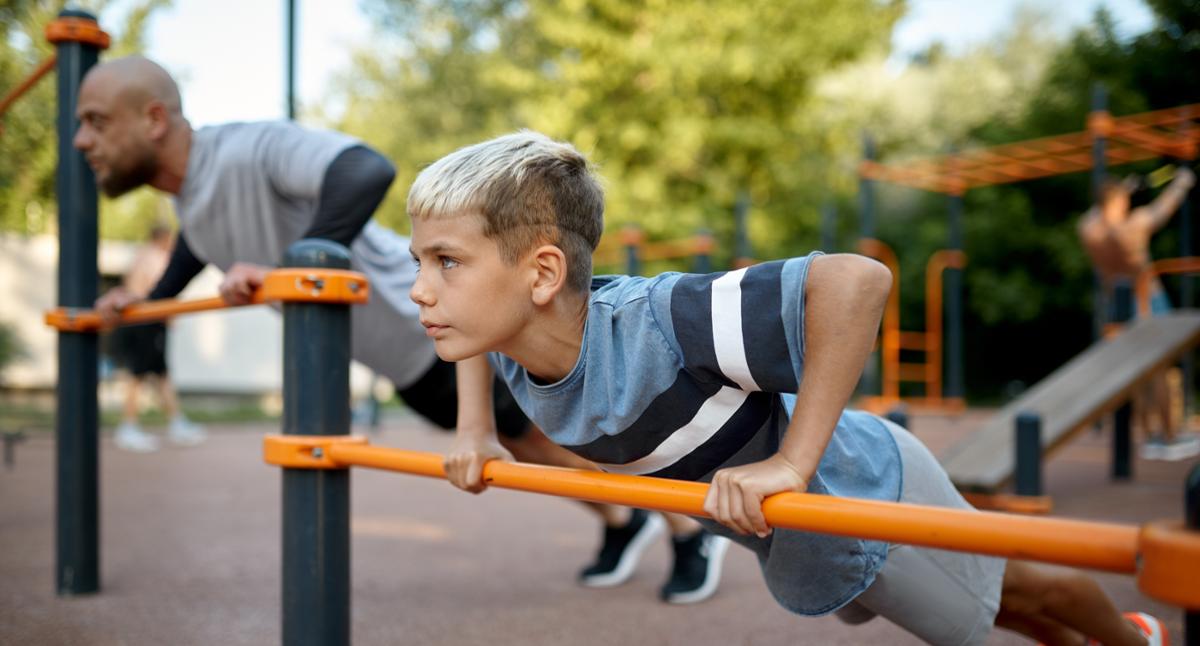
Locally Trusted Organisations need more secure funding to be sustainable / photo: Shutterstock/Drazen Zigic
Tens of thousands of young people in the UK will miss out on physical activity and sport as a result of the cost of living crisis according to reports on the BBC, while Nicola Walker – CEO of Sported – said she was “alarmed” by a member survey which showed 67 per cent of members expect young people to be forced out of participating in activities over the next six months – even when those activities are free. Also 43 per cent are concerned about young people and families being unable to afford activities, and almost 20 per cent of operators fear they will need to halt activities altogether.
Not a new problem While I recognised the seriousness of the problem, it’s important to point out that for decades the children of poor families living in poor neighbourhoods have been missing out on recreational activity. They haven’t had the money to join clubs, join leisure centre membership schemes or pay for swimming lessons on standing orders. They can’t afford all the kit or the cost of travel to training and matches. Their parents (or parent) don’t have time to take them or support them because they’re busy doing multiple jobs or looking after others.
All the data for years has shown these individuals and communities have remained excluded, but has the sector been concerned enough to do anything about it? Not really, nothing has really changed.
But all of a sudden the sector – concerned about poor post-COVID recovery, an energy crisis and now a cost of living crisis that’s affecting its traditional customer base, suddenly needs to amplify these concerns to help justify demands for more funding from government and councils.
A hard-hitting report I was still thinking about this situation when I received my copy of the Chiles Webster Batson Commission report on sport and low-income neighbourhoods. It has had a low profile and I suspect few of you will have heard about it, let alone read it, but it’s the latest in a line of reviews into the current state of sport and activity – this time focusing on children and young people living in poorer neighbourhoods.
I’ve been less than impressed by most previous reviews by government and the House of Lords and many of the reports produced by the sector itself, but this one actually makes sense. It gets to the heart of the inequality challenges we face, and offers meaningful solutions. I would argue that these solutions not only apply to children and young people, but also to adults and older people living in these communities.
There is absolute alignment between the concerns raised in the report, the national issue of worsening health inequalities and declining levels of activity. Its recommendations are key to helping deliver Sport England’s strategy, Uniting the Movement, in that it calls for fundamental changes in how we fund, work and measure. We can’t ignore this report in our search to define the future of public sport and leisure services.
About the report The Commission took as a starting point the interconnectivity between life in a low-income neighbourhood and low rates of participation in physical activity and sport.
In these neighbourhoods, 72 per cent of people don’t attain the Chief Medical Officer’s physical activity guidelines of one hour a day of enhanced physical activity, while only 16 per cent are members of a sports club of any kind, and just 14 per cent visit leisure centres.
This is a shocking outcome after 40 years of claiming we’ve been tackling variable levels of participation.
The commission points out that “this under-representation of low-income young people in the activity system is not best explained by reference to personal choice. Rather, there’s a structural inadequacy that results in the exclusion of low-income young people”.
Traditional sports clubs such as tennis, rugby, cricket, athletics, gymnastics and even football are less accessible to low income families than to more affluent families for reasons of geography, price and the tendency of such clubs to market themselves to people in their own image.
Most leisure centres now rely on annual membership schemes paid for by direct debits which are impossible to afford for families with fluctuating incomes, while discretionary pricing structures have always stigmatised people and constrained access times. Swimming lessons – mainly paid for in 10-week blocks – can exclude poorer children. It’s the same with gym membership where even the cost of even budget gyms is frequently prohibitive.
For years, we’ve encouraged traditional providers to do more to reach these disadvantaged communities, through policy, funding and measurement, but with limited and localised success.
A different approach The commission’s response to the challenge is to suggest working not through these traditional providers, such as governing bodies, trusts and local authorities, but to take a new approach by working through Locally Trusted Organisations (LTOs).
“Evidence to the commission showed LTOs, and the people who run them, are a vital part of the sporting ecosystem,” said the report. “They’re uniquely effective at activating children and young people the traditional system would classify as ‘hard to reach’.”
The report says there’s evidence to show that more low-income families would be drawn into activity if their neighbourhood benefited from an LTO offering the right kind of activities, at the right price and at the right time.
LTO’s in-depth understanding of the local area means they can tailor provision to what communities need and want – as opposed to what funders think is important. Historically, they say “strategies to promote participation among this group have largely been unsuccessful because they’ve often been too ‘top down’ in their development and delivery, and have not taken account of the specific needs and preferences of diverse communities”.
To enable children and young people living in disadvantaged communities take part in physical activity, provision needs to be built around the needs and assets of individuals and neighbourhoods using place-based and person-centred approaches.
“LTOs are ideally placed to support this endeavour. They understand local places, have the needed reach into communities, are trusted by local people, and are connected into local networks,” says Chiles Webster Batson.
NAO consensus This same view was also reflected in a recent National Audit Office (NAO) report, called Grassroots Participation in Physical Activity and Sport, which exposed failures in policy implementation by the Department for Culture, Media and Sport and Sport England.
The NAO report criticises the previous Sport England strategy, Towards an Active Nation, for its attempts to address inactivity in the most deprived communities.
It highlights the fact that Sport England failed to switch its funding strategy fast enough from supporting traditional providers such as NGBs to funding organisations closer to more deprived communities such as LTOs and also criticised the inability to measure the impact of nationally-allocated funding through NGBs on local communities.
The NAO does, however, acknowledge the switch made during the pandemic to support the most deprived communities and the successes that were emerging in the form of local delivery pilots.
It also praises the way this shift of emphasis has been embedded in Uniting the Movement, which reaffirms the focus on addressing inactivity at a place level, while also calling for fundamental changes in how we work as a sector.
The commission’s report echoes much of the learning coming out of the local delivery pilots and the work of organisations such as The Active Wellbeing Society in Birmingham and nationwide organisation, Streetgames.
These organisations were the only ones operating to Marmot’s principles of proportionate universalism when I investigated this a few years ago, finding that most leisure facilities don’t work to this principle but continue to over-serve better-off users and underserve poorer users, thus making health inequalities worse.
Mainstream facility operators are now facing a growing crisis due to partial post-COVID recovery, the energy crisis and a cost-of-living crisis while at the same time their parent councils face huge funding pressures that will frustrate and maybe prevent any attempts to make them sustainable, let alone more accessible to poorer communities.
Crunch point Some of us would argue that we’ve finally reached the crunch point for the sector.
We may well claim that we want to pivot to health but the fact remains that health inequalities continue to worsen and inactivity is again growing in our most disadvantaged communities, so our health partners will expect us to pivot to where the need is greatest.
All the evidence points to the value and importance of more opportunities to participate in physical activity and sport in these more deprived communities, particularly for children and young people, yet we’ve repeatedly failed to reach them.
History tells us that traditional providers such as National Governing Bodies and many sport and leisure facility operators have consistently failed to meet the needs of these communities, and in the current financial situation are even less likely to suddenly be able to improve their contribution.
The commission, therefore, makes a compelling case for switching funding from these providers to working with LTOs if we now want to succeed, but they rightly point out that these have traditionally been funded through small short-term grants and in ways that leave them under-resourced and constantly vulnerable.
So if Sport England is now ready to roll out the next phase of place working by partnering with councils and Integrated Care Systems, will it be brave enough to refocus more funding away from the NGBs to LTOs?
Furthermore, will councils faced with facility infrastructure that does not meet the health and wellbeing needs of their most deprived communities decide that these facilities have had their day and close them, investing instead in LTOs that actually better serve these communities, finally making them more sustainable?
If we’re brave enough we could see the biggest reshaping of the sector we’ve ever witnessed, creating a very different system that is finally delivering a universal service, but in a way that is actually proportional to need.
Find out more:
Martyn Allison
The Chiles Webster Batson Commission on Sport and Low-Income Neighbourhoods
www.sportcommission.org
Grassroots participation in sport and physical activity. National Audit Office. www.HCMmag.com/NAO
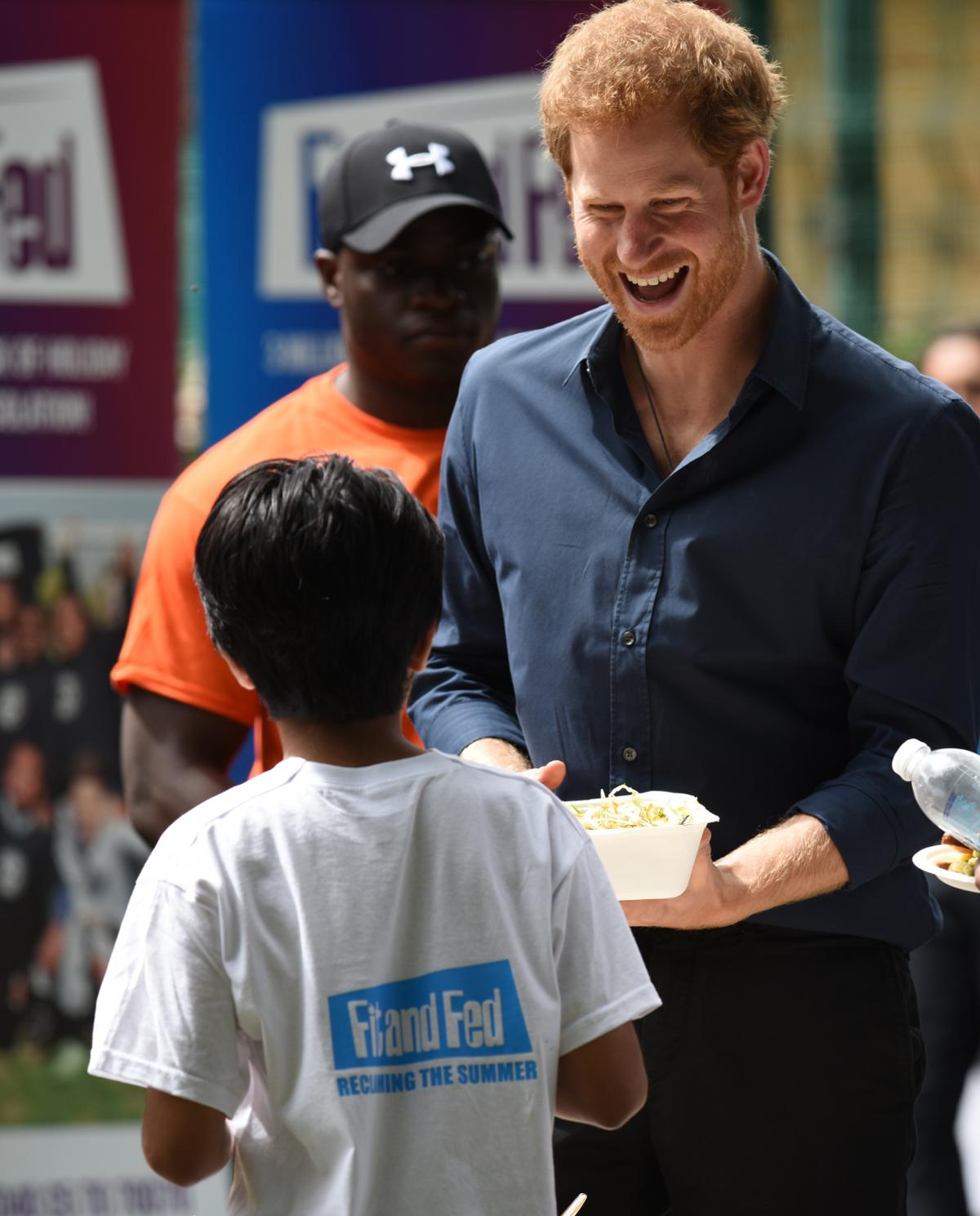
The report praises organisations such as Streetgames, which delivers its Fit and Fed initiative / photo: Shutterstock/Pond LINGTREN.COM
An LTO offering the right activities at the right price can attract more low income families / photo: Shutterstock/Nomad Soul
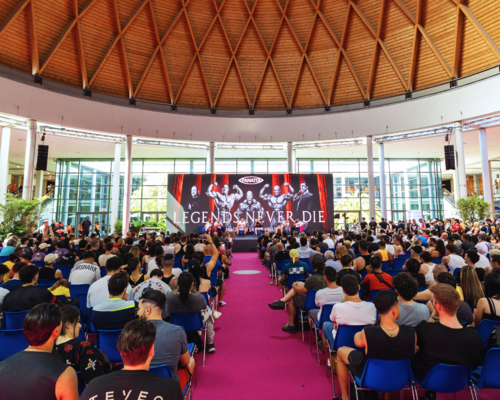
Panatta brought together four of the most influential figures in bodybuilding history on the
stage of RiminiWellness 2026: Phil Heath, Lee Haney, Ronnie Coleman and Hany Rambod. [more...]
Enthusing children from all backgrounds about
exercise paves the way for a healthy adulthood,
while creating new customers for the sector,
however, this virtuous circle is being broken by
poor policymaking, says Martyn Allison
Locally Trusted Organisations need more secure funding to be sustainable / photo: Shutterstock/Drazen Zigic
Tens of thousands of young people in the UK will miss out on physical activity and sport as a result of the cost of living crisis according to reports on the BBC, while Nicola Walker – CEO of Sported – said she was “alarmed” by a member survey which showed 67 per cent of members expect young people to be forced out of participating in activities over the next six months – even when those activities are free. Also 43 per cent are concerned about young people and families being unable to afford activities, and almost 20 per cent of operators fear they will need to halt activities altogether.
Not a new problem While I recognised the seriousness of the problem, it’s important to point out that for decades the children of poor families living in poor neighbourhoods have been missing out on recreational activity. They haven’t had the money to join clubs, join leisure centre membership schemes or pay for swimming lessons on standing orders. They can’t afford all the kit or the cost of travel to training and matches. Their parents (or parent) don’t have time to take them or support them because they’re busy doing multiple jobs or looking after others.
All the data for years has shown these individuals and communities have remained excluded, but has the sector been concerned enough to do anything about it? Not really, nothing has really changed.
But all of a sudden the sector – concerned about poor post-COVID recovery, an energy crisis and now a cost of living crisis that’s affecting its traditional customer base, suddenly needs to amplify these concerns to help justify demands for more funding from government and councils.
A hard-hitting report I was still thinking about this situation when I received my copy of the Chiles Webster Batson Commission report on sport and low-income neighbourhoods. It has had a low profile and I suspect few of you will have heard about it, let alone read it, but it’s the latest in a line of reviews into the current state of sport and activity – this time focusing on children and young people living in poorer neighbourhoods.
I’ve been less than impressed by most previous reviews by government and the House of Lords and many of the reports produced by the sector itself, but this one actually makes sense. It gets to the heart of the inequality challenges we face, and offers meaningful solutions. I would argue that these solutions not only apply to children and young people, but also to adults and older people living in these communities.
There is absolute alignment between the concerns raised in the report, the national issue of worsening health inequalities and declining levels of activity. Its recommendations are key to helping deliver Sport England’s strategy, Uniting the Movement, in that it calls for fundamental changes in how we fund, work and measure. We can’t ignore this report in our search to define the future of public sport and leisure services.
About the report The Commission took as a starting point the interconnectivity between life in a low-income neighbourhood and low rates of participation in physical activity and sport.
In these neighbourhoods, 72 per cent of people don’t attain the Chief Medical Officer’s physical activity guidelines of one hour a day of enhanced physical activity, while only 16 per cent are members of a sports club of any kind, and just 14 per cent visit leisure centres.
This is a shocking outcome after 40 years of claiming we’ve been tackling variable levels of participation.
The commission points out that “this under-representation of low-income young people in the activity system is not best explained by reference to personal choice. Rather, there’s a structural inadequacy that results in the exclusion of low-income young people”.
Traditional sports clubs such as tennis, rugby, cricket, athletics, gymnastics and even football are less accessible to low income families than to more affluent families for reasons of geography, price and the tendency of such clubs to market themselves to people in their own image.
Most leisure centres now rely on annual membership schemes paid for by direct debits which are impossible to afford for families with fluctuating incomes, while discretionary pricing structures have always stigmatised people and constrained access times. Swimming lessons – mainly paid for in 10-week blocks – can exclude poorer children. It’s the same with gym membership where even the cost of even budget gyms is frequently prohibitive.
For years, we’ve encouraged traditional providers to do more to reach these disadvantaged communities, through policy, funding and measurement, but with limited and localised success.
A different approach The commission’s response to the challenge is to suggest working not through these traditional providers, such as governing bodies, trusts and local authorities, but to take a new approach by working through Locally Trusted Organisations (LTOs).
“Evidence to the commission showed LTOs, and the people who run them, are a vital part of the sporting ecosystem,” said the report. “They’re uniquely effective at activating children and young people the traditional system would classify as ‘hard to reach’.”
The report says there’s evidence to show that more low-income families would be drawn into activity if their neighbourhood benefited from an LTO offering the right kind of activities, at the right price and at the right time.
LTO’s in-depth understanding of the local area means they can tailor provision to what communities need and want – as opposed to what funders think is important. Historically, they say “strategies to promote participation among this group have largely been unsuccessful because they’ve often been too ‘top down’ in their development and delivery, and have not taken account of the specific needs and preferences of diverse communities”.
To enable children and young people living in disadvantaged communities take part in physical activity, provision needs to be built around the needs and assets of individuals and neighbourhoods using place-based and person-centred approaches.
“LTOs are ideally placed to support this endeavour. They understand local places, have the needed reach into communities, are trusted by local people, and are connected into local networks,” says Chiles Webster Batson.
NAO consensus This same view was also reflected in a recent National Audit Office (NAO) report, called Grassroots Participation in Physical Activity and Sport, which exposed failures in policy implementation by the Department for Culture, Media and Sport and Sport England.
The NAO report criticises the previous Sport England strategy, Towards an Active Nation, for its attempts to address inactivity in the most deprived communities.
It highlights the fact that Sport England failed to switch its funding strategy fast enough from supporting traditional providers such as NGBs to funding organisations closer to more deprived communities such as LTOs and also criticised the inability to measure the impact of nationally-allocated funding through NGBs on local communities.
The NAO does, however, acknowledge the switch made during the pandemic to support the most deprived communities and the successes that were emerging in the form of local delivery pilots.
It also praises the way this shift of emphasis has been embedded in Uniting the Movement, which reaffirms the focus on addressing inactivity at a place level, while also calling for fundamental changes in how we work as a sector.
The commission’s report echoes much of the learning coming out of the local delivery pilots and the work of organisations such as The Active Wellbeing Society in Birmingham and nationwide organisation, Streetgames.
These organisations were the only ones operating to Marmot’s principles of proportionate universalism when I investigated this a few years ago, finding that most leisure facilities don’t work to this principle but continue to over-serve better-off users and underserve poorer users, thus making health inequalities worse.
Mainstream facility operators are now facing a growing crisis due to partial post-COVID recovery, the energy crisis and a cost-of-living crisis while at the same time their parent councils face huge funding pressures that will frustrate and maybe prevent any attempts to make them sustainable, let alone more accessible to poorer communities.
Crunch point Some of us would argue that we’ve finally reached the crunch point for the sector.
We may well claim that we want to pivot to health but the fact remains that health inequalities continue to worsen and inactivity is again growing in our most disadvantaged communities, so our health partners will expect us to pivot to where the need is greatest.
All the evidence points to the value and importance of more opportunities to participate in physical activity and sport in these more deprived communities, particularly for children and young people, yet we’ve repeatedly failed to reach them.
History tells us that traditional providers such as National Governing Bodies and many sport and leisure facility operators have consistently failed to meet the needs of these communities, and in the current financial situation are even less likely to suddenly be able to improve their contribution.
The commission, therefore, makes a compelling case for switching funding from these providers to working with LTOs if we now want to succeed, but they rightly point out that these have traditionally been funded through small short-term grants and in ways that leave them under-resourced and constantly vulnerable.
So if Sport England is now ready to roll out the next phase of place working by partnering with councils and Integrated Care Systems, will it be brave enough to refocus more funding away from the NGBs to LTOs?
Furthermore, will councils faced with facility infrastructure that does not meet the health and wellbeing needs of their most deprived communities decide that these facilities have had their day and close them, investing instead in LTOs that actually better serve these communities, finally making them more sustainable?
If we’re brave enough we could see the biggest reshaping of the sector we’ve ever witnessed, creating a very different system that is finally delivering a universal service, but in a way that is actually proportional to need.
Find out more:
Martyn Allison
The Chiles Webster Batson Commission on Sport and Low-Income Neighbourhoods
www.sportcommission.org
Grassroots participation in sport and physical activity. National Audit Office. www.HCMmag.com/NAO
The report praises organisations such as Streetgames, which delivers its Fit and Fed initiative / photo: Shutterstock/Pond LINGTREN.COM
An LTO offering the right activities at the right price can attract more low income families / photo: Shutterstock/Nomad Soul
It’s been five years since the fitness industry reopened after the last lockdown – long enough
to look back on the impact the pandemic had on the sector and what might come next.
Wattbike has announced a new integration with EGYM, which enables the bikes to contribute to
the Cardio BioAge score of individuals via a VO2 max result.
Les Mills has launched a reformer Pilates workout. The 45-minute workout blends traditional
reformer movements and more contemporary exercises, choreographed to music.
According to research which tracked more than 147,000 people for 30 years, 90-120 minutes
of strength training a week may deliver some of the biggest long-term health rewards.
The UK's four Chief Medical Officers have published a refreshed edition of Physical activity
guidelines: UK Chief Medical Officers' report, updating the evidence that underpins the nation's
physical activity recommendations and placing greater emphasis on strength, balance, reducing
sedentary behaviour and, for the first time, supporting people taking weight loss medications.
Places Leisure has exchanged contracts to build and operate a flagship £60m water and leisure
destination on behalf of Basingstoke and Deane Borough Council.
The Republic of Ireland will become the latest market in PureGym’s expanding international
portfolio, with the first launch planned for Dublin in 2027.
Anytime Fitness opened more than one club a day in 2025 and is on track to maintain this rate
of growth this year, as parent company Purpose Brands targets further international expansion.
Panatta brought together four of the most influential figures in bodybuilding history on the
stage of RiminiWellness 2026: Phil Heath, Lee Haney, Ronnie Coleman and Hany Rambod. [more...]