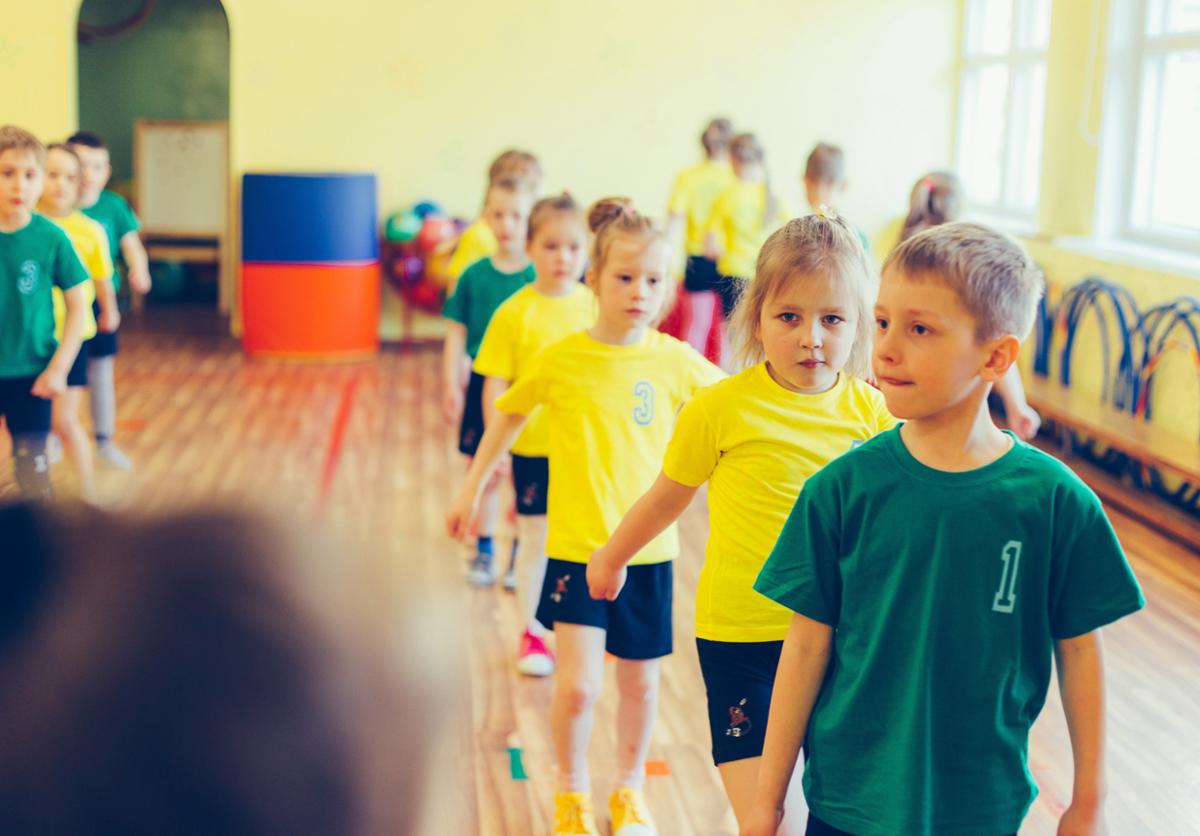
The £2.2bn invested since 2012 has largely been spent on private contractors, leaving the sector vulnerable to cuts / photo: Shutterstock/Andreshkova Nastya
The London 2012 Olympic legacy investment designed to improve physical education (PE) at primary schools has failed, according to a study.
Academics at the University of Winchester looked into the effects of £2.2bn worth of investment in primary PE since 2012. It showed that, despite the substantial investment, there had been no recognisable improvement in the standard of PE teaching at primary school level.
The study was conducted by Dr Vicky Randall, senior fellow in the Institute of Education at the University of Winchester, and Gerald Griggs, dean and head of academics, University Campus of Football Business (Etihad Campus).It looked into the effects of the £2.2bn investment, known as the Primary PE and School Sport Premium (or ‘Premium’).
Legacy hopes Report co-author Randall says: “The 2012 Olympic and Paralympic Games in London were billed as the ‘Legacy Games’.
“The Capital was poised to host a global event that, through the power of sport, promised to have a major impact on health, education and culture, as well as boosting the economy through ambitious infrastructure projects.
She continues: “Physical education (PE) in primary schools in England was to be a significant benefactor, with the aim of inspiring the youngest school-aged children.
“Renewed investment in PE would be crucial when it came to delivering much of the Games’ legacy.”
‘Failed to deliver’ “But despite a direct investment of more than £2.2bn into primary PE since 2012 – making it the highest-funded subject at primary age – we have identified a clear failure of this Olympic investment to deliver on one of its stated aims of increasing the ‘confidence, knowledge and skills of all [primary] staff in teaching PE and sport’.
“We found there is little evidence of any legacy of improved PE teaching within England’s primary school sector.
“Final-year primary education trainees who took part in our latest research told us it was difficult for them to even observe a primary PE lesson as part of their teacher-training. For most, teaching a PE lesson was not an option,” says Randall.
Lack of PE teacher skills She adds: “The London Olympics windfall has instead seen staff teachers sidelined in favour of an army of outsourced providers, looking for business in a well-funded marketplace for the best part of a decade.
“Many schools say that they are happy to pay for this extra expertise, and are happy with the work the private sports coaches do. However, there has been a striking lack of auditing of how this taxpayers’ money has been spent.
“With the government still in discussions about the future of the Premium beyond the current academic year, and amid growing budgetary pressures, the failure to build primary PE teachers’ skills could lead to a rapid erosion of provision should the funding be cut.”
Read a full report on the University of Winchester research at www.hcmmag.com/2012
Panatta brought together four of the most influential figures in bodybuilding history on the
stage of RiminiWellness 2026: Phil Heath, Lee Haney, Ronnie Coleman and Hany Rambod. [more...]
+ More featured suppliers
COMPANY PROFILES
Orbit4
With Orbit4, you’ll always have full visibility
of your equipment inventory, the true
market value [more...]
The £2.2bn invested since 2012 has largely been spent on private contractors, leaving the sector vulnerable to cuts / photo: Shutterstock/Andreshkova Nastya
The London 2012 Olympic legacy investment designed to improve physical education (PE) at primary schools has failed, according to a study.
Academics at the University of Winchester looked into the effects of £2.2bn worth of investment in primary PE since 2012. It showed that, despite the substantial investment, there had been no recognisable improvement in the standard of PE teaching at primary school level.
The study was conducted by Dr Vicky Randall, senior fellow in the Institute of Education at the University of Winchester, and Gerald Griggs, dean and head of academics, University Campus of Football Business (Etihad Campus).It looked into the effects of the £2.2bn investment, known as the Primary PE and School Sport Premium (or ‘Premium’).
Legacy hopes Report co-author Randall says: “The 2012 Olympic and Paralympic Games in London were billed as the ‘Legacy Games’.
“The Capital was poised to host a global event that, through the power of sport, promised to have a major impact on health, education and culture, as well as boosting the economy through ambitious infrastructure projects.
She continues: “Physical education (PE) in primary schools in England was to be a significant benefactor, with the aim of inspiring the youngest school-aged children.
“Renewed investment in PE would be crucial when it came to delivering much of the Games’ legacy.”
‘Failed to deliver’ “But despite a direct investment of more than £2.2bn into primary PE since 2012 – making it the highest-funded subject at primary age – we have identified a clear failure of this Olympic investment to deliver on one of its stated aims of increasing the ‘confidence, knowledge and skills of all [primary] staff in teaching PE and sport’.
“We found there is little evidence of any legacy of improved PE teaching within England’s primary school sector.
“Final-year primary education trainees who took part in our latest research told us it was difficult for them to even observe a primary PE lesson as part of their teacher-training. For most, teaching a PE lesson was not an option,” says Randall.
Lack of PE teacher skills She adds: “The London Olympics windfall has instead seen staff teachers sidelined in favour of an army of outsourced providers, looking for business in a well-funded marketplace for the best part of a decade.
“Many schools say that they are happy to pay for this extra expertise, and are happy with the work the private sports coaches do. However, there has been a striking lack of auditing of how this taxpayers’ money has been spent.
“With the government still in discussions about the future of the Premium beyond the current academic year, and amid growing budgetary pressures, the failure to build primary PE teachers’ skills could lead to a rapid erosion of provision should the funding be cut.”
Read a full report on the University of Winchester research at www.hcmmag.com/2012
It’s been five years since the fitness industry reopened after the last lockdown – long enough
to look back on the impact the pandemic had on the sector and what might come next.
Wattbike has announced a new integration with EGYM, which enables the bikes to contribute to
the Cardio BioAge score of individuals via a VO2 max result.
Les Mills has launched a reformer Pilates workout. The 45-minute workout blends traditional
reformer movements and more contemporary exercises, choreographed to music.
According to research which tracked more than 147,000 people for 30 years, 90-120 minutes
of strength training a week may deliver some of the biggest long-term health rewards.
The UK's four Chief Medical Officers have published a refreshed edition of Physical activity
guidelines: UK Chief Medical Officers' report, updating the evidence that underpins the nation's
physical activity recommendations and placing greater emphasis on strength, balance, reducing
sedentary behaviour and, for the first time, supporting people taking weight loss medications.
Places Leisure has exchanged contracts to build and operate a flagship £60m water and leisure
destination on behalf of Basingstoke and Deane Borough Council.
The Republic of Ireland will become the latest market in PureGym’s expanding international
portfolio, with the first launch planned for Dublin in 2027.
Panatta brought together four of the most influential figures in bodybuilding history on the
stage of RiminiWellness 2026: Phil Heath, Lee Haney, Ronnie Coleman and Hany Rambod. [more...]
+ More featured suppliers
COMPANY PROFILES
Orbit4 With Orbit4, you’ll always have full visibility
of your equipment inventory, the true
market value [more...]