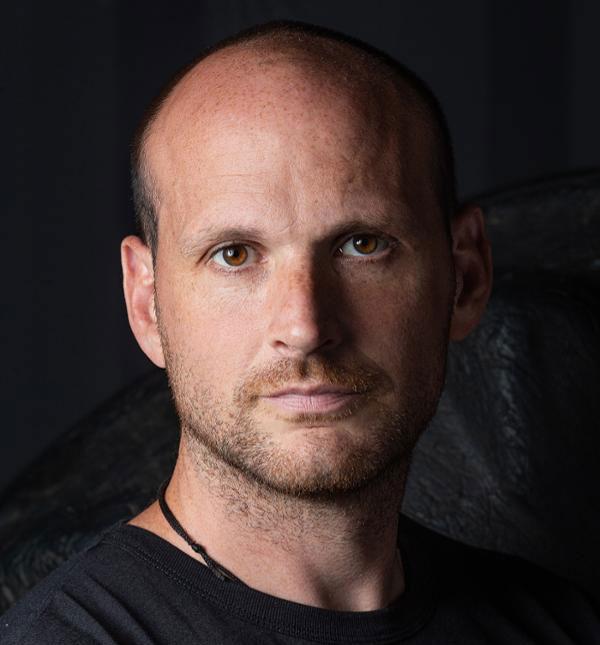
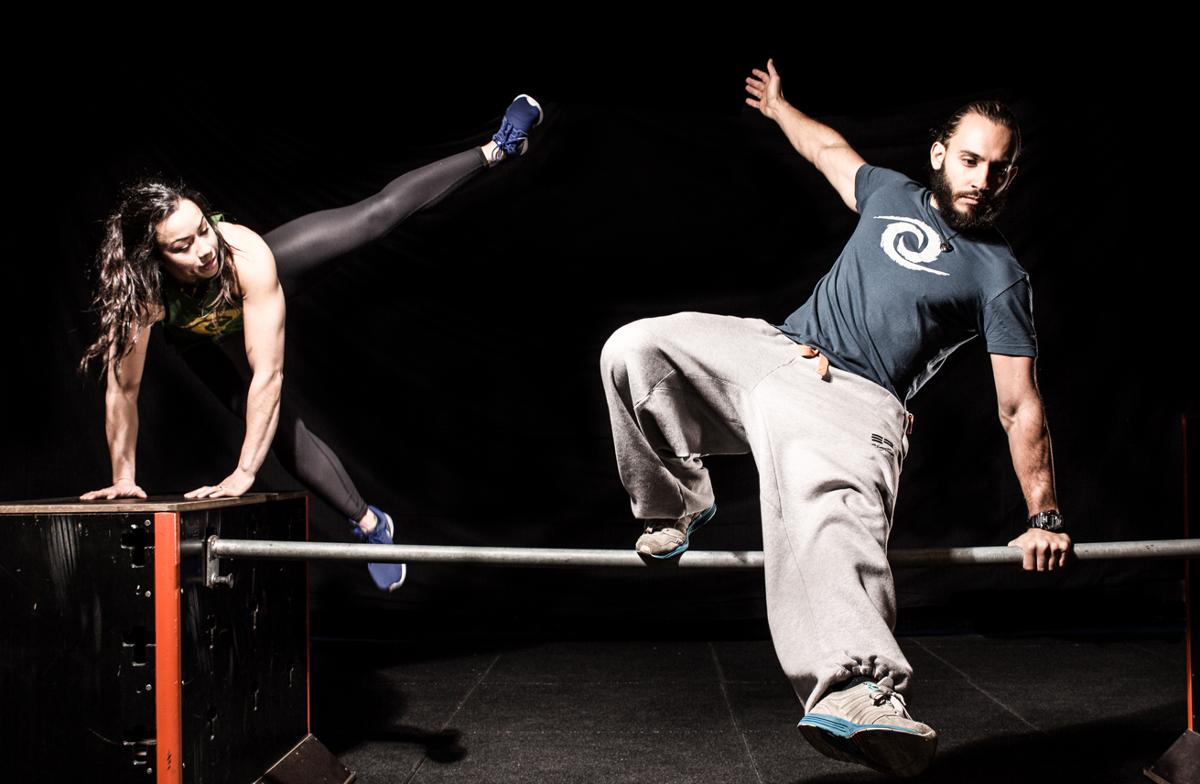
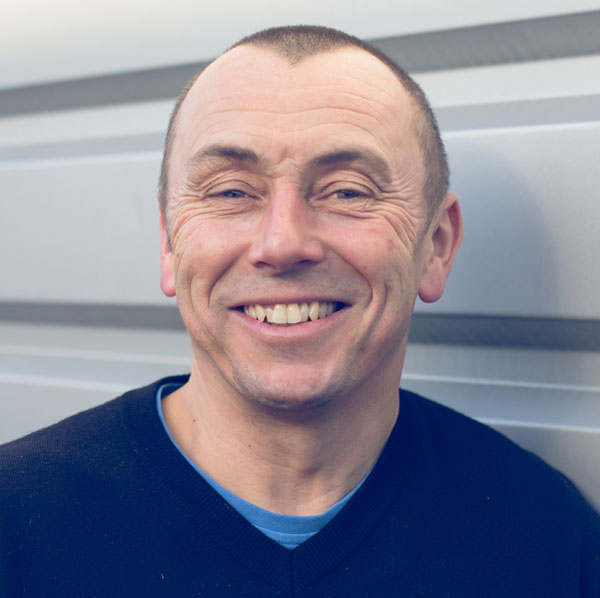
Edwardes has privately funded the company’s growth / Photo: Parkour Generations
Tell us about the partnership between Parkour Generations and Gymbox We operate two models when implementing parkour with any partner – be it a gym, school or sports centre.
The first is direct coaching – we provide Parkour Generations’ coaches to lead classes at partner venues. This is an quick, effective way for partners to bring parkour into their venues, as our coaches are good at teaching in any setting or environment and with any audience.
The limitations of this model are location and availability – the venues have to be close enough to our coaching operations, as we only have so many coaches.
That's why the second model – known as Parkour Programs (www.parkourprograms.com) is more accessible and efficient over the long-term. We train up our partner's own staff to lead sessions themselves, then provide ongoing support and updates to the programming.
With Gymbox we began with the direct coaching model, as their venues are London-based and within reach of our coaching operations, but with the aim of moving to Parkour Programs in due course.
This is a first for the health club sector – do you see this as a step towards mainstream acceptance? Over the years we've been approached by many health club operators, both in the UK and internationally, but most don't want to step outside the box that much. It takes creativity, courage and the will to embrace innovation for a gym chain to move the needle and implement non-traditional training methods.
The irony, of course, is that parkour is probably the most traditional of all physical training methods, as it's simply functional human movement over terrain – something our species has been doing since we came down from the trees. Certainly it's the most natural.
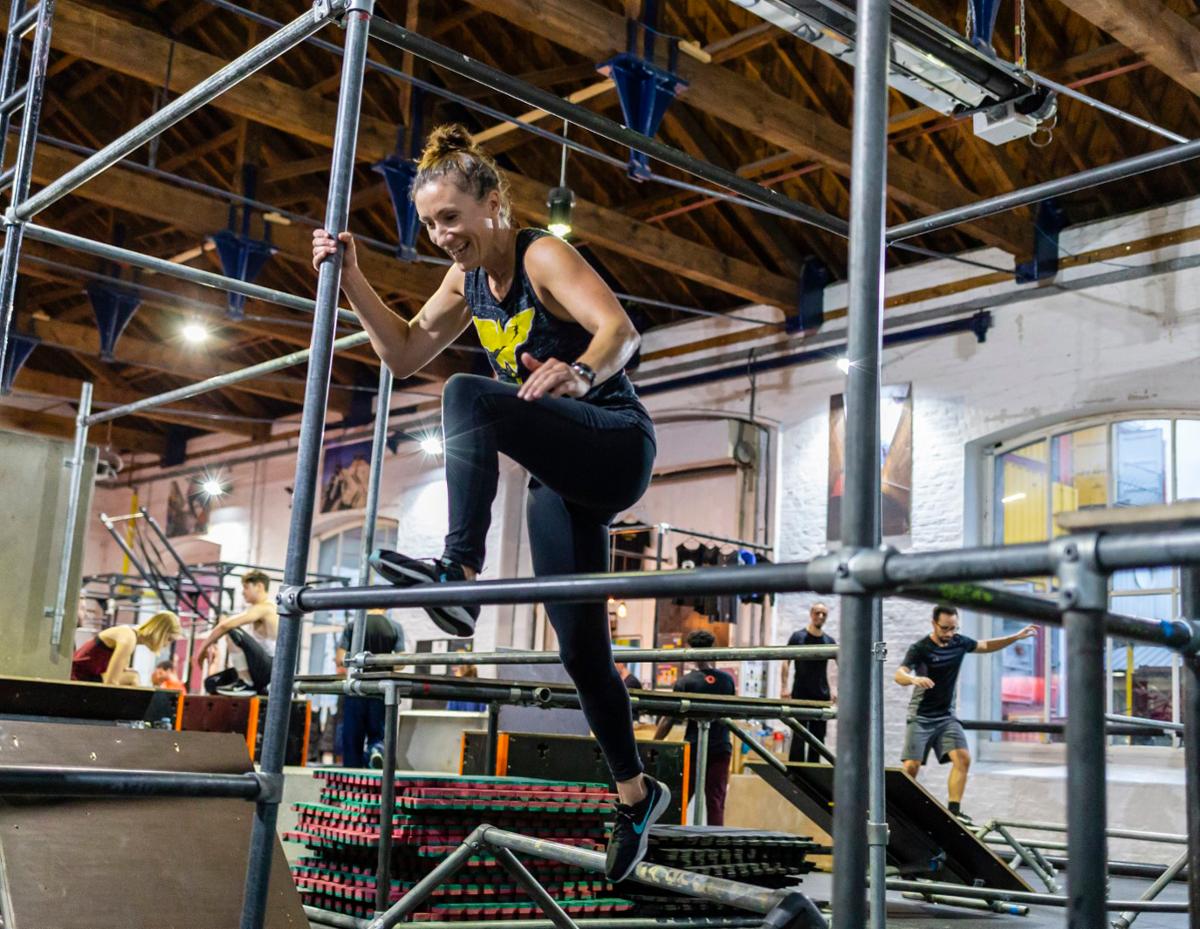
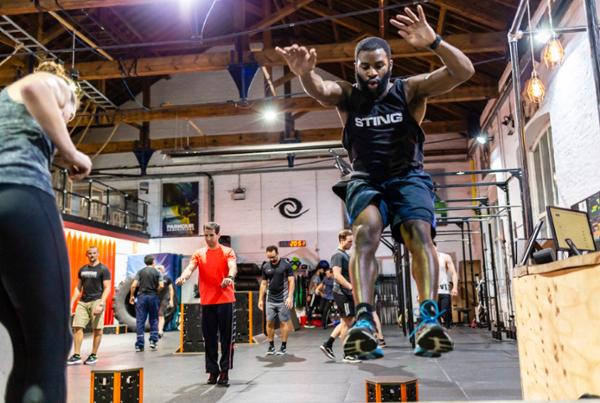
What’s involved in a standard parkour session? Our classes at Gymbox are 45 or 60 minutes in length, and involve a whole-body workout, utilising a combination of skill acquisition and general physical literacy development. A highly active, mobility-based warm up gets things going and then each class focuses on one or two of our 'family groups' of movement for the main movement training element, followed by an intense 'finisher' activity utilising those same movement skills.
We always end with active recovery, based on stretching, breathing and myofascial release to restore balance before participants head home.
No two classes are ever the same – this forces variability and adaptation, which is the best way to train the body and mind.
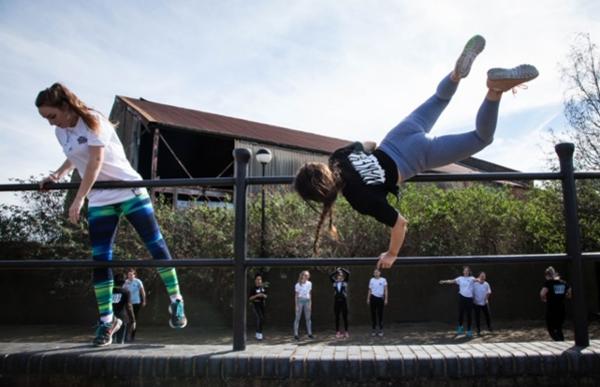
Can the sessions run inside? Sessions are all based out of Gymbox venues and mostly run indoors, but in good weather we take groups outside to train at nearby spaces.
One of the reasons we agreed to partner with Gymbox was their open-mindedness and willingness to explore new ways of getting people fit, moving and healthy.
There’s so much data supporting the multiple benefits of taking your training outdoors – particularly from the standpoint of mental health.
As Gymbox members become more confident with the idea, they can then also choose to join our existing outdoor classes at Parkour Generations across London, which provide twice the amount of practice time – great for those who really want to go deeper into parkour.
How long is Gymbox committed? It’s an open-ended partnership, so we’ll continue as long as it’s effective for both parties, which is the rule we have for all our partnerships.
How successful has it been to date? So far the results have been great, with Gymbox members telling us they love the training and are desperate for more. Success for us is rated by the positive effect we’re having on people’s lives. So as long as we see good evidence of that we consider a project a success.
How global are you? We have five international branches and multiple facilities and academies under those, from Brazil to the USA to South Korea and China.
Are there similar operations in other territories? This partnership is a world first – a formal collaboration between a major health club operator and us, the world's largest parkour organisation, doesn't exist anywhere else.
As I said, we've had many approaches – including in the USA and across Asia – and we've implemented the parkour programmes in individual clubs and independent boutique gyms, but very few large gym operators have the vision and, dare I say it, the guts to climb out of their existing paradigm and try something new.
Gymbox is a fantastic partner, in that they 'get it'. They're not afraid to try something new, to take that risk and introduce a different way of training to their members. Their attitude and philosophy resonates with our own, so we're very happy to work with them – and the real beneficiaries are their members, of course.
Why should operators consider parkour? On the simplest level, because it works. It's an incredibly fun, efficient, and engaging way to get fit, healthy, agile, mobile, functionally strong, mentally resilient, creative and self-reliant. As an added bonus, you also burn a huge number of calories doing parkour.
It's not a gimmick or fad, it's based entirely on natural human motor patterns and helps people reach a level of movement capability they never thought possible.
The fitness industry is seeing a general evolution towards true movement practices. People are much better educated around health and longevity and they're seeking more sophisticated, more challenging and more engaging practice.
Parkour is a huge part of that movement – no other discipline asks quite as much of you physically and psychologically and yet is simultaneously so naturally playful and child-like in its practice. In truth, it's the fact it builds on our innate desire to play and move that makes it so effective.
Any health club or gym can implement our parkour programmes at scale. It's the future of fitness, but in a sense, it's also us just restoring the past – after all, this is how all humans have moved since the dawn of time, and how most physical training occurred, incredibly successfully, prior to the 20th century.
Are there more parkour partnerships on the horizon? There's a lot in the works. We’ve partnered with London's largest climbing wall – HarroWall (www.hcmmag.com/HarroWall) – and have built an indoor parkour facility there.
We're also on the verge of opening our own second London venue, which will be a unique fitness space in East India Docks, London as part of the Republic London development. It will be the heart of practical movement training in London.
Where else are you planning to build? We design and build parkour and movement facilities regularly for all kinds of clients – our design department has been creating parkour structures both indoors and out for over ten years now.
We’re currently designing a huge indoor centre for a client in Saudi Arabia, as well as three outdoor public movement spaces for London borough councils. We’re passionate about making space that encourages movement, play, fitness and exploration for the communities that inhabit them.
How is Parkour Generations funded? By hard work and creative vision! We’re a private company (Edwardes is sole owner) that has grown up organically, using its own resources. We’re not funded by anyone and have built everything ourselves.
What's your dream future? We’ve pioneered practical movement training since 2006 and taken it all over the world, and it’s been a huge process of educating authorities, industries, education bodies, and people on every continent.
We’ve opened so many doors, we’re now at the stage where we’re looking to scale massively and to be able to share the benefits of our movement practice with many more people and help bring an authentic simplicity back to health, fitness and physical potential. That’s what parkour does and the modern world badly needs it.
I’d like to see every school in the world have this tool to restore physical literacy and to reward kids for moving more, to normalise play again and to encourage positive engagement with risk.
I’d like every gym to be able to help people start using their bodies and minds for the evolutionary function of movement, alongside the simple strength and fitness development. And I’d like people to have spaces in their cities which allow them to move and explore and encourage curiosity rather than limiting their options. I hope we can do our part in helping that become a reality.
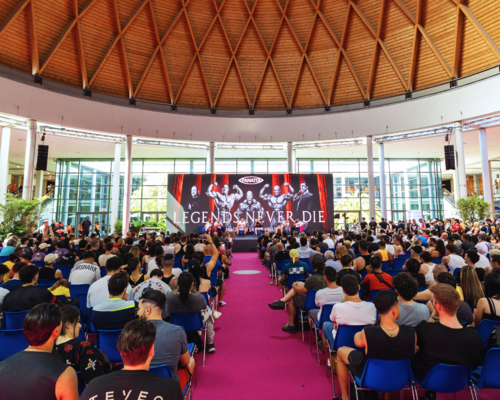
Panatta brought together four of the most influential figures in bodybuilding history on the
stage of RiminiWellness 2026: Phil Heath, Lee Haney, Ronnie Coleman and Hany Rambod. [more...]
+ More featured suppliers
COMPANY PROFILES
PSLT Ltd
PSLT Fitness Solutions manufacture, remanufacture and buy back commercial gym equipment. [more...]
Safe Space Lockers
We provide a full turn-key solution for clients from design and consultation, through to bespoke man [more...]
Edwardes has privately funded the company’s growth / Photo: Parkour Generations
Tell us about the partnership between Parkour Generations and Gymbox We operate two models when implementing parkour with any partner – be it a gym, school or sports centre.
The first is direct coaching – we provide Parkour Generations’ coaches to lead classes at partner venues. This is an quick, effective way for partners to bring parkour into their venues, as our coaches are good at teaching in any setting or environment and with any audience.
The limitations of this model are location and availability – the venues have to be close enough to our coaching operations, as we only have so many coaches.
That's why the second model – known as Parkour Programs (www.parkourprograms.com) is more accessible and efficient over the long-term. We train up our partner's own staff to lead sessions themselves, then provide ongoing support and updates to the programming.
With Gymbox we began with the direct coaching model, as their venues are London-based and within reach of our coaching operations, but with the aim of moving to Parkour Programs in due course.
This is a first for the health club sector – do you see this as a step towards mainstream acceptance? Over the years we've been approached by many health club operators, both in the UK and internationally, but most don't want to step outside the box that much. It takes creativity, courage and the will to embrace innovation for a gym chain to move the needle and implement non-traditional training methods.
The irony, of course, is that parkour is probably the most traditional of all physical training methods, as it's simply functional human movement over terrain – something our species has been doing since we came down from the trees. Certainly it's the most natural.
What’s involved in a standard parkour session? Our classes at Gymbox are 45 or 60 minutes in length, and involve a whole-body workout, utilising a combination of skill acquisition and general physical literacy development. A highly active, mobility-based warm up gets things going and then each class focuses on one or two of our 'family groups' of movement for the main movement training element, followed by an intense 'finisher' activity utilising those same movement skills.
We always end with active recovery, based on stretching, breathing and myofascial release to restore balance before participants head home.
No two classes are ever the same – this forces variability and adaptation, which is the best way to train the body and mind.
Can the sessions run inside? Sessions are all based out of Gymbox venues and mostly run indoors, but in good weather we take groups outside to train at nearby spaces.
One of the reasons we agreed to partner with Gymbox was their open-mindedness and willingness to explore new ways of getting people fit, moving and healthy.
There’s so much data supporting the multiple benefits of taking your training outdoors – particularly from the standpoint of mental health.
As Gymbox members become more confident with the idea, they can then also choose to join our existing outdoor classes at Parkour Generations across London, which provide twice the amount of practice time – great for those who really want to go deeper into parkour.
How long is Gymbox committed? It’s an open-ended partnership, so we’ll continue as long as it’s effective for both parties, which is the rule we have for all our partnerships.
How successful has it been to date? So far the results have been great, with Gymbox members telling us they love the training and are desperate for more. Success for us is rated by the positive effect we’re having on people’s lives. So as long as we see good evidence of that we consider a project a success.
How global are you? We have five international branches and multiple facilities and academies under those, from Brazil to the USA to South Korea and China.
Are there similar operations in other territories? This partnership is a world first – a formal collaboration between a major health club operator and us, the world's largest parkour organisation, doesn't exist anywhere else.
As I said, we've had many approaches – including in the USA and across Asia – and we've implemented the parkour programmes in individual clubs and independent boutique gyms, but very few large gym operators have the vision and, dare I say it, the guts to climb out of their existing paradigm and try something new.
Gymbox is a fantastic partner, in that they 'get it'. They're not afraid to try something new, to take that risk and introduce a different way of training to their members. Their attitude and philosophy resonates with our own, so we're very happy to work with them – and the real beneficiaries are their members, of course.
Why should operators consider parkour? On the simplest level, because it works. It's an incredibly fun, efficient, and engaging way to get fit, healthy, agile, mobile, functionally strong, mentally resilient, creative and self-reliant. As an added bonus, you also burn a huge number of calories doing parkour.
It's not a gimmick or fad, it's based entirely on natural human motor patterns and helps people reach a level of movement capability they never thought possible.
The fitness industry is seeing a general evolution towards true movement practices. People are much better educated around health and longevity and they're seeking more sophisticated, more challenging and more engaging practice.
Parkour is a huge part of that movement – no other discipline asks quite as much of you physically and psychologically and yet is simultaneously so naturally playful and child-like in its practice. In truth, it's the fact it builds on our innate desire to play and move that makes it so effective.
Any health club or gym can implement our parkour programmes at scale. It's the future of fitness, but in a sense, it's also us just restoring the past – after all, this is how all humans have moved since the dawn of time, and how most physical training occurred, incredibly successfully, prior to the 20th century.
Are there more parkour partnerships on the horizon? There's a lot in the works. We’ve partnered with London's largest climbing wall – HarroWall (www.hcmmag.com/HarroWall) – and have built an indoor parkour facility there.
We're also on the verge of opening our own second London venue, which will be a unique fitness space in East India Docks, London as part of the Republic London development. It will be the heart of practical movement training in London.
Where else are you planning to build? We design and build parkour and movement facilities regularly for all kinds of clients – our design department has been creating parkour structures both indoors and out for over ten years now.
We’re currently designing a huge indoor centre for a client in Saudi Arabia, as well as three outdoor public movement spaces for London borough councils. We’re passionate about making space that encourages movement, play, fitness and exploration for the communities that inhabit them.
How is Parkour Generations funded? By hard work and creative vision! We’re a private company (Edwardes is sole owner) that has grown up organically, using its own resources. We’re not funded by anyone and have built everything ourselves.
What's your dream future? We’ve pioneered practical movement training since 2006 and taken it all over the world, and it’s been a huge process of educating authorities, industries, education bodies, and people on every continent.
We’ve opened so many doors, we’re now at the stage where we’re looking to scale massively and to be able to share the benefits of our movement practice with many more people and help bring an authentic simplicity back to health, fitness and physical potential. That’s what parkour does and the modern world badly needs it.
I’d like to see every school in the world have this tool to restore physical literacy and to reward kids for moving more, to normalise play again and to encourage positive engagement with risk.
I’d like every gym to be able to help people start using their bodies and minds for the evolutionary function of movement, alongside the simple strength and fitness development. And I’d like people to have spaces in their cities which allow them to move and explore and encourage curiosity rather than limiting their options. I hope we can do our part in helping that become a reality.
It’s been five years since the fitness industry reopened after the last lockdown – long enough
to look back on the impact the pandemic had on the sector and what might come next.
Wattbike has announced a new integration with EGYM, which enables the bikes to contribute to
the Cardio BioAge score of individuals via a VO2 max result.
Les Mills has launched a reformer Pilates workout. The 45-minute workout blends traditional
reformer movements and more contemporary exercises, choreographed to music.
According to research which tracked more than 147,000 people for 30 years, 90-120 minutes
of strength training a week may deliver some of the biggest long-term health rewards.
The UK's four Chief Medical Officers have published a refreshed edition of Physical activity
guidelines: UK Chief Medical Officers' report, updating the evidence that underpins the nation's
physical activity recommendations and placing greater emphasis on strength, balance, reducing
sedentary behaviour and, for the first time, supporting people taking weight loss medications.
Places Leisure has exchanged contracts to build and operate a flagship £60m water and leisure
destination on behalf of Basingstoke and Deane Borough Council.
The Republic of Ireland will become the latest market in PureGym’s expanding international
portfolio, with the first launch planned for Dublin in 2027.
Anytime Fitness opened more than one club a day in 2025 and is on track to maintain this rate
of growth this year, as parent company Purpose Brands targets further international expansion.
Panatta brought together four of the most influential figures in bodybuilding history on the
stage of RiminiWellness 2026: Phil Heath, Lee Haney, Ronnie Coleman and Hany Rambod. [more...]
+ More featured suppliers
COMPANY PROFILES
PSLT Ltd PSLT Fitness Solutions manufacture, remanufacture and buy back commercial gym equipment. [more...]