Research was able to prove that group exercise classes were safe / shutterstock/Gorodenkoff
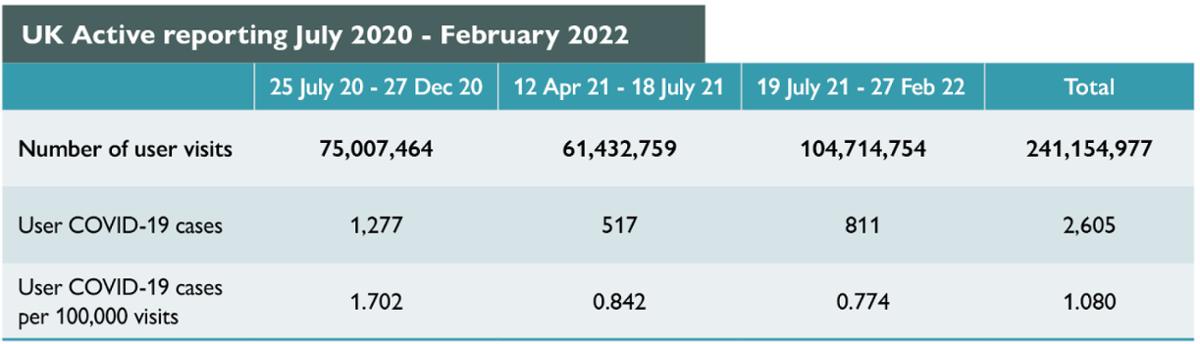
This month, UK Active published its full report on COVID-19 safety data from the health and fitness sector in the UK, representing data gathered in relation to 240 million visits, making it the biggest data set in Europe.
UK Active’s safety data reporting was launched nearly two years ago, when the UK was in the middle of its first national lockdown. As the trade body for the sector, UK Active has always championed the importance of having easily accessible physical facilities for exercise for all.
In the first stages of the pandemic, early indications from Sport England’s consumer polling – with Savanta ComRes – suggested that while activity levels overall were staying constant over the lockdown, there were gaps in activity levels opening up between certain demographic groups – effectively, inequalities were growing.
As we moved towards the initial reopening of facilities in July 2020 we were confident that Fit Togehter, the safety frameworks and operating procedures created by UK Active in partnership with operator members, would keep consumers safe when facilities reopened, ensuring more people could remain active and healthy and in turn, improve our nation’s resilience against the virus.
Gyms, leisure centres and fitness facilities all put in a huge amount of work to ensure their facilities met the new standards required. As the reopening of facilities approached on 25 July (in England), UK Active recognised the growing need to demonstrate as a sector the safety of our collective facilities. Amid a landscape of uncertainty and ever-changing restrictions over the next two years, weekly data reporting became a mainstay of the UK Active Research Institute’s work, and our evidence underpinned our public campaigning and lobbying efforts with the simple message that health and fitness facilities were ‘safe and essential’.
Proving health clubs are low-risk At a time when the spotlight fell across all sectors in determining what restrictions were necessary to reduce the spread of the virus, we looked to develop a reporting mechanism that would enable us to gather on behalf of the sector the data that was needed to demonstrate that gyms and leisure centres were low-risk spaces.
There were some key factors to consider. Firstly, the ease and simplicity of both our data collection and processing. At a time where operators were already under huge pressures due to the additional complications of operating under COVID-19 restrictions, the data we were requesting needed to be quick and simple for them to gather, and not add an extra administrative burden.
Likewise, for the team at the UK Active Research Institute to be able to produce collated weekly stats quickly and efficiently – so we always had the most up-to-date information possible – we needed a methodology that would enable us to easily convert raw data from about 2,000 sites into a set of consistent metrics each week that could be aggregated.
We determined that the key metrics we would gather from each operator each week would be: total visits, confirmed COVID-19 cases from users and staff, and Environmental Health Officer visits across different regions. Using these, we produced a data template which was circulated to the entire UK Active membership. From the initial weekend of reopening in England (24–25 July 2020), the response was incredibly positive, with operators proactively submitting their data on time across all nations. As the weeks progressed, the operation became more streamlined, with the Research Institute adding additional processes in place to automate the procedure as much as possible.
The collated data was shared on a weekly basis with UK Active members for their own internal purposes, but was also used on a much wider basis by UK Active and its members to demonstrate on an ongoing basis the low risk within facilities.
Week-on-week comparisions Data was analysed as a COVID-19 case rate per 100,000 visits to enable easy week-on-week comparison. This was presented against the UK overall case rate per 100,000 population for the same time, not for direct comparison, but to see if the trends being seen nationwide were reflected in the data we were collecting.
We were able to use the data with each of the home nation governments to provide the reassurance that the mitigations that were in place within facilities were working.
Through regular pubic statements showing the latest stats, we were able to demonstrate that even against a backdrop of rising cases within the general population, COVID-19 case rates remained extremely low throughout. The peak week saw 2,042 sites submit data. The highest weekly reported visits figure reached 5.4 million. Across the two years, the COVID-19 case rate per 100,000 visits was 1.080. Over the course of the whole project, we collected data on more than 240 million visits to facilities.
The speed of data collection and the ongoing dialogue we had with members also enabled us to adapt the methodology to respond to any new requirements. This included asking for additional information on geographical areas classified as high risk, understanding the volume of group exercise class attendees to mitigate fears that these classes presented a higher risk environment, and looking at the quantity of staff required to self-isolate and the impact this was having on business operations.
The speed at which we were able to gather this extra data meant we could respond to new concerns or risks as soon as they emerged, with high-quality evidence from a sector-wide data set available always within a week.
In early 2022, as it became apparent that nearly all COVID-19 restrictions would soon be lifted, the data reporting exercise drew to a natural conclusion. With the threat of closure that had been present over the last two years removed, and the end of mandatory self-isolation, there was no longer a pressing need for weekly data. Coupled with the removal of free lateral flow testing, which would be likely to compromise the accuracy of the data, the final week of reporting took place in February 2022.
By this point the project had served its purpose and fulfilled the original mission – to support the sector by demonstrating the safety of facilities and the effectiveness of the operating procedures that were in place.
None of this would have been possible without the ongoing support of our members, who were unwavering in their commitment to supplying their data to us, week in, week out. This level of collaboration and commitment from the sector enabled us to produce high-quality evidence which was far greater than the sum of its parts.
Having seen the power of this collaboration over the course of the pandemic, the next step now is to build on this and maintain the momentum generated. This model is a great example of the sector unifying through data to influence positive change both publicly and politically. We must continue to work together, fostering an open approach to data sharing in order to generate the insight required to continue to support, protect, inform and help the sector to grow.
Lizzie Broughton is strategic lead for insight at UK Active. Download Safe and Essential at www.HCMmag.com/SafeEssential
Operators committed to delivering on COVID-safe operating procedures / shutterstock/Dusan Petkovic
Panatta brought together four of the most influential figures in bodybuilding history on the
stage of RiminiWellness 2026: Phil Heath, Lee Haney, Ronnie Coleman and Hany Rambod. [more...]
Research was able to prove that group exercise classes were safe / shutterstock/Gorodenkoff
This month, UK Active published its full report on COVID-19 safety data from the health and fitness sector in the UK, representing data gathered in relation to 240 million visits, making it the biggest data set in Europe.
UK Active’s safety data reporting was launched nearly two years ago, when the UK was in the middle of its first national lockdown. As the trade body for the sector, UK Active has always championed the importance of having easily accessible physical facilities for exercise for all.
In the first stages of the pandemic, early indications from Sport England’s consumer polling – with Savanta ComRes – suggested that while activity levels overall were staying constant over the lockdown, there were gaps in activity levels opening up between certain demographic groups – effectively, inequalities were growing.
As we moved towards the initial reopening of facilities in July 2020 we were confident that Fit Togehter, the safety frameworks and operating procedures created by UK Active in partnership with operator members, would keep consumers safe when facilities reopened, ensuring more people could remain active and healthy and in turn, improve our nation’s resilience against the virus.
Gyms, leisure centres and fitness facilities all put in a huge amount of work to ensure their facilities met the new standards required. As the reopening of facilities approached on 25 July (in England), UK Active recognised the growing need to demonstrate as a sector the safety of our collective facilities. Amid a landscape of uncertainty and ever-changing restrictions over the next two years, weekly data reporting became a mainstay of the UK Active Research Institute’s work, and our evidence underpinned our public campaigning and lobbying efforts with the simple message that health and fitness facilities were ‘safe and essential’.
Proving health clubs are low-risk At a time when the spotlight fell across all sectors in determining what restrictions were necessary to reduce the spread of the virus, we looked to develop a reporting mechanism that would enable us to gather on behalf of the sector the data that was needed to demonstrate that gyms and leisure centres were low-risk spaces.
There were some key factors to consider. Firstly, the ease and simplicity of both our data collection and processing. At a time where operators were already under huge pressures due to the additional complications of operating under COVID-19 restrictions, the data we were requesting needed to be quick and simple for them to gather, and not add an extra administrative burden.
Likewise, for the team at the UK Active Research Institute to be able to produce collated weekly stats quickly and efficiently – so we always had the most up-to-date information possible – we needed a methodology that would enable us to easily convert raw data from about 2,000 sites into a set of consistent metrics each week that could be aggregated.
We determined that the key metrics we would gather from each operator each week would be: total visits, confirmed COVID-19 cases from users and staff, and Environmental Health Officer visits across different regions. Using these, we produced a data template which was circulated to the entire UK Active membership. From the initial weekend of reopening in England (24–25 July 2020), the response was incredibly positive, with operators proactively submitting their data on time across all nations. As the weeks progressed, the operation became more streamlined, with the Research Institute adding additional processes in place to automate the procedure as much as possible.
The collated data was shared on a weekly basis with UK Active members for their own internal purposes, but was also used on a much wider basis by UK Active and its members to demonstrate on an ongoing basis the low risk within facilities.
Week-on-week comparisions Data was analysed as a COVID-19 case rate per 100,000 visits to enable easy week-on-week comparison. This was presented against the UK overall case rate per 100,000 population for the same time, not for direct comparison, but to see if the trends being seen nationwide were reflected in the data we were collecting.
We were able to use the data with each of the home nation governments to provide the reassurance that the mitigations that were in place within facilities were working.
Through regular pubic statements showing the latest stats, we were able to demonstrate that even against a backdrop of rising cases within the general population, COVID-19 case rates remained extremely low throughout. The peak week saw 2,042 sites submit data. The highest weekly reported visits figure reached 5.4 million. Across the two years, the COVID-19 case rate per 100,000 visits was 1.080. Over the course of the whole project, we collected data on more than 240 million visits to facilities.
The speed of data collection and the ongoing dialogue we had with members also enabled us to adapt the methodology to respond to any new requirements. This included asking for additional information on geographical areas classified as high risk, understanding the volume of group exercise class attendees to mitigate fears that these classes presented a higher risk environment, and looking at the quantity of staff required to self-isolate and the impact this was having on business operations.
The speed at which we were able to gather this extra data meant we could respond to new concerns or risks as soon as they emerged, with high-quality evidence from a sector-wide data set available always within a week.
In early 2022, as it became apparent that nearly all COVID-19 restrictions would soon be lifted, the data reporting exercise drew to a natural conclusion. With the threat of closure that had been present over the last two years removed, and the end of mandatory self-isolation, there was no longer a pressing need for weekly data. Coupled with the removal of free lateral flow testing, which would be likely to compromise the accuracy of the data, the final week of reporting took place in February 2022.
By this point the project had served its purpose and fulfilled the original mission – to support the sector by demonstrating the safety of facilities and the effectiveness of the operating procedures that were in place.
None of this would have been possible without the ongoing support of our members, who were unwavering in their commitment to supplying their data to us, week in, week out. This level of collaboration and commitment from the sector enabled us to produce high-quality evidence which was far greater than the sum of its parts.
Having seen the power of this collaboration over the course of the pandemic, the next step now is to build on this and maintain the momentum generated. This model is a great example of the sector unifying through data to influence positive change both publicly and politically. We must continue to work together, fostering an open approach to data sharing in order to generate the insight required to continue to support, protect, inform and help the sector to grow.
Lizzie Broughton is strategic lead for insight at UK Active. Download Safe and Essential at www.HCMmag.com/SafeEssential
Operators committed to delivering on COVID-safe operating procedures / shutterstock/Dusan Petkovic
It’s been five years since the fitness industry reopened after the last lockdown – long enough
to look back on the impact the pandemic had on the sector and what might come next.
Wattbike has announced a new integration with EGYM, which enables the bikes to contribute to
the Cardio BioAge score of individuals via a VO2 max result.
Les Mills has launched a reformer Pilates workout. The 45-minute workout blends traditional
reformer movements and more contemporary exercises, choreographed to music.
According to research which tracked more than 147,000 people for 30 years, 90-120 minutes
of strength training a week may deliver some of the biggest long-term health rewards.
The UK's four Chief Medical Officers have published a refreshed edition of Physical activity
guidelines: UK Chief Medical Officers' report, updating the evidence that underpins the nation's
physical activity recommendations and placing greater emphasis on strength, balance, reducing
sedentary behaviour and, for the first time, supporting people taking weight loss medications.
Places Leisure has exchanged contracts to build and operate a flagship £60m water and leisure
destination on behalf of Basingstoke and Deane Borough Council.
The Republic of Ireland will become the latest market in PureGym’s expanding international
portfolio, with the first launch planned for Dublin in 2027.
Anytime Fitness opened more than one club a day in 2025 and is on track to maintain this rate
of growth this year, as parent company Purpose Brands targets further international expansion.
Panatta brought together four of the most influential figures in bodybuilding history on the
stage of RiminiWellness 2026: Phil Heath, Lee Haney, Ronnie Coleman and Hany Rambod. [more...]