The leisure-focused Framework is tackling the UK’s ageing facilities / Alliance Leisure
Since its launch in 2012, the UK Leisure Framework, owned and managed by Denbighshire Leisure and driven by Alliance Leisure as the lead development contractor, has been providing public sector leisure providers with an end-to-end leisure development solution that’s transforming communities up and down the country.
As the Framework begins its third renewal, it’s the perfect time to look back at the achievements to date and explore ambitions moving forwards.
The story so far There are many established frameworks, but the UK Leisure Framework is unique for two reasons.
Firstly, it’s the only one in the country to be entirely focused on leisure. This means all suppliers working through it are appointed based on their leisure experience and credentials. This creates huge opportunities to apply best practice learnings borne out of years of experience and practical application.
Secondly, the Framework isn’t just focused on delivering bricks and mortar facilities; it adopts a full-service approach, supporting all elements that contribute to a successful, sustainable development, including design, business planning, funding, construction and marketing.
These factors help facilitate the development of active environments that reflect the specific needs of each local community. They also help ensure a sustainable future for these developments, both in terms of their financial viability and the provision of facilities and services that make a long-term contribution to the happiness, health and prosperity of the population they serve.
Impacting local outcomes Since 2012, when Alliance Leisure was appointed lead development contractor, the UK Leisure Framework has delivered 58 projects with a total investment value of around £74m. Open to all UK local authorities and many other public sector bodies, projects completed under the framework have ranged from a £200,000 single community 3G pitch to enable year-round play, to the multi-million-pound transformation of entire leisure stock portfolios. The new UK Leisure Framework has a total investment value of £2bn and a project pipeline value of £250m.
The Framework is helping local authorities leverage their sports and physical activity provision to meet the government’s levelling up ambitions. We know we have an ageing leisure stock in the UK, which has serious repercussions for swimming pools in particular. Indeed, in its report A Decade of Decline: The Future of Swimming Pools in England, Swim England warned that almost 2,000 swimming pool locations could be lost by the end of the decade unless these ageing facilities are refurbished or replaced. The coronavirus pandemic has only exacerbated this issue.
By simplifying the procurement process for leisure development projects, maximising efficiencies at every level of the supply chain and turning projects around quickly, the Framework gives local authorities an efficient and effective means of procuring and delivering sports and active leisure projects from concept to completion. In so doing, they increase opportunities for physical activity, shape active environments and create attractive places that provide a sense of civic pride.
Mitigating investment risk Brexit, the pandemic and current global events are making life increasingly challenging and in times like these, some local authorities may be reluctant to invest in a non-statutory service such as leisure. But if these challenges have shown us anything, it’s the importance of physical activity to the nation’s mental health and physical wellbeing. From play park refurbishments to brand new leisure centres, projects completed under the UK Leisure Framework are designed to deliver real community value, helping to break down barriers to inclusion and engagement, tackling health inequalities and bringing economic, health and social benefits to local communities.
By mitigating the risk of investment, the Framework has become a proven and trusted vehicle to achieving these ambitions, even during tough times. It allows public sector providers to refurbish, redevelop and renew their tired leisure stock to prevent them from becoming a drain on resources. Instead, local authorities can work with leisure development experts to rethink their offering, what their communities really need and develop more creative solutions that encourage more people to be active.
For information on the UK Leisure Framework and to view a full list of appointed suppliers, visit: www.leisureframework.co.uk
“The UK Leisure
Framework is helping
local authorities
leverage their sports
and physical activity
provision to meet
the government’s
levelling up
ambitions” – Paul Cluett, MD of Alliance Leisure
THE FRAMEWORK IN NUMBERS
UK Leisure Framework, owned
by Denbighshire Leisure.
Lead development contractor, Alliance Leisure
Panatta brought together four of the most influential figures in bodybuilding history on the
stage of RiminiWellness 2026: Phil Heath, Lee Haney, Ronnie Coleman and Hany Rambod. [more...]
The leisure-focused Framework is tackling the UK’s ageing facilities / Alliance Leisure
Since its launch in 2012, the UK Leisure Framework, owned and managed by Denbighshire Leisure and driven by Alliance Leisure as the lead development contractor, has been providing public sector leisure providers with an end-to-end leisure development solution that’s transforming communities up and down the country.
As the Framework begins its third renewal, it’s the perfect time to look back at the achievements to date and explore ambitions moving forwards.
The story so far There are many established frameworks, but the UK Leisure Framework is unique for two reasons.
Firstly, it’s the only one in the country to be entirely focused on leisure. This means all suppliers working through it are appointed based on their leisure experience and credentials. This creates huge opportunities to apply best practice learnings borne out of years of experience and practical application.
Secondly, the Framework isn’t just focused on delivering bricks and mortar facilities; it adopts a full-service approach, supporting all elements that contribute to a successful, sustainable development, including design, business planning, funding, construction and marketing.
These factors help facilitate the development of active environments that reflect the specific needs of each local community. They also help ensure a sustainable future for these developments, both in terms of their financial viability and the provision of facilities and services that make a long-term contribution to the happiness, health and prosperity of the population they serve.
Impacting local outcomes Since 2012, when Alliance Leisure was appointed lead development contractor, the UK Leisure Framework has delivered 58 projects with a total investment value of around £74m. Open to all UK local authorities and many other public sector bodies, projects completed under the framework have ranged from a £200,000 single community 3G pitch to enable year-round play, to the multi-million-pound transformation of entire leisure stock portfolios. The new UK Leisure Framework has a total investment value of £2bn and a project pipeline value of £250m.
The Framework is helping local authorities leverage their sports and physical activity provision to meet the government’s levelling up ambitions. We know we have an ageing leisure stock in the UK, which has serious repercussions for swimming pools in particular. Indeed, in its report A Decade of Decline: The Future of Swimming Pools in England, Swim England warned that almost 2,000 swimming pool locations could be lost by the end of the decade unless these ageing facilities are refurbished or replaced. The coronavirus pandemic has only exacerbated this issue.
By simplifying the procurement process for leisure development projects, maximising efficiencies at every level of the supply chain and turning projects around quickly, the Framework gives local authorities an efficient and effective means of procuring and delivering sports and active leisure projects from concept to completion. In so doing, they increase opportunities for physical activity, shape active environments and create attractive places that provide a sense of civic pride.
Mitigating investment risk Brexit, the pandemic and current global events are making life increasingly challenging and in times like these, some local authorities may be reluctant to invest in a non-statutory service such as leisure. But if these challenges have shown us anything, it’s the importance of physical activity to the nation’s mental health and physical wellbeing. From play park refurbishments to brand new leisure centres, projects completed under the UK Leisure Framework are designed to deliver real community value, helping to break down barriers to inclusion and engagement, tackling health inequalities and bringing economic, health and social benefits to local communities.
By mitigating the risk of investment, the Framework has become a proven and trusted vehicle to achieving these ambitions, even during tough times. It allows public sector providers to refurbish, redevelop and renew their tired leisure stock to prevent them from becoming a drain on resources. Instead, local authorities can work with leisure development experts to rethink their offering, what their communities really need and develop more creative solutions that encourage more people to be active.
For information on the UK Leisure Framework and to view a full list of appointed suppliers, visit: www.leisureframework.co.uk
“The UK Leisure
Framework is helping
local authorities
leverage their sports
and physical activity
provision to meet
the government’s
levelling up
ambitions” – Paul Cluett, MD of Alliance Leisure
THE FRAMEWORK IN NUMBERS
UK Leisure Framework, owned
by Denbighshire Leisure.
Lead development contractor, Alliance Leisure
It’s been five years since the fitness industry reopened after the last lockdown – long enough
to look back on the impact the pandemic had on the sector and what might come next.
Wattbike has announced a new integration with EGYM, which enables the bikes to contribute to
the Cardio BioAge score of individuals via a VO2 max result.
Les Mills has launched a reformer Pilates workout. The 45-minute workout blends traditional
reformer movements and more contemporary exercises, choreographed to music.
According to research which tracked more than 147,000 people for 30 years, 90-120 minutes
of strength training a week may deliver some of the biggest long-term health rewards.
The UK's four Chief Medical Officers have published a refreshed edition of Physical activity
guidelines: UK Chief Medical Officers' report, updating the evidence that underpins the nation's
physical activity recommendations and placing greater emphasis on strength, balance, reducing
sedentary behaviour and, for the first time, supporting people taking weight loss medications.
Places Leisure has exchanged contracts to build and operate a flagship £60m water and leisure
destination on behalf of Basingstoke and Deane Borough Council.
The Republic of Ireland will become the latest market in PureGym’s expanding international
portfolio, with the first launch planned for Dublin in 2027.
Anytime Fitness opened more than one club a day in 2025 and is on track to maintain this rate
of growth this year, as parent company Purpose Brands targets further international expansion.
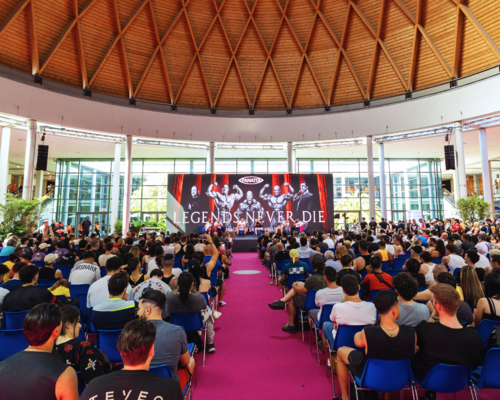
Panatta brought together four of the most influential figures in bodybuilding history on the
stage of RiminiWellness 2026: Phil Heath, Lee Haney, Ronnie Coleman and Hany Rambod. [more...]