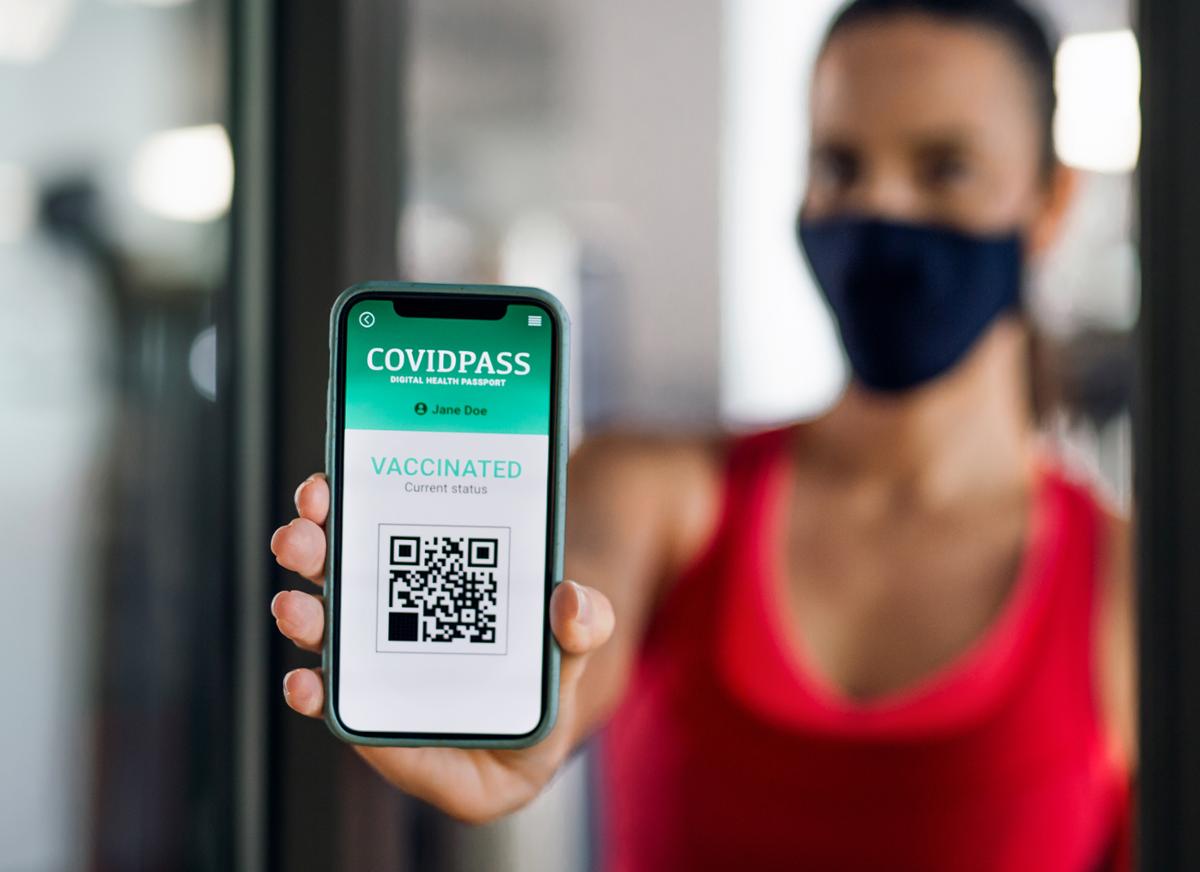
Safe Active studies show gym operators across Europe are being effective in controlling COVID-19 / Shutterstock/Halfpoint
As a scientist, I’ve seen more than enough of this virus to know that until we reach a stage of 100 per cent vaccination coverage across the world, we’ll face more mutations and disruptions to our lives, our businesses and our operations.
We must expect disruption but plan to thrive regardless.
Evidence-based approach A central pillar of maintaining the confidence of our stakeholders and customers has been our robust evidence-based approach to assessing risk and reducing the risk of transmission in our facilities. This evidence has contributed to the position we’ve been able to establish as an industry via the Safe Active study, which is conducted by Think Active, the research unit of Europe Active.
Working in partnership with the Advanced Wellbeing Research Centre, the Centre for Sport Studies at King Juan Carlos University in Spain and the UK Active Research Institute, Think Active released the first edition of the Safe Active study in December 2020. It has proven critical in providing an evidence base with which to engage policymakers across Europe.
For this reason, while hoping we were on an irreversible path into the new normal, we’ve also been working to ensure we’re in the strongest position possible as we enter what’s clearly a new and dangerous phase in our management of the pandemic.
The second Safe Active study The Safe Active study second edition released in December 2021, shows a reported rate of positive COVID-19 cases in the gym population as being 0.88 cases per 100,000 visits when taking into account numbers in the combined Safe Active study 2021 and the UK Active 2021 data sets.
These numbers were taken from a total sample of 185 million visits across nine countries. The self-reported data suggests again that fitness clubs and leisure centres (where industry-standard mitigation is in place) provide safe public spaces in which to exercise, with very low self-reported connections with cases of COVID-19.
This does not mean we should demand governments leave us alone to operate without consideration of the fact that we remain in the grip of a pandemic.
It’s essential we maintain the very highest standards of operation, as there’s no way we can deny the evidence of risk of aerosol transmission. Instead, we must redouble our efforts to ensure adequate ventilation in all our clubs. And we must also recognise the inequality that we see in our usage patterns and work tirelessly to build confidence in those customers who remain insufficiently comfortable to return.
Benefits outweigh the risks Our right to continue improving the health and wellbeing of communities will be linked to the degree to which we can demonstrate our commitment to doing so safely, and evidence that the benefit we provide far outweighs the risks that might be faced.
In that context, the only irreversible thing must be the commitment of the leaders of our industry to high-quality evidence-based research that helps us understand where we are today, and what we must do to arrive at where we want to be in the future.
Our sector has the opportunity to be among the primary drivers of wellbeing across Europe. Let’s keep making strides in that direction.
Within GO fit, an organisation I serve as chief scientific officer, we’ve taken a conscious decision to evolve our approach in line with the virus, with a focus on ensuring the safety of our customers and our team.
Throughout the crisis, we’ve worked with colleagues across the industry to build confidence in our safety and our professionalism.
Within our home market of Spain, this has resulted in a designation as an essential service in many regions, being protected as a consequence and able to remain open so we can continue to strengthen the wellbeing of the communities we serve.
Panatta brought together four of the most influential figures in bodybuilding history on the
stage of RiminiWellness 2026: Phil Heath, Lee Haney, Ronnie Coleman and Hany Rambod. [more...]
Safe Active studies show gym operators across Europe are being effective in controlling COVID-19 / Shutterstock/Halfpoint
As a scientist, I’ve seen more than enough of this virus to know that until we reach a stage of 100 per cent vaccination coverage across the world, we’ll face more mutations and disruptions to our lives, our businesses and our operations.
We must expect disruption but plan to thrive regardless.
Evidence-based approach A central pillar of maintaining the confidence of our stakeholders and customers has been our robust evidence-based approach to assessing risk and reducing the risk of transmission in our facilities. This evidence has contributed to the position we’ve been able to establish as an industry via the Safe Active study, which is conducted by Think Active, the research unit of Europe Active.
Working in partnership with the Advanced Wellbeing Research Centre, the Centre for Sport Studies at King Juan Carlos University in Spain and the UK Active Research Institute, Think Active released the first edition of the Safe Active study in December 2020. It has proven critical in providing an evidence base with which to engage policymakers across Europe.
For this reason, while hoping we were on an irreversible path into the new normal, we’ve also been working to ensure we’re in the strongest position possible as we enter what’s clearly a new and dangerous phase in our management of the pandemic.
The second Safe Active study The Safe Active study second edition released in December 2021, shows a reported rate of positive COVID-19 cases in the gym population as being 0.88 cases per 100,000 visits when taking into account numbers in the combined Safe Active study 2021 and the UK Active 2021 data sets.
These numbers were taken from a total sample of 185 million visits across nine countries. The self-reported data suggests again that fitness clubs and leisure centres (where industry-standard mitigation is in place) provide safe public spaces in which to exercise, with very low self-reported connections with cases of COVID-19.
This does not mean we should demand governments leave us alone to operate without consideration of the fact that we remain in the grip of a pandemic.
It’s essential we maintain the very highest standards of operation, as there’s no way we can deny the evidence of risk of aerosol transmission. Instead, we must redouble our efforts to ensure adequate ventilation in all our clubs. And we must also recognise the inequality that we see in our usage patterns and work tirelessly to build confidence in those customers who remain insufficiently comfortable to return.
Benefits outweigh the risks Our right to continue improving the health and wellbeing of communities will be linked to the degree to which we can demonstrate our commitment to doing so safely, and evidence that the benefit we provide far outweighs the risks that might be faced.
In that context, the only irreversible thing must be the commitment of the leaders of our industry to high-quality evidence-based research that helps us understand where we are today, and what we must do to arrive at where we want to be in the future.
Our sector has the opportunity to be among the primary drivers of wellbeing across Europe. Let’s keep making strides in that direction.
Within GO fit, an organisation I serve as chief scientific officer, we’ve taken a conscious decision to evolve our approach in line with the virus, with a focus on ensuring the safety of our customers and our team.
Throughout the crisis, we’ve worked with colleagues across the industry to build confidence in our safety and our professionalism.
Within our home market of Spain, this has resulted in a designation as an essential service in many regions, being protected as a consequence and able to remain open so we can continue to strengthen the wellbeing of the communities we serve.
Italian Exhibition Group – the organiser behind industry events Dubai Active and Dubai Muscle
Show – has been appointed to deliver the Health and Wellness Expo and Fire and Safety Expo at
the 16th World Firefighters Games.
It’s been five years since the fitness industry reopened after the last lockdown – long enough
to look back on the impact the pandemic had on the sector and what might come next.
Wattbike has announced a new integration with EGYM, which enables the bikes to contribute to
the Cardio BioAge score of individuals via a VO2 max result.
Les Mills has launched a reformer Pilates workout. The 45-minute workout blends traditional
reformer movements and more contemporary exercises, choreographed to music.
According to research which tracked more than 147,000 people for 30 years, 90-120 minutes
of strength training a week may deliver some of the biggest long-term health rewards.
The UK's four Chief Medical Officers have published a refreshed edition of Physical activity
guidelines: UK Chief Medical Officers' report, updating the evidence that underpins the nation's
physical activity recommendations and placing greater emphasis on strength, balance, reducing
sedentary behaviour and, for the first time, supporting people taking weight loss medications.
Places Leisure has exchanged contracts to build and operate a flagship £60m water and leisure
destination on behalf of Basingstoke and Deane Borough Council.
The Republic of Ireland will become the latest market in PureGym’s expanding international
portfolio, with the first launch planned for Dublin in 2027.
Panatta brought together four of the most influential figures in bodybuilding history on the
stage of RiminiWellness 2026: Phil Heath, Lee Haney, Ronnie Coleman and Hany Rambod. [more...]