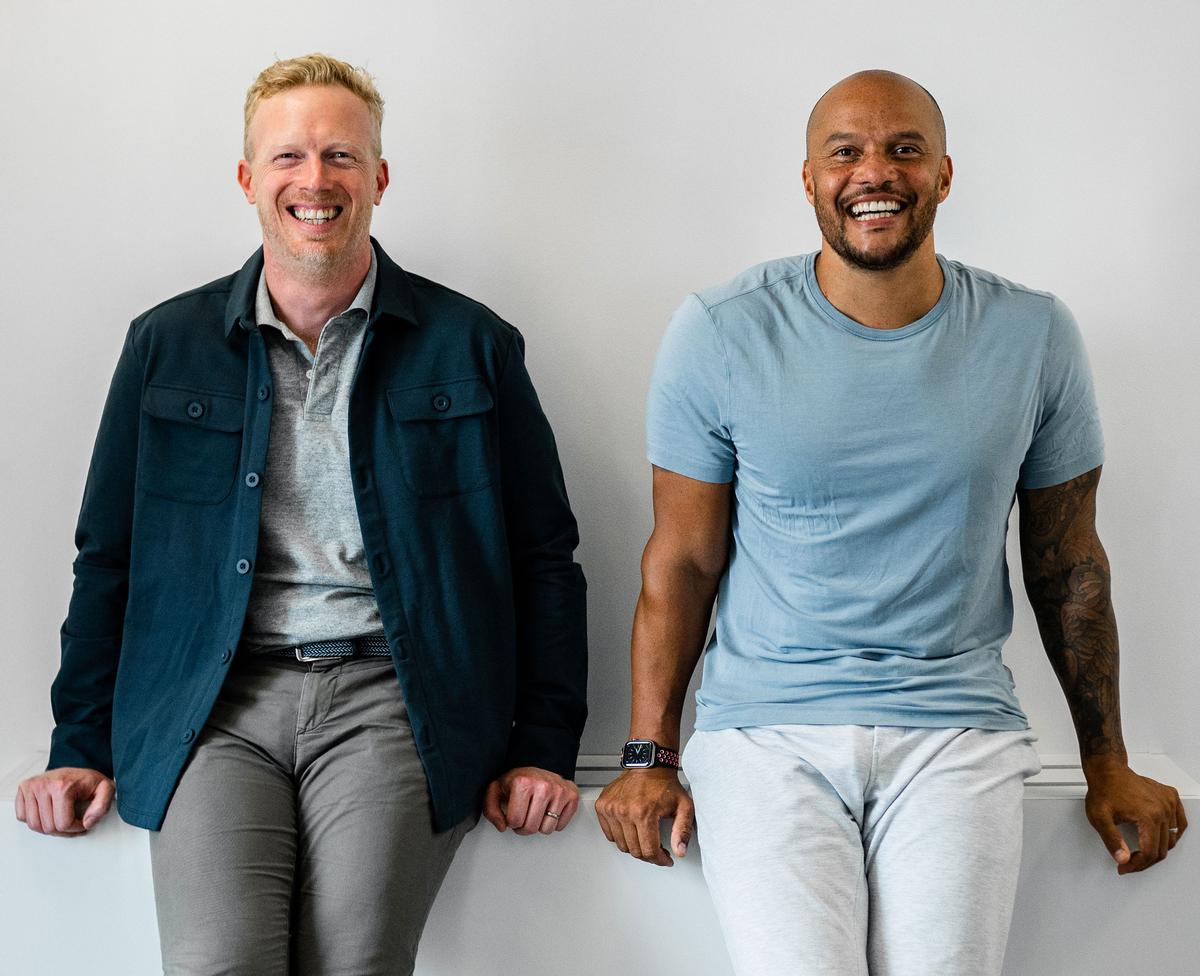
Patrick (left) is a physiologist, while Jameson (right) is a performance coach / photo: Future Practice
Tell us about your business Oli: Future Practice is a Clinical Wellbeing Academy, with the ultimate goal of creating a credible army of wellbeing professionals who are able to address the epidemic of lifestyle disease in the western world.
Stress was at epidemic levels even before COVID-19, yet there is still no ‘stress resilience’ profession and we believe fitness professionals can fill that gap.
How did it start? Harry: Future Practice is dedicated to providing education and training to deliver skills that allow fitness professionals to move into areas such as corporate wellbeing and lifestyle coaching. It gives them more tools in their toolbox to make them rounded practitioners.
What are your backgrounds? Oli: I’ve been a physiologist for 21 years, working in the grey space between medicine and fitness.
As the former head of physiology at Nuffield, I wrote the Level 7 Diploma in Health and Wellbeing Physiology, before co-founding a clinic offering advanced health assessments.
Harry: My primary role is as a performance and wellbeing coach with a preventative approach, encompassing smart training, nutrition, and recovery.
I’ve worked with brands such as Lululemon, Symprove, Technogym, Rosewood Hotels and Twitter, as well as high profile clients. I’m also wellness editor for The Times [London].
Why is it important for exercise professionals to be trained in stress resilience? Oli: If you don’t understand the technicalities of stress and its impact on the behavioural and physiological patterns of your clients, you can’t achieve optimal results.
A modern wellbeing coach needs to understand what stress is, how it moves from a thought to very real consequences in the body and be able to provide an exact framework to improve stress resilience in their clients.
Harry: When I did formal training on stress resilience it created a completely new dialogue for me, giving me a platform to launch a health retreats business and adding a new dimension to my corporate work.
A true understanding of heart rate variability and cortisol opened my understanding of technology and laboratory testing. You don’t get to stand in front of the boards of international businesses and speak about wellbeing without having a clear handle on stress and how your clients can build resilience against its ill effects.
You work with a number of high-profile clients. What do they need from you? Harry: You don’t get to work with these types of people if your view is fitness only. Even excellent nutrition coaching will only get you so far. It’s important to have a total overview of what it takes to be well.
My ability to talk coherently and develop strategies for my clients on a number of topics and areas outside of the gym is what has led these clients to me.
How do you use stress resilience techniques with your clients? Harry: I help them make appropriate life choices, to manage their thoughts and create a physiology which is robust and guards them against a high volume of stress. To be effective most of these actions take place when they’re not with me, so it’s important they completely buy in to why they’re important.
Their understanding of why I’m asking them to make certain changes helps enormously with their compliance. In physical one-on-one sessions I factor in breathwork, ‘thought re-framing’ and the management of exercise intensity.
How do you empower clients to change deeply ingrained behaviours? Harry: The first step is to reframe the debate. Too often people are told a habit or behaviour, such as alcohol intake, is ‘bad’ for them. But what does that mean? The reason given is something intangible and distant, like the impact on liver health or cardiovascular risk, issues that are completely foreign concepts to people who work in a non-clinical profession.
So I don’t start with a client wanting to change a specific behaviour, I start with what the client wants to improve. If they want more energy, which is extremely likely given the demands put on them [Harry is PT to Boris Johnson], then I might build an association between diet, poor sleep recovery and low energy. Even better, I would hope to measure their sleep response to things like alcohol and show them how this message directly relates to them. We can’t keep expecting people to adopt difficult behaviours without understanding why they’re directly related to them.
Can you give an example? Oli: One great practical example of the impact of stress on the body was a client with stubborn weight gain and fatigue, who was on four different long-term medications for blood pressure, pre-diabetes, joint pain and mood stability.
Through taking some analytics of stress – questionnaires, heart rate variability and cortisol testing – we could see excess stress sat at the core of pretty much every symptom being presented.
So we amended exercise frequency, timing and intensity: swapping evening HIIT for morning yoga. We taught basic meditation and enforced a lunchtime walk. Simple actions, yet the client understood why they were appropriate and what we were seeking to achieve.
In a year, beyond weight loss and improved energy, there was also no need for any further medication. Unlocking stress had a life-changing effect.
Footnote: Future Practice is an approved training partner of CIMSPA and is launching an online course titled Mastering Stress Resilience.
Stress epidemic
Levels of stress in the general population have skyrocketed since the start of the pandemic
• In 2011, CIPD reported that stress had overtaken traditional physical injuries, back pain mostly, as the number one cause of long term sickness absence from work.
• In 2019 ‘Burnout’ was added to the international classification of diseases as an occupational condition.
• The insurer Cigna estimates stress-related ill health to cost the NHS over £11bn each year.
• 82 per cent of UK SME businesses have no current wellbeing strategy
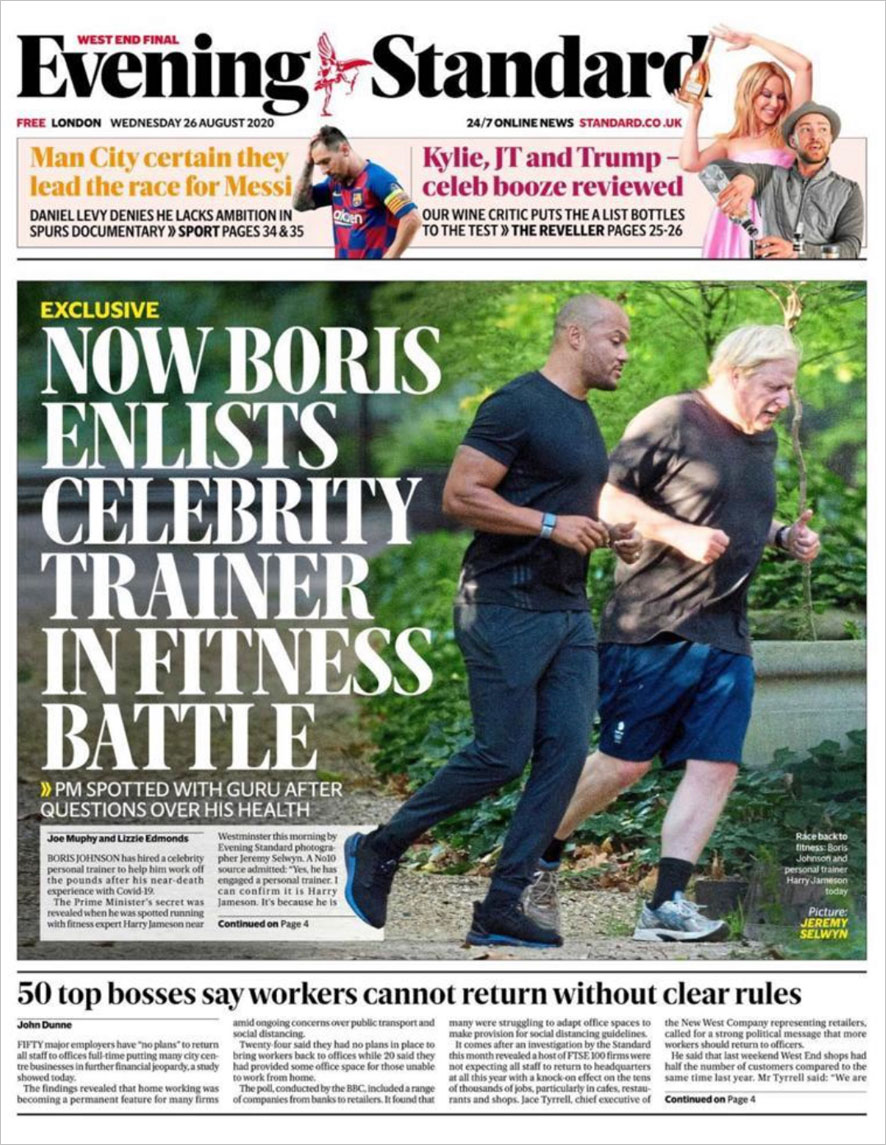
Boris Johnson hired Jameson after his spell in the ICU / photo: Evening Standard
"A wellbeing coach needs to understand what
stress is, how it moves from a thought to very real
consequences in the body and be able to provide a
framework to improve stress resilience in their clients"
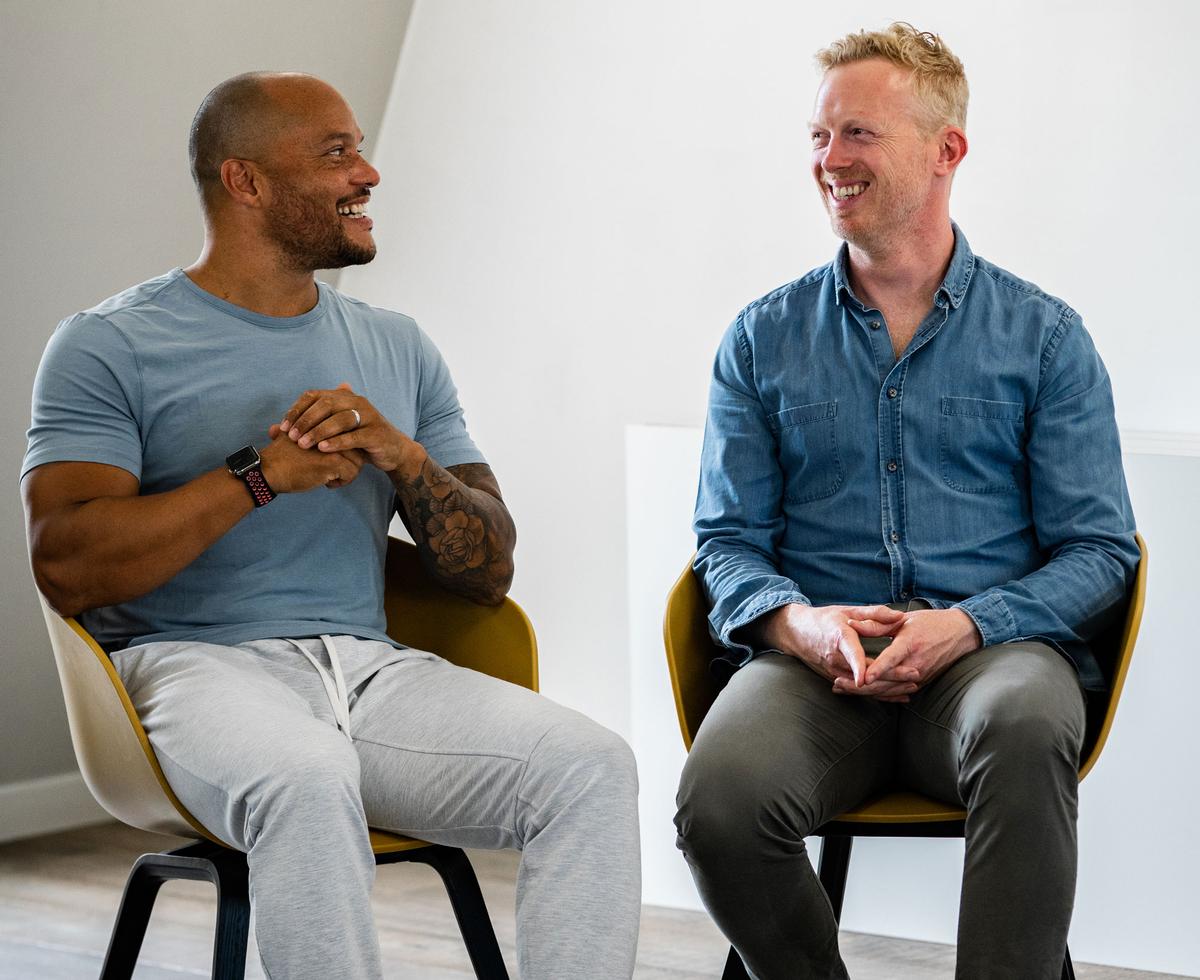
Patrick says fitness pros must understand stress to get optimal client results / photo: Future Practice
Breathwork and ‘thought re-framing’ are part of the stress training approach / photo: Future Practice
Panatta brought together four of the most influential figures in bodybuilding history on the
stage of RiminiWellness 2026: Phil Heath, Lee Haney, Ronnie Coleman and Hany Rambod. [more...]
+ More featured suppliers
COMPANY PROFILES
ukactive
ukactive is the UK’s leading trade body for the physical activity sector, bringing together more tha [more...]
Orbit4
With Orbit4, you’ll always have full visibility
of your equipment inventory, the true
market value [more...]
Patrick (left) is a physiologist, while Jameson (right) is a performance coach / photo: Future Practice
Tell us about your business Oli: Future Practice is a Clinical Wellbeing Academy, with the ultimate goal of creating a credible army of wellbeing professionals who are able to address the epidemic of lifestyle disease in the western world.
Stress was at epidemic levels even before COVID-19, yet there is still no ‘stress resilience’ profession and we believe fitness professionals can fill that gap.
How did it start? Harry: Future Practice is dedicated to providing education and training to deliver skills that allow fitness professionals to move into areas such as corporate wellbeing and lifestyle coaching. It gives them more tools in their toolbox to make them rounded practitioners.
What are your backgrounds? Oli: I’ve been a physiologist for 21 years, working in the grey space between medicine and fitness.
As the former head of physiology at Nuffield, I wrote the Level 7 Diploma in Health and Wellbeing Physiology, before co-founding a clinic offering advanced health assessments.
Harry: My primary role is as a performance and wellbeing coach with a preventative approach, encompassing smart training, nutrition, and recovery.
I’ve worked with brands such as Lululemon, Symprove, Technogym, Rosewood Hotels and Twitter, as well as high profile clients. I’m also wellness editor for The Times [London].
Why is it important for exercise professionals to be trained in stress resilience? Oli: If you don’t understand the technicalities of stress and its impact on the behavioural and physiological patterns of your clients, you can’t achieve optimal results.
A modern wellbeing coach needs to understand what stress is, how it moves from a thought to very real consequences in the body and be able to provide an exact framework to improve stress resilience in their clients.
Harry: When I did formal training on stress resilience it created a completely new dialogue for me, giving me a platform to launch a health retreats business and adding a new dimension to my corporate work.
A true understanding of heart rate variability and cortisol opened my understanding of technology and laboratory testing. You don’t get to stand in front of the boards of international businesses and speak about wellbeing without having a clear handle on stress and how your clients can build resilience against its ill effects.
You work with a number of high-profile clients. What do they need from you? Harry: You don’t get to work with these types of people if your view is fitness only. Even excellent nutrition coaching will only get you so far. It’s important to have a total overview of what it takes to be well.
My ability to talk coherently and develop strategies for my clients on a number of topics and areas outside of the gym is what has led these clients to me.
How do you use stress resilience techniques with your clients? Harry: I help them make appropriate life choices, to manage their thoughts and create a physiology which is robust and guards them against a high volume of stress. To be effective most of these actions take place when they’re not with me, so it’s important they completely buy in to why they’re important.
Their understanding of why I’m asking them to make certain changes helps enormously with their compliance. In physical one-on-one sessions I factor in breathwork, ‘thought re-framing’ and the management of exercise intensity.
How do you empower clients to change deeply ingrained behaviours? Harry: The first step is to reframe the debate. Too often people are told a habit or behaviour, such as alcohol intake, is ‘bad’ for them. But what does that mean? The reason given is something intangible and distant, like the impact on liver health or cardiovascular risk, issues that are completely foreign concepts to people who work in a non-clinical profession.
So I don’t start with a client wanting to change a specific behaviour, I start with what the client wants to improve. If they want more energy, which is extremely likely given the demands put on them [Harry is PT to Boris Johnson], then I might build an association between diet, poor sleep recovery and low energy. Even better, I would hope to measure their sleep response to things like alcohol and show them how this message directly relates to them. We can’t keep expecting people to adopt difficult behaviours without understanding why they’re directly related to them.
Can you give an example? Oli: One great practical example of the impact of stress on the body was a client with stubborn weight gain and fatigue, who was on four different long-term medications for blood pressure, pre-diabetes, joint pain and mood stability.
Through taking some analytics of stress – questionnaires, heart rate variability and cortisol testing – we could see excess stress sat at the core of pretty much every symptom being presented.
So we amended exercise frequency, timing and intensity: swapping evening HIIT for morning yoga. We taught basic meditation and enforced a lunchtime walk. Simple actions, yet the client understood why they were appropriate and what we were seeking to achieve.
In a year, beyond weight loss and improved energy, there was also no need for any further medication. Unlocking stress had a life-changing effect.
Footnote: Future Practice is an approved training partner of CIMSPA and is launching an online course titled Mastering Stress Resilience.
Stress epidemic
Levels of stress in the general population have skyrocketed since the start of the pandemic
• In 2011, CIPD reported that stress had overtaken traditional physical injuries, back pain mostly, as the number one cause of long term sickness absence from work.
• In 2019 ‘Burnout’ was added to the international classification of diseases as an occupational condition.
• The insurer Cigna estimates stress-related ill health to cost the NHS over £11bn each year.
• 82 per cent of UK SME businesses have no current wellbeing strategy
Boris Johnson hired Jameson after his spell in the ICU / photo: Evening Standard
"A wellbeing coach needs to understand what
stress is, how it moves from a thought to very real
consequences in the body and be able to provide a
framework to improve stress resilience in their clients"
Patrick says fitness pros must understand stress to get optimal client results / photo: Future Practice
Breathwork and ‘thought re-framing’ are part of the stress training approach / photo: Future Practice
It’s been five years since the fitness industry reopened after the last lockdown – long enough
to look back on the impact the pandemic had on the sector and what might come next.
Wattbike has announced a new integration with EGYM, which enables the bikes to contribute to
the Cardio BioAge score of individuals via a VO2 max result.
Les Mills has launched a reformer Pilates workout. The 45-minute workout blends traditional
reformer movements and more contemporary exercises, choreographed to music.
According to research which tracked more than 147,000 people for 30 years, 90-120 minutes
of strength training a week may deliver some of the biggest long-term health rewards.
The UK's four Chief Medical Officers have published a refreshed edition of Physical activity
guidelines: UK Chief Medical Officers' report, updating the evidence that underpins the nation's
physical activity recommendations and placing greater emphasis on strength, balance, reducing
sedentary behaviour and, for the first time, supporting people taking weight loss medications.
Places Leisure has exchanged contracts to build and operate a flagship £60m water and leisure
destination on behalf of Basingstoke and Deane Borough Council.
The Republic of Ireland will become the latest market in PureGym’s expanding international
portfolio, with the first launch planned for Dublin in 2027.
Anytime Fitness opened more than one club a day in 2025 and is on track to maintain this rate
of growth this year, as parent company Purpose Brands targets further international expansion.
Panatta brought together four of the most influential figures in bodybuilding history on the
stage of RiminiWellness 2026: Phil Heath, Lee Haney, Ronnie Coleman and Hany Rambod. [more...]
+ More featured suppliers
COMPANY PROFILES
ukactive ukactive is the UK’s leading trade body for the physical activity sector, bringing together more tha [more...]