Get HCM digital magazine and ezines FREE
Sign up here ▸
Jobs   News   Features   Products   Magazine      Advertise  
Insight
Team effort

Dr Davina Deniszczyc talks us through the findings of the first Nuffield Healthier Nation Index, which has benchmarked activity levels and attitudes to exercise among the UK population


As trading gears back up after 18 months of lockdown in the UK, the true breadth of the impact of the pandemic on the mental and physical wellbeing of the nation is becoming clearer. But so is the determination of the majority to prioritise, and invest in their physical and mental health to overcome any bad habits picked up in lockdown.

By focusing on improving our own health and wellbeing and encouraging those around us to do the same, we’ll help prevent long-term health conditions and support the nation’s recovery from the pandemic and it’s important to acknowledge that we all have a role to play.

Healthcare charity, Nuffield Health, launched its inaugural Healthier Nation Index to take a comprehensive look at all aspects of the nation’s health following the start of the pandemic, with the aim of building a stronger understanding of how people are feeling, identify where the biggest challenges are and providing crucial information to the public, NHS and policymakers to guide future decision-making and improve outcomes for everyone – ensuring the UK builds a healthier nation.

What’s the goal?
But what is a healthy nation? We believe it’s one where everyone, at every age, is able to access the tools and information they need to manage their physical and mental health.

A connected approach needs to be taken to health, proactively helping people to stay physically and mentally healthy throughout their lives in order to prevent long-term health conditions, rather than just providing reactive care to preventable conditions. This holistic approach acknowledges the fact there is no ‘health’ without a healthy mind and body and means we can best deliver our sector’s crucial and wide-ranging.

Connecting the dots will be key as we recover from the pandemic – from reducing the likelihood of people developing mental health problems, to supporting the government’s obesity strategy and protecting the NHS from being overburdened by preventable long-term health conditions.

The last year has taken a toll on the nation’s fitness. Our Healthier Nation Index, which is based on a nationally representative sample of over 8,000 UK adults, found a third (33 per cent) of people believe their physical health was worse than a year ago. Older age groups reported a more significant decline and only 10 per cent of Baby Boomers (over 55s) agreed their physical health has improved, with the other 90 per cent saying it had need negatively impacted.

This data is not surprising – we’ve lived through a mental and physical health ‘superstorm’, and the good habits that were mainstays in our previous lives were stripped away from us as we were forced to stay at home.

Shocking results
Yet, despite well-publicised evidence pointing to the link between obesity and severity of illness from COVID-19 we found that 16 per cent of respondents – or 8.8 million adults – had done no exercise in the last 12 months, rising to a quarter of over-55s. This is absolutely astonishing, and we must think creatively about how we can overcome the barriers to exercising at every stage – or major lifestyle shift – in life.

The main barriers for undertaking more physical activity are cited as a lack of motivation or energy (59 per cent), a lack of time due to work (50 per cent), a dislike of exercise (39 per cent) and cost (36 per cent). But the Index also reveals the impact of months in lockdowns, with nearly two fifths (37 per cent) agreeing they fell out of the habit of exercising and have found it difficult to restart. This rises to 49 per cent in millennials (25-to 34-year-olds).

And in a sign of the devastating impact of COVID-19, 7 per cent of respondents- representing an estimated 3.65 million people – said they have struggled to exercise in the last 12 months due to long-term symptoms, or ‘Long COVID’.

We know that COVID-19 afflicts all ages, ethnicities and genders – but also that those aged 35-69 are most likely to be affected, as are those working in the health and care sector or those who already have a disability.

Free Long COVID programme
At the start of the pandemic, Nuffield Health quickly identified that there was an unmet need and developed a free COVID-19 Rehabilitation Programme, which blends physical and emotional support to help an ever-growing number of people who are experiencing the long-term effects of COVID-19.

The programme is now available at 40 Nuffield locations throughout the UK with the ambition to roll out further by the end of 2021. Through this programme we will not only help people dealing with the symptoms of Long COVID and their families and carers but also build knowledge about this new disease and how to treat people in the longer term.

Initial findings from the programme have shown that breathlessness improved in 45 per cent of participants, while anxiety improved for 50 per cent of people and 47 per cent of participants had an improvement in their functional capacity- or their ability to carry out day to day tasks.

Without doubt the health of your mind and body are intrinsically linked, but only 30 per cent of people believe exercise helps their mental health. As with physical health, the nation’s mental health has also been impacted, with women, in particular, feeling the impact of homeschooling, professional pressures and caring responsibilities.

Mental health results
On average, 41 per cent of people said their mental health is ‘worse than this time last year’, but this rose to nearly one in two women (49 per cent). More than a fifth of Britons (21 per cent) reported low life satisfaction, while over a third (36 per cent) reported high anxiety when asked how they felt on the previous day – 53 per cent of people say they have been less productive during work due to poor mental health, and 56 per cent have gone to work despite their mental health being poor that day. A further 33 per cent called in sick to work because of their mental health, but gave another reason to explain why they were off.

There is also significant concern about family members. Almost half (49 per cent) of 25 to 34-year-olds agreed they were more concerned about their parents’ mental health now because of COVID-19, while 47 per cent of parents expressed fears about their children’s mental health.

Evidence shows that exercise can help manage mental health and working out has so much potential to enhance our wellbeing. Even low-intensity aerobic exercise, such as walking, yoga or jogging for 30 to 35 minutes, 3-5 days a week over 10 to 12 weeks has been shown to deliver the most powerful stress relief.

Health implications
The data shows the clear physical and mental health implications of lockdown, which will have serious consequences for the health of the nation, but there is still a disconnect between people acknowledging their worsening physical and mental health – and agreeing to take action.

Researchers found 24 per cent of people surveyed do not plan to do anything in relation to exercise or their physical or mental health now that lockdown restrictions have ended, with those over 55 most likely to say this (36 per cent).

Although 46 per cent of people identified themselves as overweight, 25 per cent of those admitted they are not actively trying to change this.

Despite this, there are green shoots of hope starting to appear, particularly when it comes to understanding the link between physical and mental health, which is hugely promising.

Almost 3 in 10 of people said the main reason they have been motivated to exercise and look after their physical health in the last 12 months is because exercising helps with their mental health (28 per cent) and almost half of people (47 per cent) agreed they would take more responsibility for their health after lockdown.

After 16 months of restrictions, the health and wellbeing sector must take the opportunity to help people recover from the impact of the pandemic as quickly as possible by taking better care of their mental and physical health. At Nuffield Health our commitment to helping build a healthier nation is unwavering and we are determined that we can and will build back healthier, happy and stronger.
Snap briefing: Nuffield Healthier Nation Index

• 47% are taking more responsibility for their health because of the pandemic

• 90% of over 55s say their health has been negatively impacted by the pandemic

• 33% of all UK adults believe their physical health is worse than a year ago

• 16% - 8.8 million UK adults - had done no exercise in the last 12 months

• 25% of over-55s had done no exercise in the last 12 months

• 59% lack motivation or the energy to exercise

• 50% lack time to exercise due to work

• 39% dislike exercise

• 36% say they can’t afford it

• 37% of all respondents and 49% of millennials have found it difficult to restart exercising

• 7% - 3.65m people – struggle to exercise due to Long COVID

• 41% said their mental health is ‘worse than this time last year (49 per cent of women)

• 21% reported low life satisfaction

• 36% reported high anxiety when asked how they felt on the previous day

• 53% of people say they’ve been less productive during work due to poor mental health

• 56% have gone to work despite their mental health being poor

• 33% called in sick because of their mental health, but gave another reason

• 49% of 25 to 34-year-olds are more concerned about their parents’ mental health because of COVID-19

• 47% of parents expressed fears about their children’s mental health as a result of the pandemic

• 24% of the total sample surveyed by Nuffield don’t plan to exercise in the future

• 36% of over 55s surveyed don’t plan to exercise at all in the future

• 46% of people identify as overweight but 25 per cent are not actively trying to change this in any way

• 28% exercise because they say it helps them maintain their mental health

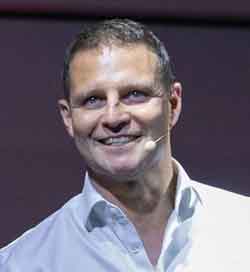
Dr Davina Deniszczyc is medical director of Nuffield Health
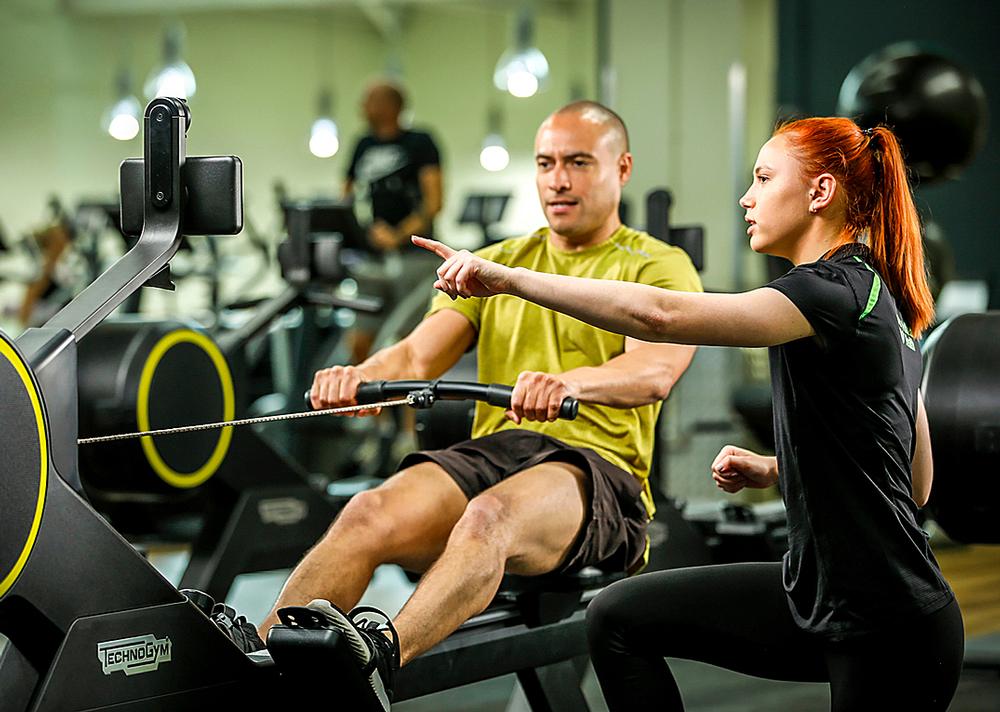
We must think creatively about how to engage every age group in exercise
We must think creatively about how to engage every age group in exercise / photo: Nuffield Health
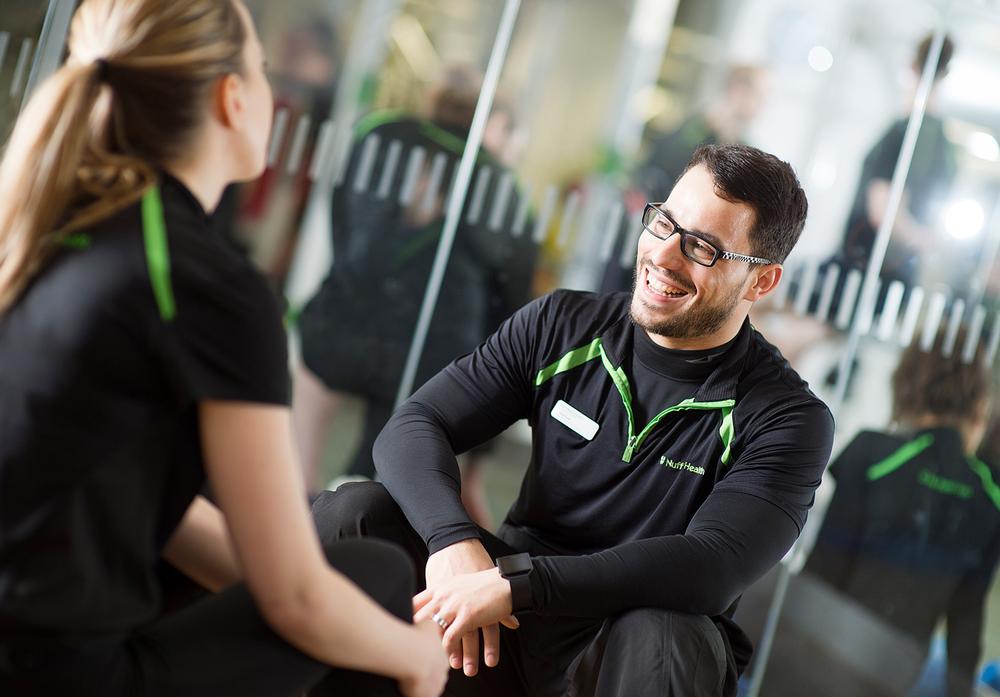
Improved mental health was cited as a major reason for exercising
Improved mental health was cited as a major reason for exercising / photo: Nuffield Health
FEATURED SUPPLIERS

Introducing a new era of Nautilus Leverage
Strength training has never been more important for member retention, facility differentiation and long-term commercial success. [more...]

Legends never die: four legends, four philosophies of life
Panatta brought together four of the most influential figures in bodybuilding history on the stage of RiminiWellness 2026: Phil Heath, Lee Haney, Ronnie Coleman and Hany Rambod. [more...]
+ More featured suppliers  
COMPANY PROFILES
Total Vibration Solutions Ltd (TVS Group)

TVS Group includes TVS Sports Surfaces, TVS Gym Flooring, TVS Play Surfaces and TVS Acoustics. [more...]
Perfect Gym Solutions S.A.

Perfect Gym, part of the Sport Alliance group, is a global software provider specialising in fitness [more...]
+ More profiles  
CATALOGUE GALLERY
 
+ More catalogues  

DIRECTORY
+ More directory  
DIARY


23-26 Aug 2026

Elevate Spa Riviera Maya Edition

The Riviera Maya Edition Kanai, Playa del Carmen, Mexico
31 Aug - 02 Sep 2026

SpaTec North America

Pier Sixty Six, Fort Lauderdale, United States
+ More diary  
 
ABOUT LEISURE MEDIA
LEISURE MEDIA MAGAZINES
LEISURE MEDIA HANDBOOKS
LEISURE MEDIA WEBSITES
LEISURE MEDIA PRODUCT SEARCH
 
HCM
LEISURE OPPORTUNITIES
HEALTH CLUB HANDBOOK
PRINT SUBSCRIPTIONS
FREE DIGITAL SUBSCRIPTIONS
ADVERTISE . CONTACT US

Leisure Media
Tel: +44 (0)1462 431385

©Cybertrek 2026
Get HCM digital magazine and ezines FREE
Sign up here ▸
Jobs    News   Products   Magazine
Insight
Team effort

Dr Davina Deniszczyc talks us through the findings of the first Nuffield Healthier Nation Index, which has benchmarked activity levels and attitudes to exercise among the UK population


As trading gears back up after 18 months of lockdown in the UK, the true breadth of the impact of the pandemic on the mental and physical wellbeing of the nation is becoming clearer. But so is the determination of the majority to prioritise, and invest in their physical and mental health to overcome any bad habits picked up in lockdown.

By focusing on improving our own health and wellbeing and encouraging those around us to do the same, we’ll help prevent long-term health conditions and support the nation’s recovery from the pandemic and it’s important to acknowledge that we all have a role to play.

Healthcare charity, Nuffield Health, launched its inaugural Healthier Nation Index to take a comprehensive look at all aspects of the nation’s health following the start of the pandemic, with the aim of building a stronger understanding of how people are feeling, identify where the biggest challenges are and providing crucial information to the public, NHS and policymakers to guide future decision-making and improve outcomes for everyone – ensuring the UK builds a healthier nation.

What’s the goal?
But what is a healthy nation? We believe it’s one where everyone, at every age, is able to access the tools and information they need to manage their physical and mental health.

A connected approach needs to be taken to health, proactively helping people to stay physically and mentally healthy throughout their lives in order to prevent long-term health conditions, rather than just providing reactive care to preventable conditions. This holistic approach acknowledges the fact there is no ‘health’ without a healthy mind and body and means we can best deliver our sector’s crucial and wide-ranging.

Connecting the dots will be key as we recover from the pandemic – from reducing the likelihood of people developing mental health problems, to supporting the government’s obesity strategy and protecting the NHS from being overburdened by preventable long-term health conditions.

The last year has taken a toll on the nation’s fitness. Our Healthier Nation Index, which is based on a nationally representative sample of over 8,000 UK adults, found a third (33 per cent) of people believe their physical health was worse than a year ago. Older age groups reported a more significant decline and only 10 per cent of Baby Boomers (over 55s) agreed their physical health has improved, with the other 90 per cent saying it had need negatively impacted.

This data is not surprising – we’ve lived through a mental and physical health ‘superstorm’, and the good habits that were mainstays in our previous lives were stripped away from us as we were forced to stay at home.

Shocking results
Yet, despite well-publicised evidence pointing to the link between obesity and severity of illness from COVID-19 we found that 16 per cent of respondents – or 8.8 million adults – had done no exercise in the last 12 months, rising to a quarter of over-55s. This is absolutely astonishing, and we must think creatively about how we can overcome the barriers to exercising at every stage – or major lifestyle shift – in life.

The main barriers for undertaking more physical activity are cited as a lack of motivation or energy (59 per cent), a lack of time due to work (50 per cent), a dislike of exercise (39 per cent) and cost (36 per cent). But the Index also reveals the impact of months in lockdowns, with nearly two fifths (37 per cent) agreeing they fell out of the habit of exercising and have found it difficult to restart. This rises to 49 per cent in millennials (25-to 34-year-olds).

And in a sign of the devastating impact of COVID-19, 7 per cent of respondents- representing an estimated 3.65 million people – said they have struggled to exercise in the last 12 months due to long-term symptoms, or ‘Long COVID’.

We know that COVID-19 afflicts all ages, ethnicities and genders – but also that those aged 35-69 are most likely to be affected, as are those working in the health and care sector or those who already have a disability.

Free Long COVID programme
At the start of the pandemic, Nuffield Health quickly identified that there was an unmet need and developed a free COVID-19 Rehabilitation Programme, which blends physical and emotional support to help an ever-growing number of people who are experiencing the long-term effects of COVID-19.

The programme is now available at 40 Nuffield locations throughout the UK with the ambition to roll out further by the end of 2021. Through this programme we will not only help people dealing with the symptoms of Long COVID and their families and carers but also build knowledge about this new disease and how to treat people in the longer term.

Initial findings from the programme have shown that breathlessness improved in 45 per cent of participants, while anxiety improved for 50 per cent of people and 47 per cent of participants had an improvement in their functional capacity- or their ability to carry out day to day tasks.

Without doubt the health of your mind and body are intrinsically linked, but only 30 per cent of people believe exercise helps their mental health. As with physical health, the nation’s mental health has also been impacted, with women, in particular, feeling the impact of homeschooling, professional pressures and caring responsibilities.

Mental health results
On average, 41 per cent of people said their mental health is ‘worse than this time last year’, but this rose to nearly one in two women (49 per cent). More than a fifth of Britons (21 per cent) reported low life satisfaction, while over a third (36 per cent) reported high anxiety when asked how they felt on the previous day – 53 per cent of people say they have been less productive during work due to poor mental health, and 56 per cent have gone to work despite their mental health being poor that day. A further 33 per cent called in sick to work because of their mental health, but gave another reason to explain why they were off.

There is also significant concern about family members. Almost half (49 per cent) of 25 to 34-year-olds agreed they were more concerned about their parents’ mental health now because of COVID-19, while 47 per cent of parents expressed fears about their children’s mental health.

Evidence shows that exercise can help manage mental health and working out has so much potential to enhance our wellbeing. Even low-intensity aerobic exercise, such as walking, yoga or jogging for 30 to 35 minutes, 3-5 days a week over 10 to 12 weeks has been shown to deliver the most powerful stress relief.

Health implications
The data shows the clear physical and mental health implications of lockdown, which will have serious consequences for the health of the nation, but there is still a disconnect between people acknowledging their worsening physical and mental health – and agreeing to take action.

Researchers found 24 per cent of people surveyed do not plan to do anything in relation to exercise or their physical or mental health now that lockdown restrictions have ended, with those over 55 most likely to say this (36 per cent).

Although 46 per cent of people identified themselves as overweight, 25 per cent of those admitted they are not actively trying to change this.

Despite this, there are green shoots of hope starting to appear, particularly when it comes to understanding the link between physical and mental health, which is hugely promising.

Almost 3 in 10 of people said the main reason they have been motivated to exercise and look after their physical health in the last 12 months is because exercising helps with their mental health (28 per cent) and almost half of people (47 per cent) agreed they would take more responsibility for their health after lockdown.

After 16 months of restrictions, the health and wellbeing sector must take the opportunity to help people recover from the impact of the pandemic as quickly as possible by taking better care of their mental and physical health. At Nuffield Health our commitment to helping build a healthier nation is unwavering and we are determined that we can and will build back healthier, happy and stronger.
Snap briefing: Nuffield Healthier Nation Index

• 47% are taking more responsibility for their health because of the pandemic

• 90% of over 55s say their health has been negatively impacted by the pandemic

• 33% of all UK adults believe their physical health is worse than a year ago

• 16% - 8.8 million UK adults - had done no exercise in the last 12 months

• 25% of over-55s had done no exercise in the last 12 months

• 59% lack motivation or the energy to exercise

• 50% lack time to exercise due to work

• 39% dislike exercise

• 36% say they can’t afford it

• 37% of all respondents and 49% of millennials have found it difficult to restart exercising

• 7% - 3.65m people – struggle to exercise due to Long COVID

• 41% said their mental health is ‘worse than this time last year (49 per cent of women)

• 21% reported low life satisfaction

• 36% reported high anxiety when asked how they felt on the previous day

• 53% of people say they’ve been less productive during work due to poor mental health

• 56% have gone to work despite their mental health being poor

• 33% called in sick because of their mental health, but gave another reason

• 49% of 25 to 34-year-olds are more concerned about their parents’ mental health because of COVID-19

• 47% of parents expressed fears about their children’s mental health as a result of the pandemic

• 24% of the total sample surveyed by Nuffield don’t plan to exercise in the future

• 36% of over 55s surveyed don’t plan to exercise at all in the future

• 46% of people identify as overweight but 25 per cent are not actively trying to change this in any way

• 28% exercise because they say it helps them maintain their mental health

Dr Davina Deniszczyc is medical director of Nuffield Health
We must think creatively about how to engage every age group in exercise
We must think creatively about how to engage every age group in exercise / photo: Nuffield Health
Improved mental health was cited as a major reason for exercising

Improved mental health was cited as a major reason for exercising / photo: Nuffield Health

LATEST NEWS
Fitness First UK unveils makeover of Highbury club with new recovery and Pilates offerings
Fitness First UK has raised the bar with its latest refurbishment, in Highbury, London, as it continues to premiumise its estate.
Total Fitness research charts the fitness industry’s post-pandemic transformation
It’s been five years since the fitness industry reopened after the last lockdown – long enough to look back on the impact the pandemic had on the sector and what might come next. 
Wattbike and EGYM integration allows addition of VO2 max tests
Wattbike has announced a new integration with EGYM, which enables the bikes to contribute to the Cardio BioAge score of individuals via a VO2 max result.
Les Mills launches reformer Pilates workout
Les Mills has launched a reformer Pilates workout. The 45-minute workout blends traditional reformer movements and more contemporary exercises, choreographed to music. 
HCM Invest opens applications for pitching slots
The inaugural HCM Invest event has opened applications for pitching slots ahead of its launch in London on 21 October 2026.
Researchers find that 90-120 minutes of strength training a week has longevity benefits
According to research which tracked more than 147,000 people for 30 years, 90-120 minutes of strength training a week may deliver some of the biggest long-term health rewards.
Everlast pushes internationally with Dublin site
Everlast Gyms expands its footprint outside of the UK this month with the imminent launch of a club in Dublin.
UK updates physical activity guidelines with focus on daily movement
The UK's four Chief Medical Officers have published a refreshed edition of Physical activity guidelines: UK Chief Medical Officers' report, updating the evidence that underpins the nation's physical activity recommendations and placing greater emphasis on strength, balance, reducing sedentary behaviour and, for the first time, supporting people taking weight loss medications.
Places Leisure is working with Roberts Limbrick to build £60m wellness flagship in Basingstoke
Places Leisure has exchanged contracts to build and operate a flagship £60m water and leisure destination on behalf of Basingstoke and Deane Borough Council.
PureGym announces expansion into Ireland
The Republic of Ireland will become the latest market in PureGym’s expanding international portfolio, with the first launch planned for Dublin in 2027.
Total Fitness CEO Sophie Lawler launches leadership coaching venture
Sophie Lawler, CEO of Total Fitness, has launched a leadership coaching business aimed at helping women realise their professional potential.
Anytime Fitness reaches milestone moment and targets Europe for growth
Anytime Fitness opened more than one club a day in 2025 and is on track to maintain this rate of growth this year, as parent company Purpose Brands targets further international expansion.
+ More news   
 
FEATURED SUPPLIERS

Introducing a new era of Nautilus Leverage
Strength training has never been more important for member retention, facility differentiation and long-term commercial success. [more...]

Legends never die: four legends, four philosophies of life
Panatta brought together four of the most influential figures in bodybuilding history on the stage of RiminiWellness 2026: Phil Heath, Lee Haney, Ronnie Coleman and Hany Rambod. [more...]
+ More featured suppliers  
COMPANY PROFILES
Total Vibration Solutions Ltd (TVS Group)

TVS Group includes TVS Sports Surfaces, TVS Gym Flooring, TVS Play Surfaces and TVS Acoustics. [more...]
+ More profiles  
CATALOGUE GALLERY
+ More catalogues  

DIRECTORY
+ More directory  
DIARY


23-26 Aug 2026

Elevate Spa Riviera Maya Edition

The Riviera Maya Edition Kanai, Playa del Carmen, Mexico
31 Aug - 02 Sep 2026

SpaTec North America

Pier Sixty Six, Fort Lauderdale, United States
+ More diary  


ADVERTISE . CONTACT US

Leisure Media
Tel: +44 (0)1462 431385

©Cybertrek 2026

ABOUT LEISURE MEDIA
LEISURE MEDIA MAGAZINES
LEISURE MEDIA HANDBOOKS
LEISURE MEDIA WEBSITES
LEISURE MEDIA PRODUCT SEARCH
PRINT SUBSCRIPTIONS
FREE DIGITAL SUBSCRIPTIONS