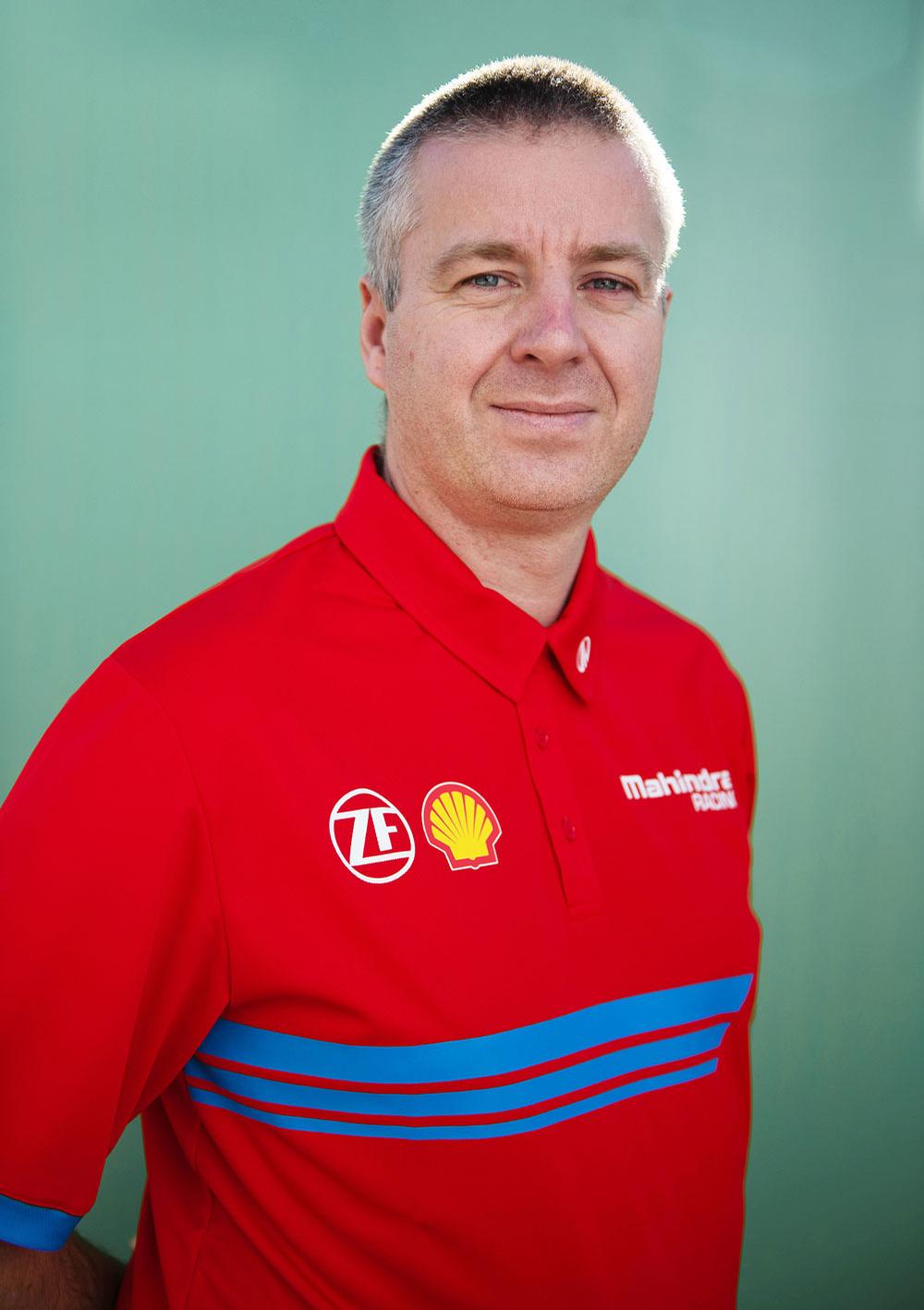
The team manager of
Mahindra Racing talks
to Kate Cracknell about
creating a new corporate
culture in a competitive
world – one that places
employee wellbeing first
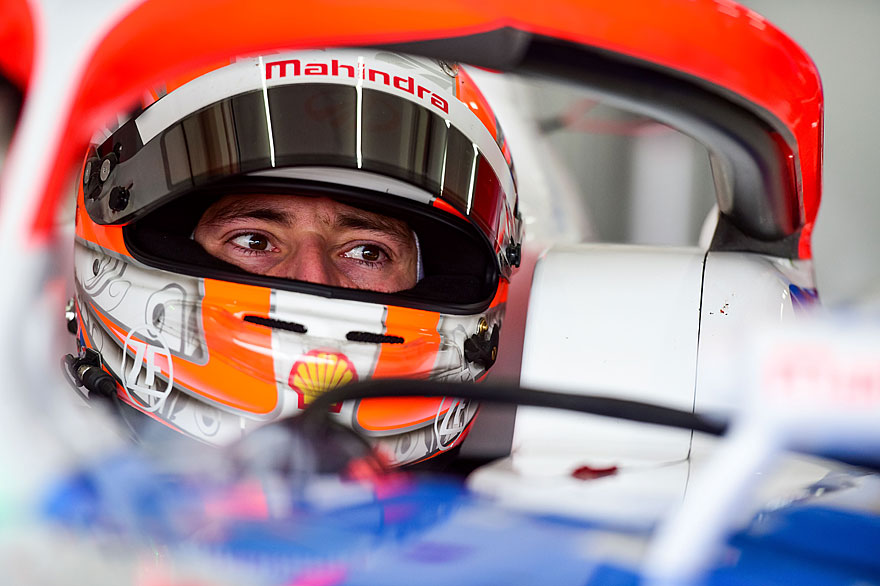
Mahindra Racing prioritises workplace wellbeing as a way to promote creativity and productivity / Spacesuit Media / Lou Johnson
What is Mahindra Racing? A motor racing team in the FIA Formula E World Championship. Part of the Mahindra Group, we are at the forefront of EV (electronic vehicle) innovation.
The Mahindra Group already manufactures electronic vehicles and went into Formula E specifically to use it as a test bed: a way to develop technology that would allow it to create better electronic vehicles for normal road use. We call it our ‘Race to Road’ philosophy.
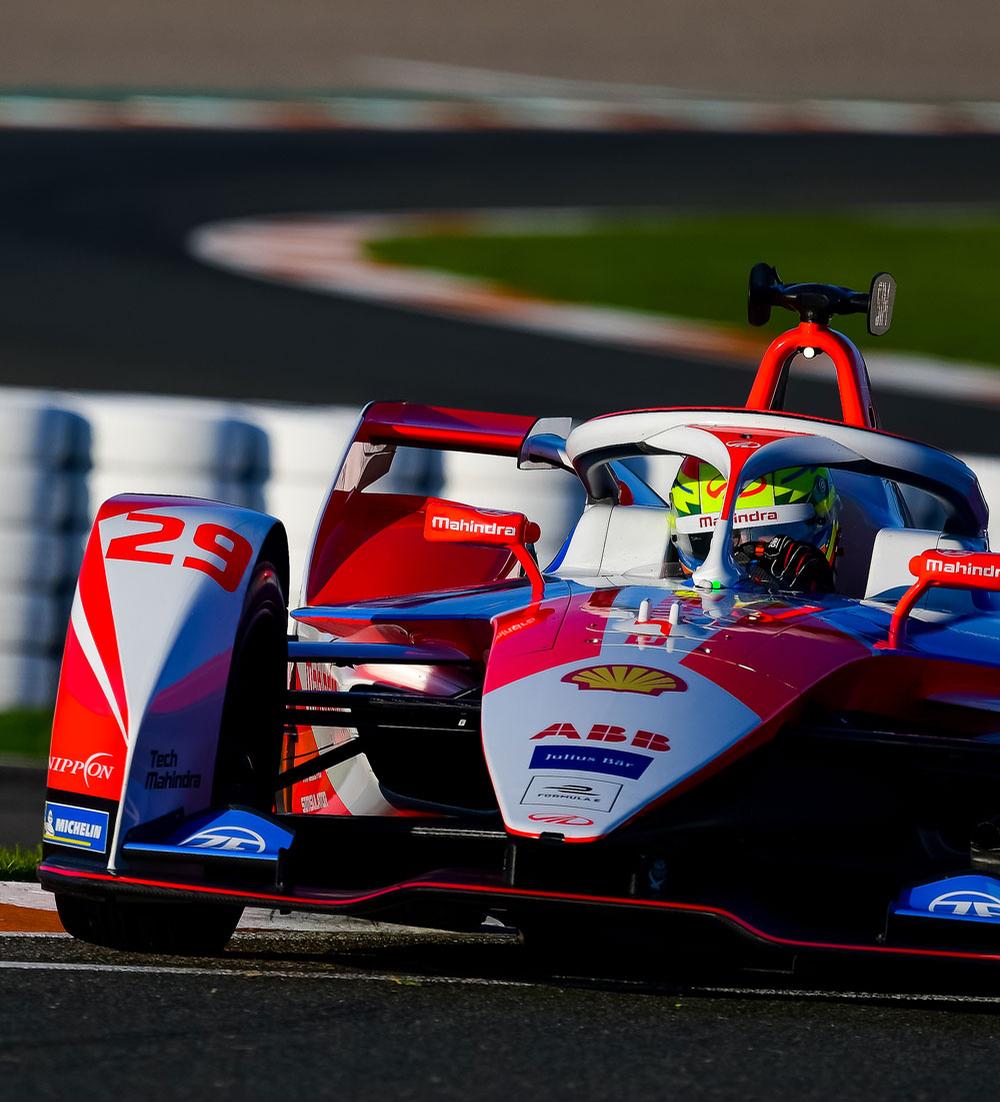
Tell us about Formula E Formula E is the only FIA World Championship for electric cars, with this year being its seventh season. For those readers familiar with Formula 1, every Formula E race is like Monaco. We race on temporary tracks in city centres across most continents of the world: London, Paris, Berlin, Rome, Mexico City, Sao Paolo, Hong Kong... the list goes on.
Twelve teams compete in a maximum of 15 races per season, with that season normally running from December to July; the start of this season was delayed to February due to COVID-19. Mahindra Racing has been involved from the very first season, and although we’re yet to win the Championship, we are a multi-race winning team.
Formula E targets a different demographic from Formula 1 – families and younger people – with events broadcast around the world, as well as live streamed on YouTube. And it has an important environmental agenda too: there’s an exhibition alongside each event, The Allianz E-Village, which showcases innovations in EV, sustainability, clean energy and so on.
It’s about trying to achieve a greener planet.
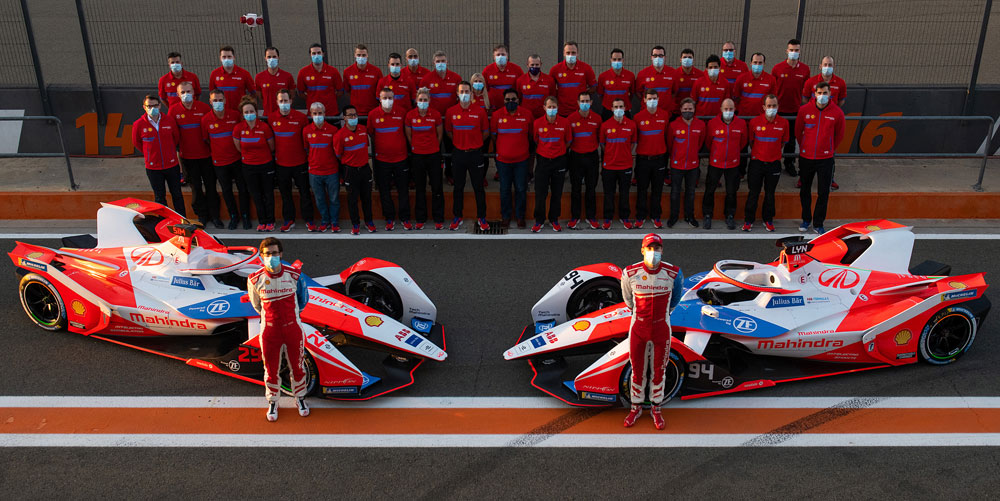
It’s the most competitive motorsport on the planet: all the teams are so close in performance that you could win one week and come last the next. That’s because all cars have to use a standardised battery and the same chassis; they all look the same. The only permitted differences are in the powertrain, which is completely electric – motor, inverter and gearbox – and the software.
The whole idea behind the Championship is to spearhead the innovation of electronic vehicles, and it comes down to two key areas: efficiency, so you drain the battery less; and regeneration, whereby the motor becomes a generator to put power back into the battery, so you can go further. On the race track, these two factors combine to ensure you go as fast as you can for as long as you can, so you finish the race. In the real world, it means going as far as you can as efficiently as possible.
How many people work for Mahindra Racing? We have three drivers – two race and one reserve – and a pool of simulator drivers. Meanwhile, behind the scenes at the factory, our team is currently 62 strong.
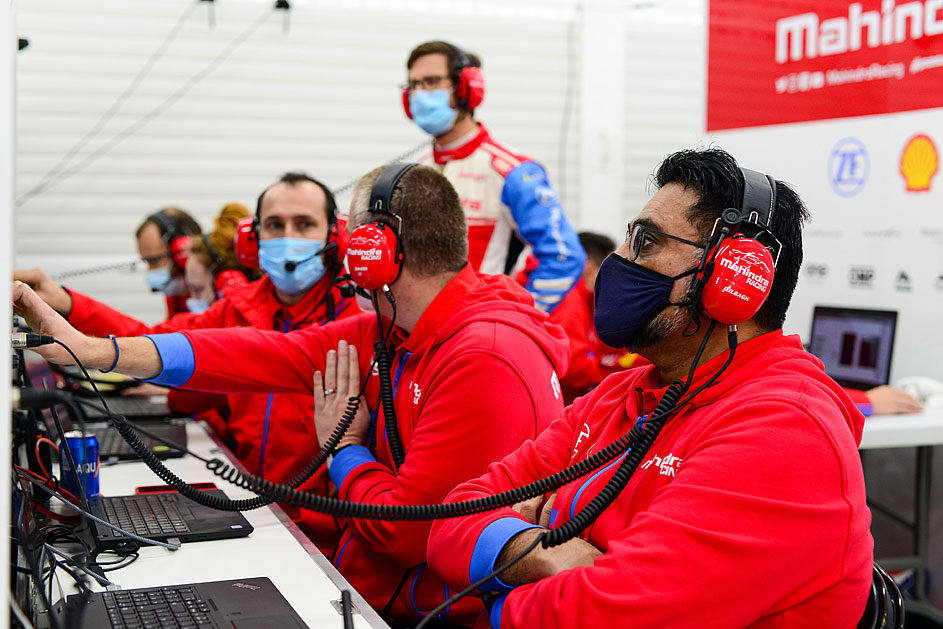
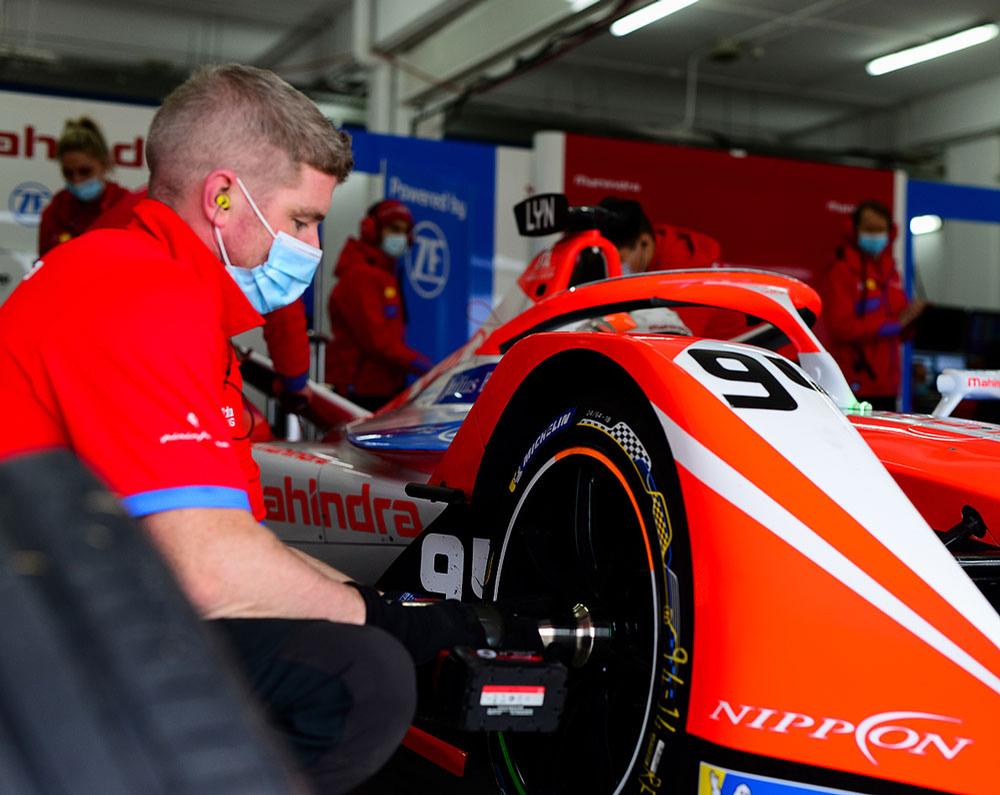
If you compare that to Formula 1, where they have teams of 350–700 people, it’s clear our team are under a lot of pressure, working in a stressful environment where they have to make decisions in milliseconds, and where the hours stack up as we approach race days.
When we moved head office in April 2020 – moving from a 4,700sq ft site to a 47,000sq ft site – we wanted to allocate some of that additional space to our team’s wellbeing. We wanted to be a company that takes its employees’ physical and mental health seriously.
Tell us about your wellbeing ethos. In a creative world like ours, where you have to come up with innovative solutions to out-think your competitors, it isn’t good to be at your screen the whole time. You can’t stay productive for long hours without a break. We’ve therefore always encouraged our team to step away from their desks now and then, taking half an hour out to read a book, go for a walk, do some exercise.
With more of our team working from home at the moment, we’re trying to support them in achieving this same balance there too.
I’m a huge believer in this personally. I used to run 5km several times a week, but a few kidney operations later and I’m trying to get back into shape. I quickly realised that it was the mental benefits of my workouts that were the most instant – and arguably the most important.
Of course, this focus on wellbeing benefits Mahindra Racing as a company: if our team feels fresh, we get the best out of them. It’s also the case that motorsport is very incestuous; if a team is doing well, competitors think it’s because of the team and try to poach people. We hope, if we look after our employees, they will want to stay with us.
But beyond all of that, we’re doing this because it’s who we are. We’ve always been a family. Now we’re a family of 62, but we still have lunches together – we stop everything at the factory and sit and talk about them, their lives, their families. That hasn’t been possible during lockdown, of course, but we’ve called every member of the team every week just to see how they are – not to talk about work at all, but just to check in, keep an eye on their wellbeing, make sure they’re OK.
What is your wellbeing offering? We’ve done a number of things around the new factory: we’ve put plants in everyone’s office, for example, and have created break-out areas throughout our open-plan design.
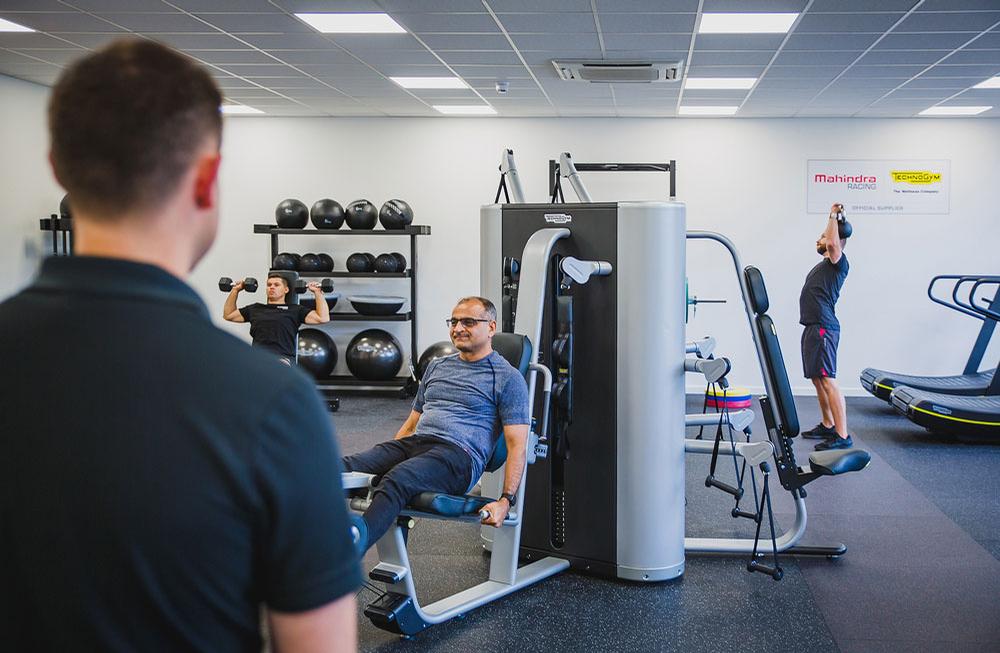
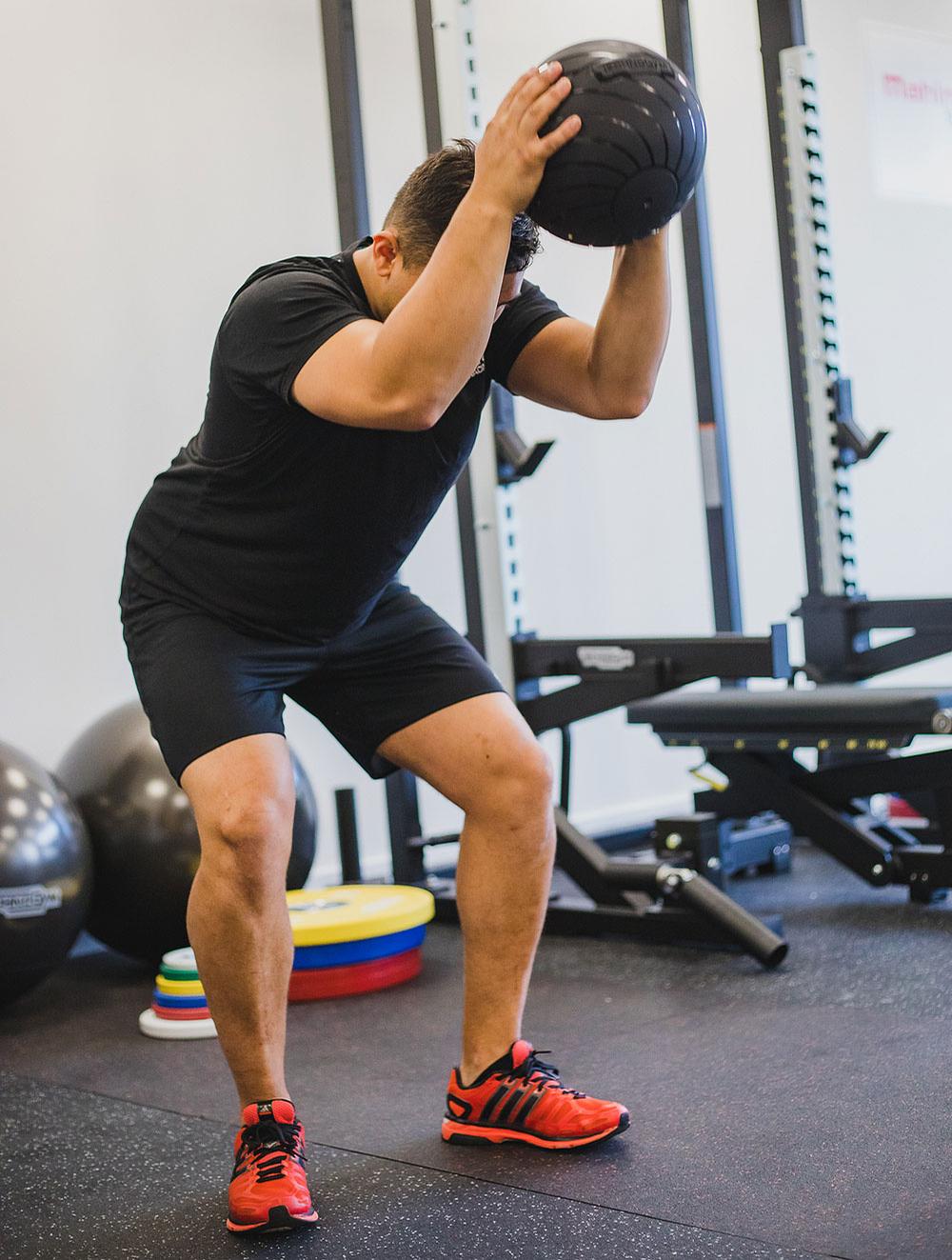
But our main investment has been our gym, which we’ve designed around the wide-ranging needs within our team: race drivers, serious amateur athletes training for decathlons or mountain biking events, and those who don’t belong to a gym and need some help in getting started. We wanted to make sure there was something for everyone.
It’s been a big investment given we only have 62 people on-site, but as I say, we were determined to be a company that takes wellbeing seriously.
We partnered with Technogym for a range of products to provide cardio, strength and functional tools, as well as Technogym Skillmills and Technogym Bikes that allow people to take part in live streamed or on-demand classes. We also have heart rate devices our team can use.
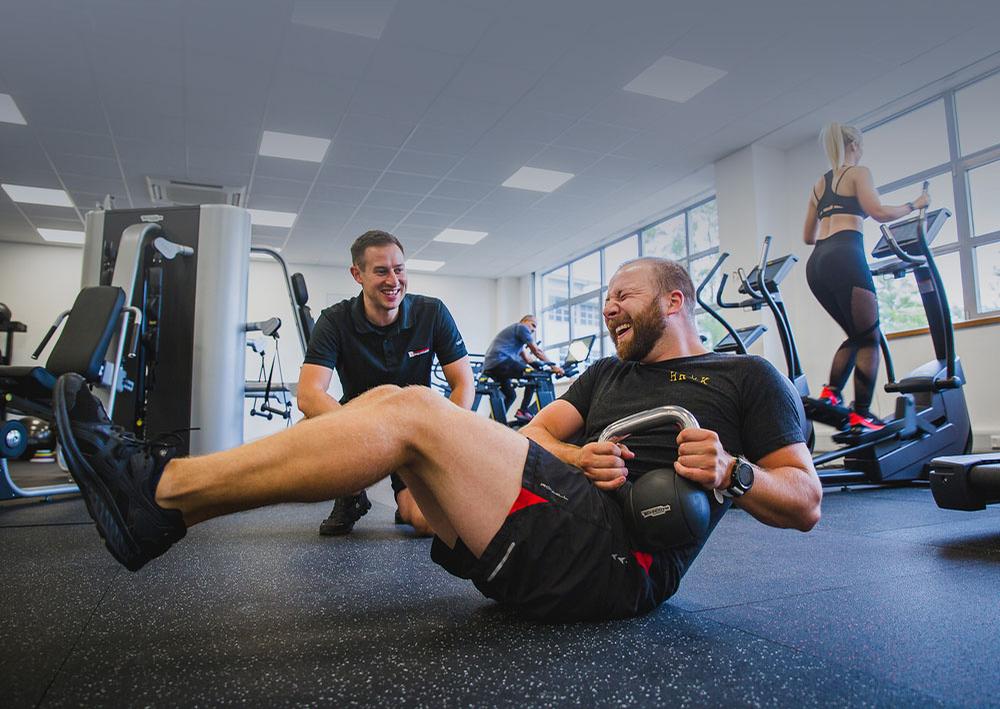
And we have two of everything, which is great. Some people like to compete side-by-side; others just want a workout buddy to help motivate them and make training more fun.
We also have an independent instructor who comes on-site every two weeks and who’s available to everyone. They’re there to offer personalised advice and workout programmes to any member of staff, helping them achieve whatever it is they want to achieve. Alongside this, the Technogym mywellness app allows our employees to track their progress.
How has COVID impacted your efforts? Our gym has remained open even throughout COVID-19, as it’s a private workplace facility. We have, however, put a range of safety measures in place – limiting access to two people at a time, for example. It’s open all day, so people have been able to stagger their workouts.
We’ve also been supporting our employees with online workouts, because although our factory has remained open, we’ve had fewer people in at any one time. We reached out to some fitness influencers who, in partnership with Technogym, created some online content especially for us, including things like stretching and bodyweight classes. These are available through the app for our team, but we’ve put some of them on YouTube for our followers to enjoy too.
Now the race season is starting, but there are still some local restrictions meaning gyms and pools are closed in some of the cities we’re visiting. For our drivers, we’re therefore shipping out smaller pieces of kit so they can work out in their hotel rooms.
What impact have you seen so far? An impressive 99 per cent of our team are using our gym; just one team member remains reluctant, as he prefers to go out and play golf. But that’s OK – he’s active.
As a direct result of our new gym, we have one driver who now bases himself here at head office. He has all the equipment he needs here to train his reaction time, upper body strength, core strength... everything he needs to be race-fit. He drives in early and meets his PT here.
But as I say, we’ve deliberately designed the gym to meet our pro-athletes’ needs without leaving the rest of our staff behind. We have team members who are changing their shifts to work around the restricted access to the gym, for example. They want to do virtual classes on the bikes – these are one of the most popular activities – and they’re willing to change their working patterns to be able to do them.
Our next step is to hopefully draw on other partnerships – Nuffield, for example, with a view to addressing the nutritional needs of all of our team, not just our drivers.
We’re also setting up an open forum to encourage our staff members to come up with ideas of what we should do next, with rewards for those who come up with the best, most impactful suggestions.
Is your ethos mirrored in the overall Mahindra Group? The Mahindra Group has always taken wellbeing very seriously; its Indian heritage means that mental and spiritual health, mindfulness and so on are embedded in its philosophy. We’re trying to embrace as much of this as possible, while at the same time appreciating we need to shape things slightly around a European mindset.
It will take time: people have come from other companies that didn’t operate like this, so we need to embed a new culture of wellbeing. But this is a family and it’s important to us. We will keep repeating the mantra over and over so everyone believes it.
Mahindra Racing is part of the Mahindra Group, which was originally founded in India in 1945 as a steel business.
Over the decades, Mahindra has steadily grown to become a global brand that boasts a 150+ strong “federation of companies”. These span 22 industries (see below), more than 100 countries and 256,000+ employees, bringing in US$19.4bn in revenue.
But as Anand Mahindra, chair of the Mahindra Group, explains: “It’s not about how big we become, but how we become big.”
Mahindra’s story in this respect is one of responding to the needs of society: “A need for change in agricultural practices pushed us to foray into that sector right before the agricultural revolution began in India,” says its website. “We also became one of the key torch-bearers of the IT revolution in our country.
“Our focus now lies in developing alternative energy sources, because we believe energy conservation will play a huge role in ensuring a better future – not just for our country and communities, but the entire world.”
Panatta brought together four of the most influential figures in bodybuilding history on the
stage of RiminiWellness 2026: Phil Heath, Lee Haney, Ronnie Coleman and Hany Rambod. [more...]
+ More featured suppliers
COMPANY PROFILES
IndigoFitness
At IndigoFitness, we create intelligent training spaces that elevate fitness facilities across indus [more...]
ukactive
ukactive is the UK’s leading trade body for the physical activity sector, bringing together more tha [more...]
The team manager of
Mahindra Racing talks
to Kate Cracknell about
creating a new corporate
culture in a competitive
world – one that places
employee wellbeing first
Mahindra Racing prioritises workplace wellbeing as a way to promote creativity and productivity / Spacesuit Media / Lou Johnson
What is Mahindra Racing? A motor racing team in the FIA Formula E World Championship. Part of the Mahindra Group, we are at the forefront of EV (electronic vehicle) innovation.
The Mahindra Group already manufactures electronic vehicles and went into Formula E specifically to use it as a test bed: a way to develop technology that would allow it to create better electronic vehicles for normal road use. We call it our ‘Race to Road’ philosophy.
Tell us about Formula E Formula E is the only FIA World Championship for electric cars, with this year being its seventh season. For those readers familiar with Formula 1, every Formula E race is like Monaco. We race on temporary tracks in city centres across most continents of the world: London, Paris, Berlin, Rome, Mexico City, Sao Paolo, Hong Kong... the list goes on.
Twelve teams compete in a maximum of 15 races per season, with that season normally running from December to July; the start of this season was delayed to February due to COVID-19. Mahindra Racing has been involved from the very first season, and although we’re yet to win the Championship, we are a multi-race winning team.
Formula E targets a different demographic from Formula 1 – families and younger people – with events broadcast around the world, as well as live streamed on YouTube. And it has an important environmental agenda too: there’s an exhibition alongside each event, The Allianz E-Village, which showcases innovations in EV, sustainability, clean energy and so on.
It’s about trying to achieve a greener planet.
It’s the most competitive motorsport on the planet: all the teams are so close in performance that you could win one week and come last the next. That’s because all cars have to use a standardised battery and the same chassis; they all look the same. The only permitted differences are in the powertrain, which is completely electric – motor, inverter and gearbox – and the software.
The whole idea behind the Championship is to spearhead the innovation of electronic vehicles, and it comes down to two key areas: efficiency, so you drain the battery less; and regeneration, whereby the motor becomes a generator to put power back into the battery, so you can go further. On the race track, these two factors combine to ensure you go as fast as you can for as long as you can, so you finish the race. In the real world, it means going as far as you can as efficiently as possible.
How many people work for Mahindra Racing? We have three drivers – two race and one reserve – and a pool of simulator drivers. Meanwhile, behind the scenes at the factory, our team is currently 62 strong.
If you compare that to Formula 1, where they have teams of 350–700 people, it’s clear our team are under a lot of pressure, working in a stressful environment where they have to make decisions in milliseconds, and where the hours stack up as we approach race days.
When we moved head office in April 2020 – moving from a 4,700sq ft site to a 47,000sq ft site – we wanted to allocate some of that additional space to our team’s wellbeing. We wanted to be a company that takes its employees’ physical and mental health seriously.
Tell us about your wellbeing ethos. In a creative world like ours, where you have to come up with innovative solutions to out-think your competitors, it isn’t good to be at your screen the whole time. You can’t stay productive for long hours without a break. We’ve therefore always encouraged our team to step away from their desks now and then, taking half an hour out to read a book, go for a walk, do some exercise.
With more of our team working from home at the moment, we’re trying to support them in achieving this same balance there too.
I’m a huge believer in this personally. I used to run 5km several times a week, but a few kidney operations later and I’m trying to get back into shape. I quickly realised that it was the mental benefits of my workouts that were the most instant – and arguably the most important.
Of course, this focus on wellbeing benefits Mahindra Racing as a company: if our team feels fresh, we get the best out of them. It’s also the case that motorsport is very incestuous; if a team is doing well, competitors think it’s because of the team and try to poach people. We hope, if we look after our employees, they will want to stay with us.
But beyond all of that, we’re doing this because it’s who we are. We’ve always been a family. Now we’re a family of 62, but we still have lunches together – we stop everything at the factory and sit and talk about them, their lives, their families. That hasn’t been possible during lockdown, of course, but we’ve called every member of the team every week just to see how they are – not to talk about work at all, but just to check in, keep an eye on their wellbeing, make sure they’re OK.
What is your wellbeing offering? We’ve done a number of things around the new factory: we’ve put plants in everyone’s office, for example, and have created break-out areas throughout our open-plan design.
But our main investment has been our gym, which we’ve designed around the wide-ranging needs within our team: race drivers, serious amateur athletes training for decathlons or mountain biking events, and those who don’t belong to a gym and need some help in getting started. We wanted to make sure there was something for everyone.
It’s been a big investment given we only have 62 people on-site, but as I say, we were determined to be a company that takes wellbeing seriously.
We partnered with Technogym for a range of products to provide cardio, strength and functional tools, as well as Technogym Skillmills and Technogym Bikes that allow people to take part in live streamed or on-demand classes. We also have heart rate devices our team can use.
And we have two of everything, which is great. Some people like to compete side-by-side; others just want a workout buddy to help motivate them and make training more fun.
We also have an independent instructor who comes on-site every two weeks and who’s available to everyone. They’re there to offer personalised advice and workout programmes to any member of staff, helping them achieve whatever it is they want to achieve. Alongside this, the Technogym mywellness app allows our employees to track their progress.
How has COVID impacted your efforts? Our gym has remained open even throughout COVID-19, as it’s a private workplace facility. We have, however, put a range of safety measures in place – limiting access to two people at a time, for example. It’s open all day, so people have been able to stagger their workouts.
We’ve also been supporting our employees with online workouts, because although our factory has remained open, we’ve had fewer people in at any one time. We reached out to some fitness influencers who, in partnership with Technogym, created some online content especially for us, including things like stretching and bodyweight classes. These are available through the app for our team, but we’ve put some of them on YouTube for our followers to enjoy too.
Now the race season is starting, but there are still some local restrictions meaning gyms and pools are closed in some of the cities we’re visiting. For our drivers, we’re therefore shipping out smaller pieces of kit so they can work out in their hotel rooms.
What impact have you seen so far? An impressive 99 per cent of our team are using our gym; just one team member remains reluctant, as he prefers to go out and play golf. But that’s OK – he’s active.
As a direct result of our new gym, we have one driver who now bases himself here at head office. He has all the equipment he needs here to train his reaction time, upper body strength, core strength... everything he needs to be race-fit. He drives in early and meets his PT here.
But as I say, we’ve deliberately designed the gym to meet our pro-athletes’ needs without leaving the rest of our staff behind. We have team members who are changing their shifts to work around the restricted access to the gym, for example. They want to do virtual classes on the bikes – these are one of the most popular activities – and they’re willing to change their working patterns to be able to do them.
Our next step is to hopefully draw on other partnerships – Nuffield, for example, with a view to addressing the nutritional needs of all of our team, not just our drivers.
We’re also setting up an open forum to encourage our staff members to come up with ideas of what we should do next, with rewards for those who come up with the best, most impactful suggestions.
Is your ethos mirrored in the overall Mahindra Group? The Mahindra Group has always taken wellbeing very seriously; its Indian heritage means that mental and spiritual health, mindfulness and so on are embedded in its philosophy. We’re trying to embrace as much of this as possible, while at the same time appreciating we need to shape things slightly around a European mindset.
It will take time: people have come from other companies that didn’t operate like this, so we need to embed a new culture of wellbeing. But this is a family and it’s important to us. We will keep repeating the mantra over and over so everyone believes it.
Mahindra Racing is part of the Mahindra Group, which was originally founded in India in 1945 as a steel business.
Over the decades, Mahindra has steadily grown to become a global brand that boasts a 150+ strong “federation of companies”. These span 22 industries (see below), more than 100 countries and 256,000+ employees, bringing in US$19.4bn in revenue.
But as Anand Mahindra, chair of the Mahindra Group, explains: “It’s not about how big we become, but how we become big.”
Mahindra’s story in this respect is one of responding to the needs of society: “A need for change in agricultural practices pushed us to foray into that sector right before the agricultural revolution began in India,” says its website. “We also became one of the key torch-bearers of the IT revolution in our country.
“Our focus now lies in developing alternative energy sources, because we believe energy conservation will play a huge role in ensuring a better future – not just for our country and communities, but the entire world.”
It’s been five years since the fitness industry reopened after the last lockdown – long enough
to look back on the impact the pandemic had on the sector and what might come next.
Wattbike has announced a new integration with EGYM, which enables the bikes to contribute to
the Cardio BioAge score of individuals via a VO2 max result.
Les Mills has launched a reformer Pilates workout. The 45-minute workout blends traditional
reformer movements and more contemporary exercises, choreographed to music.
According to research which tracked more than 147,000 people for 30 years, 90-120 minutes
of strength training a week may deliver some of the biggest long-term health rewards.
The UK's four Chief Medical Officers have published a refreshed edition of Physical activity
guidelines: UK Chief Medical Officers' report, updating the evidence that underpins the nation's
physical activity recommendations and placing greater emphasis on strength, balance, reducing
sedentary behaviour and, for the first time, supporting people taking weight loss medications.
Places Leisure has exchanged contracts to build and operate a flagship £60m water and leisure
destination on behalf of Basingstoke and Deane Borough Council.
The Republic of Ireland will become the latest market in PureGym’s expanding international
portfolio, with the first launch planned for Dublin in 2027.
Anytime Fitness opened more than one club a day in 2025 and is on track to maintain this rate
of growth this year, as parent company Purpose Brands targets further international expansion.
Panatta brought together four of the most influential figures in bodybuilding history on the
stage of RiminiWellness 2026: Phil Heath, Lee Haney, Ronnie Coleman and Hany Rambod. [more...]
+ More featured suppliers
COMPANY PROFILES
IndigoFitness At IndigoFitness, we create intelligent training spaces that elevate fitness facilities across indus [more...]