Older men who play football regularly have cells ‘younger’ than those of their inactive peers, according to new research from sports scientists in Denmark and Germany
Men aged 65 to 80, who had played football regularly, had longer telomeres than their inactive counterparts
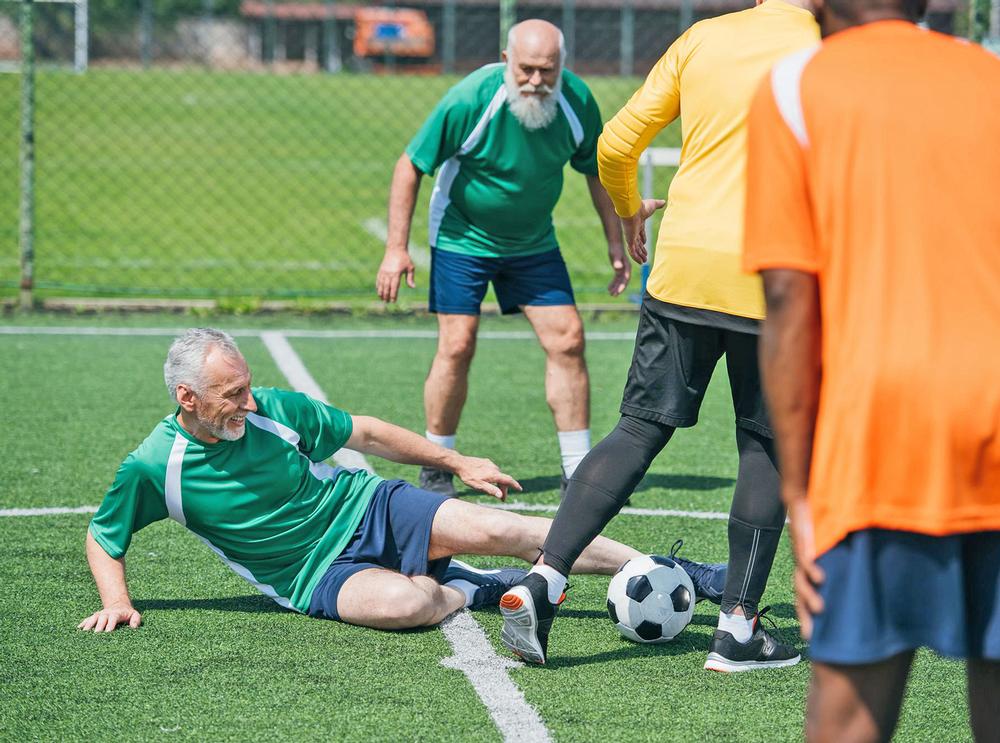
Older men who’ve played football regularly throughout their lives can have cells up to 11 years younger than their physically inactive peers, according to a new academic study.
Researchers set out to show how the cellular anti-ageing effects of regular endurance training may differ depending on the type of exercise being undertaken.
The figure comes from a study undertaken by a group of Danish and German sports scientists, which suggests that regular physical activity can keep biological ageing at bay.
For the study, which is published in the latest issue of US journal Progress in Cardiovascular Diseases, the researchers investigated the length of the telomeres, which indicates biological age: the shorter the telomere, the ‘older’ the cell and the greater the biological age of the person being tested.
They also looked at the activity of telomerase, a protein which protects the end of chromosomes from DNA damage, contributing to the protective effect regular exercise has on the body.
The study, which was based on 140 men, showed that those aged 65 to 80 years – who had played football regularly – had longer telomeres than their inactive counterparts.
Longer telomeres The elderly footballers had 2.5 per cent higher granulocyte telomere length and 1.3 per cent higher lymphocyte telomere length when compared to inactive men of the same age.
The footballers also had 37 per cent lower mRNA expression of the pro-senescent factor p16 (a cellular senescence and tumour suppressor gene), when compared to those in the study who were inactive, as well as higher telomerase activity.
Great outcome “The older football players were in excellent physical shape, which was manifested in the younger biological age in the cells,” said Peter Krustrup, professor at the Department of Sports Science and Clinical Biomechanics at University of Southern Denmark, which led the study.
“This is the first cross-sectional, controlled trial showing the effects of lifelong football participation on telomere shortening and senescence markers in circulating cells.
“It suggests that the regular exercise football represents induces cellular anti-senescence mechanisms, giving positive long-term cardiovascular health effects and protection against cell ageing.”
Panatta brought together four of the most influential figures in bodybuilding history on the
stage of RiminiWellness 2026: Phil Heath, Lee Haney, Ronnie Coleman and Hany Rambod. [more...]
+ More featured suppliers
COMPANY PROFILES
Alliance Leisure
Alliance Leisure Services was specifically
established to respond to the changing
development need [more...]
Older men who play football regularly have cells ‘younger’ than those of their inactive peers, according to new research from sports scientists in Denmark and Germany
Men aged 65 to 80, who had played football regularly, had longer telomeres than their inactive counterparts
Older men who’ve played football regularly throughout their lives can have cells up to 11 years younger than their physically inactive peers, according to a new academic study.
Researchers set out to show how the cellular anti-ageing effects of regular endurance training may differ depending on the type of exercise being undertaken.
The figure comes from a study undertaken by a group of Danish and German sports scientists, which suggests that regular physical activity can keep biological ageing at bay.
For the study, which is published in the latest issue of US journal Progress in Cardiovascular Diseases, the researchers investigated the length of the telomeres, which indicates biological age: the shorter the telomere, the ‘older’ the cell and the greater the biological age of the person being tested.
They also looked at the activity of telomerase, a protein which protects the end of chromosomes from DNA damage, contributing to the protective effect regular exercise has on the body.
The study, which was based on 140 men, showed that those aged 65 to 80 years – who had played football regularly – had longer telomeres than their inactive counterparts.
Longer telomeres The elderly footballers had 2.5 per cent higher granulocyte telomere length and 1.3 per cent higher lymphocyte telomere length when compared to inactive men of the same age.
The footballers also had 37 per cent lower mRNA expression of the pro-senescent factor p16 (a cellular senescence and tumour suppressor gene), when compared to those in the study who were inactive, as well as higher telomerase activity.
Great outcome “The older football players were in excellent physical shape, which was manifested in the younger biological age in the cells,” said Peter Krustrup, professor at the Department of Sports Science and Clinical Biomechanics at University of Southern Denmark, which led the study.
“This is the first cross-sectional, controlled trial showing the effects of lifelong football participation on telomere shortening and senescence markers in circulating cells.
“It suggests that the regular exercise football represents induces cellular anti-senescence mechanisms, giving positive long-term cardiovascular health effects and protection against cell ageing.”
It’s been five years since the fitness industry reopened after the last lockdown – long enough
to look back on the impact the pandemic had on the sector and what might come next.
Wattbike has announced a new integration with EGYM, which enables the bikes to contribute to
the Cardio BioAge score of individuals via a VO2 max result.
Les Mills has launched a reformer Pilates workout. The 45-minute workout blends traditional
reformer movements and more contemporary exercises, choreographed to music.
According to research which tracked more than 147,000 people for 30 years, 90-120 minutes
of strength training a week may deliver some of the biggest long-term health rewards.
The UK's four Chief Medical Officers have published a refreshed edition of Physical activity
guidelines: UK Chief Medical Officers' report, updating the evidence that underpins the nation's
physical activity recommendations and placing greater emphasis on strength, balance, reducing
sedentary behaviour and, for the first time, supporting people taking weight loss medications.
Places Leisure has exchanged contracts to build and operate a flagship £60m water and leisure
destination on behalf of Basingstoke and Deane Borough Council.
The Republic of Ireland will become the latest market in PureGym’s expanding international
portfolio, with the first launch planned for Dublin in 2027.
Anytime Fitness opened more than one club a day in 2025 and is on track to maintain this rate
of growth this year, as parent company Purpose Brands targets further international expansion.
The £33.9 million Leighton Leisure and Community Centre has opened in Leighton Buzzard, UK,
creating a next-generation public leisure, health and wellbeing hub for the local community.
Panatta brought together four of the most influential figures in bodybuilding history on the
stage of RiminiWellness 2026: Phil Heath, Lee Haney, Ronnie Coleman and Hany Rambod. [more...]
+ More featured suppliers
COMPANY PROFILES
Alliance Leisure Alliance Leisure Services was specifically
established to respond to the changing
development need [more...]