Get HCM digital magazine and ezines FREE
Sign up here ▸
Jobs   News   Features   Products   Magazine      Advertise  
NEWS
Trendswatch 2020: The future of financial sustainability
POSTED 17 Mar 2020 . BY Tom Anstey
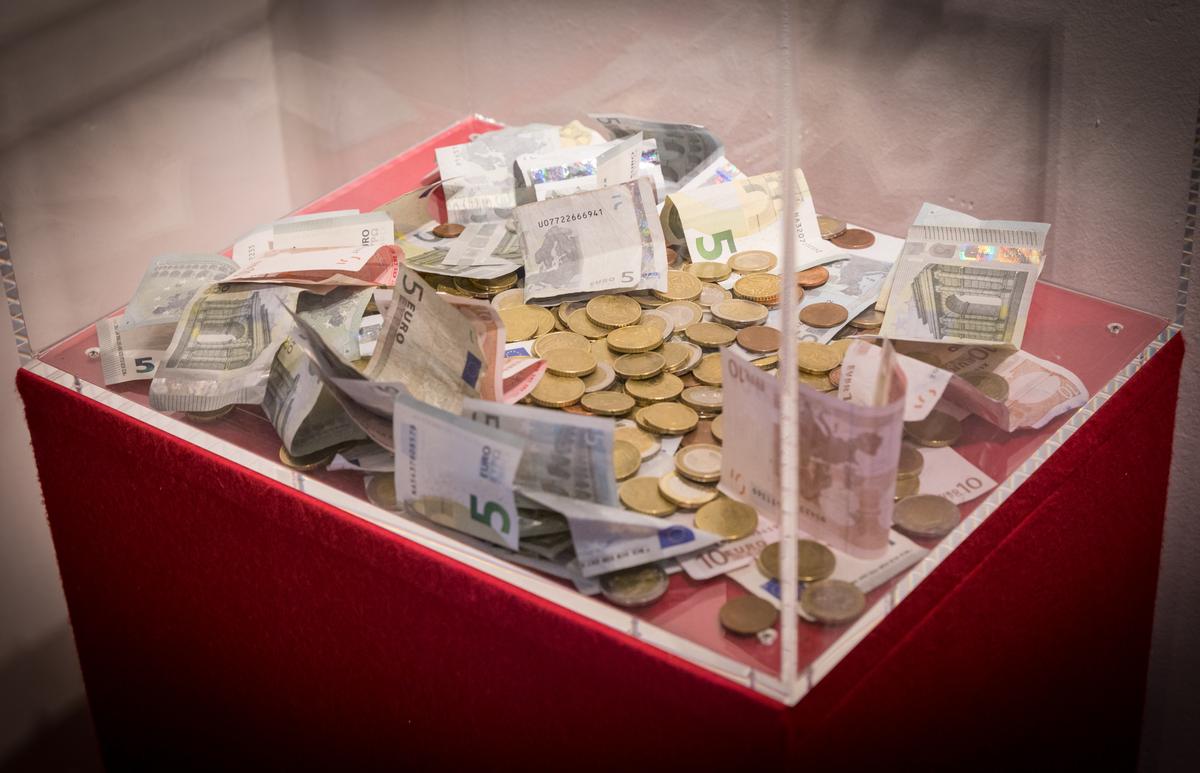
With traditional funding models disrupted museums are now in a position where they must improve financial discipline, business planning and data literacy in order to remain profitable Credit: Shutterstock.com
In a time of financial uncertainty for the global museum community, this year's TrendsWatch report from the American Alliance of Museums (AAM) and the Center for the Future of Museums (CFM) is seeking to provoke discussion and find viable solutions to these ongoing challenges.

Exploring important cultural, technological, economic, environmental and policy events, the American Alliance of Museums (AAM) and the Center for the Future of Museums' (CFM) annual TrendsWatch Report identifies the major trends that will shape the way museums worldwide will handle affairs, do business and engage visitors.

Compiled by CFM's vice president of strategic foresight and founding director, Elizabeth Merritt, the future of financial sustainability is the focus of this year's report. With traditional funding models disrupted museums are now in a position where they must improve financial discipline, business planning and data literacy in order to remain profitable.

This year's report has been organised into four parts, each exploring trends of disruption and offering emerging practices that could fill these gaps.

The majority of nonprofits rely on a combination of four sources – earned revenue, charitable contributions, government funding and capital income. Most nonprofits utilise an even mix of these streams, which are more stable and less vulnerable to disruption if one source fails to supply for whatever reason.

Certain events, however – the report lists the 2007 mortgage crisis as an example – will affect all four of these income streams. This is where museums need to try new things and make changes from within to find new forms of revenue generation.

Earned income
Earned income consists of the money a museum makes from selling a product or service to someone at a price the consumer feels is worth the cost. A museum's income applies even if attendance is free entry, as visitors will spend money in places such as the café or the gift shop.

Research suggests that the number one reason people don’t come to a museum is that they prefer to do something else with their time, often spending time at home with the vast majority of this time spent on screens – television, movies, and digital devices. This is seeing museums move further into the experience economy, with the creation of immersive experiences and must-see exhibitions in an attempt to get its visitors off the sofa and through its doors.

Once the museum has succeeded in bringing in its audience, another trend to be taken advantage of is the rise of ethical consumerism.

"Given a choice, members of the public may prefer to buy from a nonprofit than a for-profit business if they can get what they want while feeling good about supporting a cause," says the report. "Consumers may trust museums to carry merchandise that reflects ethical values like sustainability, social justice, and fair labour practices."

Charitable income
Philanthropy is a key part of most museums' funding models, but it can also be a poisoned chalice should they not look into where their money is coming from.

The fastest-growing charitable vehicle in the US is donor-advised funds (DAF) – a giving vehicle which allows donors to make a charitable contribution, receive an immediate tax deduction and then recommend grants from the fund over time. These funds now outnumber private foundations on a five to one ratio and their collective value is worth more than US$100bn.

"Impact philanthropy" is another key thing to consider, with donors and foundations increasingly want to see measurable change as a direct result of their support and often on a massive scale. This shift in philanthropy mentality could disadvantage museums seeking funding. Research from Wealth-X suggests that younger billionaires are less likely than their elders to fund the arts. New philanthropists, it states, "prefer to give to more nimble and innovative initiatives", with museums finding it challenging to measure and report on the large-scale impact their work has on society or the environment.

Toxic philanthropy is also a key issue, with the moral standing of donors based on how wealth is generated.

Government funding
With museums a major part of the public infrastructure, it's no surprise many non-profits receive significant government backing.

This support comes "with its own strings attached", which means a government-supported institution has to be sensitive to political considerations, satisfying both the taxpayer and the political institution.

In the US, nonprofits are not only seeing a decline in government funding but also attempts to actually increase the amount of money they must pay the government.

"There are perennial efforts at the state and local level to impose Payments in Lieu of Taxes (PILOT) on nonprofit organisations in order to offset the costs of government services," says the report. "As of 2012, at least 218 localities in 28 states had imposed PILOT payments of more than US$92m a year – mostly on colleges, universities, and hospitals, but also on a number of museums."

The fallout from the recession, says the report, has been a defining factor in museum funding today, with the event contributing in the long term with increased scrutiny and a reset in attitudes as to what government entities at any level support with public funding.

Financial Capital
Financial capital can be split into three groups – endowments, temporarily restricted endowments and voluntarily restricted endowments.

Endowments are portions of a museum's investments which, typically aren't spent, rather interest accrued is used for specific purposes. Temporarily restricted endowments are designated to be spent in their entirety for specific purposes. Voluntarily restricted endowments are board designated for a specific purpose, though that decision can be reversed.

Museums will often make investments in brick-and-mortar purely because a big, tangible goal is a much easier sell to would-be donors. For this reason, institutions can often over-invest in new buildings, undermining long-term financial sustainability.

"If contributions fall short, or if projects funded by borrowing don’t yield the expected financial payback, a museum may be forced to make cuts that damage its mission," says the report.

"Despite lower-than-projected attendance and income, the museum is burdened with the higher operating costs of new and bigger space. In such cases, museums most often responded by cutting programming, reducing or eliminating plans for touring exhibitions, or even restricting opening hours."

The full Trendswatch report will be released on 24 March. Check back here for a Q&A with its author – Elizabeth Merritt, as we break down the report in more detail.

RELATED STORIES
  FEATURE: Trends report: Welcome to the future


We break down the American Alliance of Museums’ TrendsWatch report
  Addressing social fallout at the heart of AAM's 2017 TrendsWatch report


Closing the empathy deficit, the next horizon of civil rights and the rise of the intelligent machines, are all trends that will affect cultural institutions in the coming years, according to the 2017 edition of the Center for the Future of Museums’ (CFM) annual TrendsWatch report.
  TrendsWatch annual report says radical reshaping of the workplace will affect museums sector


The 2016 edition of the TrendsWatch report – which highlights trends to watch out for in museums in the coming year – has predicted culture of work, the spectrum of ability, and the struggle over representation to be prominent trends in the sector.
  Wearable tech revolution, open culture and ethical scrutiny all forecast in 2015 museums TrendsWatch report


The 2015 edition of the TrendsWatch report, which highlights trends to watch out for in museums in the coming year has been released, with rising tides, wearable tech and open culture all on the agenda.
MORE NEWS
Les Mills calls on the industry to support UNICEF
Global group exercise specialist, Les Mills, is inviting operators to sign up to its Workout for the World event on 20 June, in support of UNICEF.
HUM2N opens longevity clinic at Six Senses London
Global luxury hospitality brand, Six Senses, has partnered with longevity healthcare provider, HUM2N, to launch a clinic at Six Senses London, at The Whiteley.
KX Chelsea invests £15 million to upgrade its wellness offering
Premium London health club, KX Chelsea, will imminently unveil its most significant redevelopment since its launch in 2002 to create an integrated wellness model combining training, recovery and relaxation.
Researchers identify a drug which reduces muscle loss when using GLP-1 medications
Researchers in the US have identified an antibody which could greatly reduce the loss of lean muscle mass in people who are taking weight-loss medications.
+ More news   
LATEST JOBS
GP Exercise Referral Instructor
Everyone Active
Salary: £33,000pa + benefits
Job location: Harrow, Middlesex , United Kingdom
Self Employed Personal Trainer
Everyone Active
Salary: Competitive
Job location: Enderby
+ More jobs  

FEATURED SUPPLIERS

Supporting long-term health: why whole body vibration belongs in clinical settings
As healthcare continues to shift towards prevention, there’s a growing focus on helping people stay active, independent and feeling good for longer. [more...]

Elevate 2026 to mark 10-year anniversary with biggest ever waterfront drinks reception
Elevate is set to celebrate its 10th anniversary in style this June, with organisers confirming the event’s largest-ever drinks reception as registrations continue to run more than 10% ahead of last year. [more...]
+ More featured suppliers  
COMPANY PROFILES
Alliance Leisure

Alliance Leisure Services was specifically established to respond to the changing development need [more...]
The Fitness Group Education

The Fitness Group is the UK’s Leading Fitness Education Training Provider. [more...]
+ More profiles  
CATALOGUE GALLERY
 
+ More catalogues  

DIRECTORY
+ More directory  
DIARY


09-12 Jun 2026

W3Spa EMEA

Hotel Cascais Miragem Health & Spa, Portugal
13-13 Jun 2026

Global Wellness Day

Worldwide, Various,
+ More diary  
 
ABOUT LEISURE MEDIA
LEISURE MEDIA MAGAZINES
LEISURE MEDIA HANDBOOKS
LEISURE MEDIA WEBSITES
LEISURE MEDIA PRODUCT SEARCH
 
HCM
LEISURE OPPORTUNITIES
HEALTH CLUB HANDBOOK
PRINT SUBSCRIPTIONS
FREE DIGITAL SUBSCRIPTIONS
ADVERTISE . CONTACT US

Leisure Media
Tel: +44 (0)1462 431385

©Cybertrek 2026
Get HCM digital magazine and ezines FREE
Sign up here ▸
Jobs    News   Products   Magazine
NEWS
Trendswatch 2020: The future of financial sustainability
POSTED 17 Mar 2020 . BY Tom Anstey
With traditional funding models disrupted museums are now in a position where they must improve financial discipline, business planning and data literacy in order to remain profitable Credit: Shutterstock.com
In a time of financial uncertainty for the global museum community, this year's TrendsWatch report from the American Alliance of Museums (AAM) and the Center for the Future of Museums (CFM) is seeking to provoke discussion and find viable solutions to these ongoing challenges.

Exploring important cultural, technological, economic, environmental and policy events, the American Alliance of Museums (AAM) and the Center for the Future of Museums' (CFM) annual TrendsWatch Report identifies the major trends that will shape the way museums worldwide will handle affairs, do business and engage visitors.

Compiled by CFM's vice president of strategic foresight and founding director, Elizabeth Merritt, the future of financial sustainability is the focus of this year's report. With traditional funding models disrupted museums are now in a position where they must improve financial discipline, business planning and data literacy in order to remain profitable.

This year's report has been organised into four parts, each exploring trends of disruption and offering emerging practices that could fill these gaps.

The majority of nonprofits rely on a combination of four sources – earned revenue, charitable contributions, government funding and capital income. Most nonprofits utilise an even mix of these streams, which are more stable and less vulnerable to disruption if one source fails to supply for whatever reason.

Certain events, however – the report lists the 2007 mortgage crisis as an example – will affect all four of these income streams. This is where museums need to try new things and make changes from within to find new forms of revenue generation.

Earned income
Earned income consists of the money a museum makes from selling a product or service to someone at a price the consumer feels is worth the cost. A museum's income applies even if attendance is free entry, as visitors will spend money in places such as the café or the gift shop.

Research suggests that the number one reason people don’t come to a museum is that they prefer to do something else with their time, often spending time at home with the vast majority of this time spent on screens – television, movies, and digital devices. This is seeing museums move further into the experience economy, with the creation of immersive experiences and must-see exhibitions in an attempt to get its visitors off the sofa and through its doors.

Once the museum has succeeded in bringing in its audience, another trend to be taken advantage of is the rise of ethical consumerism.

"Given a choice, members of the public may prefer to buy from a nonprofit than a for-profit business if they can get what they want while feeling good about supporting a cause," says the report. "Consumers may trust museums to carry merchandise that reflects ethical values like sustainability, social justice, and fair labour practices."

Charitable income
Philanthropy is a key part of most museums' funding models, but it can also be a poisoned chalice should they not look into where their money is coming from.

The fastest-growing charitable vehicle in the US is donor-advised funds (DAF) – a giving vehicle which allows donors to make a charitable contribution, receive an immediate tax deduction and then recommend grants from the fund over time. These funds now outnumber private foundations on a five to one ratio and their collective value is worth more than US$100bn.

"Impact philanthropy" is another key thing to consider, with donors and foundations increasingly want to see measurable change as a direct result of their support and often on a massive scale. This shift in philanthropy mentality could disadvantage museums seeking funding. Research from Wealth-X suggests that younger billionaires are less likely than their elders to fund the arts. New philanthropists, it states, "prefer to give to more nimble and innovative initiatives", with museums finding it challenging to measure and report on the large-scale impact their work has on society or the environment.

Toxic philanthropy is also a key issue, with the moral standing of donors based on how wealth is generated.

Government funding
With museums a major part of the public infrastructure, it's no surprise many non-profits receive significant government backing.

This support comes "with its own strings attached", which means a government-supported institution has to be sensitive to political considerations, satisfying both the taxpayer and the political institution.

In the US, nonprofits are not only seeing a decline in government funding but also attempts to actually increase the amount of money they must pay the government.

"There are perennial efforts at the state and local level to impose Payments in Lieu of Taxes (PILOT) on nonprofit organisations in order to offset the costs of government services," says the report. "As of 2012, at least 218 localities in 28 states had imposed PILOT payments of more than US$92m a year – mostly on colleges, universities, and hospitals, but also on a number of museums."

The fallout from the recession, says the report, has been a defining factor in museum funding today, with the event contributing in the long term with increased scrutiny and a reset in attitudes as to what government entities at any level support with public funding.

Financial Capital
Financial capital can be split into three groups – endowments, temporarily restricted endowments and voluntarily restricted endowments.

Endowments are portions of a museum's investments which, typically aren't spent, rather interest accrued is used for specific purposes. Temporarily restricted endowments are designated to be spent in their entirety for specific purposes. Voluntarily restricted endowments are board designated for a specific purpose, though that decision can be reversed.

Museums will often make investments in brick-and-mortar purely because a big, tangible goal is a much easier sell to would-be donors. For this reason, institutions can often over-invest in new buildings, undermining long-term financial sustainability.

"If contributions fall short, or if projects funded by borrowing don’t yield the expected financial payback, a museum may be forced to make cuts that damage its mission," says the report.

"Despite lower-than-projected attendance and income, the museum is burdened with the higher operating costs of new and bigger space. In such cases, museums most often responded by cutting programming, reducing or eliminating plans for touring exhibitions, or even restricting opening hours."

The full Trendswatch report will be released on 24 March. Check back here for a Q&A with its author – Elizabeth Merritt, as we break down the report in more detail.

RELATED STORIES
FEATURE: Trends report: Welcome to the future


We break down the American Alliance of Museums’ TrendsWatch report
Addressing social fallout at the heart of AAM's 2017 TrendsWatch report


Closing the empathy deficit, the next horizon of civil rights and the rise of the intelligent machines, are all trends that will affect cultural institutions in the coming years, according to the 2017 edition of the Center for the Future of Museums’ (CFM) annual TrendsWatch report.
TrendsWatch annual report says radical reshaping of the workplace will affect museums sector


The 2016 edition of the TrendsWatch report – which highlights trends to watch out for in museums in the coming year – has predicted culture of work, the spectrum of ability, and the struggle over representation to be prominent trends in the sector.
Wearable tech revolution, open culture and ethical scrutiny all forecast in 2015 museums TrendsWatch report


The 2015 edition of the TrendsWatch report, which highlights trends to watch out for in museums in the coming year has been released, with rising tides, wearable tech and open culture all on the agenda.
MORE NEWS
Les Mills calls on the industry to support UNICEF
Global group exercise specialist, Les Mills, is inviting operators to sign up to its Workout for the World event on 20 June, in support of UNICEF.
HUM2N opens longevity clinic at Six Senses London
Global luxury hospitality brand, Six Senses, has partnered with longevity healthcare provider, HUM2N, to launch a clinic at Six Senses London, at The Whiteley.
KX Chelsea invests £15 million to upgrade its wellness offering
Premium London health club, KX Chelsea, will imminently unveil its most significant redevelopment since its launch in 2002 to create an integrated wellness model combining training, recovery and relaxation.
Researchers identify a drug which reduces muscle loss when using GLP-1 medications
Researchers in the US have identified an antibody which could greatly reduce the loss of lean muscle mass in people who are taking weight-loss medications.
Peloton signals potential move into reformer Pilates with Skop acquisition
Peloton has made the strategic acquisition of the Pilates start-up, Skōp, to support the expansion of its strength ecosystem.
Crunch Fitness creates more affordable reformer Pilates concept
Crunch Fitness has announced the launch of Crunch Reform Pilates – its own reformer concept designed to bring this fast growing, but rather expensive, modality into the mainstream.
+ More news   
 
FEATURED SUPPLIERS

Supporting long-term health: why whole body vibration belongs in clinical settings
As healthcare continues to shift towards prevention, there’s a growing focus on helping people stay active, independent and feeling good for longer. [more...]

Elevate 2026 to mark 10-year anniversary with biggest ever waterfront drinks reception
Elevate is set to celebrate its 10th anniversary in style this June, with organisers confirming the event’s largest-ever drinks reception as registrations continue to run more than 10% ahead of last year. [more...]
+ More featured suppliers  
COMPANY PROFILES
Alliance Leisure

Alliance Leisure Services was specifically established to respond to the changing development need [more...]
+ More profiles  
CATALOGUE GALLERY
+ More catalogues  

DIRECTORY
+ More directory  
DIARY


09-12 Jun 2026

W3Spa EMEA

Hotel Cascais Miragem Health & Spa, Portugal
13-13 Jun 2026

Global Wellness Day

Worldwide, Various,
+ More diary  


ADVERTISE . CONTACT US

Leisure Media
Tel: +44 (0)1462 431385

©Cybertrek 2026

ABOUT LEISURE MEDIA
LEISURE MEDIA MAGAZINES
LEISURE MEDIA HANDBOOKS
LEISURE MEDIA WEBSITES
LEISURE MEDIA PRODUCT SEARCH
PRINT SUBSCRIPTIONS
FREE DIGITAL SUBSCRIPTIONS