Get HCM digital magazine and ezines FREE
Sign up here ▸
Jobs   News   Features   Products   Magazine      Advertise  
Trends
Are you fit for 2020?

Paul Bedford eases us into the new year with a look at how to tackle the competition

By Dr Paul Bedford PhD | Published in Health Club Management 2020 issue 1


In today’s competitive market, when another operator opens up nearby, you can expect to lose 20-50 per cent of customers for a period of 6-18 months.

What can you do to survive, thrive and maintain a profitable facility, by planning for and responding to this kind of challenge?

Blurred lines
The fitness industry used to consist of big clubs and small clubs; it was very linear, but now we have brands with no physical club at all, such as Gympass, ClassPass and Hussle and options for consumers are now so broad it’s no longer enough just to have a good location.

Add to that the diversity we’re seeing with the development of facilities, such as Clip ‘n Climb, Bear Grylls Fitness, table tennis concept, SPIN and relaxation and meditation centre, CH/LL and with streaming of fitness now so readily available, anyone and everyone can have access to exercise and guided workouts.

With the industry evolving, diversifying and niching as it matures, health and fitness operators need to defend their market and make significant gains in both member acquisition and retention in order to survive. We’d advise concentrating on three areas:

• Create a differentiated proposition from the competition in order to sustain the business in the long-term by standing out from rivals.

• Consolidate and increase your gross membership base – being the dominant operator in your market and location will help to maintain and increase your market share

• Increase the lifetime value of each member – not just by increasing the length of their membership or the amount they pay each month, but also by increasing the amount they pay out as secondary spend in areas such as on F&B, supplements, food deliveries or retail. With the right strategy, you could have members who spend a considerable amount in your club in a short period of time
Paul Bedford
"Operators need to defend their market and make significant gains in both member acquisition and retention in order to survive" - Paul Bedford
Solid business
Dragons’ Den – how do you measure up to their key questions?

If you watch programmes like Dragons’ Den or Shark Tank you’ll have realised there are ten main questions investors ask to understand if a company is a solid business or something that’s ill conceived, not scalable and won’t stand the test of time.

• What’s your idea, business or concept?
This is your elevator pitch. You need to be able to deliver it in less than a minute, explaining what your business does, why you’re doing it and how it can help other people; what problems does it solve?

• What’s your route to market?
Different businesses use different ways to attract customers. If you have a physical club it’s likely to be face to face walk-ins, flyers, digital marketing and your impact sales team. For a digital brand it will be online and media-based. You need to identify how you’re going to find and attract customers.

• What do you sell and for how much?
What’s your sales forecast? How do you work out your pricing? This is the most difficult step because, as you’ve seen on Dragons’ Den, people always think their business is worth more than it actually is when it comes to establishing value.

It’s finding that balance – the sweet spot between what you believe it’s worth and what others think it’s worth. It’s also about cost of delivery. What does it cost you to deliver your product or service?

Going through this process will give you a solid understanding of what business you’re in. One of the biggest challenges we see in the industry is operators getting sidetracked by trends, thinking ‘we could do that too’, which often takes away from the core product.

I truly admire John Treharne. He came up with The Gym Group concept and hasn’t changed it fundamentally.

Sure he’s tweaked, evolved and improved the product, but he decided to do one thing and do that really well.

• Differentiate or Die
As we’ve said before, the fitness industry offers consumers an endless number of choices that range from wildly different to virtually identical.

Understanding your position in the market, by identifying who you’re looking to attract and delivering solutions to meet their needs, is key to understanding how you can differentiate yourself from the competition. This is the only way to retain and gain customers in this increasingly competitive environment.

John Treharne had a clear vision in building The Gym Group

10 things to differentiate your business
Each will enable you to stand out from your rivals. Mix them up to create your positioning

1. Establish your brand positioning – where do you sit within the market?

2. Be first to market – just as Hoover is synonymous with vacuums, so Spinning is commonly used for indoor cycling

3. Aim for attribution ownership, think Les Mills for structured workouts, Mercedes for engineering, Ferrari for speed

4. Focus on leadership – are you a respected in your market? Do people admire and follow what you’re doing?

5. Reference your heritage – think Gold’s or David Lloyd Leisure. Can you trade on being well established?

6. Market a speciality – focus on developing a niche product, as Concept2 and Soul Cycle have done

7. Be preferred – are you the product that people choose over all the others?

8. Be great at what you do. Brands like 1Rebel stand out because of the way they teach classes

9. Create the latest trends – get inspired by something up and coming

10. Look back as well as forwards: think Dr. Martens, which were popular in the 70s and are now back as a trendy brand

Brand like 1Rebel stand out because of the way they teach classes
How to win in a competitive market

Defending yourself against competition by working where it’s coming from and what the new competitor’s differentiator and proposition is. This is the only way to effectively manage the impact of increased competition.

• Do your homework: find out who you’re competing against

• Plan your response carefully

Work out what it would mean to your revenue if you lost 30 per cent of your customers. Don’t forget to factor in staff you may lose to the competitor too.

Decide what you’ll do to differentiate and position yourself to stand out. Establish what budget you’ll need to cope with the impact of lost members/staff and additional marketing. Calculate what you can sustain and what you’ll have to drop.

Create a timeline
Working backwards from when the competitor is due to open, establish how long you’ve got to collect information about them and what you need to find out and devise a plan.

Set a date for when you’ll start to implement these tactics and create a realistic timeline for action.

Action
Decide if you’re going to change your membership offering. If so, train all staff so they can explain why it’s changed. Be honest and use a consistent message throughout your PR and marketing.

You need one frictionless approach.

Review, revise, renew
Keep track of what you’ve done and how numbers are changing in response. How many people did you lose last month? How quickly are people coming back? Measure sales and attrition and keep an eye on what customers are saying via an effective feedback mechanism.

CASE Study:
Magna Vitae

If your numbers aren’t changing, sometimes that equals success.

Two years ago, the operating landscape around some of the centres run by leisure trust, Magna Vitae, changed dramatically; they were no longer competing in the same market, and developed a plan to protect themselves from competition.

Working with Paul Bedford they undertook a retention review, concentrating on their mission and vision statements, core values and expected staff behaviours and setting minimum service standards to be practised on a daily basis.

With a broad range of facilities on offer, staff were encouraged to think similarly around the quality of their interactions with customers; to improve their understanding of how they could persuade them to do what they wanted, increase visit frequency and help them achieve their goals.

Evaluation and feedback tools meant Magna Vitae could also monitor improvements in customer satisfaction within all areas of service.

With low cost competitors coming into play, Magna Vitae forecast to lose 4,000 members over a two-year period, but following the programme, memberships has remained steady, and with a new centre on the cards and a refit underway, Magna Vitae is confident business will remain stable.

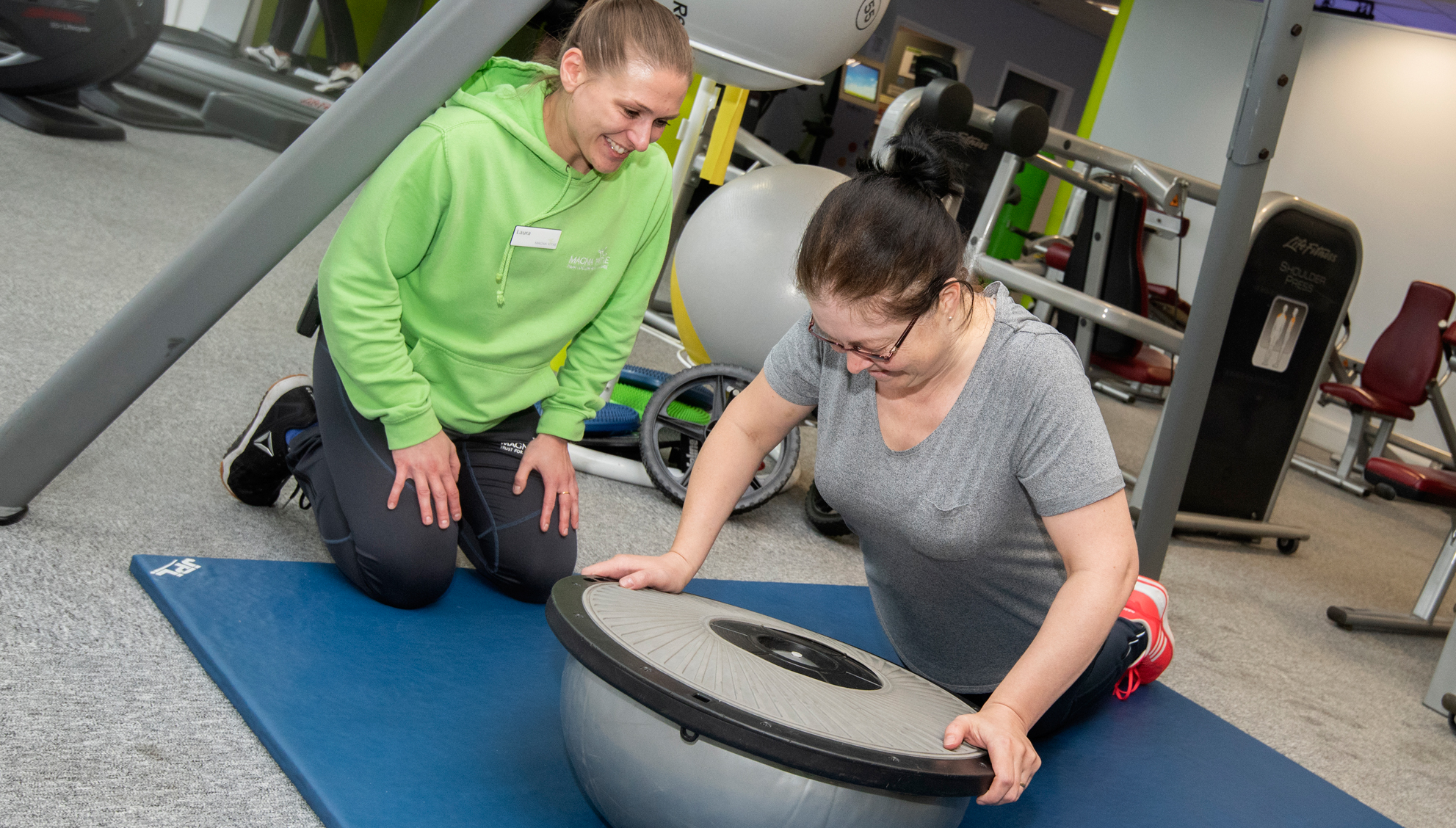
Magna Vitae says it has fought off a competitive threat by focusing on service
FEATURED SUPPLIERS

Legends never die: four legends, four philosophies of life
Panatta brought together four of the most influential figures in bodybuilding history on the stage of RiminiWellness 2026: Phil Heath, Lee Haney, Ronnie Coleman and Hany Rambod. [more...]

Introducing a new era of Nautilus Leverage
Strength training has never been more important for member retention, facility differentiation and long-term commercial success. [more...]
+ More featured suppliers  
COMPANY PROFILES
Life Fitness/Hammer Strength

Life Fitness / Hammer Strength works with some of the world’s most recognised hospitality brands, su [more...]
Orbit4

With Orbit4, you’ll always have full visibility of your equipment inventory, the true market value [more...]
+ More profiles  
CATALOGUE GALLERY
 
+ More catalogues  

DIRECTORY
+ More directory  
DIARY


23-26 Aug 2026

Elevate Spa Riviera Maya Edition

The Riviera Maya Edition Kanai, Playa del Carmen, Mexico
10-12 Sep 2026

ASEAN Patio Pool Spa Expo 2026

MITEC Kuala Lumpur,Malaysia, Malaysia
+ More diary  
 
ABOUT LEISURE MEDIA
LEISURE MEDIA MAGAZINES
LEISURE MEDIA HANDBOOKS
LEISURE MEDIA WEBSITES
LEISURE MEDIA PRODUCT SEARCH
 
HCM
LEISURE OPPORTUNITIES
HEALTH CLUB HANDBOOK
PRINT SUBSCRIPTIONS
FREE DIGITAL SUBSCRIPTIONS
ADVERTISE . CONTACT US

Leisure Media
Tel: +44 (0)1462 431385

©Cybertrek 2026
Get HCM digital magazine and ezines FREE
Sign up here ▸
Jobs    News   Products   Magazine
Trends
Are you fit for 2020?

Paul Bedford eases us into the new year with a look at how to tackle the competition

By Dr Paul Bedford PhD | Published in Health Club Management 2020 issue 1


In today’s competitive market, when another operator opens up nearby, you can expect to lose 20-50 per cent of customers for a period of 6-18 months.

What can you do to survive, thrive and maintain a profitable facility, by planning for and responding to this kind of challenge?

Blurred lines
The fitness industry used to consist of big clubs and small clubs; it was very linear, but now we have brands with no physical club at all, such as Gympass, ClassPass and Hussle and options for consumers are now so broad it’s no longer enough just to have a good location.

Add to that the diversity we’re seeing with the development of facilities, such as Clip ‘n Climb, Bear Grylls Fitness, table tennis concept, SPIN and relaxation and meditation centre, CH/LL and with streaming of fitness now so readily available, anyone and everyone can have access to exercise and guided workouts.

With the industry evolving, diversifying and niching as it matures, health and fitness operators need to defend their market and make significant gains in both member acquisition and retention in order to survive. We’d advise concentrating on three areas:

• Create a differentiated proposition from the competition in order to sustain the business in the long-term by standing out from rivals.

• Consolidate and increase your gross membership base – being the dominant operator in your market and location will help to maintain and increase your market share

• Increase the lifetime value of each member – not just by increasing the length of their membership or the amount they pay each month, but also by increasing the amount they pay out as secondary spend in areas such as on F&B, supplements, food deliveries or retail. With the right strategy, you could have members who spend a considerable amount in your club in a short period of time
Paul Bedford
"Operators need to defend their market and make significant gains in both member acquisition and retention in order to survive" - Paul Bedford
Solid business
Dragons’ Den – how do you measure up to their key questions?

If you watch programmes like Dragons’ Den or Shark Tank you’ll have realised there are ten main questions investors ask to understand if a company is a solid business or something that’s ill conceived, not scalable and won’t stand the test of time.

• What’s your idea, business or concept?
This is your elevator pitch. You need to be able to deliver it in less than a minute, explaining what your business does, why you’re doing it and how it can help other people; what problems does it solve?

• What’s your route to market?
Different businesses use different ways to attract customers. If you have a physical club it’s likely to be face to face walk-ins, flyers, digital marketing and your impact sales team. For a digital brand it will be online and media-based. You need to identify how you’re going to find and attract customers.

• What do you sell and for how much?
What’s your sales forecast? How do you work out your pricing? This is the most difficult step because, as you’ve seen on Dragons’ Den, people always think their business is worth more than it actually is when it comes to establishing value.

It’s finding that balance – the sweet spot between what you believe it’s worth and what others think it’s worth. It’s also about cost of delivery. What does it cost you to deliver your product or service?

Going through this process will give you a solid understanding of what business you’re in. One of the biggest challenges we see in the industry is operators getting sidetracked by trends, thinking ‘we could do that too’, which often takes away from the core product.

I truly admire John Treharne. He came up with The Gym Group concept and hasn’t changed it fundamentally.

Sure he’s tweaked, evolved and improved the product, but he decided to do one thing and do that really well.

• Differentiate or Die
As we’ve said before, the fitness industry offers consumers an endless number of choices that range from wildly different to virtually identical.

Understanding your position in the market, by identifying who you’re looking to attract and delivering solutions to meet their needs, is key to understanding how you can differentiate yourself from the competition. This is the only way to retain and gain customers in this increasingly competitive environment.

John Treharne had a clear vision in building The Gym Group
10 things to differentiate your business
Each will enable you to stand out from your rivals. Mix them up to create your positioning

1. Establish your brand positioning – where do you sit within the market?

2. Be first to market – just as Hoover is synonymous with vacuums, so Spinning is commonly used for indoor cycling

3. Aim for attribution ownership, think Les Mills for structured workouts, Mercedes for engineering, Ferrari for speed

4. Focus on leadership – are you a respected in your market? Do people admire and follow what you’re doing?

5. Reference your heritage – think Gold’s or David Lloyd Leisure. Can you trade on being well established?

6. Market a speciality – focus on developing a niche product, as Concept2 and Soul Cycle have done

7. Be preferred – are you the product that people choose over all the others?

8. Be great at what you do. Brands like 1Rebel stand out because of the way they teach classes

9. Create the latest trends – get inspired by something up and coming

10. Look back as well as forwards: think Dr. Martens, which were popular in the 70s and are now back as a trendy brand

Brand like 1Rebel stand out because of the way they teach classes
How to win in a competitive market

Defending yourself against competition by working where it’s coming from and what the new competitor’s differentiator and proposition is. This is the only way to effectively manage the impact of increased competition.

• Do your homework: find out who you’re competing against

• Plan your response carefully

Work out what it would mean to your revenue if you lost 30 per cent of your customers. Don’t forget to factor in staff you may lose to the competitor too.

Decide what you’ll do to differentiate and position yourself to stand out. Establish what budget you’ll need to cope with the impact of lost members/staff and additional marketing. Calculate what you can sustain and what you’ll have to drop.

Create a timeline
Working backwards from when the competitor is due to open, establish how long you’ve got to collect information about them and what you need to find out and devise a plan.

Set a date for when you’ll start to implement these tactics and create a realistic timeline for action.

Action
Decide if you’re going to change your membership offering. If so, train all staff so they can explain why it’s changed. Be honest and use a consistent message throughout your PR and marketing.

You need one frictionless approach.

Review, revise, renew
Keep track of what you’ve done and how numbers are changing in response. How many people did you lose last month? How quickly are people coming back? Measure sales and attrition and keep an eye on what customers are saying via an effective feedback mechanism.

CASE Study:
Magna Vitae

If your numbers aren’t changing, sometimes that equals success.

Two years ago, the operating landscape around some of the centres run by leisure trust, Magna Vitae, changed dramatically; they were no longer competing in the same market, and developed a plan to protect themselves from competition.

Working with Paul Bedford they undertook a retention review, concentrating on their mission and vision statements, core values and expected staff behaviours and setting minimum service standards to be practised on a daily basis.

With a broad range of facilities on offer, staff were encouraged to think similarly around the quality of their interactions with customers; to improve their understanding of how they could persuade them to do what they wanted, increase visit frequency and help them achieve their goals.

Evaluation and feedback tools meant Magna Vitae could also monitor improvements in customer satisfaction within all areas of service.

With low cost competitors coming into play, Magna Vitae forecast to lose 4,000 members over a two-year period, but following the programme, memberships has remained steady, and with a new centre on the cards and a refit underway, Magna Vitae is confident business will remain stable.

Magna Vitae says it has fought off a competitive threat by focusing on service
LATEST NEWS
Les Mills launches reformer Pilates
Les Mills has launched a reformer Pilates workout. The 45-minute workout blends traditional reformer movements and more contemporary exercises, choreographed to music. 
HCM Invest opens applications for pitching slots
The inaugural HCM Invest event has opened applications for pitching slots ahead of its launch in London on 21 October 2026.
Researchers find that 90-120 minutes of strength training a week has longevity benefits
According to research which tracked more than 147,000 people for 30 years, 90-120 minutes of strength training a week may deliver some of the biggest long-term health rewards.
Everlast pushes internationally with Dublin site
Everlast Gyms expands its footprint outside of the UK this month with the imminent launch of a club in Dublin.
UK updates physical activity guidelines with focus on daily movement
The UK's four Chief Medical Officers have published a refreshed edition of Physical activity guidelines: UK Chief Medical Officers' report, updating the evidence that underpins the nation's physical activity recommendations and placing greater emphasis on strength, balance, reducing sedentary behaviour and, for the first time, supporting people taking weight loss medications.
Places Leisure is working with Roberts Limbrick to build £60m wellness flagship in Basingstoke
Places Leisure has exchanged contracts to build and operate a flagship £60m water and leisure destination on behalf of Basingstoke and Deane Borough Council.
PureGym announces expansion into Ireland
The Republic of Ireland will become the latest market in PureGym’s expanding international portfolio, with the first launch planned for Dublin in 2027.
Total Fitness CEO Sophie Lawler launches leadership coaching venture
Sophie Lawler, CEO of Total Fitness, has launched a leadership coaching business aimed at helping women realise their professional potential.
Anytime Fitness reaches milestone moment and targets Europe for growth
Anytime Fitness opened more than one club a day in 2025 and is on track to maintain this rate of growth this year, as parent company Purpose Brands targets further international expansion.
Everyone Active opens £33.9 million next-generation leisure and wellbeing hub
The £33.9 million Leighton Leisure and Community Centre has opened in Leighton Buzzard, UK, creating a next-generation public leisure, health and wellbeing hub for the local community.
YogaSix responds to Pilates boom with launch of strength-focused Y6 Core class
YogaSix, the yoga brand of Xponential Fitness, has launched a heated, Pilates-inspired class called Y6 Core.
Bromley’s £17m Walnuts revamp adds EGYM, rehab and recovery
Walnuts Leisure Centre in Orpington, in the London Borough of Bromley, has reopened following a £17m transformation designed to secure the long-term future of the public leisure asset and reposition it as a community wellbeing hub.
+ More news   
 
FEATURED SUPPLIERS

Legends never die: four legends, four philosophies of life
Panatta brought together four of the most influential figures in bodybuilding history on the stage of RiminiWellness 2026: Phil Heath, Lee Haney, Ronnie Coleman and Hany Rambod. [more...]

Introducing a new era of Nautilus Leverage
Strength training has never been more important for member retention, facility differentiation and long-term commercial success. [more...]
+ More featured suppliers  
COMPANY PROFILES
Life Fitness/Hammer Strength

Life Fitness / Hammer Strength works with some of the world’s most recognised hospitality brands, su [more...]
+ More profiles  
CATALOGUE GALLERY
+ More catalogues  

DIRECTORY
+ More directory  
DIARY


23-26 Aug 2026

Elevate Spa Riviera Maya Edition

The Riviera Maya Edition Kanai, Playa del Carmen, Mexico
10-12 Sep 2026

ASEAN Patio Pool Spa Expo 2026

MITEC Kuala Lumpur,Malaysia, Malaysia
+ More diary  


ADVERTISE . CONTACT US

Leisure Media
Tel: +44 (0)1462 431385

©Cybertrek 2026

ABOUT LEISURE MEDIA
LEISURE MEDIA MAGAZINES
LEISURE MEDIA HANDBOOKS
LEISURE MEDIA WEBSITES
LEISURE MEDIA PRODUCT SEARCH
PRINT SUBSCRIPTIONS
FREE DIGITAL SUBSCRIPTIONS