IHRSA’s Kristen Walsh shares highlights from The 2019 IHRSA
Health Club Consumer Report into the US fitness market,
as well as giving universal advice about how to stay relevant
By Kristen Walsh | Published in Health Club Management 2019 issue 11
As trends come and go, be alert and pivot your business creatively, says IHRSA / shutterstock
In order to adequately recruit, serve, engage and retain health club customers and members, it’s crucial to understand everything about them – their needs, their wants and their behaviours.
IHRSA’s annual Health Club Consumer Report 2019 is based on a nationwide sample of more than 20,000 interviews and provides demographics and health, sports, and fitness participation data on US health club consumers.
Review your business model At this moment in time, fitness facility operators, especially those in the fitness-only category, find themselves competing in an industry segment that’s dominated by discount operators (75 per cent charge less than US$25, and 32 per cent charge less than US$10 a month).
If your present business model is fitness-only (equipment, group exercise studios and locker rooms), then chances are most of your competitors will be in the low-price game, and your existing and future members will frame their buying decision around the lowest price.
Stay in the game Consequently, if you plan to continue to operate a fitness-only model in your business, your options include:
• Lower your price and add a little extra. Rather than go head-to-head at $10, try $15 to $18, and then offer a few classes, some virtual classes, and possibly offer fee-based small group training.
• Continue to operate at your present price point, eg, $30 to $40, but differentiate your offering. Create a speciality, such as a genre of group classes, small group training or coaching, that none of your competitors is offering.
• Move up the chain. Add physical and programming amenities known to denote value and a higher price point. For example, you could add a court for POP tennis and pickleball; add a speciality studio and theme it; create more tribal programming, or partner with another small business to incorporate a custom bundle of services with higher perceived value into your offering.
Pursue ‘odd’ and ‘weird’ Dr Seuss notably quipped: “You have to be odd to be number one.” What he meant was that reaching the top and, equally importantly, remaining at the top, requires a penchant for being a little different from the rest.
“Odd” refers to your business’ value proposition and whether it offers consumers and members something unique, innovative, and relevant – rather than the same old same old.
Dr Seuss also said: “We’re all a little weird and life is a little weird, and when we find someone whose weirdness is compatible with ours, we join up with them and fall in mutual weirdness…”
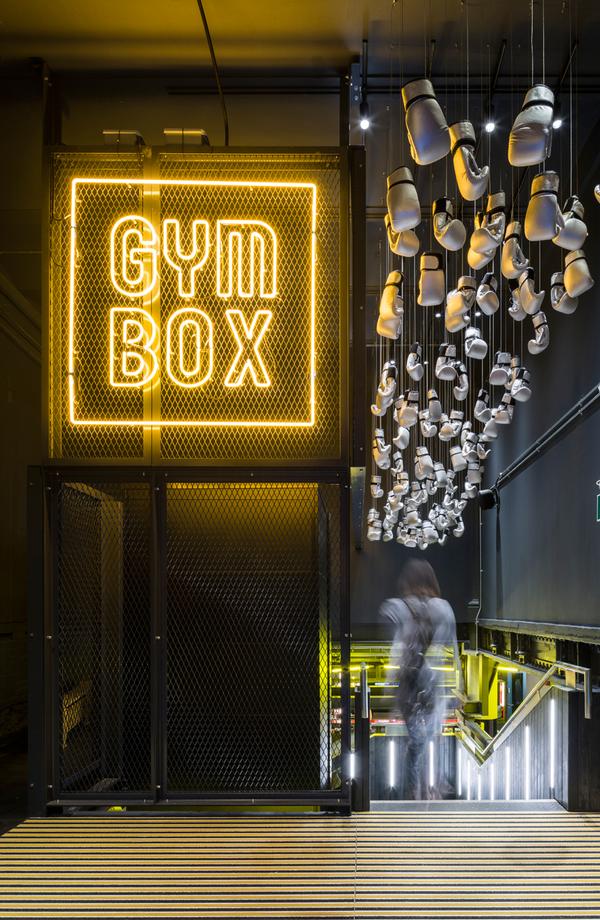
What the doctor ordered speaks to building a value proposition that appeals to one or a few weird audiences. Many successful boutique studios have taken this approach to crafting their value proposition. Gym Box in the UK is a premium operator that has taken a different approach and, in so doing, carved out a distinctive position for itself in the marketplace.
Just remember, being ‘odd’ also requires innovation and – importantly –having relevance to the audience you pursue.
So, what does it take to foster a value proposition and culture takes you to number one and enables you to leverage ‘weird’?
Find your tribe Consider selecting single or multiple niche audiences to serve, and craft your value proposition and culture to be relevant to them. Study your marketplace, talk to your existing members and, most importantly, search for un-served/under-served groups.
• Deliver your offering differently. No one says you have to operate in the same way as your competitors.
Maybe offer club access via bundled packages instead of monthly subscriptions.
How about investing more in technology and becoming the most tech-savvy fitness business in the market?
• Be a 2.5 percenter. Two-and-a-half percent refers to the percentage of businesses that are real innovators. These are businesses that pursue innovation or are willing to adopt business practices and technology early on, typically way ahead of the competition. For example, why not try a ‘freemium’ approach to your business model, similar to that used in the gaming industry, in which you offer the basics for free and then charge extra for upgrades and add-ons.
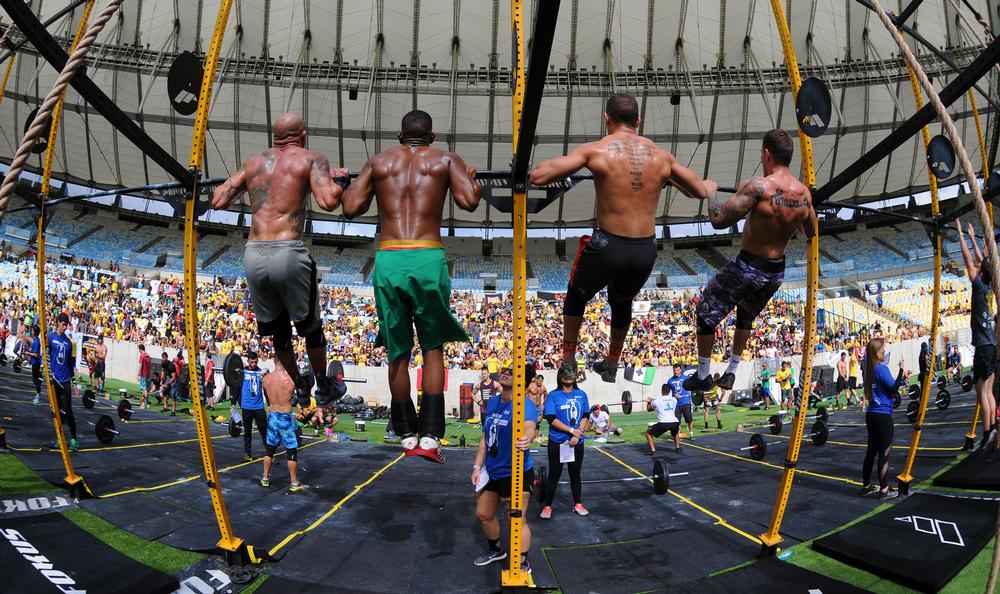
• Go back in time or shift into the future. CrossFit, possibly without even knowing it, built a business proposition around some of the clubs of the mid-1800s, in which gymnastics and calisthenics were the core of the programme. There are other models from olden times that would still work today.
Conversely, you could go the opposite route and create a high-tech virtual experience (ie virtual reality, streaming mobile content, virtual check-in, etc) supplemented by human contact.
Panatta brought together four of the most influential figures in bodybuilding history on the
stage of RiminiWellness 2026: Phil Heath, Lee Haney, Ronnie Coleman and Hany Rambod. [more...]
+ More featured suppliers
COMPANY PROFILES
Serco Leisure
Serco Leisure Operating Limited is one of the UK’s leading national operators of leisure centres, de [more...]
Orbit4
With Orbit4, you’ll always have full visibility
of your equipment inventory, the true
market value [more...]
IHRSA’s Kristen Walsh shares highlights from The 2019 IHRSA
Health Club Consumer Report into the US fitness market,
as well as giving universal advice about how to stay relevant
By Kristen Walsh | Published in Health Club Management 2019 issue 11
As trends come and go, be alert and pivot your business creatively, says IHRSA / shutterstock
In order to adequately recruit, serve, engage and retain health club customers and members, it’s crucial to understand everything about them – their needs, their wants and their behaviours.
IHRSA’s annual Health Club Consumer Report 2019 is based on a nationwide sample of more than 20,000 interviews and provides demographics and health, sports, and fitness participation data on US health club consumers.
Review your business model At this moment in time, fitness facility operators, especially those in the fitness-only category, find themselves competing in an industry segment that’s dominated by discount operators (75 per cent charge less than US$25, and 32 per cent charge less than US$10 a month).
If your present business model is fitness-only (equipment, group exercise studios and locker rooms), then chances are most of your competitors will be in the low-price game, and your existing and future members will frame their buying decision around the lowest price.
Stay in the game Consequently, if you plan to continue to operate a fitness-only model in your business, your options include:
• Lower your price and add a little extra. Rather than go head-to-head at $10, try $15 to $18, and then offer a few classes, some virtual classes, and possibly offer fee-based small group training.
• Continue to operate at your present price point, eg, $30 to $40, but differentiate your offering. Create a speciality, such as a genre of group classes, small group training or coaching, that none of your competitors is offering.
• Move up the chain. Add physical and programming amenities known to denote value and a higher price point. For example, you could add a court for POP tennis and pickleball; add a speciality studio and theme it; create more tribal programming, or partner with another small business to incorporate a custom bundle of services with higher perceived value into your offering.
Pursue ‘odd’ and ‘weird’ Dr Seuss notably quipped: “You have to be odd to be number one.” What he meant was that reaching the top and, equally importantly, remaining at the top, requires a penchant for being a little different from the rest.
“Odd” refers to your business’ value proposition and whether it offers consumers and members something unique, innovative, and relevant – rather than the same old same old.
Dr Seuss also said: “We’re all a little weird and life is a little weird, and when we find someone whose weirdness is compatible with ours, we join up with them and fall in mutual weirdness…”
What the doctor ordered speaks to building a value proposition that appeals to one or a few weird audiences. Many successful boutique studios have taken this approach to crafting their value proposition. Gym Box in the UK is a premium operator that has taken a different approach and, in so doing, carved out a distinctive position for itself in the marketplace.
Just remember, being ‘odd’ also requires innovation and – importantly –having relevance to the audience you pursue.
So, what does it take to foster a value proposition and culture takes you to number one and enables you to leverage ‘weird’?
Find your tribe Consider selecting single or multiple niche audiences to serve, and craft your value proposition and culture to be relevant to them. Study your marketplace, talk to your existing members and, most importantly, search for un-served/under-served groups.
• Deliver your offering differently. No one says you have to operate in the same way as your competitors.
Maybe offer club access via bundled packages instead of monthly subscriptions.
How about investing more in technology and becoming the most tech-savvy fitness business in the market?
• Be a 2.5 percenter. Two-and-a-half percent refers to the percentage of businesses that are real innovators. These are businesses that pursue innovation or are willing to adopt business practices and technology early on, typically way ahead of the competition. For example, why not try a ‘freemium’ approach to your business model, similar to that used in the gaming industry, in which you offer the basics for free and then charge extra for upgrades and add-ons.
• Go back in time or shift into the future. CrossFit, possibly without even knowing it, built a business proposition around some of the clubs of the mid-1800s, in which gymnastics and calisthenics were the core of the programme. There are other models from olden times that would still work today.
Conversely, you could go the opposite route and create a high-tech virtual experience (ie virtual reality, streaming mobile content, virtual check-in, etc) supplemented by human contact.
According to research which tracked more than 147,000 people for 30 years, 90-120 minutes
of strength training a week may deliver some of the biggest long-term health rewards.
The UK's four Chief Medical Officers have published a refreshed edition of Physical activity
guidelines: UK Chief Medical Officers' report, updating the evidence that underpins the nation's
physical activity recommendations and placing greater emphasis on strength, balance, reducing
sedentary behaviour and, for the first time, supporting people taking weight loss medications.
Places Leisure has exchanged contracts to build and operate a flagship £60m water and leisure
destination on behalf of Basingstoke and Deane Borough Council.
The Republic of Ireland will become the latest market in PureGym’s expanding international
portfolio, with the first launch planned for Dublin in 2027.
Anytime Fitness opened more than one club a day in 2025 and is on track to maintain this rate
of growth this year, as parent company Purpose Brands targets further international expansion.
The £33.9 million Leighton Leisure and Community Centre has opened in Leighton Buzzard, UK,
creating a next-generation public leisure, health and wellbeing hub for the local community.
Walnuts Leisure Centre in Orpington, in the London Borough of Bromley, has reopened following
a £17m transformation designed to secure the long-term future of the public leisure asset and
reposition it as a community wellbeing hub.
The Gym Group, has announced that it's sustained positive trading momentum has continued
through the first half of 2026 and the company remains confident about the outlook.
Panatta brought together four of the most influential figures in bodybuilding history on the
stage of RiminiWellness 2026: Phil Heath, Lee Haney, Ronnie Coleman and Hany Rambod. [more...]
+ More featured suppliers
COMPANY PROFILES
Serco Leisure Serco Leisure Operating Limited is one of the UK’s leading national operators of leisure centres, de [more...]