Get HCM digital magazine and ezines FREE
Sign up here ▸
Jobs   News   Features   Products   Magazine      Advertise  
Active Kids
Active healthy kids

In 2014, the Active Healthy Kids Global Alliance created the Global Matrix, which has become the most comprehensive assessment of global variation in child and youth physical activity. Steph Eaves talks to president Mark Tremblay about the matrix and its latest findings

By Steph Eaves | Published in Sports Management 2019 issue 3


How did the first Global Matrix come about?
As Active Healthy Kids Canada produced annual report cards for Canada, we were increasingly approached by other countries to mentor them to prepare similar report cards. Eventually this became sufficiently burdensome that we decided to make it a group effort.

So we worked with 14 additional countries to prepare report cards following a harmonised process and timelines, for concurrent release at the Global Summit on the Physical Activity of Children in Toronto in May 2014. This effort came to represent the Global Matrix 1.0.

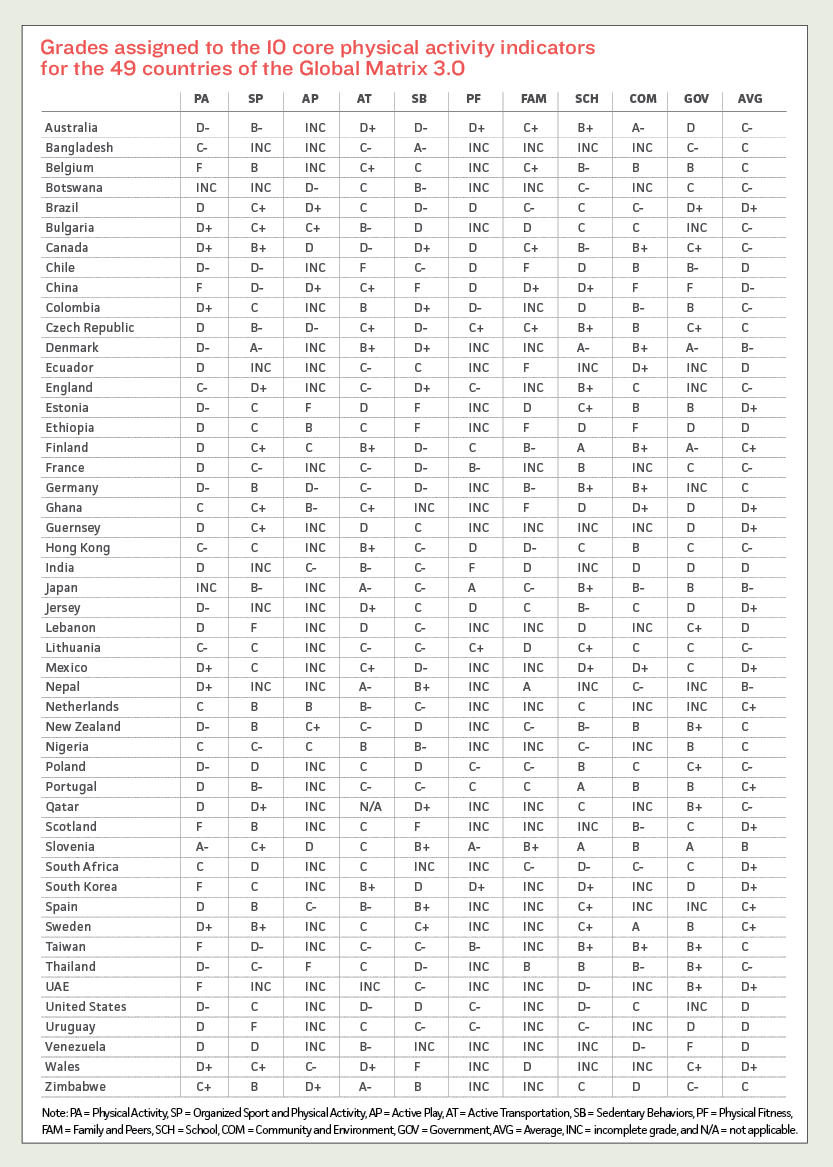
The basic idea was that core indicators that were graded in the report cards would be tabulated for all countries and presented in a matrix of grades that would show how each country was doing.

The launch of the Global Matrix 1.0 generated worldwide media attention and offered unique insights into which countries were leading, and which were lagging in the various report card indicators, and these insights offered potential solutions to help improve the grades.

How did the Active Healthy Kids Global Alliance get started?
After the release of the Global Matrix 1.0, all participating countries met to debrief on its success and voted unanimously to work together, recruit additional countries, and repeat the process in the future. This led to the formation of the Active Healthy Kids Global Alliance, and the planning for the Global Matrix 2.0.

What are your main aims for the Global Matrix?
The Global Matrix initiative serves to: elevate public awareness of the global childhood physical inactivity crisis, be an accountability index for all citizens, be a surveillance synthesis mechanism, be an advocacy tool for physical activity leaders and organizations, drive policy change, provide a process for identifying research and surveillance needs, and be a challenge to other countries and jurisdictions to implement similar processes to allow comparisons and facilitate improvements.

Through credible knowledge synthesis and translation and international collaboration and cooperation we believe the Global Matrix can elevate the priority of childhood physical activity and provide unique insights that can inform creative strategic interventions and approaches to recalibrate the movement behaviours of contemporary children.

How does the report card system work?
Using all of the best available evidence within a country, a group of experts within that country synthesises and discusses that evidence and attempts to achieve consensus on a grade that corresponds to that evidence, while following the common grading rubric applied against established measurement benchmarks.

The proposed grades and the underlying evidence supporting them are audited by the Active Healthy Kids Global Alliance, modified if necessary, and then finalised. The substantiating evidence is provided in the long form report card for each country.

What enduring trends have you seen across the three matrices?
We’ve learned that no country has the solution to the childhood inactivity crisis. Some countries do better than others in certain indicators, yet do worse on others. This global variation is necessary to cross-fertilise best practice across countries.

What’s consistent among countries with more active children is that physical activity is driven by pervasive cultural norms – being active is not just a choice, but a way of life, and part of the fabric of habitual behaviours.

What are some of the most important learnings?
Ironically, and consistent in all three Global Matrix initiatives, is the observation of an inverse relationship between sources of influence for physical activity that are believed to be important – for example, government investment, built environment characteristics and physical education programmes – and the actual behaviours these aim to support, such as physical activity, active transportation and active play.

What seems more important than the typical approaches taken by high income countries around the world – investing in more infrastructure, for instance – is freedom to move and play wherever, whenever, however children choose. The takeaway is to just let kids play, with less structure and more opportunity.

What have countries done with the results?
There are many examples, for instance:
• Expansion: report card focused on physical activity of youth with chronic conditions and disabilities was produced in the Netherlands
• Education: a national conference focused on childhood physical activity was created in Denmark
• Policy: a new regulation mandating one hour of daily physical activity in public schools was introduced in Chile
• Surveillance: nationally representative physical activity surveys were developed in China, Chile, and Thailand
• A detailed account of the international impact of the Report Cards and Global Matrices was recently published in the Journal of Physical Activity and Health (https://paahjournal.com)

What are your future plans and goals for the Global Matrix?
Our future plans are to continue with the Global Matrix initiative, and continue expanding the number of participating countries. We hope to have 75 countries participating in the Global Matrix 4.0.

The Active Healthy Kids Global Alliance also hopes to expand its efforts to “power the global movement to get kids moving” through additional data-driven initiatives – stay tuned!

For more information visit: www.activehealthykids.org
Findings from the Global Matrix 3.0
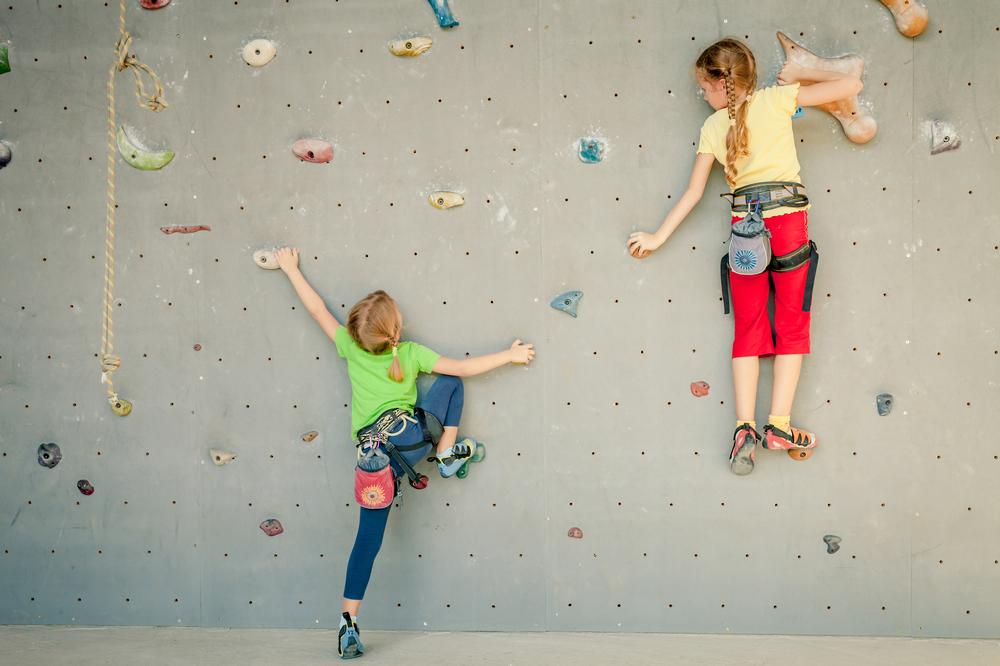
The majority of children around the world are not meeting physical activity guidelines © shutterstock/pixinoo

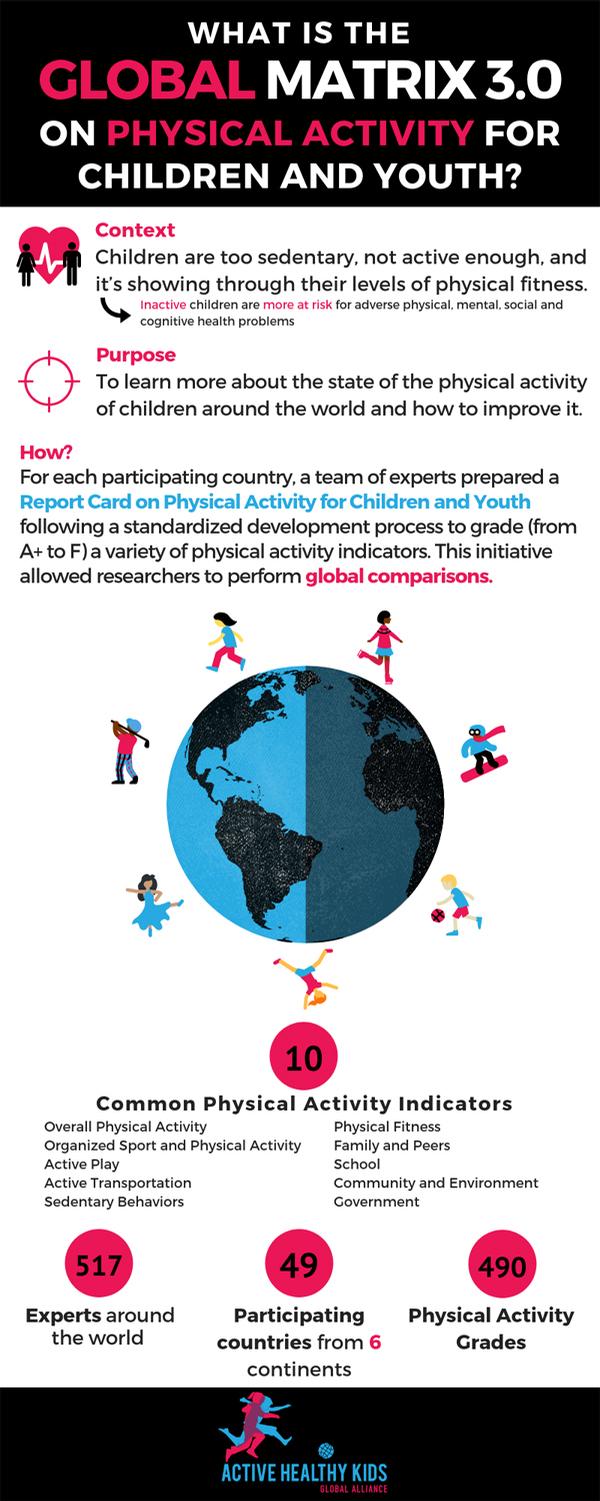
Based on an analysis of 49 countries, we are facing a global epidemic of childhood inactivity

The majority of children and youth are not meeting the physical activity guideline of a daily 60 minutes of moderate to vigorous physical activity, and spend too much time in front of a recreational screen

Slovenia obtained the best grades for Overall Physical Activity (A-), Family and Peers (B+), and Government (A), and received an overall average grade of B

A notable feature in Slovenia is the importance of sport for the culture of this almost 30-year old country as “Slovenes tend to view sports as an effective tool in fostering national identity among citizens and making successful global identity claims”

Lower behavioral grades and higher source of influence grades were observed within the very high Human Development Index (wealthier) countries

Generally low average grades for each indicator were observed in the high Human Development Index countries

The report revealed that modern lifestyles – increases in screen time, the growing urbanisation of communities and the rise in automation of previously manual tasks – are contributing to a pervasive public health problem

Zimbabwe reports above-average grades in Overall Physical Activity (C+) and Sedentary Behaviours (B)

Overall physical activity is mostly affected by active transportation which, for the majority of the children in Zimbabwe, is a necessity in everyday life

Japan had the best grades for Active Transportation (A-) and Physical Fitness (A), and had no grades lower than C-

Japan has a highly established “walking to school practice” that has been implemented since the School Education Act enforcement order, enacted in 1953. It states that public elementary schools should be located within no more than 4 km, and for public junior high schools no more than 6 km, from the student’s home

Higher behavioral grades (Overall Physical Activity, Organised Sport and Physical Activity, Active Play, Active Transportation, and Sedentary Behaviors) and lower Source of Influence grades (Family and Peers, School, Community and Environment, and Government) were generally observed in the low and medium Human Development Index countries

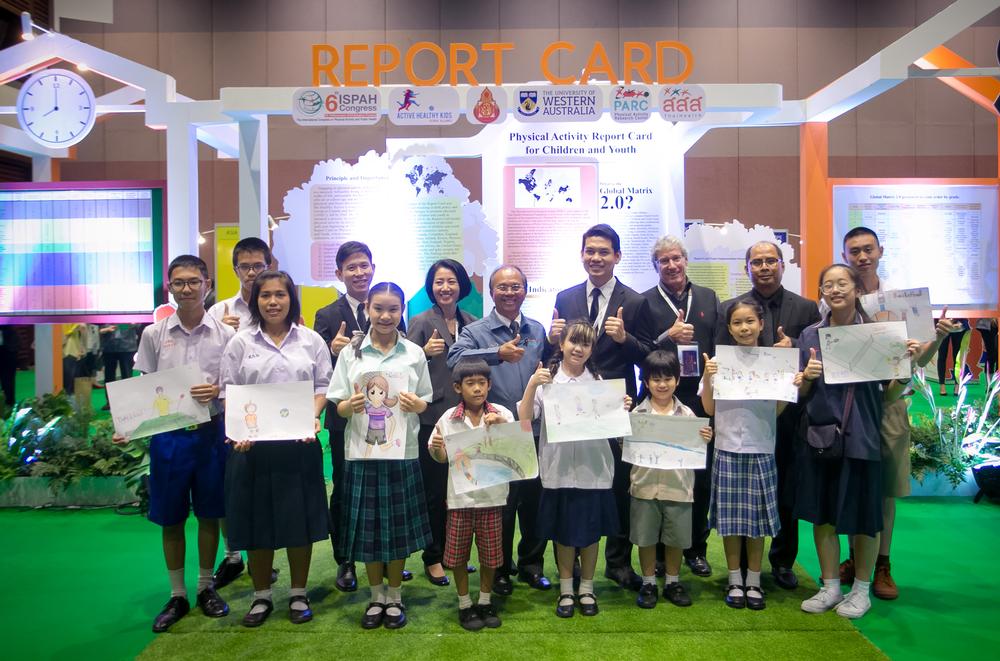
Many countries have made changes to their physical activity strategies based on the results of the matrix © shutterstock/Dmitry Naumov

/ © shutterstock/Pressmaster
The Global Matrix 1.0 was launched in 2014, gaining worldwide media attention
The Global Matrix compares the physical activity levels of children across the world
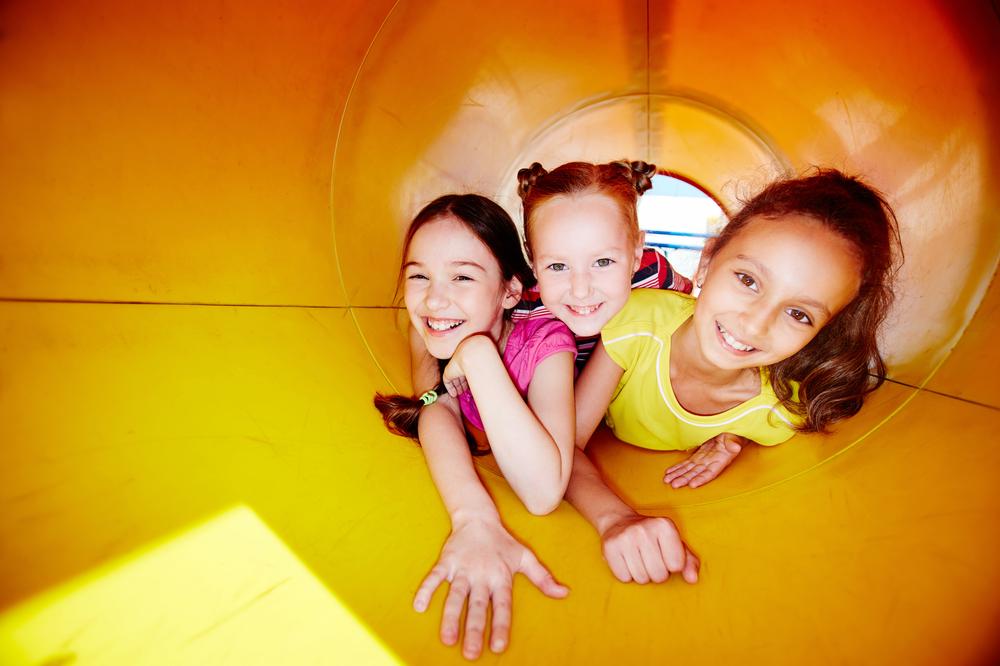
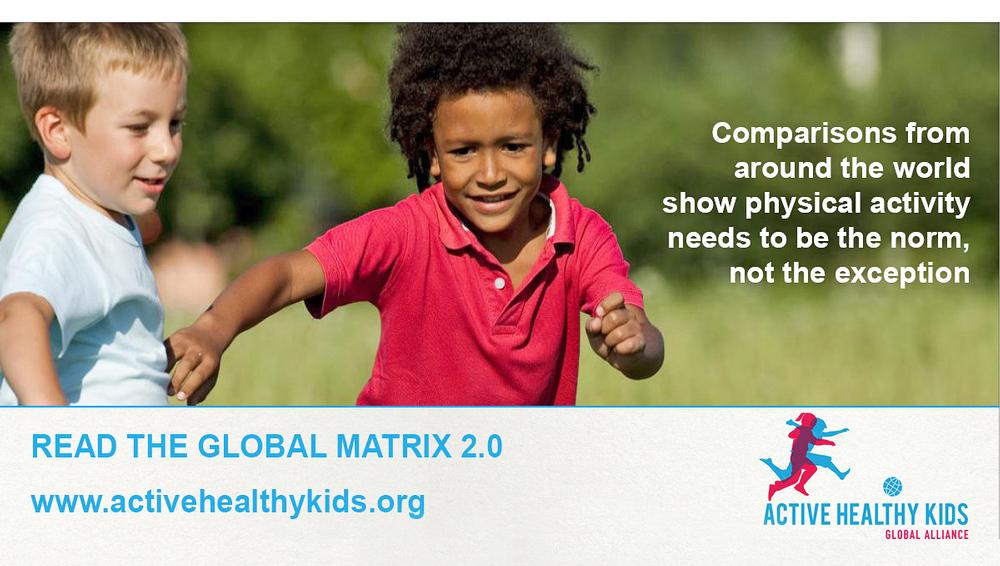
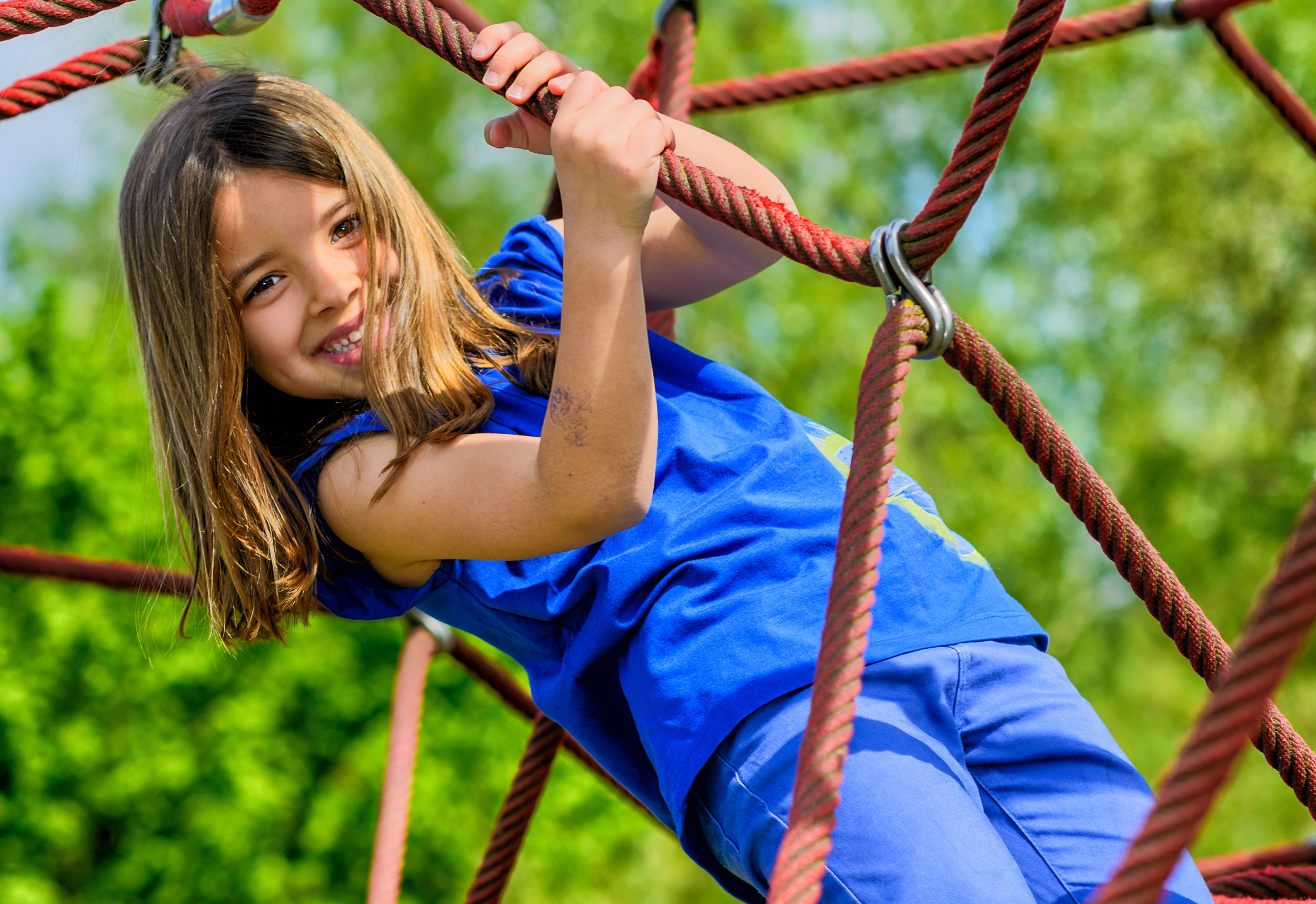
Kids move more when they have more freedom
Kids move more when they have more freedom / © shutterstock/altanaka
FEATURED SUPPLIERS

Elevate 2026 to mark 10-year anniversary with biggest ever waterfront drinks reception
Elevate is set to celebrate its 10th anniversary in style this June, with organisers confirming the event’s largest-ever drinks reception as registrations continue to run more than 10% ahead of last year. [more...]

W3Fit EMEA celebrates its fifth anniversary
Celebrating its milestone 5th anniversary, W3Fit EMEA returns in 2026 with an unmissable gathering of the Health & Fitness industry’s most influential leaders. [more...]
+ More featured suppliers  
COMPANY PROFILES
Orbit4

With Orbit4, you’ll always have full visibility of your equipment inventory, the true market value [more...]
The Fitness Group Education

The Fitness Group is the UK’s Leading Fitness Education Training Provider. [more...]
+ More profiles  
CATALOGUE GALLERY
 
+ More catalogues  

DIRECTORY
+ More directory  
DIARY


13-13 Jun 2026

Global Wellness Day

Worldwide, Various,
15-18 Jun 2026

HLTH Europe

RAI Convention Centre, Amsterdam, Netherlands
+ More diary  
 
ABOUT LEISURE MEDIA
LEISURE MEDIA MAGAZINES
LEISURE MEDIA HANDBOOKS
LEISURE MEDIA WEBSITES
LEISURE MEDIA PRODUCT SEARCH
 
HCM
LEISURE OPPORTUNITIES
HEALTH CLUB HANDBOOK
PRINT SUBSCRIPTIONS
FREE DIGITAL SUBSCRIPTIONS
ADVERTISE . CONTACT US

Leisure Media
Tel: +44 (0)1462 431385

©Cybertrek 2026
Get HCM digital magazine and ezines FREE
Sign up here ▸
Jobs    News   Products   Magazine
Active Kids
Active healthy kids

In 2014, the Active Healthy Kids Global Alliance created the Global Matrix, which has become the most comprehensive assessment of global variation in child and youth physical activity. Steph Eaves talks to president Mark Tremblay about the matrix and its latest findings

By Steph Eaves | Published in Sports Management 2019 issue 3


How did the first Global Matrix come about?
As Active Healthy Kids Canada produced annual report cards for Canada, we were increasingly approached by other countries to mentor them to prepare similar report cards. Eventually this became sufficiently burdensome that we decided to make it a group effort.

So we worked with 14 additional countries to prepare report cards following a harmonised process and timelines, for concurrent release at the Global Summit on the Physical Activity of Children in Toronto in May 2014. This effort came to represent the Global Matrix 1.0.

The basic idea was that core indicators that were graded in the report cards would be tabulated for all countries and presented in a matrix of grades that would show how each country was doing.

The launch of the Global Matrix 1.0 generated worldwide media attention and offered unique insights into which countries were leading, and which were lagging in the various report card indicators, and these insights offered potential solutions to help improve the grades.

How did the Active Healthy Kids Global Alliance get started?
After the release of the Global Matrix 1.0, all participating countries met to debrief on its success and voted unanimously to work together, recruit additional countries, and repeat the process in the future. This led to the formation of the Active Healthy Kids Global Alliance, and the planning for the Global Matrix 2.0.

What are your main aims for the Global Matrix?
The Global Matrix initiative serves to: elevate public awareness of the global childhood physical inactivity crisis, be an accountability index for all citizens, be a surveillance synthesis mechanism, be an advocacy tool for physical activity leaders and organizations, drive policy change, provide a process for identifying research and surveillance needs, and be a challenge to other countries and jurisdictions to implement similar processes to allow comparisons and facilitate improvements.

Through credible knowledge synthesis and translation and international collaboration and cooperation we believe the Global Matrix can elevate the priority of childhood physical activity and provide unique insights that can inform creative strategic interventions and approaches to recalibrate the movement behaviours of contemporary children.

How does the report card system work?
Using all of the best available evidence within a country, a group of experts within that country synthesises and discusses that evidence and attempts to achieve consensus on a grade that corresponds to that evidence, while following the common grading rubric applied against established measurement benchmarks.

The proposed grades and the underlying evidence supporting them are audited by the Active Healthy Kids Global Alliance, modified if necessary, and then finalised. The substantiating evidence is provided in the long form report card for each country.

What enduring trends have you seen across the three matrices?
We’ve learned that no country has the solution to the childhood inactivity crisis. Some countries do better than others in certain indicators, yet do worse on others. This global variation is necessary to cross-fertilise best practice across countries.

What’s consistent among countries with more active children is that physical activity is driven by pervasive cultural norms – being active is not just a choice, but a way of life, and part of the fabric of habitual behaviours.

What are some of the most important learnings?
Ironically, and consistent in all three Global Matrix initiatives, is the observation of an inverse relationship between sources of influence for physical activity that are believed to be important – for example, government investment, built environment characteristics and physical education programmes – and the actual behaviours these aim to support, such as physical activity, active transportation and active play.

What seems more important than the typical approaches taken by high income countries around the world – investing in more infrastructure, for instance – is freedom to move and play wherever, whenever, however children choose. The takeaway is to just let kids play, with less structure and more opportunity.

What have countries done with the results?
There are many examples, for instance:
• Expansion: report card focused on physical activity of youth with chronic conditions and disabilities was produced in the Netherlands
• Education: a national conference focused on childhood physical activity was created in Denmark
• Policy: a new regulation mandating one hour of daily physical activity in public schools was introduced in Chile
• Surveillance: nationally representative physical activity surveys were developed in China, Chile, and Thailand
• A detailed account of the international impact of the Report Cards and Global Matrices was recently published in the Journal of Physical Activity and Health (https://paahjournal.com)

What are your future plans and goals for the Global Matrix?
Our future plans are to continue with the Global Matrix initiative, and continue expanding the number of participating countries. We hope to have 75 countries participating in the Global Matrix 4.0.

The Active Healthy Kids Global Alliance also hopes to expand its efforts to “power the global movement to get kids moving” through additional data-driven initiatives – stay tuned!

For more information visit: www.activehealthykids.org
Findings from the Global Matrix 3.0
The majority of children around the world are not meeting physical activity guidelines © shutterstock/pixinoo

Based on an analysis of 49 countries, we are facing a global epidemic of childhood inactivity

The majority of children and youth are not meeting the physical activity guideline of a daily 60 minutes of moderate to vigorous physical activity, and spend too much time in front of a recreational screen

Slovenia obtained the best grades for Overall Physical Activity (A-), Family and Peers (B+), and Government (A), and received an overall average grade of B

A notable feature in Slovenia is the importance of sport for the culture of this almost 30-year old country as “Slovenes tend to view sports as an effective tool in fostering national identity among citizens and making successful global identity claims”

Lower behavioral grades and higher source of influence grades were observed within the very high Human Development Index (wealthier) countries

Generally low average grades for each indicator were observed in the high Human Development Index countries

The report revealed that modern lifestyles – increases in screen time, the growing urbanisation of communities and the rise in automation of previously manual tasks – are contributing to a pervasive public health problem

Zimbabwe reports above-average grades in Overall Physical Activity (C+) and Sedentary Behaviours (B)

Overall physical activity is mostly affected by active transportation which, for the majority of the children in Zimbabwe, is a necessity in everyday life

Japan had the best grades for Active Transportation (A-) and Physical Fitness (A), and had no grades lower than C-

Japan has a highly established “walking to school practice” that has been implemented since the School Education Act enforcement order, enacted in 1953. It states that public elementary schools should be located within no more than 4 km, and for public junior high schools no more than 6 km, from the student’s home

Higher behavioral grades (Overall Physical Activity, Organised Sport and Physical Activity, Active Play, Active Transportation, and Sedentary Behaviors) and lower Source of Influence grades (Family and Peers, School, Community and Environment, and Government) were generally observed in the low and medium Human Development Index countries

Many countries have made changes to their physical activity strategies based on the results of the matrix © shutterstock/Dmitry Naumov
/ © shutterstock/Pressmaster
The Global Matrix 1.0 was launched in 2014, gaining worldwide media attention
The Global Matrix compares the physical activity levels of children across the world
Kids move more when they have more freedom
Kids move more when they have more freedom / © shutterstock/altanaka
LATEST NEWS
Les Mills calls on the industry to support UNICEF
Global group exercise specialist, Les Mills, is inviting operators to sign up to its Workout for the World event on 20 June, in support of UNICEF.
HUM2N opens longevity clinic at Six Senses London
Global luxury hospitality brand, Six Senses, has partnered with longevity healthcare provider, HUM2N, to launch a clinic at Six Senses London, at The Whiteley.
KX Chelsea invests £15 million to upgrade its wellness offering
Premium London health club, KX Chelsea, will imminently unveil its most significant redevelopment since its launch in 2002 to create an integrated wellness model combining training, recovery and relaxation.
Researchers identify a drug which reduces muscle loss when using GLP-1 medications
Researchers in the US have identified an antibody which could greatly reduce the loss of lean muscle mass in people who are taking weight-loss medications.
Peloton signals potential move into reformer Pilates with Skop acquisition
Peloton has made the strategic acquisition of the Pilates start-up, Skōp, to support the expansion of its strength ecosystem.
Crunch Fitness creates more affordable reformer Pilates concept
Crunch Fitness has announced the launch of Crunch Reform Pilates – its own reformer concept designed to bring this fast growing, but rather expensive, modality into the mainstream.
As the 20th State of the Industry Report is released, LeisureDB rebrands to Evolve
The 20th State of the Industry Report reveals a resilient, expanding and competitive sector, the importance of differentiation and the ongoing challenge of tackling inequalities.
Orangetheory set for Italian expansion and Technogym tie-up
Purpose Brands has announced its entry into the Italian market, having sold the franchise rights for four Orangetheory Studios to Icon Palestre.
Fitness First adds red light therapy to relaxation classes
Fitness First UK is integrating red light therapy into yoga and Pilates classes through a partnership with Bon Charge.
Nuffield Health says it will appeal after losing at employment tribunal
Nuffield Health has told HCM that it takes its responsibilities towards its colleagues seriously and is committed to meeting all legal obligations after news of a tribunal has made national headlines.
Technogym and World Athletics team up to launch the Run X World Treadmill Championships
Technogym has announced the launch of the Run X World Treadmill Championship, the first world championship for running on connected treadmills over five kilometres.
Charitable trust, Mytime Active, tackles loneliness
Shocked by the UK loneliness statistics, charitable trust Mytime Active has been doubling down on its community outreach projects.
+ More news   
 
FEATURED SUPPLIERS

Elevate 2026 to mark 10-year anniversary with biggest ever waterfront drinks reception
Elevate is set to celebrate its 10th anniversary in style this June, with organisers confirming the event’s largest-ever drinks reception as registrations continue to run more than 10% ahead of last year. [more...]

W3Fit EMEA celebrates its fifth anniversary
Celebrating its milestone 5th anniversary, W3Fit EMEA returns in 2026 with an unmissable gathering of the Health & Fitness industry’s most influential leaders. [more...]
+ More featured suppliers  
COMPANY PROFILES
Orbit4

With Orbit4, you’ll always have full visibility of your equipment inventory, the true market value [more...]
+ More profiles  
CATALOGUE GALLERY
+ More catalogues  

DIRECTORY
+ More directory  
DIARY


13-13 Jun 2026

Global Wellness Day

Worldwide, Various,
15-18 Jun 2026

HLTH Europe

RAI Convention Centre, Amsterdam, Netherlands
+ More diary  


ADVERTISE . CONTACT US

Leisure Media
Tel: +44 (0)1462 431385

©Cybertrek 2026

ABOUT LEISURE MEDIA
LEISURE MEDIA MAGAZINES
LEISURE MEDIA HANDBOOKS
LEISURE MEDIA WEBSITES
LEISURE MEDIA PRODUCT SEARCH
PRINT SUBSCRIPTIONS
FREE DIGITAL SUBSCRIPTIONS