Get HCM digital magazine and ezines FREE
Sign up here ▸
Jobs   News   Features   Products   Magazine      Advertise  
NEWS
Nutrition, fashion and nature: GWS releases 2019 wellness trends report
POSTED 30 Jan 2019 . BY Jane Kitchen
The GWS predicts there will be radical innovation in sustainable textiles, with clothing/shoes made from recycled plastic bottles, algae, mushrooms and food waste
The Global Wellness Summit (GWS) released its top eight wellness trends for 2019 at a press event in New York City this week. The in-depth report is more than 100 pages, and includes new directions deemed to have the most meaningful impact on the US$4.2tr global wellness industry.

Trends range from the rise of a ‘dying well’ movement to ‘meditation going plural’, wellness remaking the fashion industry and scent playing a more dramatic role in our emotional health.

The eight trends are outlined below:

1. Well Fashion – Way Beyond Athleisure
The GWS predicts that 2019 will be the pivotal year for change, with a wave of sustainable, ethical, intelligent, healing, more inclusive, and meaningful fashion on the rise, and a more “well” fashion market and mindset ahead.

That includes radical innovation in sustainable textiles, with clothing/shoes made from recycled plastic bottles, algae, mushrooms and food waste. More vegan, cruelty-free fashion, with alt-fur, alt-leather, alt-everything collections that are trendier than the real thing.

New technologies mean that fitness wearables will move seamlessly into clothing while self-regulating fabrics will adapt to all kinds of environmental and bodily changes (heat, cold, air flow, movement, UV rays, etc.). The GWS also predicts we’ll see antibacterial clothes that clean themselves, collagen-infused clothes that moisturise your body all day, clothes that broadcast your mood, pajamas that help you sleep—even clothes weaving in “ancient wellness,” such as lines suffused with Ayurvedic medicinal plants.

2. Wellness Takes on Overtourism
Overtourism—when a crush of tourists overwhelms a destination—is the #1 issue in the travel industry today, making headlines everywhere. With the growth in wealth worldwide, international travel is exploding, with annual trips jumping from 500 million in 1995 to 1.3 billion today. The problem is that this tourism expansion is hyper-concentrated: Roughly half of all travelers go to just 100 global destinations; everyone wants to see the Mona Lisa and Machu Picchu, the Ginza in Tokyo and Venice’s canals. The damage to those destinations’ infrastructure and environment (and to their residents’ lives) is a terrible wellness issue: from pollution and noisy, garbage-filled landscapes to the destruction of local heritage and culture to pricing locals out of the property market.

The GWS predicts that wellness tourism will be one key antidote: Not only are the majority of wellness resorts, by nature, in nature (off the crowded, beaten path) but now a growing number of national tourism boards are smartly launching initiatives to combat overtourism (and reduce seasonality) by developing new wellness destinations.

To fight the nightmare of overtourism in Dubrovnik, Croatia, the country is developing a Wellness & Spa Tourism Zone in Varaždinske Toplice, an area with centuries of hot springs bathing and other wellness traditions. Japan is developing new wellness tourism routes to coax travellers away from the congested Kyoto-Osaka-Tokyo corridor, such as the Dragon Route in the Chebu region, rich in history and hot springs, and the village of Misugi kicking off a wellness travel initiative that lures travellers for stargazing, forest bathing and beer onsens. Many more examples are underway, and it’s going to mean more unique, newly developed wellness destinations for travellers.

3. Meditation Goes Plural
Meditation will evolve from a singular to a plural practice, from a generic concept to understanding specific types and their unique brain impacts, just as this explosive market blooms—like yoga and boutique fitness before it—into many varieties.

Meditation will “go plural” in a whole other way. If you used to take that “meditation class,” now ancient and modern varieties will multiply in 2019—whether straight-out-of-Europe sophrology (marrying Eastern meditation practices with Western relaxation concepts) or Kundalini yoga (an ancient, spiritual mash-up of chanted mantra, breathing techniques and movement).

“Mindful fitness” brands will surge, where you move with intention or where workouts work in meditation sessions—just as mindful spa experiences will get more creative. More mindful apps and new drop-in meditation studios and wellness centers/clubs (all booming) will become one-stop shops with jaw-droppingly full meditation menus.

A flurry of “meditation technologies” will boost—as well as hack—the meditation experience, using tech-like biofeedback, EEG/brain wave tracking and transcranial direct current stimulation.

4. Prescribing Nature
Imagine going to your doctor, and instead of a prescription for some pharmaceutical, you received a prescription for a 30-minute walk in nature. This is happening all over the world, and it’s only going to become more prevalent.

As people continue to be overworked and overwrought, they will answer the call of nature, so to speak. Much has been written about the evils (and glories) of technology, but the resulting dissociation from our natural surroundings leaves us emotionally and physically worse off. And as more evidence becomes available in mainstream media, more people will seek this “treatment,” and more physicians will be prescribing it. Beyond formal nature prescriptions, this trend also spans a serious “back to nature” shift happening across the wellness world, from the rise of “green exercise” (in-nature workouts) offered at more fitness studios, such as the UK’s Biofit, to the continued surge in bringing nature and biophilic design into our homes, schools, offices and hospitals to the nonstop growth in forest bathing programs at wellness travel destinations.

5. MediScent: Fragrance Gets a Wellness Makeover
The sense of smell is having a wellness renaissance. Once dismissed as the least relevant of the five senses, today, evidence-based studies around scent’s powerful impact on our physical and emotional wellbeing are being released fast and furiously.The GWS expects that the neuroscience of scent will become more pervasive in everything we do, and fragrances will be used in ways we would never have dreamed of—both in public and personal spaces.

6. China – Uncovering the Wealth in Wellness
No country will have a bigger impact on the future global wellness economy than China,. With a population of 1.4 billion, China’s middle class will skyrocket from 430 million today to 780 million by 2025. The country already drives more than half of all global e-commerce. China’s outbound travel growth has expanded 20-fold since 2000—now at 145 million international trips annually, to rise to 200 million in two years, and then doubling to 400 million by 2030 (when China will represent 30 percent of the entire international travel market).

China is undergoing a wellness (and beauty) revolution; over 70 percent of its middle class exercise regularly and purchase organic food, 104 million Chinese have at least one fitness app on their phones, and China accounts for 41 percent of all global cosmetic procedures. Chinese tourists will rewrite the wellness travel market: They’re now rejecting the old shopping/sightseeing tours to embrace authentic cultural and wellness experiences. (China is the fastest-growing wellness tourism market, jumping to third globally in lightning-fast time). With overpopulation and record-high pollution, the wellness real estate market is booming (now 2nd globally)

China’s indigenous wellness traditions and unique destinations will also increasingly grab the world’s attention, from new, authentic wellness travel destinations to its 425,000 TCM practitioners to its Buddhist and Taoist spiritual cuisine.

7. Nutrition Gets Very Personalised
We are entering the age of personalised nutrition, where science, low-cost medical testing and new technologies identify what foods are right just for us — not only for weight management but, more importantly, to boost overall health and wellbeing.

This includes companies such as Habit and Nutrigenomix, which rely on blood and DNA analyses to specify what foods are right for you. As “one-size-fits-all” health and wellness practices fall by the wayside and the understanding of epigenetics — the study of how our genes are shaped by our behaviour — grows, personalised nutrition will hit the mainstream in increasingly surprising ways.

8. Dying Well
Suddenly a “death positive” movement is here, with everything around death and dying getting rethought through a more “well” lens: from making the dying process more humane to the radical reinvention of the memorial and funeral to active death exploration/acceptance practices becoming part of a mentally healthy life.
Death doulas, wellness practitioners that fill that yawning gap in care between medicine and hospice, families and fear—and who are dedicated to delivering better, more meaningful and peaceful deaths—are gaining serious traction around the world.

More people are exploring alternative wisdom and practices around death from cultures worldwide. The future: a “better death” becomes an integral part of a “well life.”
MORE NEWS
Les Mills calls on the industry to support UNICEF
Global group exercise specialist, Les Mills, is inviting operators to sign up to its Workout for the World event on 20 June, in support of UNICEF.
HUM2N opens longevity clinic at Six Senses London
Global luxury hospitality brand, Six Senses, has partnered with longevity healthcare provider, HUM2N, to launch a clinic at Six Senses London, at The Whiteley.
KX Chelsea invests £15 million to upgrade its wellness offering
Premium London health club, KX Chelsea, will imminently unveil its most significant redevelopment since its launch in 2002 to create an integrated wellness model combining training, recovery and relaxation.
Researchers identify a drug which reduces muscle loss when using GLP-1 medications
Researchers in the US have identified an antibody which could greatly reduce the loss of lean muscle mass in people who are taking weight-loss medications.
+ More news   
LATEST JOBS
GP Exercise Referral Instructor
Everyone Active
Salary: £33,000pa + benefits
Job location: Harrow, Middlesex , United Kingdom
Self Employed Personal Trainer
Everyone Active
Salary: Competitive
Job location: Enderby
+ More jobs  

FEATURED SUPPLIERS

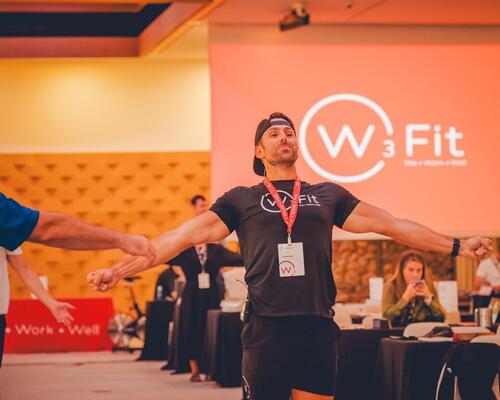
W3Fit EMEA celebrates its fifth anniversary
Celebrating its milestone 5th anniversary, W3Fit EMEA returns in 2026 with an unmissable gathering of the Health & Fitness industry’s most influential leaders. [more...]

CoverMe extends matching service to personal training, rewriting how members and personal trainers connect
CoverMe, the global leader in fitness workforce management, today launches CoverMe PT, an on-demand personal training platform that connects the right personal trainer to the right client in under 10 seconds. [more...]
+ More featured suppliers  
COMPANY PROFILES
Serco Leisure

Serco Leisure Operating Limited is one of the UK’s leading national operators of leisure centres, de [more...]
Safe Space Lockers

We provide a full turn-key solution for clients from design and consultation, through to bespoke man [more...]
+ More profiles  
CATALOGUE GALLERY
 
+ More catalogues  

DIRECTORY
+ More directory  
DIARY


13-13 Jun 2026

Global Wellness Day

Worldwide, Various,
15-18 Jun 2026

HLTH Europe

RAI Convention Centre, Amsterdam, Netherlands
+ More diary  
 
ABOUT LEISURE MEDIA
LEISURE MEDIA MAGAZINES
LEISURE MEDIA HANDBOOKS
LEISURE MEDIA WEBSITES
LEISURE MEDIA PRODUCT SEARCH
 
HCM
LEISURE OPPORTUNITIES
HEALTH CLUB HANDBOOK
PRINT SUBSCRIPTIONS
FREE DIGITAL SUBSCRIPTIONS
ADVERTISE . CONTACT US

Leisure Media
Tel: +44 (0)1462 431385

©Cybertrek 2026
Get HCM digital magazine and ezines FREE
Sign up here ▸
Jobs    News   Products   Magazine
NEWS
Nutrition, fashion and nature: GWS releases 2019 wellness trends report
POSTED 30 Jan 2019 . BY Jane Kitchen
The GWS predicts there will be radical innovation in sustainable textiles, with clothing/shoes made from recycled plastic bottles, algae, mushrooms and food waste
The Global Wellness Summit (GWS) released its top eight wellness trends for 2019 at a press event in New York City this week. The in-depth report is more than 100 pages, and includes new directions deemed to have the most meaningful impact on the US$4.2tr global wellness industry.

Trends range from the rise of a ‘dying well’ movement to ‘meditation going plural’, wellness remaking the fashion industry and scent playing a more dramatic role in our emotional health.

The eight trends are outlined below:

1. Well Fashion – Way Beyond Athleisure
The GWS predicts that 2019 will be the pivotal year for change, with a wave of sustainable, ethical, intelligent, healing, more inclusive, and meaningful fashion on the rise, and a more “well” fashion market and mindset ahead.

That includes radical innovation in sustainable textiles, with clothing/shoes made from recycled plastic bottles, algae, mushrooms and food waste. More vegan, cruelty-free fashion, with alt-fur, alt-leather, alt-everything collections that are trendier than the real thing.

New technologies mean that fitness wearables will move seamlessly into clothing while self-regulating fabrics will adapt to all kinds of environmental and bodily changes (heat, cold, air flow, movement, UV rays, etc.). The GWS also predicts we’ll see antibacterial clothes that clean themselves, collagen-infused clothes that moisturise your body all day, clothes that broadcast your mood, pajamas that help you sleep—even clothes weaving in “ancient wellness,” such as lines suffused with Ayurvedic medicinal plants.

2. Wellness Takes on Overtourism
Overtourism—when a crush of tourists overwhelms a destination—is the #1 issue in the travel industry today, making headlines everywhere. With the growth in wealth worldwide, international travel is exploding, with annual trips jumping from 500 million in 1995 to 1.3 billion today. The problem is that this tourism expansion is hyper-concentrated: Roughly half of all travelers go to just 100 global destinations; everyone wants to see the Mona Lisa and Machu Picchu, the Ginza in Tokyo and Venice’s canals. The damage to those destinations’ infrastructure and environment (and to their residents’ lives) is a terrible wellness issue: from pollution and noisy, garbage-filled landscapes to the destruction of local heritage and culture to pricing locals out of the property market.

The GWS predicts that wellness tourism will be one key antidote: Not only are the majority of wellness resorts, by nature, in nature (off the crowded, beaten path) but now a growing number of national tourism boards are smartly launching initiatives to combat overtourism (and reduce seasonality) by developing new wellness destinations.

To fight the nightmare of overtourism in Dubrovnik, Croatia, the country is developing a Wellness & Spa Tourism Zone in Varaždinske Toplice, an area with centuries of hot springs bathing and other wellness traditions. Japan is developing new wellness tourism routes to coax travellers away from the congested Kyoto-Osaka-Tokyo corridor, such as the Dragon Route in the Chebu region, rich in history and hot springs, and the village of Misugi kicking off a wellness travel initiative that lures travellers for stargazing, forest bathing and beer onsens. Many more examples are underway, and it’s going to mean more unique, newly developed wellness destinations for travellers.

3. Meditation Goes Plural
Meditation will evolve from a singular to a plural practice, from a generic concept to understanding specific types and their unique brain impacts, just as this explosive market blooms—like yoga and boutique fitness before it—into many varieties.

Meditation will “go plural” in a whole other way. If you used to take that “meditation class,” now ancient and modern varieties will multiply in 2019—whether straight-out-of-Europe sophrology (marrying Eastern meditation practices with Western relaxation concepts) or Kundalini yoga (an ancient, spiritual mash-up of chanted mantra, breathing techniques and movement).

“Mindful fitness” brands will surge, where you move with intention or where workouts work in meditation sessions—just as mindful spa experiences will get more creative. More mindful apps and new drop-in meditation studios and wellness centers/clubs (all booming) will become one-stop shops with jaw-droppingly full meditation menus.

A flurry of “meditation technologies” will boost—as well as hack—the meditation experience, using tech-like biofeedback, EEG/brain wave tracking and transcranial direct current stimulation.

4. Prescribing Nature
Imagine going to your doctor, and instead of a prescription for some pharmaceutical, you received a prescription for a 30-minute walk in nature. This is happening all over the world, and it’s only going to become more prevalent.

As people continue to be overworked and overwrought, they will answer the call of nature, so to speak. Much has been written about the evils (and glories) of technology, but the resulting dissociation from our natural surroundings leaves us emotionally and physically worse off. And as more evidence becomes available in mainstream media, more people will seek this “treatment,” and more physicians will be prescribing it. Beyond formal nature prescriptions, this trend also spans a serious “back to nature” shift happening across the wellness world, from the rise of “green exercise” (in-nature workouts) offered at more fitness studios, such as the UK’s Biofit, to the continued surge in bringing nature and biophilic design into our homes, schools, offices and hospitals to the nonstop growth in forest bathing programs at wellness travel destinations.

5. MediScent: Fragrance Gets a Wellness Makeover
The sense of smell is having a wellness renaissance. Once dismissed as the least relevant of the five senses, today, evidence-based studies around scent’s powerful impact on our physical and emotional wellbeing are being released fast and furiously.The GWS expects that the neuroscience of scent will become more pervasive in everything we do, and fragrances will be used in ways we would never have dreamed of—both in public and personal spaces.

6. China – Uncovering the Wealth in Wellness
No country will have a bigger impact on the future global wellness economy than China,. With a population of 1.4 billion, China’s middle class will skyrocket from 430 million today to 780 million by 2025. The country already drives more than half of all global e-commerce. China’s outbound travel growth has expanded 20-fold since 2000—now at 145 million international trips annually, to rise to 200 million in two years, and then doubling to 400 million by 2030 (when China will represent 30 percent of the entire international travel market).

China is undergoing a wellness (and beauty) revolution; over 70 percent of its middle class exercise regularly and purchase organic food, 104 million Chinese have at least one fitness app on their phones, and China accounts for 41 percent of all global cosmetic procedures. Chinese tourists will rewrite the wellness travel market: They’re now rejecting the old shopping/sightseeing tours to embrace authentic cultural and wellness experiences. (China is the fastest-growing wellness tourism market, jumping to third globally in lightning-fast time). With overpopulation and record-high pollution, the wellness real estate market is booming (now 2nd globally)

China’s indigenous wellness traditions and unique destinations will also increasingly grab the world’s attention, from new, authentic wellness travel destinations to its 425,000 TCM practitioners to its Buddhist and Taoist spiritual cuisine.

7. Nutrition Gets Very Personalised
We are entering the age of personalised nutrition, where science, low-cost medical testing and new technologies identify what foods are right just for us — not only for weight management but, more importantly, to boost overall health and wellbeing.

This includes companies such as Habit and Nutrigenomix, which rely on blood and DNA analyses to specify what foods are right for you. As “one-size-fits-all” health and wellness practices fall by the wayside and the understanding of epigenetics — the study of how our genes are shaped by our behaviour — grows, personalised nutrition will hit the mainstream in increasingly surprising ways.

8. Dying Well
Suddenly a “death positive” movement is here, with everything around death and dying getting rethought through a more “well” lens: from making the dying process more humane to the radical reinvention of the memorial and funeral to active death exploration/acceptance practices becoming part of a mentally healthy life.
Death doulas, wellness practitioners that fill that yawning gap in care between medicine and hospice, families and fear—and who are dedicated to delivering better, more meaningful and peaceful deaths—are gaining serious traction around the world.

More people are exploring alternative wisdom and practices around death from cultures worldwide. The future: a “better death” becomes an integral part of a “well life.”
MORE NEWS
Les Mills calls on the industry to support UNICEF
Global group exercise specialist, Les Mills, is inviting operators to sign up to its Workout for the World event on 20 June, in support of UNICEF.
HUM2N opens longevity clinic at Six Senses London
Global luxury hospitality brand, Six Senses, has partnered with longevity healthcare provider, HUM2N, to launch a clinic at Six Senses London, at The Whiteley.
KX Chelsea invests £15 million to upgrade its wellness offering
Premium London health club, KX Chelsea, will imminently unveil its most significant redevelopment since its launch in 2002 to create an integrated wellness model combining training, recovery and relaxation.
Researchers identify a drug which reduces muscle loss when using GLP-1 medications
Researchers in the US have identified an antibody which could greatly reduce the loss of lean muscle mass in people who are taking weight-loss medications.
Peloton signals potential move into reformer Pilates with Skop acquisition
Peloton has made the strategic acquisition of the Pilates start-up, Skōp, to support the expansion of its strength ecosystem.
Crunch Fitness creates more affordable reformer Pilates concept
Crunch Fitness has announced the launch of Crunch Reform Pilates – its own reformer concept designed to bring this fast growing, but rather expensive, modality into the mainstream.
+ More news   
 
FEATURED SUPPLIERS

W3Fit EMEA celebrates its fifth anniversary
Celebrating its milestone 5th anniversary, W3Fit EMEA returns in 2026 with an unmissable gathering of the Health & Fitness industry’s most influential leaders. [more...]

CoverMe extends matching service to personal training, rewriting how members and personal trainers connect
CoverMe, the global leader in fitness workforce management, today launches CoverMe PT, an on-demand personal training platform that connects the right personal trainer to the right client in under 10 seconds. [more...]
+ More featured suppliers  
COMPANY PROFILES
Serco Leisure

Serco Leisure Operating Limited is one of the UK’s leading national operators of leisure centres, de [more...]
+ More profiles  
CATALOGUE GALLERY
+ More catalogues  

DIRECTORY
+ More directory  
DIARY


13-13 Jun 2026

Global Wellness Day

Worldwide, Various,
15-18 Jun 2026

HLTH Europe

RAI Convention Centre, Amsterdam, Netherlands
+ More diary  


ADVERTISE . CONTACT US

Leisure Media
Tel: +44 (0)1462 431385

©Cybertrek 2026

ABOUT LEISURE MEDIA
LEISURE MEDIA MAGAZINES
LEISURE MEDIA HANDBOOKS
LEISURE MEDIA WEBSITES
LEISURE MEDIA PRODUCT SEARCH
PRINT SUBSCRIPTIONS
FREE DIGITAL SUBSCRIPTIONS