Now in its eighth year, Myzone has established itself
as a key player in the fitness industry.
We chat to Myzone's global marketing director,
Gemma Bonnett-Kolakowska, about how the
brand continues to develop and evolve
What stage is Myzone at now? Myzone is growing up and maturing! Marketing has been the biggest recent focus for us, and we have done a great deal of work in-house to take the business to the next level, which will see further expansion and increased engagement with consumers. Although Myzone is Dave Wright’s baby and he is as involved as he's ever been, he has now appointed a senior management team to help move the company forward.
The growth of the business has been phenomenal and we're growing significantly year on year. We’re now in 64 countries, translated into 19 languages and in 7,000 clubs globally. We've sold more than one million belts, excluding those sold directly to consumers. In 2018, 29 million workouts were completed and 4.5 billion MEPs were recorded.
How have you succeeded in getting such a broad global spread? We have dramatically ramped up the marketing and we've developed great partnerships with distributors in other regions. EMEA is a big current focus for us, and former ukactive CEO Dave Stalker has been appointed to drive growth in this region. Asia Pacific is another area in which we are focusing our efforts – both regions have massive growth potential.
You were brought on board two years ago to reset the marketing strategy. What's your background? I'd known Dave Wright for almost 20 years before I joined the company and I had a lot of operational experience. I started off working in corporate fitness in London, before joining Next Generation and then nine years with local authority clubs, before moving into consultancy with Leisure-net Solutions. Prior to Dave approaching me to join Myzone, I had been with Matrix, first helping them to reposition the brand in the UK and then as director of strategic marketing for EMEA.
What was your first task at Myzone? I wanted to find out how the brand’s messaging and imagery was perceived by the industry and whether Dave’s vision – of motivation, gamification and making people feel good about exercise – had been embedded in the culture of the company and understood by the industry.
I found that sometimes the message was inconsistent and there was a bit of disconnect. Myzone was known more for the product than the brand, and we wanted to make the brand – its message and personality – crystal clear.
Firstly, we reset the marketing pillars to ensure the message, purpose and personality were aligned, then we redesigned the logo, sharpening up the font and the pantones. We changed the case from upper to lower – people know Myzone, so we don’t need to shout anymore. Then we overhauled the image and video library, creating a massive resource for both operators, trainers and end users, so they all fully understand the potential of Myzone and how it can work for them, as well as how they can create their own content from templates.
Further to this, we redesigned the website and reset our inbound digital and marketing strategies, creating additional roles. We now have someone focused on social media, as well as for lead capture.
Going forward, our next area of work will be to extend our app so that we can improve communication with the end user. We are looking to educate and engage directly with them, because if we can motivate them this will make them continue to exercise and therefore keep them a member of their health club.
Further to this, we will also be fine tuning our digital and social media marketing platforms. All of the foundations are now in place, the next stage is to build on them for further growth, and we've agreed milestones and targets of where we want to be.
We've gone from a start-up to an established company which has been strategised in a thoughtful, pro-active way and we have very clear milestones in mind, and avenues of how to get there.
What's next for Myzone? We want as many people using it as possible, both in and outside of clubs and to keep engaging and motivating more people. We’re well placed to do this; wearables are still the ACSM’s number one trend and heart rate monitors are the fastest growing technological device. There are so many opportunities to engage more people – in the workplace and schools – and break down the barriers to exercising at clubs.
Do you have any insights on how operators can achieve greater penetration? I think many operators are very focused on membership sales figures. They need to refine their purpose and consider what they want people to feel when they enter the club, with a focus on quality, experience and differentiation of the offering. The fitness market is changing and operators need to operate as a business, looking at all business aspects, not just membership figures.
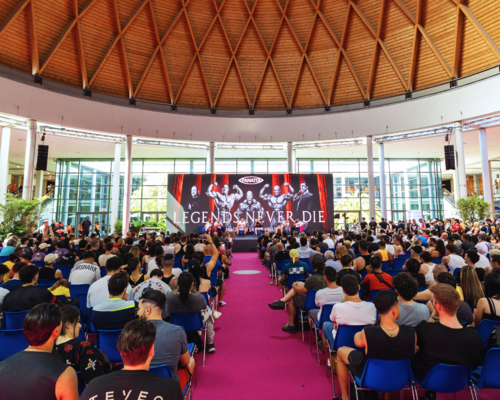
Panatta brought together four of the most influential figures in bodybuilding history on the
stage of RiminiWellness 2026: Phil Heath, Lee Haney, Ronnie Coleman and Hany Rambod. [more...]
Now in its eighth year, Myzone has established itself
as a key player in the fitness industry.
We chat to Myzone's global marketing director,
Gemma Bonnett-Kolakowska, about how the
brand continues to develop and evolve
What stage is Myzone at now? Myzone is growing up and maturing! Marketing has been the biggest recent focus for us, and we have done a great deal of work in-house to take the business to the next level, which will see further expansion and increased engagement with consumers. Although Myzone is Dave Wright’s baby and he is as involved as he's ever been, he has now appointed a senior management team to help move the company forward.
The growth of the business has been phenomenal and we're growing significantly year on year. We’re now in 64 countries, translated into 19 languages and in 7,000 clubs globally. We've sold more than one million belts, excluding those sold directly to consumers. In 2018, 29 million workouts were completed and 4.5 billion MEPs were recorded.
How have you succeeded in getting such a broad global spread? We have dramatically ramped up the marketing and we've developed great partnerships with distributors in other regions. EMEA is a big current focus for us, and former ukactive CEO Dave Stalker has been appointed to drive growth in this region. Asia Pacific is another area in which we are focusing our efforts – both regions have massive growth potential.
You were brought on board two years ago to reset the marketing strategy. What's your background? I'd known Dave Wright for almost 20 years before I joined the company and I had a lot of operational experience. I started off working in corporate fitness in London, before joining Next Generation and then nine years with local authority clubs, before moving into consultancy with Leisure-net Solutions. Prior to Dave approaching me to join Myzone, I had been with Matrix, first helping them to reposition the brand in the UK and then as director of strategic marketing for EMEA.
What was your first task at Myzone? I wanted to find out how the brand’s messaging and imagery was perceived by the industry and whether Dave’s vision – of motivation, gamification and making people feel good about exercise – had been embedded in the culture of the company and understood by the industry.
I found that sometimes the message was inconsistent and there was a bit of disconnect. Myzone was known more for the product than the brand, and we wanted to make the brand – its message and personality – crystal clear.
Firstly, we reset the marketing pillars to ensure the message, purpose and personality were aligned, then we redesigned the logo, sharpening up the font and the pantones. We changed the case from upper to lower – people know Myzone, so we don’t need to shout anymore. Then we overhauled the image and video library, creating a massive resource for both operators, trainers and end users, so they all fully understand the potential of Myzone and how it can work for them, as well as how they can create their own content from templates.
Further to this, we redesigned the website and reset our inbound digital and marketing strategies, creating additional roles. We now have someone focused on social media, as well as for lead capture.
Going forward, our next area of work will be to extend our app so that we can improve communication with the end user. We are looking to educate and engage directly with them, because if we can motivate them this will make them continue to exercise and therefore keep them a member of their health club.
Further to this, we will also be fine tuning our digital and social media marketing platforms. All of the foundations are now in place, the next stage is to build on them for further growth, and we've agreed milestones and targets of where we want to be.
We've gone from a start-up to an established company which has been strategised in a thoughtful, pro-active way and we have very clear milestones in mind, and avenues of how to get there.
What's next for Myzone? We want as many people using it as possible, both in and outside of clubs and to keep engaging and motivating more people. We’re well placed to do this; wearables are still the ACSM’s number one trend and heart rate monitors are the fastest growing technological device. There are so many opportunities to engage more people – in the workplace and schools – and break down the barriers to exercising at clubs.
Do you have any insights on how operators can achieve greater penetration? I think many operators are very focused on membership sales figures. They need to refine their purpose and consider what they want people to feel when they enter the club, with a focus on quality, experience and differentiation of the offering. The fitness market is changing and operators need to operate as a business, looking at all business aspects, not just membership figures.
According to research which tracked more than 147,000 people for 30 years, 90-120 minutes
of strength training a week may deliver some of the biggest long-term health rewards.
The UK's four Chief Medical Officers have published a refreshed edition of Physical activity
guidelines: UK Chief Medical Officers' report, updating the evidence that underpins the nation's
physical activity recommendations and placing greater emphasis on strength, balance, reducing
sedentary behaviour and, for the first time, supporting people taking weight loss medications.
Places Leisure has exchanged contracts to build and operate a flagship £60m water and leisure
destination on behalf of Basingstoke and Deane Borough Council.
The Republic of Ireland will become the latest market in PureGym’s expanding international
portfolio, with the first launch planned for Dublin in 2027.
Anytime Fitness opened more than one club a day in 2025 and is on track to maintain this rate
of growth this year, as parent company Purpose Brands targets further international expansion.
The £33.9 million Leighton Leisure and Community Centre has opened in Leighton Buzzard, UK,
creating a next-generation public leisure, health and wellbeing hub for the local community.
Walnuts Leisure Centre in Orpington, in the London Borough of Bromley, has reopened following
a £17m transformation designed to secure the long-term future of the public leisure asset and
reposition it as a community wellbeing hub.
The Gym Group, has announced that it's sustained positive trading momentum has continued
through the first half of 2026 and the company remains confident about the outlook.
Panatta brought together four of the most influential figures in bodybuilding history on the
stage of RiminiWellness 2026: Phil Heath, Lee Haney, Ronnie Coleman and Hany Rambod. [more...]