We catch up with Phil Horton, country director for miha bodytec in the UK to talk about the growth of EMS training and to find out what’s next for the UK market
Why is Germany so far ahead of the UK and other European markets when it comes to the development of EMS training? With miha bodytec’s roots in Germany, it’s not surprising that EMS is an enormously popular training method there.
In fact, there are more than 250 EMS studios in Munich alone.
Our data shows that at the end of 2017, Germany had 1,064 EMS studios, amounting to 11.8 per cent of all German fitness facilities and growing.
When applied on a European scale, the potential is huge. This data translates into a potential for about 7,000 studios.
The market in the UK is really just beginning. If you look at historical growth in Germany, you can clearly see that the UK EMS market is following a similar trajectory. Up until the last 12 months, the core market for EMS in the UK has been mobile PTs, however, it’s now expanding to boutiques and studios across the country. This is the exact same trend that occurred in Germany as the market there developed.
While the idea of working out in a specialised suit covered in electrodes is still a new concept for many Brits, awareness is steadily increasing. Every major player in the UK is planning to expand in 2019 and we're starting to see international players enter the market. It’s an exciting time!
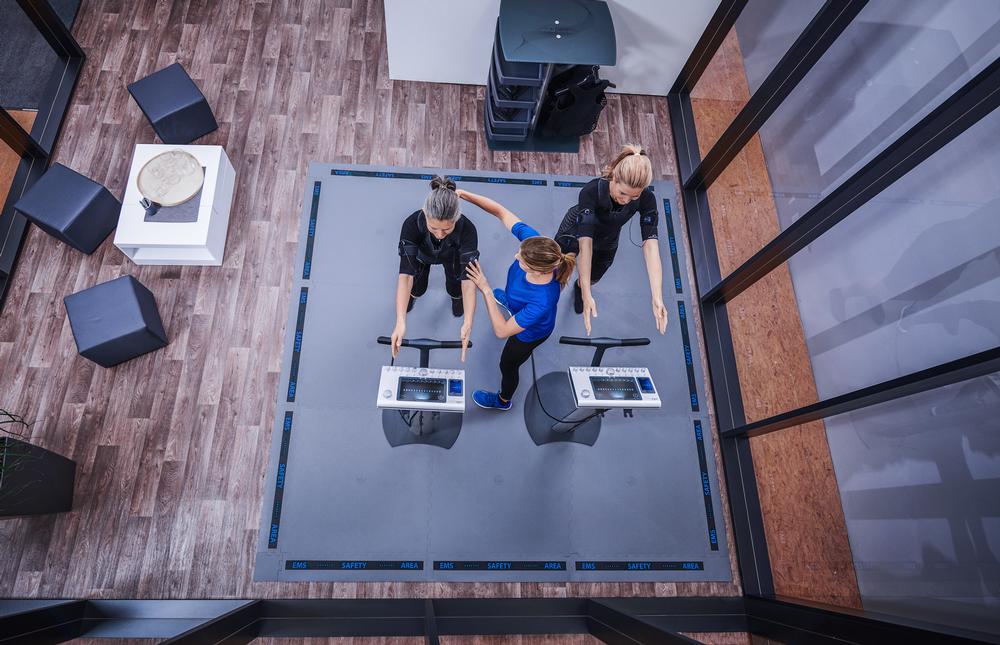
Why should the fitness industry pay attention to EMS training? EMS training is a great opportunity to differentiate your offering in a crowded fitness market. The kit requires very little space and the low start-up costs make it an appealing offer for many PTs and operators. The business model can also be extremely lucrative. High performing EMS studios operate with just 100 people per machine, which is a very achievable target, compared to the 500+ members that most studios require to be profitable.
The retention rate is also remarkably high – more than 85 per cent. Backed by years of scientific research, coupled with irrefutable results, clients are quick to hand over their money when they see the results of this specialised form of training. And with sessions lasting just 20 minutes, you can facilitate more clients per hour, increasing your earnings dramatically.
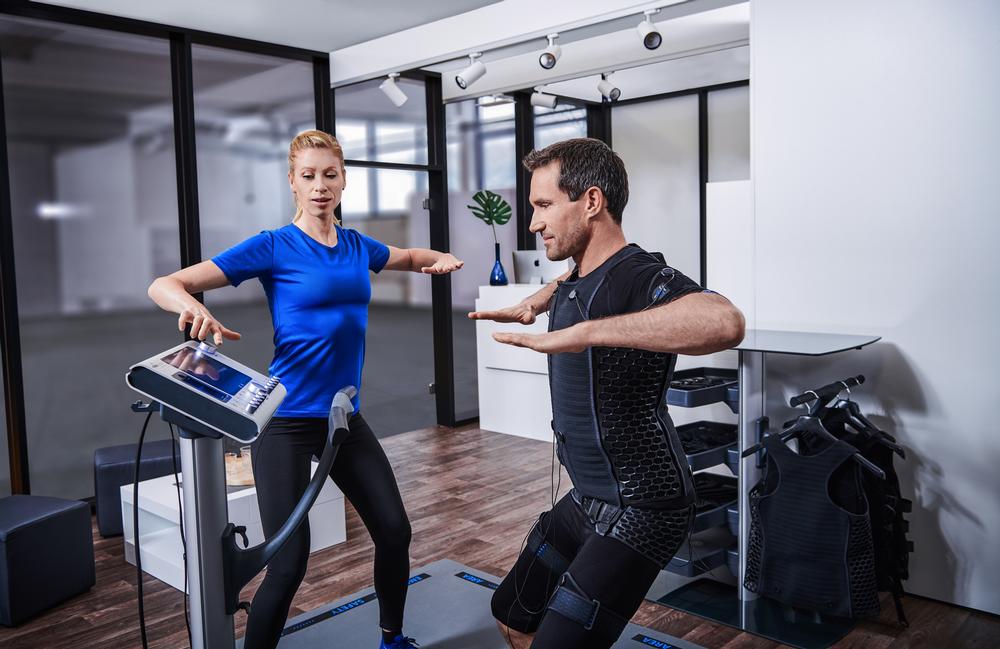
What sort of clients does EMS suit? EMS can work for a huge variety of people. It works beautifully for people who don’t like the typical gym environment. Sessions are always one-on-one or one-on-two, so the personal training aspect is appealing to people who find the gym floor or group exercise studio intimidating. Similarly, it’s a great form of exercise for unconditioned or sedentary people. It’s low-impact and low-commitment. One 20-minute session once per week is all that’s required for people to see results. For that reason, it’s also a great option for busy professionals who can’t make time for the gym. On the flip-side, EMS can also be a great tool for recreational or elite athletes looking to gain an extra edge in their training. This is why many professional athletes have used EMS training to bring them into top form. Whether the sport of choice is tennis, triathlon, running or football, EMS training can be effective for any type of athlete.
It can also be effective for an older clientele. Despite the well-established benefits of physical activity for older adults, seniors age 75-plus are among the most sedentary of Brits. Most older adults won’t participate in traditional forms of fitness for several reasons: physical limitations, the intimidating atmosphere, the noise levels and the lack of affordable supervision.
EMS training removes all these barriers, providing an efficient alternative to increase or maintain muscle mass and function. This low-impact workout is accessible, completely safe and it's also scientifically proven to reduce sarcopenia.
Is EMS as effective as it sounds? Yes, EMS is scientifically proven and backed by numerous studies that prove that this type of training effectively targets fast twitch muscle fibres, increasing hypertrophy. Results show improvements in speed performance by 30 per cent over a 3-6 week period for elite athletes, as well as advances in maximal strength and jumping power. Elite athletes like Usain Bolt have been known to use EMS as a safe, effective way to increase performance across strength, speed and endurance.
However, EMS isn’t limited to the elite. A recreational runner training with EMS posted improvements in her 5km and 10km time of 45 and 90 seconds respectively in just 6 weeks. When EMS is combined with sport-specific training, like running, athletes benefit from the cumulative effects and generate faster neuromuscular adaptations.
EMS is a well-researched and established technology. Specially structured sessions are always led by a certified trainer to ensure a safe and effective workout.
All miha bodytec devices comply with the requirements of German standard DIN EN 6-601-1-10, the industry benchmark for medical electrical systems.
What’s next for EMS? We’re at the beginning of the journey with EMS training in the UK. The benefits and applications of this type of training are vast, and there’s an enormous commercial opportunity for both PTs and operators to develop business in this area.
Take Bodystreet, for example. The two latest EMS studios in Coventry and Edinburgh join Bodystreet’s growing UK operation of six franchises, including locations in Worthing, Milton Keynes, Gibraltar, North London, Sutton Coldfield and Bristol. The Edinburgh location, which opened in April, is the only studio in Scotland.
The potential market for this sort of training is vast. As evidenced by the growth of EMS in Germany, the proven model provides fast ROI, which in turn, provides the opportunity for rapid expansion. We’re seeing diverse applications of EMS emerging in the UK – from mobile PTs to shop-in-shop models. With new players like EMS Bodypower coming on board every month, the rise of EMS is really just beginning.
EMS has been around for centuries. The earliest known use was by the Egyptians 2,000 years ago. They discovered the electrical properties of fish and used it to treat ailments.
It wasn’t until the 1970s that EMS was used in physiotherapy, fitness and muscle strengthening and since then, the industry has evolved
dramatically.
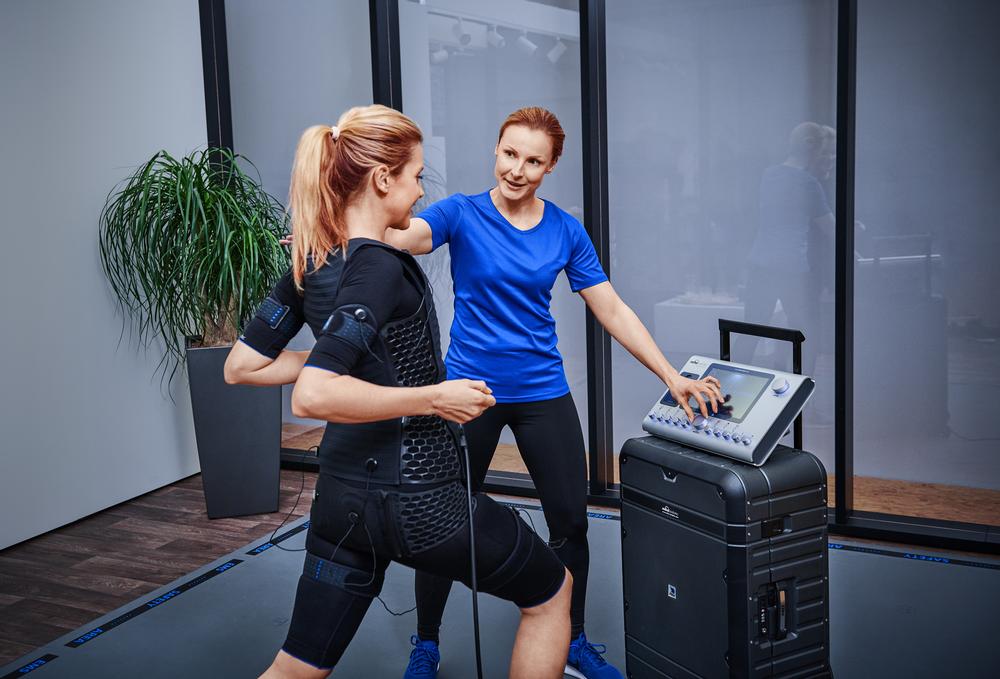
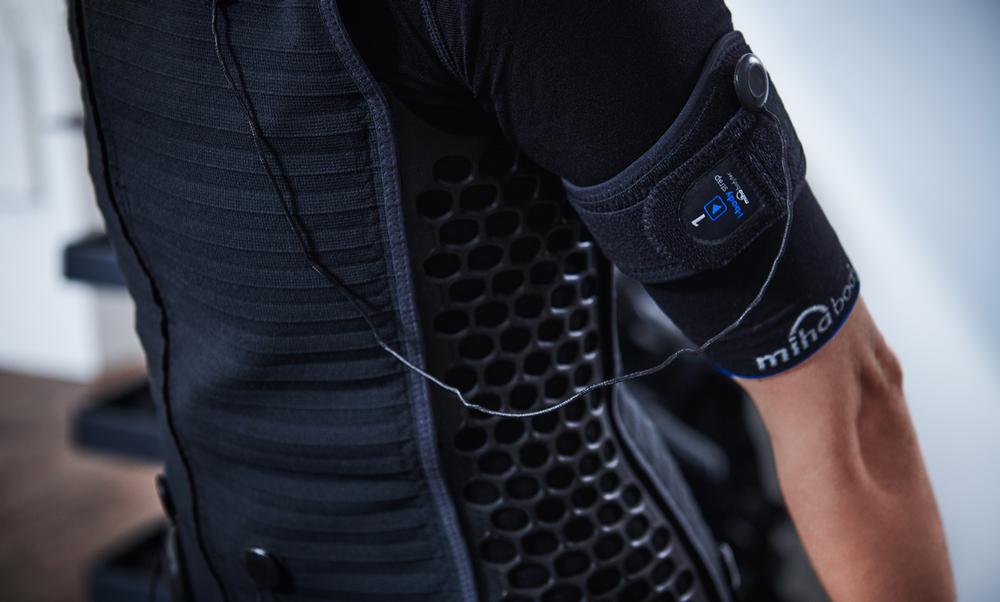
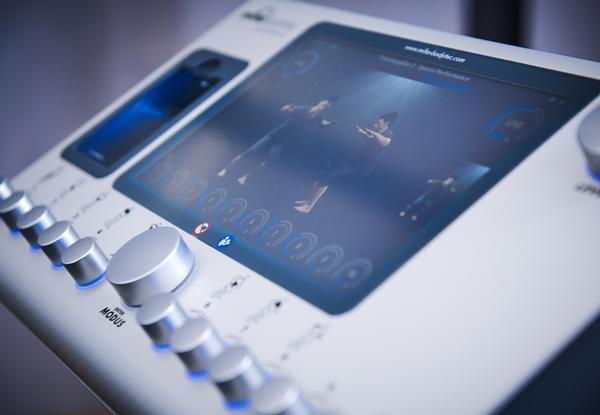
Today, modern EMS training equipment uses electrical impulses to stimulate muscles, causing them to contract harder for longer. miha says the result is a safe, ultra-efficient 20-minute workout that delivers quick, noticeable results in a fraction of the time.
“Modern EMS training equipment uses electrical impulses to stimulate muscles, causing them
to contract harder for longer. The result is a safe, ultra-efficient 20-minute workout”
miha bodytec is leading the way with unrivalled technology that's growing rapidly across Europe. The name miha originated from Maschinen GmbH, a company which has developed and manufactured innovative products for the sports and medical industry for over 40 years. miha bodytec first launched in 2007 and has remained the world market and technology leader in EMS training ever since.
Panatta brought together four of the most influential figures in bodybuilding history on the
stage of RiminiWellness 2026: Phil Heath, Lee Haney, Ronnie Coleman and Hany Rambod. [more...]
+ More featured suppliers
COMPANY PROFILES
IndigoFitness
At IndigoFitness, we create intelligent training spaces that elevate fitness facilities across indus [more...]
Orbit4
With Orbit4, you’ll always have full visibility
of your equipment inventory, the true
market value [more...]
We catch up with Phil Horton, country director for miha bodytec in the UK to talk about the growth of EMS training and to find out what’s next for the UK market
Why is Germany so far ahead of the UK and other European markets when it comes to the development of EMS training? With miha bodytec’s roots in Germany, it’s not surprising that EMS is an enormously popular training method there.
In fact, there are more than 250 EMS studios in Munich alone.
Our data shows that at the end of 2017, Germany had 1,064 EMS studios, amounting to 11.8 per cent of all German fitness facilities and growing.
When applied on a European scale, the potential is huge. This data translates into a potential for about 7,000 studios.
The market in the UK is really just beginning. If you look at historical growth in Germany, you can clearly see that the UK EMS market is following a similar trajectory. Up until the last 12 months, the core market for EMS in the UK has been mobile PTs, however, it’s now expanding to boutiques and studios across the country. This is the exact same trend that occurred in Germany as the market there developed.
While the idea of working out in a specialised suit covered in electrodes is still a new concept for many Brits, awareness is steadily increasing. Every major player in the UK is planning to expand in 2019 and we're starting to see international players enter the market. It’s an exciting time!
Why should the fitness industry pay attention to EMS training? EMS training is a great opportunity to differentiate your offering in a crowded fitness market. The kit requires very little space and the low start-up costs make it an appealing offer for many PTs and operators. The business model can also be extremely lucrative. High performing EMS studios operate with just 100 people per machine, which is a very achievable target, compared to the 500+ members that most studios require to be profitable.
The retention rate is also remarkably high – more than 85 per cent. Backed by years of scientific research, coupled with irrefutable results, clients are quick to hand over their money when they see the results of this specialised form of training. And with sessions lasting just 20 minutes, you can facilitate more clients per hour, increasing your earnings dramatically.
What sort of clients does EMS suit? EMS can work for a huge variety of people. It works beautifully for people who don’t like the typical gym environment. Sessions are always one-on-one or one-on-two, so the personal training aspect is appealing to people who find the gym floor or group exercise studio intimidating. Similarly, it’s a great form of exercise for unconditioned or sedentary people. It’s low-impact and low-commitment. One 20-minute session once per week is all that’s required for people to see results. For that reason, it’s also a great option for busy professionals who can’t make time for the gym. On the flip-side, EMS can also be a great tool for recreational or elite athletes looking to gain an extra edge in their training. This is why many professional athletes have used EMS training to bring them into top form. Whether the sport of choice is tennis, triathlon, running or football, EMS training can be effective for any type of athlete.
It can also be effective for an older clientele. Despite the well-established benefits of physical activity for older adults, seniors age 75-plus are among the most sedentary of Brits. Most older adults won’t participate in traditional forms of fitness for several reasons: physical limitations, the intimidating atmosphere, the noise levels and the lack of affordable supervision.
EMS training removes all these barriers, providing an efficient alternative to increase or maintain muscle mass and function. This low-impact workout is accessible, completely safe and it's also scientifically proven to reduce sarcopenia.
Is EMS as effective as it sounds? Yes, EMS is scientifically proven and backed by numerous studies that prove that this type of training effectively targets fast twitch muscle fibres, increasing hypertrophy. Results show improvements in speed performance by 30 per cent over a 3-6 week period for elite athletes, as well as advances in maximal strength and jumping power. Elite athletes like Usain Bolt have been known to use EMS as a safe, effective way to increase performance across strength, speed and endurance.
However, EMS isn’t limited to the elite. A recreational runner training with EMS posted improvements in her 5km and 10km time of 45 and 90 seconds respectively in just 6 weeks. When EMS is combined with sport-specific training, like running, athletes benefit from the cumulative effects and generate faster neuromuscular adaptations.
EMS is a well-researched and established technology. Specially structured sessions are always led by a certified trainer to ensure a safe and effective workout.
All miha bodytec devices comply with the requirements of German standard DIN EN 6-601-1-10, the industry benchmark for medical electrical systems.
What’s next for EMS? We’re at the beginning of the journey with EMS training in the UK. The benefits and applications of this type of training are vast, and there’s an enormous commercial opportunity for both PTs and operators to develop business in this area.
Take Bodystreet, for example. The two latest EMS studios in Coventry and Edinburgh join Bodystreet’s growing UK operation of six franchises, including locations in Worthing, Milton Keynes, Gibraltar, North London, Sutton Coldfield and Bristol. The Edinburgh location, which opened in April, is the only studio in Scotland.
The potential market for this sort of training is vast. As evidenced by the growth of EMS in Germany, the proven model provides fast ROI, which in turn, provides the opportunity for rapid expansion. We’re seeing diverse applications of EMS emerging in the UK – from mobile PTs to shop-in-shop models. With new players like EMS Bodypower coming on board every month, the rise of EMS is really just beginning.
EMS has been around for centuries. The earliest known use was by the Egyptians 2,000 years ago. They discovered the electrical properties of fish and used it to treat ailments.
It wasn’t until the 1970s that EMS was used in physiotherapy, fitness and muscle strengthening and since then, the industry has evolved
dramatically.
Today, modern EMS training equipment uses electrical impulses to stimulate muscles, causing them to contract harder for longer. miha says the result is a safe, ultra-efficient 20-minute workout that delivers quick, noticeable results in a fraction of the time.
“Modern EMS training equipment uses electrical impulses to stimulate muscles, causing them
to contract harder for longer. The result is a safe, ultra-efficient 20-minute workout”
miha bodytec is leading the way with unrivalled technology that's growing rapidly across Europe. The name miha originated from Maschinen GmbH, a company which has developed and manufactured innovative products for the sports and medical industry for over 40 years. miha bodytec first launched in 2007 and has remained the world market and technology leader in EMS training ever since.
According to research which tracked more than 147,000 people for 30 years, 90-120 minutes
of strength training a week may deliver some of the biggest long-term health rewards.
The UK's four Chief Medical Officers have published a refreshed edition of Physical activity
guidelines: UK Chief Medical Officers' report, updating the evidence that underpins the nation's
physical activity recommendations and placing greater emphasis on strength, balance, reducing
sedentary behaviour and, for the first time, supporting people taking weight loss medications.
Places Leisure has exchanged contracts to build and operate a flagship £60m water and leisure
destination on behalf of Basingstoke and Deane Borough Council.
The Republic of Ireland will become the latest market in PureGym’s expanding international
portfolio, with the first launch planned for Dublin in 2027.
Anytime Fitness opened more than one club a day in 2025 and is on track to maintain this rate
of growth this year, as parent company Purpose Brands targets further international expansion.
The £33.9 million Leighton Leisure and Community Centre has opened in Leighton Buzzard, UK,
creating a next-generation public leisure, health and wellbeing hub for the local community.
Walnuts Leisure Centre in Orpington, in the London Borough of Bromley, has reopened following
a £17m transformation designed to secure the long-term future of the public leisure asset and
reposition it as a community wellbeing hub.
The Gym Group, has announced that it's sustained positive trading momentum has continued
through the first half of 2026 and the company remains confident about the outlook.
Panatta brought together four of the most influential figures in bodybuilding history on the
stage of RiminiWellness 2026: Phil Heath, Lee Haney, Ronnie Coleman and Hany Rambod. [more...]
+ More featured suppliers
COMPANY PROFILES
IndigoFitness At IndigoFitness, we create intelligent training spaces that elevate fitness facilities across indus [more...]