Get HCM digital magazine and ezines FREE
Sign up here ▸
Jobs   News   Features   Products   Magazine      Advertise  
NEWS
GWI estimates value of wellness real estate at US$134bn in landmark report
POSTED 25 Jan 2018 . BY Jane Kitchen
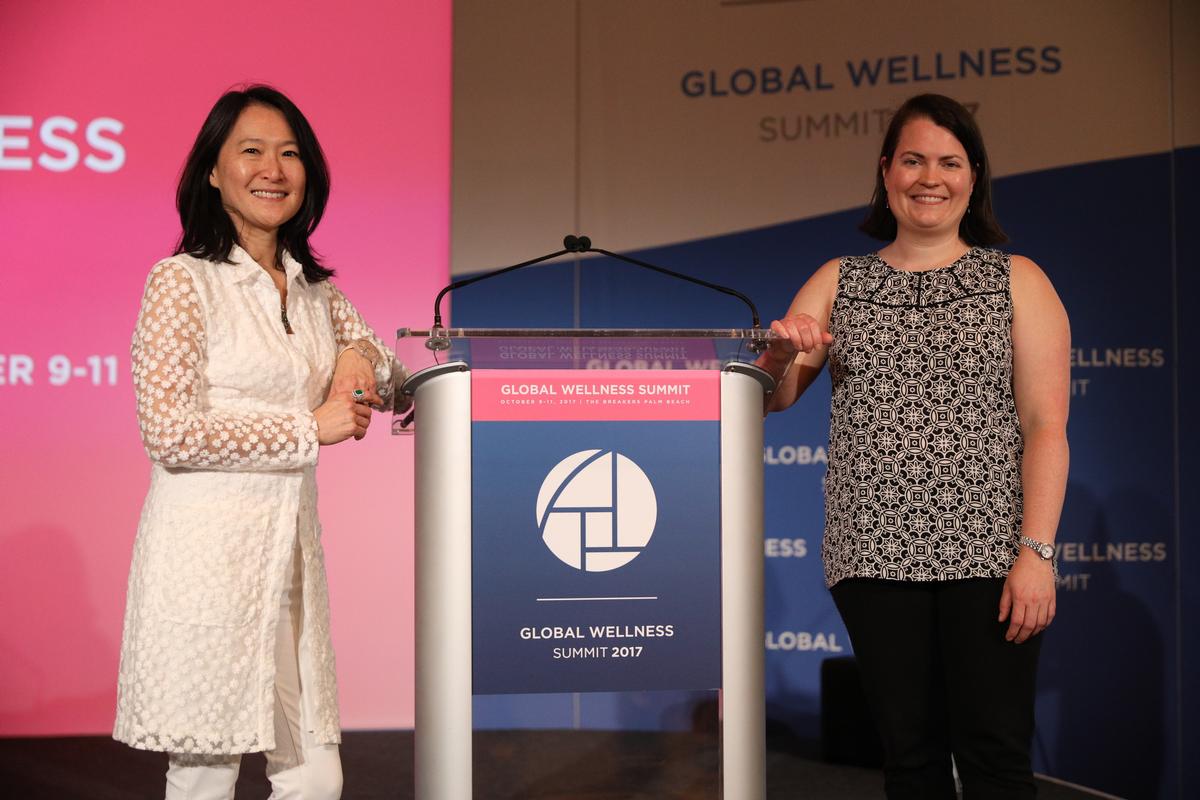
Ophelia Yeung (left) and Katherine Johnston were the senior researchers on the project Credit: Global Wellness Institute
The Global Wellness Institute has released its first report on wellness real estate and communities, Build Well to Live Well.

The organisation estimates that the global wellness real estate market was worth US$134bn (€108bn, £94bn) in 2017, and projects it will grow six per cent a year, to US$180bn (€145bn, £126bn), by 2022.

The US is the largest market, worth US$52.5bn (€42bn, £37bn), followed by China, Australia and the UK, and the GWI estimates that there are 740 projects worldwide in the pipeline that meet the criteria for wellness real estate.

The 150-plus page report defines wellness real estate and communities as facilities that "intentionally put people’s health at the centre of design, creation and redevelopment".

The GWI says consumer demand for healthy homes is outstripping supply: in the US, for example, there are 1.3 million potential buyers each year but with a pipeline of 355 projects.

“Collectively, we must shake-up our thinking: healthy homes are as important as immunisations; parks, paths, and plants are as beneficial as prescriptions; friends and neighbours are far more important than Fitbits,” said Katherine Johnston, GWI senior research fellow.

“All the industries that create our home environments – real estate investors, urban planners/designers, architects, transportation planners, the construction industry – play a massive role in human health.

"And they need to partner to meet the desperate need – and fast-rising demand – for healthier homes and communities.”

The report found that wellness real estate has grown 6.4 per cent annually since 2015, and represents 1.5 per cent of the annual global construction market, and half the size of the global green building industry (US$260bn). The US, along with a few key Asian countries (China, Australia, India) and Europe (UK, Germany), account for three-quarters of the market.

In five years, the pipeline for wellness lifestyle real estate and communities has gone from a handful of projects to over 740 built, partially built, or in development, across 34 countries today.

Among more than 740 projects, GWI estimates that there are over 1.5 million units or homes either already built, or planned to be built out, over the next two decades. They account for more than 560,000 acres of land and will house more than 4.1 million people.

The GWI posits that emerging wellness living concepts will drive future development.

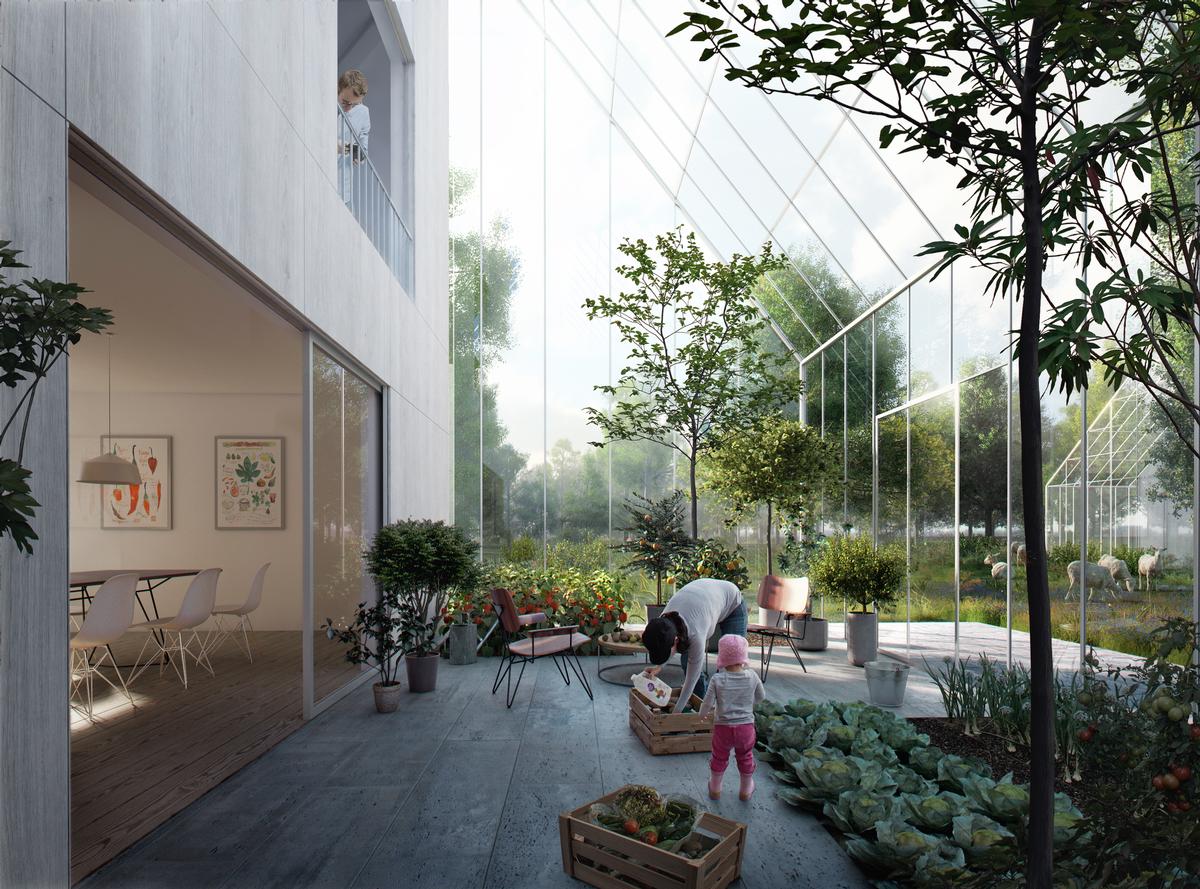
These include: a trend towards the strategic integration of homes, co-working facilities and wellness programming; a move by developers to collaborate with governments to bring wellness-infused homes to lower-income populations; a renewed interest in multigenerational and diverse neighbourhoods; a concentration of hospitals and health services for consumers mixed with wellness-focused neighbourhoods; a move from green to regenerative living, where communities produce their own food and renewable energy; a leveraging of technologies to create smart-healthy homes and cities; and a rediscovering of hot springs as a wellness living anchor.

“Our existing built environment has a massive and increasingly negative impact on our physical and mental health,” said Ophelia Yeung, GWI senior researcher.

“We'll never address skyrocketing chronic disease and health costs without dramatically transforming where and how we live.

"We’ve got to shift investment into the places that give us the most outsized health returns: our homes and communities.”

To read more about the Build Well to Live Well report, see Spa Business Q1 2018.

Top 10 Countries for Wellness Real Estate – Market Size
Country Market Size (US$ millions)
US US$52.5bn
China US$19.9bn
Australia US$9.5bn
UK US$9bn
Germany US$6.4bn
India US$6bn
France US$5.8bn
South Korea US$4.2bn
Canada US$2.4bn
Japan US$2.2bn

Top Ten Countries - Projects in Pipeline
US 355
Australia 189
UK 42
China 39
India 17
Canada 17
Malaysia 12
Singapore 9
Vietnam 6
Indonesia 6
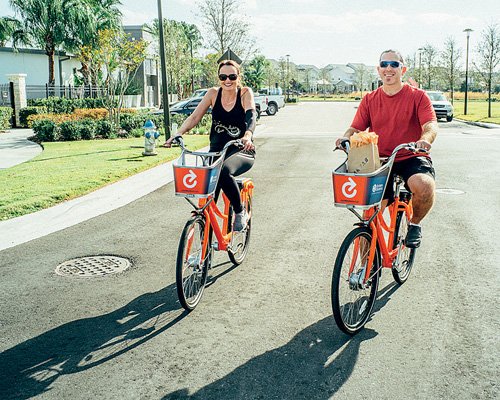
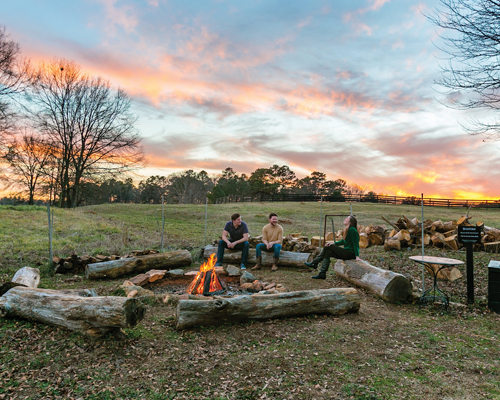
Communities with walking trails and a connection to nature are becoming increasingly popular Credit: Serenbe
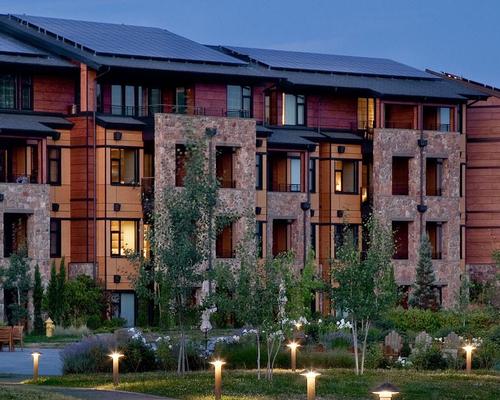
The GWI posits that a move a move from green to regenerative living, where communities produce their own food and renewable energy, will help drive growth in the segment Credit: Regen/EFFEKT ARCHITECTS
RELATED STORIES
  FEATURE: Wellness: Living well


The US wellness communities providing a new model for living
  FEATURE: Wellness Communities: Living Well


Jane Kitchen looks at the growing business of wellness communities research round-up
  Delos forms alliance with engineers Glumac to boost integration of wellness and design


Wellness real estate and technology firm Delos has announced the latest in a long line of strategic alliances as it continues its bid to expand the global reach of the WELL Building Standard in the architecture and design sector.
  Delos expanding healthy building with partnerships for cruise ships, airport lounges


Wellness real estate firm Delos is expanding its Stay Well programme with a new Stay Well at Sea cruise ship programme as well as an extension of its partnership with MGM Hotels in Las Vegas.
MORE NEWS
Les Mills calls on the industry to support UNICEF
Global group exercise specialist, Les Mills, is inviting operators to sign up to its Workout for the World event on 20 June, in support of UNICEF.
HUM2N opens longevity clinic at Six Senses London
Global luxury hospitality brand, Six Senses, has partnered with longevity healthcare provider, HUM2N, to launch a clinic at Six Senses London, at The Whiteley.
KX Chelsea invests £15 million to upgrade its wellness offering
Premium London health club, KX Chelsea, will imminently unveil its most significant redevelopment since its launch in 2002 to create an integrated wellness model combining training, recovery and relaxation.
Researchers identify a drug which reduces muscle loss when using GLP-1 medications
Researchers in the US have identified an antibody which could greatly reduce the loss of lean muscle mass in people who are taking weight-loss medications.
+ More news   
LATEST JOBS
GP Exercise Referral Instructor
Everyone Active
Salary: £33,000pa + benefits
Job location: Harrow, Middlesex , United Kingdom
Self Employed Personal Trainer
Everyone Active
Salary: Competitive
Job location: Enderby
+ More jobs  

FEATURED SUPPLIERS

Supporting long-term health: why whole body vibration belongs in clinical settings
As healthcare continues to shift towards prevention, there’s a growing focus on helping people stay active, independent and feeling good for longer. [more...]

CoverMe extends matching service to personal training, rewriting how members and personal trainers connect
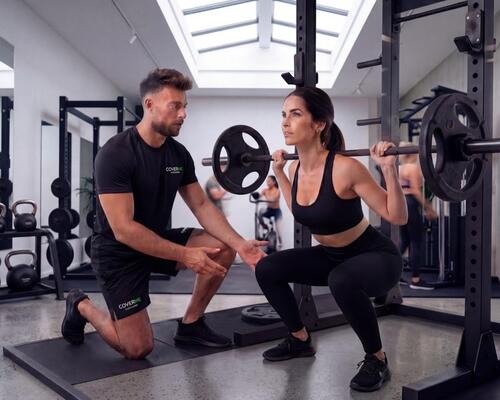
CoverMe, the global leader in fitness workforce management, today launches CoverMe PT, an on-demand personal training platform that connects the right personal trainer to the right client in under 10 seconds. [more...]
+ More featured suppliers  
COMPANY PROFILES
Orbit4

With Orbit4, you’ll always have full visibility of your equipment inventory, the true market value [more...]
Alliance Leisure

Alliance Leisure Services was specifically established to respond to the changing development need [more...]
+ More profiles  
CATALOGUE GALLERY
 
+ More catalogues  

DIRECTORY
+ More directory  
DIARY


15-18 Jun 2026

HLTH Europe

RAI Convention Centre, Amsterdam, Netherlands
17-18 Jun 2026

Elevate London

Excel London, London, United Kingdom
+ More diary  
 
ABOUT LEISURE MEDIA
LEISURE MEDIA MAGAZINES
LEISURE MEDIA HANDBOOKS
LEISURE MEDIA WEBSITES
LEISURE MEDIA PRODUCT SEARCH
 
HCM
LEISURE OPPORTUNITIES
HEALTH CLUB HANDBOOK
PRINT SUBSCRIPTIONS
FREE DIGITAL SUBSCRIPTIONS
ADVERTISE . CONTACT US

Leisure Media
Tel: +44 (0)1462 431385

©Cybertrek 2026
Get HCM digital magazine and ezines FREE
Sign up here ▸
Jobs    News   Products   Magazine
NEWS
GWI estimates value of wellness real estate at US$134bn in landmark report
POSTED 25 Jan 2018 . BY Jane Kitchen
Ophelia Yeung (left) and Katherine Johnston were the senior researchers on the project Credit: Global Wellness Institute
The Global Wellness Institute has released its first report on wellness real estate and communities, Build Well to Live Well.

The organisation estimates that the global wellness real estate market was worth US$134bn (€108bn, £94bn) in 2017, and projects it will grow six per cent a year, to US$180bn (€145bn, £126bn), by 2022.

The US is the largest market, worth US$52.5bn (€42bn, £37bn), followed by China, Australia and the UK, and the GWI estimates that there are 740 projects worldwide in the pipeline that meet the criteria for wellness real estate.

The 150-plus page report defines wellness real estate and communities as facilities that "intentionally put people’s health at the centre of design, creation and redevelopment".

The GWI says consumer demand for healthy homes is outstripping supply: in the US, for example, there are 1.3 million potential buyers each year but with a pipeline of 355 projects.

“Collectively, we must shake-up our thinking: healthy homes are as important as immunisations; parks, paths, and plants are as beneficial as prescriptions; friends and neighbours are far more important than Fitbits,” said Katherine Johnston, GWI senior research fellow.

“All the industries that create our home environments – real estate investors, urban planners/designers, architects, transportation planners, the construction industry – play a massive role in human health.

"And they need to partner to meet the desperate need – and fast-rising demand – for healthier homes and communities.”

The report found that wellness real estate has grown 6.4 per cent annually since 2015, and represents 1.5 per cent of the annual global construction market, and half the size of the global green building industry (US$260bn). The US, along with a few key Asian countries (China, Australia, India) and Europe (UK, Germany), account for three-quarters of the market.

In five years, the pipeline for wellness lifestyle real estate and communities has gone from a handful of projects to over 740 built, partially built, or in development, across 34 countries today.

Among more than 740 projects, GWI estimates that there are over 1.5 million units or homes either already built, or planned to be built out, over the next two decades. They account for more than 560,000 acres of land and will house more than 4.1 million people.

The GWI posits that emerging wellness living concepts will drive future development.

These include: a trend towards the strategic integration of homes, co-working facilities and wellness programming; a move by developers to collaborate with governments to bring wellness-infused homes to lower-income populations; a renewed interest in multigenerational and diverse neighbourhoods; a concentration of hospitals and health services for consumers mixed with wellness-focused neighbourhoods; a move from green to regenerative living, where communities produce their own food and renewable energy; a leveraging of technologies to create smart-healthy homes and cities; and a rediscovering of hot springs as a wellness living anchor.

“Our existing built environment has a massive and increasingly negative impact on our physical and mental health,” said Ophelia Yeung, GWI senior researcher.

“We'll never address skyrocketing chronic disease and health costs without dramatically transforming where and how we live.

"We’ve got to shift investment into the places that give us the most outsized health returns: our homes and communities.”

To read more about the Build Well to Live Well report, see Spa Business Q1 2018.

Top 10 Countries for Wellness Real Estate – Market Size
Country Market Size (US$ millions)
US US$52.5bn
China US$19.9bn
Australia US$9.5bn
UK US$9bn
Germany US$6.4bn
India US$6bn
France US$5.8bn
South Korea US$4.2bn
Canada US$2.4bn
Japan US$2.2bn

Top Ten Countries - Projects in Pipeline
US 355
Australia 189
UK 42
China 39
India 17
Canada 17
Malaysia 12
Singapore 9
Vietnam 6
Indonesia 6
Communities with walking trails and a connection to nature are becoming increasingly popular Credit: Serenbe
The GWI posits that a move a move from green to regenerative living, where communities produce their own food and renewable energy, will help drive growth in the segment Credit: Regen/EFFEKT ARCHITECTS
RELATED STORIES
FEATURE: Wellness: Living well


The US wellness communities providing a new model for living
FEATURE: Wellness Communities: Living Well


Jane Kitchen looks at the growing business of wellness communities research round-up
Delos forms alliance with engineers Glumac to boost integration of wellness and design


Wellness real estate and technology firm Delos has announced the latest in a long line of strategic alliances as it continues its bid to expand the global reach of the WELL Building Standard in the architecture and design sector.
Delos expanding healthy building with partnerships for cruise ships, airport lounges


Wellness real estate firm Delos is expanding its Stay Well programme with a new Stay Well at Sea cruise ship programme as well as an extension of its partnership with MGM Hotels in Las Vegas.
MORE NEWS
Les Mills calls on the industry to support UNICEF
Global group exercise specialist, Les Mills, is inviting operators to sign up to its Workout for the World event on 20 June, in support of UNICEF.
HUM2N opens longevity clinic at Six Senses London
Global luxury hospitality brand, Six Senses, has partnered with longevity healthcare provider, HUM2N, to launch a clinic at Six Senses London, at The Whiteley.
KX Chelsea invests £15 million to upgrade its wellness offering
Premium London health club, KX Chelsea, will imminently unveil its most significant redevelopment since its launch in 2002 to create an integrated wellness model combining training, recovery and relaxation.
Researchers identify a drug which reduces muscle loss when using GLP-1 medications
Researchers in the US have identified an antibody which could greatly reduce the loss of lean muscle mass in people who are taking weight-loss medications.
Peloton signals potential move into reformer Pilates with Skop acquisition
Peloton has made the strategic acquisition of the Pilates start-up, Skōp, to support the expansion of its strength ecosystem.
Crunch Fitness creates more affordable reformer Pilates concept
Crunch Fitness has announced the launch of Crunch Reform Pilates – its own reformer concept designed to bring this fast growing, but rather expensive, modality into the mainstream.
+ More news   
 
FEATURED SUPPLIERS

Supporting long-term health: why whole body vibration belongs in clinical settings
As healthcare continues to shift towards prevention, there’s a growing focus on helping people stay active, independent and feeling good for longer. [more...]

CoverMe extends matching service to personal training, rewriting how members and personal trainers connect
CoverMe, the global leader in fitness workforce management, today launches CoverMe PT, an on-demand personal training platform that connects the right personal trainer to the right client in under 10 seconds. [more...]
+ More featured suppliers  
COMPANY PROFILES
Orbit4

With Orbit4, you’ll always have full visibility of your equipment inventory, the true market value [more...]
+ More profiles  
CATALOGUE GALLERY
+ More catalogues  

DIRECTORY
+ More directory  
DIARY


15-18 Jun 2026

HLTH Europe

RAI Convention Centre, Amsterdam, Netherlands
17-18 Jun 2026

Elevate London

Excel London, London, United Kingdom
+ More diary  


ADVERTISE . CONTACT US

Leisure Media
Tel: +44 (0)1462 431385

©Cybertrek 2026

ABOUT LEISURE MEDIA
LEISURE MEDIA MAGAZINES
LEISURE MEDIA HANDBOOKS
LEISURE MEDIA WEBSITES
LEISURE MEDIA PRODUCT SEARCH
PRINT SUBSCRIPTIONS
FREE DIGITAL SUBSCRIPTIONS