A Strep A infection saw Alex Lewis’s life hanging in the balance.
Surgeons were able to save his life, but only by amputating
his limbs. Now an extreme athlete, he shares his story with HCM
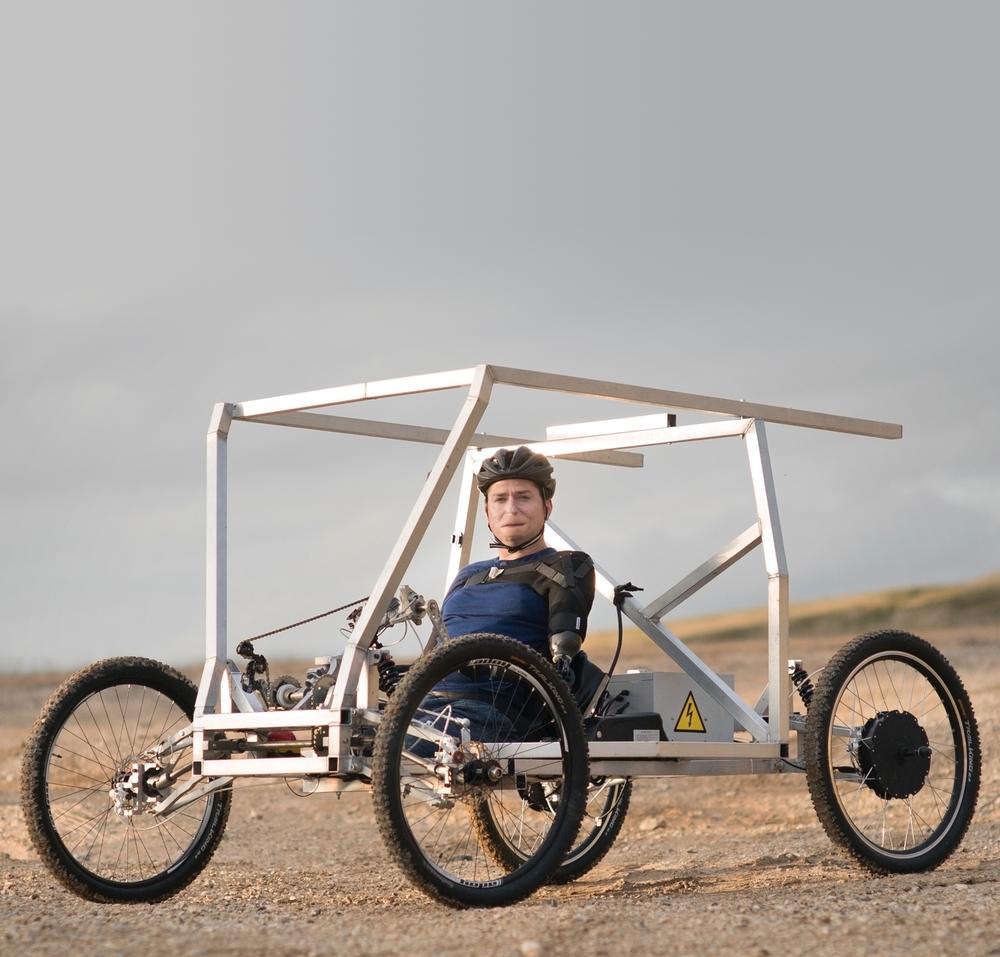
This September, Alex Lewis will drive his moon buggy up the highest mountain in Ethiopia to raise money for a wheelchair factory there
Given just days to live after contracting a rare flesh-eating infection, Alex Lewis’ life was turned upside down in 2013, when he had 120 hours of surgery to amputate all four limbs in order to survive.
Following the surgery, it was clear even the simplest of tasks would be a challenge. Not only that, but Lewis was faced with a lack of prosthetic provision. He set out to address this and improve access to prosthetics by setting up The Alex Lewis Trust Foundation, which raises funds for prosthetics, wheelchair and home adjustments for amputees.
In collaboration with a number of universities and rehab facilities, Lewis now trials new prosthetic equipment, often embarking on physical challenges to test it fully.
This September, he faces his biggest challenge yet – climbing one of Africa's highest mountains, Ras Dashen in Ethiopia, to raise money to open a wheelchair factory in Ethiopia.
He plans to top that in 2020 by travelling over 800 km in 10 days across the Gobi Desert.
These are no mean feats for even the most able athlete and training for these two events requires Lewis to follow a tailored exercise programme that will ensure he’s fit enough to complete the challenges.
Key to his success is Electrical Muscle Stimulation (EMS) training, which was recommended for strength gains, core stability and posture correction.
Dramatic improvements Within a few weeks of training with Tom Corcoran, the owner of Fast Track EMS in Hampshire, UK, Lewis noticed a dramatic improvement in his physical capacity, strength gains and improved posture.
“Since becoming an amputee, I’ve been fortunate enough to try out a number of training methods to keep my fitness up, working with physios and visiting the Help for Heroes training facilities,” he explains. “I’ve had first-rate guidance, but nothing has been as effective as EMS training, especially in such a short space of time. It’s amazing how the machine helps me to engage muscles I haven’t felt since I lost my arms and legs. I feel stronger in training, daily life tasks are easier and I’ve gained greater confidence that I can take on these challenges.”
EMS training works by providing an external stimulus via an EMS machine to help individuals engage muscle fibres they might otherwise struggle to target through normal exercises. When Lewis climbs Ras Dashen, he’ll be using a hand-propelled moon buggy that requires him to use a lot of upper body and core strength to power the wheels with his prosthetic arms, but his traditional training, Pilates and physio programmes didn’t enable him to activate and build the muscle required for this movement.
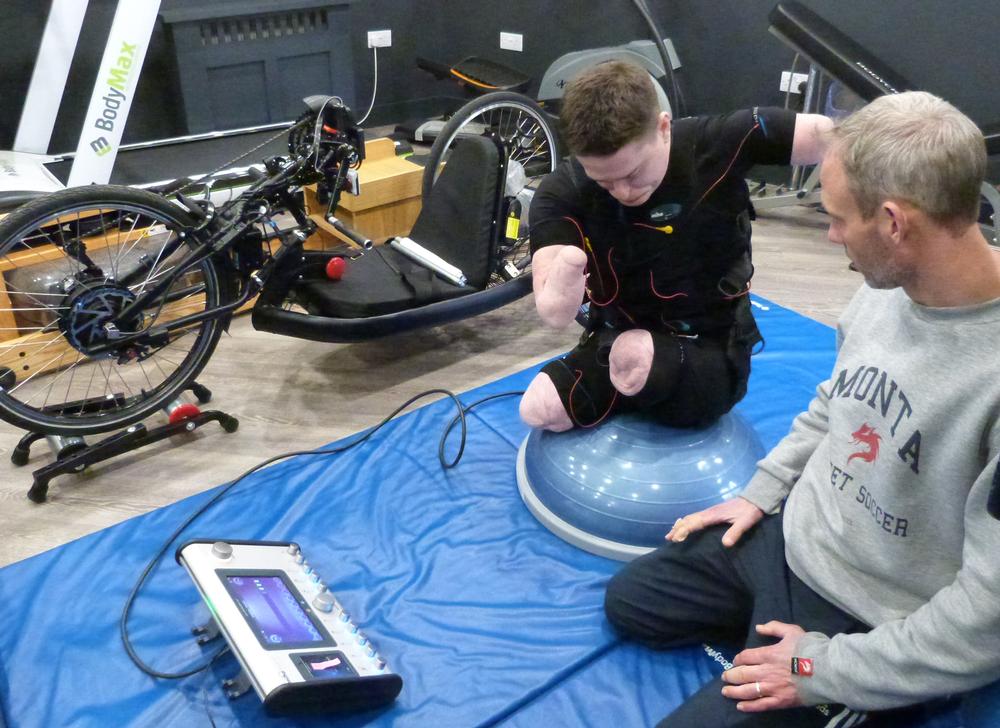
Working alongside Corcoran, he’s been able to target these weaker muscle groups, forcing them to contract harder. Corcoran has programmed the training to focus on strengthening upper and lower back, lats, shoulders and core, using resistance bands and a BOSU ball to keep the workouts varied and challenging.
Confidence gains As a result of Lewis’s condition, his arm and shoulder muscles had collapsed down one side and he’s been working with his physio for years to build up the muscles and level his shoulders again. After his first session, Lewis’s Pilates instructor noticed a positive difference and within a few weeks he was holding a stronger position and regaining postural alignment. Furthermore, he no longer suffers from back pain.
“I wish I’d found EMS when I was in rehab, as I would have become much more independent much faster with its help,” he says. “The kit works different areas of your body at varying levels. It’s a perfectly targeted workout that should be offered to all amputees when they go into rehab to get their muscles working properly.
“I need to keep in strong physical condition for the rest of my life, ensuring my body is able to cope with everyday tasks in order to live with a degree of independence. EMS is helping me to do just that.”
Inspiring results “When Alex told me about his upcoming challenges and the struggle he had to activate and build the muscles required to power the moon buggy, I was confident EMS training could make the difference,” says Corcoron. “The miha bodytec EMS machine is particularly effective for targeting weaker muscle groups, forcing them to contract involuntarily so I knew it was the perfect training solution for Alex.
“He brings a unique set of training challenges to our sessions and it’s been a real learning curve working together,” says Corcoron.
ems – how does it work?
The origins of EMS training lie in rehabilitation. EMS works by helping users to activate their agonist and antagonist muscles at the same time, making it a form of functional training that focuses on working multiple muscle groups.
It allows individuals to reach and strengthen deep seated muscle groups that are usually hard to target, resulting in higher recruitment of muscle fibres without any additional load on the joints through weights.
Workouts are scientifically proven to engage up to 98 per cent of muscles compared to the usual 60 per cent individuals would normally be able to target in the gym. Consequently, it’s being more widely used as a training method for improving strength; training elderly people, weight-loss and rehabilitation – especially for those with ongoing back injuries.
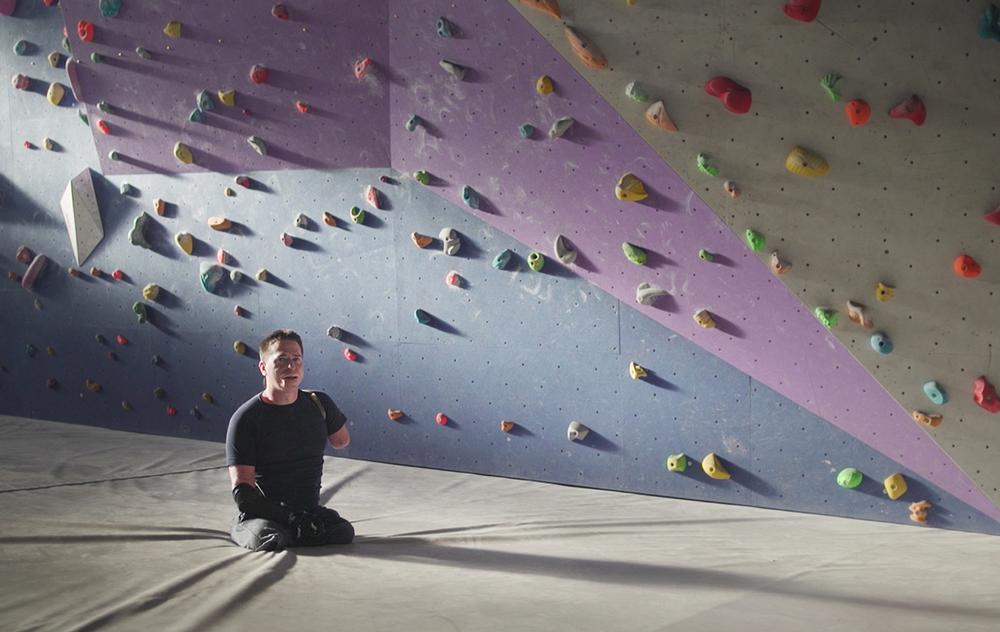
Lewis has established a foundation to raise funds and test prosthetics for amputees
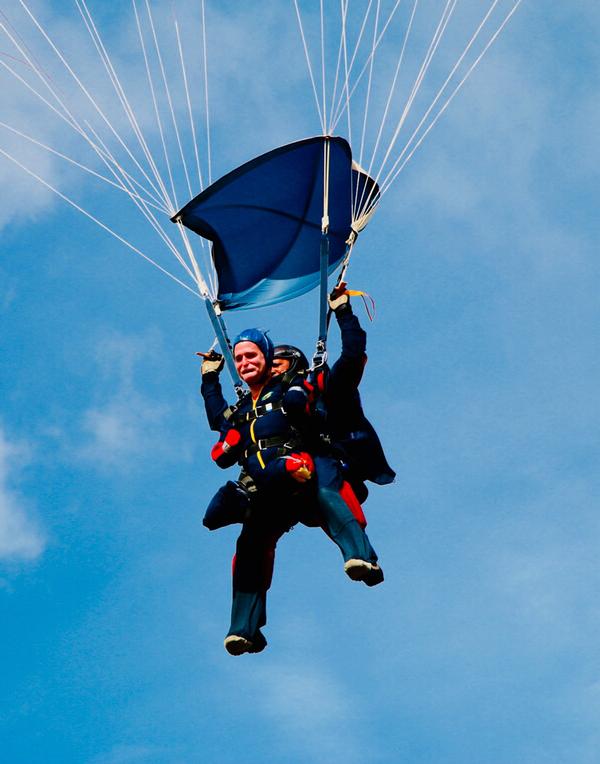
A charity skydive in 2015 with the Pilgrim Bandits
Training hard with Tom Corcoran at Fast Track EMS
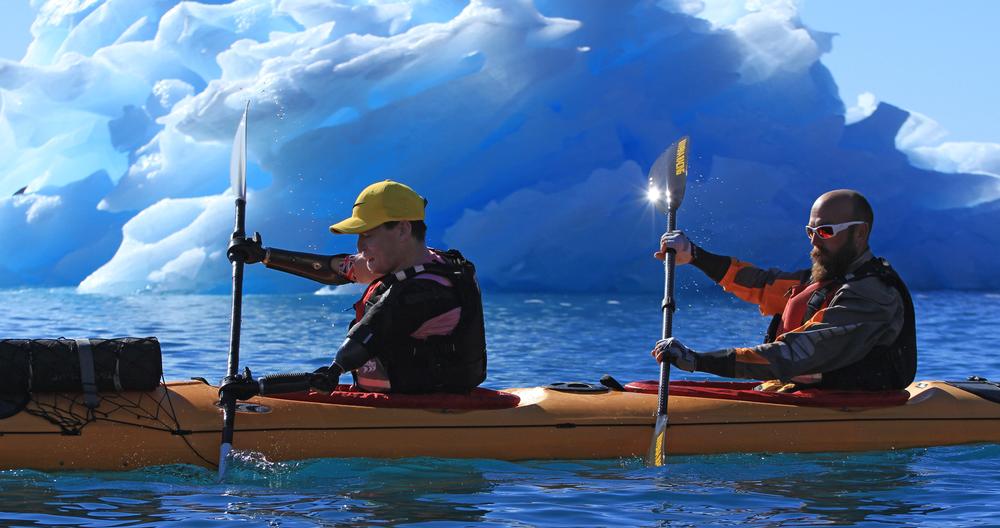
Lewis paddled 120 miles around Greenland to raise money for charity in 2016
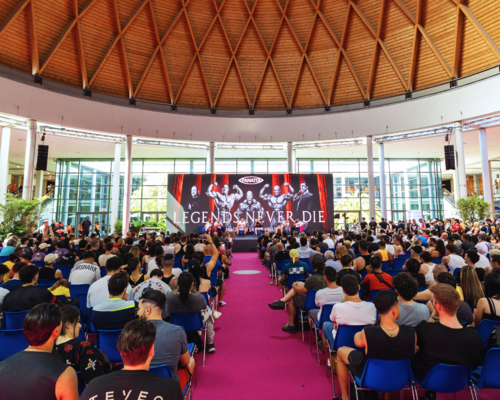
Panatta brought together four of the most influential figures in bodybuilding history on the
stage of RiminiWellness 2026: Phil Heath, Lee Haney, Ronnie Coleman and Hany Rambod. [more...]
A Strep A infection saw Alex Lewis’s life hanging in the balance.
Surgeons were able to save his life, but only by amputating
his limbs. Now an extreme athlete, he shares his story with HCM
This September, Alex Lewis will drive his moon buggy up the highest mountain in Ethiopia to raise money for a wheelchair factory there
Given just days to live after contracting a rare flesh-eating infection, Alex Lewis’ life was turned upside down in 2013, when he had 120 hours of surgery to amputate all four limbs in order to survive.
Following the surgery, it was clear even the simplest of tasks would be a challenge. Not only that, but Lewis was faced with a lack of prosthetic provision. He set out to address this and improve access to prosthetics by setting up The Alex Lewis Trust Foundation, which raises funds for prosthetics, wheelchair and home adjustments for amputees.
In collaboration with a number of universities and rehab facilities, Lewis now trials new prosthetic equipment, often embarking on physical challenges to test it fully.
This September, he faces his biggest challenge yet – climbing one of Africa's highest mountains, Ras Dashen in Ethiopia, to raise money to open a wheelchair factory in Ethiopia.
He plans to top that in 2020 by travelling over 800 km in 10 days across the Gobi Desert.
These are no mean feats for even the most able athlete and training for these two events requires Lewis to follow a tailored exercise programme that will ensure he’s fit enough to complete the challenges.
Key to his success is Electrical Muscle Stimulation (EMS) training, which was recommended for strength gains, core stability and posture correction.
Dramatic improvements Within a few weeks of training with Tom Corcoran, the owner of Fast Track EMS in Hampshire, UK, Lewis noticed a dramatic improvement in his physical capacity, strength gains and improved posture.
“Since becoming an amputee, I’ve been fortunate enough to try out a number of training methods to keep my fitness up, working with physios and visiting the Help for Heroes training facilities,” he explains. “I’ve had first-rate guidance, but nothing has been as effective as EMS training, especially in such a short space of time. It’s amazing how the machine helps me to engage muscles I haven’t felt since I lost my arms and legs. I feel stronger in training, daily life tasks are easier and I’ve gained greater confidence that I can take on these challenges.”
EMS training works by providing an external stimulus via an EMS machine to help individuals engage muscle fibres they might otherwise struggle to target through normal exercises. When Lewis climbs Ras Dashen, he’ll be using a hand-propelled moon buggy that requires him to use a lot of upper body and core strength to power the wheels with his prosthetic arms, but his traditional training, Pilates and physio programmes didn’t enable him to activate and build the muscle required for this movement.
Working alongside Corcoran, he’s been able to target these weaker muscle groups, forcing them to contract harder. Corcoran has programmed the training to focus on strengthening upper and lower back, lats, shoulders and core, using resistance bands and a BOSU ball to keep the workouts varied and challenging.
Confidence gains As a result of Lewis’s condition, his arm and shoulder muscles had collapsed down one side and he’s been working with his physio for years to build up the muscles and level his shoulders again. After his first session, Lewis’s Pilates instructor noticed a positive difference and within a few weeks he was holding a stronger position and regaining postural alignment. Furthermore, he no longer suffers from back pain.
“I wish I’d found EMS when I was in rehab, as I would have become much more independent much faster with its help,” he says. “The kit works different areas of your body at varying levels. It’s a perfectly targeted workout that should be offered to all amputees when they go into rehab to get their muscles working properly.
“I need to keep in strong physical condition for the rest of my life, ensuring my body is able to cope with everyday tasks in order to live with a degree of independence. EMS is helping me to do just that.”
Inspiring results “When Alex told me about his upcoming challenges and the struggle he had to activate and build the muscles required to power the moon buggy, I was confident EMS training could make the difference,” says Corcoron. “The miha bodytec EMS machine is particularly effective for targeting weaker muscle groups, forcing them to contract involuntarily so I knew it was the perfect training solution for Alex.
“He brings a unique set of training challenges to our sessions and it’s been a real learning curve working together,” says Corcoron.
ems – how does it work?
The origins of EMS training lie in rehabilitation. EMS works by helping users to activate their agonist and antagonist muscles at the same time, making it a form of functional training that focuses on working multiple muscle groups.
It allows individuals to reach and strengthen deep seated muscle groups that are usually hard to target, resulting in higher recruitment of muscle fibres without any additional load on the joints through weights.
Workouts are scientifically proven to engage up to 98 per cent of muscles compared to the usual 60 per cent individuals would normally be able to target in the gym. Consequently, it’s being more widely used as a training method for improving strength; training elderly people, weight-loss and rehabilitation – especially for those with ongoing back injuries.
Lewis has established a foundation to raise funds and test prosthetics for amputees
A charity skydive in 2015 with the Pilgrim Bandits
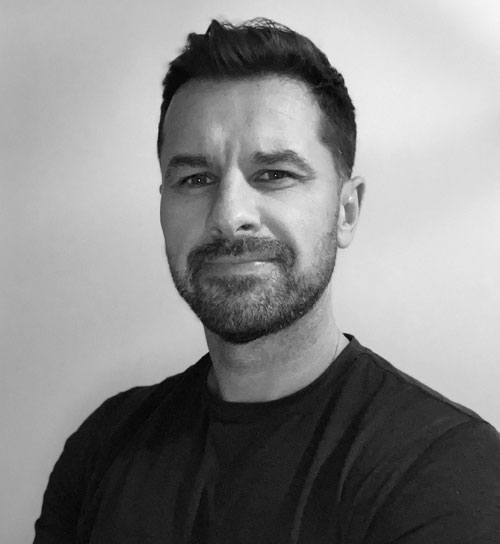
Training hard with Tom Corcoran at Fast Track EMS
Lewis paddled 120 miles around Greenland to raise money for charity in 2016
According to research which tracked more than 147,000 people for 30 years, 90-120 minutes
of strength training a week may deliver some of the biggest long-term health rewards.
The UK's four Chief Medical Officers have published a refreshed edition of Physical activity
guidelines: UK Chief Medical Officers' report, updating the evidence that underpins the nation's
physical activity recommendations and placing greater emphasis on strength, balance, reducing
sedentary behaviour and, for the first time, supporting people taking weight loss medications.
Places Leisure has exchanged contracts to build and operate a flagship £60m water and leisure
destination on behalf of Basingstoke and Deane Borough Council.
The Republic of Ireland will become the latest market in PureGym’s expanding international
portfolio, with the first launch planned for Dublin in 2027.
Anytime Fitness opened more than one club a day in 2025 and is on track to maintain this rate
of growth this year, as parent company Purpose Brands targets further international expansion.
The £33.9 million Leighton Leisure and Community Centre has opened in Leighton Buzzard, UK,
creating a next-generation public leisure, health and wellbeing hub for the local community.
Walnuts Leisure Centre in Orpington, in the London Borough of Bromley, has reopened following
a £17m transformation designed to secure the long-term future of the public leisure asset and
reposition it as a community wellbeing hub.
The Gym Group, has announced that it's sustained positive trading momentum has continued
through the first half of 2026 and the company remains confident about the outlook.
Panatta brought together four of the most influential figures in bodybuilding history on the
stage of RiminiWellness 2026: Phil Heath, Lee Haney, Ronnie Coleman and Hany Rambod. [more...]