NEWS
 |
| GWI highlights findings from first wellness community study |
|
| POSTED 10 Oct 2017 . BY Jane Kitchen |
|
|
|
|
|
|
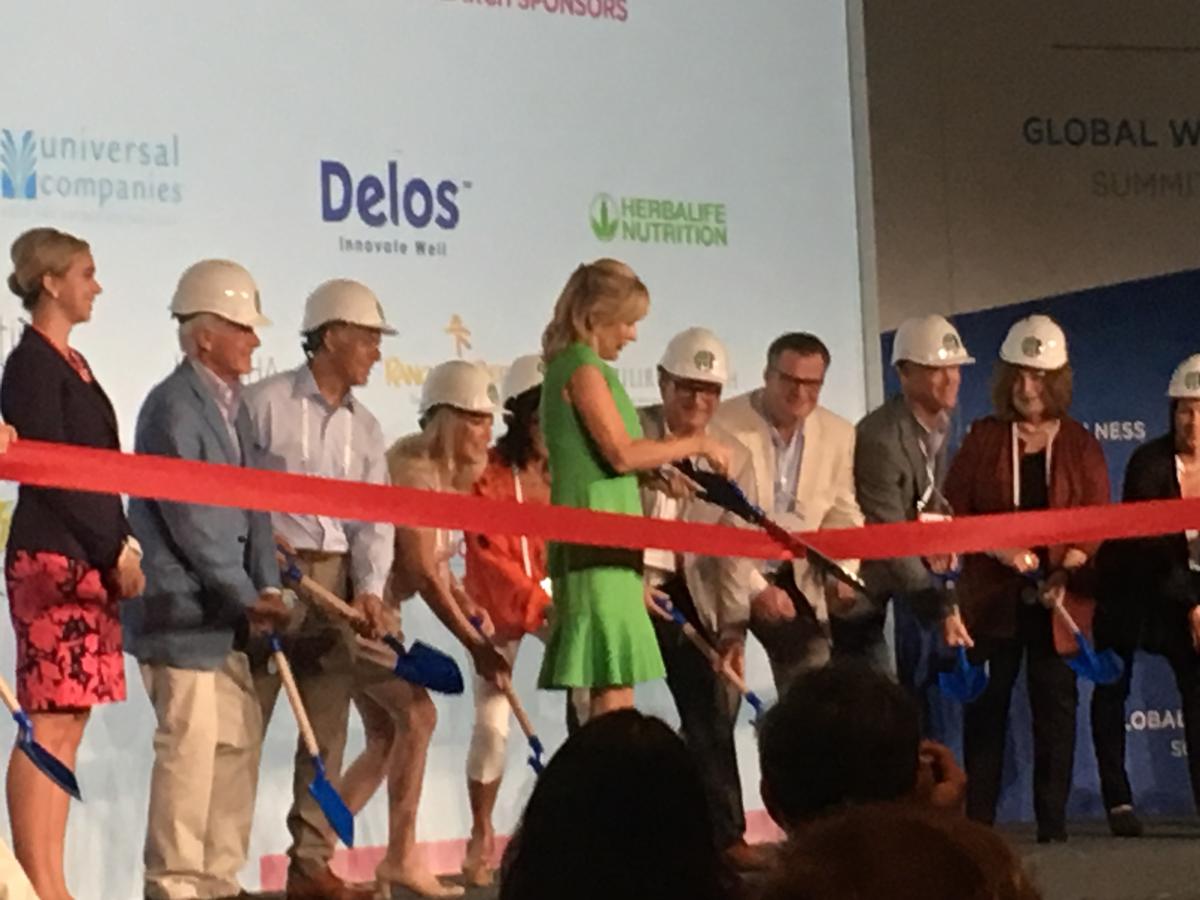
GWI chair Susie Ellis cuts the ribbon on the new research, as sponsors help with hard hats and shovels
|
|
|
|
|
Wellness communities are seeing high consumer demand, according to new research from the Global Wellness Institute due out in January.
GWI researchers Ophelia Yeung and Katherine Johnston presented key findings from their report, Build Well to Live Well, at the Global Wellness Summit being held this week in Palm Beach, Florida.
Johnston and Yeung called the report “the most important research we’ve undertaken”.
“It’s not just because it’s a hot new industry market – but because it’s about where and how we live,” said Johnston.
Johnston and Yeung reported that consumer demand for wellness lifestyle real estate and communities is on the rise globally. They estimate that in the US alone, there are 1.3 million potential buyers each year.
Johnston said the GWI has defined wellness real estate as “homes or buildings proactively designed and built to support the holistic health of their residents” and that wellness communities are “focused on people living in close proximity who share common goals, interests and experiences in proactively pursuing wellness in a holistic, multidimensional way”.
The GWI has tracked more than 600 projects across the globe that meet these definitions, many of which are still in development. Its research has shown that homes in these wellness communities are commanding higher price premiums of between 10 and 25 per cent.
“Our homes and communities have had a massive, increasingly negative impact on our wellbeing, as they were designed following templates set up decades ago to meet the health and lifestyle needs of a radically different era,” said Johnston. “But now we’re at the beginning of a new movement in home and community design that tackles our uniquely modern problems: sedentary lives, unhealthy diets, stress, social isolation and loneliness, pollution, nature-deprivation etc – and it’s creating powerful opportunities.”
The GWI has valued the wellness lifestyle real estate and communities market at US$119bn – growing fast at nine per cent a year – and estimates that it will jump to US$153bn by 2020.
“People spend $3.7 trillion on their wellness every year, but they spend $8 trillion on homes that often encourage unhealthy lifestyles,” said Yeung. “Then we spend another $7.6 trillion on health expenditures to fix those problems. The math doesn’t add up – $20 trillion not working in the same direction – to make us healthier.
"We predict that in the next several decades, building our homes and neighbourhoods for human wellness will become the default approach, not simply a trend.”
The full 80-page report will be released in January 2018 at a press event in New York.
|
|
|
|
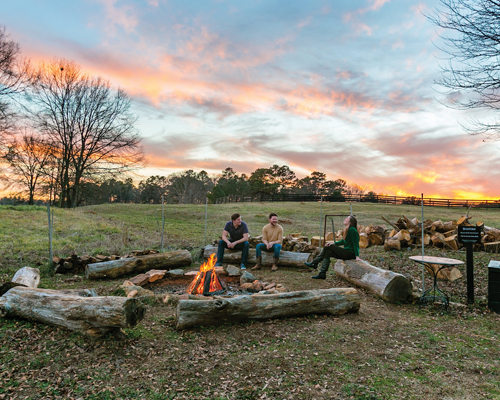
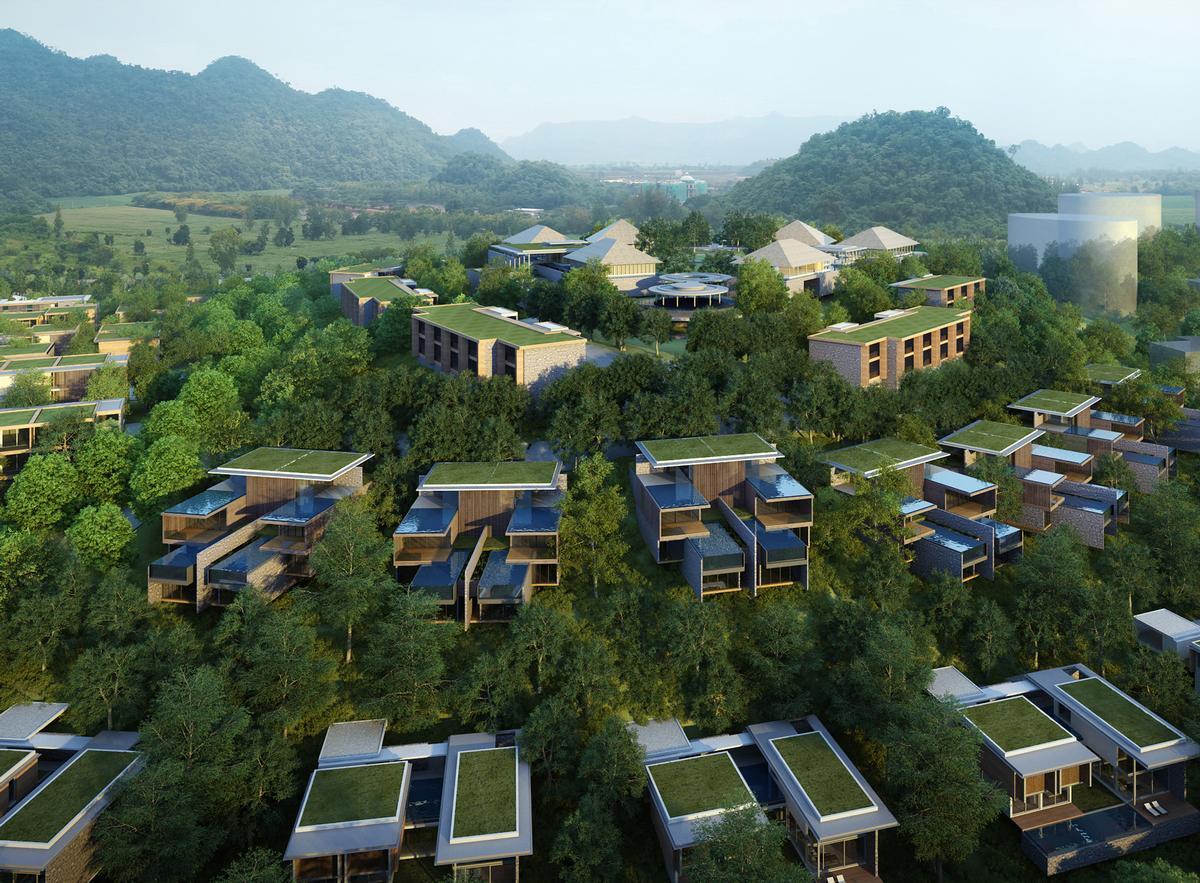
| Wellness developments, such as GOCO Hospitality's forthcoming mixed-use community in Khao Yai, Thailand, are becoming more valuable
|
|
|
|
|
|
|
|
|
|
|
|
|
|
Wellness communities offer ‘huge opportunity’ for spas, says panel
POSTED 02 Mar 2017. BY Jane Kitchen
Mia Kyricos, founder of strategic advisory firm Kyricos & Associates, told an audience at
the World Spa & Wellness Convention in London that wellness communities grew
by 19 per cent from 2013 to 2015, and are worth an estimated US$29bn in Europe and
US$48bn in North America.
|
|
|
|
|
|
 |
|
|


 |
|
| DIARY |
15-18 Jun 2026
HLTH Europe
RAI Convention Centre,
Amsterdam,
Netherlands
|
|
|
|
|
|