Outside London - Will boutiques work outside major cities?
Spinning, group exercise boxing, barre, rowing, pilates, yoga, HIIT –
major cities now have a plethora of boutique studios specialising in different workouts. But can these premium concepts work outside major cities? Using London as a case study, Kath Hudson asks the experts
By Kath Hudson | Published in Health Club Management 2019 issue 2
In the UK, a few boutique operators have already expanded beyond the capital: Barrecore has 10 sites in London and three outside, Digme has four in London and one in Oxford. Some boutique operators are targeting secondary cities first: V1BE has launched its first site in Manchester and the TRIB3 concept was carefully curated so that it could be rolled out into provincial cities globally, with plans for 1000 sites by 2021.
Other operators have also said they plan to go beyond London in the future. For example, co-founder of Flykick, Charlie Kemper, says the scope for expansion beyond London is huge and he would be confident to take his group exercise boxing concept beyond the capital. "Already we're seeing a high level of engagement, particularly across social media, from people in UK cities such as Manchester and Bristol, which currently feel underserved in the boutique space,” he says. “Followers from all over the UK look to London as the epicentre for new concepts and to keep up with the activity of their favourite influencers."
However, although all cities have a number of affluent people, London has the highest density, so would it be harder to transport the concept beyond the capital? What are the issues and challenges and how can they be overcome? We ask the experts…
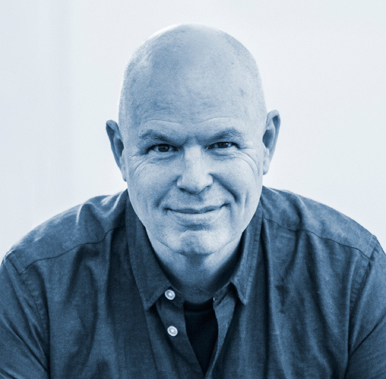
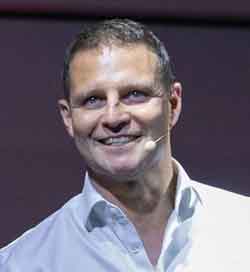
Geoff Bamber
Digme Fitness: Co-founder and CEO
Geoff Bamber
We have four boutique studios in London and one in Oxford. Although the facilities and customer experience we offer are much the same, there are many differences to running a boutique in a secondary city and it does require adjustments to the business model.
Like many secondary cities, Oxford is not part of the London economy, so although it is an extremely affluent city, the cost of living, income levels and price expectations are lower. Outside of the capital boutiques are less common, so there is a greater requirement to educate the customer around the pay-as-you-go model.
The strength of community is extremely high at our Oxford studio and this means that customer service is even more important. You definitely can’t get away with being transactional.
Sourcing great instructors can be another challenge. Outside of London, there isn’t the same density of fitness instructors and PTs, so finding quality people is harder.
“Outside of London, there isn’t the same density of fitness instructors and PTs, so finding quality people is harder”
Marketing is also a very different challenge. Channels like ClassPass are good for driving business to clubs in London, but are not present in most cities outside of London. Social media doesn’t work as well outside the M25 either because there are not the same density of influencers.
Although there might be less competition with other clubs outside of London, beyond the capital it is much easier to find open space for a run or a bike ride – even in cities like Manchester. Combined with a slightly more price-sensitive consumer, this can amplify your business’s seasonality.
Although the cost of doing business is lower outside of London, I think it will be a while before we see lots of London operators going beyond the capital. There is still plenty of opportunity in London for those looking to grow, and this is operationally much easier than going to a new market. Most existing operators are still sub-scale, so achieving greater local scale is probably a higher priority than national expansion right now.
Brexit is also giving many people the jitters so there will likely be a pause to see how that all plays out. Regional cities are on our roadmap, but our immediate focus is to create a higher density of studios in London and optimise existing operations.
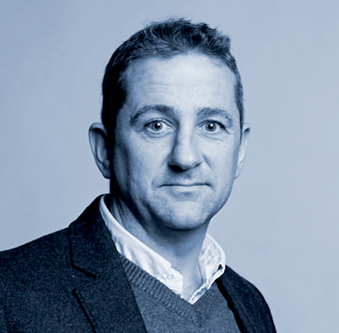
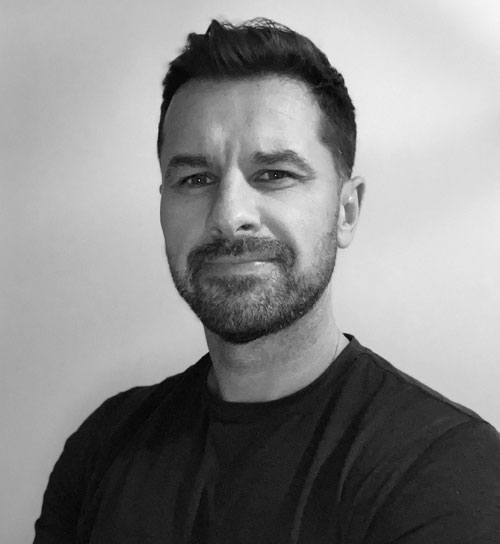
Jason Zavasnik
Orangetheory: Director of Franchise Development
Jason Zavasnik
Orangetheory has an aggressive expansion strategy and already has 1,100 sites in 22 countries, which has taken us into many secondary cities, without needing to change the concept or pricing. We use a report to locate the appropriate areas for our premium offering and often find our most successful sites are in the suburbs, as people like their workout to be convenient for home, rather than work. The advantage of these sites is that they tend to have more parking and cheaper rents than in major cities.
As more professionals move away from London to places that are cheaper to live in, there are hubs of busy professionals in cities all over the UK. With this in mind, Orangetheory is now expanding into the Midlands and the north of England, with plans to open 40 sites in the next nine years. Our first site in this region launched in December, in Altrincham, Greater Manchester, with record-breaking pre-sales. Derby will open soon.
“As more professionals move away from London to places that are cheaper to live in, there are hubs of busy professionals in cities all over the UK”
Unlike London, there are not many boutiques in the Midlands, so some education of the market is necessary. It’s similar to when we first started out in the US in 2010: people were only familiar with big box gyms, where they pay so little they barely notice it, but they often don’t get results. We see ourselves as competing more with PTs than gyms, as the Orangetheory workout is science-backed and individualised to ensure people get results.
Justin Rogers
Ten Health & Fitness: Creative Director
Jason Zavasnik
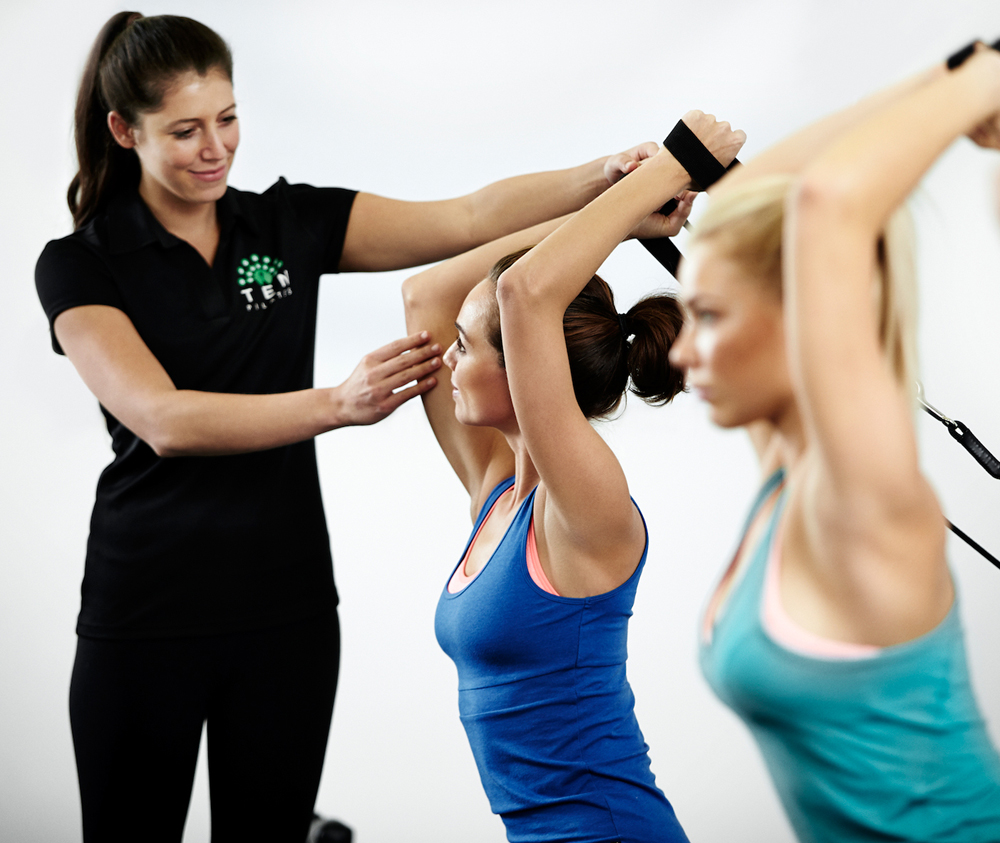
With eight locations in London, offering a mix of Pilates, physiotherapy massage and PT, our intention, at least for the short term, is to stay in London.
Operationally, it’s easier for us to be in one city and, with nearly 9 million people living here, there is still great potential and many areas in greater London where we would like to open studios.
“People in regional cities are generally underserved and in terms of appetite for a more expert and experiential fitness offer, no different to those living in the capital”
That said, I absolutely think that boutiques can work outside of the capital. People in regional cities are generally underserved and in terms of appetite for a more expert and experiential fitness offer, no different to those living in the capital. So I don't see why there wouldn't be an appetite for boutique concepts in cities like Manchester, Birmingham and Edinburgh.
For start-up boutique operators it could even be a better idea to open outside of London, given the saturation and the price of rents in the capital. Also, in the current uncertain climate, it might well be the perfect time to look beyond London.
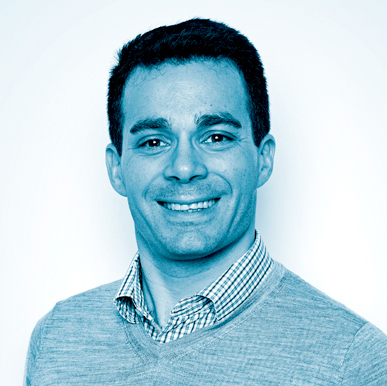
Andy Tee
V1BE: Co-Founder
Jason Zavasnik
As one of the first boutiques in Manchester, I hope the concept can work in secondary cities! The main challenge you come up against when taking this concept outside of London is educating the consumer as to why they should pay the same for one class as they could pay for a month’s membership at a budget gym. We have to make them understand that it is an experience, not just a workout.
Two years down the line, when more boutiques come into the city, I think the challenge will shift. More people will understand the concept, so less education will be required, but also there will be more competition for those affluent consumers, and differentiation will become important.
“The main challenge you come up against when taking this concept outside of London is educating the consumer as to why they should pay the same for one class as they could pay for a month’s membership at a budget gym”
On the upside, even though people are more price-sensitive outside of London, the cost of doing business is less. Fit-out costs, rent, rates and staff are less expensive in other cities. London has the biggest density of the right target market for boutique clubs, but every city has an element of the right demographic.
Going forward I think we will see a lot more development of boutique clubs both in London and outside and this will be a mix of local operators and those that started out in London and overseas.
As boutiques become more popular in secondary cities, differentiation will become important
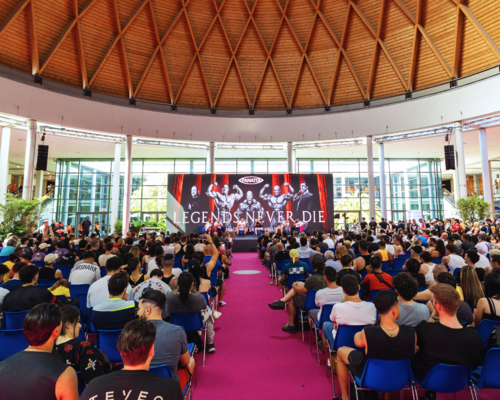
Panatta brought together four of the most influential figures in bodybuilding history on the
stage of RiminiWellness 2026: Phil Heath, Lee Haney, Ronnie Coleman and Hany Rambod. [more...]
Outside London - Will boutiques work outside major cities?
Spinning, group exercise boxing, barre, rowing, pilates, yoga, HIIT –
major cities now have a plethora of boutique studios specialising in different workouts. But can these premium concepts work outside major cities? Using London as a case study, Kath Hudson asks the experts
By Kath Hudson | Published in Health Club Management 2019 issue 2
In the UK, a few boutique operators have already expanded beyond the capital: Barrecore has 10 sites in London and three outside, Digme has four in London and one in Oxford. Some boutique operators are targeting secondary cities first: V1BE has launched its first site in Manchester and the TRIB3 concept was carefully curated so that it could be rolled out into provincial cities globally, with plans for 1000 sites by 2021.
Other operators have also said they plan to go beyond London in the future. For example, co-founder of Flykick, Charlie Kemper, says the scope for expansion beyond London is huge and he would be confident to take his group exercise boxing concept beyond the capital. "Already we're seeing a high level of engagement, particularly across social media, from people in UK cities such as Manchester and Bristol, which currently feel underserved in the boutique space,” he says. “Followers from all over the UK look to London as the epicentre for new concepts and to keep up with the activity of their favourite influencers."
However, although all cities have a number of affluent people, London has the highest density, so would it be harder to transport the concept beyond the capital? What are the issues and challenges and how can they be overcome? We ask the experts…
Geoff Bamber
Digme Fitness: Co-founder and CEO
Geoff Bamber
We have four boutique studios in London and one in Oxford. Although the facilities and customer experience we offer are much the same, there are many differences to running a boutique in a secondary city and it does require adjustments to the business model.
Like many secondary cities, Oxford is not part of the London economy, so although it is an extremely affluent city, the cost of living, income levels and price expectations are lower. Outside of the capital boutiques are less common, so there is a greater requirement to educate the customer around the pay-as-you-go model.
The strength of community is extremely high at our Oxford studio and this means that customer service is even more important. You definitely can’t get away with being transactional.
Sourcing great instructors can be another challenge. Outside of London, there isn’t the same density of fitness instructors and PTs, so finding quality people is harder.
“Outside of London, there isn’t the same density of fitness instructors and PTs, so finding quality people is harder”
Marketing is also a very different challenge. Channels like ClassPass are good for driving business to clubs in London, but are not present in most cities outside of London. Social media doesn’t work as well outside the M25 either because there are not the same density of influencers.
Although there might be less competition with other clubs outside of London, beyond the capital it is much easier to find open space for a run or a bike ride – even in cities like Manchester. Combined with a slightly more price-sensitive consumer, this can amplify your business’s seasonality.
Although the cost of doing business is lower outside of London, I think it will be a while before we see lots of London operators going beyond the capital. There is still plenty of opportunity in London for those looking to grow, and this is operationally much easier than going to a new market. Most existing operators are still sub-scale, so achieving greater local scale is probably a higher priority than national expansion right now.
Brexit is also giving many people the jitters so there will likely be a pause to see how that all plays out. Regional cities are on our roadmap, but our immediate focus is to create a higher density of studios in London and optimise existing operations.
Jason Zavasnik
Orangetheory: Director of Franchise Development
Jason Zavasnik
Orangetheory has an aggressive expansion strategy and already has 1,100 sites in 22 countries, which has taken us into many secondary cities, without needing to change the concept or pricing. We use a report to locate the appropriate areas for our premium offering and often find our most successful sites are in the suburbs, as people like their workout to be convenient for home, rather than work. The advantage of these sites is that they tend to have more parking and cheaper rents than in major cities.
As more professionals move away from London to places that are cheaper to live in, there are hubs of busy professionals in cities all over the UK. With this in mind, Orangetheory is now expanding into the Midlands and the north of England, with plans to open 40 sites in the next nine years. Our first site in this region launched in December, in Altrincham, Greater Manchester, with record-breaking pre-sales. Derby will open soon.
“As more professionals move away from London to places that are cheaper to live in, there are hubs of busy professionals in cities all over the UK”
Unlike London, there are not many boutiques in the Midlands, so some education of the market is necessary. It’s similar to when we first started out in the US in 2010: people were only familiar with big box gyms, where they pay so little they barely notice it, but they often don’t get results. We see ourselves as competing more with PTs than gyms, as the Orangetheory workout is science-backed and individualised to ensure people get results.
Justin Rogers
Ten Health & Fitness: Creative Director
Jason Zavasnik
With eight locations in London, offering a mix of Pilates, physiotherapy massage and PT, our intention, at least for the short term, is to stay in London.
Operationally, it’s easier for us to be in one city and, with nearly 9 million people living here, there is still great potential and many areas in greater London where we would like to open studios.
“People in regional cities are generally underserved and in terms of appetite for a more expert and experiential fitness offer, no different to those living in the capital”
That said, I absolutely think that boutiques can work outside of the capital. People in regional cities are generally underserved and in terms of appetite for a more expert and experiential fitness offer, no different to those living in the capital. So I don't see why there wouldn't be an appetite for boutique concepts in cities like Manchester, Birmingham and Edinburgh.
For start-up boutique operators it could even be a better idea to open outside of London, given the saturation and the price of rents in the capital. Also, in the current uncertain climate, it might well be the perfect time to look beyond London.
Andy Tee
V1BE: Co-Founder
Jason Zavasnik
As one of the first boutiques in Manchester, I hope the concept can work in secondary cities! The main challenge you come up against when taking this concept outside of London is educating the consumer as to why they should pay the same for one class as they could pay for a month’s membership at a budget gym. We have to make them understand that it is an experience, not just a workout.
Two years down the line, when more boutiques come into the city, I think the challenge will shift. More people will understand the concept, so less education will be required, but also there will be more competition for those affluent consumers, and differentiation will become important.
“The main challenge you come up against when taking this concept outside of London is educating the consumer as to why they should pay the same for one class as they could pay for a month’s membership at a budget gym”
On the upside, even though people are more price-sensitive outside of London, the cost of doing business is less. Fit-out costs, rent, rates and staff are less expensive in other cities. London has the biggest density of the right target market for boutique clubs, but every city has an element of the right demographic.
Going forward I think we will see a lot more development of boutique clubs both in London and outside and this will be a mix of local operators and those that started out in London and overseas.
As boutiques become more popular in secondary cities, differentiation will become important
According to research which tracked more than 147,000 people for 30 years, 90-120 minutes
of strength training a week may deliver some of the biggest long-term health rewards.
The UK's four Chief Medical Officers have published a refreshed edition of Physical activity
guidelines: UK Chief Medical Officers' report, updating the evidence that underpins the nation's
physical activity recommendations and placing greater emphasis on strength, balance, reducing
sedentary behaviour and, for the first time, supporting people taking weight loss medications.
Places Leisure has exchanged contracts to build and operate a flagship £60m water and leisure
destination on behalf of Basingstoke and Deane Borough Council.
The Republic of Ireland will become the latest market in PureGym’s expanding international
portfolio, with the first launch planned for Dublin in 2027.
Anytime Fitness opened more than one club a day in 2025 and is on track to maintain this rate
of growth this year, as parent company Purpose Brands targets further international expansion.
The £33.9 million Leighton Leisure and Community Centre has opened in Leighton Buzzard, UK,
creating a next-generation public leisure, health and wellbeing hub for the local community.
Walnuts Leisure Centre in Orpington, in the London Borough of Bromley, has reopened following
a £17m transformation designed to secure the long-term future of the public leisure asset and
reposition it as a community wellbeing hub.
The Gym Group, has announced that it's sustained positive trading momentum has continued
through the first half of 2026 and the company remains confident about the outlook.
Panatta brought together four of the most influential figures in bodybuilding history on the
stage of RiminiWellness 2026: Phil Heath, Lee Haney, Ronnie Coleman and Hany Rambod. [more...]







.jpg)