The recent Power Plate RISE event (Retention, Insights, Solutions, Engagement) brought
together research, expertise and practical solutions, supported by industry speakers
Dr Paul Bedford, retention specialist and David Minton, CEO of The Leisure Database Company (TLDC)
There’s a growing segment identified as ‘Strong Women’: 25-44-year-old females who build power and a tribe
The rapid development, disruption and diversification of the fitness market has inspired Power Plate to help its customers understand where growth is coming from and why, as well as what owners and operators can do to compete.
In his keynote speech, Minton shared statistics from the latest reports into the size and scale of the UK fitness market, which has 9.9 million members across 7,038 facilities and an estimated market value of £4.9 billion in 2018.
Minton went on to identify an industry blind spot – the effective use of web, apps and social media platforms. Cue a new solution that will be launched soon by TLDC – the Social Fitness Index; a social listening tool targeted to the fitness industry.
This will give the ability to understand what resonates with members and what is trending in real-time, as well as insights into brand performance, ranking, content, keywords and platform preferences.
Customer focus Understanding and targeting customers effectively was a continued theme for Minton. With 84 per cent of the population living within two miles of a public gym and 83 per cent living within two miles of a private health club (not to mention the ever-increasing popularity of at-home solutions), how can owners and operators cut through the competition?
Segmenting by age and location is nothing new but what about segmenting by behaviour?
This was also a hot topic in the presentations of Bedford and Power Plate’s business development expert, Julie Riker. Bedford discussed the blurring lines around what facilities offer – segments, sectors and services are all changing and the way we sell, operate, retain and measure needs to change around them.
He identified a number of key groups; ‘FIT Gen’, which is made up of 25- to 34-year-olds “who are constructing their own identities more freely than ever around varied exercise experiences – in and out of the gym”; ‘Wellthy Gen’, those aged 35-44 “living an interconnected holistic lifestyle to enhance their wellbeing”; and ‘Strong Women’ – 25- to 44-year-old females who build their physical strength as a way of constructing identities and communities”.
These segments or ‘tribes’ demand different solutions, with experience increasingly becoming the product. HIIT and Cross Fit-style studios, along with boutiques, are continuing to fuel growth, while home workout offerings such as the Daily Burn can retain ‘members’ without any need for a physical space – “a club without a club”, as Bedford put it.
Emotional archetypes Riker also covered how emotional archetypes drive consumer choice; including training preferences.
By mapping considerations such as social, motivational and accountability drivers, she explained how Power Plate’s Small Group Training programmes (Burn, Strong, X and Zen) have been developed using research and analysis into how diverse personalities and behaviours determine exercise choice. These programmes also deliver against key industry trends such as HIIT, body weight and hybrid classes to provide a free, innovative, total solution on a rolling basis for customers.
Riker said Power Plate is using small group training to deliver results for customers such as Plate Fit in Los Angeles – a chain of boutique Power Plate studios.
Her data also demonstrated the link between member engagement and retention and how small group training can help deliver this.
NEW PARAMETERS Bedford went on to highlight that the way in which health and fitness operators measure retention in clubs is now changing in a number of ways.
He says: “We need to think in new ways about active users, valuable customers, lifetime value and revenue per visit.”
As the market continues to fragment and diversify, there’s a great deal for owners and operators to consider in order to navigate the changing landscape and position for success.
Minton says that the opportunities are there and growth is happening, yet tomorrow belongs to those who can hear it coming; so it’s time to look at using these insights to get ahead.
David Minton
"David Minton identified an industry blind spot – the effective use of web, apps and social media platforms and explained he will launch a new solution soon called the Social Fitness Index; a social listening tool targeted to the fitness industry"
Dr Paul Bedford
"Dr Paul Bedford identified a number of customer types: FIT Gen, 25- to 34-year-olds who are constructing their identities around exercise; Wellthy Gen, 35-44, living an interconnected holistic lifestyle to enhance their wellbeing; and Strong Women, 25- to 44-year olds who build physical strength as a way of constructing identities and communities"
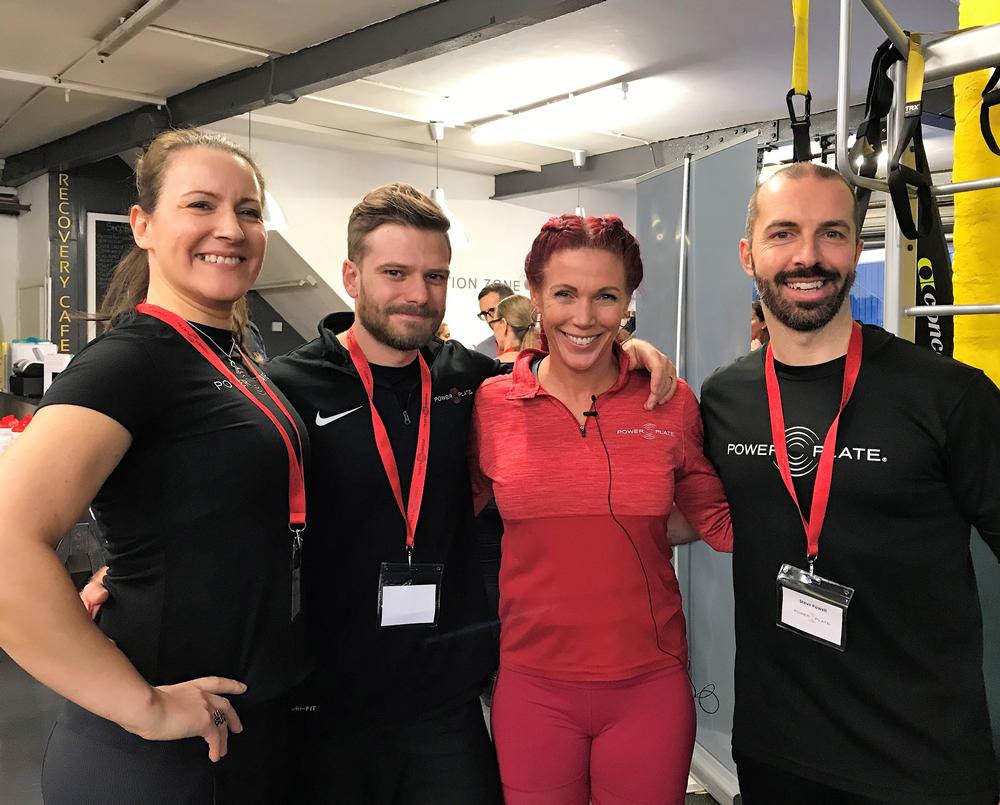
From left: Sarah Morrelli, Matt Cottle, Laura Wilson and Stephen Powell at the Power Plate RISE event
Panatta brought together four of the most influential figures in bodybuilding history on the
stage of RiminiWellness 2026: Phil Heath, Lee Haney, Ronnie Coleman and Hany Rambod. [more...]
+ More featured suppliers
COMPANY PROFILES
Orbit4
With Orbit4, you’ll always have full visibility
of your equipment inventory, the true
market value [more...]
ukactive
ukactive is the UK’s leading trade body for the physical activity sector, bringing together more tha [more...]
The recent Power Plate RISE event (Retention, Insights, Solutions, Engagement) brought
together research, expertise and practical solutions, supported by industry speakers
Dr Paul Bedford, retention specialist and David Minton, CEO of The Leisure Database Company (TLDC)
There’s a growing segment identified as ‘Strong Women’: 25-44-year-old females who build power and a tribe
The rapid development, disruption and diversification of the fitness market has inspired Power Plate to help its customers understand where growth is coming from and why, as well as what owners and operators can do to compete.
In his keynote speech, Minton shared statistics from the latest reports into the size and scale of the UK fitness market, which has 9.9 million members across 7,038 facilities and an estimated market value of £4.9 billion in 2018.
Minton went on to identify an industry blind spot – the effective use of web, apps and social media platforms. Cue a new solution that will be launched soon by TLDC – the Social Fitness Index; a social listening tool targeted to the fitness industry.
This will give the ability to understand what resonates with members and what is trending in real-time, as well as insights into brand performance, ranking, content, keywords and platform preferences.
Customer focus Understanding and targeting customers effectively was a continued theme for Minton. With 84 per cent of the population living within two miles of a public gym and 83 per cent living within two miles of a private health club (not to mention the ever-increasing popularity of at-home solutions), how can owners and operators cut through the competition?
Segmenting by age and location is nothing new but what about segmenting by behaviour?
This was also a hot topic in the presentations of Bedford and Power Plate’s business development expert, Julie Riker. Bedford discussed the blurring lines around what facilities offer – segments, sectors and services are all changing and the way we sell, operate, retain and measure needs to change around them.
He identified a number of key groups; ‘FIT Gen’, which is made up of 25- to 34-year-olds “who are constructing their own identities more freely than ever around varied exercise experiences – in and out of the gym”; ‘Wellthy Gen’, those aged 35-44 “living an interconnected holistic lifestyle to enhance their wellbeing”; and ‘Strong Women’ – 25- to 44-year-old females who build their physical strength as a way of constructing identities and communities”.
These segments or ‘tribes’ demand different solutions, with experience increasingly becoming the product. HIIT and Cross Fit-style studios, along with boutiques, are continuing to fuel growth, while home workout offerings such as the Daily Burn can retain ‘members’ without any need for a physical space – “a club without a club”, as Bedford put it.
Emotional archetypes Riker also covered how emotional archetypes drive consumer choice; including training preferences.
By mapping considerations such as social, motivational and accountability drivers, she explained how Power Plate’s Small Group Training programmes (Burn, Strong, X and Zen) have been developed using research and analysis into how diverse personalities and behaviours determine exercise choice. These programmes also deliver against key industry trends such as HIIT, body weight and hybrid classes to provide a free, innovative, total solution on a rolling basis for customers.
Riker said Power Plate is using small group training to deliver results for customers such as Plate Fit in Los Angeles – a chain of boutique Power Plate studios.
Her data also demonstrated the link between member engagement and retention and how small group training can help deliver this.
NEW PARAMETERS Bedford went on to highlight that the way in which health and fitness operators measure retention in clubs is now changing in a number of ways.
He says: “We need to think in new ways about active users, valuable customers, lifetime value and revenue per visit.”
As the market continues to fragment and diversify, there’s a great deal for owners and operators to consider in order to navigate the changing landscape and position for success.
Minton says that the opportunities are there and growth is happening, yet tomorrow belongs to those who can hear it coming; so it’s time to look at using these insights to get ahead.
David Minton
"David Minton identified an industry blind spot – the effective use of web, apps and social media platforms and explained he will launch a new solution soon called the Social Fitness Index; a social listening tool targeted to the fitness industry"
Dr Paul Bedford
"Dr Paul Bedford identified a number of customer types: FIT Gen, 25- to 34-year-olds who are constructing their identities around exercise; Wellthy Gen, 35-44, living an interconnected holistic lifestyle to enhance their wellbeing; and Strong Women, 25- to 44-year olds who build physical strength as a way of constructing identities and communities"
From left: Sarah Morrelli, Matt Cottle, Laura Wilson and Stephen Powell at the Power Plate RISE event
According to research which tracked more than 147,000 people for 30 years, 90-120 minutes
of strength training a week may deliver some of the biggest long-term health rewards.
The UK's four Chief Medical Officers have published a refreshed edition of Physical activity
guidelines: UK Chief Medical Officers' report, updating the evidence that underpins the nation's
physical activity recommendations and placing greater emphasis on strength, balance, reducing
sedentary behaviour and, for the first time, supporting people taking weight loss medications.
Places Leisure has exchanged contracts to build and operate a flagship £60m water and leisure
destination on behalf of Basingstoke and Deane Borough Council.
The Republic of Ireland will become the latest market in PureGym’s expanding international
portfolio, with the first launch planned for Dublin in 2027.
Anytime Fitness opened more than one club a day in 2025 and is on track to maintain this rate
of growth this year, as parent company Purpose Brands targets further international expansion.
The £33.9 million Leighton Leisure and Community Centre has opened in Leighton Buzzard, UK,
creating a next-generation public leisure, health and wellbeing hub for the local community.
Walnuts Leisure Centre in Orpington, in the London Borough of Bromley, has reopened following
a £17m transformation designed to secure the long-term future of the public leisure asset and
reposition it as a community wellbeing hub.
The Gym Group, has announced that it's sustained positive trading momentum has continued
through the first half of 2026 and the company remains confident about the outlook.
Panatta brought together four of the most influential figures in bodybuilding history on the
stage of RiminiWellness 2026: Phil Heath, Lee Haney, Ronnie Coleman and Hany Rambod. [more...]
+ More featured suppliers
COMPANY PROFILES
Orbit4 With Orbit4, you’ll always have full visibility
of your equipment inventory, the true
market value [more...]