There have been two revolutions in healthcare. The first in the 19th Century was the Public Health Revolution in which large-scale engineering of sewers and water systems – enabled by stable government and growing wealth – reduced mortality from the great epidemics that ravaged Europe.
The most feared were cholera and typhoid – and then came the clean water revolution as a solution.
The last 50 years have seen the second wave of change, the High Tech Revolution, in which developments such as MRI, transplantation, chemotherapy and joint replacement have transformed the health of individuals and populations, when delivered by well-organised services and funded by a growing economy.
However, at the end of this second revolution, we’re facing significant challenges, with rising demand and no parallel increase in finance.
Furthermore, we know that increases in life expectancy are stalling and that the gap in life expectancy between the wealthiest and most deprived subsections of society remains stubbornly wide.
Another challenge we face is population ageing, and there are great fears about the impact of this on individuals, their families, health and social care services and the economic wealth of nations.
However recent research has demonstrated that this fear is not based on evidence and that in fact disability, dementia and frailty can be prevented or delayed, providing we embrace the third healthcare revolution – the Activity Revolution.
COMBATTING THE NEW EPIDEMIC Inactivity is a modern epidemic. Our bodies have evolved to be active, but we now live in an environment dominated by the car, the computer and the desk job.
Just as the clean water revolution required environmental and social change and also political support, so too does the third revolution. It’s now recognised that inactivity is a major preventable cause of our modern epidemics, where cancer, heart disease and type II diabetes have replaced cholera and typhoid.
Furthermore, we now know not only that activity can prevent many common diseases, but also that it can transform their treatment. It is – in the words of the Academy Medical Royal Colleges – “the miracle cure” and it’s been agreed that the NHS needs to promote activity therapy alongside drug therapy, operative therapy and psychological therapy.
THIRD healthcare revolution Unlike the second healthcare revolution, activity therapy will not just be delivered by major hospitals and health centres. It will also harness the power of what has been called the third industrial revolution – namely citizens’ knowledge and the internet.
The real key to it is knowledge, and it’s clear that the public and many health service professionals are ignorant or muddled about the effects of ageing, loss of fitness and disease, and the great potential for prevention and treatment.
the impact of ageing Ageing by itself isn’t a major cause of problems until people reach their mid-90s. It’s a normal biological process that reduces ability and resilience – namely the ability to respond to challenges. However, many people believe that the loss of physical capacity they experience from their 20s onwards is due to ageing, whereas it’s actually due to the modern epidemic – loss of fitness due to inactivity.
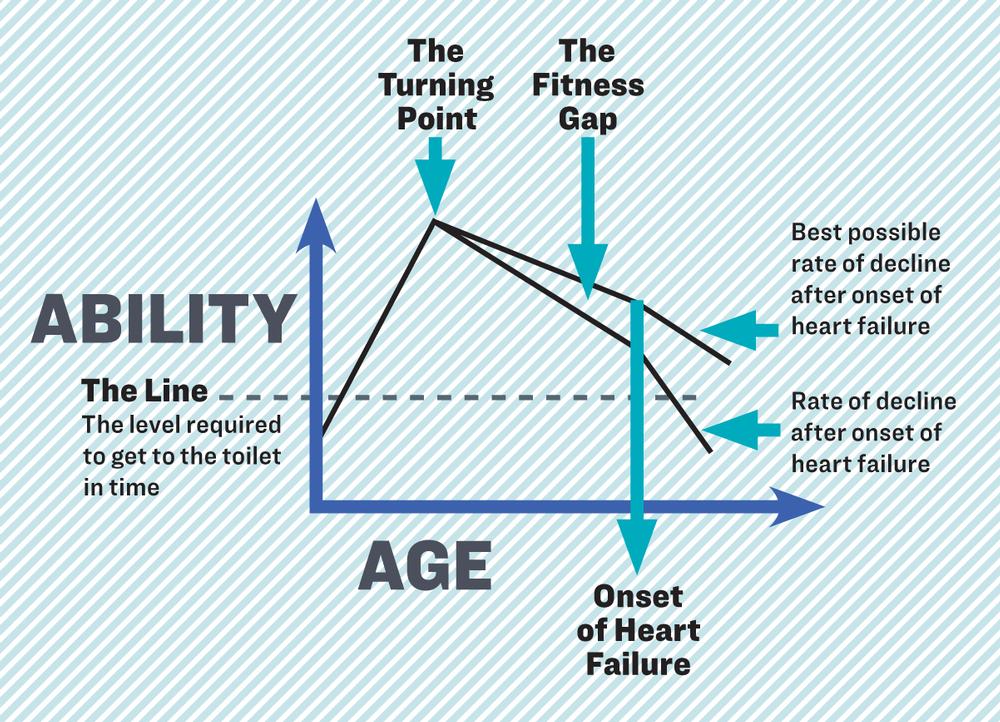
For most people, maximum ability starts to decline from their early 20s – usually when they get their first sitting job and car. A fitness gap then starts to open up between the best possible rate of decline and the actual rate of decline in their physical abilities and capacity.
For this reason loss of fitness and ageing are often confused. The picture becomes more complicated when disease occurs.
The impact of disease on fitness About 40 per cent of 40-year-olds have one long term condition and a proportion have more than one. The proportion of people with long-term conditions then increases by approximately 10 per cent every decade.
However, this increase in disease is not only because of ageing but also as a result of being exposed to risks that are either environmental, social or personal, such as bad diet and sedentary behaviour.
What’s also emerging is the way loss of fitness complicates disease and accelerates increases in the fitness gap, in part because of the direct effect of that disease and the response to it in terms of treatment.
For example, the direct effect of a heart attack is on heart muscle, but it also increases risk for social reasons because other people, including professional carers and family, can assume that the onset of disease indicates the need for more “care” and less activity – whereas, scientifically, the opposite is what’s required.
This means negative beliefs and pessimistic attitudes towards health are the key factors complicating disease and loss of fitness, and these four factors relate – as shown in the diagram on the right.
Prescribing activity therapy Of the 15 million people with long-term health conditions in the UK, about three million receive rehabilitation from highly skilled professionals. However, the remaining 13 million are simply given a pill, or a psychological intervention or some combination of the two.
What’s clear now is that all these people need activity therapy. Sometimes the activity therapy can replace the pill or psychological treatment, but often the two or three should be provided simultaneously.
Activity should be prescribed like a drug, not simply as an instruction, but as part of a process of information-giving, encouragement, facilitation and support.
We need to make use of the billions of interactions that people with long-term conditions have with doctors and nurses, health service staff and pharmacies, to keep nudging and encouraging them – but we also clearly need the full energy and skill of the fitness industry to swing in behind this drive to improve the health of the nation.
The fitness industry mostly sees people who want to reduce their risk of disease through activity, but it’s also starting to reach out to people who are living with long-term health conditions.
The launch of the new Universal Personalised Care initiative comes with the proposal to appoint 1,000 link workers whose responsibility it is to find therapeutic opportunities in addition to those provided by pharmacies, hospitals and mental health services.
This offers the best opportunity we’ve had so far to link the NHS and the fitness world in a single therapeutic alliance and we must work towards this goal with all possible haste to deliver on the Third Healthcare Revolution.
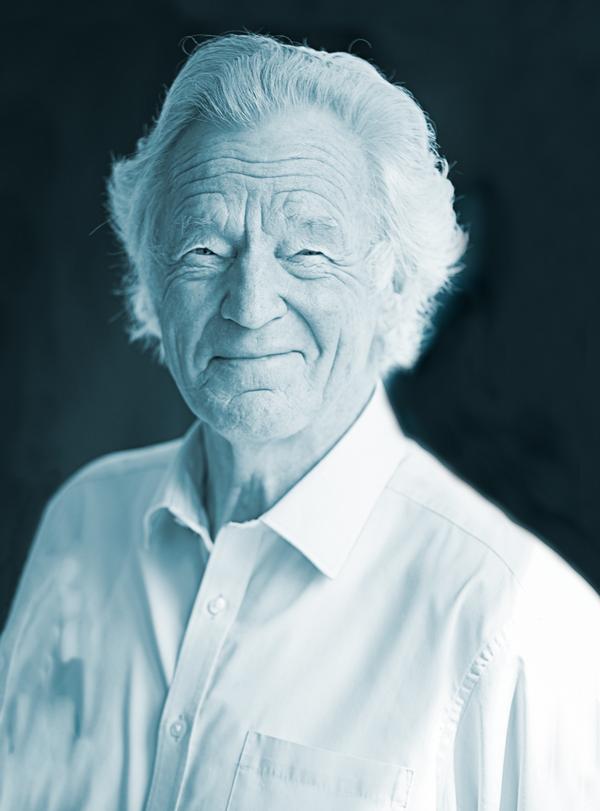
Sir Muir Gray
Loss of fitness due to inactivity can have wide-ranging effects on health
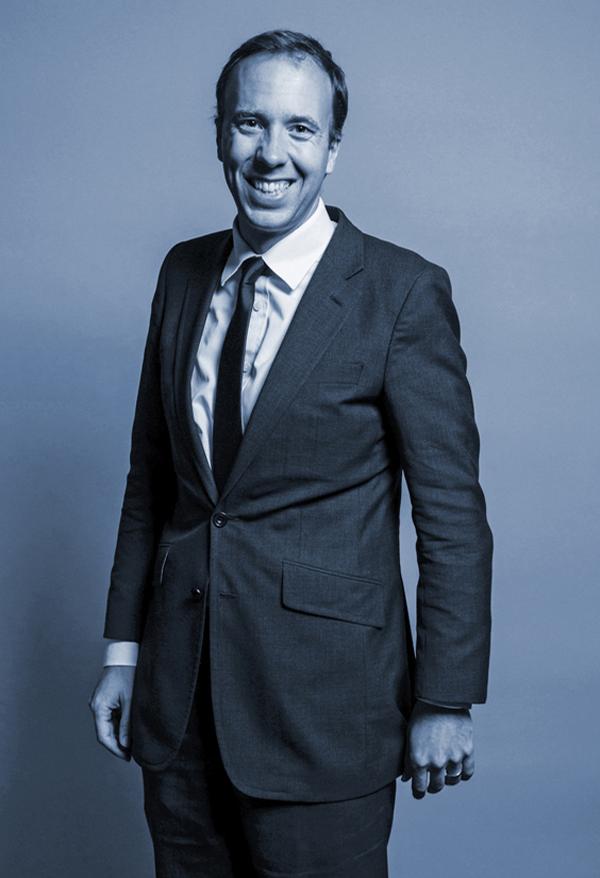
Health secretary Matt Hancock has a modern health epidemic to tackle
Ageing in the absence of disease needn’t be a problem until people reach their 90s / shutterstock
Ageing in the absence of disease needn’t be a problem until people reach their 90s / shutterstock
/ shutterstock_323449430
The fitness industry can start to reach out to those with long-term conditions / shutterstock
Panatta brought together four of the most influential figures in bodybuilding history on the
stage of RiminiWellness 2026: Phil Heath, Lee Haney, Ronnie Coleman and Hany Rambod. [more...]
There have been two revolutions in healthcare. The first in the 19th Century was the Public Health Revolution in which large-scale engineering of sewers and water systems – enabled by stable government and growing wealth – reduced mortality from the great epidemics that ravaged Europe.
The most feared were cholera and typhoid – and then came the clean water revolution as a solution.
The last 50 years have seen the second wave of change, the High Tech Revolution, in which developments such as MRI, transplantation, chemotherapy and joint replacement have transformed the health of individuals and populations, when delivered by well-organised services and funded by a growing economy.
However, at the end of this second revolution, we’re facing significant challenges, with rising demand and no parallel increase in finance.
Furthermore, we know that increases in life expectancy are stalling and that the gap in life expectancy between the wealthiest and most deprived subsections of society remains stubbornly wide.
Another challenge we face is population ageing, and there are great fears about the impact of this on individuals, their families, health and social care services and the economic wealth of nations.
However recent research has demonstrated that this fear is not based on evidence and that in fact disability, dementia and frailty can be prevented or delayed, providing we embrace the third healthcare revolution – the Activity Revolution.
COMBATTING THE NEW EPIDEMIC Inactivity is a modern epidemic. Our bodies have evolved to be active, but we now live in an environment dominated by the car, the computer and the desk job.
Just as the clean water revolution required environmental and social change and also political support, so too does the third revolution. It’s now recognised that inactivity is a major preventable cause of our modern epidemics, where cancer, heart disease and type II diabetes have replaced cholera and typhoid.
Furthermore, we now know not only that activity can prevent many common diseases, but also that it can transform their treatment. It is – in the words of the Academy Medical Royal Colleges – “the miracle cure” and it’s been agreed that the NHS needs to promote activity therapy alongside drug therapy, operative therapy and psychological therapy.
THIRD healthcare revolution Unlike the second healthcare revolution, activity therapy will not just be delivered by major hospitals and health centres. It will also harness the power of what has been called the third industrial revolution – namely citizens’ knowledge and the internet.
The real key to it is knowledge, and it’s clear that the public and many health service professionals are ignorant or muddled about the effects of ageing, loss of fitness and disease, and the great potential for prevention and treatment.
the impact of ageing Ageing by itself isn’t a major cause of problems until people reach their mid-90s. It’s a normal biological process that reduces ability and resilience – namely the ability to respond to challenges. However, many people believe that the loss of physical capacity they experience from their 20s onwards is due to ageing, whereas it’s actually due to the modern epidemic – loss of fitness due to inactivity.
For most people, maximum ability starts to decline from their early 20s – usually when they get their first sitting job and car. A fitness gap then starts to open up between the best possible rate of decline and the actual rate of decline in their physical abilities and capacity.
For this reason loss of fitness and ageing are often confused. The picture becomes more complicated when disease occurs.
The impact of disease on fitness About 40 per cent of 40-year-olds have one long term condition and a proportion have more than one. The proportion of people with long-term conditions then increases by approximately 10 per cent every decade.
However, this increase in disease is not only because of ageing but also as a result of being exposed to risks that are either environmental, social or personal, such as bad diet and sedentary behaviour.
What’s also emerging is the way loss of fitness complicates disease and accelerates increases in the fitness gap, in part because of the direct effect of that disease and the response to it in terms of treatment.
For example, the direct effect of a heart attack is on heart muscle, but it also increases risk for social reasons because other people, including professional carers and family, can assume that the onset of disease indicates the need for more “care” and less activity – whereas, scientifically, the opposite is what’s required.
This means negative beliefs and pessimistic attitudes towards health are the key factors complicating disease and loss of fitness, and these four factors relate – as shown in the diagram on the right.
Prescribing activity therapy Of the 15 million people with long-term health conditions in the UK, about three million receive rehabilitation from highly skilled professionals. However, the remaining 13 million are simply given a pill, or a psychological intervention or some combination of the two.
What’s clear now is that all these people need activity therapy. Sometimes the activity therapy can replace the pill or psychological treatment, but often the two or three should be provided simultaneously.
Activity should be prescribed like a drug, not simply as an instruction, but as part of a process of information-giving, encouragement, facilitation and support.
We need to make use of the billions of interactions that people with long-term conditions have with doctors and nurses, health service staff and pharmacies, to keep nudging and encouraging them – but we also clearly need the full energy and skill of the fitness industry to swing in behind this drive to improve the health of the nation.
The fitness industry mostly sees people who want to reduce their risk of disease through activity, but it’s also starting to reach out to people who are living with long-term health conditions.
The launch of the new Universal Personalised Care initiative comes with the proposal to appoint 1,000 link workers whose responsibility it is to find therapeutic opportunities in addition to those provided by pharmacies, hospitals and mental health services.
This offers the best opportunity we’ve had so far to link the NHS and the fitness world in a single therapeutic alliance and we must work towards this goal with all possible haste to deliver on the Third Healthcare Revolution.
Sir Muir Gray
Loss of fitness due to inactivity can have wide-ranging effects on health
Health secretary Matt Hancock has a modern health epidemic to tackle
Ageing in the absence of disease needn’t be a problem until people reach their 90s / shutterstock
Ageing in the absence of disease needn’t be a problem until people reach their 90s / shutterstock
/ shutterstock_323449430
The fitness industry can start to reach out to those with long-term conditions / shutterstock
According to research which tracked more than 147,000 people for 30 years, 90-120 minutes
of strength training a week may deliver some of the biggest long-term health rewards.
The UK's four Chief Medical Officers have published a refreshed edition of Physical activity
guidelines: UK Chief Medical Officers' report, updating the evidence that underpins the nation's
physical activity recommendations and placing greater emphasis on strength, balance, reducing
sedentary behaviour and, for the first time, supporting people taking weight loss medications.
Places Leisure has exchanged contracts to build and operate a flagship £60m water and leisure
destination on behalf of Basingstoke and Deane Borough Council.
The Republic of Ireland will become the latest market in PureGym’s expanding international
portfolio, with the first launch planned for Dublin in 2027.
Anytime Fitness opened more than one club a day in 2025 and is on track to maintain this rate
of growth this year, as parent company Purpose Brands targets further international expansion.
The £33.9 million Leighton Leisure and Community Centre has opened in Leighton Buzzard, UK,
creating a next-generation public leisure, health and wellbeing hub for the local community.
Walnuts Leisure Centre in Orpington, in the London Borough of Bromley, has reopened following
a £17m transformation designed to secure the long-term future of the public leisure asset and
reposition it as a community wellbeing hub.
The Gym Group, has announced that it's sustained positive trading momentum has continued
through the first half of 2026 and the company remains confident about the outlook.
Panatta brought together four of the most influential figures in bodybuilding history on the
stage of RiminiWellness 2026: Phil Heath, Lee Haney, Ronnie Coleman and Hany Rambod. [more...]