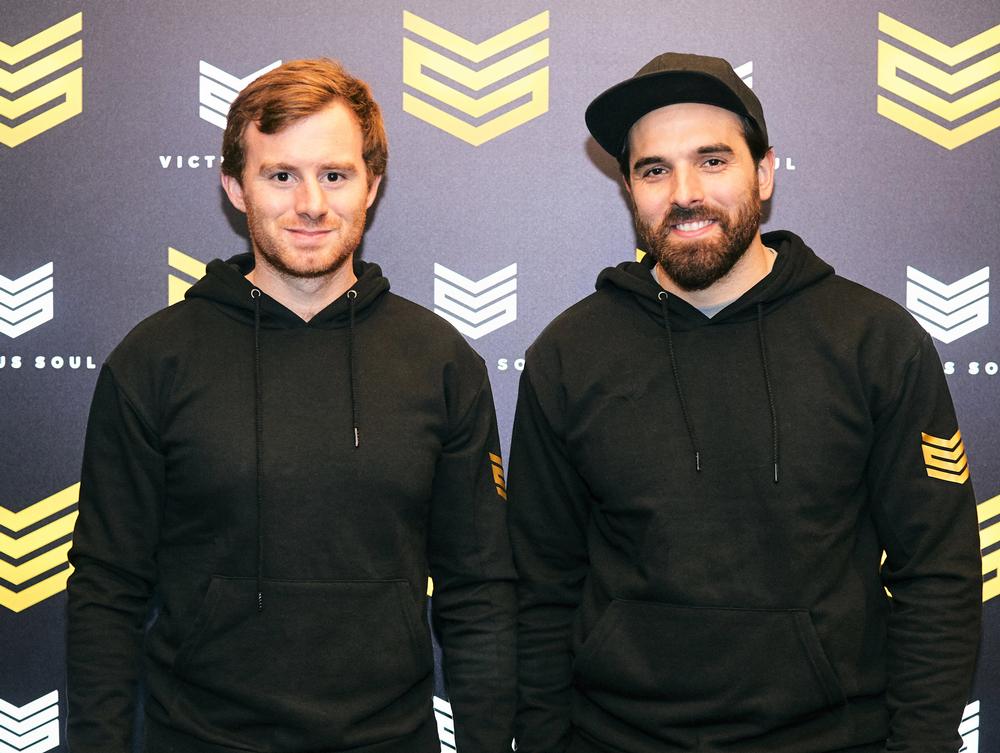
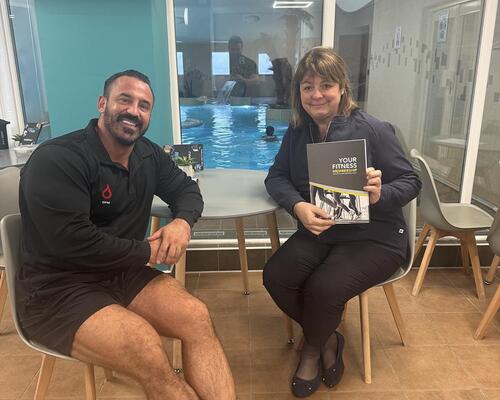
Paul Trendell and Chris Djuric met at university, and are now building their HIIT-focused brand
How did you come up with the idea for Victus Soul? PT: Chris and I had known each other for a long time – we went to the same university. We met up after we graduated, at which point I was working for Ernst & Young and Chris had just opened an énergie gym in Banbury.
We both recognised the great opportunity for low-cost gyms in London, so we met with Jan Spaticchia, founder of énergie, and signed a franchise agreement. We opened our first club in Bethnal Green in September 2014, which went incredibly well, and went on to open another four sites. We still own four énergie clubs – we sold one because it fell outside our rule of being no more than 45 minutes from where we live!
But we also found ourselves drawn to trying out a new model. We’d seen the boutique market growing, both in the UK and in the US, and were training in boutiques a lot ourselves, so we started to formulate the concept for Victus Soul.
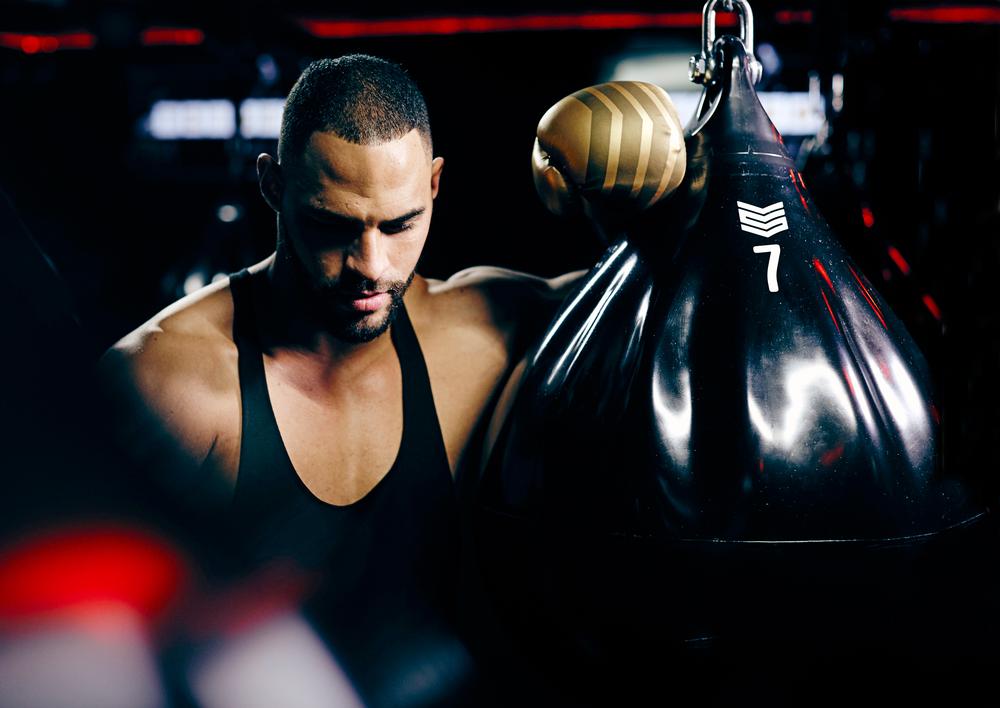
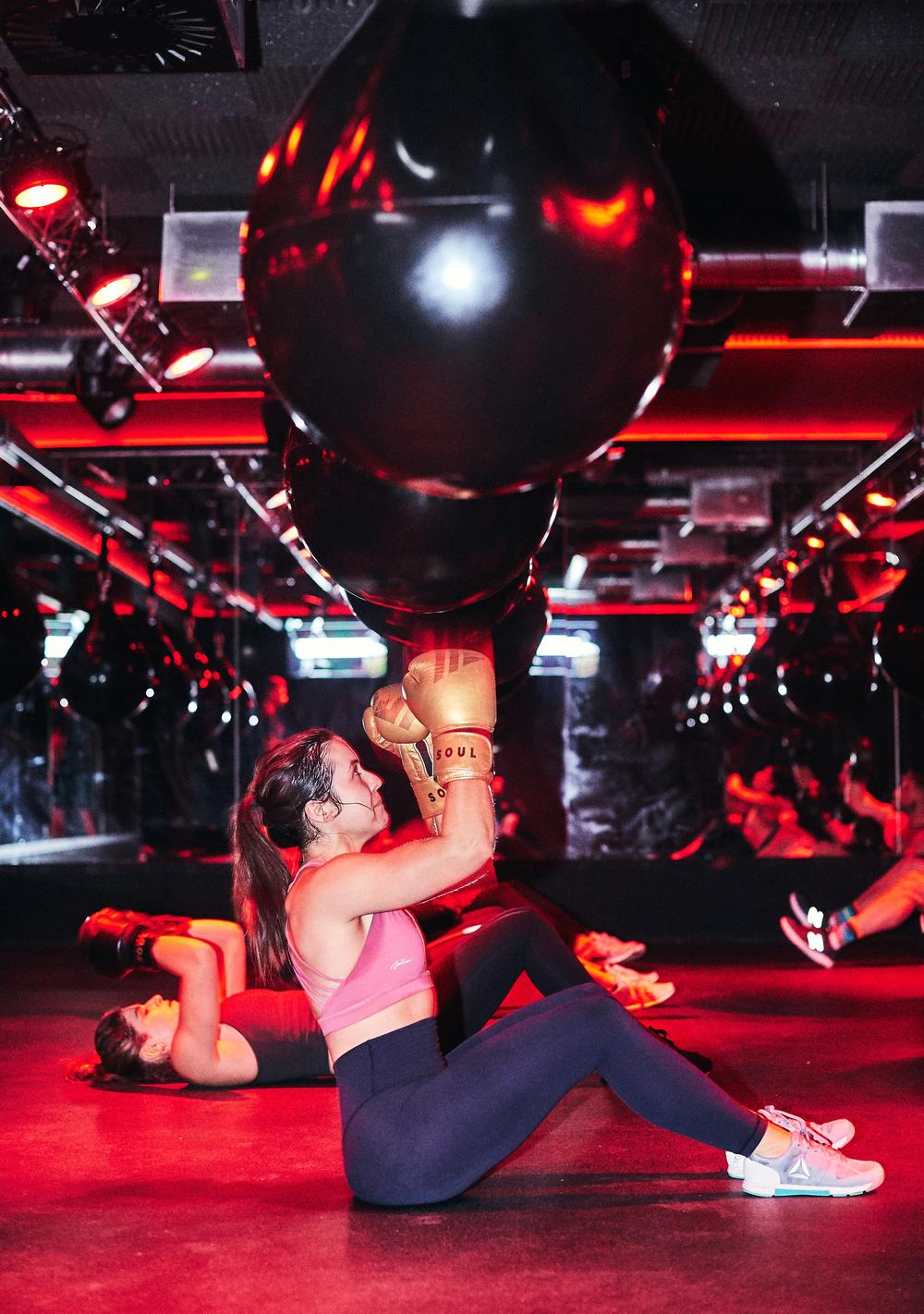
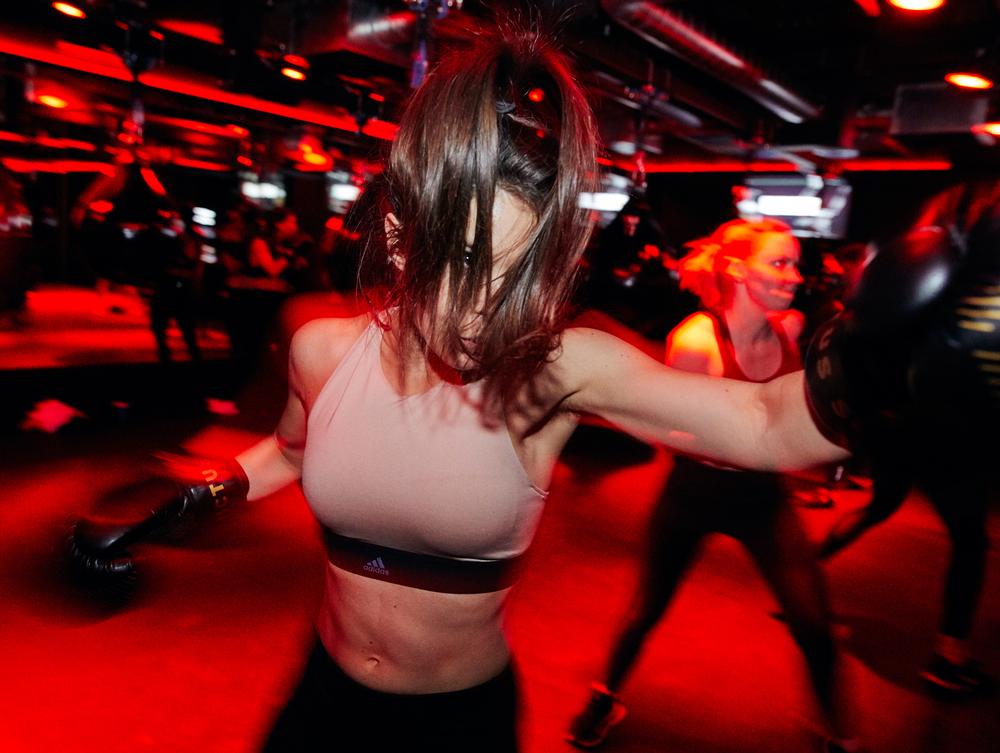
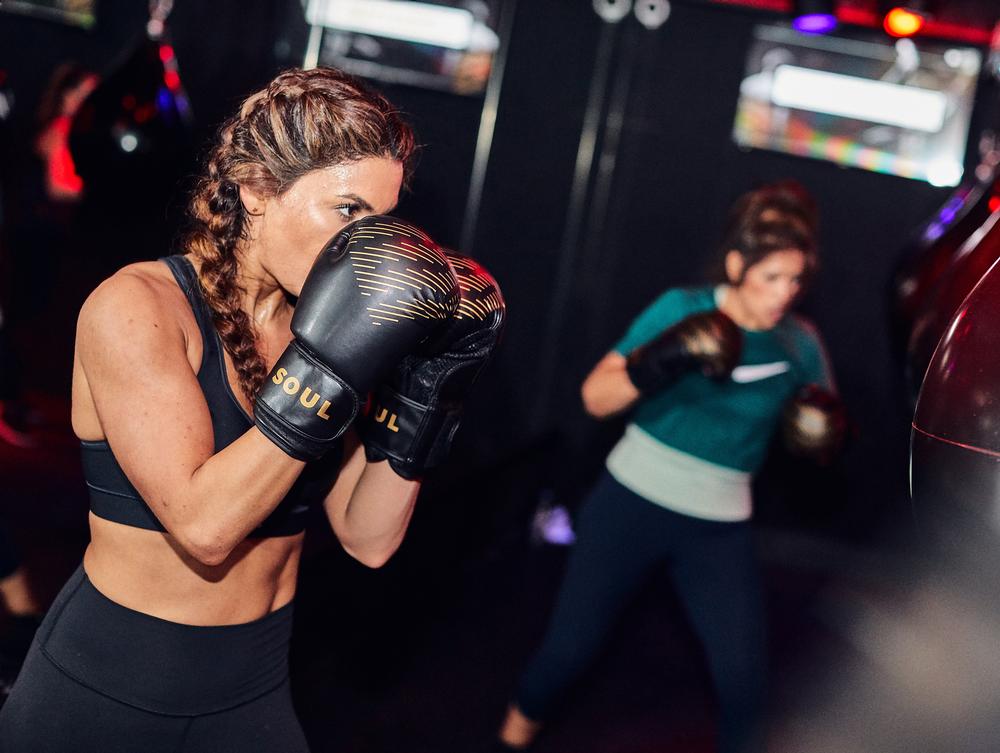
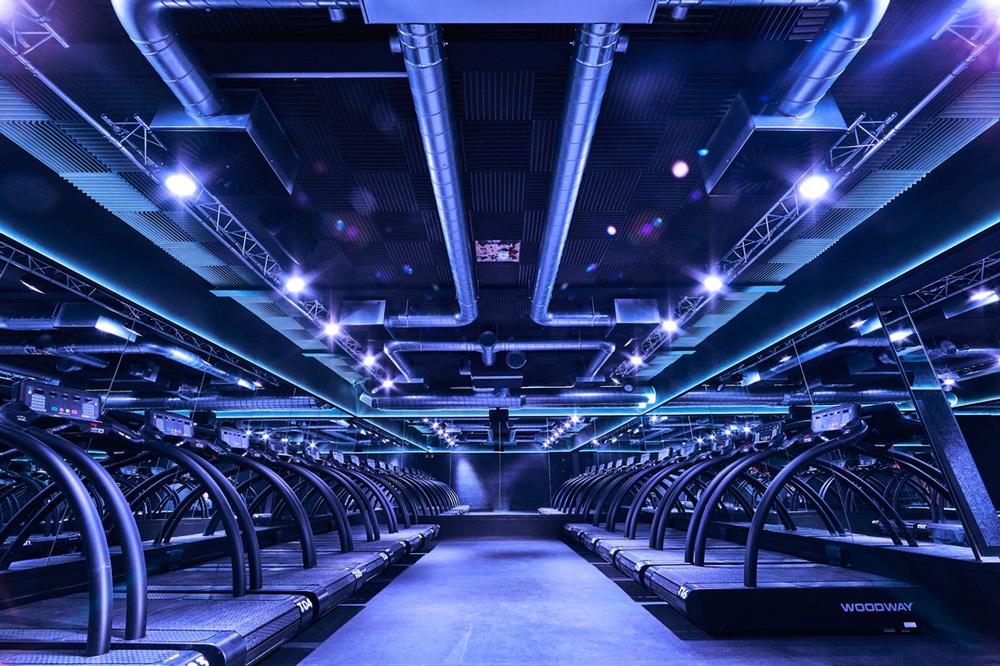
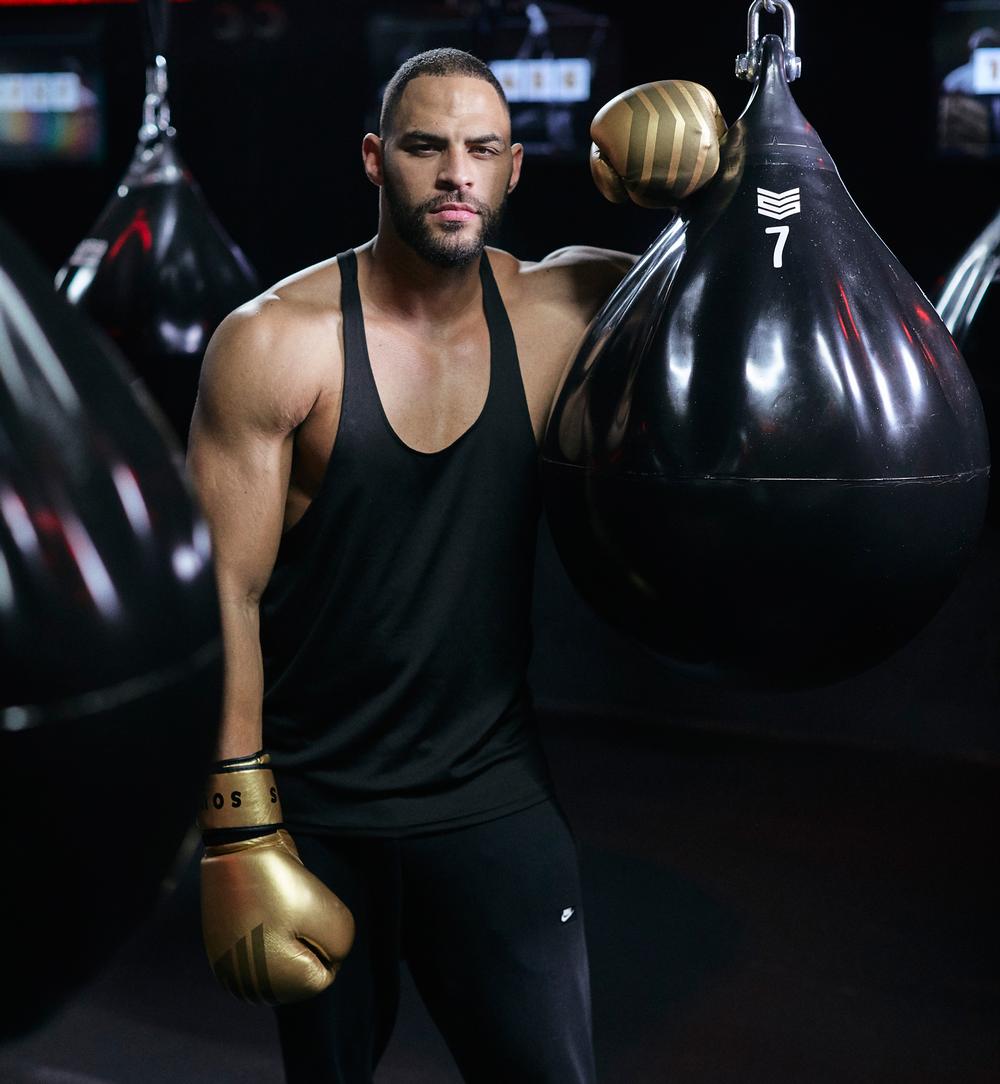
How would you describe the concept? PT: It’s a boutique focused on HIIT, offering running- and boxing-inspired group exercise classes. We have two studios – one focused on boxing and one on running. The floor-based interval is the same in both. It’s the cardio intervals that differ.
Our personal view is that the multi-discipline boutiques – studios with, for example, cycling, yoga and HIIT in one environment – aren’t where the market should be. We believe a boutique should be best in class at one thing, and that’s what brought us back to HIIT. It’s the most effective way to train and that’s what we want to specialise in. That’s our sole focus.
Recovery is a strong focus for us within all our HIIT classes. We don’t feel recovery is very well served in the market at the moment; if you’re asking anyone to train at the intensity they need to achieve in a HIIT class, they also need to recover just as hard.
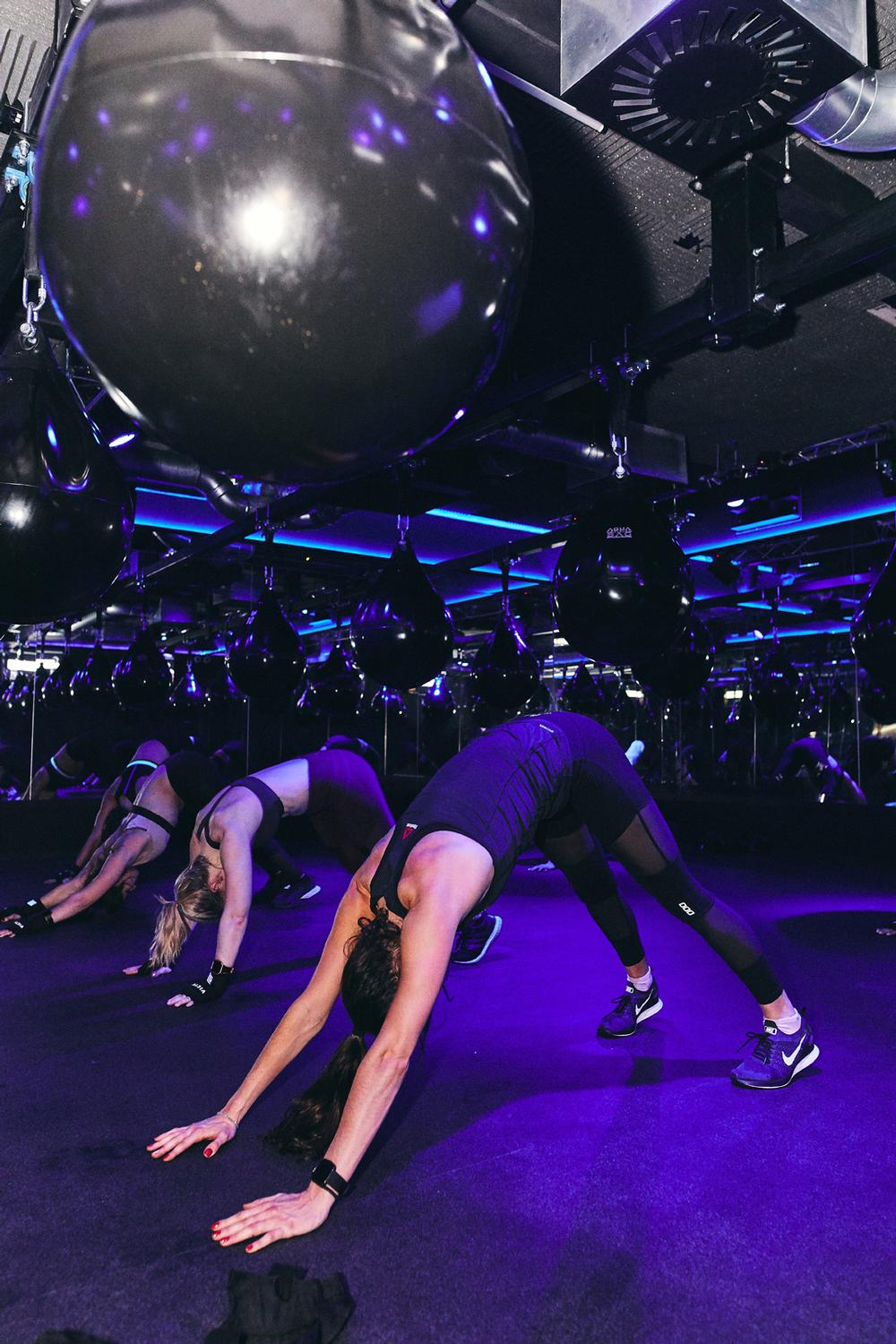
Tell us more about your approach to recovery CD: It’s active recovery, so it isn’t like some other studios where an instructor might even say: ‘If you need to leave now, please do.’ That will absolutely not happen at Victus Soul. All our instructors emphasise the importance of recovery, plus it isn’t really a separate section of the class – we do it subtly, so people don’t even realise it’s starting, and there’s nothing static. The whole workout flows into one and the start of the recovery is still quite challenging, but by the end of it we’ve brought people back to a stable state so they’re ready to leave. We end the class focusing on breathing, being aware of yourself and what you just achieved. We want people to go away feeling mentally good as well as physically good.
We give our instructors specialist training so they’re able to design their own recovery flows, focusing on the specific areas they’ve trained in that class.
In the end, we’d like 15 minutes of a 60-minute class to be focused on active recovery, but we need to work up to that. The market isn’t quite ready for that yet, and if you shove it down people’s throats you’ll lose them. At the moment, we’re doing about eight to 10 minutes in an hour’s class.
How have you designed your programming? CD: We split our sessions into primal movements. On Monday it’s Push and Pull, Wednesday is Squat and Lunge, Friday is Bend and Rotate. The other days are all full body. So the instructors have a framework – and there are certain exercises we’ve made off limits for safety reasons, because it’s group exercise – but we don’t tell them which exercises to do. They’re qualified to do that themselves, they’ve all had robust training in our concept, and we trust and empower them to choose their own moves.
The same goes for the cardio. Running is probably the best example here. You get some instructors who love doing endurance runs and some who love doing sprints, and they’re allowed to tailor their workouts around this. If we dictated exactly what they should be doing all the time, the customers would only be getting our preferences and that might not be to everyone’s tastes.
Consistency is a big focus for us: whatever class you come to, we want you to get a similar product. That in itself is a challenge when you have 20+ trainers with such different personalities to manage. Nevertheless, the idea is to let the trainers put their own spin on things, so their personality comes through in the programming.
How big are your studios? CD: We’ve made a conscious decision not to cram people in. Each of our studios has been designed to hold 32 people, even though they could take a lot more. We’ve left huge spaces around our work stations because we’d rather fill more classes, spreading the load across the day and making sure people are leaving happy. If you’re paying £20 a class, you don’t expect to be crammed in like cattle.
Community is key in the boutique sector. How will you build yours? CD: We wanted to create a hot spot for people to stay and have a drink after their workout – somewhere to socialise – so we’ve built an artisan coffee shop at ground floor level, with the studios downstairs.
It’s quite quirky, with an outdoor space we’ll bring online for the summer. We’ve partnered with Ozone Coffee, a premium New Zealand-based company, and everything we serve is very ethically sourced.
We’re hoping it will drive good revenue, but more important is its role in building a community. Our model isn’t just about driving people into the studio and getting them out as quickly as possible for the next to come in. We have the space to make it much more of a social experience.
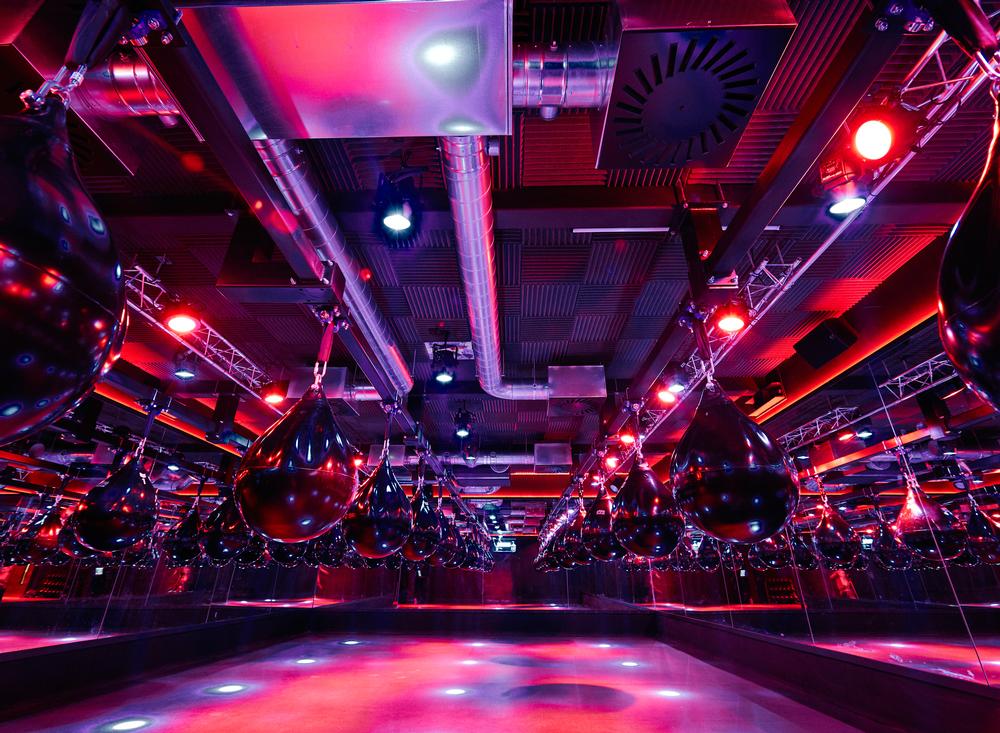
Tell us about the design of Victus Soul PT: It’s very industrial, very trendy, and we tried to use as many of the natural architectural features of the building as we could. There’s lots of exposed concrete, including polished concrete floors, and at the entrance there’s a big burnished mild steel wall. Obviously, I’m biased, but I feel that from a fit-out perspective, there isn’t anything in London that looks quite like Victus Soul.
CD: We sub-contracted everything ourselves, overseeing everything from the nitty-gritty of hiring self-employed bricklayers, plumbers, tilers, decorators… We didn’t just go with one company to do it all. It’s taken longer than we expected, cost us a little more than we expected, but at the end of the day we have a product we’re really pleased with. I don’t think we’d have this product had we gone with a contractor and done it all off an architect’s plan.
It’s a great location too. We bought it two years ago as an énergie Fit4less club, but when we approached énergie with our ideas to convert it into the first Victus Soul site, they were very supportive. It’s just too good a site not to turn into a boutique. We’ve spent £400,000 on the fit-out, and another £225,000 on equipment, largely funded by our existing énergie clubs.
PT: We’ve just done a small funding round, principally to get some people on board who expressed an interest to be involved at this stage, but we want to avoid giving away lots of equity. We expect to continue to fund the business ourselves, but we’d hope to get some institutional interest as we grow.
How tough is it to break into London’s busy boutique segment? CD: We believe there’s still space for new operators. We’ve spent a few years visiting boutique studios all over the world to identify what makes for a really good experience. We’ve also spent many hours drawing up our company values – things we believe make us stand out.
The first is ‘Conquer your journey’, because we’re not going to compare you to other people in class. It’s about what you can achieve and how you progress. The next is ‘Train for tomorrow’, which is all about recovery and good technique that means you’re able to come back and train again tomorrow. And the last one is ‘Protect our soul’, which is about doing everything ethically and sustainably – minimising the use of plastic in the studio, for example.
PT: It’s also interesting to note that, while the London boutique space is very busy, it’s dominated by independent studios and operators with perhaps three or four sites. There aren’t really any businesses that are controlling the space. You certainly don’t have anything like a SoulCycle in the UK.
Do you plan to control the space? PT: Our aspiration is certainly to scale the business quite quickly. We’re aiming to open another couple of clubs in London over the next 18 months to two years, getting up to five or six sites within three or four years.
We need to prove the concept initially, but we may then explore franchising options – working with énergie – as a way to expand into overseas markets such as other European capital cities.
Instructor training would be a big consideration and the one thing we would want to have central and complete control over. But principally, as long as we can lock down our concept and our product, I don’t see why it couldn’t be franchised.
We would, however, want to be in a position where our brand and product were so strong that we could afford to pick our franchisees – if you get a weak franchisee, it’s very difficult to control product quality.
What are your more immediate plans? CD: We’re launching with 36 classes on the timetable, focusing on the peak hours during weekdays as well as weekends; we’re only 15 minutes’ walk from London Bridge, and there’s a lot of residential property just south of the river there.
In time, we’d like to get closer to 100 classes a week, with an initial target of 72 classes at 40 per cent capacity. Break-even will be lower than that, but that’s where we’d like to be financially.
We expect to attract a different crowd at weekends, so we’ll probably try a few special classes too: a double class where you do both concepts in a 75-minute class, for example; a Marathon masterclass focused on running techniques; maybe some standalone recovery classes. But all that’s further down the road.
We also have something on paper that we’d like to do in the area of digital fitness. We’re exploring how we can cater to people who can’t get to our studio, as well as reaching out to support our customers outside of the club. For example, recovery shouldn’t just be something that happens for 10 minutes at the end of a class. It should also be something you think about at home, and just before you go to bed. But we don’t have any concrete plans yet.
What are your predictions for the boutique sector as a whole? PT: I would say that we’re a few years off consolidation, but once consolidation happens, I suspect it will be driven by the private equity houses buying products that their customer base is interested in. That would be my view based on my time spent in the City. Not so much consolidation of offering, but consolidation of ownership.
In the meantime, we’re seeing more big box gyms opening their own boutique-style offerings within their clubs. The question, of course, is: Can they really be so good at delivering one thing when they have all the other gym operations to deliver? Because let’s be honest – if they can do that, our concept is in trouble!
However, we feel comfortable that the amount of work that goes into getting our trainers as good as they are, and our product as good as it is… it would really be impossible for one of the big box gyms to finance and deliver that.
Victus Soul vital statistics
Location: Aldgate, London
Opened: 26 November 2018
Size: 6,000sq ft
Timetable: 36 classes a week at launch
Studio capacity: 32 people per studio
Price per class: £20 – packages also available
Membership: £250 a month for unlimited usage
The HIIT classes are focused around boxing or running
Members can expect classes that offer enough space to train
Victus Soul classes focus on active recovery, with instructors having received special training on how to develop their own recovery flows
Classes focus on good technique and recovery so members train safely and efficiently
The aim is for Victus Soul to be a social place, where members want to hang out for a drink after training
Elevate is set to celebrate its 10th anniversary in style this June, with organisers
confirming the event’s largest-ever drinks reception as registrations continue to run more
than 10% ahead of last year. [more...]
One of the biggest mistakes the fitness industry still makes is advertising almost
exclusively to people who already look and live like gym members. [more...]
Paul Trendell and Chris Djuric met at university, and are now building their HIIT-focused brand
How did you come up with the idea for Victus Soul? PT: Chris and I had known each other for a long time – we went to the same university. We met up after we graduated, at which point I was working for Ernst & Young and Chris had just opened an énergie gym in Banbury.
We both recognised the great opportunity for low-cost gyms in London, so we met with Jan Spaticchia, founder of énergie, and signed a franchise agreement. We opened our first club in Bethnal Green in September 2014, which went incredibly well, and went on to open another four sites. We still own four énergie clubs – we sold one because it fell outside our rule of being no more than 45 minutes from where we live!
But we also found ourselves drawn to trying out a new model. We’d seen the boutique market growing, both in the UK and in the US, and were training in boutiques a lot ourselves, so we started to formulate the concept for Victus Soul.
How would you describe the concept? PT: It’s a boutique focused on HIIT, offering running- and boxing-inspired group exercise classes. We have two studios – one focused on boxing and one on running. The floor-based interval is the same in both. It’s the cardio intervals that differ.
Our personal view is that the multi-discipline boutiques – studios with, for example, cycling, yoga and HIIT in one environment – aren’t where the market should be. We believe a boutique should be best in class at one thing, and that’s what brought us back to HIIT. It’s the most effective way to train and that’s what we want to specialise in. That’s our sole focus.
Recovery is a strong focus for us within all our HIIT classes. We don’t feel recovery is very well served in the market at the moment; if you’re asking anyone to train at the intensity they need to achieve in a HIIT class, they also need to recover just as hard.
Tell us more about your approach to recovery CD: It’s active recovery, so it isn’t like some other studios where an instructor might even say: ‘If you need to leave now, please do.’ That will absolutely not happen at Victus Soul. All our instructors emphasise the importance of recovery, plus it isn’t really a separate section of the class – we do it subtly, so people don’t even realise it’s starting, and there’s nothing static. The whole workout flows into one and the start of the recovery is still quite challenging, but by the end of it we’ve brought people back to a stable state so they’re ready to leave. We end the class focusing on breathing, being aware of yourself and what you just achieved. We want people to go away feeling mentally good as well as physically good.
We give our instructors specialist training so they’re able to design their own recovery flows, focusing on the specific areas they’ve trained in that class.
In the end, we’d like 15 minutes of a 60-minute class to be focused on active recovery, but we need to work up to that. The market isn’t quite ready for that yet, and if you shove it down people’s throats you’ll lose them. At the moment, we’re doing about eight to 10 minutes in an hour’s class.
How have you designed your programming? CD: We split our sessions into primal movements. On Monday it’s Push and Pull, Wednesday is Squat and Lunge, Friday is Bend and Rotate. The other days are all full body. So the instructors have a framework – and there are certain exercises we’ve made off limits for safety reasons, because it’s group exercise – but we don’t tell them which exercises to do. They’re qualified to do that themselves, they’ve all had robust training in our concept, and we trust and empower them to choose their own moves.
The same goes for the cardio. Running is probably the best example here. You get some instructors who love doing endurance runs and some who love doing sprints, and they’re allowed to tailor their workouts around this. If we dictated exactly what they should be doing all the time, the customers would only be getting our preferences and that might not be to everyone’s tastes.
Consistency is a big focus for us: whatever class you come to, we want you to get a similar product. That in itself is a challenge when you have 20+ trainers with such different personalities to manage. Nevertheless, the idea is to let the trainers put their own spin on things, so their personality comes through in the programming.
How big are your studios? CD: We’ve made a conscious decision not to cram people in. Each of our studios has been designed to hold 32 people, even though they could take a lot more. We’ve left huge spaces around our work stations because we’d rather fill more classes, spreading the load across the day and making sure people are leaving happy. If you’re paying £20 a class, you don’t expect to be crammed in like cattle.
Community is key in the boutique sector. How will you build yours? CD: We wanted to create a hot spot for people to stay and have a drink after their workout – somewhere to socialise – so we’ve built an artisan coffee shop at ground floor level, with the studios downstairs.
It’s quite quirky, with an outdoor space we’ll bring online for the summer. We’ve partnered with Ozone Coffee, a premium New Zealand-based company, and everything we serve is very ethically sourced.
We’re hoping it will drive good revenue, but more important is its role in building a community. Our model isn’t just about driving people into the studio and getting them out as quickly as possible for the next to come in. We have the space to make it much more of a social experience.
Tell us about the design of Victus Soul PT: It’s very industrial, very trendy, and we tried to use as many of the natural architectural features of the building as we could. There’s lots of exposed concrete, including polished concrete floors, and at the entrance there’s a big burnished mild steel wall. Obviously, I’m biased, but I feel that from a fit-out perspective, there isn’t anything in London that looks quite like Victus Soul.
CD: We sub-contracted everything ourselves, overseeing everything from the nitty-gritty of hiring self-employed bricklayers, plumbers, tilers, decorators… We didn’t just go with one company to do it all. It’s taken longer than we expected, cost us a little more than we expected, but at the end of the day we have a product we’re really pleased with. I don’t think we’d have this product had we gone with a contractor and done it all off an architect’s plan.
It’s a great location too. We bought it two years ago as an énergie Fit4less club, but when we approached énergie with our ideas to convert it into the first Victus Soul site, they were very supportive. It’s just too good a site not to turn into a boutique. We’ve spent £400,000 on the fit-out, and another £225,000 on equipment, largely funded by our existing énergie clubs.
PT: We’ve just done a small funding round, principally to get some people on board who expressed an interest to be involved at this stage, but we want to avoid giving away lots of equity. We expect to continue to fund the business ourselves, but we’d hope to get some institutional interest as we grow.
How tough is it to break into London’s busy boutique segment? CD: We believe there’s still space for new operators. We’ve spent a few years visiting boutique studios all over the world to identify what makes for a really good experience. We’ve also spent many hours drawing up our company values – things we believe make us stand out.
The first is ‘Conquer your journey’, because we’re not going to compare you to other people in class. It’s about what you can achieve and how you progress. The next is ‘Train for tomorrow’, which is all about recovery and good technique that means you’re able to come back and train again tomorrow. And the last one is ‘Protect our soul’, which is about doing everything ethically and sustainably – minimising the use of plastic in the studio, for example.
PT: It’s also interesting to note that, while the London boutique space is very busy, it’s dominated by independent studios and operators with perhaps three or four sites. There aren’t really any businesses that are controlling the space. You certainly don’t have anything like a SoulCycle in the UK.
Do you plan to control the space? PT: Our aspiration is certainly to scale the business quite quickly. We’re aiming to open another couple of clubs in London over the next 18 months to two years, getting up to five or six sites within three or four years.
We need to prove the concept initially, but we may then explore franchising options – working with énergie – as a way to expand into overseas markets such as other European capital cities.
Instructor training would be a big consideration and the one thing we would want to have central and complete control over. But principally, as long as we can lock down our concept and our product, I don’t see why it couldn’t be franchised.
We would, however, want to be in a position where our brand and product were so strong that we could afford to pick our franchisees – if you get a weak franchisee, it’s very difficult to control product quality.
What are your more immediate plans? CD: We’re launching with 36 classes on the timetable, focusing on the peak hours during weekdays as well as weekends; we’re only 15 minutes’ walk from London Bridge, and there’s a lot of residential property just south of the river there.
In time, we’d like to get closer to 100 classes a week, with an initial target of 72 classes at 40 per cent capacity. Break-even will be lower than that, but that’s where we’d like to be financially.
We expect to attract a different crowd at weekends, so we’ll probably try a few special classes too: a double class where you do both concepts in a 75-minute class, for example; a Marathon masterclass focused on running techniques; maybe some standalone recovery classes. But all that’s further down the road.
We also have something on paper that we’d like to do in the area of digital fitness. We’re exploring how we can cater to people who can’t get to our studio, as well as reaching out to support our customers outside of the club. For example, recovery shouldn’t just be something that happens for 10 minutes at the end of a class. It should also be something you think about at home, and just before you go to bed. But we don’t have any concrete plans yet.
What are your predictions for the boutique sector as a whole? PT: I would say that we’re a few years off consolidation, but once consolidation happens, I suspect it will be driven by the private equity houses buying products that their customer base is interested in. That would be my view based on my time spent in the City. Not so much consolidation of offering, but consolidation of ownership.
In the meantime, we’re seeing more big box gyms opening their own boutique-style offerings within their clubs. The question, of course, is: Can they really be so good at delivering one thing when they have all the other gym operations to deliver? Because let’s be honest – if they can do that, our concept is in trouble!
However, we feel comfortable that the amount of work that goes into getting our trainers as good as they are, and our product as good as it is… it would really be impossible for one of the big box gyms to finance and deliver that.
Victus Soul vital statistics
Location: Aldgate, London
Opened: 26 November 2018
Size: 6,000sq ft
Timetable: 36 classes a week at launch
Studio capacity: 32 people per studio
Price per class: £20 – packages also available
Membership: £250 a month for unlimited usage
The HIIT classes are focused around boxing or running
Members can expect classes that offer enough space to train
Victus Soul classes focus on active recovery, with instructors having received special training on how to develop their own recovery flows
Classes focus on good technique and recovery so members train safely and efficiently
The aim is for Victus Soul to be a social place, where members want to hang out for a drink after training
Global luxury hospitality brand, Six Senses, has partnered with longevity healthcare provider,
HUM2N, to launch a clinic at Six Senses London, at The Whiteley.
Premium London health club, KX Chelsea, will imminently unveil its most significant
redevelopment since its launch in 2002 to create an integrated wellness model combining
training, recovery and relaxation.
Researchers in the US have identified an antibody which could greatly reduce the loss of lean
muscle mass in people who are taking weight-loss medications.
Crunch Fitness has announced the launch of Crunch Reform Pilates – its own reformer concept
designed to bring this fast growing, but rather expensive, modality into the mainstream.
The 20th State of the Industry Report reveals a resilient, expanding and competitive
sector, the
importance of differentiation and the ongoing challenge of tackling inequalities.
Nuffield Health has told HCM that it takes its responsibilities towards its colleagues seriously
and is committed to meeting all legal obligations after news of a tribunal has made national
headlines.
Technogym has announced the launch of the Run X World Treadmill Championship, the first
world championship for running on connected treadmills over five kilometres.
Elevate is set to celebrate its 10th anniversary in style this June, with organisers
confirming the event’s largest-ever drinks reception as registrations continue to run more
than 10% ahead of last year. [more...]
One of the biggest mistakes the fitness industry still makes is advertising almost
exclusively to people who already look and live like gym members. [more...]