The ubiquity of screens offers our sector greater reach than ever before. The challenge is to find creative solutions to transform this perceived threat into an opportunity
By Jak Phillips | Published in Health Club Management 2019 issue 1
Companies like Peloton are harnessing screen power to offer engaging fitness options
Addictive’, ‘deadly’, ‘the scourge of modern living’ – just some of the warning sirens from our growing moral panic around screen time.
Whether it’s new ukactive research that UK adults spend an average of 12 hours a week watching on-demand TV, or those amusing YouTube videos of toddlers furtively trying to swipe and zoom in on newspapers, seemingly everything today signals the impending apocalypse where screens finally take over.
Make no mistake, screens are everywhere. They’re in our living rooms, atop our desks, in our pockets even. The chances are, you’re reading these words on a screen.
But what’s so bad about that? Screens aren’t to blame for our ‘box-set binges’ and love affair with the chair, it’s the content. Screens don’t force people to stare at them for hours at a time, it’s the fact that Netflix does such a bloody good job of producing addictive content.
Content Landmarks Idle forms of content currently dominate our screen time, but there’s no reason why the health and fitness sector can’t fight back with its own inspiring content to get people moving. It’s not like we haven’t done it before.
Think back to Jack LaLanne in the 1950s, Jane Fonda in the 1980s and Mr Motivator in the 1990s – they all became big ‘on the box’. Far from being the enemy of exercise, many of the landmark moments in our fledgeling fitness movement have stemmed from the screen.
The ubiquity of screens offers our sector greater reach than ever before. The challenge now is to find creative solutions to transform this perceived threat into an unprecedented opportunity.
Many firms have already started, and as digital fitness has exploded in recent years, the mission to establish fitness facilities as consumers’ ‘third space’ has moved into cyberspace.
The fitness content war is coming And this is where the quality of content is key. Just as the dodgy on-screen instructors and faded projectors initially gave virtual fitness a bad name in health clubs, it’s the high-quality offerings now becoming the norm that are currently fuelling this new wave of virtual and on-demand fitness.
The content war is well underway, and the stakes are quickly rising. US private equity-backed Peloton recently arrived in London with much fanfare and is opening a production studio dedicated to creating ‘UK-centric’ fitness content.
Pitting itself against the traditional gym market, Peloton aims to persuade consumers to part with £2,000 for a bike and £40 a month in subscription fees to work out at home instead, with its array of streamed classes.
Meanwhile, established market players – such as Fitness On Demand, Wexer Virtual and Les Mills On Demand – are working with health and fitness clubs to bridge the gap between members’ homes and the gym, with fitness subscription services that offer an exercise touchpoint in between club visits.
And then there are a growing number of boutique clubs starting to offer live and recorded feeds of their workouts to be broadcast through streaming services such as ClassPass Live.
What does all this mean for health clubs? There are those who believe that on-demand fitness offerings will negate the need for the health club and ultimately cost them members.
But the initial numbers don’t seem to bear this out. As the digital fitness revolution has gathered pace over the past decade, gym memberships and penetration rates have continued to steadily increase.
The evidence suggests that digital fitness is helping to bring more people into the world of fitness – the inactive, the self-conscious, the time-poor – with many then graduating into the club space, as they did in droves when the Fondas and LaLannes first hit our screens.
You only have to look to the music industry, which has similarly been disrupted by streaming services to see how this can play out. Most people have a Spotify subscription, but live music has never been more popular, with attendances to gigs and festivals at an all-time high. It just shows how live experiences will always be the pinnacle.
It’s the same story with virtual fitness in gyms. Far from cannibalising the group fitness crowd, industry research has shown clubs that install virtual fitness in their studio see an average 12 per cent increase in attendances to live classes.
Quality content gets people moving and crucially, it helps provide sustainable inspiration. We know the main reasons people leave gyms are down to perceived cost, convenience and lack of time – all of which ultimately boil down to a loss of motivation. A loss of motivation to fork out for that membership, to make that trip to the gym, to create the time for that regular workout.
By offering fitness at members’ fingertips, we can support them to stay in the fitness groove and maintain motivation whether they’re stuck at home, or at work or are travelling.
The gyms that win will be those that can form the right partnerships to extend their reach beyond their four walls through top quality content. They’ll keep current members engaged and will open up a route to reach the 85 per cent of adults who aren’t currently members of a gym. They’ll be primed to help these audiences dip their toe into the world of fitness, before graduating from home workouts into the club space.
The competition will be fierce, but the potential spoils are seismic. Forget being our biggest enemy, screens could yet prove to be the gym’s best friend.
Companies like Fitness on Demand are harnessing screen power to offer engaging fitness options
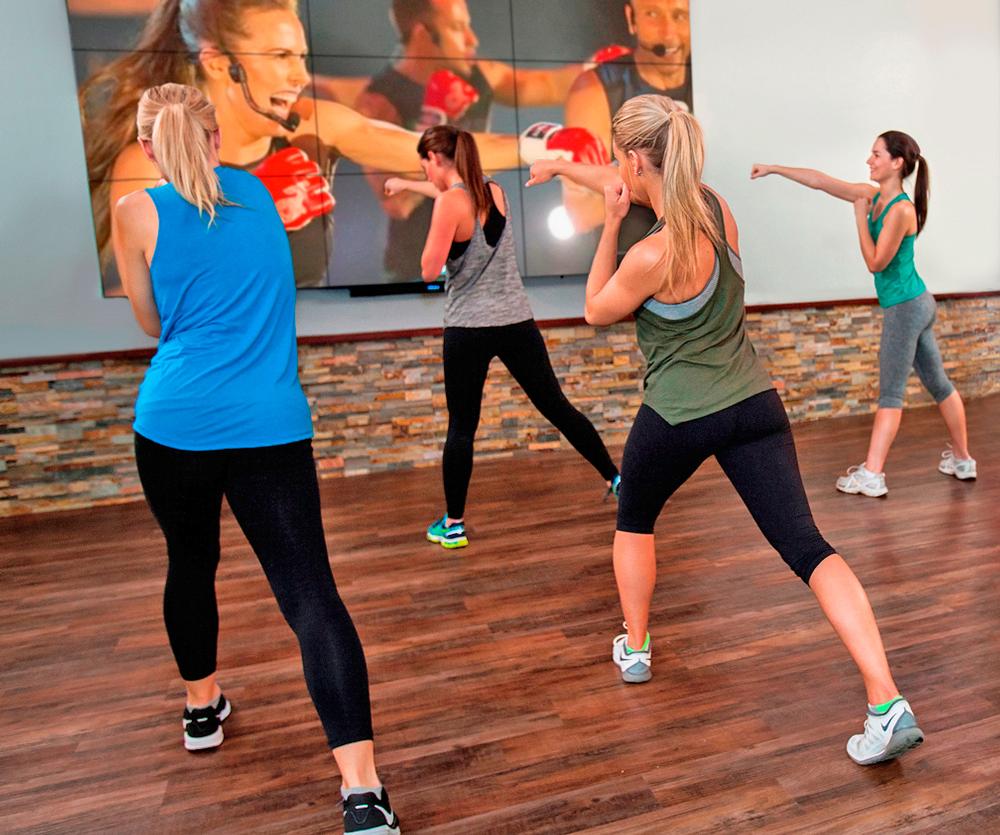
Companies like Les Mills are harnessing screen power to offer engaging fitness options
Panatta brought together four of the most influential figures in bodybuilding history on the
stage of RiminiWellness 2026: Phil Heath, Lee Haney, Ronnie Coleman and Hany Rambod. [more...]
Active Blackpool is deploying Cornerstone Connect, a new digital interface allowing
disparate information from multiple systems to be aggregated into one dataset, to support
its focus on reducing health inequalities and improving healthy life expectancy. [more...]
The ubiquity of screens offers our sector greater reach than ever before. The challenge is to find creative solutions to transform this perceived threat into an opportunity
By Jak Phillips | Published in Health Club Management 2019 issue 1
Companies like Peloton are harnessing screen power to offer engaging fitness options
Addictive’, ‘deadly’, ‘the scourge of modern living’ – just some of the warning sirens from our growing moral panic around screen time.
Whether it’s new ukactive research that UK adults spend an average of 12 hours a week watching on-demand TV, or those amusing YouTube videos of toddlers furtively trying to swipe and zoom in on newspapers, seemingly everything today signals the impending apocalypse where screens finally take over.
Make no mistake, screens are everywhere. They’re in our living rooms, atop our desks, in our pockets even. The chances are, you’re reading these words on a screen.
But what’s so bad about that? Screens aren’t to blame for our ‘box-set binges’ and love affair with the chair, it’s the content. Screens don’t force people to stare at them for hours at a time, it’s the fact that Netflix does such a bloody good job of producing addictive content.
Content Landmarks Idle forms of content currently dominate our screen time, but there’s no reason why the health and fitness sector can’t fight back with its own inspiring content to get people moving. It’s not like we haven’t done it before.
Think back to Jack LaLanne in the 1950s, Jane Fonda in the 1980s and Mr Motivator in the 1990s – they all became big ‘on the box’. Far from being the enemy of exercise, many of the landmark moments in our fledgeling fitness movement have stemmed from the screen.
The ubiquity of screens offers our sector greater reach than ever before. The challenge now is to find creative solutions to transform this perceived threat into an unprecedented opportunity.
Many firms have already started, and as digital fitness has exploded in recent years, the mission to establish fitness facilities as consumers’ ‘third space’ has moved into cyberspace.
The fitness content war is coming And this is where the quality of content is key. Just as the dodgy on-screen instructors and faded projectors initially gave virtual fitness a bad name in health clubs, it’s the high-quality offerings now becoming the norm that are currently fuelling this new wave of virtual and on-demand fitness.
The content war is well underway, and the stakes are quickly rising. US private equity-backed Peloton recently arrived in London with much fanfare and is opening a production studio dedicated to creating ‘UK-centric’ fitness content.
Pitting itself against the traditional gym market, Peloton aims to persuade consumers to part with £2,000 for a bike and £40 a month in subscription fees to work out at home instead, with its array of streamed classes.
Meanwhile, established market players – such as Fitness On Demand, Wexer Virtual and Les Mills On Demand – are working with health and fitness clubs to bridge the gap between members’ homes and the gym, with fitness subscription services that offer an exercise touchpoint in between club visits.
And then there are a growing number of boutique clubs starting to offer live and recorded feeds of their workouts to be broadcast through streaming services such as ClassPass Live.
What does all this mean for health clubs? There are those who believe that on-demand fitness offerings will negate the need for the health club and ultimately cost them members.
But the initial numbers don’t seem to bear this out. As the digital fitness revolution has gathered pace over the past decade, gym memberships and penetration rates have continued to steadily increase.
The evidence suggests that digital fitness is helping to bring more people into the world of fitness – the inactive, the self-conscious, the time-poor – with many then graduating into the club space, as they did in droves when the Fondas and LaLannes first hit our screens.
You only have to look to the music industry, which has similarly been disrupted by streaming services to see how this can play out. Most people have a Spotify subscription, but live music has never been more popular, with attendances to gigs and festivals at an all-time high. It just shows how live experiences will always be the pinnacle.
It’s the same story with virtual fitness in gyms. Far from cannibalising the group fitness crowd, industry research has shown clubs that install virtual fitness in their studio see an average 12 per cent increase in attendances to live classes.
Quality content gets people moving and crucially, it helps provide sustainable inspiration. We know the main reasons people leave gyms are down to perceived cost, convenience and lack of time – all of which ultimately boil down to a loss of motivation. A loss of motivation to fork out for that membership, to make that trip to the gym, to create the time for that regular workout.
By offering fitness at members’ fingertips, we can support them to stay in the fitness groove and maintain motivation whether they’re stuck at home, or at work or are travelling.
The gyms that win will be those that can form the right partnerships to extend their reach beyond their four walls through top quality content. They’ll keep current members engaged and will open up a route to reach the 85 per cent of adults who aren’t currently members of a gym. They’ll be primed to help these audiences dip their toe into the world of fitness, before graduating from home workouts into the club space.
The competition will be fierce, but the potential spoils are seismic. Forget being our biggest enemy, screens could yet prove to be the gym’s best friend.
Companies like Fitness on Demand are harnessing screen power to offer engaging fitness options
Companies like Les Mills are harnessing screen power to offer engaging fitness options
According to research which tracked more than 147,000 people for 30 years, 90-120 minutes
of strength training a week may deliver some of the biggest long-term health rewards.
The UK's four Chief Medical Officers have published a refreshed edition of Physical activity
guidelines: UK Chief Medical Officers' report, updating the evidence that underpins the nation's
physical activity recommendations and placing greater emphasis on strength, balance, reducing
sedentary behaviour and, for the first time, supporting people taking weight loss medications.
Places Leisure has exchanged contracts to build and operate a flagship £60m water and leisure
destination on behalf of Basingstoke and Deane Borough Council.
The Republic of Ireland will become the latest market in PureGym’s expanding international
portfolio, with the first launch planned for Dublin in 2027.
Anytime Fitness opened more than one club a day in 2025 and is on track to maintain this rate
of growth this year, as parent company Purpose Brands targets further international expansion.
The £33.9 million Leighton Leisure and Community Centre has opened in Leighton Buzzard, UK,
creating a next-generation public leisure, health and wellbeing hub for the local community.
Walnuts Leisure Centre in Orpington, in the London Borough of Bromley, has reopened following
a £17m transformation designed to secure the long-term future of the public leisure asset and
reposition it as a community wellbeing hub.
The Gym Group, has announced that it's sustained positive trading momentum has continued
through the first half of 2026 and the company remains confident about the outlook.
Panatta brought together four of the most influential figures in bodybuilding history on the
stage of RiminiWellness 2026: Phil Heath, Lee Haney, Ronnie Coleman and Hany Rambod. [more...]
Active Blackpool is deploying Cornerstone Connect, a new digital interface allowing
disparate information from multiple systems to be aggregated into one dataset, to support
its focus on reducing health inequalities and improving healthy life expectancy. [more...]