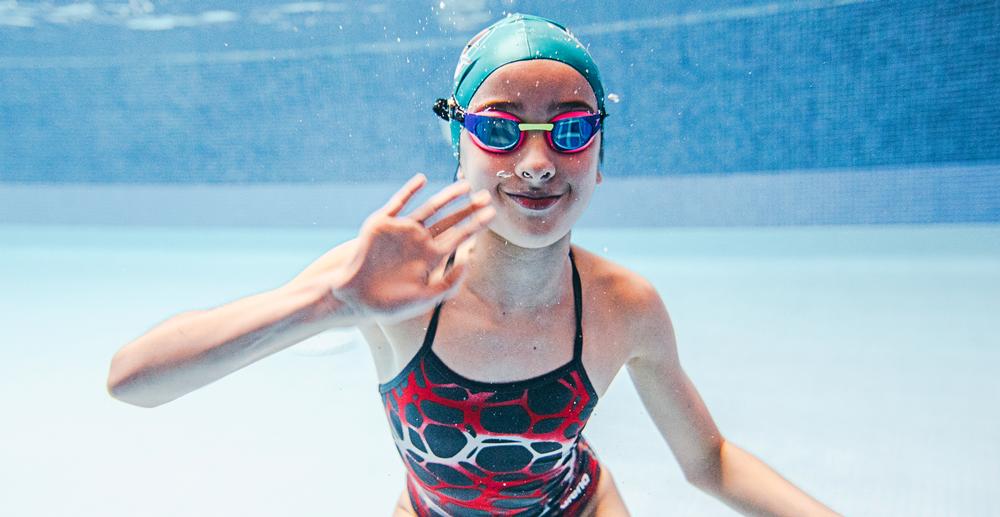
Currently, only 45 per cent of 11 year olds are able to swim 25 metres
Eduardo Ferré, founder and group director of Swimming Nature
I was thrilled to read the recent news story about the Department for Education increasing funding for schools to ensure every child knows how to swim by the end of primary school. There have been major improvements made to increase children’s physical activity levels, but swimming is one area where some state sector schools continue to struggle. This increase in funding is a definite step in the right direction.
The initiative will receive funding from the £320m PE and Sport premium and will provide extra lessons for pupils and extra training for teachers.
The move followed the publication of a government-backed review of swimming in primary schools which found that swimming standards vary widely in schools. It’s true that swimming is on the National Curriculum, but many schools offer lessons infrequently throughout the year, leaving children without these necessary life-saving skills.
The ambition has been for children to be able to swim 25 metres by the time they’re 11. Currently, our success rate is just 45 per cent, and earlier this year the European Swimming Federation introduced new standards to ensure that by age 11, all children can swim 200 metres in a recognisable stroke.
School swimming has unfortunately developed a reputation for being of a poor standard. Third party suppliers can help improve the quality of lessons, but many large corporations are choosing to eliminate all private suppliers from their business. This means there are fewer children with access to high-quality lessons, making the revised standard of 200m even more challenging.
Achieving these new standards would, of course, be a dream come true, but without significant changes, I remain concerned this new goal may be set up for failure. However, the increased funding improves the chances of success.
Swimming isn’t just a leisure activity. It is a life-saving skill and one that every child has the right to learn. Unfortunately, the fact remains that nearly 2,000 primary schools in the UK do not offer any swimming lessons and there’s over a quarter of a million children every year that finish primary school and can’t swim 25 meters. More budget needs to be allocated to schools and swimming lessons need to be made a compulsory OFSTED requirement.
Although there is still a long way to go, this is a great start to ensuring all young people are able swimmers with complete confidence by the time they finish primary school.
Panatta brought together four of the most influential figures in bodybuilding history on the
stage of RiminiWellness 2026: Phil Heath, Lee Haney, Ronnie Coleman and Hany Rambod. [more...]
Active Blackpool is deploying Cornerstone Connect, a new digital interface allowing
disparate information from multiple systems to be aggregated into one dataset, to support
its focus on reducing health inequalities and improving healthy life expectancy. [more...]
Currently, only 45 per cent of 11 year olds are able to swim 25 metres
Eduardo Ferré, founder and group director of Swimming Nature
I was thrilled to read the recent news story about the Department for Education increasing funding for schools to ensure every child knows how to swim by the end of primary school. There have been major improvements made to increase children’s physical activity levels, but swimming is one area where some state sector schools continue to struggle. This increase in funding is a definite step in the right direction.
The initiative will receive funding from the £320m PE and Sport premium and will provide extra lessons for pupils and extra training for teachers.
The move followed the publication of a government-backed review of swimming in primary schools which found that swimming standards vary widely in schools. It’s true that swimming is on the National Curriculum, but many schools offer lessons infrequently throughout the year, leaving children without these necessary life-saving skills.
The ambition has been for children to be able to swim 25 metres by the time they’re 11. Currently, our success rate is just 45 per cent, and earlier this year the European Swimming Federation introduced new standards to ensure that by age 11, all children can swim 200 metres in a recognisable stroke.
School swimming has unfortunately developed a reputation for being of a poor standard. Third party suppliers can help improve the quality of lessons, but many large corporations are choosing to eliminate all private suppliers from their business. This means there are fewer children with access to high-quality lessons, making the revised standard of 200m even more challenging.
Achieving these new standards would, of course, be a dream come true, but without significant changes, I remain concerned this new goal may be set up for failure. However, the increased funding improves the chances of success.
Swimming isn’t just a leisure activity. It is a life-saving skill and one that every child has the right to learn. Unfortunately, the fact remains that nearly 2,000 primary schools in the UK do not offer any swimming lessons and there’s over a quarter of a million children every year that finish primary school and can’t swim 25 meters. More budget needs to be allocated to schools and swimming lessons need to be made a compulsory OFSTED requirement.
Although there is still a long way to go, this is a great start to ensuring all young people are able swimmers with complete confidence by the time they finish primary school.
According to research which tracked more than 147,000 people for 30 years, 90-120 minutes
of strength training a week may deliver some of the biggest long-term health rewards.
The UK's four Chief Medical Officers have published a refreshed edition of Physical activity
guidelines: UK Chief Medical Officers' report, updating the evidence that underpins the nation's
physical activity recommendations and placing greater emphasis on strength, balance, reducing
sedentary behaviour and, for the first time, supporting people taking weight loss medications.
Places Leisure has exchanged contracts to build and operate a flagship £60m water and leisure
destination on behalf of Basingstoke and Deane Borough Council.
The Republic of Ireland will become the latest market in PureGym’s expanding international
portfolio, with the first launch planned for Dublin in 2027.
Anytime Fitness opened more than one club a day in 2025 and is on track to maintain this rate
of growth this year, as parent company Purpose Brands targets further international expansion.
The £33.9 million Leighton Leisure and Community Centre has opened in Leighton Buzzard, UK,
creating a next-generation public leisure, health and wellbeing hub for the local community.
Walnuts Leisure Centre in Orpington, in the London Borough of Bromley, has reopened following
a £17m transformation designed to secure the long-term future of the public leisure asset and
reposition it as a community wellbeing hub.
The Gym Group, has announced that it's sustained positive trading momentum has continued
through the first half of 2026 and the company remains confident about the outlook.
Panatta brought together four of the most influential figures in bodybuilding history on the
stage of RiminiWellness 2026: Phil Heath, Lee Haney, Ronnie Coleman and Hany Rambod. [more...]
Active Blackpool is deploying Cornerstone Connect, a new digital interface allowing
disparate information from multiple systems to be aggregated into one dataset, to support
its focus on reducing health inequalities and improving healthy life expectancy. [more...]