Is going sub-zero the next big thing in health clubs?
We take a closer look at the benefits of cryotherapy and some of the options on offer if you’re thinking of making the leap into the big chill
Health club members using cryotherapy can benefit from enhanced exercise and
injury recovery
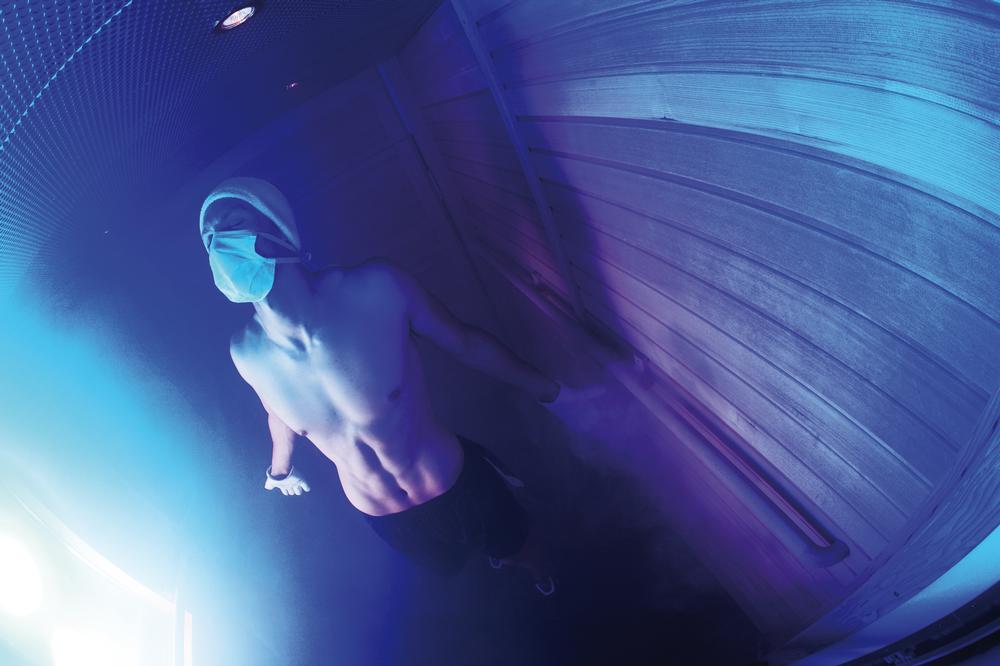
Standing for three minutes in a space cooled to minus 130°c may sound a tough sell to your members, but it’s a trend that originated in physical therapy, was adopted by elite athletes and is now becoming mainstream in spas and health clubs.
The benefits claimed of cryotherapy are many and varied, meaning it has a broad appeal: recovery after training, improved mood, fewer aches and pains for ageing joints and even a better appearance, with people emerging after treatments feeling more alert, upbeat and energised.
Cryotherapy works by forcing the body to send blood to the brain and the core in a process called vasoconstriction. Afterwards, vasodilation takes place, whereby blood that is now enriched with oxygen, nutrients and enzymes flows back into the peripheral tissues.
This process gets body fluids moving and in doing so increases power, performance and endurance, as well as clearing out lactate. It can boost recovery and reduce aches and pains – both from exercise and from chronic illnesses such as arthritis. Endorphins are also released and it’s even claimed to reduce wrinkles.
“Pulling blood away from the peripheries reduces inflammation and the effects of oxidative stress on the body,” says Laurence White, MD of RP-X, which distributes Cryoair chambers in the UK.
“It also helps with the complexion and anti-ageing, as the cold temperatures stimulate the production of collagen, reducing fine lines and wrinkles and decreasing pore size. The skin becomes toned, tighter and circulation is improved,” he says.
Rainer Bolsinger, sales manager of Zimmer MedizinSysteme likens cryotherapy to icing an injured knee, but the whole body and mind also benefit: “It affects the nervous system, forcing our brain into a heightened state, which can give stress relief and clear the mind.”
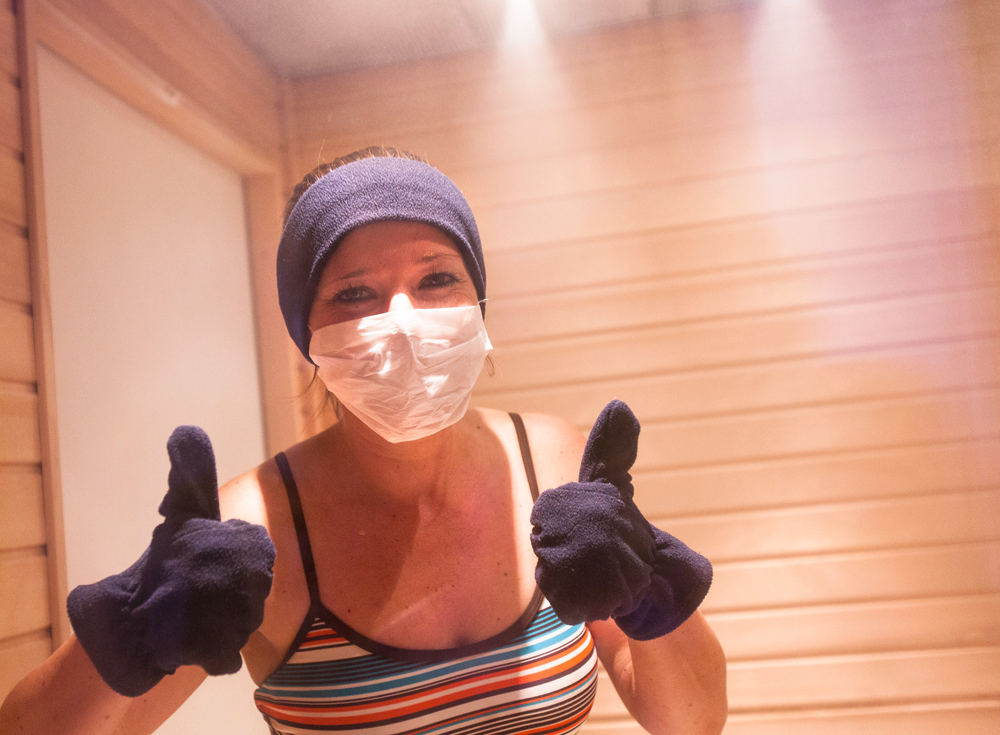
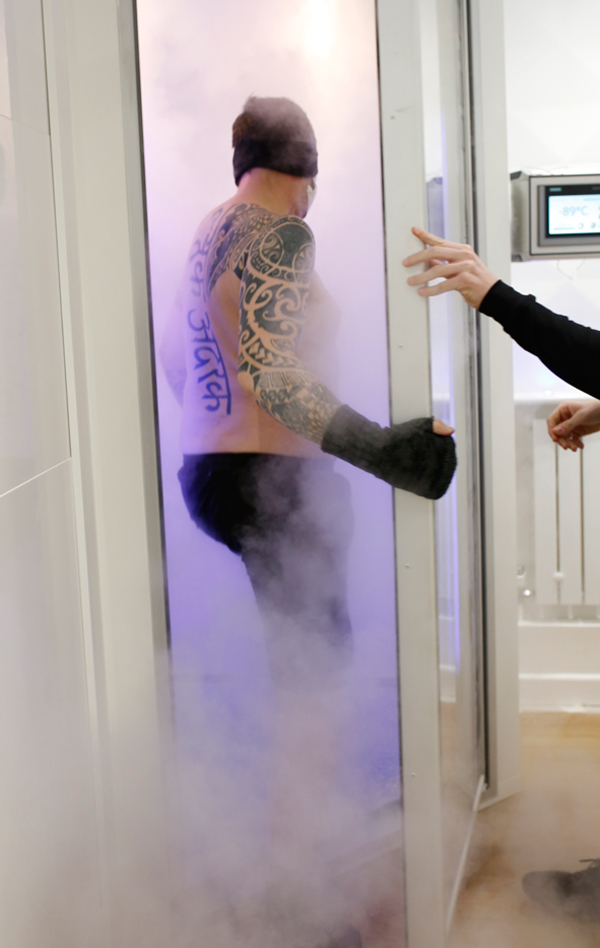
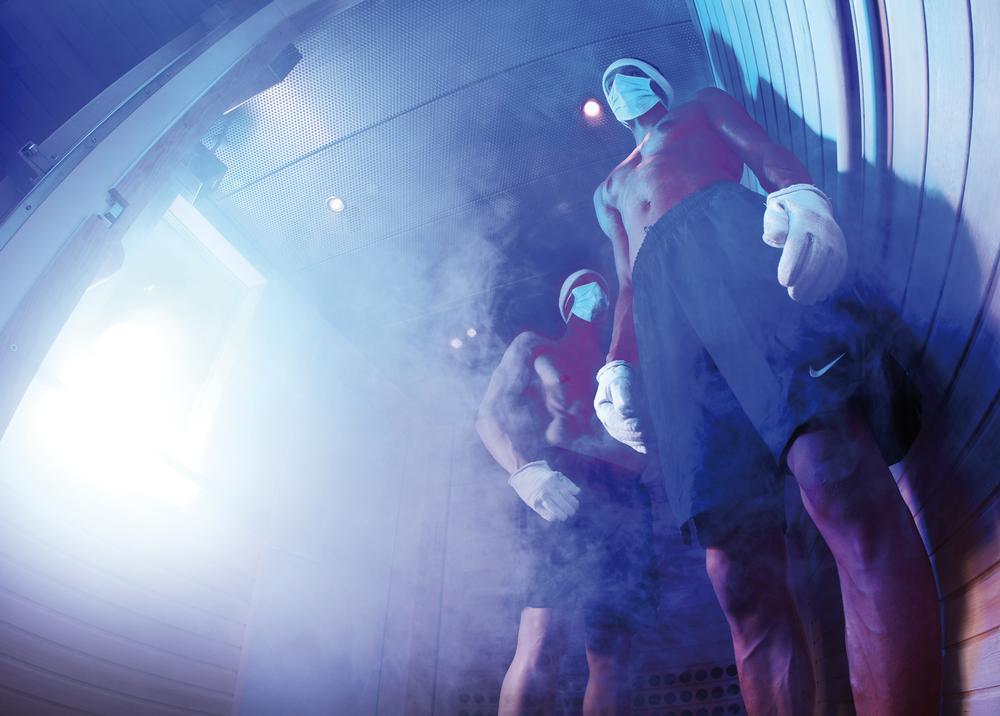
Roots in medicine The benefits might sound wonderful, but are they sufficient to warrant three minutes of bone-chilling cold? According to Bolsinger, at this temperature, the air no longer contains moisture, so people don’t perceive the cold to be extreme. To protect their extremities, which are starved of blood during the treatment, users enter the chamber wearing protective masks, gloves, nipple protection and footwear. Music is often used to take their mind off the fact that they’re being chilled.
Cold therapy has a long history in medical treatments, first mentioned 400 years BC by Hippocrates as a method of treating pain. In the 19th century, Sebastian Kneipp popularised the Kneipp Method, which uses cold on the extremities – a method still used today in many spas and thermal baths.
“Whole-body cryostimulation at ultra-low temperatures was first applied by Professor T Yamauchi in Japan to treat rheumatoid arthritis. During the early 1980s several professors in Germany followed his approach and developed the treatment further,” says Bolsinger. “It’s been used in clinics and rehab centres as a method of treating pain, shortening rehabilitation and helping with stress and sleep. Now we’re seeing it move into the world of health clubs and spas, where it’s used for preventative health, wellbeing, beauty and to optimise training and recovery.”
UK-based company, CryoAction, says cryotherapy’s use in wellness is increasing and interest is growing across the board, from Premier League football clubs, to spas and health clubs. “Cryotherapy is becoming increasingly popular across the health club sector and we’re installing new units all the time, driven by consumer demand, as clubs are seeking to respond to members who want to look and feel amazing,” says CryoAction CEO, Ian Saunders. “The chambers complement existing treatments and facilities and offer a new revenue opportunity to health clubs.”
Originally developed for use in physical medicine, the natural pain-relieving properties of the cold are beneficial for sufferers of conditions such as arthritis, rheumatism and fibromyalgia,” says Saunders. “The treatment also has significant capabilities that increase the commercial opportunity for health clubs.”
Cold effects
Research has proven that cryotherapy can:
Improve fitness performance
Speed up rehabilitation
Reduce muscle soreness, pain and inflammation
Increase energy levels
Increase mobility
Promote healing, wellbeing and quality of life
Enhance lymph drainage and blood circulation
Stimulate collagenases
Reduce the effects of DOMS
Boost adrenaline and endorphins
Promote relaxation and deeper sleep
Improve eczema
Icelab
Face, hands and feet are protected before entering the Icelab
Guests ease their way through one or two cool pre-chambers and finally reach the third which is set at -110°C and where they spend up to three minutes.
The rooms can accommodate up to four people at a time and music and video on screen are installed as standard.
Guests can move around freely and the technicians speak to them through an intercom, suggesting different ways to move and stretch, to increases the effectiveness of the treatment.
The Icelab system is distributed by Zimmer MedizinSysteme.
Key suppliers
CryoAction
Members can use the ice chamber up to twice a day
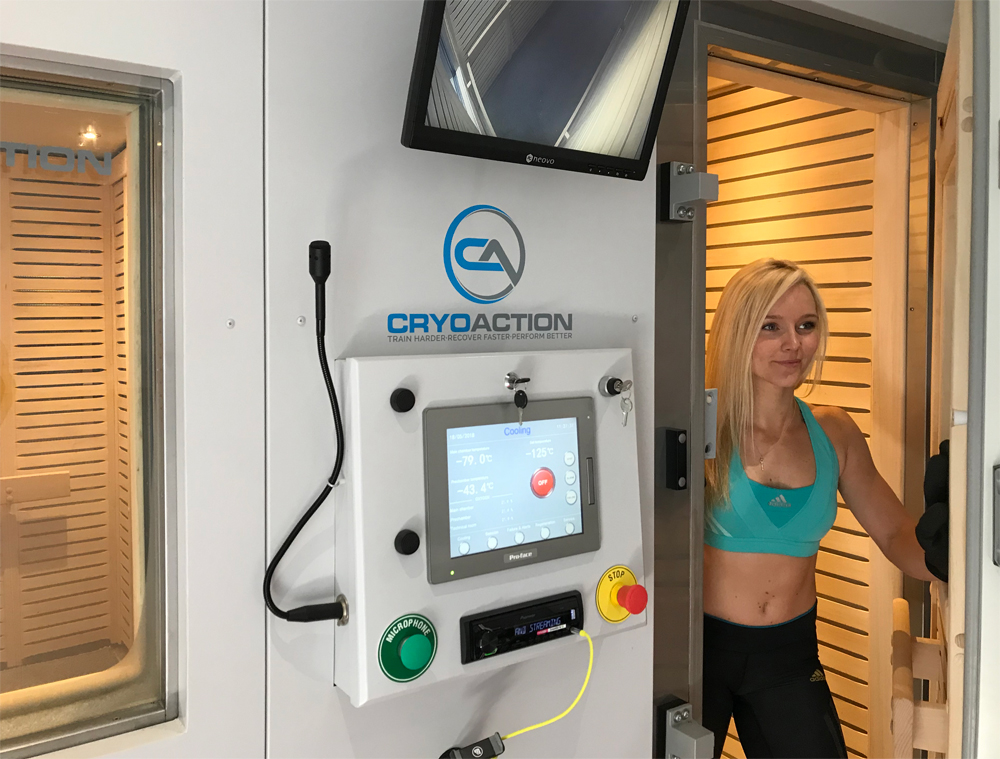
CryoAction designs, manufactures, installs and maintains its own products, which are certified for use as a medical device.
It has a portfolio that spans from single person chambers through to walk-in rooms, enabling up to 10 people to be treated simultaneously. Chambers can be standalone or integrated and are available in a wide selection of colours and materials to match the club’s décor.
Larger bespoke chambers usually comprise two rooms linked by an interconnecting door. The first chamber is cooled to a temperature of around -60°C and the second to around -130°C.
Key supplier
Cryoair
Members can use the ice chamber up to twice a day
Cryoair offers chambers in two sizes. The Cryone is compact, with capacity for one or two people and a temperature of -85°C. The Cryoair is for commercial or team use, with capacity of up to 30 users an hour and a temperature of -110°C.
Members can use the chambers up to twice a day for three minutes.
The systems are distributed by RP-X in the UK.
Cryotherapy presents a commercial opportunity for clubs
Active Blackpool is deploying Cornerstone Connect, a new digital interface allowing
disparate information from multiple systems to be aggregated into one dataset, to support
its focus on reducing health inequalities and improving healthy life expectancy. [more...]
Panatta brought together four of the most influential figures in bodybuilding history on the
stage of RiminiWellness 2026: Phil Heath, Lee Haney, Ronnie Coleman and Hany Rambod. [more...]
Is going sub-zero the next big thing in health clubs?
We take a closer look at the benefits of cryotherapy and some of the options on offer if you’re thinking of making the leap into the big chill
Health club members using cryotherapy can benefit from enhanced exercise and
injury recovery
Standing for three minutes in a space cooled to minus 130°c may sound a tough sell to your members, but it’s a trend that originated in physical therapy, was adopted by elite athletes and is now becoming mainstream in spas and health clubs.
The benefits claimed of cryotherapy are many and varied, meaning it has a broad appeal: recovery after training, improved mood, fewer aches and pains for ageing joints and even a better appearance, with people emerging after treatments feeling more alert, upbeat and energised.
Cryotherapy works by forcing the body to send blood to the brain and the core in a process called vasoconstriction. Afterwards, vasodilation takes place, whereby blood that is now enriched with oxygen, nutrients and enzymes flows back into the peripheral tissues.
This process gets body fluids moving and in doing so increases power, performance and endurance, as well as clearing out lactate. It can boost recovery and reduce aches and pains – both from exercise and from chronic illnesses such as arthritis. Endorphins are also released and it’s even claimed to reduce wrinkles.
“Pulling blood away from the peripheries reduces inflammation and the effects of oxidative stress on the body,” says Laurence White, MD of RP-X, which distributes Cryoair chambers in the UK.
“It also helps with the complexion and anti-ageing, as the cold temperatures stimulate the production of collagen, reducing fine lines and wrinkles and decreasing pore size. The skin becomes toned, tighter and circulation is improved,” he says.
Rainer Bolsinger, sales manager of Zimmer MedizinSysteme likens cryotherapy to icing an injured knee, but the whole body and mind also benefit: “It affects the nervous system, forcing our brain into a heightened state, which can give stress relief and clear the mind.”
Roots in medicine The benefits might sound wonderful, but are they sufficient to warrant three minutes of bone-chilling cold? According to Bolsinger, at this temperature, the air no longer contains moisture, so people don’t perceive the cold to be extreme. To protect their extremities, which are starved of blood during the treatment, users enter the chamber wearing protective masks, gloves, nipple protection and footwear. Music is often used to take their mind off the fact that they’re being chilled.
Cold therapy has a long history in medical treatments, first mentioned 400 years BC by Hippocrates as a method of treating pain. In the 19th century, Sebastian Kneipp popularised the Kneipp Method, which uses cold on the extremities – a method still used today in many spas and thermal baths.
“Whole-body cryostimulation at ultra-low temperatures was first applied by Professor T Yamauchi in Japan to treat rheumatoid arthritis. During the early 1980s several professors in Germany followed his approach and developed the treatment further,” says Bolsinger. “It’s been used in clinics and rehab centres as a method of treating pain, shortening rehabilitation and helping with stress and sleep. Now we’re seeing it move into the world of health clubs and spas, where it’s used for preventative health, wellbeing, beauty and to optimise training and recovery.”
UK-based company, CryoAction, says cryotherapy’s use in wellness is increasing and interest is growing across the board, from Premier League football clubs, to spas and health clubs. “Cryotherapy is becoming increasingly popular across the health club sector and we’re installing new units all the time, driven by consumer demand, as clubs are seeking to respond to members who want to look and feel amazing,” says CryoAction CEO, Ian Saunders. “The chambers complement existing treatments and facilities and offer a new revenue opportunity to health clubs.”
Originally developed for use in physical medicine, the natural pain-relieving properties of the cold are beneficial for sufferers of conditions such as arthritis, rheumatism and fibromyalgia,” says Saunders. “The treatment also has significant capabilities that increase the commercial opportunity for health clubs.”
Cold effects
Research has proven that cryotherapy can:
Improve fitness performance
Speed up rehabilitation
Reduce muscle soreness, pain and inflammation
Increase energy levels
Increase mobility
Promote healing, wellbeing and quality of life
Enhance lymph drainage and blood circulation
Stimulate collagenases
Reduce the effects of DOMS
Boost adrenaline and endorphins
Promote relaxation and deeper sleep
Improve eczema
Icelab
Face, hands and feet are protected before entering the Icelab
Guests ease their way through one or two cool pre-chambers and finally reach the third which is set at -110°C and where they spend up to three minutes.
The rooms can accommodate up to four people at a time and music and video on screen are installed as standard.
Guests can move around freely and the technicians speak to them through an intercom, suggesting different ways to move and stretch, to increases the effectiveness of the treatment.
The Icelab system is distributed by Zimmer MedizinSysteme.
Key suppliers
CryoAction
Members can use the ice chamber up to twice a day
CryoAction designs, manufactures, installs and maintains its own products, which are certified for use as a medical device.
It has a portfolio that spans from single person chambers through to walk-in rooms, enabling up to 10 people to be treated simultaneously. Chambers can be standalone or integrated and are available in a wide selection of colours and materials to match the club’s décor.
Larger bespoke chambers usually comprise two rooms linked by an interconnecting door. The first chamber is cooled to a temperature of around -60°C and the second to around -130°C.
Key supplier
Cryoair
Members can use the ice chamber up to twice a day
Cryoair offers chambers in two sizes. The Cryone is compact, with capacity for one or two people and a temperature of -85°C. The Cryoair is for commercial or team use, with capacity of up to 30 users an hour and a temperature of -110°C.
Members can use the chambers up to twice a day for three minutes.
The systems are distributed by RP-X in the UK.
Cryotherapy presents a commercial opportunity for clubs
According to research which tracked more than 147,000 people for 30 years, 90-120 minutes
of strength training a week may deliver some of the biggest long-term health rewards.
The UK's four Chief Medical Officers have published a refreshed edition of Physical activity
guidelines: UK Chief Medical Officers' report, updating the evidence that underpins the nation's
physical activity recommendations and placing greater emphasis on strength, balance, reducing
sedentary behaviour and, for the first time, supporting people taking weight loss medications.
Places Leisure has exchanged contracts to build and operate a flagship £60m water and leisure
destination on behalf of Basingstoke and Deane Borough Council.
The Republic of Ireland will become the latest market in PureGym’s expanding international
portfolio, with the first launch planned for Dublin in 2027.
Anytime Fitness opened more than one club a day in 2025 and is on track to maintain this rate
of growth this year, as parent company Purpose Brands targets further international expansion.
The £33.9 million Leighton Leisure and Community Centre has opened in Leighton Buzzard, UK,
creating a next-generation public leisure, health and wellbeing hub for the local community.
Walnuts Leisure Centre in Orpington, in the London Borough of Bromley, has reopened following
a £17m transformation designed to secure the long-term future of the public leisure asset and
reposition it as a community wellbeing hub.
The Gym Group, has announced that it's sustained positive trading momentum has continued
through the first half of 2026 and the company remains confident about the outlook.
Active Blackpool is deploying Cornerstone Connect, a new digital interface allowing
disparate information from multiple systems to be aggregated into one dataset, to support
its focus on reducing health inequalities and improving healthy life expectancy. [more...]
Panatta brought together four of the most influential figures in bodybuilding history on the
stage of RiminiWellness 2026: Phil Heath, Lee Haney, Ronnie Coleman and Hany Rambod. [more...]