Many women believe cardio is the best way to burn fat, while many men favour doing more upper body training. Are these just preferences, mindsets and habits or are men and women actually pre-disposed to train differently?
To help members get the best results, should health and fitness operators be offering gender specific training, or is a shake-up and some re-education in order?
As more operators, such as Pure Gym and Total Fitness, offer women-only training areas, will we start to see more concepts aimed specifically at women? Could that help to grow the sector? Kath Hudson reports.
Jonny Taylor
Ultimate Performance: Deputy Global Head of Education and Development
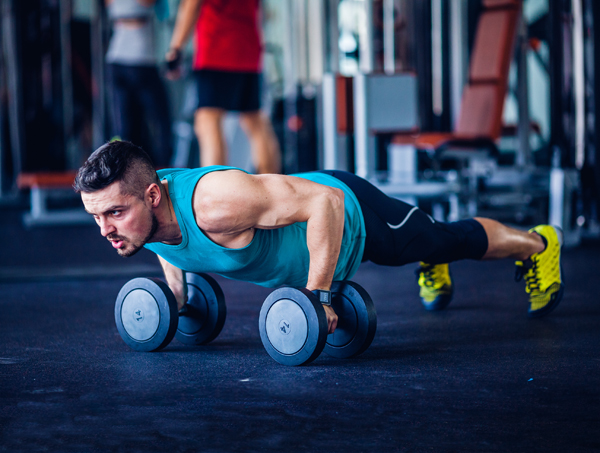
How long a member has been training for has a bigger impact on programme design than gender
PHOTO: SHUTTERSTOCK.COM
Jonny Taylor
Men and women don’t need to train differently, but we tend to find they want to. For a start, they have different aesthetic ideals: we find our female clients typically want to focus on posterior muscles (back, glutes and hamstrings), while our male clients emphasise the upper body (chest, back and arms). Societal/cultural factors also play a part. Until recently, females have tended to avoid lifting weights, stuck to group classes, or followed ineffective programmes for fear of becoming bulky.
How long you’ve trained for has a much bigger impact on programme design than gender, and all beginners need to develop the same general skill base. There are no major physiological differences in muscle quality between men and women and they adapt in the same way to resistance training. However, there is a difference in muscle quantity, with men tending to have bigger frames and more muscle mass, which makes them stronger in the gym.
The programmes we use for men and women, especially beginner clients, are very similar. Roughly 70 per cent of the workout is devoted to learning the main movement patterns, such as squatting, pressing and pulling and skills, including how to lift weights with control. This equates to two upper body exercises – one each for the front and back – such as dumbbell press and cable pull-down. Likewise for the lower body, for example, split squat and leg curl. These exercises are essential to a client’s long-term development, building a base of skills which allows them to specialise later.
The remaining 30 per cent of the programme is for addressing individual target areas, training the body parts that will benefit their physique the most. Often this does show a gender bias towards lower body and abs for females and chest and arms for males.
“Men and women have different aesthetic ideals: we find female clients want to focus on posterior muscles, while male clients emphasise the upper body”
Menno Henselmans
Bayesian Bodybuilding: owner
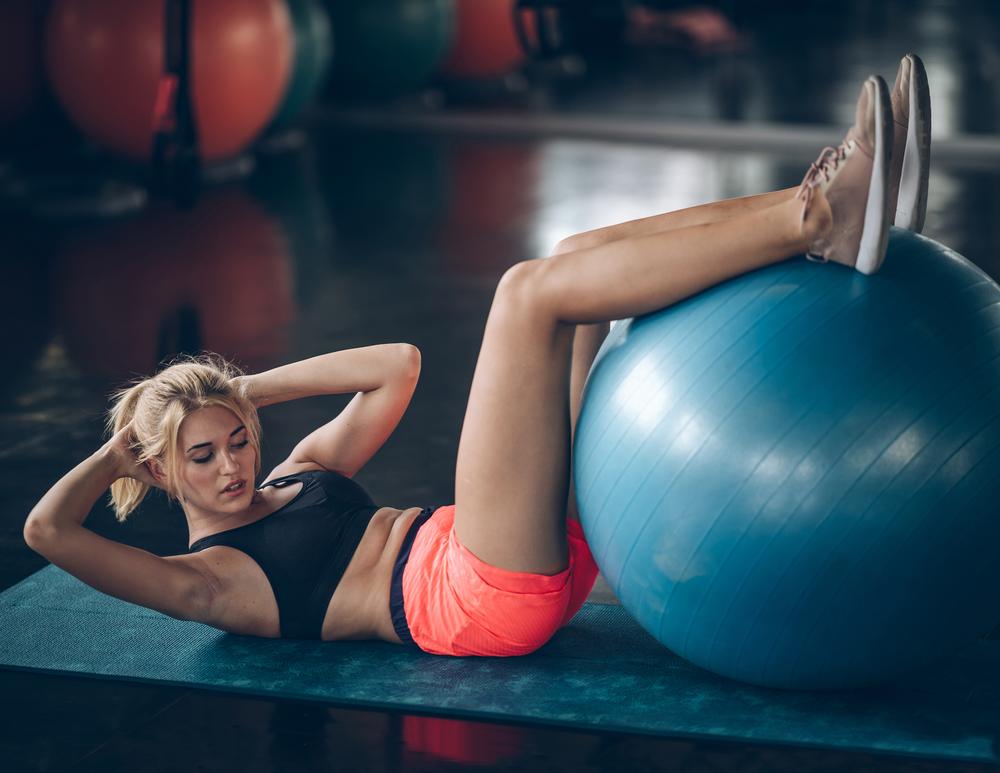
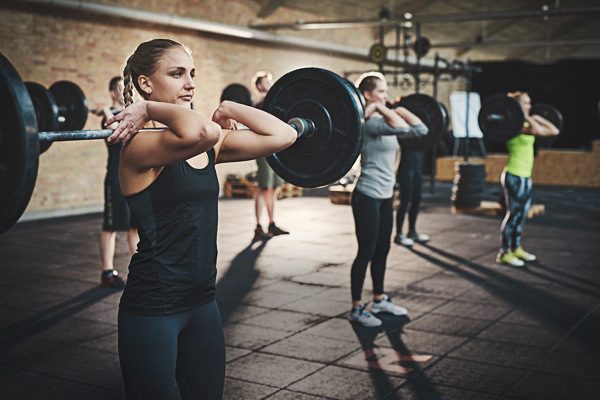
Group training classes can be a good way to offer strength training options to female members
PHOTO: SHUTTERSTOCK.COM
Menno Henselmans
Many women believe that the key to their dream physique is cardio and burning lots of calories, but what they really need to do in order to change their physique is body recomposition: lose fat but gain muscle.
Health clubs don’t need to offer completely different programmes for men and women.
Most clients, whether they know it or not, should probably do a form of resistance training, as this is ideal for body recomposition. Strength training is ideal for muscle growth, and scientific research shows it’s generally more time-efficient than cardio for fat loss.
Cardio burns more calories acutely, but strength training stimulates muscle protein synthesis and excess post-exercise oxygen consumption: the metabolic afterburn. More muscle mass also increases metabolic rate. Strength training also more effectively suppresses appetite, and therefore energy intake.
As a result, over the long-run, strength training typically helps people to not only build more muscle, but also to lose more fat and end up with a more favourable body composition than is achieved if the same time is spent on cardio.
Group circuit training classes are a particularly good way for gyms to offer strength training for women. They have the social element to motivate and bind people together, while providing the best of resistance training and cardio, as well as strength training.
They also enable people to exercise at a high heart rate, creating enough fatigue to satisfy people’s need to feel they’ve had a good workout.
“Group circuit training is a good way for gyms to offer strength training for women. They create enough fatigue to satisfy people’s need to feel they’ve had a good workout”
Yasmin Hurkardes
Go30: Business Director
Yasmin Hurkardes
Women don’t necessarily need different training programmes from men, but many of them benefit from, and feel more comfortable with, training in a female-only environment.
Go30 runs two Essex-based ladies-only gyms, and we’ve found that both of these clubs have a real community feel and sense of sisterhood.
The vibe at a female-only gym is very different to a mixed club. There’s no gymtimidation factor and many feel much more confident without males present.
At one club, the membership is made up almost exclusively of women in their 60s, 70s and 80s, who tell us that they wouldn’t feel comfortable in a mixed environment and so wouldn’t go to the gym if we weren’t available. A large group of women who met at the gym now even go on holiday together.
Some people may think it’s sexist to not include men, but we believe we’re opening up the gym experience to a different market: hard to reach groups, such as older women and those who – because of religious beliefs – can’t train in a mixed health club environment.
Having a club that is open to everyone is a great concept as well, but our target market feel more comfortable exercising without men present. Going forward, I think we’ll see more boutique concepts aimed specifically at different markets, including more women-only gyms.
“Some people may think it’s sexist to not include men, but we believe we’re opening up the gym experience to a different market”
Alan Milway
MX Fitness: Founder and Coach to Elite Athletes
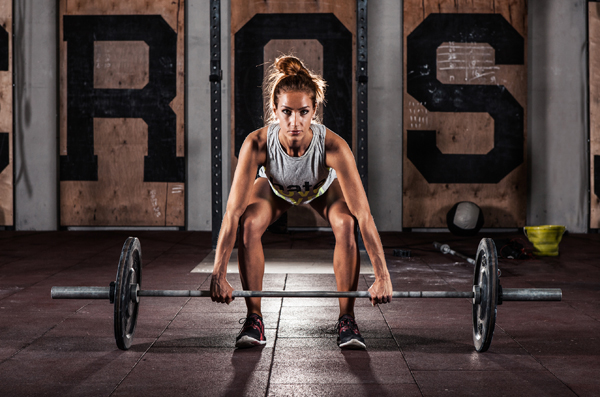
Some women can squat and deadlift as much as men per kilogram of body weight, but upper body training differs
PHOTO: SHUTTERSTOCK.COM
Alan Milway
Initially, training should be specific to the individual, not gender. Poor posture or poor movement patterns aren’t gender specific. However, as training progresses, there are areas in strength and power development that can differ between males and females.
I’ve coached a number of females who can squat/deadlift very good figures per kilogram of bodyweight and get close to male figures, but I haven’t been able to achieve the same in upper body performance. Therefore, I feel female athletes who can gain strength and power in the upper body can have a performance advantage over others during competition.
Other than this difference in upper body strength, I have found the needs of the athletes I’ve worked with have not tended to be gender specific.
However, women are able to work at a higher percentage of their maximum lifts than men, and if you don’t accommodate for this then you can get programming wrong – as from sets of five reps I’ve put the weight up slightly, only to find that one rep is too much.
I like to get all people moving well – so they can lunge, squat, hinge, push, pull and rotate well. Once they are able to do this, I can add load and build global strength, then specify to the discipline or the athlete’s needs.
Good general robustness is better than big peaks and troughs in performance in the sports I work within. Setting targets is important and I’ve worked with females who varied greatly, so I felt individual focus was more important than gender focus. Many men would be humbled by these strong and powerful female athletes!
“Women are able to work at a higher percentage of their maximum lifts than men. If you don’t accommodate for this, you can get programming wrong”
Active Blackpool is deploying Cornerstone Connect, a new digital interface allowing
disparate information from multiple systems to be aggregated into one dataset, to support
its focus on reducing health inequalities and improving healthy life expectancy. [more...]
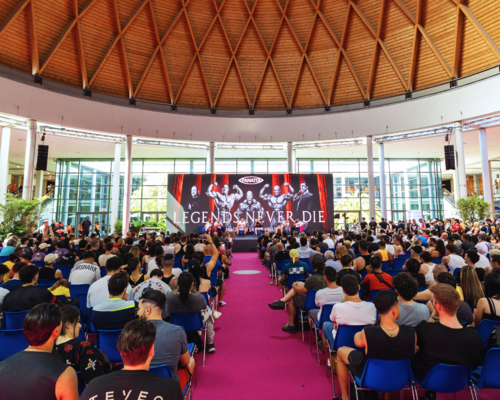
Panatta brought together four of the most influential figures in bodybuilding history on the
stage of RiminiWellness 2026: Phil Heath, Lee Haney, Ronnie Coleman and Hany Rambod. [more...]
Many women believe cardio is the best way to burn fat, while many men favour doing more upper body training. Are these just preferences, mindsets and habits or are men and women actually pre-disposed to train differently?
To help members get the best results, should health and fitness operators be offering gender specific training, or is a shake-up and some re-education in order?
As more operators, such as Pure Gym and Total Fitness, offer women-only training areas, will we start to see more concepts aimed specifically at women? Could that help to grow the sector? Kath Hudson reports.
Jonny Taylor
Ultimate Performance: Deputy Global Head of Education and Development
How long a member has been training for has a bigger impact on programme design than gender
PHOTO: SHUTTERSTOCK.COM
Jonny Taylor
Men and women don’t need to train differently, but we tend to find they want to. For a start, they have different aesthetic ideals: we find our female clients typically want to focus on posterior muscles (back, glutes and hamstrings), while our male clients emphasise the upper body (chest, back and arms). Societal/cultural factors also play a part. Until recently, females have tended to avoid lifting weights, stuck to group classes, or followed ineffective programmes for fear of becoming bulky.
How long you’ve trained for has a much bigger impact on programme design than gender, and all beginners need to develop the same general skill base. There are no major physiological differences in muscle quality between men and women and they adapt in the same way to resistance training. However, there is a difference in muscle quantity, with men tending to have bigger frames and more muscle mass, which makes them stronger in the gym.
The programmes we use for men and women, especially beginner clients, are very similar. Roughly 70 per cent of the workout is devoted to learning the main movement patterns, such as squatting, pressing and pulling and skills, including how to lift weights with control. This equates to two upper body exercises – one each for the front and back – such as dumbbell press and cable pull-down. Likewise for the lower body, for example, split squat and leg curl. These exercises are essential to a client’s long-term development, building a base of skills which allows them to specialise later.
The remaining 30 per cent of the programme is for addressing individual target areas, training the body parts that will benefit their physique the most. Often this does show a gender bias towards lower body and abs for females and chest and arms for males.
“Men and women have different aesthetic ideals: we find female clients want to focus on posterior muscles, while male clients emphasise the upper body”
Menno Henselmans
Bayesian Bodybuilding: owner
Group training classes can be a good way to offer strength training options to female members
PHOTO: SHUTTERSTOCK.COM
Menno Henselmans
Many women believe that the key to their dream physique is cardio and burning lots of calories, but what they really need to do in order to change their physique is body recomposition: lose fat but gain muscle.
Health clubs don’t need to offer completely different programmes for men and women.
Most clients, whether they know it or not, should probably do a form of resistance training, as this is ideal for body recomposition. Strength training is ideal for muscle growth, and scientific research shows it’s generally more time-efficient than cardio for fat loss.
Cardio burns more calories acutely, but strength training stimulates muscle protein synthesis and excess post-exercise oxygen consumption: the metabolic afterburn. More muscle mass also increases metabolic rate. Strength training also more effectively suppresses appetite, and therefore energy intake.
As a result, over the long-run, strength training typically helps people to not only build more muscle, but also to lose more fat and end up with a more favourable body composition than is achieved if the same time is spent on cardio.
Group circuit training classes are a particularly good way for gyms to offer strength training for women. They have the social element to motivate and bind people together, while providing the best of resistance training and cardio, as well as strength training.
They also enable people to exercise at a high heart rate, creating enough fatigue to satisfy people’s need to feel they’ve had a good workout.
“Group circuit training is a good way for gyms to offer strength training for women. They create enough fatigue to satisfy people’s need to feel they’ve had a good workout”
Yasmin Hurkardes
Go30: Business Director
Yasmin Hurkardes
Women don’t necessarily need different training programmes from men, but many of them benefit from, and feel more comfortable with, training in a female-only environment.
Go30 runs two Essex-based ladies-only gyms, and we’ve found that both of these clubs have a real community feel and sense of sisterhood.
The vibe at a female-only gym is very different to a mixed club. There’s no gymtimidation factor and many feel much more confident without males present.
At one club, the membership is made up almost exclusively of women in their 60s, 70s and 80s, who tell us that they wouldn’t feel comfortable in a mixed environment and so wouldn’t go to the gym if we weren’t available. A large group of women who met at the gym now even go on holiday together.
Some people may think it’s sexist to not include men, but we believe we’re opening up the gym experience to a different market: hard to reach groups, such as older women and those who – because of religious beliefs – can’t train in a mixed health club environment.
Having a club that is open to everyone is a great concept as well, but our target market feel more comfortable exercising without men present. Going forward, I think we’ll see more boutique concepts aimed specifically at different markets, including more women-only gyms.
“Some people may think it’s sexist to not include men, but we believe we’re opening up the gym experience to a different market”
Alan Milway
MX Fitness: Founder and Coach to Elite Athletes
Some women can squat and deadlift as much as men per kilogram of body weight, but upper body training differs
PHOTO: SHUTTERSTOCK.COM
Alan Milway
Initially, training should be specific to the individual, not gender. Poor posture or poor movement patterns aren’t gender specific. However, as training progresses, there are areas in strength and power development that can differ between males and females.
I’ve coached a number of females who can squat/deadlift very good figures per kilogram of bodyweight and get close to male figures, but I haven’t been able to achieve the same in upper body performance. Therefore, I feel female athletes who can gain strength and power in the upper body can have a performance advantage over others during competition.
Other than this difference in upper body strength, I have found the needs of the athletes I’ve worked with have not tended to be gender specific.
However, women are able to work at a higher percentage of their maximum lifts than men, and if you don’t accommodate for this then you can get programming wrong – as from sets of five reps I’ve put the weight up slightly, only to find that one rep is too much.
I like to get all people moving well – so they can lunge, squat, hinge, push, pull and rotate well. Once they are able to do this, I can add load and build global strength, then specify to the discipline or the athlete’s needs.
Good general robustness is better than big peaks and troughs in performance in the sports I work within. Setting targets is important and I’ve worked with females who varied greatly, so I felt individual focus was more important than gender focus. Many men would be humbled by these strong and powerful female athletes!
“Women are able to work at a higher percentage of their maximum lifts than men. If you don’t accommodate for this, you can get programming wrong”
According to research which tracked more than 147,000 people for 30 years, 90-120 minutes
of strength training a week may deliver some of the biggest long-term health rewards.
The UK's four Chief Medical Officers have published a refreshed edition of Physical activity
guidelines: UK Chief Medical Officers' report, updating the evidence that underpins the nation's
physical activity recommendations and placing greater emphasis on strength, balance, reducing
sedentary behaviour and, for the first time, supporting people taking weight loss medications.
Places Leisure has exchanged contracts to build and operate a flagship £60m water and leisure
destination on behalf of Basingstoke and Deane Borough Council.
The Republic of Ireland will become the latest market in PureGym’s expanding international
portfolio, with the first launch planned for Dublin in 2027.
Anytime Fitness opened more than one club a day in 2025 and is on track to maintain this rate
of growth this year, as parent company Purpose Brands targets further international expansion.
The £33.9 million Leighton Leisure and Community Centre has opened in Leighton Buzzard, UK,
creating a next-generation public leisure, health and wellbeing hub for the local community.
Walnuts Leisure Centre in Orpington, in the London Borough of Bromley, has reopened following
a £17m transformation designed to secure the long-term future of the public leisure asset and
reposition it as a community wellbeing hub.
The Gym Group, has announced that it's sustained positive trading momentum has continued
through the first half of 2026 and the company remains confident about the outlook.
Active Blackpool is deploying Cornerstone Connect, a new digital interface allowing
disparate information from multiple systems to be aggregated into one dataset, to support
its focus on reducing health inequalities and improving healthy life expectancy. [more...]
Panatta brought together four of the most influential figures in bodybuilding history on the
stage of RiminiWellness 2026: Phil Heath, Lee Haney, Ronnie Coleman and Hany Rambod. [more...]