Spiritual retreats change feel-good chemical systems in the brain, research finds
POSTED 24 Mar 2017 . BY Jane Kitchen
The study has interesting implications for the spa industry, where many destination locations offer regular seven-day retreats that can include things like silent meditation and other spiritual elements Credit: Shutterstock/ 511743475
Researchers at The Marcus Institute of Integrative Health at Thomas Jefferson University in Philadelphia have shown there are changes in the dopamine and serotonin systems in the brains of people who take part in spiritual, meditative and religious retreats.
The researchers conducted a study that included 14 Christian participants, age 24 to 76, who attended a seven-day Ignatian retreat, spending much of their day in silent contemplation, prayer and reflection.
Post-retreat scans revealed decreases of between 5 and 8 per cent in dopamine transporter, and 6.5 per cent in serotonin transporter binding, which could make more of the neurotransmitters – which are associated with positive emotions – available to the brain.
Dopamine is responsible for mediating cognition, emotion and movement, while serotonin is involved in emotional regulation and mood. Study subjects also completed a number of post-retreat surveys, which showed marked improvements in their perceived physical health, tension and fatigue.
“Since serotonin and dopamine are part of the reward and emotional systems of the brain, it helps us understand why these practices result in powerful, positive emotional experiences,” said Andrew Newberg, MD and director of research in the Marcus Institute of Integrative Health. “Our study showed significant changes in dopamine and serotonin transporters after the seven-day retreat, which could help prime participants for the spiritual experiences that they reported.”
The results from the study were published in the journal Religion, Brain & Behavior.
The study has interesting implications for the spa industry, where many destination locations offer regular seven-day retreats that can include things like silent meditation and other spiritual elements. While this study focused specifically on a Christian religious retreat, there may be similar changes that occur at spa retreats – though more studies are needed.
“In some ways, our study raises more questions than it answers,” said Dr Newberg. “Our team is curious about which aspects of the retreat caused the changes in the neurotransmitter systems, and if different retreats would produce different results. Hopefully, future studies can answer these questions."
The UK's four Chief Medical Officers have published a refreshed edition of Physical activity
guidelines: UK Chief Medical Officers' report, updating the evidence that underpins the nation's
physical activity recommendations and placing greater emphasis on strength, balance, reducing
sedentary behaviour and, for the first time, supporting people taking weight loss medications.
Places Leisure has exchanged contracts to build and operate a flagship £60m water and leisure
destination on behalf of Basingstoke and Deane Borough Council.
The Republic of Ireland will become the latest market in PureGym’s expanding international
portfolio, with the first launch planned for Dublin in 2027.
Active Blackpool is deploying Cornerstone Connect, a new digital interface allowing
disparate information from multiple systems to be aggregated into one dataset, to support
its focus on reducing health inequalities and improving healthy life expectancy. [more...]
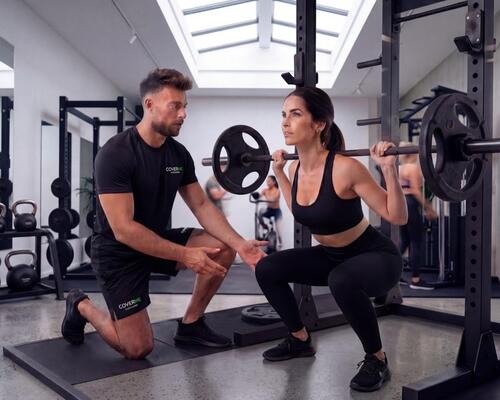
CoverMe, the global leader in fitness workforce management, today launches CoverMe PT, an
on-demand personal training platform that connects the right personal trainer to the right
client in under 10 seconds. [more...]
Spiritual retreats change feel-good chemical systems in the brain, research finds
POSTED 24 Mar 2017 . BY Jane Kitchen
The study has interesting implications for the spa industry, where many destination locations offer regular seven-day retreats that can include things like silent meditation and other spiritual elements Credit: Shutterstock/ 511743475
Researchers at The Marcus Institute of Integrative Health at Thomas Jefferson University in Philadelphia have shown there are changes in the dopamine and serotonin systems in the brains of people who take part in spiritual, meditative and religious retreats.
The researchers conducted a study that included 14 Christian participants, age 24 to 76, who attended a seven-day Ignatian retreat, spending much of their day in silent contemplation, prayer and reflection.
Post-retreat scans revealed decreases of between 5 and 8 per cent in dopamine transporter, and 6.5 per cent in serotonin transporter binding, which could make more of the neurotransmitters – which are associated with positive emotions – available to the brain.
Dopamine is responsible for mediating cognition, emotion and movement, while serotonin is involved in emotional regulation and mood. Study subjects also completed a number of post-retreat surveys, which showed marked improvements in their perceived physical health, tension and fatigue.
“Since serotonin and dopamine are part of the reward and emotional systems of the brain, it helps us understand why these practices result in powerful, positive emotional experiences,” said Andrew Newberg, MD and director of research in the Marcus Institute of Integrative Health. “Our study showed significant changes in dopamine and serotonin transporters after the seven-day retreat, which could help prime participants for the spiritual experiences that they reported.”
The results from the study were published in the journal Religion, Brain & Behavior.
The study has interesting implications for the spa industry, where many destination locations offer regular seven-day retreats that can include things like silent meditation and other spiritual elements. While this study focused specifically on a Christian religious retreat, there may be similar changes that occur at spa retreats – though more studies are needed.
“In some ways, our study raises more questions than it answers,” said Dr Newberg. “Our team is curious about which aspects of the retreat caused the changes in the neurotransmitter systems, and if different retreats would produce different results. Hopefully, future studies can answer these questions."
The UK's four Chief Medical Officers have published a refreshed edition of Physical activity
guidelines: UK Chief Medical Officers' report, updating the evidence that underpins the nation's
physical activity recommendations and placing greater emphasis on strength, balance, reducing
sedentary behaviour and, for the first time, supporting people taking weight loss medications.
Places Leisure has exchanged contracts to build and operate a flagship £60m water and leisure
destination on behalf of Basingstoke and Deane Borough Council.
The Republic of Ireland will become the latest market in PureGym’s expanding international
portfolio, with the first launch planned for Dublin in 2027.
Anytime Fitness opened more than one club a day in 2025 and is on track to maintain this rate
of growth this year, as parent company Purpose Brands targets further international expansion.
The £33.9 million Leighton Leisure and Community Centre has opened in Leighton Buzzard, UK,
creating a next-generation public leisure, health and wellbeing hub for the local community.
Active Blackpool is deploying Cornerstone Connect, a new digital interface allowing
disparate information from multiple systems to be aggregated into one dataset, to support
its focus on reducing health inequalities and improving healthy life expectancy. [more...]
CoverMe, the global leader in fitness workforce management, today launches CoverMe PT, an
on-demand personal training platform that connects the right personal trainer to the right
client in under 10 seconds. [more...]