Get HCM digital magazine and ezines FREE
Sign up here ▸
Jobs   News   Features   Products   Magazine      Advertise  
Talking point
How can clubs get the most out of virtual?

HCM’s Steph Eaves gets tips from our panel of experts

By Steph Eaves | Published in Health Club Management 2018 issue 9


It took years for virtual to be accepted by the market, however, things have reached a tipping point recently as operators have been adopting it in earnest, in a bid to get an edge over the competition and reduce costs.

As with all new things, implementation brings expected and unexpected benefits, such as the power to experiment with new classes without financial risk and a straightforward way to connect to the fast-growing home fitness market.

However, there’s a balance to be stuck between virtual and live classes, to ensure it works for the benefit of all, as our experts explain.


Wendy Coulson Les Mills


Wendy Coulson
 

How can clubs maximise the potential of virtual?
The average cycle studio stays idle for 83 per cent of the day, meaning up to £120,000 a year in lost revenue.

Adding virtual helps clubs maximise their studio assets and lighten the load during peak periods, by offering more workout options across the day.

We encourage operators to include virtual messaging in their marketing, as our research shows that providing an ‘always-on’ group exercise timetable is a great way to attract members.

People want to choose when they work out. Six out of ten members surveyed said the number of group exercise classes a gym offers – live and virtual – influences their decision to join.

Clubs also need to consider the quality of the content and the technology, as this can be the biggest determinant of success.

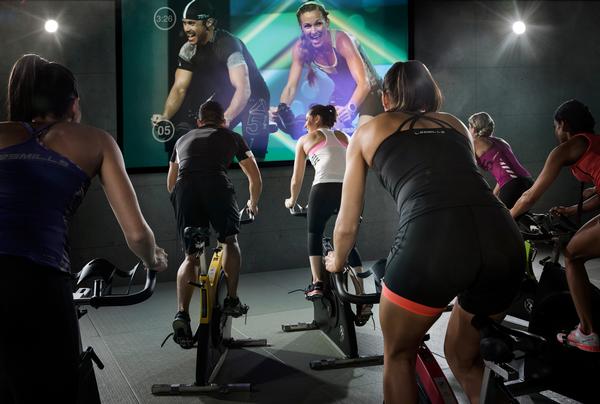
For example, an immersive class such as The Trip [the Les Mills experiential cycle class] is made more effective by cinematic-quality screens, innovative lighting and hi-tech sound: for virtual to work, experience is everything.

Tell us about the benefits
There’s a common misconception that live classes could become a thing of the past, as virtual asserts its place in the gym. However, operators are noticing a positive correlation between virtual and live classes, with virtual helping increase the number of people attending live classes.

Research shows 75 per cent of virtual fitness users also attend live classes and there’s a 12 per cent average increase in live class attendance when clubs timetable both virtual and live workouts.

We suspect this is because virtual is helping people overcome the initial intimidation they feel when they’re new in a group exercise class.

Virtual also enables clubs to build a bigger base of regular participants, increasing class sizes, and this has a positive impact on the number of times people work out each week and how long they stay as members.

Research by ukactive shows members who attend three or more Les Mills classes a week maintain membership nine months longer than non-attendees.

How can clubs ensure that virtual classes are safe?
We’ve been filming our classes for decades to educate instructors on how to deliver a great, safe class, so filming these experiences for virtual isn’t a leap into the unknown and we use bespoke camera angles to film for virtual to demonstrate the moves more clearly.

We’ve also adjusted the editing so we give participants more time to change their equipment and get their set-up right.

Our virtual class presenters also make an extra effort to engage the audience in virtual, so they feel more connected.

The product design of Les Mills classes – both live and virtual – uses a coaching model with three layers. Layer 1 is designed to establish technique and motivation. Layer 2 starts more slowly, but the exercises gradually build in intensity or complexity. This ensures people are warmed up and not jumping into something too complex too quickly. Finally, Layer 3 is about dialling things up. Now the user has nailed the exercises, they can increase the intensity.

The classes are designed to help people ease into the programme.

Any other tips?
Clubs should measure attendance. Many don’t and it makes it difficult to measure value. We know group exercisers attend more frequently and are 26 per cent less likely to cancel than gym-only members.

Virtual can help operators reach beyond the four walls of the gym and be a more consistent touchpoint in their members’ lives through at-home platforms like Les Mills On-Demand.

Clubs know members are going to try online videos at home, so they might as well support them with a high-quality offering that complements the in-club experience and generates revenue.

It’s also a retention tool for keeping members in the exercise habit and can serve as a funnel, drawing members to the club who’ve formed a love of fitness online.

Today’s consumer expects to be able to access anything, anytime, anywhere and clubs need to be able to cater for this.

About Les Mills Virtual
Les Mills classes are now available in virtual, and work alongside live classes.



“There’s a 12 per cent increase in live class attendance when clubs timetable both virtual and live workouts”


The Les Mills RPM – one of three cycle workouts from the company – is now available on virtual


Paul Bowman Wexer


Paul Bowman
 

How can clubs maximise virtual?
Invest in the best installation – the quality of the virtual environment has a significant impact on member enjoyment.

The most effective virtual installations are in studios with no natural light, allowing every aspect of the experience to be controlled, from lighting and sound to screen quality and even scenting.

In our research, 48.9 per cent of members felt their virtual fitness experience would be improved if the whole studio experience were better.

It’s also important to invest in technology that’s robust, reliable and that you can trust to deliver classes around-the-clock to avoid members turning up to find their class has been cancelled due to technical issues. Such scenarios have a negative impact on member satisfaction – worse than not offering classes.

Make sure you market the new studio to members. It sounds obvious, but our research found 67 per cent of members weren’t using their club’s virtual studio, due to a simple lack of awareness.

Then get staff buy-in – your studio needs to be the thing everyone’s talking about, and what better way to get members enthused than mobilising staff?

Build a team of passionate virtual advocates who can create a buzz around your new studio, then watch as they kindle that same passion in your members.

Track attendances, so you can identify top performers and class slots where refinements will improve the experience.

Research carried out by Wexer and Zumba found introducing virtual boosts live class attendance by 12 per cent.

What are the benefits?
Wexer research from 2016 found 21 per cent of virtual users had been a member of their gym for more than a year, compared with only 15 per cent of non-virtual users. It also found 52.2 per cent of virtual users visited the gym at least three times a week.

Forty per cent named virtual as a factor in their decision to join a club.

The main focus of virtual is to encourage people to attend live classes – it’s a route in for those who are too intimidated to enter a room full of regulars.

There are times when it isn’t financially viable to run live classes, but that doesn’t mean your studios have to be empty: virtual classes allow clubs to maximise studio yield and offer an around-the-clock schedule of high-quality group exercise.

Virtual enables clubs to make the most of top instructors via live streaming, which means they can broadcast a ‘superstar’ class to other areas of the club and the estate. They can also be added to the Wexer platform. It’s a great way to ensure all members enjoy the very best of the group exercise offering and not just the few who can fit into the studio.

About Wexer
Wexer Virtual’s On-Demand Player is a touch screen unit that delivers virtual fitness content,null


“Research carried out by Wexer and Zumba found introducing virtual boosts live class attendance by 12 per cent”


Tracking attendance enables operators to fine-tune schedules and improve service


Jason Von Bank Wellbeats


Jason Von Bank
 

How can clubs exploit virtual?
Start by integrating virtual into your offerings. For example, personal trainers can use Wellbeats fitness assessments with clients and also supplement one-on-one training with virtual classes that members can do on their own.

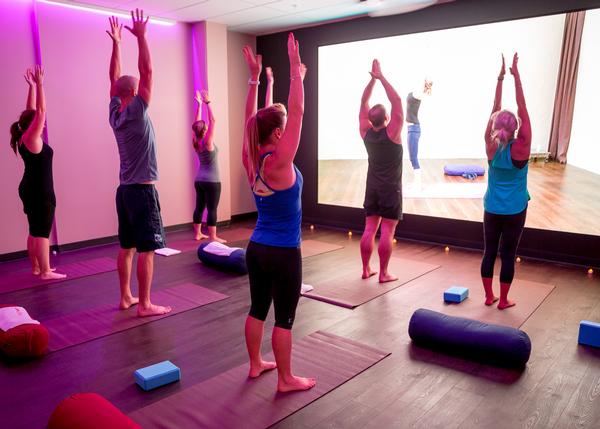
Clubs can also use virtual to create communities of like-minded members with similar goals, such as offering virtual spin classes to cyclists in the off-season or yoga classes to members who want to improve their flexibility.

What are the benefits?
Virtual classes enable clubs to engage members beyond the facility and deliver a more customised experience.

They also break down barriers for people who are not quite ready for a public workout or who are juggling caregiving or intensive work schedules that make it difficult to get to a regular class.

More importantly, virtual classes can open up additional revenue streams for clubs and assist both with member retention and long-term engagement.

Any other tips?
The consumer demand for virtual fitness is growing fast and clubs need to embrace it and view it as a supplement to live classes rather than competition for their more traditional services.

Clubs that integrate virtual fitness in a variety of ways create membership continuity and strengthen membership acquisition and retention strategies.

About Wellbeats
Wellbeats Virtual Fitness delivers fitness classes, workout plans, and fitness assessments to users anytime, anywhere.

Wellbeats’ content and technology enable individuals to take control of their health with solutions that fit their lives.


“Clubs can use virtual to create communities of like-minded members with similar goals”


Virtual fitness allows members to maintain their workout momentum, even if they can’t make it to the club


Brad Weber FitCloudConnect


Brad Weber
 

What’s the key to success?
To do it now while the opportunity to stand out is strong. Once everyone’s doing it, it won’t be a differentiator.

Streaming classes to remote users gives you access to new membership income without having to carry the real estate costs. We have clubs with locations on the west coast of the US with members right across the country paying for classes.

The technology exists to charge appropriate taxes, do the tax reporting and take multi-currency payments.

The third thing to do is to ensure you’re going out live to your members.

How does it work?
Our offering includes pre-recorded classes and live classes, which are streamed at the exact time they’re occurring in the club.

The platform also drives PT revenue and bootcamp training courses.

Any other tips?
Use your imagination: offer live broadcasts from experts, create a rock ‘n’ roll class, a yoga in the park remote broadcast, or send your top trainer on a trip to an exotic location to provide some ‘live on location’ classes. Have fun with it and challenge your imagination!

About FitCloudConnect
FitCloudConnect is a live streaming app, which enables people to work out remotely from any internet device,null


“By extending virtual to become ‘anywhere fitness’ you can stretch your reach across the region, the country or even the world”


Garrett Marshall Fitness On Demand


Garrett Marshall
 

How can clubs exploit virtual?
In short, organise a compelling group fitness offer. Our analytics provide business intelligence that enables operators to understand the most popular formats, frequencies and times of day for virtual classes, so the club’s virtual strategy can be refined and tailored over time.

The speed at which you get engagement in your virtual programme upon implementation has a proportionate effect on long-term usage. So a thorough communications strategy is paramount at launch.

What impact can clubs expect?
We’re currently involved in the first independent research study on virtual in a big box club setting.

The study is taking place in an established club with 13,000 members and a significant live programme.

Early findings show that overall group exercise attendance increased by 39.5 per cent in March 2018 year on year. In addition, one in every three club visits for group fitness are for virtual classes and six per cent of club visits in March 2018 (a total of 60,000 visits) were for virtual.

About Fitness on Demand
The Fitness On Demand platform delivers fitness media and programming through a variety of channels.


“One in every three club visits for group fitness are for virtual classes”


Jonny Queen Fitbox


Jonny Queen
 

How should clubs use virtual?
Until operators schedule a class at a certain time, they don’t know if there’ll be a demand for it – virtual gives them the freedom to experiment with their schedule without financial risk.

Our system enables clubs to publish timetables by way of a simple web link, to ensure members and new customers are kept up to date with these changes.

Virtual is also a great tool for driving members towards the live group timetable.

Clubs in commuter belts experience demand for classes before work and with virtual they have a product to offer at a time when it’s not easy to get instructors.

Operators also need to be aware of the ROI they’ll get if they offer studio space with virtual content to corporates and community groups.

The benefits of increased productivity gained from mid-week employee stress reduction are well-documented, with relaxation and yoga classes being offered as employee benefits.

What are the benefits?
New workouts are quickly available on virtual, so gyms can be very responsive to trends. It also saves money, because gym instructors can be costly.

Virtual brings in different types of customer, only a percentage of whom would be reached by live classes, as the new workouts can be designed to appeal to a far wider range of people.

Virtual has given gyms the opportunity to take best practice from sectors such as retail and to create a different ambience. Starkly-lit, mirror-clad studios for the elite have been replaced by enveloping spaces that provide a positive workout experience.


“Virtual gives the freedom to experiment without financial risk”

FEATURED SUPPLIERS

Legends never die: four legends, four philosophies of life
Panatta brought together four of the most influential figures in bodybuilding history on the stage of RiminiWellness 2026: Phil Heath, Lee Haney, Ronnie Coleman and Hany Rambod. [more...]

Cornerstone Connect helps Active Blackpool tackle health inequalities
Active Blackpool is deploying Cornerstone Connect, a new digital interface allowing disparate information from multiple systems to be aggregated into one dataset, to support its focus on reducing health inequalities and improving healthy life expectancy. [more...]
+ More featured suppliers  
COMPANY PROFILES
Orbit4

With Orbit4, you’ll always have full visibility of your equipment inventory, the true market value [more...]
Safe Space Lockers

We provide a full turn-key solution for clients from design and consultation, through to bespoke man [more...]
+ More profiles  
CATALOGUE GALLERY
 
+ More catalogues  

DIRECTORY
+ More directory  
DIARY


23-26 Aug 2026

Elevate Spa Riviera Maya Edition

The Riviera Maya Edition Kanai, Playa del Carmen, Mexico
10-12 Sep 2026

ASEAN Patio Pool Spa Expo 2026

MITEC Kuala Lumpur,Malaysia, Malaysia
+ More diary  
 
ABOUT LEISURE MEDIA
LEISURE MEDIA MAGAZINES
LEISURE MEDIA HANDBOOKS
LEISURE MEDIA WEBSITES
LEISURE MEDIA PRODUCT SEARCH
 
HCM
LEISURE OPPORTUNITIES
HEALTH CLUB HANDBOOK
PRINT SUBSCRIPTIONS
FREE DIGITAL SUBSCRIPTIONS
ADVERTISE . CONTACT US

Leisure Media
Tel: +44 (0)1462 431385

©Cybertrek 2026
Get HCM digital magazine and ezines FREE
Sign up here ▸
Jobs    News   Products   Magazine
Talking point
How can clubs get the most out of virtual?

HCM’s Steph Eaves gets tips from our panel of experts

By Steph Eaves | Published in Health Club Management 2018 issue 9


It took years for virtual to be accepted by the market, however, things have reached a tipping point recently as operators have been adopting it in earnest, in a bid to get an edge over the competition and reduce costs.

As with all new things, implementation brings expected and unexpected benefits, such as the power to experiment with new classes without financial risk and a straightforward way to connect to the fast-growing home fitness market.

However, there’s a balance to be stuck between virtual and live classes, to ensure it works for the benefit of all, as our experts explain.


Wendy Coulson Les Mills


Wendy Coulson
 

How can clubs maximise the potential of virtual?
The average cycle studio stays idle for 83 per cent of the day, meaning up to £120,000 a year in lost revenue.

Adding virtual helps clubs maximise their studio assets and lighten the load during peak periods, by offering more workout options across the day.

We encourage operators to include virtual messaging in their marketing, as our research shows that providing an ‘always-on’ group exercise timetable is a great way to attract members.

People want to choose when they work out. Six out of ten members surveyed said the number of group exercise classes a gym offers – live and virtual – influences their decision to join.

Clubs also need to consider the quality of the content and the technology, as this can be the biggest determinant of success.

For example, an immersive class such as The Trip [the Les Mills experiential cycle class] is made more effective by cinematic-quality screens, innovative lighting and hi-tech sound: for virtual to work, experience is everything.

Tell us about the benefits
There’s a common misconception that live classes could become a thing of the past, as virtual asserts its place in the gym. However, operators are noticing a positive correlation between virtual and live classes, with virtual helping increase the number of people attending live classes.

Research shows 75 per cent of virtual fitness users also attend live classes and there’s a 12 per cent average increase in live class attendance when clubs timetable both virtual and live workouts.

We suspect this is because virtual is helping people overcome the initial intimidation they feel when they’re new in a group exercise class.

Virtual also enables clubs to build a bigger base of regular participants, increasing class sizes, and this has a positive impact on the number of times people work out each week and how long they stay as members.

Research by ukactive shows members who attend three or more Les Mills classes a week maintain membership nine months longer than non-attendees.

How can clubs ensure that virtual classes are safe?
We’ve been filming our classes for decades to educate instructors on how to deliver a great, safe class, so filming these experiences for virtual isn’t a leap into the unknown and we use bespoke camera angles to film for virtual to demonstrate the moves more clearly.

We’ve also adjusted the editing so we give participants more time to change their equipment and get their set-up right.

Our virtual class presenters also make an extra effort to engage the audience in virtual, so they feel more connected.

The product design of Les Mills classes – both live and virtual – uses a coaching model with three layers. Layer 1 is designed to establish technique and motivation. Layer 2 starts more slowly, but the exercises gradually build in intensity or complexity. This ensures people are warmed up and not jumping into something too complex too quickly. Finally, Layer 3 is about dialling things up. Now the user has nailed the exercises, they can increase the intensity.

The classes are designed to help people ease into the programme.

Any other tips?
Clubs should measure attendance. Many don’t and it makes it difficult to measure value. We know group exercisers attend more frequently and are 26 per cent less likely to cancel than gym-only members.

Virtual can help operators reach beyond the four walls of the gym and be a more consistent touchpoint in their members’ lives through at-home platforms like Les Mills On-Demand.

Clubs know members are going to try online videos at home, so they might as well support them with a high-quality offering that complements the in-club experience and generates revenue.

It’s also a retention tool for keeping members in the exercise habit and can serve as a funnel, drawing members to the club who’ve formed a love of fitness online.

Today’s consumer expects to be able to access anything, anytime, anywhere and clubs need to be able to cater for this.

About Les Mills Virtual
Les Mills classes are now available in virtual, and work alongside live classes.


“There’s a 12 per cent increase in live class attendance when clubs timetable both virtual and live workouts”


The Les Mills RPM – one of three cycle workouts from the company – is now available on virtual


Paul Bowman Wexer


Paul Bowman
 

How can clubs maximise virtual?
Invest in the best installation – the quality of the virtual environment has a significant impact on member enjoyment.

The most effective virtual installations are in studios with no natural light, allowing every aspect of the experience to be controlled, from lighting and sound to screen quality and even scenting.

In our research, 48.9 per cent of members felt their virtual fitness experience would be improved if the whole studio experience were better.

It’s also important to invest in technology that’s robust, reliable and that you can trust to deliver classes around-the-clock to avoid members turning up to find their class has been cancelled due to technical issues. Such scenarios have a negative impact on member satisfaction – worse than not offering classes.

Make sure you market the new studio to members. It sounds obvious, but our research found 67 per cent of members weren’t using their club’s virtual studio, due to a simple lack of awareness.

Then get staff buy-in – your studio needs to be the thing everyone’s talking about, and what better way to get members enthused than mobilising staff?

Build a team of passionate virtual advocates who can create a buzz around your new studio, then watch as they kindle that same passion in your members.

Track attendances, so you can identify top performers and class slots where refinements will improve the experience.

Research carried out by Wexer and Zumba found introducing virtual boosts live class attendance by 12 per cent.

What are the benefits?
Wexer research from 2016 found 21 per cent of virtual users had been a member of their gym for more than a year, compared with only 15 per cent of non-virtual users. It also found 52.2 per cent of virtual users visited the gym at least three times a week.

Forty per cent named virtual as a factor in their decision to join a club.

The main focus of virtual is to encourage people to attend live classes – it’s a route in for those who are too intimidated to enter a room full of regulars.

There are times when it isn’t financially viable to run live classes, but that doesn’t mean your studios have to be empty: virtual classes allow clubs to maximise studio yield and offer an around-the-clock schedule of high-quality group exercise.

Virtual enables clubs to make the most of top instructors via live streaming, which means they can broadcast a ‘superstar’ class to other areas of the club and the estate. They can also be added to the Wexer platform. It’s a great way to ensure all members enjoy the very best of the group exercise offering and not just the few who can fit into the studio.

About Wexer
Wexer Virtual’s On-Demand Player is a touch screen unit that delivers virtual fitness content,null


“Research carried out by Wexer and Zumba found introducing virtual boosts live class attendance by 12 per cent”


Tracking attendance enables operators to fine-tune schedules and improve service


Jason Von Bank Wellbeats


Jason Von Bank
 

How can clubs exploit virtual?
Start by integrating virtual into your offerings. For example, personal trainers can use Wellbeats fitness assessments with clients and also supplement one-on-one training with virtual classes that members can do on their own.

Clubs can also use virtual to create communities of like-minded members with similar goals, such as offering virtual spin classes to cyclists in the off-season or yoga classes to members who want to improve their flexibility.

What are the benefits?
Virtual classes enable clubs to engage members beyond the facility and deliver a more customised experience.

They also break down barriers for people who are not quite ready for a public workout or who are juggling caregiving or intensive work schedules that make it difficult to get to a regular class.

More importantly, virtual classes can open up additional revenue streams for clubs and assist both with member retention and long-term engagement.

Any other tips?
The consumer demand for virtual fitness is growing fast and clubs need to embrace it and view it as a supplement to live classes rather than competition for their more traditional services.

Clubs that integrate virtual fitness in a variety of ways create membership continuity and strengthen membership acquisition and retention strategies.

About Wellbeats
Wellbeats Virtual Fitness delivers fitness classes, workout plans, and fitness assessments to users anytime, anywhere.

Wellbeats’ content and technology enable individuals to take control of their health with solutions that fit their lives.


“Clubs can use virtual to create communities of like-minded members with similar goals”


Virtual fitness allows members to maintain their workout momentum, even if they can’t make it to the club


Brad Weber FitCloudConnect


Brad Weber
 

What’s the key to success?
To do it now while the opportunity to stand out is strong. Once everyone’s doing it, it won’t be a differentiator.

Streaming classes to remote users gives you access to new membership income without having to carry the real estate costs. We have clubs with locations on the west coast of the US with members right across the country paying for classes.

The technology exists to charge appropriate taxes, do the tax reporting and take multi-currency payments.

The third thing to do is to ensure you’re going out live to your members.

How does it work?
Our offering includes pre-recorded classes and live classes, which are streamed at the exact time they’re occurring in the club.

The platform also drives PT revenue and bootcamp training courses.

Any other tips?
Use your imagination: offer live broadcasts from experts, create a rock ‘n’ roll class, a yoga in the park remote broadcast, or send your top trainer on a trip to an exotic location to provide some ‘live on location’ classes. Have fun with it and challenge your imagination!

About FitCloudConnect
FitCloudConnect is a live streaming app, which enables people to work out remotely from any internet device,null


“By extending virtual to become ‘anywhere fitness’ you can stretch your reach across the region, the country or even the world”


Garrett Marshall Fitness On Demand


Garrett Marshall
 

How can clubs exploit virtual?
In short, organise a compelling group fitness offer. Our analytics provide business intelligence that enables operators to understand the most popular formats, frequencies and times of day for virtual classes, so the club’s virtual strategy can be refined and tailored over time.

The speed at which you get engagement in your virtual programme upon implementation has a proportionate effect on long-term usage. So a thorough communications strategy is paramount at launch.

What impact can clubs expect?
We’re currently involved in the first independent research study on virtual in a big box club setting.

The study is taking place in an established club with 13,000 members and a significant live programme.

Early findings show that overall group exercise attendance increased by 39.5 per cent in March 2018 year on year. In addition, one in every three club visits for group fitness are for virtual classes and six per cent of club visits in March 2018 (a total of 60,000 visits) were for virtual.

About Fitness on Demand
The Fitness On Demand platform delivers fitness media and programming through a variety of channels.


“One in every three club visits for group fitness are for virtual classes”


Jonny Queen Fitbox


Jonny Queen
 

How should clubs use virtual?
Until operators schedule a class at a certain time, they don’t know if there’ll be a demand for it – virtual gives them the freedom to experiment with their schedule without financial risk.

Our system enables clubs to publish timetables by way of a simple web link, to ensure members and new customers are kept up to date with these changes.

Virtual is also a great tool for driving members towards the live group timetable.

Clubs in commuter belts experience demand for classes before work and with virtual they have a product to offer at a time when it’s not easy to get instructors.

Operators also need to be aware of the ROI they’ll get if they offer studio space with virtual content to corporates and community groups.

The benefits of increased productivity gained from mid-week employee stress reduction are well-documented, with relaxation and yoga classes being offered as employee benefits.

What are the benefits?
New workouts are quickly available on virtual, so gyms can be very responsive to trends. It also saves money, because gym instructors can be costly.

Virtual brings in different types of customer, only a percentage of whom would be reached by live classes, as the new workouts can be designed to appeal to a far wider range of people.

Virtual has given gyms the opportunity to take best practice from sectors such as retail and to create a different ambience. Starkly-lit, mirror-clad studios for the elite have been replaced by enveloping spaces that provide a positive workout experience.


“Virtual gives the freedom to experiment without financial risk”

LATEST NEWS
HCM Invest opens applications for pitching slots
The inaugural HCM Invest event has opened applications for pitching slots ahead of its launch in London on 21 October 2026.
Researchers find that 90-120 minutes of strength training a week has longevity benefits
According to research which tracked more than 147,000 people for 30 years, 90-120 minutes of strength training a week may deliver some of the biggest long-term health rewards.
Everlast pushes internationally with Dublin site
Everlast Gyms expands its footprint outside of the UK this month with the imminent launch of a club in Dublin.
UK updates physical activity guidelines with focus on daily movement
The UK's four Chief Medical Officers have published a refreshed edition of Physical activity guidelines: UK Chief Medical Officers' report, updating the evidence that underpins the nation's physical activity recommendations and placing greater emphasis on strength, balance, reducing sedentary behaviour and, for the first time, supporting people taking weight loss medications.
Places Leisure is working with Roberts Limbrick to build £60m wellness flagship in Basingstoke
Places Leisure has exchanged contracts to build and operate a flagship £60m water and leisure destination on behalf of Basingstoke and Deane Borough Council.
PureGym announces expansion into Ireland
The Republic of Ireland will become the latest market in PureGym’s expanding international portfolio, with the first launch planned for Dublin in 2027.
Total Fitness CEO Sophie Lawler launches leadership coaching venture
Sophie Lawler, CEO of Total Fitness, has launched a leadership coaching business aimed at helping women realise their professional potential.
Anytime Fitness reaches milestone moment and targets Europe for growth
Anytime Fitness opened more than one club a day in 2025 and is on track to maintain this rate of growth this year, as parent company Purpose Brands targets further international expansion.
Everyone Active opens £33.9 million next-generation leisure and wellbeing hub
The £33.9 million Leighton Leisure and Community Centre has opened in Leighton Buzzard, UK, creating a next-generation public leisure, health and wellbeing hub for the local community.
YogaSix responds to Pilates boom with launch of strength-focused Y6 Core class
YogaSix, the yoga brand of Xponential Fitness, has launched a heated, Pilates-inspired class called Y6 Core.
Bromley’s £17m Walnuts revamp adds EGYM, rehab and recovery
Walnuts Leisure Centre in Orpington, in the London Borough of Bromley, has reopened following a £17m transformation designed to secure the long-term future of the public leisure asset and reposition it as a community wellbeing hub.
The Gym Group breaks the million members mark for the first time
The Gym Group, has announced that it's sustained positive trading momentum has continued through the first half of 2026 and the company remains confident about the outlook.
+ More news   
 
FEATURED SUPPLIERS

Legends never die: four legends, four philosophies of life
Panatta brought together four of the most influential figures in bodybuilding history on the stage of RiminiWellness 2026: Phil Heath, Lee Haney, Ronnie Coleman and Hany Rambod. [more...]

Cornerstone Connect helps Active Blackpool tackle health inequalities
Active Blackpool is deploying Cornerstone Connect, a new digital interface allowing disparate information from multiple systems to be aggregated into one dataset, to support its focus on reducing health inequalities and improving healthy life expectancy. [more...]
+ More featured suppliers  
COMPANY PROFILES
Orbit4

With Orbit4, you’ll always have full visibility of your equipment inventory, the true market value [more...]
+ More profiles  
CATALOGUE GALLERY
+ More catalogues  

DIRECTORY
+ More directory  
DIARY


23-26 Aug 2026

Elevate Spa Riviera Maya Edition

The Riviera Maya Edition Kanai, Playa del Carmen, Mexico
10-12 Sep 2026

ASEAN Patio Pool Spa Expo 2026

MITEC Kuala Lumpur,Malaysia, Malaysia
+ More diary  


ADVERTISE . CONTACT US

Leisure Media
Tel: +44 (0)1462 431385

©Cybertrek 2026

ABOUT LEISURE MEDIA
LEISURE MEDIA MAGAZINES
LEISURE MEDIA HANDBOOKS
LEISURE MEDIA WEBSITES
LEISURE MEDIA PRODUCT SEARCH
PRINT SUBSCRIPTIONS
FREE DIGITAL SUBSCRIPTIONS