Stress levels increase for each generation, so should stress resilience training be something health clubs offer as standard? Kath Hudson asks the experts
By Kath Hudson | Published in Health Club Management 2018 issue 9
Mental ill health frequently leads to physical ill health and stress is the root cause of many potentially fatal illnesses, such as depression, obesity, cardiac disease and diabetes.
Since the overall health of our clients is what the health and fitness industry is all about, should we be doing more to help and support people in building their stress resilience?
Research shows that millennials are now more stressed than the 'silent generation', who lived through the world wars.
There are a number of reasons, including the fact that, having been raised with technology, they communicate more comfortably via social media and text than face to face. Social media also brings its own pressures and expectations.
Highly educated, ambitious and confident, millennials have high expectations, but then have to cope with the reality of student loans and few high-paying job prospects.
According to women’s business organisation, One of Many, women are 60 per cent more likely to suffer from stress or burnout than men. They're also less happy than they were 40 years ago, regardless of income, health, job, marital status, age, race and whether or not they have children. Dr Joanna Martin, founder of One of Many, attributes this to women finding themselves running on adrenalin and cortisol – the stress hormones – to fulfil their many roles, and this is not sustainable.
Undoubtedly gyms could help support people to become less stressed. But since stress resilience is not part of PT training programmes, could gyms unwittingly be adding to the problem they're trying to solve? We ask the experts…
Andy McGlynnManaging directorLSF Personal Training
Andy McGlynn
A lot of education is needed around the subject of stress and gyms are a great place to start. Every single senior executive I work with suffers from stress. To get them to train hard from the outset would stress an already adrenally fatigued body even further, causing more inflammation, which leads to a number of issues including sleep disruption, brain fog and IBS.
In extreme cases, it can lead to burnout, insulin resistance and hypothyroidism, as the prolonged high blood cortisol levels will begin to suppress the thyroid.
One of the USPs of my PT company is offering stress-resilience programmes. Each of my clients is assessed for stress using a cortisol saliva test and an in-depth questionnaire. We then start to unpick each stressor: addressing deficiencies of key minerals and vitamins in their diet, and working on developing mental robustness to cope with stressors that can’t be avoided.
People who are suffering from stress need to be introduced to exercise slowly, using parasympathetic exercise and programme design. We don’t let them train hard in the beginning, however, we use primal movement pattern exercise to improve their posture and core strength, and to build up strength throughout the kinetic chain while addressing any weak links which could lead to pain.
In extreme cases, it might take as long as eight weeks, before they are ready to exercise more aggressively.
"Each of my clients is assessed for stress using a cortisol saliva test and an in-depth questionnaire. We then start to unpick each stressor"
John Allison FounderStreetGym and Motion to Mind
John Allison
Twenty four years in the army made me appreciate the value of physical exercise to sustain yourself mentally in a high pressure environment.
Exercise is a great way of relieving stress, and I think there's definitely the opportunity for gyms to become wellness hubs and for PTs to become wellness coaches, helping people to tackle stress and build resilience by building their mental strength while they also build their physical strength.
Many PTs are already acting in this capacity, but the formal career path isn’t there yet – we don’t have either the education programme or the curriculum.
The Level 4, Physical Activity for Mental Health qualification is a good starting point, but there's much more work to be done.
It is important that we don’t take a one-size-fits-all approach, as this can have a detrimental impact.
One client, who suffers from anxiety, confided that when he was doing a lot of HIIT sessions after work, it disrupted his sleep patterns and led to greater anxiety, by turning on his fight or flight response and flooding his body with stress hormones.
It’s about the right exercise at the right time, for the right person. We need to remember that exercise itself can be a stressor, therefore, PTs need to ensure training is tailored to the client’s mental as well as physical state.
Activities requiring concentration, like yoga or boxing, are good because they keep people in the moment and stop them from ruminating about the past or future, creating breathing space.
It’s also important to restore balance and homeostasis, particularly after a high intensity workout – doing some relaxation and breath work, for example.
Visualisation and engaging the senses is also powerful: focusing on people and places that produce feelings of gratitude and appreciation is deeply restorative and something we should be encouraging our clients to do.
"Exercise is a great way of relieving stress, and I think there’s definitely the opportunity for gyms to become wellness hubs and for PTs to become wellness coaches"
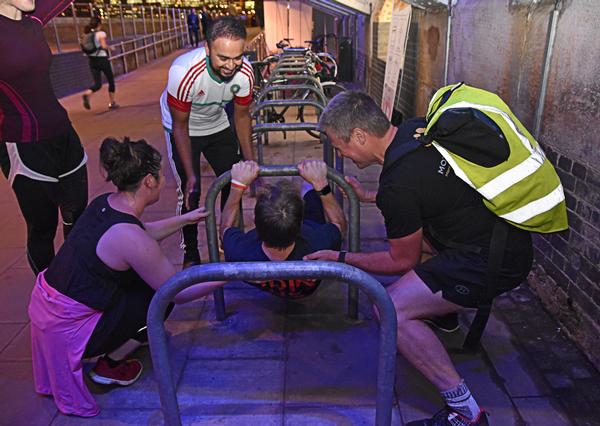
StreetGym encourages people to develop mental toughness
Oliver PatrickCo-founderViavi:
Oliver Patrick
It’s true that many people do need help in managing their stress and that it can get in the way of the results members are seeking to achieve from their gym membership.
A key symptom of overstress is a lack of energy. Stress can affect energy in many ways, but particularly through disrupted sleep cycles, and if people are tired they often don’t have the energy to go to the gym, and are more likely to crave, and overeat, carbs.
Excess stress over time can also lead to too much cortisol production, which leads to fat storage and, over time, a decrease in the hormones that assist muscle growth and metabolism.
Despite this, I would be wary of operators offering stress resilience as a formal programme, unless they have a clinical background, because there is not a one-size-fits-all approach to managing stress.
Without clinical training, instructors and PTs might fall into the trap of working experientially rather than clinically: using an approach that worked well for one individual on another when it’s not appropriate.
At the moment there isn’t a well-defined and consistent stress professional in the industry and, in our experience, tackling stress requires a broad tool kit of knowledge and behaviours.
In light of this, I believe the safest way to progress is to be wary of launching specific stress or resilience diagnostic services. Instead operators should encourage highly pressurised members to add generic recovery strategies to their life, such as sleep routines, meditation and yoga.
"Operators should encourage highly pressurised members to add generic recovery strategies to their life, such as sleep routines, meditation and yoga"
Photo: SHUTTERSTOCK
Yoga can be offered to members to aid recovery and reduce stress
Gavin JenningsDirectorCHEK Europe
Gavin Jennings
Developed by Paul Chek, based on 30 years of clinical practice of working with clients, CHEK Institute has come up with a series of training programmes that take a holistic view of the body, treating the mental, physical, hormonal, emotional and spiritual systems as inextricably linked.
We're in the grey area between the medical and fitness industries and have professionals from both sides coming onto our courses: PTs, doctors, psychotherapists and osteopaths.
Demand for our courses has risen over the last 18 months, reflecting the shift in awareness of mental health, but also PTs not feeling confident about their PT qualification.
Stress comes in many forms, but typically most gym members will be experiencing moderate to high levels of stress related to digestive health, poor sleep patterns and poor diet. A significant number will have ongoing musculoskeletal issues, which can be exacerbated through the wrong sort of exercise.
Often big improvements can be made through some easy fixes: going to bed and getting up at the same time, eating correctly in order to maintain even blood sugar, ensuring they have some quiet time each day and spending restorative time in nature to rest and recharge.
Also important is knowing when and how to ‘work-in’ rather than ‘work-out’. A common stress is people trying to fit too much into their lives, so we help them to prioritise what is important and their core values. Often it is simplistic changes that have the most benefit.
"We take a holistic view of the body, treating the mental, physical, hormonal, emotional and spiritual systems as inextricably linked"
PHOTO: shutterstock.com
Spending time in nature is a powerful way to rest and recharge
Panatta brought together four of the most influential figures in bodybuilding history on the
stage of RiminiWellness 2026: Phil Heath, Lee Haney, Ronnie Coleman and Hany Rambod. [more...]
Active Blackpool is deploying Cornerstone Connect, a new digital interface allowing
disparate information from multiple systems to be aggregated into one dataset, to support
its focus on reducing health inequalities and improving healthy life expectancy. [more...]
Stress levels increase for each generation, so should stress resilience training be something health clubs offer as standard? Kath Hudson asks the experts
By Kath Hudson | Published in Health Club Management 2018 issue 9
Mental ill health frequently leads to physical ill health and stress is the root cause of many potentially fatal illnesses, such as depression, obesity, cardiac disease and diabetes.
Since the overall health of our clients is what the health and fitness industry is all about, should we be doing more to help and support people in building their stress resilience?
Research shows that millennials are now more stressed than the 'silent generation', who lived through the world wars.
There are a number of reasons, including the fact that, having been raised with technology, they communicate more comfortably via social media and text than face to face. Social media also brings its own pressures and expectations.
Highly educated, ambitious and confident, millennials have high expectations, but then have to cope with the reality of student loans and few high-paying job prospects.
According to women’s business organisation, One of Many, women are 60 per cent more likely to suffer from stress or burnout than men. They're also less happy than they were 40 years ago, regardless of income, health, job, marital status, age, race and whether or not they have children. Dr Joanna Martin, founder of One of Many, attributes this to women finding themselves running on adrenalin and cortisol – the stress hormones – to fulfil their many roles, and this is not sustainable.
Undoubtedly gyms could help support people to become less stressed. But since stress resilience is not part of PT training programmes, could gyms unwittingly be adding to the problem they're trying to solve? We ask the experts…
Andy McGlynnManaging directorLSF Personal Training
Andy McGlynn
A lot of education is needed around the subject of stress and gyms are a great place to start. Every single senior executive I work with suffers from stress. To get them to train hard from the outset would stress an already adrenally fatigued body even further, causing more inflammation, which leads to a number of issues including sleep disruption, brain fog and IBS.
In extreme cases, it can lead to burnout, insulin resistance and hypothyroidism, as the prolonged high blood cortisol levels will begin to suppress the thyroid.
One of the USPs of my PT company is offering stress-resilience programmes. Each of my clients is assessed for stress using a cortisol saliva test and an in-depth questionnaire. We then start to unpick each stressor: addressing deficiencies of key minerals and vitamins in their diet, and working on developing mental robustness to cope with stressors that can’t be avoided.
People who are suffering from stress need to be introduced to exercise slowly, using parasympathetic exercise and programme design. We don’t let them train hard in the beginning, however, we use primal movement pattern exercise to improve their posture and core strength, and to build up strength throughout the kinetic chain while addressing any weak links which could lead to pain.
In extreme cases, it might take as long as eight weeks, before they are ready to exercise more aggressively.
"Each of my clients is assessed for stress using a cortisol saliva test and an in-depth questionnaire. We then start to unpick each stressor"
John Allison FounderStreetGym and Motion to Mind
John Allison
Twenty four years in the army made me appreciate the value of physical exercise to sustain yourself mentally in a high pressure environment.
Exercise is a great way of relieving stress, and I think there's definitely the opportunity for gyms to become wellness hubs and for PTs to become wellness coaches, helping people to tackle stress and build resilience by building their mental strength while they also build their physical strength.
Many PTs are already acting in this capacity, but the formal career path isn’t there yet – we don’t have either the education programme or the curriculum.
The Level 4, Physical Activity for Mental Health qualification is a good starting point, but there's much more work to be done.
It is important that we don’t take a one-size-fits-all approach, as this can have a detrimental impact.
One client, who suffers from anxiety, confided that when he was doing a lot of HIIT sessions after work, it disrupted his sleep patterns and led to greater anxiety, by turning on his fight or flight response and flooding his body with stress hormones.
It’s about the right exercise at the right time, for the right person. We need to remember that exercise itself can be a stressor, therefore, PTs need to ensure training is tailored to the client’s mental as well as physical state.
Activities requiring concentration, like yoga or boxing, are good because they keep people in the moment and stop them from ruminating about the past or future, creating breathing space.
It’s also important to restore balance and homeostasis, particularly after a high intensity workout – doing some relaxation and breath work, for example.
Visualisation and engaging the senses is also powerful: focusing on people and places that produce feelings of gratitude and appreciation is deeply restorative and something we should be encouraging our clients to do.
"Exercise is a great way of relieving stress, and I think there’s definitely the opportunity for gyms to become wellness hubs and for PTs to become wellness coaches"
StreetGym encourages people to develop mental toughness
Oliver PatrickCo-founderViavi:
Oliver Patrick
It’s true that many people do need help in managing their stress and that it can get in the way of the results members are seeking to achieve from their gym membership.
A key symptom of overstress is a lack of energy. Stress can affect energy in many ways, but particularly through disrupted sleep cycles, and if people are tired they often don’t have the energy to go to the gym, and are more likely to crave, and overeat, carbs.
Excess stress over time can also lead to too much cortisol production, which leads to fat storage and, over time, a decrease in the hormones that assist muscle growth and metabolism.
Despite this, I would be wary of operators offering stress resilience as a formal programme, unless they have a clinical background, because there is not a one-size-fits-all approach to managing stress.
Without clinical training, instructors and PTs might fall into the trap of working experientially rather than clinically: using an approach that worked well for one individual on another when it’s not appropriate.
At the moment there isn’t a well-defined and consistent stress professional in the industry and, in our experience, tackling stress requires a broad tool kit of knowledge and behaviours.
In light of this, I believe the safest way to progress is to be wary of launching specific stress or resilience diagnostic services. Instead operators should encourage highly pressurised members to add generic recovery strategies to their life, such as sleep routines, meditation and yoga.
"Operators should encourage highly pressurised members to add generic recovery strategies to their life, such as sleep routines, meditation and yoga"
Photo: SHUTTERSTOCK
Yoga can be offered to members to aid recovery and reduce stress
Gavin JenningsDirectorCHEK Europe
Gavin Jennings
Developed by Paul Chek, based on 30 years of clinical practice of working with clients, CHEK Institute has come up with a series of training programmes that take a holistic view of the body, treating the mental, physical, hormonal, emotional and spiritual systems as inextricably linked.
We're in the grey area between the medical and fitness industries and have professionals from both sides coming onto our courses: PTs, doctors, psychotherapists and osteopaths.
Demand for our courses has risen over the last 18 months, reflecting the shift in awareness of mental health, but also PTs not feeling confident about their PT qualification.
Stress comes in many forms, but typically most gym members will be experiencing moderate to high levels of stress related to digestive health, poor sleep patterns and poor diet. A significant number will have ongoing musculoskeletal issues, which can be exacerbated through the wrong sort of exercise.
Often big improvements can be made through some easy fixes: going to bed and getting up at the same time, eating correctly in order to maintain even blood sugar, ensuring they have some quiet time each day and spending restorative time in nature to rest and recharge.
Also important is knowing when and how to ‘work-in’ rather than ‘work-out’. A common stress is people trying to fit too much into their lives, so we help them to prioritise what is important and their core values. Often it is simplistic changes that have the most benefit.
"We take a holistic view of the body, treating the mental, physical, hormonal, emotional and spiritual systems as inextricably linked"
PHOTO: shutterstock.com
Spending time in nature is a powerful way to rest and recharge
According to research which tracked more than 147,000 people for 30 years, 90-120 minutes
of strength training a week may deliver some of the biggest long-term health rewards.
The UK's four Chief Medical Officers have published a refreshed edition of Physical activity
guidelines: UK Chief Medical Officers' report, updating the evidence that underpins the nation's
physical activity recommendations and placing greater emphasis on strength, balance, reducing
sedentary behaviour and, for the first time, supporting people taking weight loss medications.
Places Leisure has exchanged contracts to build and operate a flagship £60m water and leisure
destination on behalf of Basingstoke and Deane Borough Council.
The Republic of Ireland will become the latest market in PureGym’s expanding international
portfolio, with the first launch planned for Dublin in 2027.
Anytime Fitness opened more than one club a day in 2025 and is on track to maintain this rate
of growth this year, as parent company Purpose Brands targets further international expansion.
The £33.9 million Leighton Leisure and Community Centre has opened in Leighton Buzzard, UK,
creating a next-generation public leisure, health and wellbeing hub for the local community.
Walnuts Leisure Centre in Orpington, in the London Borough of Bromley, has reopened following
a £17m transformation designed to secure the long-term future of the public leisure asset and
reposition it as a community wellbeing hub.
The Gym Group, has announced that it's sustained positive trading momentum has continued
through the first half of 2026 and the company remains confident about the outlook.
Panatta brought together four of the most influential figures in bodybuilding history on the
stage of RiminiWellness 2026: Phil Heath, Lee Haney, Ronnie Coleman and Hany Rambod. [more...]
Active Blackpool is deploying Cornerstone Connect, a new digital interface allowing
disparate information from multiple systems to be aggregated into one dataset, to support
its focus on reducing health inequalities and improving healthy life expectancy. [more...]