Randy Hetrick invented the TRX training system by hacking
a jiu-jitsu belt and parchute webbing
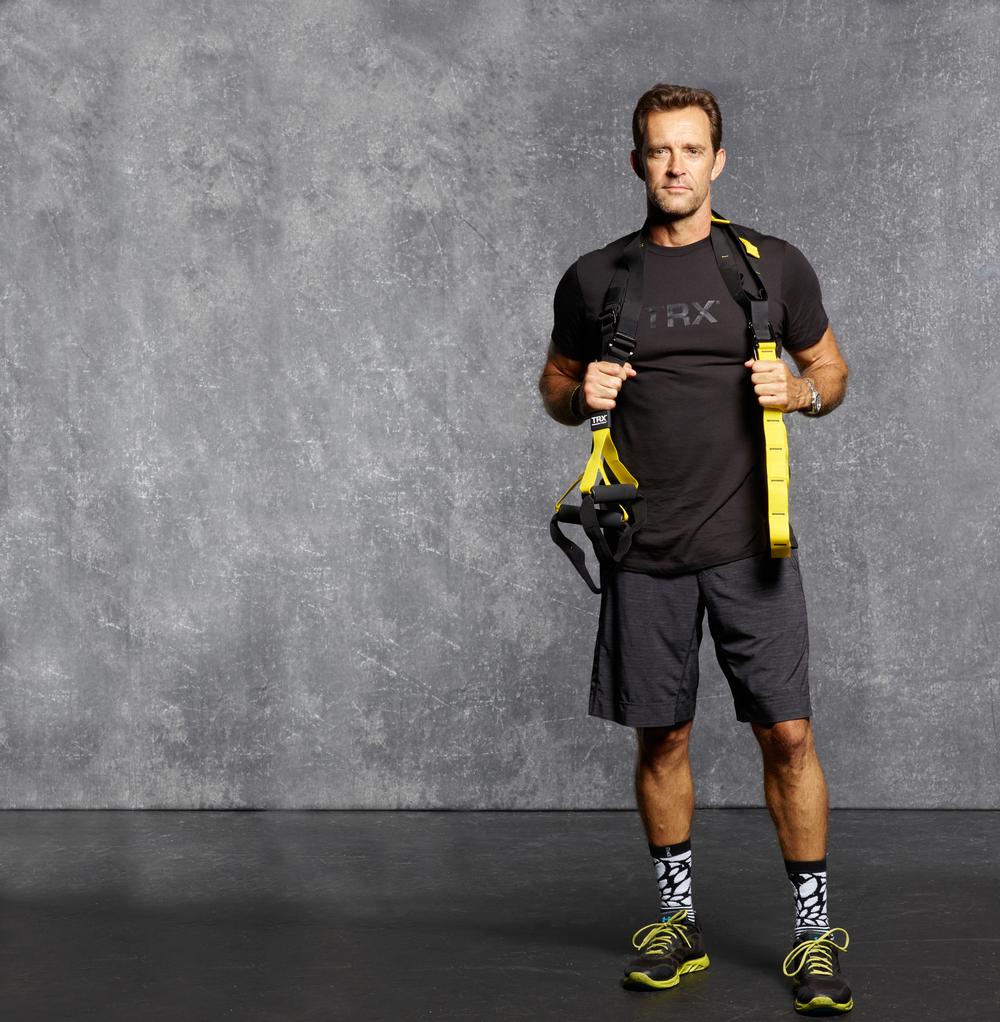
The development of TRX was an accident,” explains Olivier Ciaravino, VP of international business at TRX. “In 1997, Squadron Commander Randy Hetrick and his team were stuck in South East Asia waiting to deploy. They had no access to exercise and couldn’t even go outside, but needed to stay strong. Randy found a jiu-jitsu belt in his bag, which he combined with parachute webbing, tied in a knot and threw over the door to do bodyweight exercises such as pull-ups.”
Four years later, Hetrick graduated from Stanford University with an MBA and plans to take the business forward. Now, 21 years on, TRX enjoys enviable brand recognition and is used by 40,000 gyms, one million people in the military and 250,000 sports people worldwide.
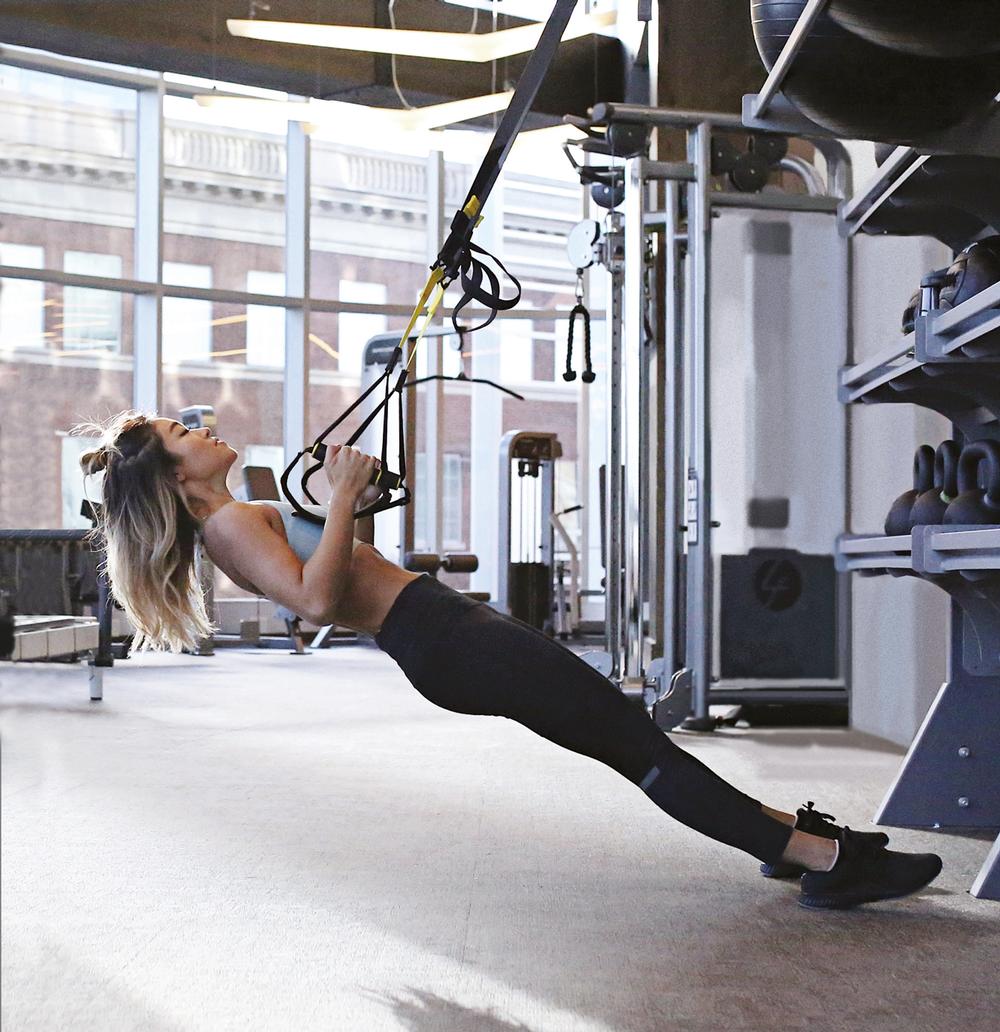
A simple, versatile product, it uses a suspended strap to allow users to leverage gravity and their body weight, to complete hundreds of exercises that develop strength, balance, flexibility and core stability. As well as burning fat and improving heart health, it can be used to blast specific parts of the body.
“By using bodyweight, rather than weights, TRX marked a new approach to exercise,” says Ciaravino. “It’s a fantastically simple product: completely portable, you can put in a backpack and use it in a hotel room, or hang off a tree. Because it was such a game changer there have been many copy cat products but we are protected by 24 patents.”
During the last two years, the company has enjoyed double digit growth and this trend has kept going in 2018. “The brand has become synonymous with good movement and education,” says Ciaravino. “The key to our success has been our education programme; we now run 2,000 instructor courses every year.”
Innovation – TRX Zones As well as promoting the concept through the instructor training programmes, the company is constantly looking for ways to innovate and use TRX to drive customer engagement and revenue for clubs. One way is through the TRX zones.
“Last year we started offering the concept of our 'TRX Training Zone Solution' to health clubs,” explains Ciaravino. “This is a zone where we offer frames – our Studio Line range – with monkey bars, dip bars and pull bars, on which we display straps and functional equipment, such as kettlebells and medicine balls. All this gear being offered with world-class education and programming. It is perfect for group exercise and PT sessions, offering a better way of generating revenue than the traditional CV and weight areas."
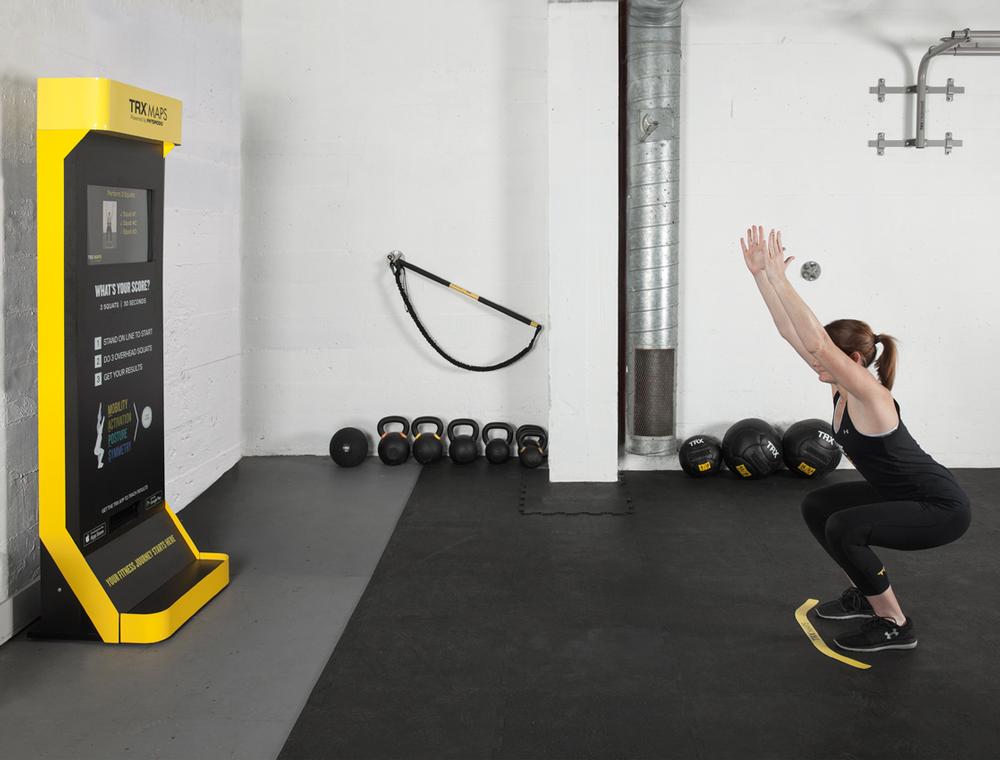
Completely integrated in this TRX Zone concept, TRX MAPS, which was launched earlier this year, is designed to improve inefficiencies in mobility, activation, posture and symmetry. “It’s a very user-friendly tool allowing club members and PTs to perform a complete body movement scan in less than 30 seconds,” says Ciaravino. They can then identify any weaknesses or imbalances and set exercises to address this. It can be used on an ongoing basis to monitor improvements, which offers a great opportunity to upsell PT services.”
Now a global business, TRX only distributes directly into three markets: the US, where it was created, Japan and, as of this year, the UK. “There are three strands to the business that together lead to our TRX Training Zone Solution: gear, technology and activation,” says Ciaravino. “Gear covers the straps, the functional training accessories and our Studio Line frames; technology is TRX MAPS and activation is about education and programming elements.
"We can’t separate them and it leads to us being unique in the market. Now we're going to deploy this solution globally to replicate the success we've had in the US throughout the world.”
THE TRX TIMELINE 1997 Randy Hetrick creates first TRX out of a martial arts belt
2001 Hetrick graduates with an MBA from Stanford University
2004 TRX prototype is launched
2005 Launch of the first suspension training course
2006 TRX enters the international market
2007 TRX FORCE launches as a military training programme and is incorporated by the US Marine Corps
2009 TRX reaches more than one million users in 60 countries
2010 Launch of the flagship training centre in San Francisco
2011 Acquisition of RipCore FX to form TRX Rip Training. The Pro Pack suspension trainer design is unveiled, along with Rip Training and sports medicine Suspension Training Courses
2012 Two innovations launched for the commercial market: TRX Commercial Suspension Trainer and Rip Training education course
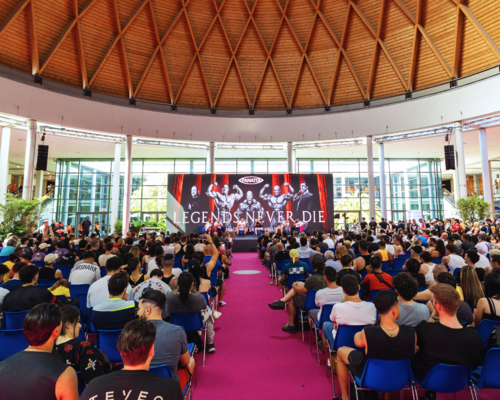
Panatta brought together four of the most influential figures in bodybuilding history on the
stage of RiminiWellness 2026: Phil Heath, Lee Haney, Ronnie Coleman and Hany Rambod. [more...]
Randy Hetrick invented the TRX training system by hacking
a jiu-jitsu belt and parchute webbing
The development of TRX was an accident,” explains Olivier Ciaravino, VP of international business at TRX. “In 1997, Squadron Commander Randy Hetrick and his team were stuck in South East Asia waiting to deploy. They had no access to exercise and couldn’t even go outside, but needed to stay strong. Randy found a jiu-jitsu belt in his bag, which he combined with parachute webbing, tied in a knot and threw over the door to do bodyweight exercises such as pull-ups.”
Four years later, Hetrick graduated from Stanford University with an MBA and plans to take the business forward. Now, 21 years on, TRX enjoys enviable brand recognition and is used by 40,000 gyms, one million people in the military and 250,000 sports people worldwide.
A simple, versatile product, it uses a suspended strap to allow users to leverage gravity and their body weight, to complete hundreds of exercises that develop strength, balance, flexibility and core stability. As well as burning fat and improving heart health, it can be used to blast specific parts of the body.
“By using bodyweight, rather than weights, TRX marked a new approach to exercise,” says Ciaravino. “It’s a fantastically simple product: completely portable, you can put in a backpack and use it in a hotel room, or hang off a tree. Because it was such a game changer there have been many copy cat products but we are protected by 24 patents.”
During the last two years, the company has enjoyed double digit growth and this trend has kept going in 2018. “The brand has become synonymous with good movement and education,” says Ciaravino. “The key to our success has been our education programme; we now run 2,000 instructor courses every year.”
Innovation – TRX Zones As well as promoting the concept through the instructor training programmes, the company is constantly looking for ways to innovate and use TRX to drive customer engagement and revenue for clubs. One way is through the TRX zones.
“Last year we started offering the concept of our 'TRX Training Zone Solution' to health clubs,” explains Ciaravino. “This is a zone where we offer frames – our Studio Line range – with monkey bars, dip bars and pull bars, on which we display straps and functional equipment, such as kettlebells and medicine balls. All this gear being offered with world-class education and programming. It is perfect for group exercise and PT sessions, offering a better way of generating revenue than the traditional CV and weight areas."
Completely integrated in this TRX Zone concept, TRX MAPS, which was launched earlier this year, is designed to improve inefficiencies in mobility, activation, posture and symmetry. “It’s a very user-friendly tool allowing club members and PTs to perform a complete body movement scan in less than 30 seconds,” says Ciaravino. They can then identify any weaknesses or imbalances and set exercises to address this. It can be used on an ongoing basis to monitor improvements, which offers a great opportunity to upsell PT services.”
Now a global business, TRX only distributes directly into three markets: the US, where it was created, Japan and, as of this year, the UK. “There are three strands to the business that together lead to our TRX Training Zone Solution: gear, technology and activation,” says Ciaravino. “Gear covers the straps, the functional training accessories and our Studio Line frames; technology is TRX MAPS and activation is about education and programming elements.
"We can’t separate them and it leads to us being unique in the market. Now we're going to deploy this solution globally to replicate the success we've had in the US throughout the world.”
THE TRX TIMELINE 1997 Randy Hetrick creates first TRX out of a martial arts belt
2001 Hetrick graduates with an MBA from Stanford University
2004 TRX prototype is launched
2005 Launch of the first suspension training course
2006 TRX enters the international market
2007 TRX FORCE launches as a military training programme and is incorporated by the US Marine Corps
2009 TRX reaches more than one million users in 60 countries
2010 Launch of the flagship training centre in San Francisco
2011 Acquisition of RipCore FX to form TRX Rip Training. The Pro Pack suspension trainer design is unveiled, along with Rip Training and sports medicine Suspension Training Courses
2012 Two innovations launched for the commercial market: TRX Commercial Suspension Trainer and Rip Training education course
In response to customer demand, Gymnation has unveiled a muscle thobe and ghutra range
for Saudi men that celebrates Saudi culture as well as the region’s growing interest in fitness.
Italian Exhibition Group – the organiser behind industry events Dubai Active and Dubai Muscle
Show – has been appointed to deliver the Health and Wellness Expo and Fire and Safety Expo at
the 16th World Firefighters Games.
It’s been five years since the fitness industry reopened after the last lockdown – long enough
to look back on the impact the pandemic had on the sector and what might come next.
Wattbike has announced a new integration with EGYM, which enables the bikes to contribute to
the Cardio BioAge score of individuals via a VO2 max result.
Les Mills has launched a reformer Pilates workout. The 45-minute workout blends traditional
reformer movements and more contemporary exercises, choreographed to music.
According to research which tracked more than 147,000 people for 30 years, 90-120 minutes
of strength training a week may deliver some of the biggest long-term health rewards.
The UK's four Chief Medical Officers have published a refreshed edition of Physical activity
guidelines: UK Chief Medical Officers' report, updating the evidence that underpins the nation's
physical activity recommendations and placing greater emphasis on strength, balance, reducing
sedentary behaviour and, for the first time, supporting people taking weight loss medications.
Places Leisure has exchanged contracts to build and operate a flagship £60m water and leisure
destination on behalf of Basingstoke and Deane Borough Council.
Panatta brought together four of the most influential figures in bodybuilding history on the
stage of RiminiWellness 2026: Phil Heath, Lee Haney, Ronnie Coleman and Hany Rambod. [more...]