Scientists believe floatation therapy could be a shortcut to meditation
and much more than just a relaxation amenity for health clubs.
Niamh Madigan dives in to find out more
By Niamh Madigan | Published in Health Club Management 2018 issue 8
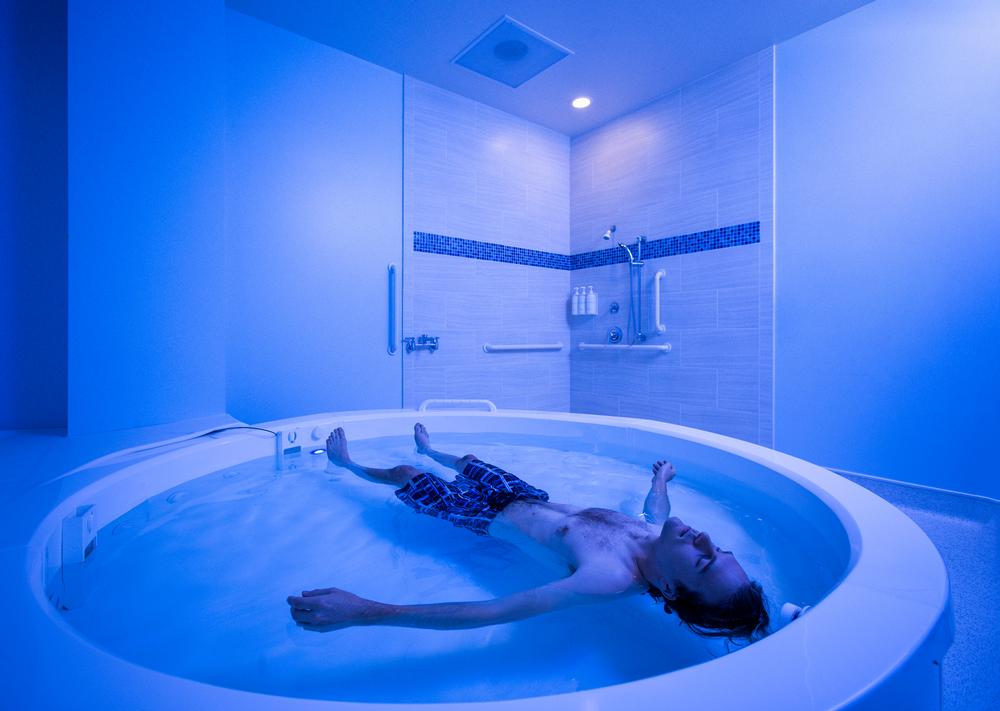
Float Clinic and Research Center at the Laureate Institute for Brain Research
Anyone who’s ever tried to meditate will know how difficult it is to sit quietly, shut out distractions and go into a state of complete tranquility. In a world where our brains are constantly being primed, there’s little chance to focus inwards. But what if the many widely-reported benefits of meditation could be achieved in another way – by the simple act of floating?
Neuropsychologist Justin Feinstein thinks this is a possibility and says: “floatation creates what I might say is the ultimate environment for focused, internal meditation”. Last year, he set up the Float Clinic and Research Center at the Laureate Institute for Brain Research in Tulsa, Oklahoma. It’s one of the first labs to look at the therapeutic benefits of floatation and initial findings indicate that it could be used to treat conditions like post-traumatic stress disorder (PTSD), chronic pain and even anorexia.
What Feinstein and his team are working on could have wider implications for spas. Instead of overlooking floatation pools and pods and thinking of them as an expensive extra just for relaxation, there may be grounds for operators to incorporate them into wellness programmes or use them as a standalone treatment for more serious ailments.
Making sense Originally called isolation tanks, floatation pools have been around since the 1950s but had little credibility with scientists – not least because studies were often combined with hallucinogens like LSD. But as we move towards an era when mindfulness is being taken more seriously by western society, a number of researchers are trying to provide concrete evidence for the healing benefits of floatation.
Feinstein first became interested in floatation 10 years ago when studying the brain function of patients with psychiatric conditions such as PTSD, social phobia and drug addiction. His interest was in the concept of interoception. In other words, how the brain senses the internal workings of the body; from the heart beating and blood pulsating to feelings from the gut and the immune system. He believed that disturbances in these body maps were the crux of mental health issues and discovered that floatation can help correct that dysregulation.
He explains: “For the first time in people’s lives, they have a chance to connect with those senses which are being overshadowed and understand who they are a little bit better.” Floating also creates a state of profound relaxation, which is the complete opposite to a state of anxiety.
Research results Feinstein’s research is still in its early stages and he’s still trying to understand the basic science behind floating and how it so profoundly affects both the brain and the body. Preliminary studies show a lot of visceral systems are entering into a relaxed state, with a reduction in heart rates, respiratory rates, blood pressure and brain waves. He says: “Most people outside of a float pool average 15 breaths a minute. Without much practice, floating reduces this to about five breaths a minute, which is quite a change.”
He’s just completed the first float fMRI brain imaging study to see what impact the experience has on the amygdala, a part of the brain that plays a key role in the processing of emotions. When the amygdala is over-stimulated it activates our fight or flight response which can trigger stress and anxiety. In the research, 40 healthy people were split into two groups – one enjoyed a 90-minute float, the other control group spent the time relaxing in a reclining chair. Their brain activity was scanned before and after, and fMRI results show that unlike the control relaxation group, the amygdala shut off post-float, causing the body to relax and have a similar effect to anti-anxiety medication and meditation. Feinstein says: “Floating is a great environment to enhance meditation – sensory distractions are minimised and you can really focus inwards.”
In another first, Feinstein is conducting the first float electroencephalogram screening. This allows him to measure the brainwaves of patients during a float by placing a waterproof, wireless device on their foreheads. “We hope to characterise the neural signature of what happens during a float experience,” he says. “Some preliminary results reveal that the brain’s going into a state of deep relaxation.”
Effective experience Costs for a floatation pool start at around £17,000, plus wet-room conversion prices. But for health clubs thinking of taking the plunge, it’s not just a case of ‘build it and they will come’. It’s about creating the right offering for the most effective experience.
The custom-made flotation pools at Feinstein’s clinic are not encased, which is deliberate. He says: “Some pod-style tanks are very enclosed. They look like coffins and the average person isn’t very excited about trying out floating because of that.”
Instead, his UK-built Floataway pools are 2.5m in diameter and the circular shape creates a self-centering effect for the person floating.
Each pool is filled with 2,000lbs of Epsom salts, which allows the body to effortlessly float and the salts themselves are said to have therapeutic properties.
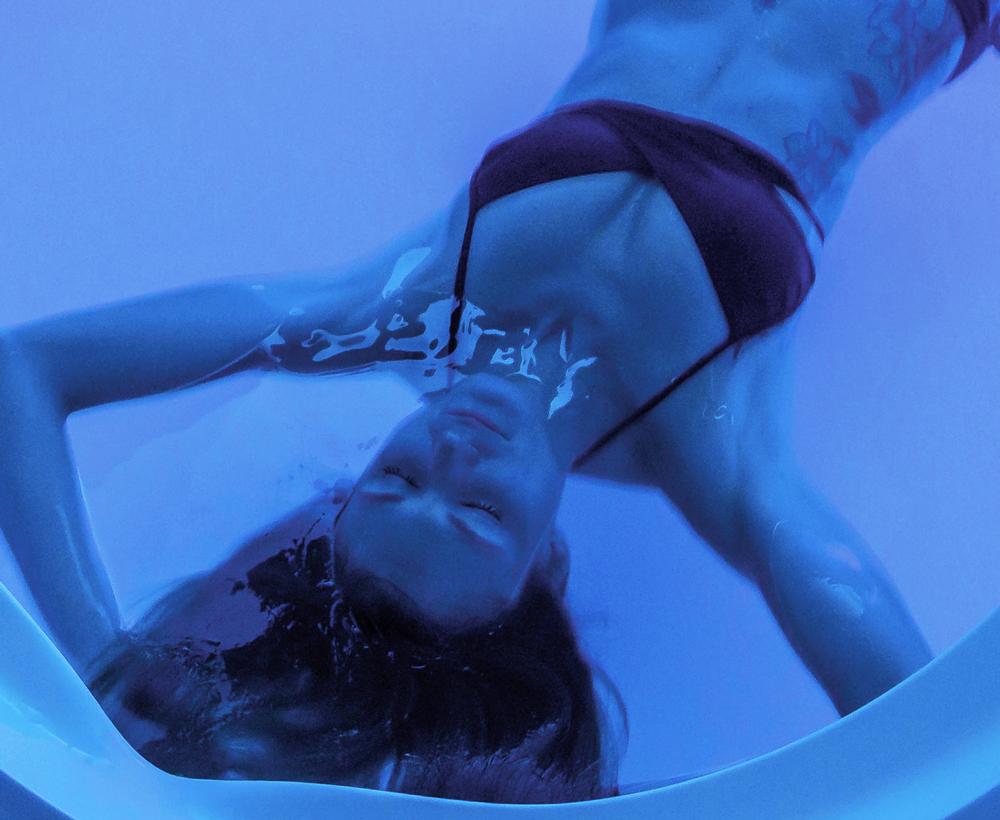
The water is set at 35?C to match the body’s temperature and the temperature of the air is the same. This creates a unique situation, where the user is no longer able to distinguish the boundaries between air, body and water. A wave of an arm turns the lights on or off and music is played through embedded speakers. “There’s probably a list of about 20 different variables we control in our lab, says Feinstein. “The most important point is to enter into an unperturbed state of consciousness and that’s why it’s important to calibrate the environment so precisely.”
Feinstein believes the perfect length of time for a session is 90 minutes. “It takes about 25 minutes to an hour to fully relax and clear mind chatter, so the idea is to sustain that for a little bit longer,” he says. “In circadian terms, the basic rest activity cycle tends to run in 90 minute increments and we’re finding that it seems to maximise the relaxation response.”
To increase the benefits further, for health clubs with spas, Feinstein feels there are many treatments that complement floating and could be combined with it in packages. Consider acupuncture, massage or alternatively, yoga, pilates or assisted stretching, which help to loosen up muscles before a session and allow the person to maintain a deep stillness during a float.
Floatation renaissance? Spurred on by a growing interest in mindfulness, it’s possible that there’s a resurgence in floating. The Float Locations directory lists 297 float centres in the US compared to only 85 in 2011, but it’s not able to give accurate figures in Europe yet.
Meanwhile, in Sweden, a number of studies suggest that floatation relieves chronic stress, depression, fibromyalgia and insomnia and the government is now incorporating float therapy into its national healthcare programme.
As for Feinstein, he feels much more research is needed: “My hope is that as more results are published, more and more scientists will get excited about floating and begin to study this as well.”
90 minutes is the ideal
float time as it takes up
to 25 minutes to clear initial mind chatter
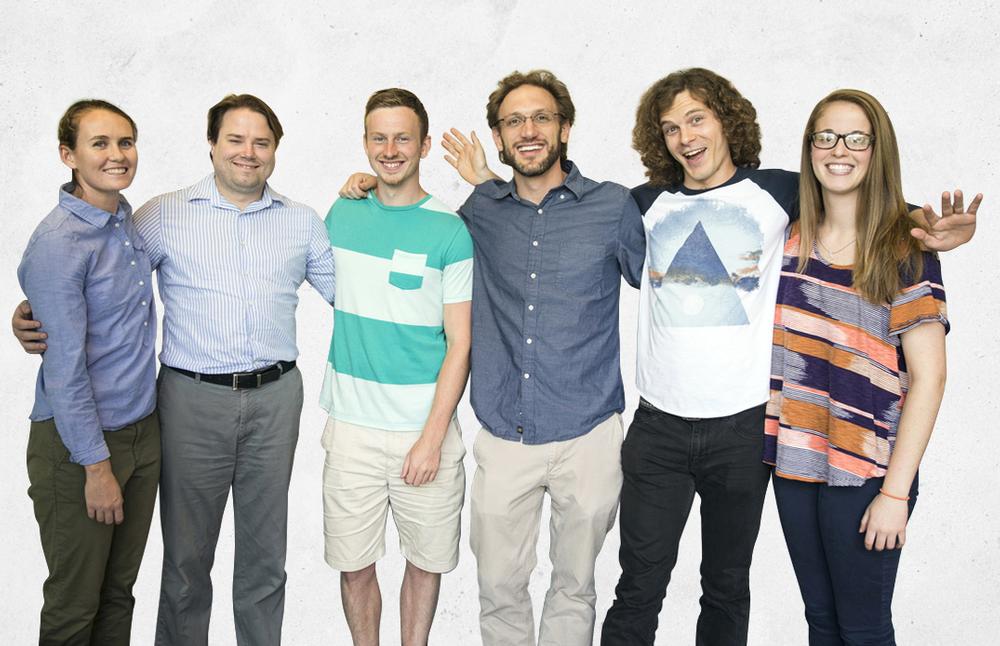
Feinstein (third right) and his team are among the first to study floatation
Active Blackpool is deploying Cornerstone Connect, a new digital interface allowing
disparate information from multiple systems to be aggregated into one dataset, to support
its focus on reducing health inequalities and improving healthy life expectancy. [more...]
Panatta brought together four of the most influential figures in bodybuilding history on the
stage of RiminiWellness 2026: Phil Heath, Lee Haney, Ronnie Coleman and Hany Rambod. [more...]
Scientists believe floatation therapy could be a shortcut to meditation
and much more than just a relaxation amenity for health clubs.
Niamh Madigan dives in to find out more
By Niamh Madigan | Published in Health Club Management 2018 issue 8
Float Clinic and Research Center at the Laureate Institute for Brain Research
Anyone who’s ever tried to meditate will know how difficult it is to sit quietly, shut out distractions and go into a state of complete tranquility. In a world where our brains are constantly being primed, there’s little chance to focus inwards. But what if the many widely-reported benefits of meditation could be achieved in another way – by the simple act of floating?
Neuropsychologist Justin Feinstein thinks this is a possibility and says: “floatation creates what I might say is the ultimate environment for focused, internal meditation”. Last year, he set up the Float Clinic and Research Center at the Laureate Institute for Brain Research in Tulsa, Oklahoma. It’s one of the first labs to look at the therapeutic benefits of floatation and initial findings indicate that it could be used to treat conditions like post-traumatic stress disorder (PTSD), chronic pain and even anorexia.
What Feinstein and his team are working on could have wider implications for spas. Instead of overlooking floatation pools and pods and thinking of them as an expensive extra just for relaxation, there may be grounds for operators to incorporate them into wellness programmes or use them as a standalone treatment for more serious ailments.
Making sense Originally called isolation tanks, floatation pools have been around since the 1950s but had little credibility with scientists – not least because studies were often combined with hallucinogens like LSD. But as we move towards an era when mindfulness is being taken more seriously by western society, a number of researchers are trying to provide concrete evidence for the healing benefits of floatation.
Feinstein first became interested in floatation 10 years ago when studying the brain function of patients with psychiatric conditions such as PTSD, social phobia and drug addiction. His interest was in the concept of interoception. In other words, how the brain senses the internal workings of the body; from the heart beating and blood pulsating to feelings from the gut and the immune system. He believed that disturbances in these body maps were the crux of mental health issues and discovered that floatation can help correct that dysregulation.
He explains: “For the first time in people’s lives, they have a chance to connect with those senses which are being overshadowed and understand who they are a little bit better.” Floating also creates a state of profound relaxation, which is the complete opposite to a state of anxiety.
Research results Feinstein’s research is still in its early stages and he’s still trying to understand the basic science behind floating and how it so profoundly affects both the brain and the body. Preliminary studies show a lot of visceral systems are entering into a relaxed state, with a reduction in heart rates, respiratory rates, blood pressure and brain waves. He says: “Most people outside of a float pool average 15 breaths a minute. Without much practice, floating reduces this to about five breaths a minute, which is quite a change.”
He’s just completed the first float fMRI brain imaging study to see what impact the experience has on the amygdala, a part of the brain that plays a key role in the processing of emotions. When the amygdala is over-stimulated it activates our fight or flight response which can trigger stress and anxiety. In the research, 40 healthy people were split into two groups – one enjoyed a 90-minute float, the other control group spent the time relaxing in a reclining chair. Their brain activity was scanned before and after, and fMRI results show that unlike the control relaxation group, the amygdala shut off post-float, causing the body to relax and have a similar effect to anti-anxiety medication and meditation. Feinstein says: “Floating is a great environment to enhance meditation – sensory distractions are minimised and you can really focus inwards.”
In another first, Feinstein is conducting the first float electroencephalogram screening. This allows him to measure the brainwaves of patients during a float by placing a waterproof, wireless device on their foreheads. “We hope to characterise the neural signature of what happens during a float experience,” he says. “Some preliminary results reveal that the brain’s going into a state of deep relaxation.”
Effective experience Costs for a floatation pool start at around £17,000, plus wet-room conversion prices. But for health clubs thinking of taking the plunge, it’s not just a case of ‘build it and they will come’. It’s about creating the right offering for the most effective experience.
The custom-made flotation pools at Feinstein’s clinic are not encased, which is deliberate. He says: “Some pod-style tanks are very enclosed. They look like coffins and the average person isn’t very excited about trying out floating because of that.”
Instead, his UK-built Floataway pools are 2.5m in diameter and the circular shape creates a self-centering effect for the person floating.
Each pool is filled with 2,000lbs of Epsom salts, which allows the body to effortlessly float and the salts themselves are said to have therapeutic properties.
The water is set at 35?C to match the body’s temperature and the temperature of the air is the same. This creates a unique situation, where the user is no longer able to distinguish the boundaries between air, body and water. A wave of an arm turns the lights on or off and music is played through embedded speakers. “There’s probably a list of about 20 different variables we control in our lab, says Feinstein. “The most important point is to enter into an unperturbed state of consciousness and that’s why it’s important to calibrate the environment so precisely.”
Feinstein believes the perfect length of time for a session is 90 minutes. “It takes about 25 minutes to an hour to fully relax and clear mind chatter, so the idea is to sustain that for a little bit longer,” he says. “In circadian terms, the basic rest activity cycle tends to run in 90 minute increments and we’re finding that it seems to maximise the relaxation response.”
To increase the benefits further, for health clubs with spas, Feinstein feels there are many treatments that complement floating and could be combined with it in packages. Consider acupuncture, massage or alternatively, yoga, pilates or assisted stretching, which help to loosen up muscles before a session and allow the person to maintain a deep stillness during a float.
Floatation renaissance? Spurred on by a growing interest in mindfulness, it’s possible that there’s a resurgence in floating. The Float Locations directory lists 297 float centres in the US compared to only 85 in 2011, but it’s not able to give accurate figures in Europe yet.
Meanwhile, in Sweden, a number of studies suggest that floatation relieves chronic stress, depression, fibromyalgia and insomnia and the government is now incorporating float therapy into its national healthcare programme.
As for Feinstein, he feels much more research is needed: “My hope is that as more results are published, more and more scientists will get excited about floating and begin to study this as well.”
90 minutes is the ideal
float time as it takes up
to 25 minutes to clear initial mind chatter
Feinstein (third right) and his team are among the first to study floatation
According to research which tracked more than 147,000 people for 30 years, 90-120 minutes
of strength training a week may deliver some of the biggest long-term health rewards.
The UK's four Chief Medical Officers have published a refreshed edition of Physical activity
guidelines: UK Chief Medical Officers' report, updating the evidence that underpins the nation's
physical activity recommendations and placing greater emphasis on strength, balance, reducing
sedentary behaviour and, for the first time, supporting people taking weight loss medications.
Places Leisure has exchanged contracts to build and operate a flagship £60m water and leisure
destination on behalf of Basingstoke and Deane Borough Council.
The Republic of Ireland will become the latest market in PureGym’s expanding international
portfolio, with the first launch planned for Dublin in 2027.
Anytime Fitness opened more than one club a day in 2025 and is on track to maintain this rate
of growth this year, as parent company Purpose Brands targets further international expansion.
The £33.9 million Leighton Leisure and Community Centre has opened in Leighton Buzzard, UK,
creating a next-generation public leisure, health and wellbeing hub for the local community.
Walnuts Leisure Centre in Orpington, in the London Borough of Bromley, has reopened following
a £17m transformation designed to secure the long-term future of the public leisure asset and
reposition it as a community wellbeing hub.
The Gym Group, has announced that it's sustained positive trading momentum has continued
through the first half of 2026 and the company remains confident about the outlook.
Active Blackpool is deploying Cornerstone Connect, a new digital interface allowing
disparate information from multiple systems to be aggregated into one dataset, to support
its focus on reducing health inequalities and improving healthy life expectancy. [more...]
Panatta brought together four of the most influential figures in bodybuilding history on the
stage of RiminiWellness 2026: Phil Heath, Lee Haney, Ronnie Coleman and Hany Rambod. [more...]