Jack Shakespeare, head of ukactive Kids, argues for a collective approach to beating childhood inactivity – a trend that has consequences just as serious as childhood obesity
ukactive wants equal opportunities for kids’ holiday-time activities / shutterstock
Modern life has engineered movement out of our days, and children are being hit hardest. While childhood obesity grabs the headlines, inactivity has an equally serious impact.
It’s the fourth biggest risk factor for mortality globally, yet only half of seven-year-olds are meeting the recommended guidelines of 60 minutes of moderate-to-vigorous activity a day, making today’s kids the most inactive generation ever.
We know activity habits formed in childhood carry through to adulthood, so failure to get kids moving has a devastating impact in the longer term.
Inactive children go on to become inactive adults – at risk from a multitude of preventable diseases that put pressure on the NHS.
We need to find ways to get children moving, and it must be a national priority.
The government is taking positive steps to address this issue and in January this year the Department for Education announced a new programme of research and pilots to tackle the issue of unhealthy school holidays.
These have been found to cause disproportionate harm to poorer pupils by contributing to inactivity, malnutrition and poorer academic results.
This programme is a major step, but these efforts alone will not turn the tide. This is a multi-layered issue that needs a multi-faceted response. There’s no silver bullet to reverse decades of inactivity.
Collaboration between our sector, schools and policymakers at national and local level will be vital to address the many factors that have led to a generation of inactive children.
New consultation To bring together the views of these stakeholders – each with their own expertise – ukactive has begun a consultation to offer everyone the chance to have their say on the best ways to engage children in activity.
We’re calling for evidence on what really works, from those who know – parents, teachers, activity providers, policymakers, business leaders and, of course, the children themselves.
We’ll aggregate the evidence to create a report that updates Generation Inactive (2015), offering solutions to shape policy and becoming the blueprint for a collective, evidence-based, approach.
Children’s inactivity is one of the most urgent public health challenges we face. Only by coming together can we establish solutions and I invite anyone with a stake in our children’s health to get involved.
One of the biggest mistakes the fitness industry still makes is advertising almost
exclusively to people who already look and live like gym members. [more...]
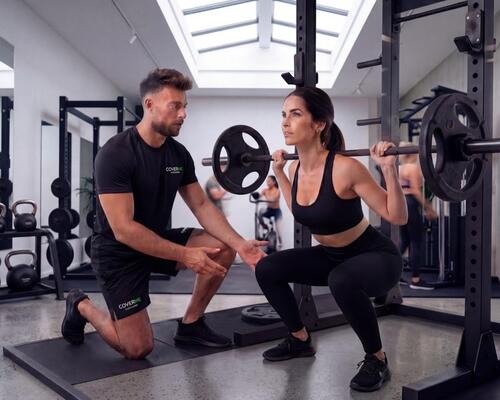
CoverMe, the global leader in fitness workforce management, today launches CoverMe PT, an
on-demand personal training platform that connects the right personal trainer to the right
client in under 10 seconds. [more...]
+ More featured suppliers
COMPANY PROFILES
Precor
Precor promises precision-quality products with steadfast reliability that are inspired by exerciser [more...]
Jack Shakespeare, head of ukactive Kids, argues for a collective approach to beating childhood inactivity – a trend that has consequences just as serious as childhood obesity
ukactive wants equal opportunities for kids’ holiday-time activities / shutterstock
Modern life has engineered movement out of our days, and children are being hit hardest. While childhood obesity grabs the headlines, inactivity has an equally serious impact.
It’s the fourth biggest risk factor for mortality globally, yet only half of seven-year-olds are meeting the recommended guidelines of 60 minutes of moderate-to-vigorous activity a day, making today’s kids the most inactive generation ever.
We know activity habits formed in childhood carry through to adulthood, so failure to get kids moving has a devastating impact in the longer term.
Inactive children go on to become inactive adults – at risk from a multitude of preventable diseases that put pressure on the NHS.
We need to find ways to get children moving, and it must be a national priority.
The government is taking positive steps to address this issue and in January this year the Department for Education announced a new programme of research and pilots to tackle the issue of unhealthy school holidays.
These have been found to cause disproportionate harm to poorer pupils by contributing to inactivity, malnutrition and poorer academic results.
This programme is a major step, but these efforts alone will not turn the tide. This is a multi-layered issue that needs a multi-faceted response. There’s no silver bullet to reverse decades of inactivity.
Collaboration between our sector, schools and policymakers at national and local level will be vital to address the many factors that have led to a generation of inactive children.
New consultation To bring together the views of these stakeholders – each with their own expertise – ukactive has begun a consultation to offer everyone the chance to have their say on the best ways to engage children in activity.
We’re calling for evidence on what really works, from those who know – parents, teachers, activity providers, policymakers, business leaders and, of course, the children themselves.
We’ll aggregate the evidence to create a report that updates Generation Inactive (2015), offering solutions to shape policy and becoming the blueprint for a collective, evidence-based, approach.
Children’s inactivity is one of the most urgent public health challenges we face. Only by coming together can we establish solutions and I invite anyone with a stake in our children’s health to get involved.
Global luxury hospitality brand, Six Senses, has partnered with longevity healthcare provider,
HUM2N, to launch a clinic at Six Senses London, at The Whiteley.
Premium London health club, KX Chelsea, will imminently unveil its most significant
redevelopment since its launch in 2002 to create an integrated wellness model combining
training, recovery and relaxation.
Researchers in the US have identified an antibody which could greatly reduce the loss of lean
muscle mass in people who are taking weight-loss medications.
Crunch Fitness has announced the launch of Crunch Reform Pilates – its own reformer concept
designed to bring this fast growing, but rather expensive, modality into the mainstream.
The 20th State of the Industry Report reveals a resilient, expanding and competitive
sector, the
importance of differentiation and the ongoing challenge of tackling inequalities.
Nuffield Health has told HCM that it takes its responsibilities towards its colleagues seriously
and is committed to meeting all legal obligations after news of a tribunal has made national
headlines.
Technogym has announced the launch of the Run X World Treadmill Championship, the first
world championship for running on connected treadmills over five kilometres.
One of the biggest mistakes the fitness industry still makes is advertising almost
exclusively to people who already look and live like gym members. [more...]
CoverMe, the global leader in fitness workforce management, today launches CoverMe PT, an
on-demand personal training platform that connects the right personal trainer to the right
client in under 10 seconds. [more...]
+ More featured suppliers
COMPANY PROFILES
Precor Precor promises precision-quality products with steadfast reliability that are inspired by exerciser [more...]