Loughborough University has revealed plans to open an innovative new hotel, targeting a large number of elite athletes who visit and train at the university.
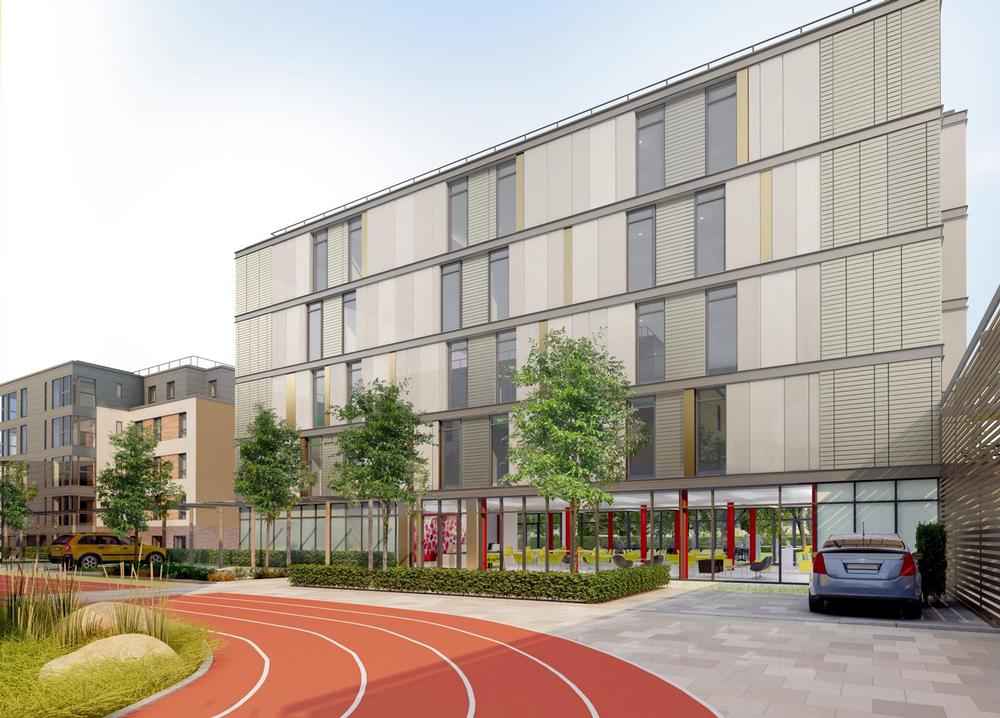
Designed by David Morley Architects, the Elite Athlete Centre and Hotel (EAC) will feature 44 bedrooms and will be located at the heart of the university’s extensive sports campus, next to the Paula Radcliffe Athletics Stadium.
Described as the first of its kind in Europe, the hotel will house 20 specially-designed altitude rooms, allowing athletes to “live high while training low”. The rooms will prepare guests for competition by improving their oxygen carrying ability, as well as maximum oxygen take-up.
Other athlete-centric facilities at the hotel include fully-accessible bedrooms – capable of accommodating para-athletes – a nutrition lounge, an athletes’ relaxation area and a seminar space for 30 people.
Where did the idea come from? At Loughborough, we’ve been building an ecosystem for elite sport for a while. We felt an important part of the set-up would be to offer specialist accommodation to Someelite athletes, so the EAC is the last piece of the jigsaw for us and we’re very excited about it.
Tell us about the altitude rooms Going to altitude camps usually means travelling – we wanted to take this out of the equation and offer athletes high altitude training in the UK.
There are only a handful of facilities in the world which provide the kind of rooms we’ll have. They’ll be able to simulate climatic altitude up to 5,000m
The tech, provided by a company called Sporting Edge, will allow us to inject air into the rooms which is either 10 or 7 per cent oxygen, while at the same time increasing nitrogen levels in the room.
This increases red cell count to achieve a 3-5 per cent improvement in performance. Gains can be considerable over time.
Who will use the EAC? We expect it to be of interest to individuals – serious athletes training for triathlons or endurance events.
National governing bodies can use the facility, rather than camps abroad, we’ll work to attract pro teams in non-Olympic and Paralympic sports and hope athletes from other countries will come and use the EAC before taking part in competitions – as well as training camps.
What’s the bigger picture? At Loughborough, we’re proud to be recognised globally as having one of the most advanced ecosystems for elite sport.
We have everyone from students setting out on their journey in elite sport, to athletes like swimmer Adam Peaty – a multiple gold medalist in his prime.
We also have an incredible diversity of excellence in areas from nutrition and conditioning coaching to physiotherapy, research and education: something that’s difficult to find anywhere else in the world.
Hotel rooms will have oxygen airstream
kit by tech company Sporting Edge
Active Blackpool is deploying Cornerstone Connect, a new digital interface allowing
disparate information from multiple systems to be aggregated into one dataset, to support
its focus on reducing health inequalities and improving healthy life expectancy. [more...]
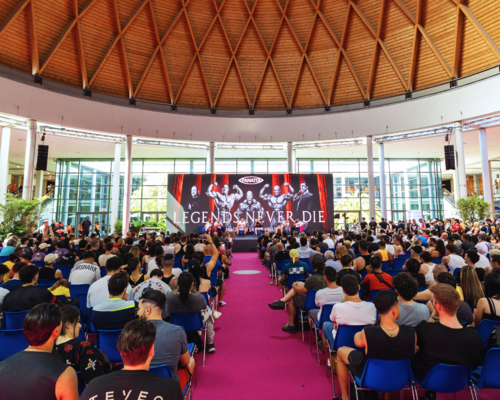
Panatta brought together four of the most influential figures in bodybuilding history on the
stage of RiminiWellness 2026: Phil Heath, Lee Haney, Ronnie Coleman and Hany Rambod. [more...]
Loughborough University has revealed plans to open an innovative new hotel, targeting a large number of elite athletes who visit and train at the university.
Designed by David Morley Architects, the Elite Athlete Centre and Hotel (EAC) will feature 44 bedrooms and will be located at the heart of the university’s extensive sports campus, next to the Paula Radcliffe Athletics Stadium.
Described as the first of its kind in Europe, the hotel will house 20 specially-designed altitude rooms, allowing athletes to “live high while training low”. The rooms will prepare guests for competition by improving their oxygen carrying ability, as well as maximum oxygen take-up.
Other athlete-centric facilities at the hotel include fully-accessible bedrooms – capable of accommodating para-athletes – a nutrition lounge, an athletes’ relaxation area and a seminar space for 30 people.
Where did the idea come from? At Loughborough, we’ve been building an ecosystem for elite sport for a while. We felt an important part of the set-up would be to offer specialist accommodation to Someelite athletes, so the EAC is the last piece of the jigsaw for us and we’re very excited about it.
Tell us about the altitude rooms Going to altitude camps usually means travelling – we wanted to take this out of the equation and offer athletes high altitude training in the UK.
There are only a handful of facilities in the world which provide the kind of rooms we’ll have. They’ll be able to simulate climatic altitude up to 5,000m
The tech, provided by a company called Sporting Edge, will allow us to inject air into the rooms which is either 10 or 7 per cent oxygen, while at the same time increasing nitrogen levels in the room.
This increases red cell count to achieve a 3-5 per cent improvement in performance. Gains can be considerable over time.
Who will use the EAC? We expect it to be of interest to individuals – serious athletes training for triathlons or endurance events.
National governing bodies can use the facility, rather than camps abroad, we’ll work to attract pro teams in non-Olympic and Paralympic sports and hope athletes from other countries will come and use the EAC before taking part in competitions – as well as training camps.
What’s the bigger picture? At Loughborough, we’re proud to be recognised globally as having one of the most advanced ecosystems for elite sport.
We have everyone from students setting out on their journey in elite sport, to athletes like swimmer Adam Peaty – a multiple gold medalist in his prime.
We also have an incredible diversity of excellence in areas from nutrition and conditioning coaching to physiotherapy, research and education: something that’s difficult to find anywhere else in the world.
Hotel rooms will have oxygen airstream
kit by tech company Sporting Edge
According to research which tracked more than 147,000 people for 30 years, 90-120 minutes
of strength training a week may deliver some of the biggest long-term health rewards.
The UK's four Chief Medical Officers have published a refreshed edition of Physical activity
guidelines: UK Chief Medical Officers' report, updating the evidence that underpins the nation's
physical activity recommendations and placing greater emphasis on strength, balance, reducing
sedentary behaviour and, for the first time, supporting people taking weight loss medications.
Places Leisure has exchanged contracts to build and operate a flagship £60m water and leisure
destination on behalf of Basingstoke and Deane Borough Council.
The Republic of Ireland will become the latest market in PureGym’s expanding international
portfolio, with the first launch planned for Dublin in 2027.
Anytime Fitness opened more than one club a day in 2025 and is on track to maintain this rate
of growth this year, as parent company Purpose Brands targets further international expansion.
The £33.9 million Leighton Leisure and Community Centre has opened in Leighton Buzzard, UK,
creating a next-generation public leisure, health and wellbeing hub for the local community.
Walnuts Leisure Centre in Orpington, in the London Borough of Bromley, has reopened following
a £17m transformation designed to secure the long-term future of the public leisure asset and
reposition it as a community wellbeing hub.
The Gym Group, has announced that it's sustained positive trading momentum has continued
through the first half of 2026 and the company remains confident about the outlook.
Active Blackpool is deploying Cornerstone Connect, a new digital interface allowing
disparate information from multiple systems to be aggregated into one dataset, to support
its focus on reducing health inequalities and improving healthy life expectancy. [more...]
Panatta brought together four of the most influential figures in bodybuilding history on the
stage of RiminiWellness 2026: Phil Heath, Lee Haney, Ronnie Coleman and Hany Rambod. [more...]